REVIEW · LECCE
Lecce: Walking Tour
Book on GetYourGuide →Operated by TURISTI IN PUGLIA INCOMING · Bookable on GetYourGuide
Lecce Baroque hits fast. This guided walk threads Roman ruins, church art, and papier-mâché craft into a story that actually makes sense. You’ll start at Sant’Oronzo square and move through the historic center, learning why Lecce became the main Baroque city in southern Italy.
Two things I really like: the stop at the Roman Amphitheater next to your starting square, and the chance to watch papier-mâché artisans at work as your guide explains how the art developed. One possible drawback: the exact meeting point can be a bit tricky if your app pin isn’t spot-on, so plan to double-check the spot before you gather.
In This Review
- Key highlights you’ll feel (not just see)
- Why Lecce’s Baroque works best on foot
- Starting at Sant’Oronzo Square and the Roman Amphitheater
- Baroque churches and the street-level detail you’ll actually spot
- Papier-mâché artisans: why paper became sacred art
- How your guide turns architecture into a story you can remember
- Duration and pace: fitting Baroque into 1.5–2 hours
- Price and value: what you’re really paying for
- Who this tour is best for
- Practical tips before you meet at Sant’Oronzo
- Should you book Lecce: Walking Tour?
- FAQ
- How long is the Lecce walking tour?
- Where does the tour start?
- What are the tour’s available languages?
- Is the tour free for children?
- Is there a minimum group size?
- What happens if the minimum group size isn’t met?
- Is a private group option available?
- Can I cancel and get a full refund?
- Will I get a refund if I miss the tour?
Key highlights you’ll feel (not just see)
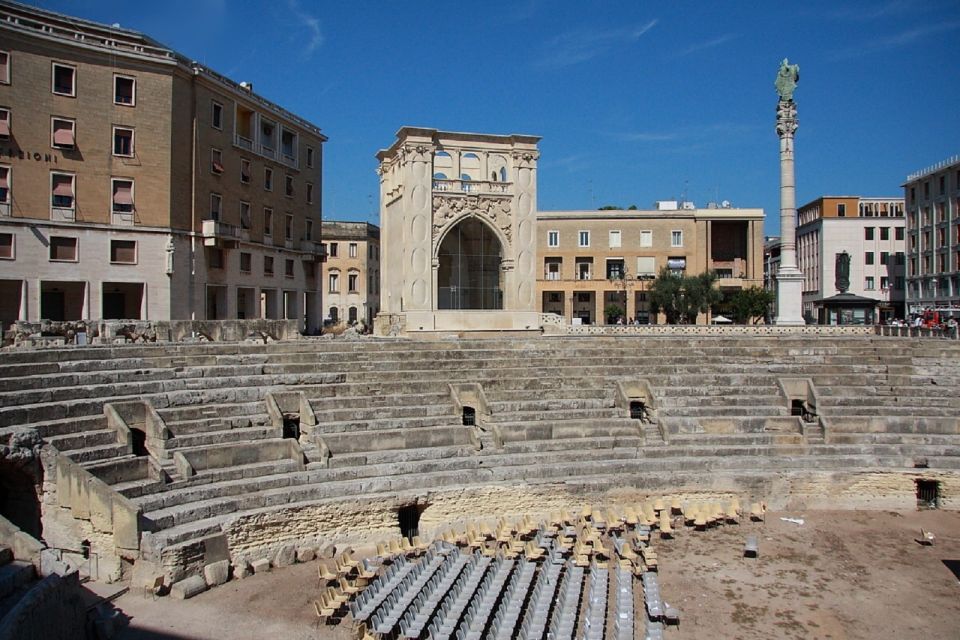
- Sant’Oronzo square first, Roman Amphitheater right there: you get the “before Baroque” layer immediately.
- Papier-mâché artisans in action: you see the technique, not just photos.
- Seventeenth-century reason for papier-mâché: learn why paper-based church decoration took off in a world with limited materials.
- Baroque church detail at walking speed: your guide helps you notice the carvings and the symbolism.
- Stories that connect religion and architecture: the tour doesn’t treat churches like museum pieces.
- Comfort check for shade and rest: at least one guide is known for pacing with real human needs in mind.
Why Lecce’s Baroque works best on foot
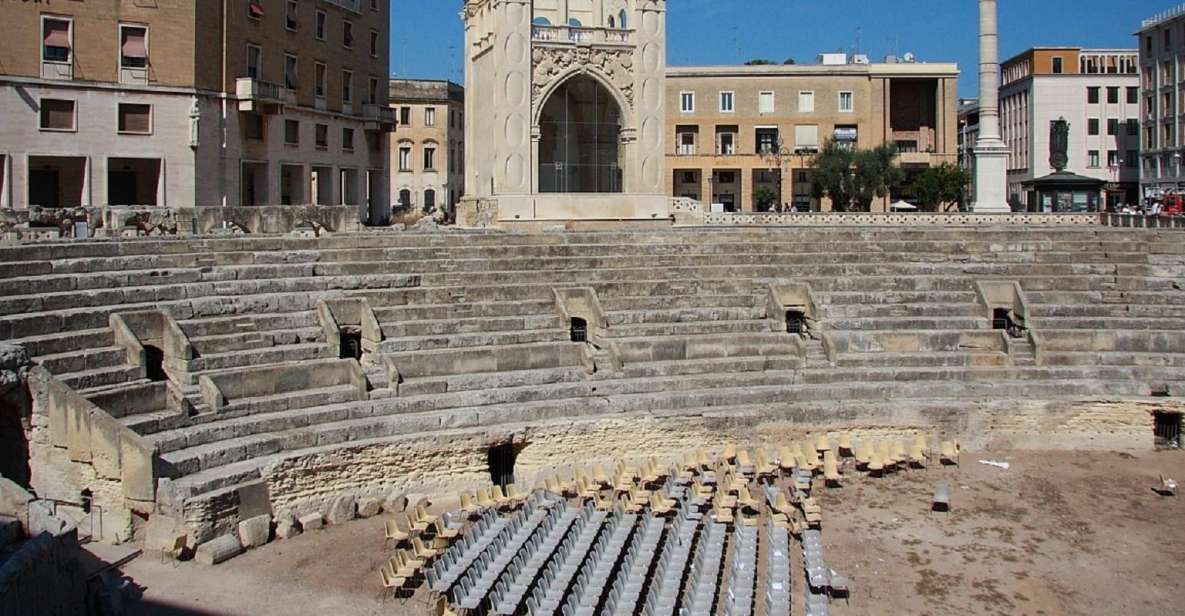
Lecce is one of those towns where the architecture keeps talking long after you think you’ve looked at the main sights. On a walking tour, the details aren’t just decoration. They’re a way of reading the city—stone by stone, church door by church door.
What makes this tour especially satisfying is the order. You don’t start deep in a church and then hope you can picture how it fits into the whole place. You begin in Sant’Oronzo square, with the Roman Amphitheater as your early anchor, then you slide into the historic center where Baroque art takes over the streets.
And the guide matters. In the best runs of this tour, guides bring the city down to everyday life: how locals lived around these buildings, how faith influenced design, and why papier-mâché became part of Lecce’s look for centuries.
You can also read our reviews of more tours and experiences in Lecce.

Starting at Sant’Oronzo Square and the Roman Amphitheater
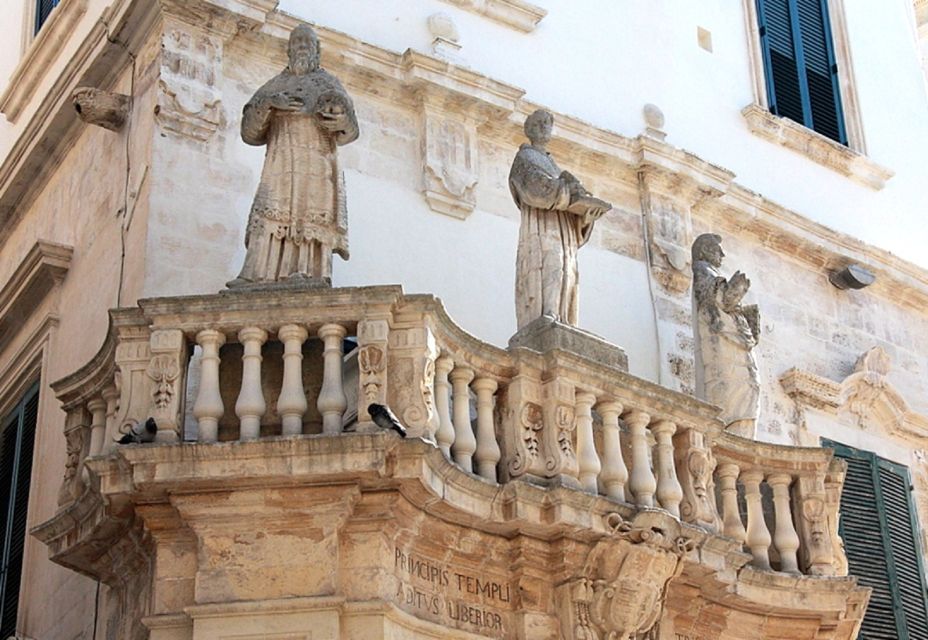
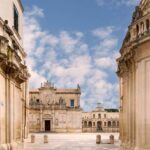
Your tour starts at Sant’Oronzo square, and the very first major landmark you’ll see nearby is the Roman Amphitheater. This is a smart opener because it sets up a theme: Lecce didn’t invent its importance from scratch. It built on earlier Roman presence, and then later generations reshaped that identity into Baroque splendor.
The amphitheater was first discovered at the beginning of the 20th century. That detail helps you understand why the city can feel layered: the stones are old, but the “big reveal” of what was under/around them is more recent than you’d assume.
Practically, starting at the square also means you’re oriented fast. You’ll get a quick sense of how the streets funnel from the central space into the church-and-palace core. It’s the kind of orientation you’ll still thank yourself for later, even after the tour ends.
Baroque churches and the street-level detail you’ll actually spot
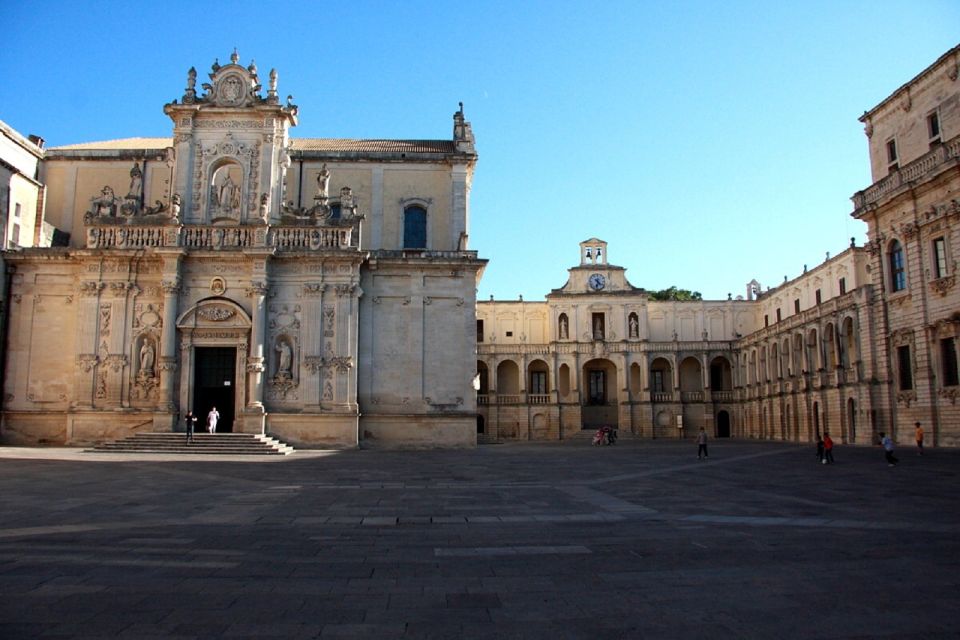
After the Roman stop, the itinerary focuses on the historic center: churches and antique buildings decorated with Baroque art. Here’s the trick with Baroque in Lecce—you can miss most of it if you treat it like a single “pretty façade.” This tour is designed to help you slow down enough to notice what’s carved, shaped, and placed where.
Your guide’s job is to translate the visual language. You’ll hear the history of the city and how it contributed to art, and you’ll also get context about how religion influenced what you’re seeing. That matters because many Baroque church details aren’t random flourishes; they’re part of a bigger message—belief made visible in stone.
One detail that sticks out from strong guide experiences: pacing and comfort. A guide named Antonella impressed with careful pacing, shade, and rest, while still packing in lots of facts in multiple topics. That’s a big deal on a 1.5–2 hour walk, because if the tour feels rushed, you lose the whole point of Baroque detail.
Papier-mâché artisans: why paper became sacred art
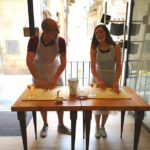
Now for one of Lecce’s most distinctive tricks: papier-mâché (paper-based sculpted decoration). During the walk, you may be able to watch papier-mâché artisans at work, and your guide will explain why this craft took off.
This art form belongs to Lecce from the 17th century, when it was conceived to decorate churches at a time when paper was the most available material. Once you hear that, the craft stops feeling like a quirky local specialty and starts sounding like smart, practical artistry.
Your guide will connect that 17th-century origin to what you see later: papier-mâché continues to adorn houses and churches, carried forward by old masters and also by younger people who keep the tradition alive.
If you love craft, this is the moment you’ll likely remember most. It’s not only about what the decorations look like. It’s about how the city’s people used what they had, then turned it into an identity.
How your guide turns architecture into a story you can remember
This is a guided walking tour, so the biggest “variable” is the guide. The good news: the tour is built around real storytelling, and the guides who perform it well tend to connect multiple angles at once.
From different guide names you might encounter—Antonella, Gigi Leante, Luigi Leante—the common thread is clear explanations, patience, and city-specific passion. One guide (Gigi) handled a group of 11 and even three dogs without drama, which is a reminder that good organization can make a tour feel smooth even when the group isn’t textbook-perfect. Another guide (Luigi) was noted for professionalism and answering questions in detail, including help finding a restaurant for local dishes afterward.
A solid tour guide also gives you useful direction beyond the walk. Some guides add recommendations for what to do during the rest of your stay in Salento. That’s more valuable than it sounds, because it turns your time in Lecce from sightseeing into actual planning.

Duration and pace: fitting Baroque into 1.5–2 hours
This experience runs about 1.5–2 hours. That’s a sweet spot for Lecce. Long enough to see major highlights like Sant’Oronzo square and the Roman Amphitheater, plus multiple church-and-street stops. Short enough that you don’t feel like you’re “touring” all day.
Still, expect a real walk. The value here comes from noticing details—carvings, façade changes, and the way churches frame the street. If you prefer a slow museum pace, you’ll want to communicate that. And if you’re traveling in warm months, bring water and plan for shade breaks; at least one guide is known for building in rest when needed.
Price and value: what you’re really paying for
There’s no amount listed in the info you provided, but one review concern stands out: the tour can feel pricey. Here’s how I’d think about value.
You’re not paying just for “seeing churches.” You’re paying for interpretation:
- the origin story of Lecce’s Baroque importance in southern Italy
- the connection between Roman roots and later city identity
- explanations for why papier-mâché became a church decoration technique in the 17th century
- the guide’s ability to point out what to look at on facades and inside settings you pass
If you already know how to read Baroque symbolism, you might feel you’re paying mainly for convenience. But if you want to understand why Lecce looks the way it does, the guided format is exactly what makes it worth your time.
Who this tour is best for
This walking tour fits best if you:
- love art and architecture but want it explained in plain language
- want a focused route instead of wandering randomly through church streets
- enjoy craft details, especially papier-mâché and church decoration techniques
- prefer a guided group experience that still feels flexible in pace
It’s also a good choice for visitors with limited time in Lecce. In short bursts, it gives you a strong “map + meaning” combo.
Practical tips before you meet at Sant’Oronzo
Meeting point can vary depending on the option booked, but the tour begins around Sant’Oronzo square. If you want a backup plan, the provided map coordinates are: 40.35282897949219, 18.173120498657227.
One more practical note from experience with tours like this: double-check the gathering spot. A review flagged that the meeting place in the app wasn’t exact, so don’t assume your phone pin is perfect. If you arrive early, you’ll feel calmer and less rushed.
Also, wear shoes you trust. Lecce’s historic center can mean uneven stone and a lot of footwork. You’ll enjoy the churches more if your body isn’t distracting you.
Should you book Lecce: Walking Tour?
I’d book it if you want Lecce’s Baroque to make sense, not just impress you for a moment. The Roman Amphitheater start gives you context fast, and the papier-mâché artisan element is a distinctive payoff you won’t get on generic city walks.
Skip it only if you’re the type who prefers totally free-form wandering with zero guiding. If you’re hoping for a quick look and photos only, you may feel the time is better spent doing a self-guided loop.
FAQ
How long is the Lecce walking tour?
It lasts about 1.5 to 2 hours.
Where does the tour start?
The tour begins at Sant’Oronzo square. The meeting point can vary depending on the option booked, but it’s centered around that square area.
What are the tour’s available languages?
The live guide is available in Italian, English, French, German, and Spanish.
Is the tour free for children?
Yes. The tour is free for children under 14 years old.
Is there a minimum group size?
Yes. The tour requires at least 3 persons to run.
What happens if the minimum group size isn’t met?
If the minimum isn’t reached, you’ll be offered a refund or a supplement to guarantee the tour.
Is a private group option available?
Yes. Private group availability is offered.
Can I cancel and get a full refund?
Yes. You can cancel up to 24 hours in advance for a full refund.
Will I get a refund if I miss the tour?
No refunds are given for no-shows.