REVIEW · MILAN
Milan: Sforza Castle and Michelangelo’s Pietà Rondanini Tour
Book on GetYourGuide →Operated by Hidden Experiences · Bookable on GetYourGuide
One sculpture can change how you see a city. This guided stop inside Sforza Castle and the museum around Michelangelo’s Pietà Rondanini turns a quick visit into something you actually understand.
I also like how the pacing forces you to connect the art to the people in power. You move through the Ducal Courtyards—including the Corte Ducale and Cortile della Rocchetta—with the story of Ludovico il Moro and Leonardo da Vinci’s nearly 20 years at the castle.
One possible drawback: 1.5 hours goes fast. If you want to read every label and linger in every museum room, you may wish you had more time on your own.
Quick hits before you go
- Michelangelo’s Pietà Rondanini explained like a story, not just a description
- Sforza Castle courtyards with political context, from Visconti to Sforza
- Leonardo da Vinci connections inside the castle you might not expect
- Small-group feel with headphones so you can hear the guide
- Meet clearly outside, under the Filarete clock tower in Piazza Castello
In This Review
- Sforza Castle and Pietà Rondanini: a short tour that hits hard
- Meeting in Piazza Castello under the Filarete clock tower
- Entering the castle: why this guided start is worth it
- Michelangelo’s Pietà Rondanini: the final unfinished work
- From museum to courtyards: Leonardo and Ludovico il Moro on real stone
- Biscione, power, and daily life inside the Visconti and Sforza world
- Who will love this tour (and who should rethink it)
- Value check: is $47 worth 90 minutes in Milan?
- Guide quality: clarity, patience, and real storytelling
- Should you book this Sforza Castle and Pietà Rondanini tour?
- FAQ
- How long is the Milan Sforza Castle and Pietà Rondanini tour?
- What is the meeting point?
- What’s included in the price?
- Is food or drink included?
- Is hotel pickup and drop-off included?
- What languages are available for the guide?
- Is the tour accessible for wheelchair users?
Sforza Castle and Pietà Rondanini: a short tour that hits hard
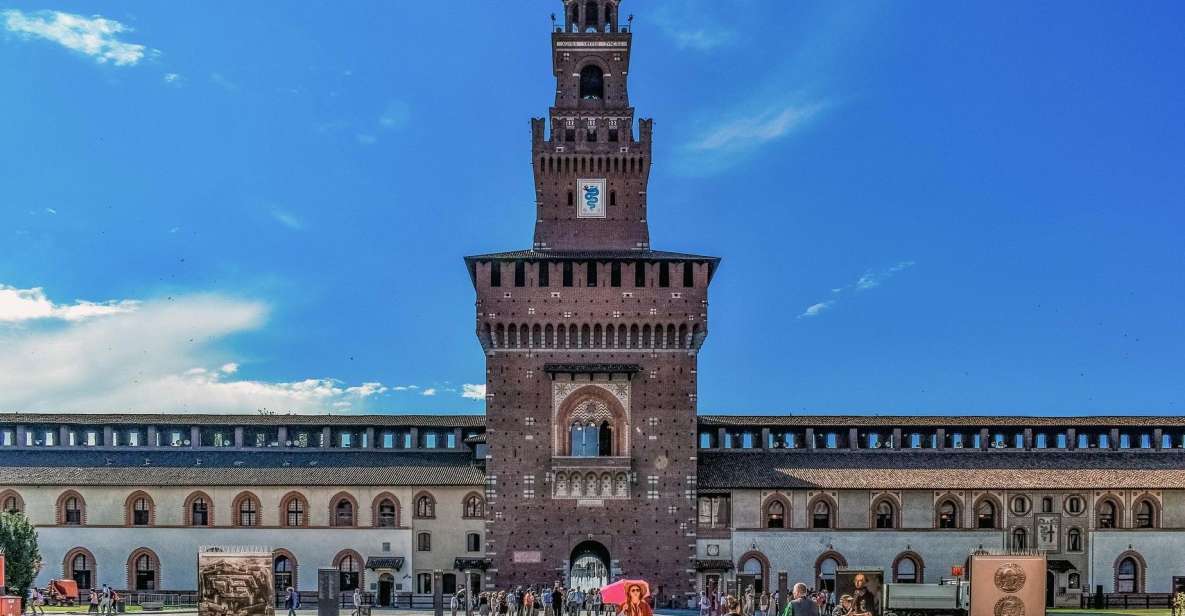
Milan can feel like a city of glass and speed. But in Sforza Castle, the city gets a different mood: heavy walls, ducal power, and Renaissance ambition packed into one stop.
This tour is only 1.5 hours, yet it’s built around two big anchors: the fortress complex and Michelangelo’s Pietà Rondanini, his final unfinished work. The best part is how the guide links the sculptures and the setting. You don’t just look; you get the why behind the what.
And it’s not only art. You also get the human side of the dukes who shaped Milan. Once you hear the Visconti and Sforza stories, the castle stops being a backdrop and starts feeling like a place where decisions were made.
Meeting in Piazza Castello under the Filarete clock tower
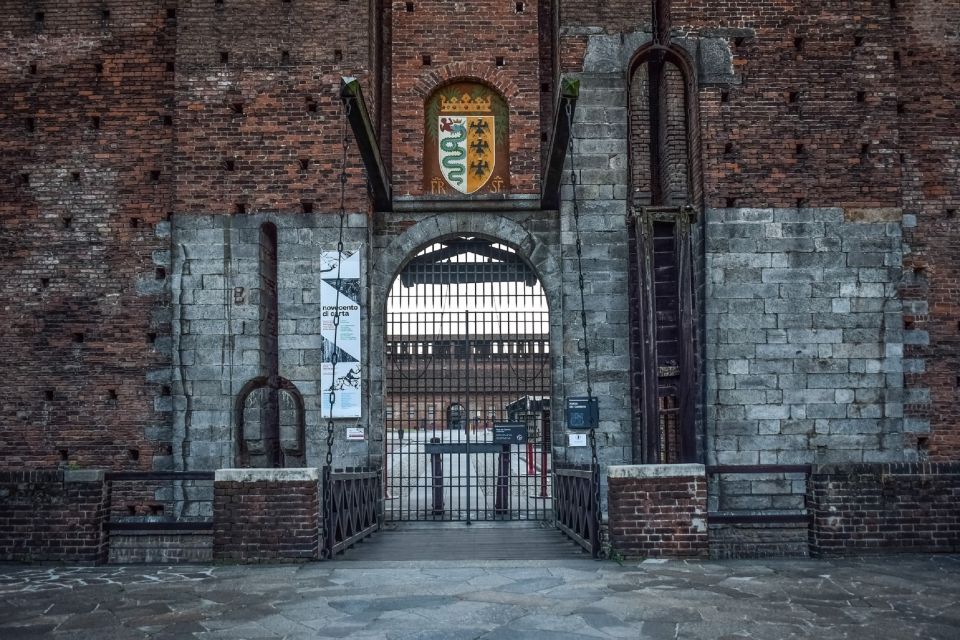
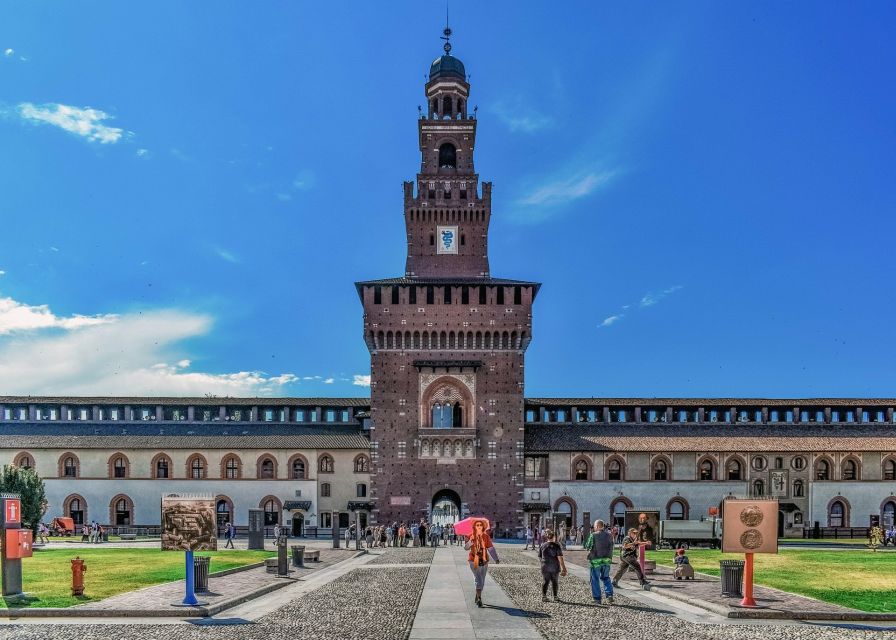
Timing matters in a castle tour. You meet the guide in Piazza Castello, under the Filarete clock tower, in front of the Sforza Castle. The meeting point is outside the courtyards—this matters because it helps you start together before you enter.
Look for the guide holding a Hidden Experiences purple flag or board. That detail sounds small, but it saves minutes of milling around with fellow visitors.
Also note the tour includes headphones (listed as from 11 participants). If the group grows, those earpieces keep the guide’s voice clear while you’re moving through rooms and courtyards. I’d rather wear headphones for direction than lose time to confusion.
You can also read our reviews of more tours and experiences in Milan.

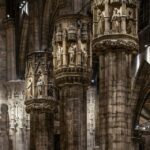
Entering the castle: why this guided start is worth it
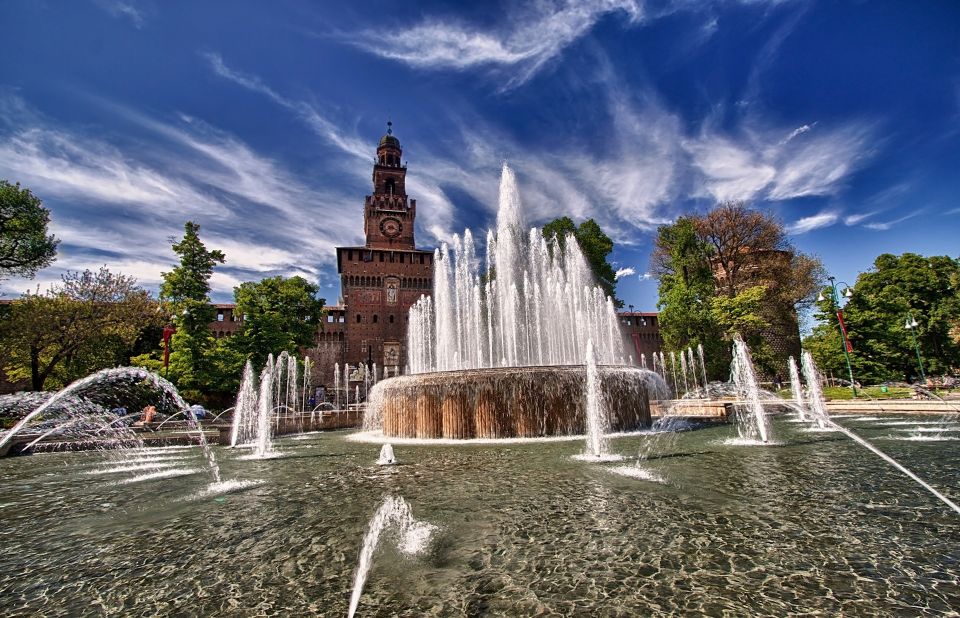
There’s a difference between walking into Sforza Castle on your own and walking in with a plan. With this tour, the priority is seamless entry into the castle and its museums, plus a guide who steers your attention toward the most meaningful parts in a limited time window.
Sforza Castle is one of those places where it’s easy to get distracted. You’ll notice courtyards, towers, and museum rooms that invite you to drift. The guide’s job is to keep your route tight and your understanding clear.
And that clarity is the point. This castle wasn’t built only to impress. It started as an imposing defensive structure, then evolved into a Renaissance capital seat for the Visconti and Sforza families. When you know that shift, even the architecture reads differently.
Michelangelo’s Pietà Rondanini: the final unfinished work
Your first major art stop is Michelangelo’s Pietà Rondanini, housed in a museum space inside the castle. This piece is special for one big reason: it’s Michelangelo’s final, unfinished testament.
You’ll hear the story that he worked on the marble block until just a few days before his death at age 89. That detail changes how you look at the sculpture. The work feels like it’s in conversation with time—caught before it reaches closure.
The guide’s analysis focuses on what makes this Pietà feel different from his earlier perfection: elongated figures and a rough, non-finished texture. This is the side of Michelangelo that many people don’t expect—less polished anatomy, more spiritual urgency. Instead of chasing flawless form, the sculpture carries emotion forward while still under construction.
If you care about art history, this is a rare chance to see how a major masterpiece can be unfinished and still feel complete in its meaning. If you care about mood and human emotion, it’s even better. The guide helps you slow down just enough to notice what Michelangelo left unresolved on purpose.
Practical tip: in museum spaces, it can get crowded and lines can form. Arriving as part of a guided entry helps, and the headphones help you keep up when the group moves quickly between viewpoints.
From museum to courtyards: Leonardo and Ludovico il Moro on real stone
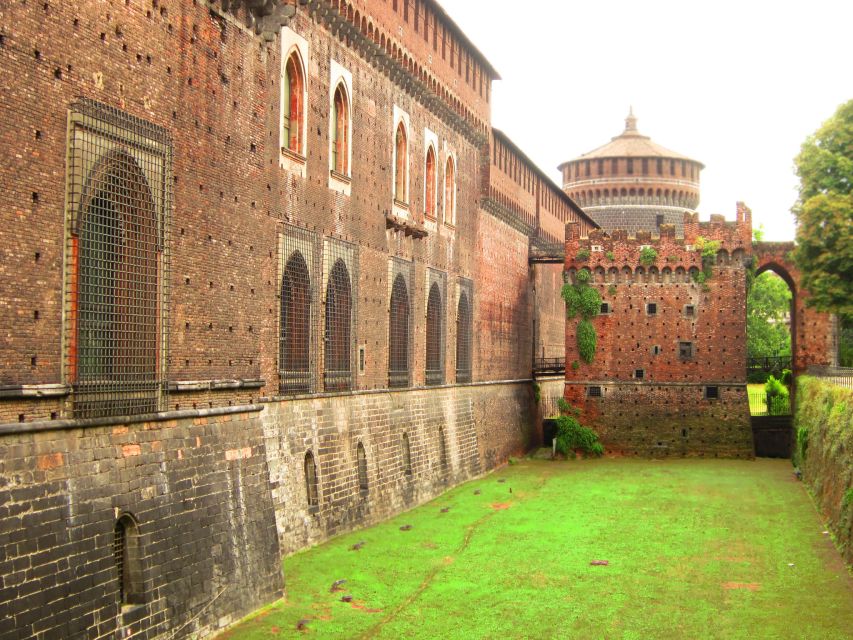
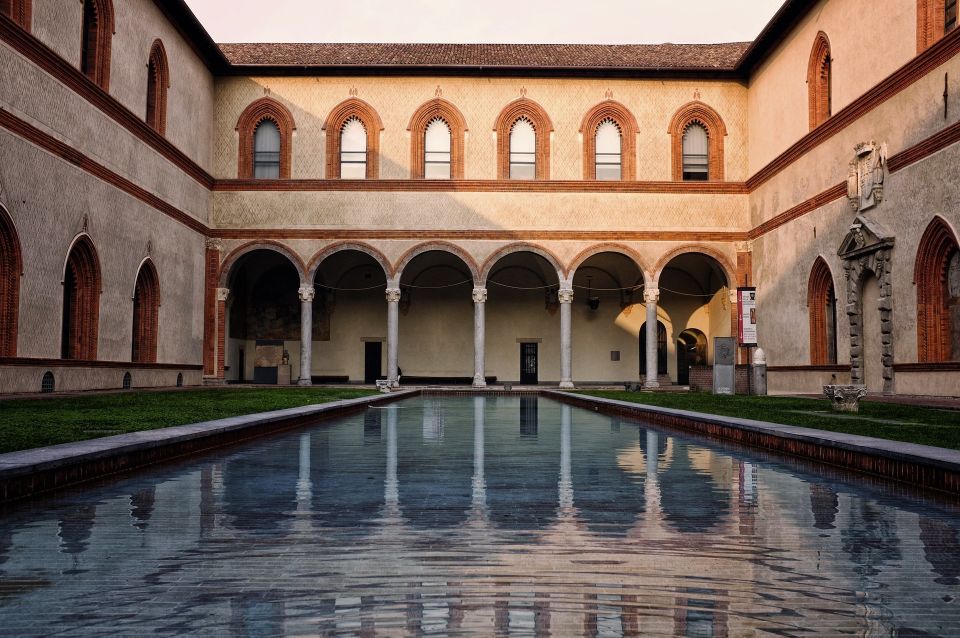
After the Pietà, the tour shifts into the castle’s lived-in spaces: the Ducal Courtyards. This is where the story becomes physical. You’re no longer just observing a sculpture; you’re walking through the world that shaped the art and politics.
The guide points out stops like the Corte Ducale and the Cortile della Rocchetta, with the narrative turning toward Ludovico il Moro and the court life around him. You also get the connection to Leonardo da Vinci in a way that feels grounded rather than textbook.
Here’s the key detail: Leonardo didn’t only visit Milan for famous moments. He lived and worked at the castle for nearly twenty years. The tour also emphasizes that within Sforza Castle, Leonardo acted as a court engineer and architect, not just a painter known for later fame.
If you’ve seen Leonardo’s work elsewhere in Milan, this tour gives you a missing link. You start thinking about him as a working court professional inside the castle complex—someone shaping buildings and engineering problems while his art career evolves in parallel.
And because you’re walking the courtyards with a guide, you’re not trying to guess what mattered. The guide connects your feet to the historical stakes.
Biscione, power, and daily life inside the Visconti and Sforza world
The most memorable tours don’t just share facts. They explain what the facts meant to the people living there.
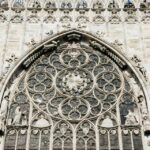
This one does that with stories about ducal life and intrigue. You’ll learn the meaning behind the Biscione—the iconic serpent coat of arms associated with the dynasties that ruled Milan. You’ll also hear how nobles and power players, including ambitious men and influential noblewomen, affected culture and decisions at court.
That context matters because it gives names and symbols a job. The serpent stops being a decorative motif. It becomes a shorthand for authority, identity, and political messaging.
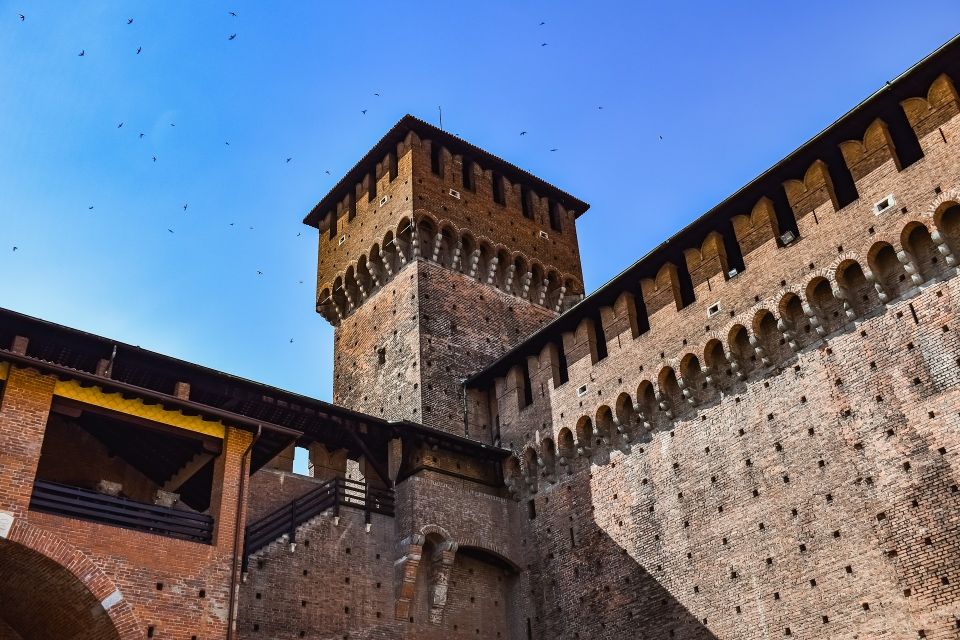
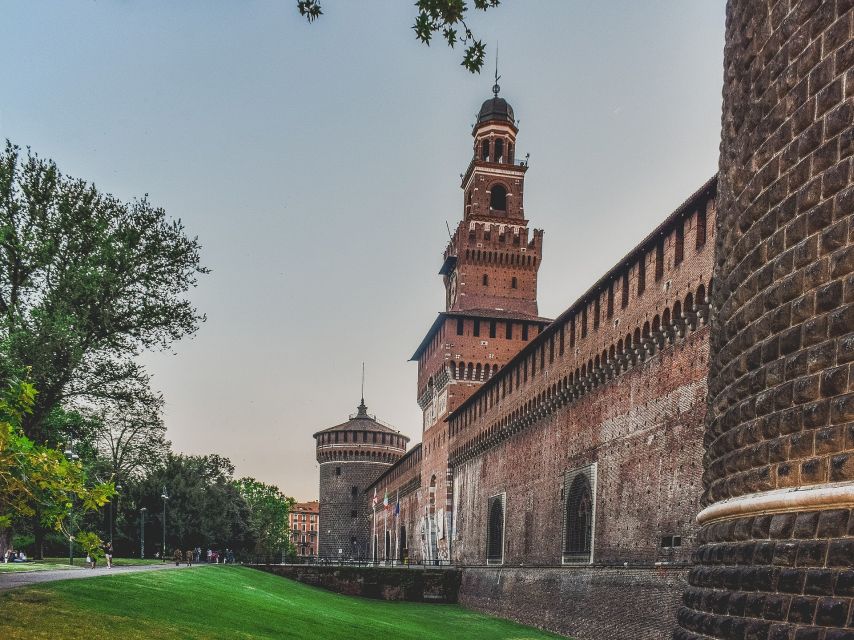
You’ll also walk under the shadow of the Filarete Tower. The guide’s take on how the castle survived centuries helps you understand why this fortress is tied to Milanese identity today. It’s not just about defensive walls. It’s about continuity—how a place keeps being used and reinterpreted across eras.





Who will love this tour (and who should rethink it)
This experience is a strong fit if you want a compact, high-impact introduction to Milan’s Renaissance power story. It’s also a good match if you care about art but don’t want to spend half a day hunting for it.
I’d especially recommend it if:
- You want the Pietà Rondanini explained in context, including why it’s unfinished and what that suggests
- You’re curious about the Visconti and Sforza families but don’t want to build the timeline yourself
- You like walking tours with a clear narrative thread, not open-ended wandering
You might want to choose something else if:
- You prefer slow museum time and long label reading
- You’re the type who wants to revisit each gallery more than once in the same visit
- You’re hoping for a full, deep museum curriculum beyond the main highlights
The time limit is real. The tour is designed to hit the big points and interpret them well, not to turn into an all-day museum program.
Value check: is $47 worth 90 minutes in Milan?
At $47 per person for about 1.5 hours, the value depends on what you want from Milan.
If you would otherwise:
- pay separate museum entry fees, and
- spend time figuring out where to go inside a complex castle,
then a guided format becomes a practical bargain. The tour includes entrance fees to the castle and its museums, plus a certified guide.
The headphones and small-group format also matter for comfort and clarity. You get less time lost to noise or distance from the guide, and more of the tour stays focused on the story.
One more value point: the guide doesn’t treat the Pietà like a random stop. You’ll get art analysis tied directly to the Renaissance setting and the ducal court world. That’s the kind of framing that can make a short tour feel longer because you absorb more per minute.
So yes, I think it’s priced for the highlights. The key is buying it with the right expectations: quick, meaning-heavy, and guided rather than slow and exhaustive.
Guide quality: clarity, patience, and real storytelling
A tour stands or falls on how the guide handles the room. This one is consistently praised for engagement and explanation.
You’ll see repeated mention of guides like Giorgio, Stephanie, Simone, Fabio, Lore, Graziela/Gabriella (spelled variously in notes), and Sylvia being easy to follow, patient with questions, and able to translate complex history into something you can track.
Even when the tour runs tightly, the better guides keep you from getting lost in names and dates. They point out what to notice, then explain why it matters—especially with Michelangelo’s late, unfinished approach and with the castle’s shift from fortress to Renaissance residence.
If you’re deciding last-minute, this is the part I’d bet on: the tour works best when the guide is strong at making the timeline feel human.
Should you book this Sforza Castle and Pietà Rondanini tour?
If you want a smart first taste of Milan’s Renaissance core, I’d book it. This is a high-value way to see Sforza Castle and focus on Michelangelo’s Pietà Rondanini with interpretation that helps you see the sculpture’s unfinished quality as part of its power, not a flaw.
Book it if:
- you’re art-curious and want context you can’t easily pick up by wandering
- you want the Visconti–Sforza story connected to the spaces you’re walking in
- you prefer a short, well-structured route over a long, uncertain one
Hold off if:
- you want maximum time in every museum corner
- you’re aiming for a deep museum-only experience rather than a guided narrative
For most people doing Milan for a few days, this hits the sweet spot: meaningful stops, clear storytelling, and just enough time pressure to keep your visit lively rather than exhausting.
FAQ
How long is the Milan Sforza Castle and Pietà Rondanini tour?
It lasts about 1.5 hours.
What is the meeting point?
Meet the guide in Piazza Castello, under the Filarete clock tower, in front of Sforza Castle (not inside the courtyards). Look for the Hidden Experiences purple flag or board.
What’s included in the price?
The tour includes entrance fees to the castle and museum, a certified tour guide, headphones (listed for participants up to 11), and a small group guided tour.
Is food or drink included?
No. Food and drink are not included.
Is hotel pickup and drop-off included?
No. Hotel pickup and drop-off are not included, though it may be available for an extra charge.
What languages are available for the guide?
The guide is offered in Italian, English, German, French, and Spanish.
Is the tour accessible for wheelchair users?
Yes, it is listed as wheelchair accessible.
If you tell me your travel month and whether you’re more into art or history, I can suggest the best time of day to slot this in so you get the calmest visit possible.