REVIEW · PARMA
Museum entrance ticket – Full
Book on Viator →Operated by Fondazione Museo del Violino · Bookable on Viator
Stradivarius violins aren’t subtle. With skip-the-line entry to Cremona’s Museo del Violino and an English audio guide, you get a smooth start and story-led visit instead of wandering blind. I also like that the experience focuses on what matters in violin-making—origins, history, and how Stradivari built instruments to near-incredible standards.
One thing to keep in mind: this is a paper ticket experience and entry can depend on rules in place on your date. I’d plan to have your voucher ready and any required pass/ID sorted out ahead of time, and remember the ticket is non-refundable.
In This Review
- Key things to know before you go
- Cremona’s Violin Museum ticket: what you’re really paying for
- The Stradivarius payoff: why the instruments feel different in person
- How the audio guide shapes your 1 to 3 hour visit
- Inside the Museo del Violino: what you should expect to see
- Timing matters: opening hours and the last-entry rule
- Ticket details you’ll want to verify before you leave
- Price and value: is $21.72 worth it?
- Who should book this, and who might think twice
- Small practical tips that make the visit smoother
- Should you book? My honest call
- FAQ
- What is included with the full museum entrance ticket?
- Is an audio guide included, and is it in English?
- How long does the museum visit take?
- What are the Museo del Violino opening hours?
- When is the last entry time?
- Is food and beverages included?
- Is this ticket refundable if plans change?
Key things to know before you go
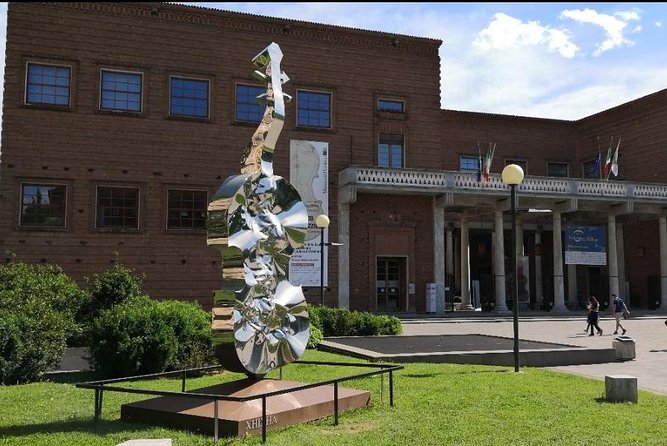
- Skip-the-line admission to the Museo del Violino, so you spend time looking, not waiting
- English audio guide that explains how violin-making evolved
- Close-up access to original Stradivarius violins (as described for this visit)
- Technique-focused explanations of what Stradivari did to get those results
- A good 1 to 3 hour time window for most museum-goers
Cremona’s Violin Museum ticket: what you’re really paying for
Buying this ticket isn’t just about getting into a museum. You’re paying for momentum: skip-the-line entry, plus an audio guide that gives you context while you look at instruments that people treat like art—and like history—at the same time.
The Museo del Violino is the kind of place where looking gets better when you understand. A violin isn’t only wood and strings. It’s design choices, material behavior, setup, and those small decisions that add up to sound and stability. This ticket is built around that idea, with an audio guide that covers the origin and history of violin-making and points toward what Stradivari changed or perfected.
At $21.72 per person, the price feels fair when you think about the payoff: original instruments (including Stradivarius pieces, per the description) plus guidance for a focused visit. If you try to do this as a last-minute museum stroll, you risk losing time in lines and leaving questions unanswered.
You can also read our reviews of more tours and experiences in Parma.



The Stradivarius payoff: why the instruments feel different in person
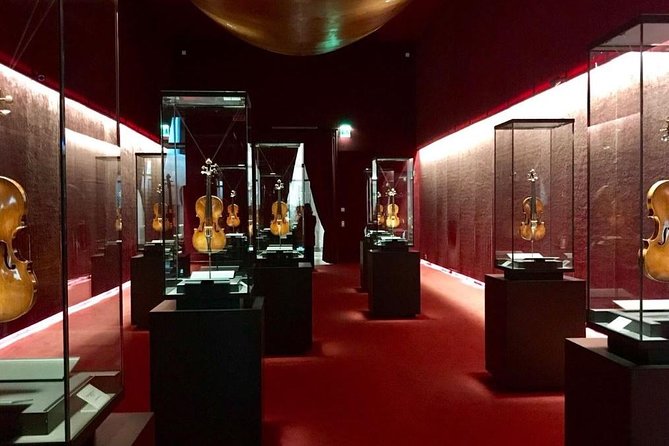
The big draw here is the chance to see original Stradivarius violins, not replicas behind glass with zero explanation. When you stand close to something that old, you can feel the craftsmanship in the details—shape, finish, wear patterns, and the “finished” quality that doesn’t happen by accident.
What I like about how this is described is the emphasis on technique. It’s not only, “Here’s a famous violin.” It’s “Here’s how Stradivari built instruments to reach flawless results,” and that changes the whole vibe of the visit. You start looking for evidence: how choices in construction connect to the goal.
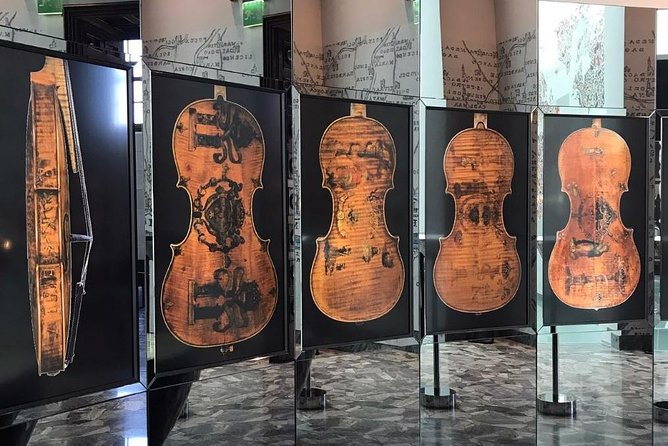
One review called out that the collection is displayed so you can view instruments from multiple angles. That matters a lot. If you can only see the front, you miss half the story. Multiple viewpoints help you notice how design affects the whole form—not just the front ornamentation.
And yes, it’s the kind of museum where a visit can feel like you finally checked a lifelong box. You don’t have to be a violin expert to get that sense. If you care about craft, you’ll get it fast.
How the audio guide shapes your 1 to 3 hour visit
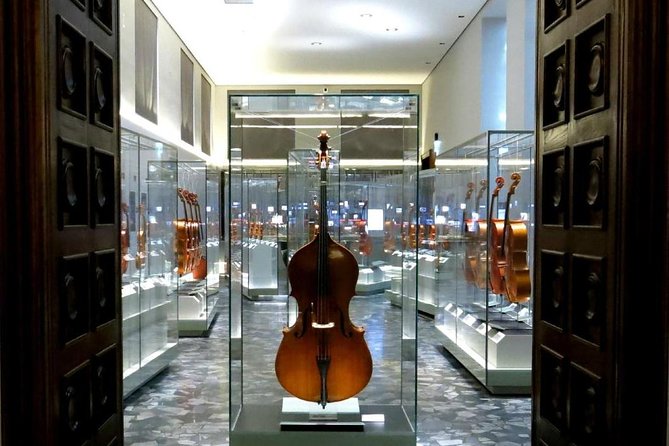
This experience is designed for a 1 to 3 hour museum window, and the audio guide is what makes that time efficient. Without guidance, violin museums can still be great—but your brain fills in the blanks. With the audio guide, those blanks turn into clear links between objects and ideas.
The guide is described as covering the origin and history of violin-making, plus the techniques associated with Stradivari. That’s a lot of ground, but spread across a museum visit it works like a good playlist: it keeps you from getting stuck on one display too long or moving too quickly past what you’re meant to learn.
If you enjoy museum experiences where you can pause and re-listen, this setup is ideal. You won’t just “walk through.” You’ll understand why you’re looking at certain instruments or certain construction features.
Also, it’s offered in English, which makes a difference here. Violin terminology can be tricky, and you’ll get more out of the instruments if the explanations match your language.
Inside the Museo del Violino: what you should expect to see
Your stop is straightforward: admission to Museo del Violino. No complicated route, no hopping between sites. That simplicity is a plus when you’re only spending a half day in the area and want maximum focus.
Inside, expect a mix of historic instruments and interpretive displays meant to explain how violin-making works and why certain makers are remembered. The audio guide should guide your attention, so you don’t just stare at objects without a framework.
One of the strongest points is visibility. The museum display style is described as allowing viewing from multiple angles, which helps you appreciate form and craftsmanship. That means you can spend time at each major piece without feeling like you’re missing something because of where you’re standing.
If you come expecting the museum to be quiet and passive, adjust your expectations. Some displays are set up to feel interactive, at least in how they’re presented and how you’re encouraged to engage with the instruments.
And if you’re someone who loves hearing stories behind famous names, you’ll likely enjoy the way the material connects origin, development, and technique. It turns the word Stradivarius from a label into a process.
Timing matters: opening hours and the last-entry rule
You’ll want to plan your timing around the museum’s hours. In both 2025 and 2026, the Museo del Violino is open Tuesday through Friday, 11:00 AM to 5:00 PM.
Here’s the key practical detail: last entry uses the museum route 45 minutes before closing. That means if closing time is 5:00 PM, you need to be factoring in entry by around 4:15 PM. If you show up at 4:40 PM hoping to “just go in,” you could end up shut out.
This ticket is best when you build in a little cushion. I’d arrive early enough to settle, grab your audio guide, and get your bearings. Plan on the visit stretching across that 1 to 3 hour window rather than treating it like a 45-minute sprint.
Good timing also helps if you’re visiting Cremona as part of a bigger day. You’ll finish with enough energy to wander the city without feeling rushed.





Ticket details you’ll want to verify before you leave
You get a paper ticket, and the description says it’s offered in English with confirmation received at booking. That’s helpful for planning, because you know what kind of format to expect.
But paper tickets come with one real-world headache: you need them in hand. One caution that shows up is the need to print a voucher close to departure time. So I recommend you treat this like travel theater—don’t wait until the last minute. Have a backup plan for printing, like asking your hotel to help or keeping a clear digital copy ready in case you’re told to present something printed.
Also, this experience is listed as near public transportation. That’s useful in a town where you might be mixing walking with transit. If you’re traveling from elsewhere and aren’t sure where to park, transit access makes your route simpler.
One more note: the museum says most travelers can participate. That’s a broad statement, but it suggests this isn’t restricted to one narrow type of visitor. Still, don’t treat that as a guarantee for everyone. If you have mobility or sensory needs, it’s smart to check directly with the museum before committing.
Price and value: is $21.72 worth it?
For $21.72 per person, you’re paying for three things: skip-the-line entry, an audio-guided visit, and access to a collection described as including original Stradivarius instruments.
A fair way to judge value is to compare effort saved versus extra learning gained. Skip-the-line reduces time pressure. You’re less likely to rush the displays, and that matters because violin details reward slow looking.
The audio guide adds the second value layer. Even if you love instruments, history and technique make the experience “click.” You can read about violin-making later, sure. But here you’ll match explanations to what you see right in front of you.
And the museum itself is focused. You’re not paying for a long transfer day or a multi-stop schedule. You’re paying to be inside one place and get a strong, readable experience.
If you’re a casual music fan with short attention, you might only enjoy part of it. But if you care about craft, instrument design, music history, or hands-on design thinking, this ticket is one of those purchases that feels like it lands exactly on your interests.
Who should book this, and who might think twice
Book this if you:
- Want a focused visit that fits a 1 to 3 hour window
- Care about violin-making history and technique, not just famous names
- Prefer English audio guidance while you look
- Like museum experiences that help you view objects from different angles
Consider thinking twice if:
- You’re very short on time and can’t meet the last-entry timing
- You don’t have a plan for handling a paper ticket or voucher printing needs
- Your visit depends on having the right entry pass/requirements on the day (there’s at least one documented case of denied entry due to lacking a pass for that time period)
If you’re traveling with family, it can still work. One review praised interactive displays, which suggests it won’t feel like only lecture-style rooms. Still, you know your group best—some kids enjoy instrument displays; some want motion and action.
Small practical tips that make the visit smoother
A few things I’d do to make your time there feel effortless:
- Aim to arrive before the museum gets tight. You’ll avoid stress and make the last-entry rule less scary.
- Wear comfortable shoes. Even a 1 to 3 hour museum run can mean lots of standing, turning, and moving between viewpoints.
- Bring water or plan a snack strategy elsewhere. Food and beverages aren’t included here.
- If you’re hoping to catch a specific guide style, remember that people can vary. I’ve seen examples of guides like Clara sharing extra context and making the visit feel personal. You can still ask questions if you’re allowed to interact.
These are small moves, but they protect your visit from common travel friction.
Should you book? My honest call
If you’re heading to Cremona and you want a high-focus museum experience, I’d book this skip-the-line admission. The combination of an English audio guide, structured explanations, and the chance to see original Stradivarius violins is the kind of “one place, big impact” deal that’s hard to replicate on your own.
Just don’t treat it like a casual walk-in. Use the schedule—Tuesday to Friday, 11:00 to 5:00—and respect the 45-minute-before-closing last entry rule. Also, plan for the paper-ticket reality so you don’t lose time right when you’re trying to enjoy the instruments.
If you want a museum that turns famous music history into understandable technique, this is a smart way to spend your time.
FAQ
What is included with the full museum entrance ticket?
The experience includes the entrance ticket to Museo del Violino.
Is an audio guide included, and is it in English?
The highlights describe an audio guide that explains the origin and history of violin-making, and the experience is offered in English.
How long does the museum visit take?
The duration is listed as 1 to 3 hours (approx.).
What are the Museo del Violino opening hours?
For both 2025 and 2026, it is open Tuesday through Friday from 11:00 AM to 5:00 PM.
When is the last entry time?
The last entry time to use the museum route is 45 minutes before the museum closes.
Is food and beverages included?
No. Food and beverages are not included.
Is this ticket refundable if plans change?
No. The experience is non-refundable and cannot be changed for any reason.