REVIEW · ROME
Rome at Night Segway Small Group Tour
Book on Viator →Operated by Fat Tire Tours Holdings LLC - Italy · Bookable on Viator
Rome looks cooler when it’s dark. This Rome at Night Segway small-group tour strings together the big-name sights—Piazza Navona, Trevi Fountain, the Pantheon area, the Spanish Steps—when the city feels less hectic and the lighting is pure magic. I especially like how the route is built around great night photos and short stops that still give you context.
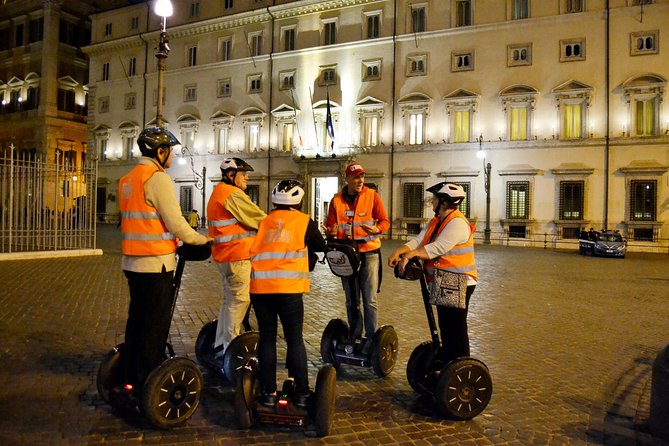
My second favorite part is the start-to-ride help: you get an orientation session and helmet before you roll out, and the guides I’ve heard mentioned—Alessandro, Matt, Nico, Sara, Stefano, and Marcelo—are consistently described as patient and safety-focused while you learn. With a maximum group size of 8, it doesn’t feel like you’re cattle in a line.
One thing to consider: this is a fast-paced circuit. Most sights are seen from the outside (and Pantheon is not included), so if you want long museum-style time or ticketed entrances, plan on adding that separately. Also, it requires good weather.
In This Review
- Key things to know before you go
- Why a Night Segway Tour Works So Well in Rome
- Getting Comfortable at Via dei Delfini: Training, Helmet, and First Steps
- Piazza Navona After Dark: Fountains, Temple of Hadrian, and a VR Moment
- Trevi Fountain by Night: What You’ll Actually See and How to Photograph It
- Pantheon From the Streets: A Quick Look Without the Ticket
- Spanish Steps at Evening Rush Hour: Where to Pause for Views
- Chiesa di Sant’Ignazio di Loyola: The 3D Illusion Explained on the Spot
- How Much You Actually See in 2.5 Hours (and Why It Feels Faster Than a Bus)
- Price and Value: Is $90.74 Worth It for a Rome Night Ride?
- Who This Tour Fits Best (and Who Should Rethink It)
- Should You Book the Rome at Night Segway Small Group Tour?
- FAQ
- Where does the Rome at Night Segway tour start and end?
- How long is the tour?
- What’s included in the tour price?
- Is the Pantheon entrance included?
- How old do you need to be to ride?
- What if the weather is bad?
Key things to know before you go
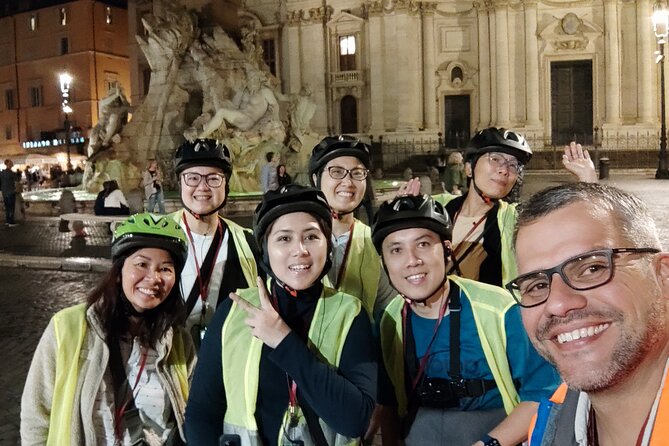
- Small group size (max 8) means you get more attention during training and at stops.
- Orientation + helmet first makes a first-time Segway ride feel much more manageable.
- Night routing helps you see the big landmarks when streets are quieter and photo-friendly.
- Short, focused stops keep you moving through Rome’s center without a bus pace.
- Piazza Navona can include a VR moment connected to the area’s ancient stadium story.
- Not all entrances are included, so outside viewing is the default plan.
Why a Night Segway Tour Works So Well in Rome
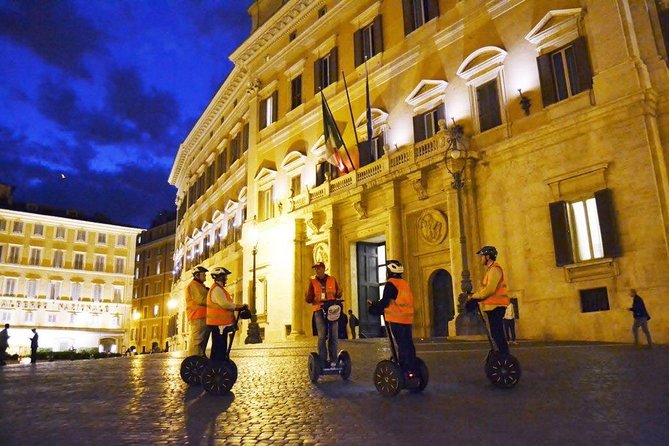
Rome is made for walking, but night is when you really notice how much time you can waste. You can spend an hour just getting between landmarks, dodging crowds and traffic, and still feel like you missed the best light. This Segway format is the practical fix.
In about 2 hours 30 minutes, you cover a string of iconic stops that would take way longer on foot. You’re outside long enough to feel the city—cool air, street life, and those famous facades glowing—but you still move fast enough to hit the highlights without turning your evening into a march.
The best part is the payoff at the stops. The Trevi Fountain glow at night is the kind of thing you can’t really fake with daylight pictures. And when you arrive after most groups have already rushed in, you often get a better shot at the scene without the constant crush.
You can also read our reviews of more tours and experiences in Rome.


Getting Comfortable at Via dei Delfini: Training, Helmet, and First Steps
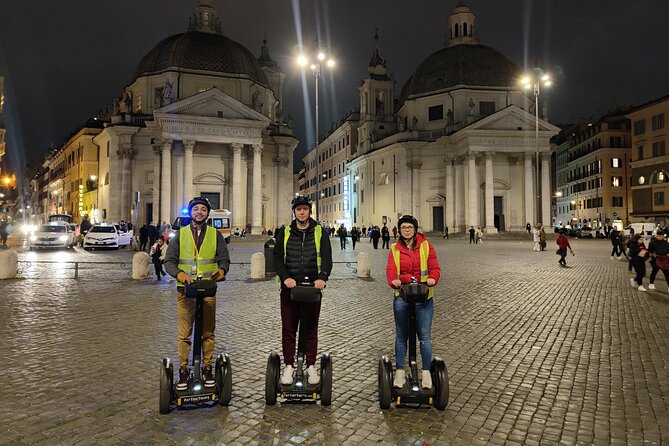
The tour begins at Via dei Delfini, 35, 00186 Roma RM. That’s your base before you head out through central Rome. The provider builds in a safety briefing and training session, plus helmet use—so you’re not expected to instantly “figure it out” in traffic.
A few practical notes from the tour details you should take seriously:
- Everyone must be at least 16 years old and weigh at least 40 kilos (90 pounds).
- You’ll need a valid ID document on the day of travel.
- Wear comfortable shoes. Rome sidewalks can be a mix of smooth stone and uneven patches.
- The group is capped at 8 travelers, which matters because it affects how quickly staff can check on riders.
If you’re new to a Segway, you’re not alone. The guides mentioned in the feedback—especially Alessandro and Matt—are repeatedly described as patient with first-timers. The tone is basically: learn, practice, then go. That’s the right order.
Also, expect some road-crossing moments. Reviews highlight guides who stay on top of safety around streets, which is reassuring. Still, if you’re the kind of person who gets panicky with anything that feels “fast,” do yourself a favor and start with an honest assessment of how comfortable you feel on a balanced platform.
Piazza Navona After Dark: Fountains, Temple of Hadrian, and a VR Moment
Stop 1: Piazza Navona is where the tour sets its rhythm. You get about 10 minutes here, with time for photos and an explanation of the square and major features. The tour focuses on the Fountain of the Four Rivers and the Church of Santa Agnese in Agone—plus the broader ancient story of the area.
Two things make this stop work well on a night Segway:
- Piazza Navona is naturally lively, so even at night it has energy.
- Being on a Segway lets you take in the layout quickly, so you understand where you are instead of just snapping pictures at random angles.
Piazza Navona is also tied to ancient Rome. The tour includes a look at the Temple of Hadrian in the context of what’s hidden under modern streets. That’s useful because Rome can feel like layers of buildings stacked without explanation. Here, you get a thread to follow.
One extra element you may get is a virtual reality (VR) moment tied to the area’s ancient stadium story. People mention an Oh Wow reaction when the VR piece shows the stadium the square connects to. If it’s offered on your departure, treat it like a short history shortcut—you’ll understand what you’re seeing outside immediately afterward.
Drawback here is simple: it’s only 10 minutes, so don’t plan on wandering off. Treat it like a guided “see it, learn it, photograph it” stop.
Trevi Fountain by Night: What You’ll Actually See and How to Photograph It
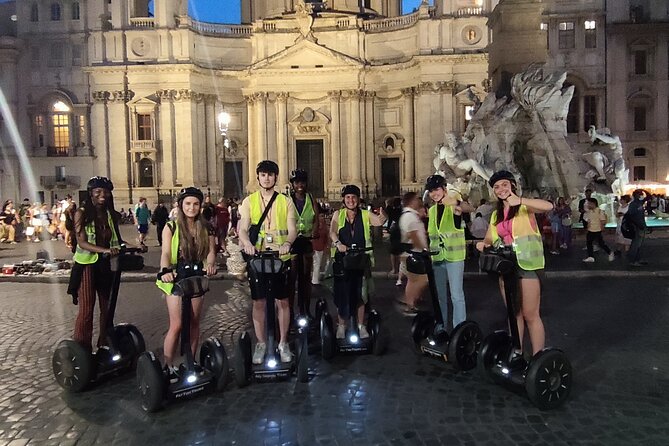
Stop 2: Trevi Fountain is a classic for a reason. The tour includes viewing and explanation plus photo time for about 10 minutes. Admission is listed as free, and the main idea is straightforward: you see it, you learn the basics, and you leave with pictures that actually match the postcard mood.
At night, Trevi changes character. The sound of foot traffic turns into a kind of background hiss. The fountain becomes the focal point, and the surrounding architecture frames it like a stage.
Photography tip that comes straight from the reality of the stop length: use the first few minutes to choose your angle, then shoot quickly in a tight window. If you wait until the end to think about angles, you’ll feel rushed. Trevi doesn’t wait politely for your camera decisions.
Also, keep your Segway handling in mind. You’ll have to park it, dismount, and re-mount or move around depending on the instruction from your guide. That’s normal, but it’s another reason to move with purpose during the photo window.
Pantheon From the Streets: A Quick Look Without the Ticket
Stop 3: Pantheon is where the tour walks the line between “iconic” and “time-efficient.” You get around 7 minutes outside, plus explanation and pictures. Importantly, admission is not included.
So here’s how to frame it: you’re getting a guided exterior orientation, not a full Pantheon visit. If your dream is to step inside, check your own plans in advance and budget for a separate ticket or a different tour with entrance included.
Why it still works in this Segway format:
- You see the building properly from the outside without losing the night to lines.
- Your guide’s explanation can help you place what you’re looking at in the larger Rome story.
- You move on while the nighttime atmosphere stays fresh.
If you’re a first-timer in Rome, this can be a smart strategy: learn enough to recognize it later when you pass it on your own.



Spanish Steps at Evening Rush Hour: Where to Pause for Views
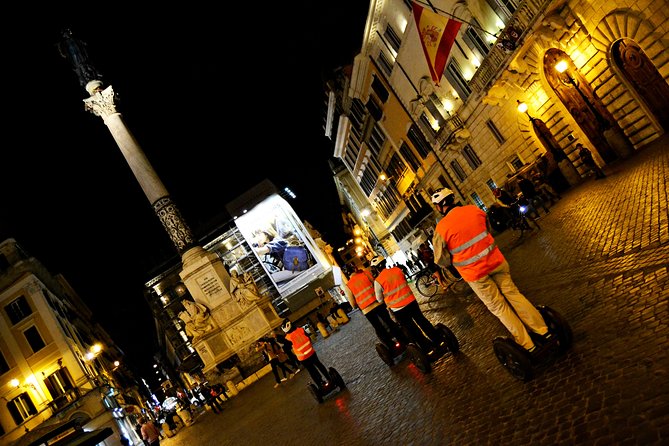
Stop 4: Spanish Steps gives you about 10 minutes. This part of the evening tends to be lively, and that’s not a bad thing. The Spanish Steps are where Rome feels like Rome—people arriving for dinner, locals out for a stroll, and visitors doing that one last photo before heading to gelato.
The tour includes viewing and explanation with picture time. Since you’re moving on by Segway, your guide can show you the best nearby angles quickly, which is the key advantage. If you’re walking, you might spend more time figuring out where to stand than actually seeing the steps and surroundings.
A small practical consideration: the area can still be busy, even at night. Stay close to your guide, keep your route tidy, and don’t block pedestrian flow with your phone camera marathon. You want your evening to feel fun, not like an obstacle course.
Chiesa di Sant’Ignazio di Loyola: The 3D Illusion Explained on the Spot
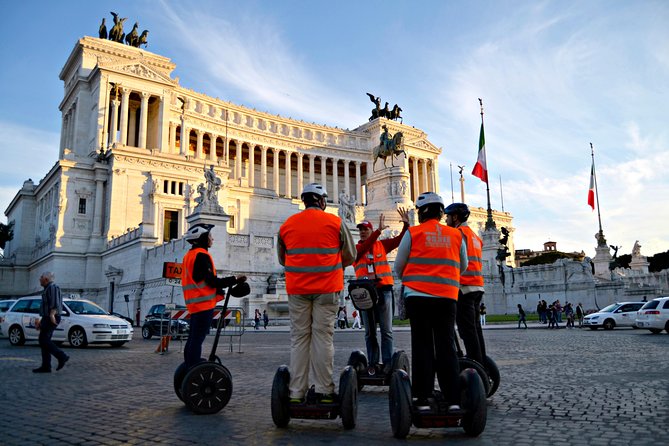
Stop 5: Chiesa di Sant’Ignazio di Loyola (Chiesa di Sant’Ignazio di Loyola) is a short stop—around 4 minutes—with viewing from outside and a special focus on the church’s 3D effect. Admission is not included.
Even in a short window, this stop adds something important: it’s a reminder that Rome isn’t just monuments you can photograph. It’s also design tricks, forced perspective, and architecture that plays with depth.
The value here is the “explained while you look” approach. If you learn how to see the effect at the right spot, the experience lands in your brain instead of sliding past like another facade. This is also one of the easiest places to miss if you’re doing a self-guided night walk and just hoping the street signs will save you.
Don’t expect a long church moment here. Expect a quick, guided wow—then back to the ride.
How Much You Actually See in 2.5 Hours (and Why It Feels Faster Than a Bus)
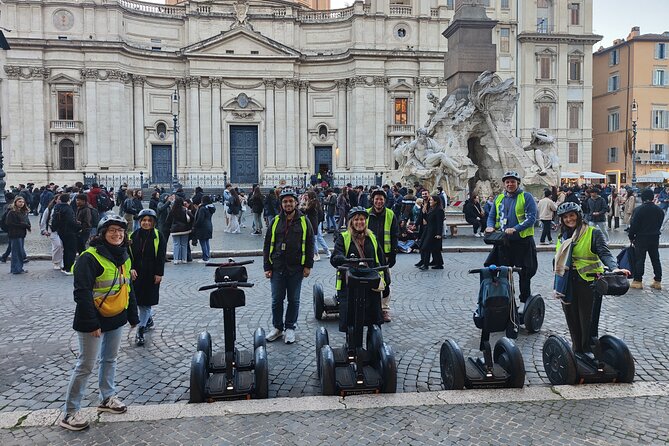
A common worry with tours like this is that you’ll barely touch each place. Here, that concern is partly true: you’re not doing deep museum visits. But the tradeoff is exactly why this kind of night tour can feel worth it.
You’re moving through multiple major zones in one evening without relying on taxis or fighting transit schedules. You also get the benefit of stepping into photo-friendly positions with the guide’s help.
Think of the itinerary as a “greatest hits” route:
- Piazza Navona gives you the baroque square vibe plus ancient context.
- Trevi Fountain delivers the night glow payoff.
- The Pantheon stop gives you recognition and orientation without ticket lines.
- Spanish Steps let you experience the lively evening mood.
- Sant’Ignazio ties in architectural storytelling.
You finish back at the starting point, so your evening stays clean and contained.
Price and Value: Is $90.74 Worth It for a Rome Night Ride?
The price is $90.74 per person, and the value depends on what you want from your first night in Rome.
Here’s what you get for that money:
- A local, licensed tour guide
- Orientation session plus Segway tour
- Helmet use
- Stops built around famous Rome landmarks, with explanation and photo time
- A small group size (max 8), which makes the training part feel less chaotic
What you don’t get:
- Hotel pickup/drop-off
- Monument or museum entrances (Pantheon is specifically not included)
- You’re mostly doing outside viewing, not full site entry
So is it worth it? If your goal is to hit the top sights efficiently while enjoying Rome at night, yes. You’re paying for time-saved movement, guided storytelling, and the Segway experience itself.
If your priority is stepping into every major site for a long visit, this might feel pricey because it’s not designed to be an entrance-heavy tour.
My practical take: this is a strong “first-night” purchase. It helps you understand where things are so your remaining days become easier and more self-guided.
Who This Tour Fits Best (and Who Should Rethink It)
This tour fits best if you:
- Are comfortable following safety instructions and riding a new device with a training session
- Want an efficient way to see central Rome without a bus feel
- Like night photography and prefer quieter streets over daylight crowds
- Value a small group experience and guided explanations
It may be less ideal if you:
- Strongly prefer indoor museum-style visits and long stays at each site
- Struggle with the physical demands of balancing on a Segway for the duration
- Don’t have good shoes or are worried about uneven Roman sidewalks
- Are traveling during a weather window that’s uncertain, since this experience requires good weather
Should You Book the Rome at Night Segway Small Group Tour?
If you want one evening that covers major landmarks, includes guided context, and gives you that unmistakable Rome-at-night vibe, I’d book this. The short stops actually help, because they keep you moving and prevent the common problem of spending your whole evening traveling between places.
Do it especially if:
- You’re in Rome for a short trip and want orientation fast
- You’re a first-timer who benefits from a guided route
- You want to see Trevi Fountain under night lighting instead of chasing it in daylight
Just go in with the right expectations: you’ll see a lot, but it’s mostly outside viewing, and you won’t be doing full entrances like Pantheon. Pack comfortable shoes, bring your ID, and show up ready to learn the Segway.
FAQ
Where does the Rome at Night Segway tour start and end?
It starts at Via dei Delfini, 35, 00186 Roma RM, Italy, and it ends back at the same meeting point.
How long is the tour?
The duration is approximately 2 hours 30 minutes.
What’s included in the tour price?
The tour includes an orientation session, the Segway tour, a local licensed tour guide, and helmet use. Entrance tickets to monuments are not included.
Is the Pantheon entrance included?
No. The Pantheon stop is an outside view, and admission is not included.
How old do you need to be to ride?
You must be at least 16 years old. There is also a weight requirement of at least 40 kilos (90 pounds).
What if the weather is bad?
This experience requires good weather. If it’s canceled due to poor weather, you’ll be offered a different date or a full refund.