REVIEW · ROME
Night Tour of Rome with Top E-bike & optional Italian Dinner
Book on GetYourGuide →Operated by TopTours · Bookable on GetYourGuide
Rome turns magical right after sunset. This night e-bike tour is built for that in-between hour when the big sights feel quieter, the streets feel more local, and your guide keeps everything moving at a safe pace. I like the Top E-bikes (anti-puncture tires, comfy seat, handlebar bag) and the expert night route that threads from the Colosseum area through back streets to places like the Pantheon and Trevi Fountain. One thing to consider: the included restaurant meal in the 4-hour option is fixed, so if you’re picky with menus, you might not love every course.
You’ll ride with a small group capped at 10, so you’re not constantly stopping to regroup. The guides also come across as patient and detail-focused, and names like Bita, Arina, Stefano, Francesca, and Csenge have shown up in real tour experiences—good signs that the storytelling and pacing tend to land well.
This is also an active tour (even with e-assist). You cover about 12 km / 7.5 mi, and while the difficulty is listed as leisure (or intermediate when riding with a child seat/extension), you’ll still want to show up with comfortable shoes and a realistic expectation for night cycling.
In This Review
- Key highlights worth planning around
- Why Rome at dusk feels different on an e-bike
- Top E-bikes, anti-puncture tires, and what comfort actually means
- Entering from Via Labicana 49: your first taste of the ride
- The Colosseum, Roman Forum, and Theatre of Marcellus stops that work
- What you should consider here
- Jewish Ghetto to Farnese Palace: Rome’s less-rushed side
- Pantheon at dusk and Sant’Ignazio: where the guide’s timing matters
- Drawback to keep in mind
- Piazza di Pietra, the Spanish Steps, and Trevi Fountain at night
- Piazza Venezia and the Imperial Fora: endgame with scale
- What I’d watch for near the end
- The 4-hour option: dinner in a trattoria (and what’s included)
- Safety, group size, and the reality of night cycling
- Child policy and who should consider the ride
- Price and value: is $85 a fair deal for Rome at night?
- Who should book this night e-bike tour
- Should you book it?
- FAQ
- How long is the Night Tour of Rome?
- Where do I meet the guide?
- What sights does the tour include?
- Is dinner included?
- How much do I ride?
- Is the tour suitable for families and children?
- Do I need a helmet?
- What language are the guides?
- How big is the group?
- What is the cancellation policy?
Key highlights worth planning around
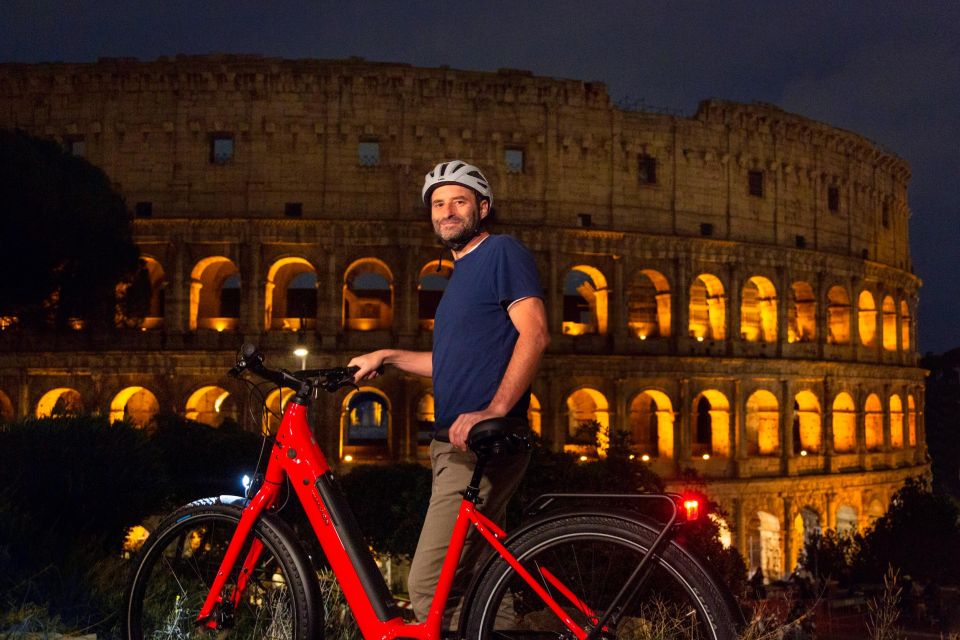
- Dusk timing on purpose: the route is designed for that Rome hour when landmarks glow but crowds can thin out.
- Cannondale e-bikes that are ready to go: anti-puncture tires, checked after every use, with a comfortable seat for a longer ride.
- Safety-conscious setup: helmet mandatory, plus the guide stays focused on keeping the group together.
- Back-street Rome, not only postcard stops: you get alleys and neighborhoods like the Jewish Ghetto area, not just the big squares.
- Two itineraries, one route core: the 2.5-hour and 4-hour versions share the same sightseeing path—one just adds dinner.
- Optional Italian trattoria meal: in the 4-hour tour, dinner arrives about 1h15 after departure and includes set items like pizza or pasta.
Why Rome at dusk feels different on an e-bike
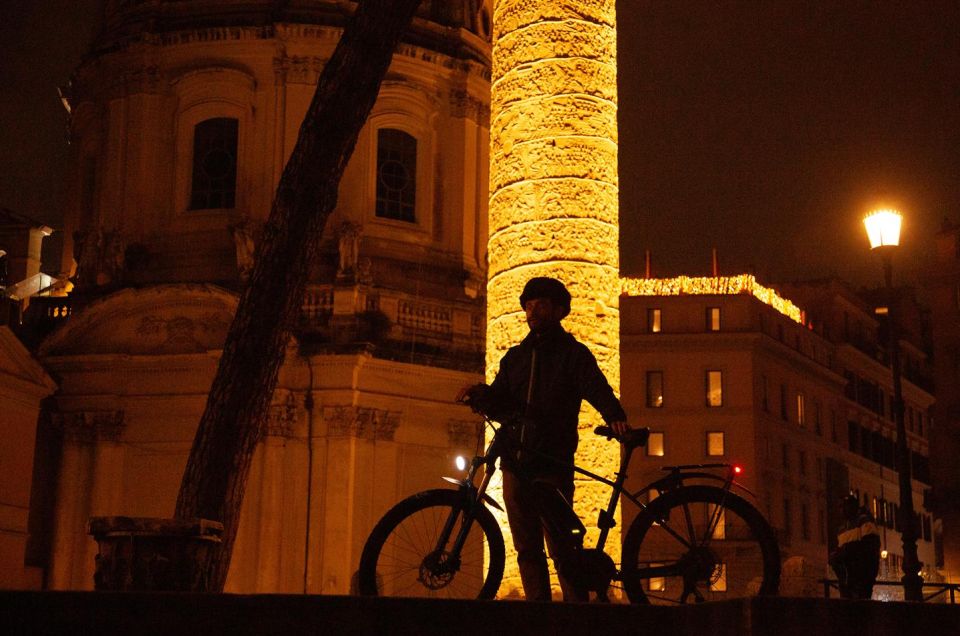
Night cycling changes your relationship with Rome. Instead of viewing monuments from a sidewalk, you glide through streets that feel used—like you’re moving with the city rather than waiting at the edge of it.
This tour is timed around the golden window before full dark and into the evening atmosphere. That matters for two reasons: you get better mood for photos, and the guide can point out details while you still have enough light to enjoy the route without sprinting between stops.
I also like how the tour mixes famous names with quieter corners. Colosseum and Pantheon anchor the evening, but you also ride toward spots many people skip when they only do walking tours.
You can also read our reviews of more tours and experiences in Rome.
Top E-bikes, anti-puncture tires, and what comfort actually means
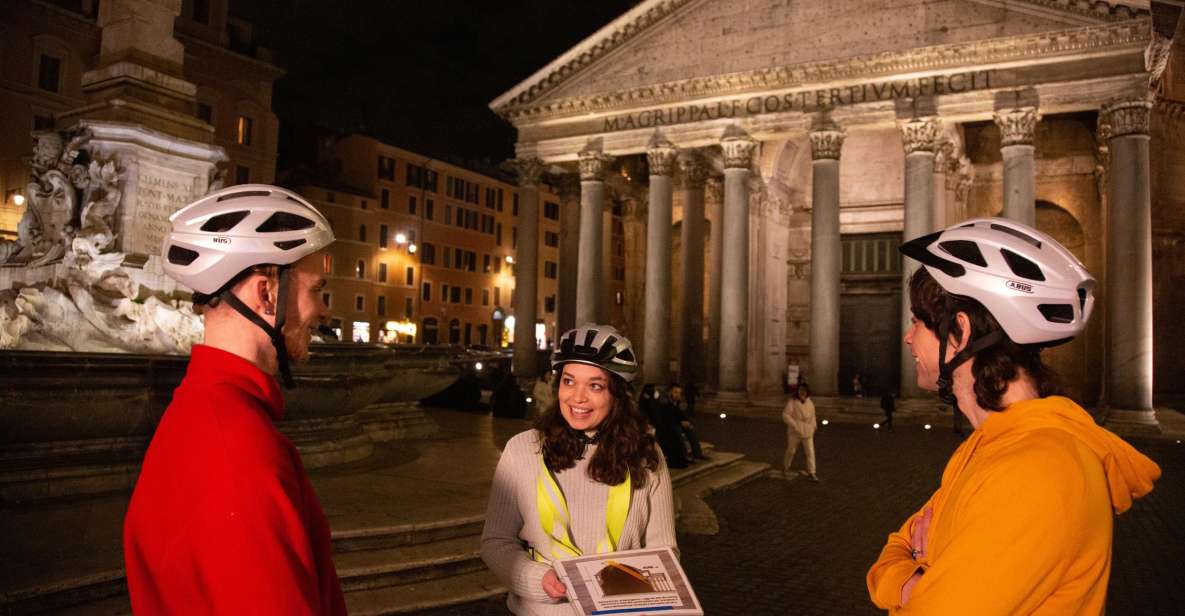
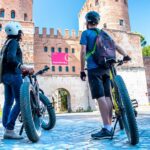
The bikes are described as Top Quality with Cannondale e-bikes, and the equipment is checked after every use. Anti-puncture tires plus a comfy seat sound like “small details” until you’re riding at night—then they mean fewer worries and fewer interruptions.
Helmet use is mandatory, and you’ll also get a handlebar bag and a bottle of water. That setup is practical for a night ride: you’re not juggling bags while trying to steer.
One more real-life factor: this tour is set up for small-group flow. With a cap of 10 participants, your guide can slow down if someone needs a moment, and you’re less likely to lose track of the group at tricky turns.
Entering from Via Labicana 49: your first taste of the ride
You start at the shop on Via Labicana 49, about a 5-minute walk from the Colosseum area. The meeting point location is useful because it puts you close to the first landmark, so you’re not spending your paid time crisscrossing the city before the tour even begins.
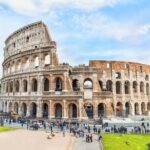
From there, you’ll move into the core sightseeing loop, beginning with a short stop at the Colosseum. Expect a quick look rather than a long linger, since the whole point is to keep momentum while Rome is turning evening.
This is where e-bikes shine: you cover distance efficiently, but you still get landmark moments that feel intentional.
The Colosseum, Roman Forum, and Theatre of Marcellus stops that work
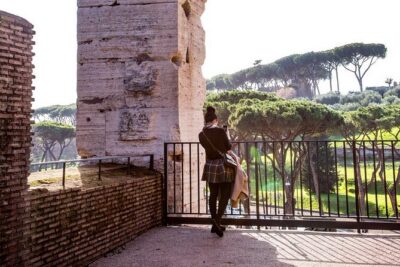
The tour’s first big landmark moment is the Colosseum area, with about 5 minutes of sightseeing. It’s not a half-day visit, so don’t plan on this replacing a museum or an in-depth historic walkthrough. Instead, think of it as a strong visual opener—your cue that you’re really in Rome at night.
Next comes the Roman Forum. This is the kind of site where the lighting can do half the work, and the ride keeps you from feeling stuck behind other tour groups for hours.
Then you head toward the Theatre of Marcellus. Even if you’ve seen photos before, it tends to feel different when you approach by cycling through the streets instead of arriving by bus and immediately stopping for photos.
What you should consider here
Because the pace is set for a ride-and-see format, your guide will be managing timing between stops. If you want every photo from every angle, bring a steady mindset: you’ll have short windows, not long museum-style stays.

Jewish Ghetto to Farnese Palace: Rome’s less-rushed side
After the core classics, the tour shifts into neighborhoods and palazzo energy. You’ll see the Jewish Ghetto area and then pass by the Farnese Palace area as part of the evening route.
What I like about this stretch is the change in texture. It’s not only monuments; you’re riding through the city’s fabric—streets that feel lived in, and corners where the vibe becomes more local than iconic.
These are the moments where cycling makes a difference. Walking tours can make you backtrack or zigzag, but on a bike you keep flowing and let the city’s layout unfold as you move.
Pantheon at dusk and Sant’Ignazio: where the guide’s timing matters
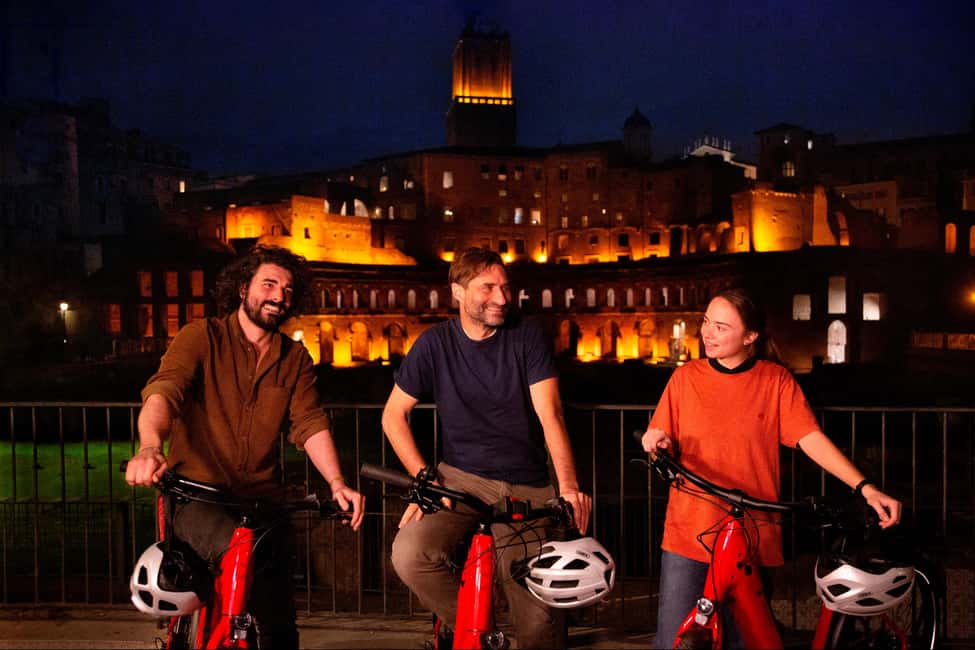
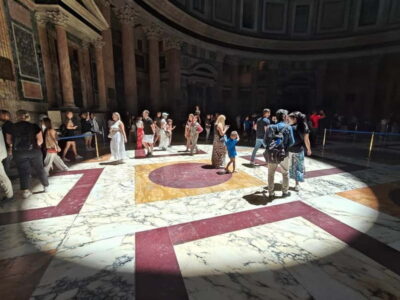
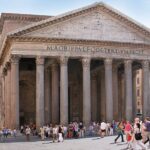
The Pantheon stop comes after Farnese Palace, and it’s one of the evening’s anchor points. The Pantheon’s setting works well at night because it frames the scene with light and shadow in a way that feels less like a daytime checklist.
Then you’ll move to the Church of Sant’Ignazio di Loyola. Churches can be easy to rush through, but on this tour you’re typically in motion, so stops feel more like guided pauses than separate attractions competing for your attention.
If you’re the type who likes understanding what you’re looking at, this is a good segment. The guide’s commentary is a major part of how the stops land, especially when multiple landmarks appear in the same broader area.
Drawback to keep in mind
Night routes can be harder if you’re prone to motion discomfort. The tour is still described as leisure/intermediate and the bikes provide e-assist, but it’s still a cycling evening—so pick this only if you’re comfortable riding in traffic-adjacent areas at night.
Piazza di Pietra, the Spanish Steps, and Trevi Fountain at night
You’ll pass Piazza di Pietra before reaching the Spanish Steps. The Spanish Steps are one of those places that look best when you see them from angles—not just from the bottom. With the ride format, you can appreciate how the streets connect to the steps without wasting time retracing paths.
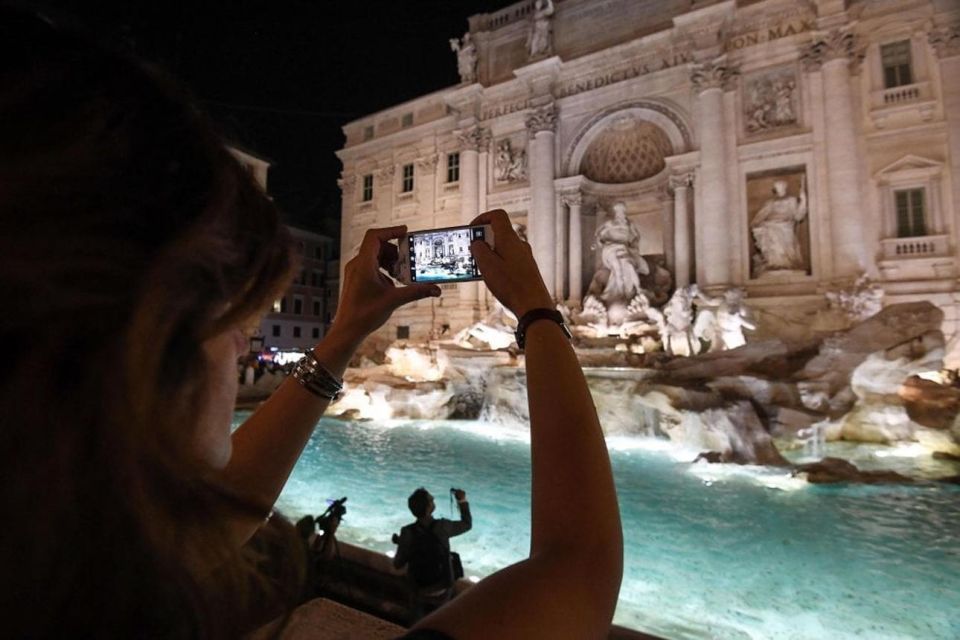
Then comes the grand finish-feature: Trevi Fountain. On a night tour, Trevi feels like theater—brighter, louder, and more magical than it does in daytime photos.
Here’s a practical tip: plan to treat Trevi as a photo + orientation stop, not a long-stay event. The tour is structured to fit many highlights in one evening, so you’ll want to decide fast what matters most to you—classic fountain shots, or watching the scene with less camera time.
A nice extra from real tour experiences: some people ask for small breaks like a spritz stop in the back alleys. That’s not listed as part of the standard program, but it’s a good reminder to bring your own pacing preferences. If you want longer food/drink breaks, the 4-hour dinner option is the better match.
Piazza Venezia and the Imperial Fora: endgame with scale
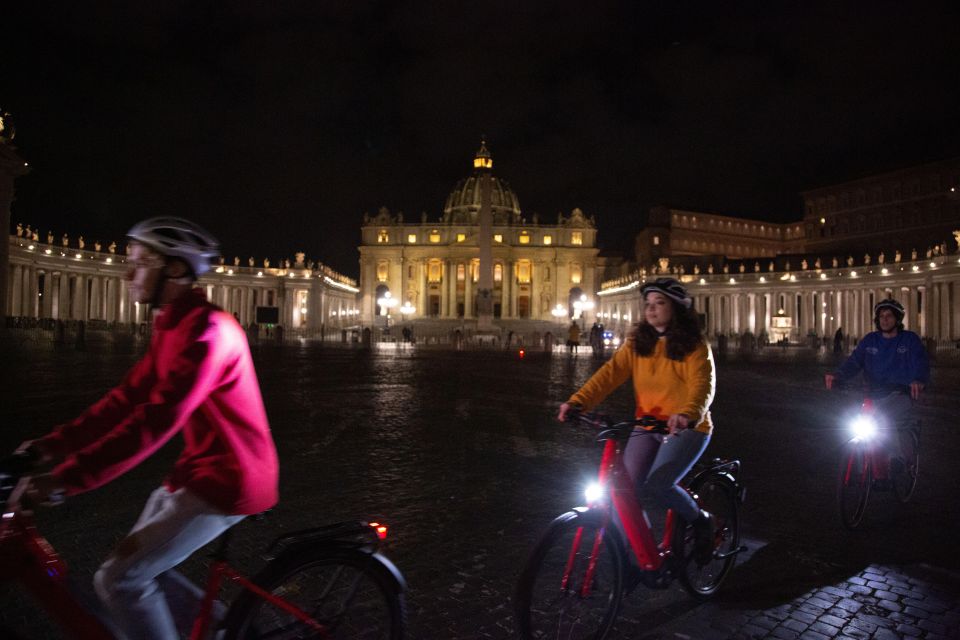
By the time you reach Piazza Venezia and then the Imperial Fora, you’re in Rome’s “big” spatial territory. The Imperial Fora can feel endless in a daytime walk, but at night—especially with a guide helping you connect what you’re seeing—the space starts to make more sense.
This is a strong closing sequence because it contrasts with earlier stops. You started near the Colosseum, moved through classic sites and neighborhoods, then finish with an area that emphasizes the scale of ancient Rome.
After the Imperial Fora, you ride back to Via Labicana 49 to end the tour where you started.
What I’d watch for near the end
Fatigue is the main factor at the end of any bike tour. Even with e-bikes, the last portion is still cycling time, so keep enough energy for the final stretch rather than burning it on early photo stops.
The 4-hour option: dinner in a trattoria (and what’s included)
If you pick the 4-hour version, the sightseeing route is the same, but you add dinner about 1h15 after the start. The dinner is described as a set menu including:
- a mix of appetizers
- pizza or a pasta dish
- soft drink or a glass of wine or beer
- water
- coffee
I like this structure because it lowers decision fatigue. You’re not trying to find a good spot while you’re tired and hungry, and you’re not giving up the evening walk for a long food detour.
The trade-off: it’s a fixed menu. One person noted the offered menu wasn’t exactly to their liking, though the overall experience still landed as great. So if you’re very food-specific—certain dietary restrictions or strict tastes—this is the part to think through carefully.
Safety, group size, and the reality of night cycling
This is a safety-conscious tour. Helmet use is mandatory, and the bikes are maintained and checked. The route is designed for an easier ride, and the difficulty is listed as leisure, or intermediate for adults carrying a child seat/extension.
Small group size matters. With a limit of 10 participants, you’re more likely to get help quickly if someone needs to adjust or if the group hits a slower moment.
Also, the bike’s equipment has a 300 lbs / 136 kg weight limitation. If you’re planning with a child, the e-bike setup is part of how the tour handles riders of different ages.
Child policy and who should consider the ride
This tour has clear guidance for kids:
- Infants aged 1 to 4 (up to 22 kg / 49 lb) ride free on a child seat
- Children aged 5 to 8 get a child extension (child streamliner)
- Children 9+ (at least 140 cm / 55″) can independently ride an appropriately sized e-bike
- Babies under 1 year are not suitable
So yes, this can work for families, and some tour experiences specifically mention it felt safe and suitable for a 10-year-old. Still, you’ll want to match the child’s comfort with night cycling and obey the helmet rule.
If you’re traveling with a child seat/extension, know the tour difficulty is listed as intermediate for that scenario. The assist helps, but the overall pace and handling can feel different with added setup.
Price and value: is $85 a fair deal for Rome at night?
At $85 per person, you’re paying for three things at once: a guide, an e-bike experience, and (if you choose it) dinner on the longer option. For Rome, where independent navigation can eat time, having a guide manage the route and pacing can feel like a shortcut to a better evening.
The best value here is for people who want multiple top landmarks plus local back streets in one block. If your plan is only Colosseum and Trevi, you might be overbuying. But if you want Colosseum, Roman Forum, Theatre of Marcellus, Jewish Ghetto area, Pantheon, Sant’Ignazio, Spanish Steps, Trevi, Piazza Venezia, and the Imperial Fora—this format keeps you from bouncing between locations all night.
Also, the ride is about 12 km. That’s a meaningful distance, but it’s manageable because the bikes are e-assisted and designed for comfort.
Who should book this night e-bike tour
This tour is a great match if you:
- want to see Rome’s highlights in evening light without spending the whole night walking
- like guided storytelling that helps landmarks make sense
- enjoy back streets and neighborhood atmosphere, not only major squares
- want a convenient optional meal in the 4-hour format
It’s less ideal if you:
- need long, unscheduled stops at each monument
- have very strict food preferences (since dinner is a set menu in the 4-hour tour)
- aren’t comfortable riding at night, even with helmet and e-assist
Should you book it?
Yes—if your goal is a smart, guided night ride through central Rome with a good balance of big sights and lesser-seen streets. I’d book the 4-hour option if you’d rather relax into dinner afterward and get a full evening plan without hunting for food.
If you’re unsure, the shorter 2.5-hour version can be the lower-risk choice. You still get the same core route, the same bike-and-guide experience, and you keep the rest of the night open for your own pace.
My bottom-line advice: come with comfortable shoes, bring a phone with enough battery for dusk photos, and let the guide handle the timing. This is the kind of Rome evening that feels best when you stop planning every minute.
FAQ
How long is the Night Tour of Rome?
The tour runs between 2.5 and 4 hours, depending on which option you choose.
Where do I meet the guide?
You meet at the shop on Via Labicana 49, about a 5-minute walk from the Colosseum.
What sights does the tour include?
You’ll see the Colosseum, Roman Forum, Theatre of Marcellus, Jewish Ghetto area, Farnese Palace, Pantheon, Church of Sant’Ignazio di Loyola, Piazza di Pietra, Spanish Steps, Trevi Fountain, Piazza Venezia, and Imperial Fora.
Is dinner included?
Dinner is included only with the 4-hour version. It takes place about 1 hour and 15 minutes after the tour starts and includes appetizers, pizza or pasta, a soft drink or glass of wine or beer, water, and coffee.
How much do I ride?
The route covers about 12 km / 7.5 mi.
Is the tour suitable for families and children?
Infants aged 1 to 4 can join free on a child seat, children aged 5 to 8 use a child extension, and children aged 9+ (at least 140 cm tall) can ride independently on an appropriately sized e-bike. Babies under 1 year are not suitable.
Do I need a helmet?
Yes. Wearing a helmet is mandatory.
What language are the guides?
The live guides are available in German, Italian, Spanish, French, Dutch, and English.
How big is the group?
The tour is a small group with a maximum of 10 participants.
What is the cancellation policy?
Free cancellation is available up to 24 hours in advance for a full refund.