REVIEW · SICILY
Palermo, a tour of unique monuments and colorful markets
Book on Viator →Operated by Palermo Tour · Bookable on Viator
Palermo can feel like a live history book. This 3-hour walk through the center mixes UNESCO sights, classic monuments, and real street life in a way that’s easy to follow.
I especially love how you get two different Palermo flavors back-to-back: the legend-rich monuments around Piazza Giuseppe Verdi and the Teatro Massimo area, then the everyday energy of the Capo market with a chance to stop for street food. One thing to keep in mind: a lot of the route is outdoors, and the tour notes good weather is important, so plan for rescheduling if rain shows up.
In This Review
- Key Highlights You’ll Actually Feel
- A Three-Hour Walk Through Palermo’s Center That Doesn’t Waste Time
- Meeting Near Piazza Giuseppe Verdi and Teatro Massimo (Start Strong)
- Piazza Olivella: Baroque Beauty Meets Archaeology Next Door
- Teatro dell’Opera dei Pupi: UNESCO Puppet Opera in Real History Space
- From Piazza Massimo to Porta Carini: The Florios Meet the City’s Walls
- Capo Street Market: Arab-Origin Streets and Street-Food Time
- Grotta dei Beati Paoli: A Secret-Society Legend Break
- Entering Cattedrale di Palermo: Norman-Arab Roots and Sicily’s Birth Story
- Via Vittorio Emanuele: Palermo’s Oldest Street as a Living Gallery
- Fontana della Vergogna and the Markets Nearby: Visual Punch Before the Finale
- Piazza dei Quattro Canti: The Symbol-Laden Heart of Palermo
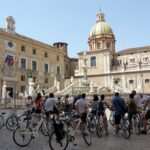
- Piazza Pretoria: Renaissance Fountain and Sweet History Nearby
- Price and Value: What $34.83 Buys You Here
- What the Schedule Means for You (And When It Might Feel Tight)
- Who This Palermo Tour Fits Best
- Should You Book This Palermo Monuments and Markets Tour?
- FAQ
- How long is the tour?
- Where does the tour start?
- Where does the tour end?
- What time does the tour start?
- Do I need to buy tickets for the sites?
- Is there a mobile ticket?
- Is there a maximum group size?
- What’s included in the tour price?
- Is the tour outdoors?
- What’s the cancellation policy?
- Is the tour suitable for everyone?
Key Highlights You’ll Actually Feel
- Teatro Massimo area stories: Florio-era charm plus a ghost legend tied to the theater’s mystique
- UNESCO puppet-opera stop: Teatro dell’Opera dei Pupi in its historic setting
- Capo market + Arab-origin setting: walk the lanes and take time for Palermo street food
- Ancient walls and a city gate: see the 1500s fortification remnants that lead toward the Capo quarter
- Norman-Arab Palermo Cathedral: built in 1185, tied to the kingdom of Sicily and royal tombs
- Piazza dei Quattro Canti + Piazza Pretoria: symbolic city-center squares finished with Renaissance fountain drama
A Three-Hour Walk Through Palermo’s Center That Doesn’t Waste Time
If you’re short on time, this tour is built for you. You start near Piazza Giuseppe Verdi at Teatro Massimo, then you work your way through the old spine of Palermo on foot until you finish at Piazza dei Quattro Canti. In about three hours, you cover enough landmarks to understand the city’s layers—Greek and Roman bones, Arab influence in the streets and architecture, Norman power in the cathedral, and later Renaissance and baroque flourishes.
The pacing is also practical. Most stops are short, which keeps the energy up, and each place gets the kind of explanation you can use while you keep walking. You’re not stuck listening in one spot for ages; you’re learning while the city keeps moving around you.
And the guide matters. This is led by a professional, authorized, and certified guide, and the tour includes assistance and info for further visits, transport, and gastronomy. That’s the difference between seeing photos and actually understanding where to go next.
You can also read our reviews of more tours and experiences in Sicily.


Meeting Near Piazza Giuseppe Verdi and Teatro Massimo (Start Strong)
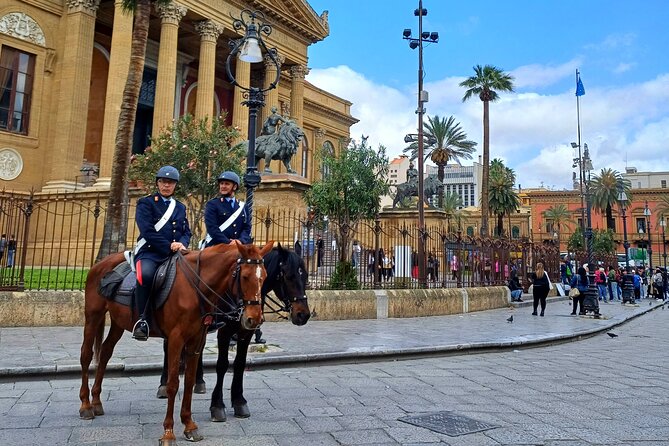
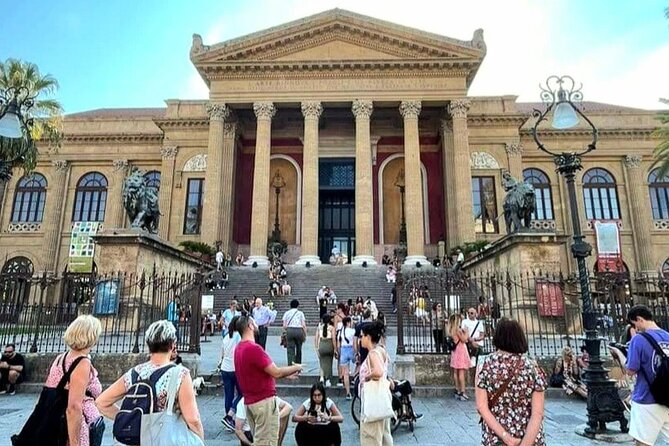
You begin at Piazza Giuseppe Verdi, right in the Teatro Massimo zone. This matters because it immediately places you in Palermo’s “grand” story. Teatro Massimo is described as the largest in Italy, and the tour frames it as a symbol of Palermo connected to the Florios—a name that keeps coming up when you’re trying to understand the city’s wealth and ambition.
Even before you move into the smaller lanes, you get a sense of tone: Palermo is not only about churches and markets. It also has big-city flair and dramatic legends. The tour includes the mysterious legend connected to the theater’s ghost, which is a fun way to set your imagination running before you reach the medieval bits.
If you like a clean first hour—easy orientation, strong storytelling, and no guesswork—starting here is smart.
Piazza Olivella: Baroque Beauty Meets Archaeology Next Door
Your first stop is Piazza Olivella. This is a scenic baroque square and it’s also directly tied to the church of Sant’Ignazio and the National Archaeological Museum nearby.
What I like about this kind of stop is how it gives you a foothold. Before Palermo gets crowded with market noise, you take a breath in an elegant square and learn the kind of visual cues you’ll see later: facades, angles, and the way religious buildings anchor public space. It’s one of those “small” moments that makes the later walking feel more connected instead of random.
No admissions are required here, which helps keep the tour smooth.
Teatro dell’Opera dei Pupi: UNESCO Puppet Opera in Real History Space
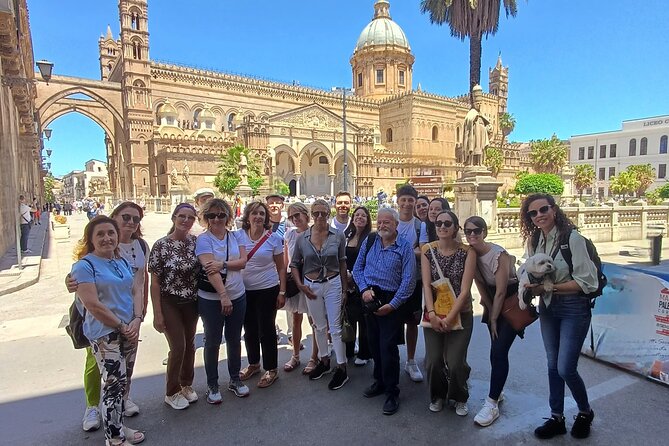
Next comes Teatro dell’Opera dei Pupi, the most famous puppet opera theatre. It’s noted as UNESCO heritage, and that label isn’t just for bragging rights. The point is that Palermo has a living tradition of storytelling with puppets, not only a museum display.
This stop lasts about 10 minutes, so you won’t get a long performance. But you’ll leave with a clear sense of what you’re looking at and why it’s culturally important. If you’ve ever thought puppet culture is childish or just for kids, this is the antidote. In Palermo, it’s tied to identity and local tradition.
Free entry for this stop means you can enjoy the atmosphere without adding extra time planning.
From Piazza Massimo to Porta Carini: The Florios Meet the City’s Walls
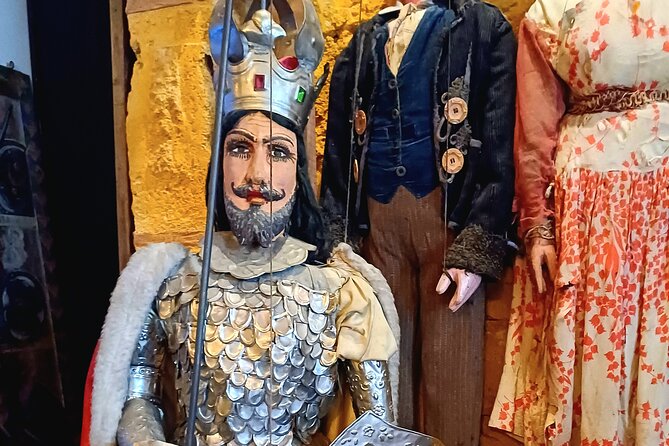
Then you look around Piazza Giuseppe Verdi again as the tour explains the belle époque era linked to the Florio family and the square where the big opera house stands.
After that, you shift gears toward the oldest-feeling part of town: the tour points out the mura, bastione e porta Carini—ancient walls and a city gate. You’ll see a glimpse of fortifications built in the 1500s, and the gate is tied to entering the Capo market area.
This is a really good “logic stop.” When you walk from monument-heavy zones into market lanes, it helps to know that those markets aren’t accidental. They’re part of a historical urban system shaped by defense, movement, and neighborhood layout.
Short stop, strong context.


Capo Street Market: Arab-Origin Streets and Street-Food Time
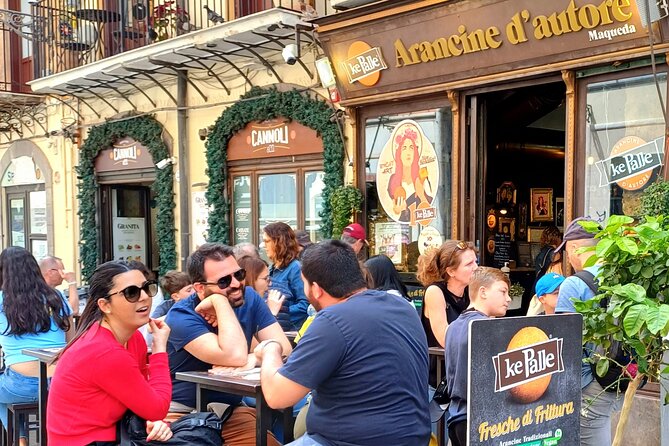
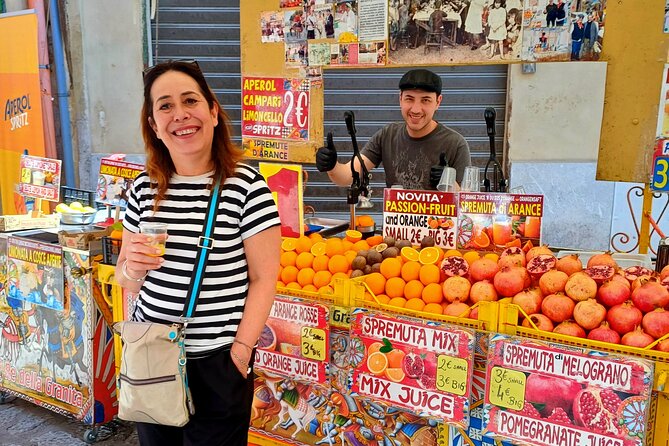
Now comes the part many people remember most: the Capo street market. The tour describes it as an ancient Arab market, and it gives you about 25 minutes here. You also get a free stop option for typical Palermitan street food.
This is where I think the tour offers real value. You’re not just told the market exists—you’re given a time window that actually works. Twenty-five minutes is enough to pick something you’ll enjoy without rushing, and enough to taste rather than just browse.
A practical tip: with street food, you don’t need a full meal. One good bite can carry the flavor memory of the whole day. If you plan to eat later too, keep it to one or two items and focus on what you can identify easily while you’re standing there.
The Capo market also sets up later landmarks. Market lanes help you understand why streets like Via Vittorio Emanuele matter later—this is a city where commerce and culture share space.
Grotta dei Beati Paoli: A Secret-Society Legend Break
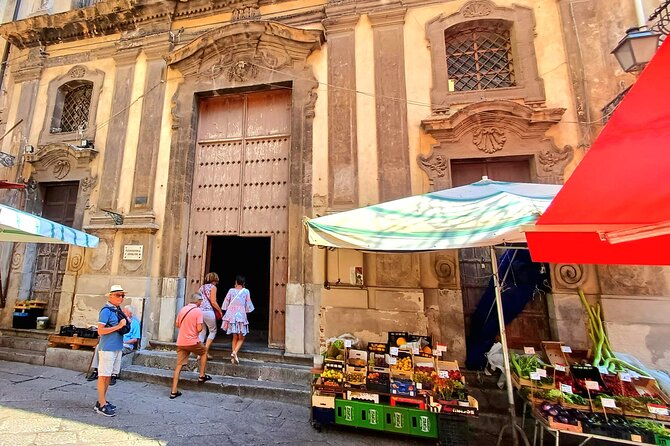
After Capo, the tour takes you to Grotta dei Beati Paoli. This is tied to the ancient secret sect of the Beati Paoli, described as people who avenged wrongs suffered by poor citizens in earlier centuries.
This stop is only about 10 minutes, but it adds a key ingredient: Palermo isn’t only architecture. It also has an undercurrent of stories—places where legends cling to corners and caves.
If you’re the type who likes a city more when you know the human drama, this is a great pause. The city feels less like stone and more like plot.
Entering Cattedrale di Palermo: Norman-Arab Roots and Sicily’s Birth Story
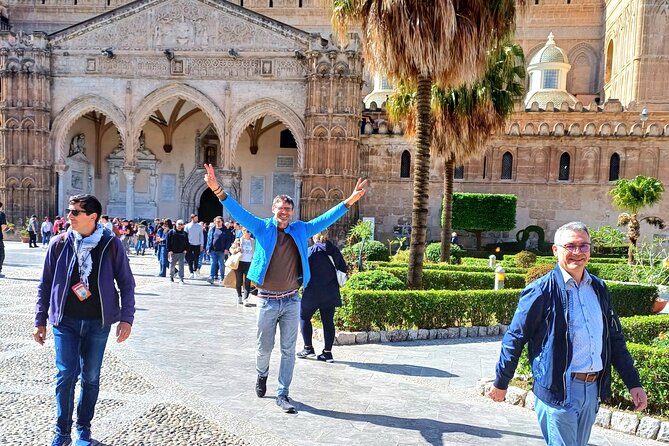
Then you reach the big one: Cattedrale di Palermo, the cathedral. It’s UNESCO heritage and the tour notes it was built in Norman-Arab style in 1185.
This stop is about 20 minutes, and it’s set up as a foundation point: the place where the kingdom of Sicily was born. You’ll also hear that it houses the tombs of the first kings of Sicily.
Now, about the entry: the tour includes free entry to the cathedral if there are no religious services. That detail matters because cathedrals can shift from tourist-friendly to active worship fast. The guide will handle this in the moment.
What you’ll gain here isn’t just big names. It’s pattern recognition. You’ll start noticing how Palermo’s “mixing” style shows up in one building—Norman power on top, Arab influence in the visual and cultural language, and a sense of continuity from medieval rule to later eras.
If you want one reason this tour is worth the money even beyond the market stop, it’s this: you’re not left to guess what to look for inside the cathedral. The tour gives you the meaning.
Via Vittorio Emanuele: Palermo’s Oldest Street as a Living Gallery
After the cathedral, you walk along Via Vittorio Emanuele, described as the oldest street in Palermo with monuments, art, and history.
This stretch is about 15 minutes, and the value here is the scan. You see how the city arranges itself around a main artery: the way buildings face the street, how landmarks appear in sequence, and how the street turns from religious gravity to civic space.
If you’re trying to orient yourself quickly, this is one of the best learning walks in Palermo. You’re building a mental map that you can reuse later if you want to explore on your own.
Fontana della Vergogna and the Markets Nearby: Visual Punch Before the Finale
As you move through the center area, the tour also highlights the Fontana della Vergogna. It’s described as incredible and located a few steps from the Ballarò and Vucciria markets.
Even if you don’t spend a long time here, it’s a great sight to know about. Renaissance and baroque squares are one kind of Palermo, but fountains in market proximity are another. They show how beauty and daily life overlap.
This also helps you plan what to do after the tour. If you finish and feel hungry again—or just curious—knowing that Ballarò and Vucciria sit nearby makes it easier to keep going.
Piazza dei Quattro Canti: The Symbol-Laden Heart of Palermo
The tour ends at Piazza dei Quattro Canti, about 15 minutes. This is described as the center of the ancient city, a scenic square full of symbols.
I like how this ending place works as a mental reset. After cathedral weight, old street scenes, and market atmosphere, you arrive at a square designed to function like a visual statement. Quattro Canti is not only pretty; it’s an orientation point. It helps you understand where Palermo’s “axes” feel like they meet.
If you’re planning to roam later, ending here is convenient. You get a landmark that’s easy to find again.
Piazza Pretoria: Renaissance Fountain and Sweet History Nearby
You also stop at Piazza Pretoria for about 15 minutes. This square is known for the extraordinary Renaissance fountain. The tour also ties the area to the convent of Santa Caterina, where many famous Sicilian desserts were born.
This is one of those stops where a quick explanation changes how you see the place. A fountain isn’t just a fountain—it becomes a clue to the city’s artistic ambitions. And the dessert connection makes the whole neighborhood feel like it has a palate, not only an architecture.
If you have any room left for snacks later, this is a good time to think about it. The tour’s focus on daily life keeps the energy consistent, even when you shift back to sights.
Price and Value: What $34.83 Buys You Here
At $34.83 per person, this feels like good value for a few reasons.
First, it’s a guided route through major landmarks in the center, including the cathedral where the tour includes free entry when there are no religious services. That can be the difference between a “walk and look” and a “walk and learn” day.
Second, it’s a short commitment—about 3 hours—so you’re not paying for a full-day drain if you only want the highlights. The route is efficient: you cover a cathedral, UNESCO-recognized culture, key squares, and a market segment within one session.
Third, the group size is capped at 20. That’s not huge, and it usually means you can ask questions and still keep moving.
Last, you get help beyond the tour: assistance and information for further visits, transport, and gastronomy. That kind of planning support is hard to put a price on, and it can save you time later.
What the Schedule Means for You (And When It Might Feel Tight)
The tour starts at 10:30 am at Piazza Giuseppe Verdi. That timing is helpful because you’re catching the center before the day gets too messy, especially for market browsing.
Most stops are free-entry and relatively short, so it’s easy to stay engaged. The only real “pressure” is that you have limited time at each location. If you want to linger for photos for long stretches, you’ll have to do it in the short moments built into the schedule or plan a longer self-guided follow-up after the tour ends.
Also note the weather condition: good weather is required, and if it’s canceled due to poor weather you’ll be offered another date or a full refund. Since this is largely outdoors, it’s worth packing for sun or rain as you decide.
Who This Palermo Tour Fits Best
This tour is a strong fit if you want:
- a guided orientation to central Palermo fast
- a mix of UNESCO sites, churches, and squares, plus the markets where locals actually snack
- clear context for what you’re seeing, especially the Norman-Arab cathedral story and the symbolism of Quattro Canti
It may not be your best choice if you want deep time inside one building or you prefer very slow travel with long independent wandering.
Should You Book This Palermo Monuments and Markets Tour?
I’d book it if your goal is to understand Palermo’s center in one focused morning and leave with a usable mental map. The cathedral stop with its kingdom-of-Sicily connection, the UNESCO puppet-opera theatre, and the Capo market food time are a good mix of meaning and real life.
Also, the tour rate is a strong signal: it’s been consistently rated 5/5 with top recommendation. When a tour combines professional certified guiding with an efficient route, you get less guesswork and more “I get it now.”
If you’re traveling during a season where rain is common, keep an eye on conditions and be ready to reschedule. Otherwise, this is the kind of Palermo day that makes the rest of your trip easier.
FAQ
How long is the tour?
The tour lasts about 3 hours.
Where does the tour start?
The start point is Piazza Giuseppe Verdi, Palermo, near the Teatro Massimo area, with the meeting location given at Piazza Giuseppe Verdi, 90138 Palermo PA.
Where does the tour end?
The tour ends at Piazza dei Quattro Canti at Piazza Vigliena, 90133 Palermo PA.
What time does the tour start?
The start time is 10:30 am.
Do I need to buy tickets for the sites?
The tour provides free entry for the stops listed as free, including the Cathedral when there are no religious services. You should still follow any on-site guidance if services are happening.
Is there a mobile ticket?
Yes, this experience uses a mobile ticket.
Is there a maximum group size?
Yes, the tour has a maximum of 20 travelers.
What’s included in the tour price?
It includes a professional, authorized, and certified guide, free entry to the Cathedral when applicable, and assistance and information for further visits, transport, and gastronomy.
Is the tour outdoors?
You’ll spend time walking through squares and street areas, so it depends on weather. The experience requires good weather.
What’s the cancellation policy?
You can cancel for a full refund up to 24 hours before the experience starts. If it’s canceled due to poor weather, you’ll be offered another date or a full refund.
Is the tour suitable for everyone?
The tour says most travelers can participate, and service animals are allowed. It’s also near public transportation.