REVIEW · SICILY
Palermo in 2 hours Main monuments and historic markets
Book on Viator →Operated by Palermo a Piedi - Walking Tour · Bookable on Viator
Palermo hits you fast. In just about two hours, this guided walk ties together the big-name sights—Teatro Massimo and the Palermo Cathedral—with the real pulse of the city: markets, street food, and stories that explain why Sicily looks the way it does.
I especially love the human touch. A guide like Maurizio (and sometimes Fabrizio) brings the place to life with clear history, sharp anecdotes, and practical local advice—right down to how to haggle without acting like a bull in a china shop. I also like the mix of included value: you get the Cathedral entrance and a short stop for free street-food tasting while you walk through the Capo area.
One thing to consider: it’s tightly paced with mostly short photo-and-orientation stops at several major buildings. Tickets for other interiors aren’t included, and food and drinks beyond the tasting are on you.
In This Review
- Key highlights before you go
- Why this 2-hour Palermo start makes sense
- Meet-up, walking pace, and how to not feel rushed
- Teatro Massimo: see the big opera house before the crowd story
- Teatro dell’Opera dei Pupi: puppets with UNESCO clout
- Piazza Pretoria and Palazzo delle Aquile: the Renaissance fountain moment
- Piazza Olivella: Sant’Ignazio and Santa Rosalia’s return from plague
- Crossing the Cape Market: where Palermo tells you what it eats
- Entering Palermo Cathedral: Arab-Norman style, UNESCO weight
- The ancient Cassaro: Palermo’s oldest street spine
- The stories you actually remember: Beati Paoli, Santa Rosalia, dessert myths
- Price and value: what $23.26 buys you in Palermo terms
- Who this walking tour suits best (and who should plan differently)
- Final verdict: should you book Palermo in 2 hours?
- FAQ
- How long is the Palermo in 2 hours walking tour?
- Where does the tour start and end?
- What’s included in the price?
- Are tickets for Teatro Massimo or Teatro dell’Opera dei Pupi included?
- Is the tour suitable for most travelers?
- Does the tour depend on weather?
Key highlights before you go
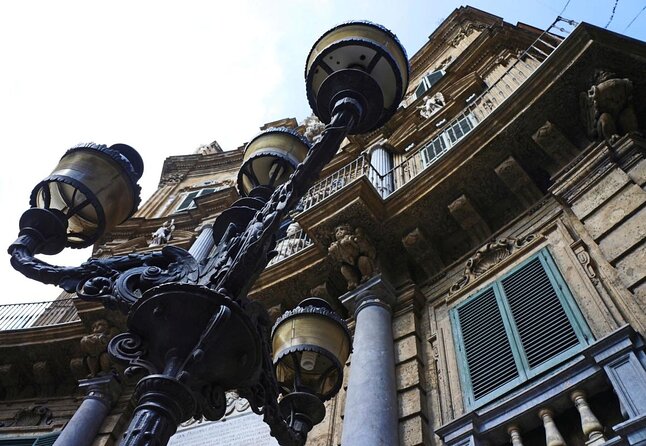
- A fast “first time in Palermo” route that connects monuments to neighborhoods without wasting hours on logistics.
- Cathedral entry included, so you actually get inside one of the city’s key Arab-Norman treasures.
- Market time plus a street-food tasting, not just a drive-by walk.
- Classic Palermo myths and legends woven into the walk, including Beati Paoli and Santa Rosalia.
- A guide with energy who keeps things conversational (and helps you with practical pointers for later).
- Small group size (up to 20) which makes it easier to ask questions and hear details.
Why this 2-hour Palermo start makes sense
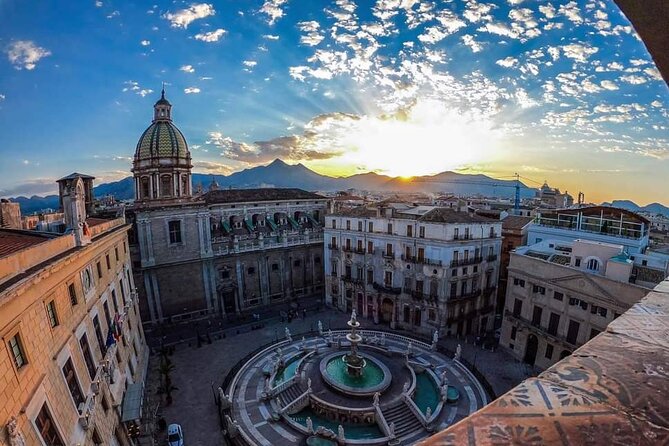
Palermo can feel like a lot on day one. The streets twist, the architecture seems to layer itself on top of centuries, and suddenly you’re staring at a church façade while thinking, wait—how did this get here?
This tour works because it’s built like a guided map. You see the major landmarks first, then you move into the market atmosphere, where the city’s identity becomes obvious in smells, sounds, and everyday habits. The best part is the balance: you’re not stuck in one mode the whole time. Monument viewing gives you the big picture; the markets give you the texture.
And it’s short enough to fit into a realistic vacation schedule. Start at 10:30 am, plan on around two hours, and you’ll finish in the right spot for continuing on your own.
You can also read our reviews of more tours and experiences in Sicily.


Meet-up, walking pace, and how to not feel rushed
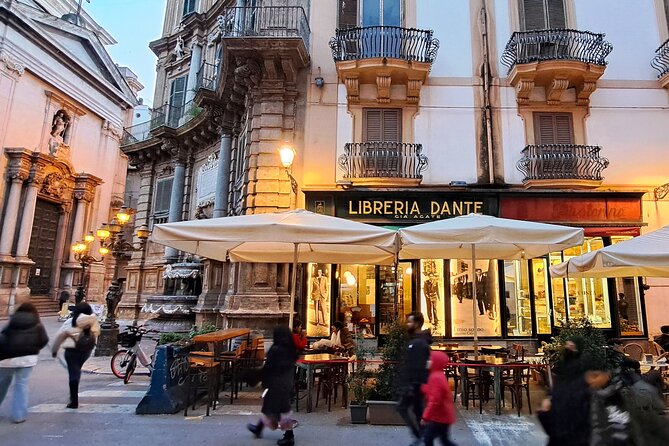
The meeting point is Via Cavour 131, and the walk ends at Palermo Cathedral near Via Vittorio Emanuele 490. Ending at the Cathedral is smart—you’re basically dropped at one of the city’s easiest “anchor” points for further exploration.
With a maximum of 20 people, the pace stays manageable. You’ll stop often, but you won’t feel like you’re in a long conga line. Still, keep your expectations realistic: some stops are brief (think orientation and quick context), not a full guided museum session.
I’d plan to wear comfy shoes and dress for the weather. This experience requires good weather, so if conditions are rough, the operator may change dates or refund, depending on what happens.
Teatro Massimo: see the big opera house before the crowd story
You’ll first land at Teatro Massimo, described as the largest opera house in Italy. Even if you never go inside, the building itself is a statement—huge, formal, and confident in a way that tells you Palermo wanted to be part of the cultural map of Europe.
What I like about starting here is how it sets the tone. Before you hit the markets, you understand that Palermo isn’t only street life and old-world streets. It has prestige and ambition, too. The guide’s job at this stop is to connect what you’re seeing to the broader story of the city and its rulers over time.
This is also a practical reminder: the Teatro Massimo ticket isn’t included, and the stop is short. So treat it like a landmark moment, not a full performance experience. If you want an interior tour or show, plan that separately.
Teatro dell’Opera dei Pupi: puppets with UNESCO clout
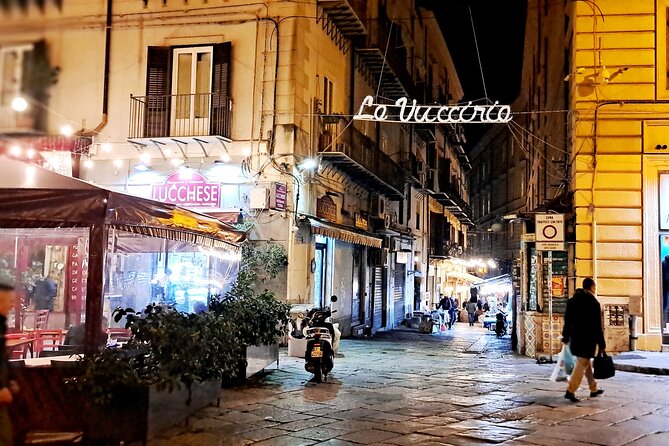
Next is Teatro dell’Opera dei Pupi, tied to the tradition of Palermo’s puppet opera. This is the kind of cultural detail that makes Palermo feel different from any other Italian city you’ve visited.
The tour keeps it focused—another short stop, with context and historical framing—rather than promising a full show. That’s a good match for a two-hour walk. You get the “why this matters” behind the opera dei pupi tradition, and you can decide later if you want to seek out more.
Because admission isn’t included here either, don’t plan on sitting down for a performance during the walk itself. Still, the payoff is that you leave knowing what to look for later, especially if you wander into the right places or spot puppet themes in shops.
Piazza Pretoria and Palazzo delle Aquile: the Renaissance fountain moment
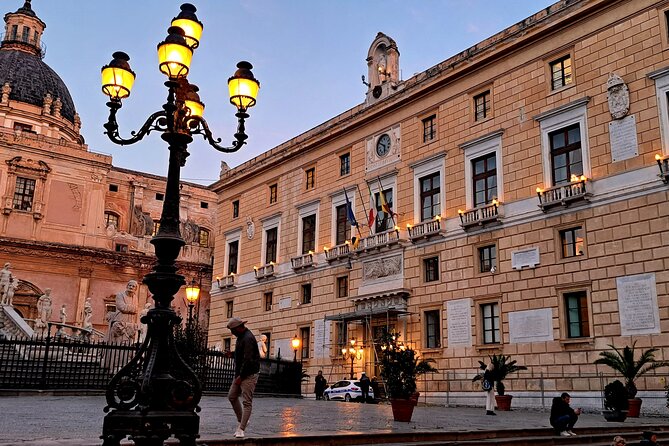
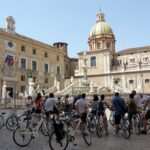
Then you’re at Piazza Pretoria, famous for a monumental Renaissance fountain in front of the Palazzo delle Aquile—the historic civic administration seat. It’s one of those squares where you can’t help but look up and then around, because the architecture and symbolism pull your attention from every angle.
This stop is valuable even if you’re not a formal architecture nerd. A square like this is a window into how power liked to be displayed—how civic identity got staged for public life. In a city shaped by layers of rule and influence, these kinds of spaces help you see the rhythm of history without needing a textbook.
Also note the practical side: Piazza Pretoria’s stop includes admission in the tour listing, but your overall time is still limited. You’re meant to get the highlights and the meaning fast, then move on.

Piazza Olivella: Sant’Ignazio and Santa Rosalia’s return from plague
Piazza Olivella is where the tour slows down a bit and adds emotional weight. You’ll be in the area of the Regional Archaeological Museum and near Sant’Ignazio, noted as one of Palermo’s most sumptuous Baroque temples. Not far off, you’ll also connect with the story of Santa Rosalia, proclaimed patroness of the city by popular acclaim for helping free Palermo from the plague.
This stop is a reminder that religion here isn’t only about buildings. It’s about community memory. The guide’s storytelling matters because it turns the church façade into a chapter of local identity: who people trusted, what they feared, and what they believed helped them survive.
In this area, Sant’Ignazio’s museum-like context is there, and the Regional Archaeological Museum sits nearby, but the key point for your planning is that this is a landmark-and-story segment. It’s also free at this stop for what’s listed, so you’re not paying extra just to be in the right place for the explanation.
Crossing the Cape Market: where Palermo tells you what it eats
Now you shift from monument time to street life. The tour includes a crossing of the Capo Market area, and that’s where Palermo starts making sense through everyday details.
Markets are sensory. You’ll notice how food talk replaces museum talk. The guide’s role here is not just pointing out sights—it’s teaching you how to read the place. You’ll pick up on what’s popular, how locals shop and snack, and why this area feels like the heart of social life.
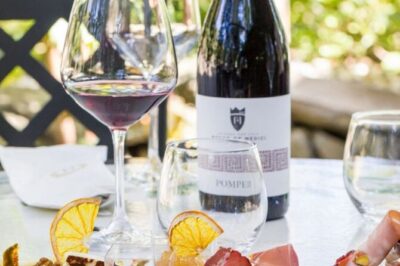
The tour also includes a short stop for free street-food tasting. I like that it’s not a full meal included, because that keeps the walk flexible. You taste something, you learn what to look for, then you can choose what you want to eat next on your own later.
Tip: after the tasting, you’ll be tempted to keep eating everything. That’s normal. Still, keep a little space for later meals, because Palermo desserts can sneak up on you.
Entering Palermo Cathedral: Arab-Norman style, UNESCO weight
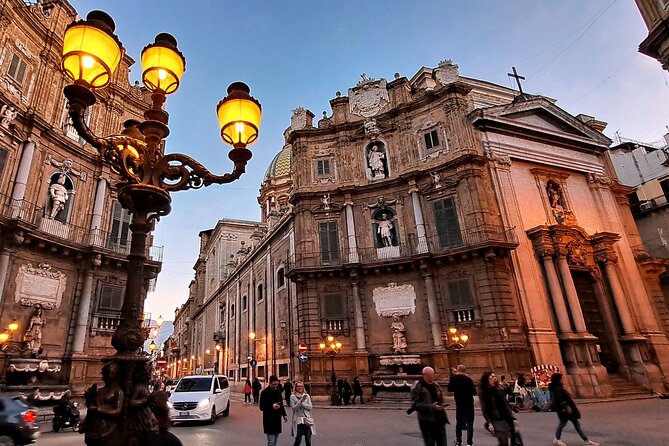
The big payoff comes with Cathedral entrance included. You’ll enter Palermo Cathedral, described as a UNESCO heritage site in Arab-Norman style.
If you care about “why cities look the way they do,” this is the moment. Arab-Norman architecture isn’t just a label; it’s the visible result of Sicily being at a crossroads for centuries. The building helps you see how influences can blend rather than simply replace each other.
The Cathedral stop is also a good end point for the whole walk. The tour finishes at the Cathedral, so you’re not left wandering to find the next landmark. You can stay longer, take your time, and turn what you learned into your own deeper exploration.
A small reality check: you’re in a major religious site, so expect crowds and a need to follow basic rules about behavior and dress. Since entrance is included, you’ll avoid one common “but where do I buy tickets?” headache.
The ancient Cassaro: Palermo’s oldest street spine
After the Cathedral zone, you’ll also be guided along the ancient Cassaro, described as Palermo’s oldest street, lined with palaces, churches, and convents. Even if you’re only here briefly, the Cassaro is the kind of street that makes the city feel connected.
This part matters because it gives your brain something to hold onto. When you later walk on your own, you’ll recognize the street’s logic: where the big religious buildings sit, how the palaces relate to street life, and why the city’s center feels like a long spine rather than a scatter of attractions.
It’s also a good reminder that Palermo isn’t arranged like some cities that politely group all the best sights into one compact block. Here, the historic structure stretches—and the tour helps you navigate that.
The stories you actually remember: Beati Paoli, Santa Rosalia, dessert myths
A guided tour lives or dies by storytelling. This one leans into Sicilian legends and popular memory.
You’ll hear about the mysterious Beati Paoli—the kind of rumored secret sect that turns a city into a mystery novel. You’ll also get Santa Rosalia’s story connected to plague and rescue, which changes how you interpret religious sites and public devotion. And the tour even touches on secret recipes of Sicilian desserts, which sets you up nicely for your next pastry stop afterward.
I love this approach because it makes the walk feel less like a checklist. You leave with a handful of themes—power, faith, survival, and food—and those themes help you understand what you see after the tour ends.
Price and value: what $23.26 buys you in Palermo terms
At $23.26 per person, this is priced like a serious “starter pack” for a first visit. You’re paying for a licensed professional guide, not just for a route through buildings.
What makes the price feel fair is the mix of inclusions:
- Cathedral entrance
- Capo Market crossing
- Short street-food tasting
- Core orientation stops at major landmarks
Meanwhile, it’s honest about what you’re not getting. Tickets for Teatro Massimo, Teatro dell’Opera dei Pupi, and any additional palaces, churches, museums are not included. Food and beverages beyond the tasting are also on you.
So the deal is best if you want context plus a taste of the city’s everyday life—not if you’re hoping for a fully-ticketed all-access museum marathon.
Who this walking tour suits best (and who should plan differently)
This tour is a strong fit if:
- It’s your first time in Palermo and you want a clear starting line.
- You like your history explained in real human terms, not read-from-a-brochure style.
- You want markets and monuments together, with enough structure to keep the day from turning into random walking.
It might be less ideal if:
- You want long, in-depth interior visits of multiple attractions during the same session.
- You’re traveling only for one major ticketed attraction and don’t care about markets or legends.
For most people, though, it’s a smart way to get your bearings fast—then you can choose what to return to later.
Final verdict: should you book Palermo in 2 hours?
I think you should book this if you want a guided orientation that actually connects Palermo’s monuments to its food culture. The included Cathedral entrance and the market-and-tasting piece do most of the heavy lifting for value at this price.
Book it especially if you’re arriving with zero structure. The guide energy—often credited to guides like Maurizio—helps you feel like Palermo is telling you the story, not just showing you the sights.
Skip it if your priority is deep ticketed interiors in a single morning. This walk is about the big picture, the main neighborhoods, and the myths that make the city click.
FAQ
How long is the Palermo in 2 hours walking tour?
It runs for about 2 hours.
Where does the tour start and end?
The tour starts at Via Cavour, 131, 90133 Palermo PA, Italy and ends at Palermo Cathedral, Via Vittorio Emanuele, 490, 90134 Palermo PA.
What’s included in the price?
Included are a licensed professional guide, crossing the Capo Market, a short free street-food tasting, and Cathedral entrance.
Are tickets for Teatro Massimo or Teatro dell’Opera dei Pupi included?
No. Admission tickets for those stops are not included.
Is the tour suitable for most travelers?
Yes. The experience states that most travelers can participate, and it allows service animals.
Does the tour depend on weather?
Yes. It requires good weather. If it’s canceled due to poor weather, you’ll be offered a different date or a full refund.