REVIEW · ROME
Pantheon, The Best-Preserved Roman Monument Guided Tour
Book on Viator →Operated by Roma Visite Guidate · Bookable on Viator
The Pantheon never feels like an old building. In about 1 hour 10 minutes, this guided tour gets you from Piazza della Rotonda into one of Rome’s best-preserved monuments, with a guide focused on what you’re actually looking at.
I love how the tour pairs quick orientation outside with real explanation inside. You get the story arc too: it starts as a pagan temple and later becomes the church of Saint Maria ad Martyres, with key artistic and political connections you can spot once you’re in.
One consideration: the experience depends on your guide arriving on time and keeping the group together in crowded conditions. I’d also be ready for the Pantheon area to feel hectic, so arriving a bit early helps you start stress-free.
In This Review
- Key things to know before you go
- Piazza della Rotonda start: an obelisk and a fast game plan
- Entering the Pantheon: dome, oculus, and the big architectural story
- Raphael and Italian royalty: why the floor feels heavier
- Timing and group flow: 70 minutes that can feel just right
- The money question: what $42.12 buys you (and what it doesn’t)
- Guide quality: when names like Jessica, Leo, and Nina pop up
- How to make the most of the hour inside
- Is this the right Pantheon tour for you?
- Should you book this Pantheon guided tour?
- FAQ
- How long is the Pantheon guided tour?
- Is admission included in the price?
- Is the tour offered in English?
- Where do I meet the guide?
- Is there a limit on group size?
- Do I get a mobile ticket?
- Can I cancel for a full refund?
Key things to know before you go
- Piazza della Rotonda orientation first: a focused 20 minutes right outside, including the obelisk brought to Rome
- Inside access with a guide: about 50 minutes in the Pantheon with commentary while you see the dome and oculus
- Pagan temple to church: you’ll follow the big identity shift to Saint Maria ad Martyres
- Raphael and royal tombs: the Pantheon isn’t only architecture; it’s also where history was buried
- Small group size (max 25): enough structure to stay together without feeling boxed in
- Short and purposeful: it’s designed to cover the essentials without turning into a half-day commitment
Piazza della Rotonda start: an obelisk and a fast game plan
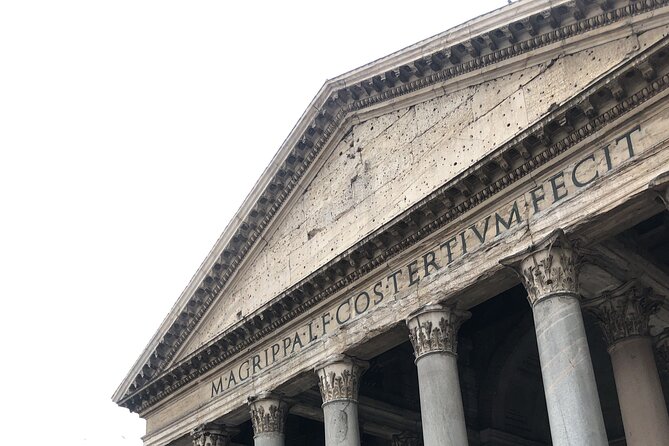
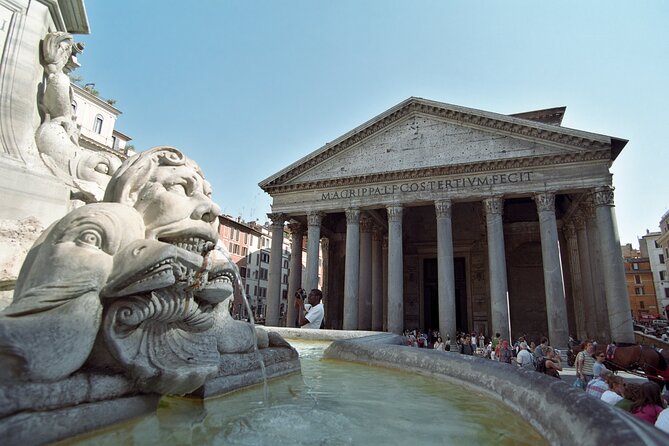
Your tour begins at Piazza della Rotonda, 4 (00186 Roma RM), in front of the Pantheon. You’ll start with about 20 minutes outside, which matters more than it sounds. Rome can be disorienting—streets, crowds, and the constant swirl of people. This first stop gives you a reference point before you step into the monument itself.
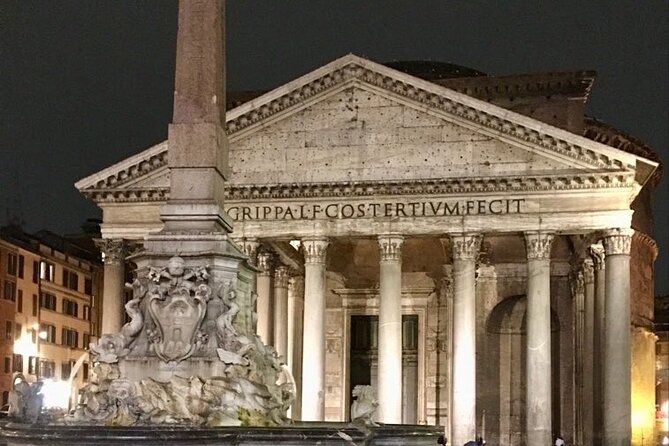
One detail your guide focuses on is the obelisk standing in the square, one of the monuments the Romans brought to the city. It’s not just trivia. When you understand why certain objects ended up in this exact spot, the whole area starts to make more sense. Plus, getting this mini-orientation early means you’re not scrambling for context once you’re inside.
Practical tip: arrive with buffer time. The Pantheon front area is crowded and the meeting scene can be chaotic. I’d rather you spend 10 minutes calmly finding your guide than rush at the last second, especially if your tour is the morning or afternoon slot you picked to fit around other plans.
You can also read our reviews of more tours and experiences in Rome.


Entering the Pantheon: dome, oculus, and the big architectural story

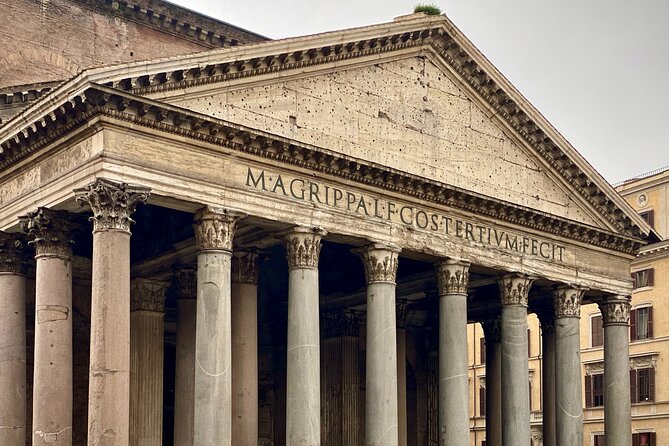
Once your group gathers, the tour moves into the Pantheon for about 50 minutes, and this is the part most people came for. The Pantheon’s interior is famous for a reason, but a guide changes how you experience it. Instead of just staring upward, you learn what you’re seeing and why it was revolutionary for its time.
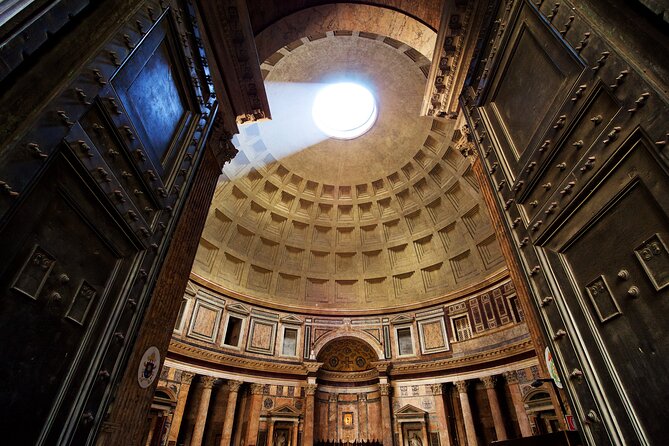
The centerpiece is the dome and its oculus, the open circle at the top. Your guide walks you through the mysteries of the structure—especially how that opening shapes the feel of the space. It’s the kind of detail you can miss if you rush or if you’re focused only on photos.
Then comes the historical pivot, one of the tour’s strongest moments: the Pantheon was born as a pagan temple and later became a Christian church. During the conversion, it was officially tied to Saint Maria ad Martyres (noted as 608 AD in the tour description). That “identity change” isn’t a footnote. It’s one of the reasons the Pantheon stayed such a powerful presence across centuries. You’re basically watching history reuse a masterpiece.
I also like how this tour keeps the explanation tied to the building. You’re not just hearing dates; you’re linking them to where you’re standing—how the Pantheon functioned, what changed with Christianity, and why the space continued to matter.
Raphael and Italian royalty: why the floor feels heavier
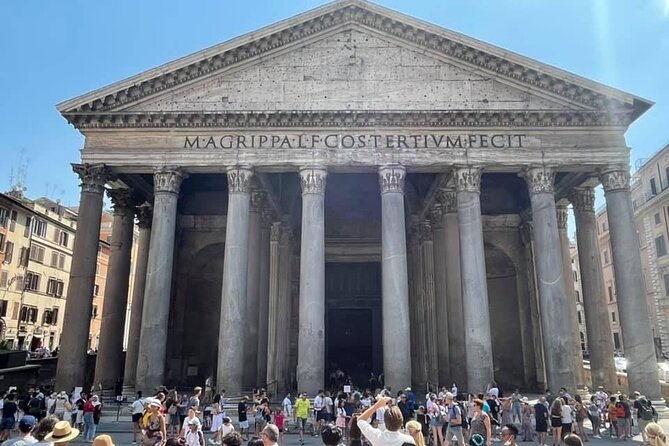
Inside the Pantheon, you’ll also notice that it’s not only about engineering. It has major cultural significance because it contains the burials of Raphael and Italian kings. That can surprise first-timers.
Knowing those names makes the room feel different. You stop thinking of the Pantheon as a single era’s monument and start treating it like a long-running public stage—art, politics, and religion all layered into the same structure. A good guide helps you connect that without turning it into a lecture. The effect is immediate: the space feels lived-in, even if it’s stone and centuries old.
If you enjoy Renaissance history or you’re the type who likes to understand why certain buildings have the reputation they do, this is a big win. The Pantheon’s reputation isn’t only because it looks impressive. It’s also because it became a place where prominent figures were honored.
Timing and group flow: 70 minutes that can feel just right
The full tour runs about 1 hour 10 minutes. That isn’t long, and that’s part of the value. The Pantheon is one of those Rome sites where the lines and crowd density can make a slow, wandering visit frustrating. This format trades a little freedom for better structure.
You’ll spend roughly:
- 20 minutes outside in Piazza della Rotonda
- 50 minutes inside in the Pantheon
For many people, that’s a sweet spot. You get the key architecture (dome and oculus), the identity story (pagan temple to church), and the notable burials, without losing half your day to crowds.
That said, crowd reality is real. Some guides do a great job keeping the group together and moving at the right pace, even when the Pantheon area is full. On tougher days, you may feel your time inside tighten—especially if your guide arrives late. I’d build your schedule with that in mind, and keep your next stop close so you’re not sprinting across Rome afterward.
Small group size helps. With a maximum of 25 travelers, it’s easier to keep track of your group and for the guide to manage questions. You’ll feel the difference compared with giant tours that become a walking wall of people.
The money question: what $42.12 buys you (and what it doesn’t)
The price is $42.12 per person, and the tour includes the admission ticket plus a live guide. Tips are not included.
For Rome, that’s a fair chunk of change, but it’s not outrageous for a top site where guided context can genuinely upgrade the visit. You’re paying for:
- someone to point out details you’d likely miss
- a structured, time-friendly plan
- help navigating a crowded, high-demand site
Also, the tour is frequently booked in advance (average: 40 days). That popularity is a good sign for demand, not a guarantee of everything being smooth on your specific day. Still, booking earlier is smart because it gives you more morning/afternoon options.
One value tip: if you’re deciding between doing this as a guided visit or doing it self-guided, consider your goal. If you want to understand what you’re looking at and you don’t want to spend time hunting for context, this kind of tour tends to pay off fast. If your goal is pure wandering with zero schedule, you might prefer a self-guided approach—just accept that you’ll be doing more work yourself.





Guide quality: when names like Jessica, Leo, and Nina pop up
A major theme in the experience is that the guides can make or break it. On the positive side, people describe guides who are friendly, funny in a way that doesn’t derail the history, and attentive to questions.
I’ve seen guides like Silvia, Jessica, Leo, Christina, Nina, and Leonardo praised for being clear and enthusiastic—especially for making the Pantheon feel more than a photo stop. In at least one reported case, Nina used large-print handouts and an audio setup to keep the guide easy to hear, which is a practical advantage in a noisy, crowded interior.
Still, there’s one mismatch worth mentioning for your expectations. The tour is listed as having a live guide, and most accounts match that experience, but a guest reported that the guided portion felt like a recording after entry. If you’re someone who strongly prefers a human guide the whole time, it’s worth clarifying with the operator before you go how the guide will be present once you enter.
And yes—rarely, guides can be late or replaced due to unexpected issues. If that kind of uncertainty would stress you out, keep your day flexible or be ready to rely on your own time inside if needed. The Pantheon will still be there doing its thing.
How to make the most of the hour inside
Even with a guide, the Pantheon can be intense. Here’s how you’ll get more out of your time.
1) Treat the oculus like the main character
Keep glancing up. The dome and opening are what give the space its signature feel. The guide will connect the architecture to the experience, so don’t multitask too much with phones right at the key moments.
2) Ask one good question instead of ten quick ones
In a group tour, you’ll learn faster if you ask something specific: how the conversion to Christianity changed how people used the site, or what architectural choices make the dome work. A strong guide can answer quickly without losing the group.
3) Move with your group, not against it
Crowd flow inside can shift. When your guide calls the next viewpoint, follow. That way you don’t get separated and you keep the tour on track.
4) Have a backup mental itinerary
Because the tour is time-limited, you’ll still want time to look around even after the structured part ends. The Pantheon is one of those places where your second look can be the best one.
Is this the right Pantheon tour for you?
This tour fits especially well if:
- you want a high-impact, short visit rather than a long day
- you like architectural explanations and the pagan-to-Christian story
- you want the Pantheon to feel connected to Renaissance art (Raphael) and Italian royal history
- you appreciate a small-group format that keeps you from getting lost
It may be less ideal if:
- you dislike any risk of guide delays in crowded places
- you want a completely self-directed visit with no schedule pressure
- you’re very sensitive to whether commentary is delivered live versus via audio/recording
If you’re traveling with a mix of ages or interests, the tour’s structure helps. The Pantheon works for history lovers and also for people who mainly want the wow factor—dome, oculus, and the feeling of walking inside a legend.
Should you book this Pantheon guided tour?
I think it’s a good buy for most first-timers to Rome—especially if you want your hour to count. The best part is the combination: orientation outside, then a guided, purposeful walk inside where the dome and oculus come alive through explanation. Add the burials of Raphael and Italian kings, and you’re not just seeing a famous building—you’re seeing why it mattered.
Before you book, make your choice based on your tolerance for crowds and timing. If you can arrive a bit early, stay with the group, and accept that the Pantheon area can be busy, you’ll likely feel like the guide paid off quickly. If you’re the type who prefers total freedom or worries about anything not being live the whole time, you should confirm that expectation with the operator.
Overall: this is one of those Rome tours that earns its spot because it’s short, focused, and built around a site you really do need to see with the right context.
FAQ
How long is the Pantheon guided tour?
It runs for about 1 hour 10 minutes.
Is admission included in the price?
Yes. The tour includes an admission ticket.
Is the tour offered in English?
Yes, it’s offered in English.
Where do I meet the guide?
Meet at Piazza della Rotonda, 4, 00186 Roma RM, Italy. The tour ends back at the meeting point.
Is there a limit on group size?
Yes. The tour has a maximum of 25 travelers.
Do I get a mobile ticket?
Yes. It’s a mobile ticket.
Can I cancel for a full refund?
You can cancel up to 24 hours in advance for a full refund. If you cancel less than 24 hours before the start time, the amount paid is not refunded.