REVIEW · ROME
Pastamania in Rome
Book on Viator →Operated by Dalle Nostre Mani · Bookable on Viator
Fresh pasta beats another Rome dinner. This 3-hour class in a historic palazzo, a few minutes from the Pantheon and Piazza Venezia, turns you into the pasta maker with small group attention and hands-on rolling, kneading, and shaping.
What I like most is that it’s not just theory: you make three pastas (ravioli, tortelli, and fettuccine) and then sit down as a group to eat what you made. The other big win for me is the family-style flow, with instructors who keep things relaxed, fun, and doable even if you’ve never worked with fresh dough. One thing to consider: the experience is not accessible for people with limited mobility (example given: crutches).
In This Review
- Key highlights worth planning for
- Pastamania in Rome: a pasta school that feels like dinner with a purpose
- Where you start: Palazzo Grazioli near the Pantheon and Piazza Venezia
- The 3-hour flow: from dough basics to ravioli, tortelli, and fettuccine
- 1) Welcome and pasta-making basics
- 2) Hands-on ravioli
- 3) Tortelli with a classic, comfort-style finish
- 4) Fettuccine and the sauce you can taste as you learn
- 5) Communal eating: the moment everything clicks
- What you actually learn (and can use again at home)
- The menu details: what you might eat during your 3 hours
- Instructors and group size: why this class doesn’t feel stiff
- Drinks, dessert, and the “don’t eat before you come” tip
- Price and value: is $49.58 actually a good deal?
- Who should book Pastamania, and who might want a different plan
- Should you book Pastamania in Rome?
- FAQ
- How long is the Pastamania pasta-making experience?
- Where do you meet for Pastamania in Rome?
- Is the class offered in English?
- How many people are in the group?
- Is this experience accessible for people with limited mobility?
- What do I eat during the class?
Key highlights worth planning for
- Small group up to 10 so you get personal attention while you work dough.
- Three pasta types: ravioli, tortelli, and fettuccine, not just one shortcut.
- You shape the final forms by hand, then watch (and taste) how sauces finish them.
- A communal meal at a shared table, with dessert included.
- Instructors with great energy (names like Christian, Fabrizio, Giorgio, Luca, Sofia, Ricardo, Martina, and Arianna show up in the experience).
Pastamania in Rome: a pasta school that feels like dinner with a purpose
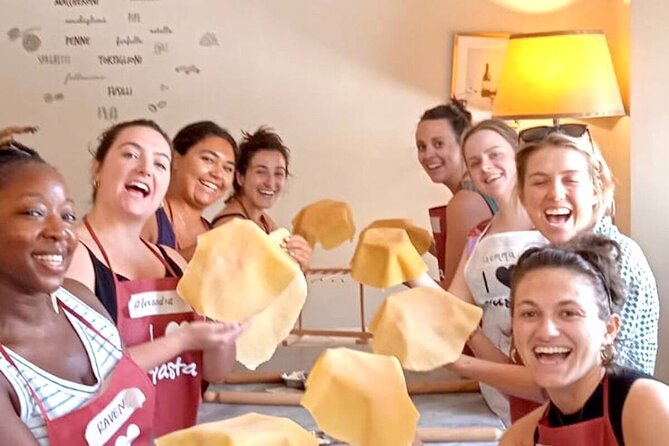
Rome is packed with food stops, but this one gives you something better than a plate you didn’t make. Pastamania is built around a practical skill: fresh pasta from scratch. You’ll handle the dough, learn what changes the texture, and pick up a few techniques you can repeat later at home without needing special magic.
And yes, you end up eating. The class runs about 3 hours, and the finale is the part that makes the earlier work pay off: you and your group sit down around a communal table to enjoy the pastas you shaped, plus dessert.
You can also read our reviews of more tours and experiences in Rome.

Where you start: Palazzo Grazioli near the Pantheon and Piazza Venezia
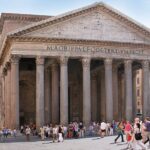
The meeting point is Palazzo Grazioli, Via della Gatta 14, 00186 Roma. It’s in the center of the city, and the location is one of the reasons this class fits well into a Rome day. You’re close to the Pantheon area and also not far from Piazza Venezia, so you can build the rest of your day around it without wasting time on long transfers.
You’ll also want to plan your timing so you don’t arrive rushed. Because the experience is hands-on, being a little early helps you settle in, meet your group, and start dough prep without stress.
The 3-hour flow: from dough basics to ravioli, tortelli, and fettuccine
This isn’t a long lecture. The pacing is quick, clear, and built for making, not watching. Here’s the typical arc of what you do during the lesson.
1) Welcome and pasta-making basics
The session begins with an introduction meant to get your hands ready. You learn the logic behind the dough and the shaping steps. Expect a mix of tradition and practical tips—things like how to handle the pasta when it’s fresh, how to keep it from drying out, and how to aim for consistency as you work.
Even if you feel intimidated at first, the class style is meant to put you at ease. Multiple instructors have been praised for patience and an upbeat vibe, including Christian (described as energetic and easygoing), Fabrizio (accommodating and helpful with a family group), and Giorgio (funny and patient).
2) Hands-on ravioli
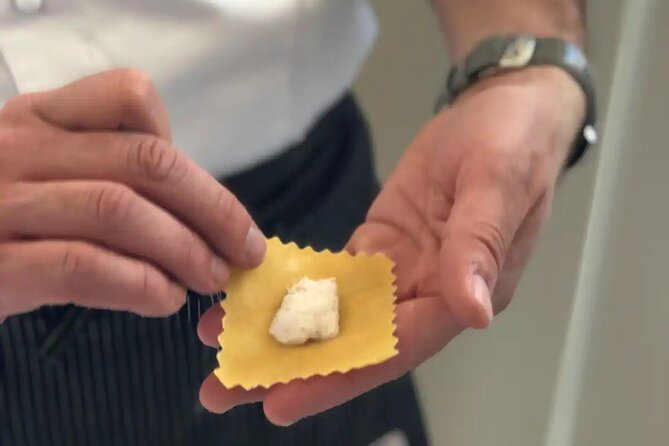
Next comes one of the stuffed styles. You’ll work on ravioli—mixing your understanding of dough with the specific job of filling and shaping. The goal is for you to go home knowing how the filling sits, how the pasta seals, and how you keep the final piece looking good enough to eat right away.
Sample menu details include ravioli with parmigiano & ricotta filling with truffle oil, finished with butter and sage. Whether your exact filling varies slightly day to day, the method focus stays the same: make the pasta, then complete it with a classic finishing sauce.

3) Tortelli with a classic, comfort-style finish
After ravioli, you’ll move into tortelli. This is where you build confidence. You learn how stuffed pasta behaves differently from flat sheets, and you’ll practice shaping until it feels natural.
One sample version: tortelli with parmigiano, ricotta, and nutmeg, served with butter and sage sauce. The nutmeg flavor note is a nice reminder that Italian pasta isn’t only about tomatoes—some of the most comforting flavors are built into the filling.
4) Fettuccine and the sauce you can taste as you learn
Then comes fettuccine—a long, flat pasta that teaches control. Rolling and cutting matter here, and that’s why fettuccine is such a good choice in a class like this. It makes you pay attention to thickness and texture in a way that stuffed pasta doesn’t.
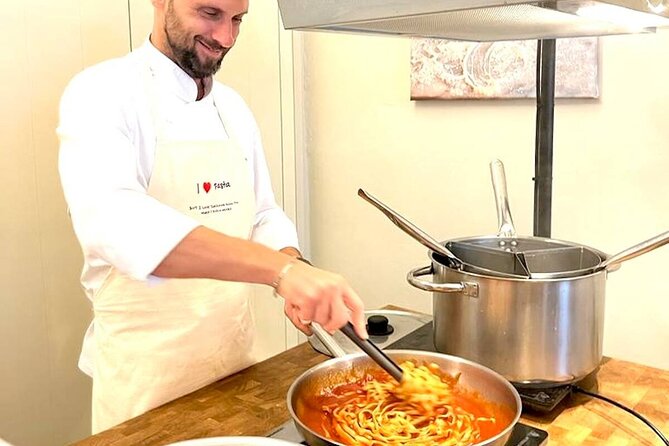
Sample menu includes fettuccine with tomato sauce. That’s a good, classic anchor because tomato sauce is both simple and forgiving, so you can focus on pasta quality rather than complicated cooking steps.
5) Communal eating: the moment everything clicks
When the pasta is done, the group gathers around a shared table. This is one of the most “Rome” parts of the experience, because you’re not eating in a hurry or one person at a time. It’s a slow, social finish that makes the earlier work feel worth it.
Many people also mention drinks and treats that add to the vibe, including wine and limoncello. One review even calls out biscuits and limoncello as part of the evening’s pacing, alongside dessert.
What you actually learn (and can use again at home)
Cooking classes sometimes stop at instructions. This one is built to give you skills, not just a meal.
Here are a few practical takeaways that fit how this class is described:
- You handle the dough directly. Kneading, rolling, and shaping are the core of the experience. That’s how you learn what the dough should feel like, not just what it should look like.
- You learn the “why” behind steps. The class mixes theory and tradition, so you understand what you’re doing rather than following a blind recipe.
- You get used to Italian sauce logic. Butter and sage and tomato sauce are both meant to work with the pasta’s texture. You’ll get a better sense of how pasta type changes sauce choices.
- You’re shown how to make pasta from basic ingredients. One review mentions starting with just flour and eggs, which matches the idea of fresh pasta as a real skill, not a prepared shortcut.
The menu details: what you might eat during your 3 hours
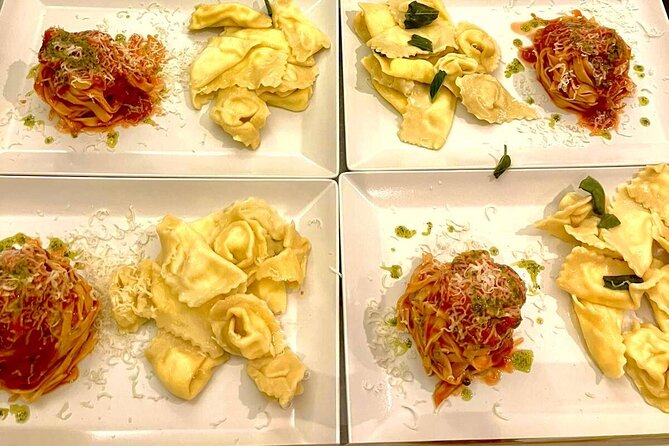
The sample menu gives you a strong idea of the flavors and how the meal is organized:
Main courses (sample)
- Ravioli with parmigiano and ricotta filling with truffle oil, finished with butter & sage
- Tortelli with parmigiano and ricotta plus nutmeg filling, finished with butter & sage
- Fettuccine with tomato sauce
Dessert (sample)
- Chocolate salami
From the reviews, expect that the experience may include extra treats around the meal, like wine, limoncello shots, and biscuits. Even if your specific drink lineup varies, the consistent promise is clear: you do the work, and then you get to taste it in full.
Instructors and group size: why this class doesn’t feel stiff
Pastamania caps the group at 10 travelers, and that small size shows in the feedback. People repeatedly mention how the instructor adapts to the room—teaching in a way that works for different ages and experience levels.
You’ll see praise for instructors by name, including:
- Christian for humor and easy pacing
- Fabrizio for patience and accommodating mixed groups
- Giorgio and Ricardo for clear teaching and strong technique
- Luca for making it connect with kids and adults
- Sofia and Arianna for balancing guidance with light jokes
That matters, because fresh pasta is physical. If you don’t get a small correction at the right moment, your dough can go from great to frustrating fast. A small group helps you avoid that problem.
Drinks, dessert, and the “don’t eat before you come” tip
One of the most repeated bits of practical advice is simple: don’t eat a big meal right before your class. The reason is obvious once you see the structure. You’re going to make three pastas and then eat them in generous portions, plus dessert.
The reviews also mention wine and limoncello shots as part of the evening’s treats. That doesn’t turn it into a party bus, though. The tone stays focused on cooking and sharing food together.
A nice side benefit: this class is an easy way to meet other people in Rome without doing awkward networking. One of the best comments in the feedback notes the chance to share the table with international and local guests, and it sounds like the atmosphere is warm rather than overly formal.
Price and value: is $49.58 actually a good deal?
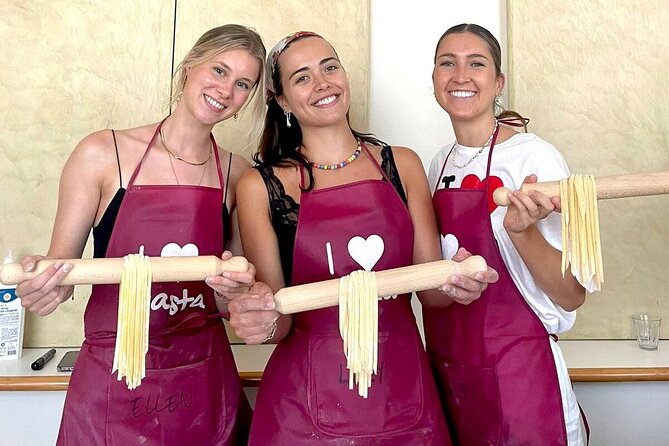
At $49.58 per person, this class sits in the mid-range for a Rome cooking experience—but the value comes from what’s included.
You’re paying for:
- A guided, professional instruction session (not a DIY demo)
- Three pasta types made from scratch
- Sauces and a full sit-down meal at the end
- Dessert (chocolate salami)
- A small group size that keeps instruction practical
If all you need is a quick food fix, you can eat cheaper in Rome. But if you want an experience that gives you a skill, a meal, and a relaxed social moment in about 3 hours, the price starts to make sense. Also, booking in English helps you get the most out of the technique talk.
Who should book Pastamania, and who might want a different plan
This class is a great match if you:
- Want a hands-on Rome activity near major sights like the Pantheon
- Love Italian food and want to learn how the basics really work
- Travel with family or mixed ages; feedback suggests it works well across generations
- Like an activity that ends with a proper meal, not just a snack
You might reconsider if:
- You use a mobility aid or need accessibility support. The experience is explicitly noted as not accessible for limited mobility.
- You’re not into hands-on tasks. This is work with your hands; it’s not only watching.
- You want a strictly quiet, keep-your-own-space style tour.
Should you book Pastamania in Rome?
If you’re deciding between another restaurant meal and a real food skill, I’d lean toward booking Pastamania. You get a small-group setup, serious hands-on pasta practice, and then a communal meal that makes the time feel like it flies by.
Book it especially if you’re the type of traveler who wants your Rome photos to include more than monuments. This one gives you something you can recreate later, and that’s the best souvenir in a city full of great ones.
That said, if accessibility is an issue for you or your group, check carefully and plan an alternative. And if you’re the type who hates getting your hands involved, choose a tasting instead.
FAQ
How long is the Pastamania pasta-making experience?
It runs for about 3 hours.
Where do you meet for Pastamania in Rome?
You start at Palazzo Grazioli, Via della Gatta, 14, 00186 Roma RM, Italy, and the experience ends back at the meeting point.
Is the class offered in English?
Yes. The experience is offered in English.
How many people are in the group?
The experience has a maximum of 10 travelers.
Is this experience accessible for people with limited mobility?
No. It is not accessible for people with limited mobility (example given: crutches).
What do I eat during the class?
You make fresh pasta and then eat it at the end of the lesson. A sample menu includes ravioli, tortelli, and fettuccine with sauces, plus chocolate salami for dessert.