REVIEW · POMPEII ARCHAEOLOGICAL SITE
Pompei: Pompeii Private Tour
Book on GetYourGuide →Operated by Tempio Travel Pompei Tickets · Bookable on GetYourGuide
Pompeii hits hard in just three hours. This private skip-the-line tour turns the ruins into a guided story, with an archaeologist walking you through the ancient city’s layout and what daily life looked like before 79 AD. I especially like the way you get time-efficient access plus a guide who helps you understand what you’re seeing—not just where to stand for photos. Another big win is that you may get a detailed stop at places like the Amphitheatre or the Villa of Mysteries. The only thing to keep in mind: it’s a compact time window, so you’ll need to choose your priorities if you’re hoping to cover every single street and building in depth.
You’ll start at the Tempio Travel agency near the Circumvesuviana station, then move through Pompeii’s heart—built, lived in, and eventually frozen in time by Vesuvius. The most satisfying part is how the best guides connect architecture to real routines: work, trade, art, and customs. Guides such as Marina, Giada, Dr Daniella, Mariachiara, and Alessandra show up in the guide-style notes you’ll want to look for, because their focus tends to be exactly what makes Pompeii click.
One possible drawback? Your pace will depend on the guide and the route they choose, since Pompeii is huge. Even with private time, three hours can’t cover everything—so come with a couple must-sees in mind.
In This Review
- Key things to know before you go
- Entering Pompeii faster with skip-the-line access
- Meeting at Tempio Travel near the Circumvesuviana station
- The core story you’ll follow: Pompeii from founding to 79 AD
- What you’ll see in the heart of the ancient city
- Amphitheatre or Villa of the Mysteries: two stops worth planning for
- The Amphitheatre: a clearer view of Roman public life
- The Villa of the Mysteries: art that tells stories
- How guides keep Pompeii manageable on a 3-hour private tour
- Price and value: $407.83 for a private group—what you’re really buying
- Practical tips that make the visit smoother
- First Sunday free entry: a smart option with a catch
- Who this Pompeii private tour is best for
- So, should you book?
- FAQ
- How long is the Pompeii private tour?
- Is skip-the-line access included?
- Where do we meet for the tour?
- What languages are the live guides available in?
- Do I need to bring ID?
- Are luggage or large bags allowed?
- Is it free to enter Pompeii on the first Sunday of the month?
Key things to know before you go
- Skip-the-line entrance ticket express saves real time at the gates
- Archaeologist guide focus helps you connect buildings to daily life in Pompeii
- Two major site options: the Amphitheatre or the Villa of Mysteries (in detail)
- Pompeii’s timeline made clear: founded in the VII century BC, destroyed in 79 AD
- Private group pacing works well for adults, families, and mixed ages
- No large bags keeps you moving through entrances and corridors
Entering Pompeii faster with skip-the-line access
Pompeii is one of those places where time management isn’t a luxury—it’s the whole game. A skip-the-line entrance ticket express is the difference between starting your visit with momentum versus losing it to queues.
In practice, that means you’re more likely to arrive already in the “right mode”: walking, orienting, and taking in context while the site is still fresh in your mind. The tour setup is built around meeting at the Tempio Travel agency at the Pompeii ruins Circumvesuviana train station, so you’re not scrambling for the right starting point once you’re on-site.
If you’re traveling by train, this location is a good match for day-trippers and people who don’t want to wrestle with parking logistics. And if you’re car-based, there’s also a helpful detail: there’s a chance to park for free at Osteria Nonna Cherubina (Via Diomede 16), about 500 meters from the main entrance—if it’s open and spots are available.
You can also read our reviews of more tours and experiences in Pompeii Archaeological Site.



Meeting at Tempio Travel near the Circumvesuviana station
Your tour begins at Tempio Travel Pompei Tickets, at the Tempio Travel agency by the Pompeii ruins Circumvesuviana train station. Meeting here matters because it keeps you close to the main arrival flow, which reduces the “where do we go now?” friction that can eat into a short experience.
You should also plan to travel light. The tour doesn’t allow luggage or large bags, so if you’re used to arriving with a daypack plus extras, trim it down. Bring your passport or ID card (that’s specifically required), and be ready for a straightforward start with minimal fuss.
The core story you’ll follow: Pompeii from founding to 79 AD
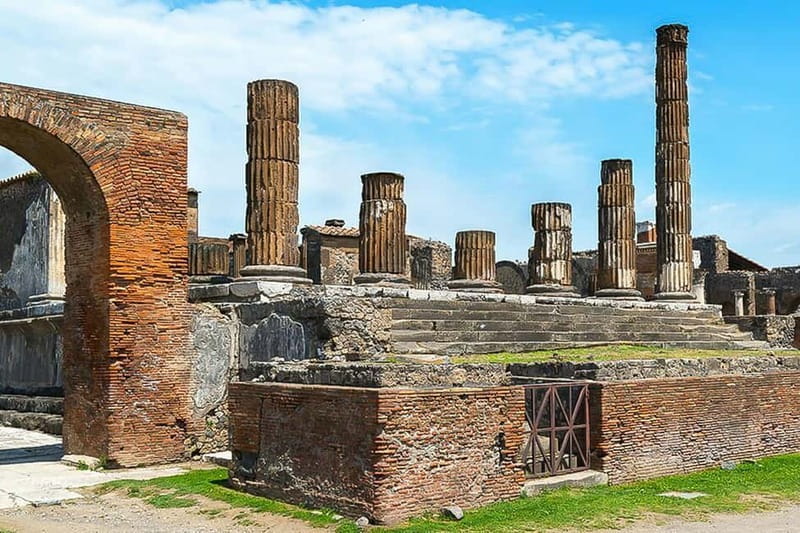
The tour is built around the idea that Pompeii isn’t a pile of walls—it’s a city with a timeline. You’ll start from the city’s origins, back to the VII century BC, then move toward what the eruption of Mount Vesuvius did to it in 79 AD.
That arc is where a good archaeologist guide does their magic. You’re not just watching ruins; you’re learning to read the city like a living place that got interrupted. This is also where you’ll start understanding why the site is so important in the Roman world: Pompeii gives you an unusually clear snapshot of everyday life because so much was preserved.
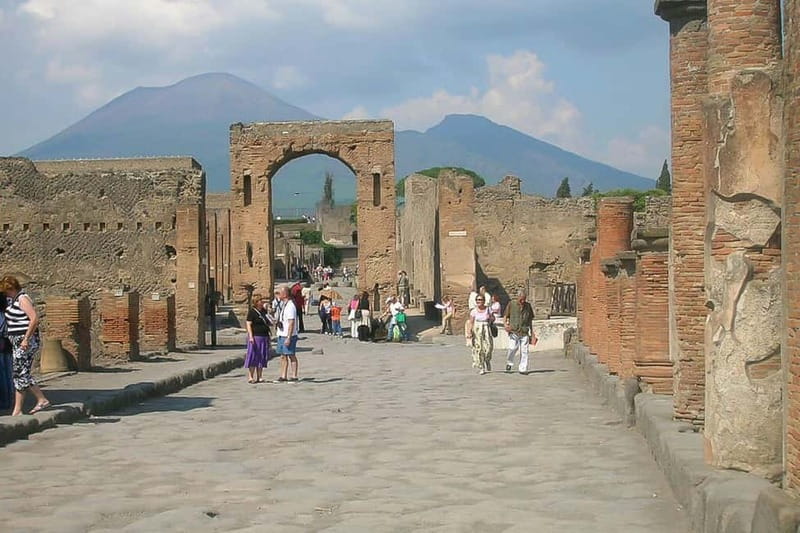
One detail I find especially helpful is the mention of the city’s scale—Pompeii once spanned about 66 acres. When you understand that footprint, you stop expecting to “finish Pompeii.” Instead, you start thinking strategically: which parts explain the whole?
What you’ll see in the heart of the ancient city
Once inside, you’ll explore Pompeii’s heart with an archaeological guide. The goal is to move beyond the walls and ruins to understand the meaning of buildings and spaces—what they were for, how people used them, and what the visual clues suggest.
Expect a mix of:
- Roman art and how it shows up in everyday spaces
- Customs and trades—how people earned money and lived socially
- Everyday life details that make the place feel less museum-like
This is also where the private format pays off. You can ask questions as you go, and the guide can slow down when you’re curious. That matters because Pompeii’s “wow” moments are scattered. With a private group, you don’t have to sprint past the interesting bits just to keep up with a larger schedule.
And the guides described in the experience notes tend to do something very practical: they help you understand not just the famous highlights, but what you’re looking at and what it originally was. That’s how a visit becomes learning you can actually keep.
Amphitheatre or Villa of the Mysteries: two stops worth planning for
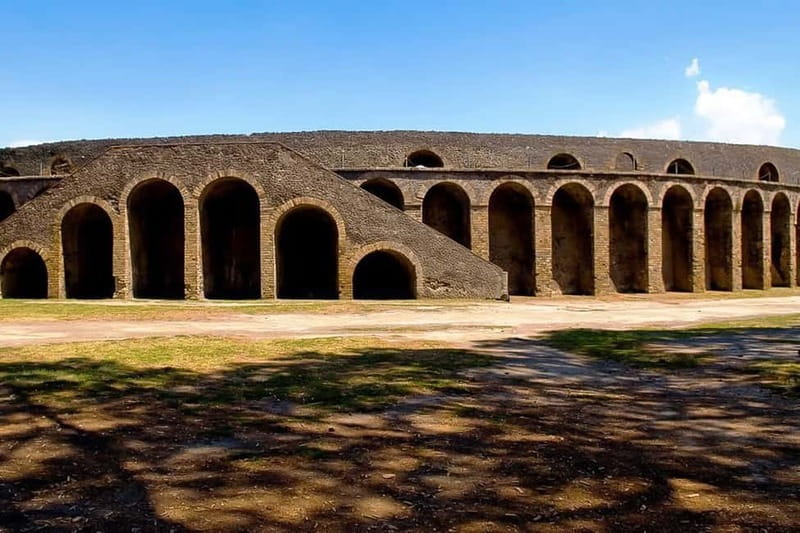
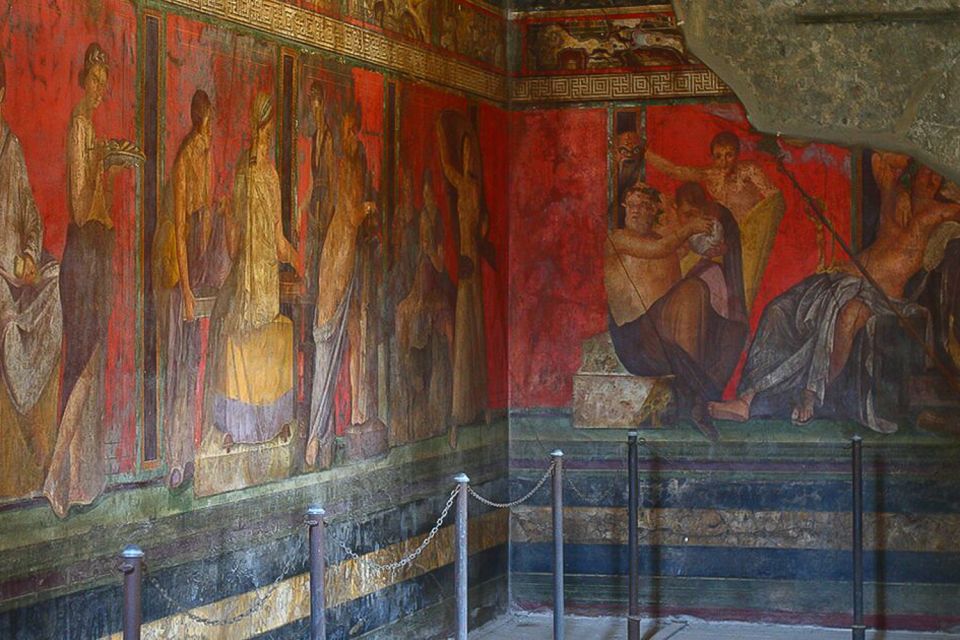
You may have the possibility to visit in detail two of Pompeii’s most important places: the Amphitheatre or the Villa of the Mysteries. Which one you get in detail will depend on your guide’s route and what fits the visit best.






The Amphitheatre: a clearer view of Roman public life
If you go to the Amphitheatre, you’re stepping into a Roman-style public space where entertainment and crowd energy were part of civic life. Even if you’re not a “sports and spectacle” person, this is a strong stop because it helps explain the social rhythm of the city.
A good guide makes it more than a big curved wall. In the best cases, your path through the site is arranged so you can keep context instead of getting dropped into a single isolated stop.
The Villa of the Mysteries: art that tells stories
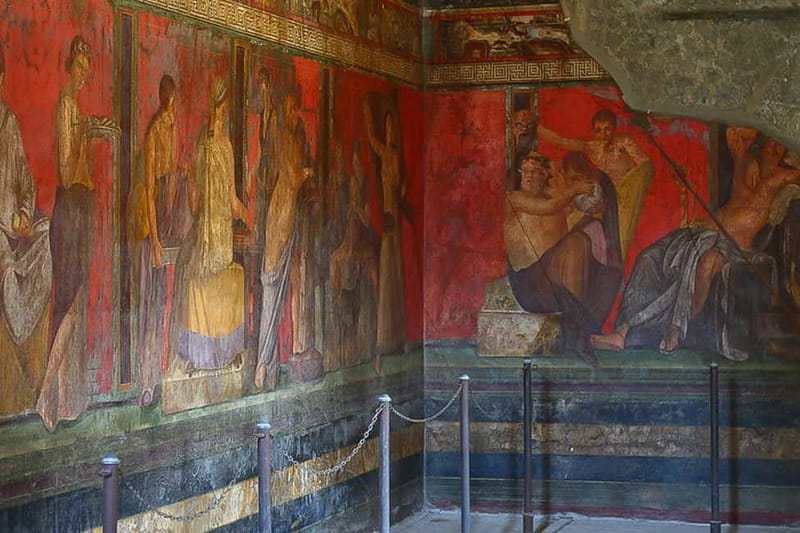
If your detailed stop includes the Villa of the Mysteries, you’ll be leaning into art and symbolism. This is the kind of place where Pompeii becomes more than ruins—it becomes a window into ideas people believed, expressed, and decorated their homes with.
It’s also the sort of stop where you’ll likely benefit from a guide who can point to details you might otherwise miss. The notes around guide styles suggest that some guides bring extra layers of explanation, including visual aids, which can be a big help when the site shifts from architectural clues to painted meaning.
If you’re choosing between the two, here’s a simple rule: pick the one that matches your interest right now—public spectacle (Amphitheatre) or artistic storytelling (Villa of the Mysteries).
How guides keep Pompeii manageable on a 3-hour private tour
Three hours sounds short. For Pompeii, it’s just enough time to see a meaningful slice—if your guide is strategic.
The visit is private, and that shows up in the way your tour is paced. Some guides are described as excellent at handling crowds and helping you negotiate them so you can actually see what you came for, not just pass through a bottleneck.
Even better: the guide’s approach can adapt. In the notes, guides like Daniela and Dr Daniella are described as patient and accommodating when plans get messy (like unexpected delays). Other guides, including Alessandra and Mariachiara, are described as matching pace for elderly visitors. If you’re bringing kids, you’ll also like what’s been described about one guide using an iPad with pictures or interactive context to keep attention—useful in a setting that can feel repetitive if it’s explained like a lecture.
So instead of thinking of this as a “fast tour,” think of it as a guided route that aims to give you:
- the right context early
- the most meaningful sights inside the time window
- a clear sense of what you skipped and why
Price and value: $407.83 for a private group—what you’re really buying
The price is listed as $407.83 per group, up to 1. For Pompeii, private access usually costs more than group tours, so the value question is fair.
Here’s how I’d weigh it.
You’re paying for:
- a private archaeologist guide (not just an escort)
- skip-the-ticket-line access through entrance ticket express
- a route designed for learning, not wandering
If you’re traveling alone or with just one other person, private pricing can feel steep—until you factor in the opportunity cost. When you’re guided, you spend less time figuring out what matters and more time understanding what you’re seeing. And Pompeii is the kind of place where “doing it yourself” can turn into random walking unless you’re already an expert in Roman cities.
If you’re a small group, it can be a strong deal because you’re not paying solo-tour rates for extra seats. The key is to decide whether you want the ruins as scenery or as a story you can follow. This tour is clearly aimed at the second option.
Practical tips that make the visit smoother
A great tour can still trip you up if you show up unprepared. Based on the tour rules and on-the-ground notes:
- Bring your passport or ID card. It’s required.
- Expect that luggage or large bags aren’t allowed, so travel light.
- Wear comfortable shoes. You’ll be walking on uneven surfaces and moving between areas quickly.
- Use the time wisely: pick your must-sees before you arrive, especially if the Villa of the Mysteries or the Amphitheatre is on your shortlist.
Timing note: the tour duration is 3 hours, and starting times depend on availability. That means you should check available slots before locking in your day.
First Sunday free entry: a smart option with a catch
If you’re visiting on the first Sunday of the month, entrance is free of charge. But there’s a catch: tickets can’t be reserved ahead of time, so entry isn’t guaranteed.
That’s where this private format can help you think clearly. If free entry matters to you, it’s worth planning for uncertainty. If you want certainty and a timed flow through the site, skip-the-line access is part of what you’re paying for here.
Who this Pompeii private tour is best for
This is a great fit if you want Pompeii to feel like a coherent experience in a short window.
It tends to work especially well for:
- people who want more than the big “must-see” moments
- families who need pacing and clear explanations
- anyone who appreciates art and Roman daily life context
- visitors who don’t want to manage crowds alone
If you’re the type who enjoys reading on your own and already has a strong background in Roman archaeology, you might not need a guide. But if you want your time to result in understanding—not just sightseeing—this format is built for you.
So, should you book?
Yes, if your goal is a guided, time-efficient Pompeii that connects ruins to life. The combination of an archaeologist guide, skip-the-line entrance ticket express, and the chance to focus on major sites like the Amphitheatre or the Villa of the Mysteries is a strong formula.
I’d say book this tour if:
- you want Pompeii to make sense, not just impress you
- you’d rather ask questions than wander
- you care about art, customs, trades, and everyday Roman life
Skip it (or choose another approach) if you’re hoping to cover the entire site in one go. Pompeii is too big for that in 3 hours, and the best outcome comes when you let the guide choose a smart route around your interests.
FAQ
How long is the Pompeii private tour?
The tour duration is 3 hours.
Is skip-the-line access included?
Yes. The tour includes an entrance ticket express and skip the ticket line.
Where do we meet for the tour?
Meet at the Tempio Travel agency at the Pompeii ruins Circumvesuviana train station.
What languages are the live guides available in?
The live tour guide is offered in Spanish, English, French, German, and Italian.
Do I need to bring ID?
Yes. You should bring a passport or ID card.
Are luggage or large bags allowed?
No. Luggage or large bags are not allowed.
Is it free to enter Pompeii on the first Sunday of the month?
Entrance is free of charge on the first Sunday of each month, but tickets can’t be reserved ahead of time, so entry isn’t guaranteed.