REVIEW · ROME
Private Cooking Class in Rome with Chef Andrea Consoli
Book on Viator →Operated by Cooking Classes in Rome · Bookable on Viator
Cooking in Rome beats another bus ride. You get a private, hands-on evening with Chef Andrea Consoli that ends with a meal you made yourself. I love that it’s farm-to-table with seasonal Roman ingredients, and you get real wine pairing help while you’re cooking, not after you’re full.
The best part for me is how the class stays practical. You’ll prep, cook, and sit down to eat a complete 4-course feast focused on Roman favorites, with a 4-glass wine flight built for the meal.
One thing to consider: this is a dinner-time experience (about 5:00 pm start, around 4 hours). If you’re visiting with very small kids or you prefer early evenings, you’ll want to plan your day so nobody’s rushing or melting down before the class starts.
In This Review
- Key things I’d highlight before you book
- Why a Private Rome Cooking Class Feels Like More Than a Meal
- Meeting Point at Via dei Fienaroli: Start Smart for a 5:00 pm Class
- The 4-Course Hands-On Cooking Flow (and What Each Part Teaches You)
- Starter: Seasonal Roman Bites
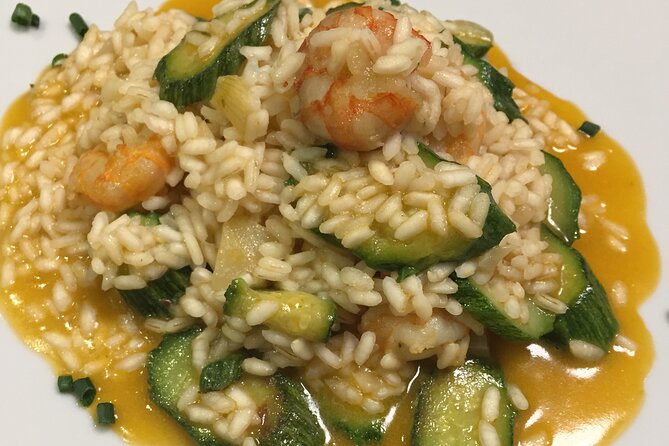
- Pasta Course: Sauce That Actually Makes Sense
- Meat Course: Building the Main Dish Like a Roman Meal
- Dessert: Closing on a Classic Italian Note
- Farm-to-Table Roman Ingredients: Why Seasonal Matters in a Small Kitchen
- Wine Pairing with a 4-Glass Flight: How It Adds Value
- Chef Andrea Consoli’s Role: What Makes It Feel Personal
- Who This Class Suits Best (and Who Might Find It Less Fun)
- Price and Value: Is $181.48 per Person Fair?
- After the Class: Take Home Roman Recipes You’ll Actually Use
- Should You Book This Private Rome Cooking Class?
- FAQ
- How long is the private cooking class?
- Is this experience private?
- What courses will I cook and eat?
- Is wine included?
- Where and when does it start?
- Can the chef accommodate special diets?
Key things I’d highlight before you book
- Private group experience: only your group cooks and eats together, with the chef focused on you
- 4-course Roman menu: appetizer, pasta, meat, and dessert you make yourself
- Seasonal ingredients: examples include artichokes, zucchini blossoms, and seasonal bruschetta-style bites
- Wine pairing built into the meal: a 4-glass flight paired to each course
- Beginner-friendly by design: tasks are shared so even non-cooks can participate
- Dietary options possible: special diets can be accommodated with advance notice
Why a Private Rome Cooking Class Feels Like More Than a Meal
Rome can be a lot: crowds, lines, and the constant “where do we go next?” feeling. This experience trades that for a different rhythm. For about four hours, your focus is food, ingredients, and technique. You’re not just tasting Rome. You’re making it.
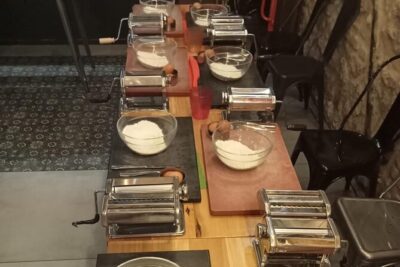
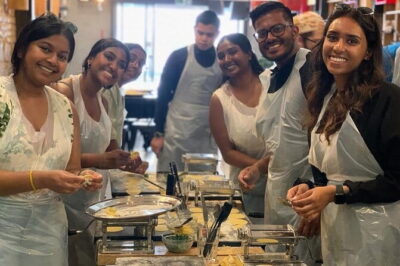
I also like that the class treats cooking as a shared activity, not a performance. You’ll be working in a kitchen environment where everyone has a job, even if your hands are more familiar with phones than with cutting boards. That matters if you’re traveling with family, friends, or mixed skill levels.
The “Rome in a box” idea is wrong here. The ingredients are seasonal, and the menu is built around Roman favorites. You’re learning how those flavors fit together, not memorizing a one-time dish.
You can also read our reviews of more tours and experiences in Rome.

Meeting Point at Via dei Fienaroli: Start Smart for a 5:00 pm Class
You’ll meet at Via dei Fienaroli, 5, 00153 Roma RM, Italy. The start time is 5:00 pm, and the activity ends back at the meeting point.
A 5:00 pm start is convenient if you want dinner plans handled for you. It also means you’ll likely be eating around the time Romans start thinking about food—not midnight, not lunch-time weirdness.
Two practical notes that make your evening easier:
- It’s near public transportation, so you’re not dependent on a long taxi ride.
- You’ll receive a mobile ticket, which is one less thing to print, hunt for, or lose in your daypack.
Because it’s private, show up on time so the chef can pace the cooking. Once the kitchen starts moving, timing is everything—especially with multiple courses and wine.
The 4-Course Hands-On Cooking Flow (and What Each Part Teaches You)
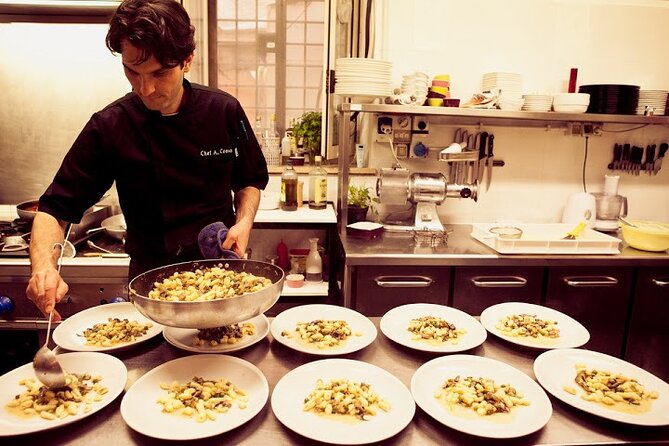
This is a true hands-on format: prep, cook, and eat what you make. The meal is organized into four parts:
- Starter
- Pasta course
- Meat course
- Dessert
Starter: Seasonal Roman Bites
Your starter is a seasonal appetizer. Examples can include artichoke, bruschetta, and zucchini blossoms. Even if you’ve only had one of these at a restaurant before, the kitchen context changes everything.
What you’ll get from the starter phase:
- A sense of Roman flavor logic—simple ingredients, careful prep
- Technique basics like prepping vegetables and assembling something you can serve immediately
- Confidence, because the first course is the first win of the evening
Pasta Course: Sauce That Actually Makes Sense
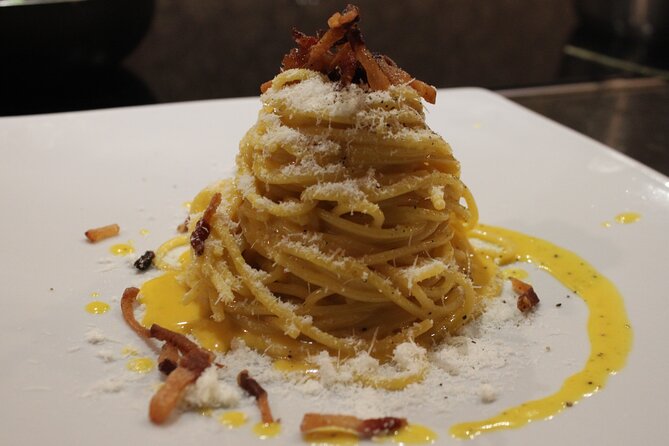
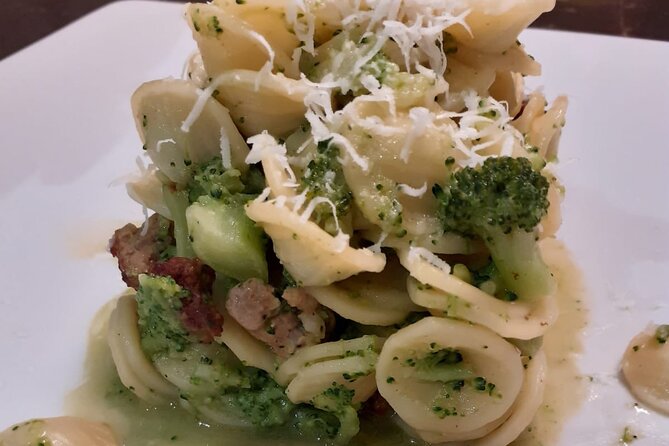
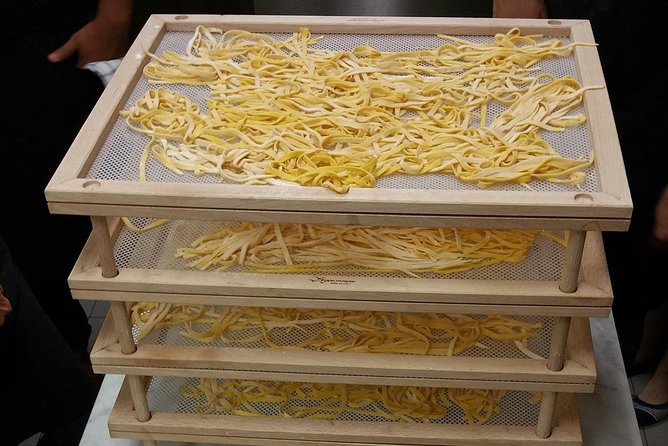
You’ll make a pasta course with sauce. That sounds generic until you’re in the kitchen learning how the sauce interacts with the pasta.
This is where you start understanding the “why,” not just the “what.” In a good class, pasta isn’t a finished dish—it’s the vehicle for flavor, and the sauce is the real work.
If you want to cook at home later, the pasta course is where you’ll find your take-home momentum. You’ll remember the approach because it connects directly to your own pantry.


Meat Course: Building the Main Dish Like a Roman Meal
Next up is a meat course. The exact dish can vary, but the structure stays the same: you’ll cook it as a main feature of the Roman plate, not as a side project.
This part matters because it often teaches the difference between cooking “an ingredient” and cooking “a meal.” You’ll think about timing, doneness, and how the main course lands after the earlier flavors and wine.
Dessert: Closing on a Classic Italian Note
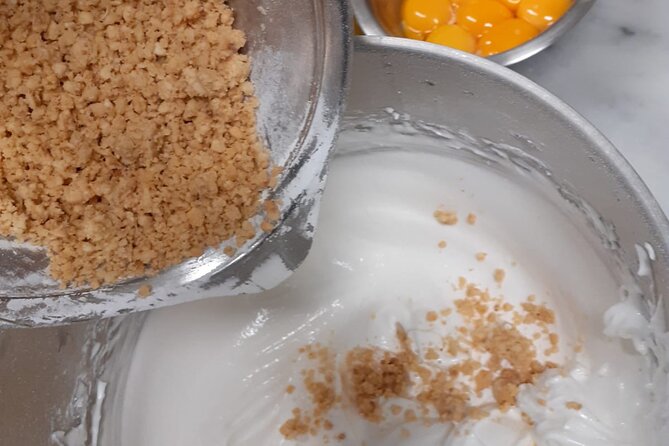
Finally, dessert is an Italian sweet course. Dessert is usually the moment where classes either feel rushed or end strong. Here, dessert rounds out the four-course experience, giving you a full meal arc rather than a cooking session that stops when the appetite gets loud.
You’ll leave with a better sense of how Italians pace flavor. Savory first, then a sweet finish that feels intentional.
Farm-to-Table Roman Ingredients: Why Seasonal Matters in a Small Kitchen
The class is built around seasonal, fresh ingredients and a farm-to-table concept. That means you’re more likely to cook with what’s actually in season than with ingredients that are shipped in just to match a menu page.
From the examples given, you might work with items like artichoke and zucchini blossoms. Those are the kinds of ingredients that immediately make you feel like you’re eating Roman food, not generic Italian-American cooking.
Seasonal ingredients also affect the class in a practical way:
- You learn how to handle vegetables at their best, not as sad leftovers
- Your dishes taste more alive, so you’re motivated to pay attention to technique
- You can recreate the method later even if the exact ingredient changes with the season
Wine Pairing with a 4-Glass Flight: How It Adds Value
After your cooking time, you sit down and eat your creations along with a 4 glass wine flight. Each glass is paired with the meal courses.
This is a big deal for value. It’s not just dinner plus wine. The pairing is part of the lesson. Wine helps you notice what works and what doesn’t. It also gives you a clearer idea of how Italians think about food and drink together.
A wine flight approach is also easier to manage than one big bottle. You get variety, you can follow the pairing logic course by course, and you don’t have to worry about committing to one wine choice for the entire evening.
If you care about wine, you’ll likely enjoy how pairing is explained in a way that connects to the food you just cooked. If you don’t care much about wine, it still helps you experience the meal as a complete Roman dinner rather than separate dishes.
Chef Andrea Consoli’s Role: What Makes It Feel Personal
Chef Andrea Consoli is the center of the experience. The vibe is personal and passionate. You’re not stuck listening to lectures. You’re in the work with the chef guiding you.
From what’s consistently praised, the chef’s strength is conversation—Rome, Italy, food, and culture. That makes the evening feel like a real host-led experience, not a scripted cooking demo.
You also benefit from having the chef focused on your group, since it’s private. If you want to ask questions while you’re cooking, you can. That’s how you turn a nice meal into actual skills you can reuse.
And yes, this class seems to work even if your group is new to cooking. Tasks are shared, and the experience doesn’t depend on everyone already knowing kitchen technique.
Who This Class Suits Best (and Who Might Find It Less Fun)
This experience fits a wide range of travelers:
- Families looking for something structured and hands-on
- Beginner cooks who want guidance without feeling judged
- Food lovers who want a Roman meal with context
- Groups who enjoy cooking together and then sharing the results
It’s also described as suitable for all ages and all skill levels, with special diets possible if you give advance notice. That’s ideal if you have someone who can’t eat certain ingredients and you don’t want to sit out the meal.
The only people who might find it less ideal are those who:
- Strongly prefer self-guided sightseeing with zero schedule
- Don’t enjoy cooking steps at all and only want to eat
- Need an early night (because you start at 5:00 pm)
Price and Value: Is $181.48 per Person Fair?
At $181.48 per person, this isn’t a bargain-basement activity. But it is structured value.
Here’s what you’re paying for, in real terms:
- A private class (your group only)
- A hands-on cooking experience for a full meal: starter, pasta, meat, dessert
- Seasonal ingredients used in real preparation
- Wine included via a 4-glass flight paired to your courses
- Chef guidance throughout, with time built in for you to ask questions
If you’re comparing this to a fancy dinner plus wine, it’s helpful to think differently. You’re not only consuming food. You’re learning how the dishes come together, with technique and recipe structure. That makes it more like a cooking lesson that happens to include a full Roman dinner.
For groups, private can also be a hidden win. You’re not sharing the kitchen with strangers who slow the pace or turn it into a one-size-fits-all lesson.
After the Class: Take Home Roman Recipes You’ll Actually Use
The goal isn’t just a good night. The experience is designed so you’ll take Roman recipes home with you.
That means you should leave with:
- A mental map of the course sequence (starter to pasta to meat to dessert)
- A clearer sense of seasonal Roman ingredient use, based on what you cooked
- Confidence to cook at home because you handled the steps, not just watched
I like experiences where the souvenir is food knowledge you can reuse. That’s what this class aims for. When you shop for artichokes or zucchini blossoms later in the season, you’ll remember the approach and the flavor logic that made it work.
Should You Book This Private Rome Cooking Class?
If you want one evening in Rome that feels genuinely local, this is a strong choice. It mixes hands-on cooking, Roman favorites, and wine pairing in a way that’s built for real groups—families included—and not only for expert food people.
Book it if:
- You’d rather cook and eat a Roman meal than just bounce between landmarks
- You like learning from a chef in a small, private setting
- Your group includes mixed skill levels and you want everyone participating
Skip it if:
- You hate cooking steps and want only sightseeing
- You need an early night due to the 5:00 pm start
If your vacation includes at least one “we did this together” memory you can’t replicate at home, this is the kind of night that delivers.
FAQ
How long is the private cooking class?
It runs for about 4 hours.
Is this experience private?
Yes. It’s a private activity, so only your group participates.
What courses will I cook and eat?
You’ll prepare and eat a 4-course meal: an appetizer starter, a pasta course, a meat course, and dessert.
Is wine included?
Yes. You’ll have a 4-glass wine flight paired with the meal.
Where and when does it start?
The class starts at 5:00 pm at Via dei Fienaroli, 5, 00153 Roma RM, Italy, and ends back at the meeting point.
Can the chef accommodate special diets?
Special diets can be accommodated with advance notice.