REVIEW · FLORENCE
Private Florence Highlights Electric Tour
Book on Viator →Operated by Eco Florence Tour · Bookable on Viator
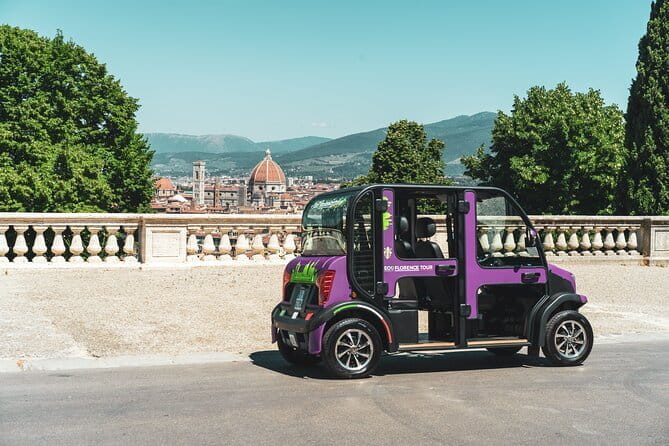
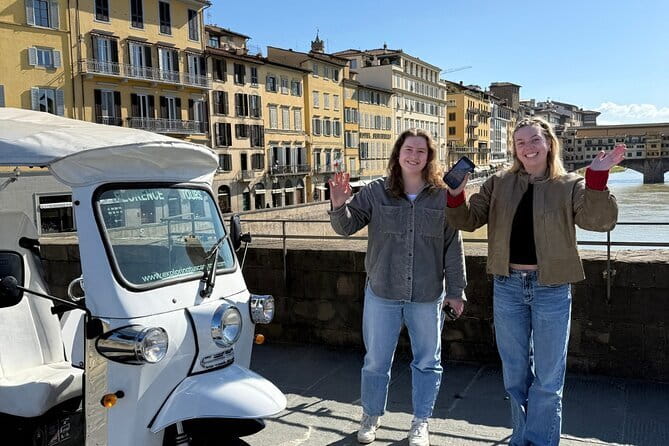
Florence can feel like a pop quiz. This 90-minute electric highlights tour gets you oriented fast, then feeds you just enough history to make the city click. I love the practical stop plan that hits major landmarks without making you do a long day of walking, and I also like the comfort factor of cruising Florence’s tighter streets by electric vehicle.
The route is built around photo-worthy scenery and big names—think Santa Croce, San Miniato, Ponte Vecchio, and the Medici sites—so even short stops feel like meaningful progress. The main thing to watch is that this experience uses an audio-guide component; if you expect a fully live guided tour at every stop, read closely and plan your expectations.
In This Review
- Key points worth knowing before you go
- First: What This Electric Cart Tour Is Best At
- Price and What You Really Pay For (and for what you don’t)
- Meeting Point in San Lorenzo: Easy to Find, Central to Start
- Audio-Guide Reality Check: Plan for Pre-Recorded Content
- The Route Walk-Through: Every Stop, What You’ll See, and What to Watch For
- Piazza Santa Croce + Basilica di Santa Croce (Stop 1)
- Biblioteca Nazionale Centrale (Stop 2)
- Basilica di San Miniato al Monte (Stop 3)
- Piazzale Michelangelo (Stop 4)
- Oltrarno District + Basilica di Santo Spirito (Stop 5)
- Ponte alla Carraia (Stop 6)
- Basilica di Santa Croce (Stop 7)
- Palazzo Medici Riccardi (Stop 8)
- Basilica di San Lorenzo (Stop 9)
- Cappelle Medicee (Stop 10)
- Santa Maria Novella: Basilica + Piazza (Stop 11)
- Chiesa di San Salvatore in Ognissanti (Stop 12)
- Ponte Santa Trinita (Stop 13)
- Ponte Vecchio + Vasari Corridor (Stop 14)
- Palazzo Pitti (Stop 15)
- How to Use Your Short Stop Times Like a Pro
- What the Best Guides Tend to Do (and Names to Watch For)
- Comfort, Vehicle Size, and Group Reality
- Ticket Planning: What You’ll Need to Pay For Later
- Who This Tour Fits Best in Your Florence Plan
- The Bottom Line: Should You Book This Florence Highlights Electric Tour?
- FAQ
- How long is the Private Florence Highlights Electric Tour?
- What language is offered on the tour?
- Is entry to attractions included?
- Where do we meet for the tour?
- Does the tour end at the same place where it starts?
- Is WiFi included?
- Is this tour private?
- Does the tour use an audio guide?
- Is the tour affected by weather?
- Are service animals allowed?
Key points worth knowing before you go
- Compact 90-minute route that hits a lot of Florence’s “first timer” highlights without the leg burn
- Audio-guide format onboard, with some guides adding live commentary depending on the driver setup
- Huge viewpoint payoff at Piazzale Michelangelo, plus classic bridges like Ponte Santa Trinita and Ponte Vecchio
- Medici-focused stops (San Lorenzo, Medici Chapels, Palazzo Medici Riccardi, and the Santa Maria Novella square)
- WiFi included on board, which is handy for saving directions and looking up practical info between stops
- Vehicle capacity can mean split rides for larger groups (example: 6 people reported splitting into two carts)
First: What This Electric Cart Tour Is Best At
This tour is designed for one main job: getting you to Florence’s essential sights in a short window, while minimizing walking. Instead of bouncing between far-flung areas on foot, you ride between stops, then get a few minutes at each key spot to look, photograph, and move on.
It’s also a “get your bearings” kind of experience. After this, you’ll understand where things sit in relation to each other: the Arno river crossings, the hill views, and how the historic core hangs together from east to west.
One more plus: you’re not doing this solo in a crowded bus. It’s a private tour, so only your group rides. That matters when your pace is slower, you want extra time for pictures, or you need a quick bathroom break between stops.
You can also read our reviews of more tours and experiences in Florence.
- Tuscany Day Trip from Florence: Siena, San Gimignano, Pisa and Lunch at a Winery
★ 5.0 · 21,634 reviews

Price and What You Really Pay For (and for what you don’t)
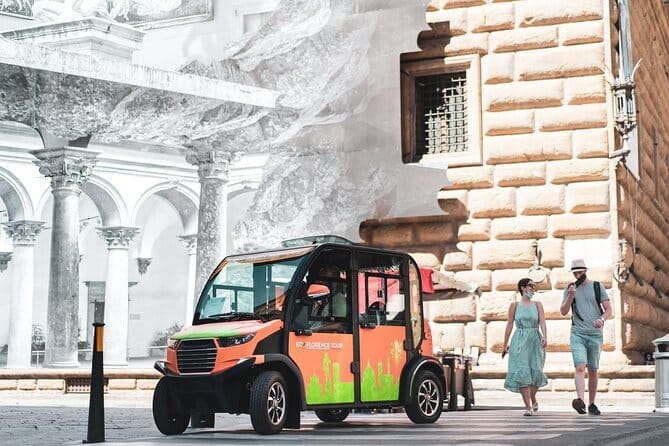
At $83.45 per person for about 1 hour 30 minutes, the value is mostly about time and effort saved. Florence is gorgeous, but it’s also packed. If you’re trying to fit big landmarks into a single afternoon, this price can feel reasonable compared with spending the same time stuck in queues, long walks, or multiple transit hops.
The tour includes WiFi on board, which sounds small but helps in practice—maps, quick translations, and planning your next stop while you’re already in the neighborhood.
What you should mentally budget for: entry tickets are not included. Many of these stops are best enjoyed from the outside and through brief viewing windows, but if you want to go inside basilicas or chapels, you’ll need to pay separately.
Meeting Point in San Lorenzo: Easy to Find, Central to Start
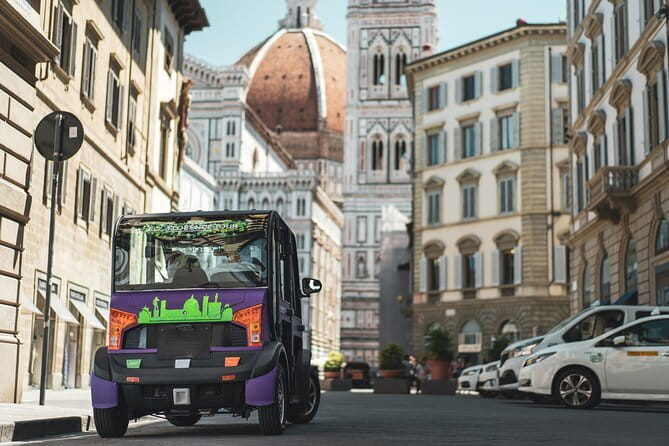
Your pickup is at Trattoria Sergio Gozzi, Piazza di San Lorenzo, 8R, 50123 Firenze FI. This is a central, logical starting place because it puts you near a major historic corridor right away.
From there, the route sweeps across Florence’s classic sights—churches, squares, bridges, and Medici-linked places—so you don’t have to fight the city layout from minute one.
A small but useful detail: the tour can end anywhere within the tour route upon request. If you want to finish closer to where you already planned dinner or a hotel route, it can save time.
Audio-Guide Reality Check: Plan for Pre-Recorded Content
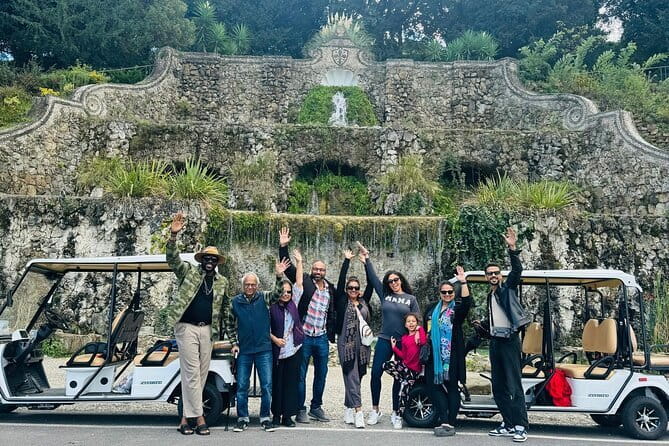
Here’s the part you want to get right before booking: this is not a purely live, stop-by-stop narration.
Your experience includes an audio guide component, and at least some rides use pre-recorded explanations delivered through the onboard system. That showed up in reviews as occasionally repetitive, sometimes hard to hear (Bluetooth mention), and sometimes mixed with live guiding depending on the driver.
The upside is that the audio format keeps the tour moving and consistent. The tradeoff is that you might not get the deep back-and-forth you’d expect from a dedicated guide at every stop.
Practical move: if you prefer a more conversational style, you can often ask whether the audio can be lowered or turned off. One review mentioned the driver accommodated a request to turn off the audio guide and provide commentary while driving. Your results may vary, but it’s worth asking early.
If you’re the type who wants live stories only, this is still workable—just go in with your eyes open.
The Route Walk-Through: Every Stop, What You’ll See, and What to Watch For
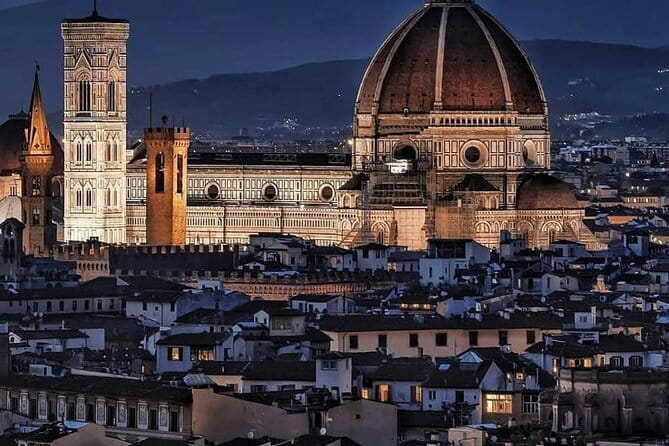
This tour moves in a tight loop of about 14 stops. Most stops are brief—think 3 to 10 minutes—so your job is to use the time well: look first, take photos second, and avoid spending your whole window hunting for the perfect angle.
- The Best tour in Florence: Renaissance & Medici Tales – guided by a STORYTELLER
★ 5.0 · 12,316 reviews

Piazza Santa Croce + Basilica di Santa Croce (Stop 1)
Santa Croce Square and the basilica are one of Florence’s most charming meeting points. You get the feel of the Franciscan legacy in the heart of the city’s eastern quarter, and you can clock the scale and elegance even if you don’t enter.
Drawback to plan for: this stop is short, so if Santa Croce inside is on your must-do list, don’t expect this cart ride to replace a full visit.
Biblioteca Nazionale Centrale (Stop 2)
The National Library building is a style mash-up that blends medieval and Renaissance touches, wrapped into a structure you might not expect to be this visually interesting.
Why it matters: it helps you see Florence beyond the famous church-and-palace postcard. This is architecture you notice more after you’ve seen a few basilicas and squares.
Basilica di San Miniato al Monte (Stop 3)
San Miniato al Monte sits on a hill and is popular partly because the view out over Florence is a star attraction. It’s also a strong example of Florentine Romanesque architecture.
What to watch for: even if your stop is only a few minutes, positioning matters. If you can, step to the viewpoint side for the city sweep and not just the facade.
Piazzale Michelangelo (Stop 4)
This is the big-picture moment. Piazzale Michelangelo is a balcony over the city, and it’s the kind of stop where people linger because the view keeps paying off as you rotate.
It was created in the late 1800s to introduce the viewpoint concept to Florence for a new era. You’ll feel that intention the second you arrive: it’s built for looking.
Tip: go earlier in your day if you can, because light changes fast and you’ll want photos that don’t look washed out.
Oltrarno District + Basilica di Santo Spirito (Stop 5)
Oltrarno means beyond the Arno, and it has a different vibe from the busier center. It grew from countryside migration, and later the Medici court presence helped shape its expansion and importance.
You’ll see Santo Spirito’s church presence without needing a long detour.
Why it’s worth the stop: it gives you contrast. After bridges and river views, Oltrarno feels like the calmer side of “real life” Florence.
Ponte alla Carraia (Stop 6)
This is a quieter bridge moment. The bridge is named for cart transport of goods, which gives you a small reminder that the Arno wasn’t only a view; it was an artery for work.
Even if the stop is only a few minutes, you can catch the “old Florence function” idea quickly.
Basilica di Santa Croce (Stop 7)
Yes, Santa Croce appears again later as a dedicated stop. Expect more time at the basilica area and a chance to re-check the facade scale and square layout.
If you want the best photos, this second chance can help—especially if you walked past earlier and didn’t get your angle.
Palazzo Medici Riccardi (Stop 8)
This is Medici proof you can see with your eyes. The palace was commissioned around the mid-1400s by Cosimo the Elder and designed by Michelozzo.
Why it matters: it connects the Medici family story to a real physical footprint, not just museum labels.
Basilica di San Lorenzo (Stop 9)
San Lorenzo is built on older religious layers and became central to Florence’s power-and-faith story. This is also tied to Filippo Brunelleschi’s major rebuilding work starting in 1419.
If you’re into architecture, you’ll recognize why this area matters even without entering.
Cappelle Medicee (Stop 10)
The Medici Chapels are essentially a ruling-family mausoleum setup. It’s the kind of place that’s hard to fully grasp without going inside, but the exterior context from the cart stop helps frame what you’d expect if you ticket up.
If chapels inside are important to you, plan to add time later. This tour isn’t built to be a replacement.
Santa Maria Novella: Basilica + Piazza (Stop 11)
Santa Maria Novella is one of the first big basilicas in Florence and connected to the Dominican order. The square in front is historically associated with sermons and public gatherings, so it makes sense as a stop.
Even if you don’t go inside, the location helps you understand how churches functioned like city magnets.
Chiesa di San Salvatore in Ognissanti (Stop 12)
This is a smaller, local-feeling church stop in the Ognissanti area. The Umiliati friars are connected here through medieval wool craftsmanship supported by the river.
Why it’s good: it adds texture. Not every stop is about the biggest headline names.
Ponte Santa Trinita (Stop 13)
This bridge is one of Florentines’ favorites. It was originally built in 1252, destroyed by an Arno flood in 1557, and later rebuilt with a design linked to Bartolomeo Ammannati.
What you’ll get: classic bridge geometry plus the feeling that Florence has lived through damage and rebuild cycles.
Ponte Vecchio + Vasari Corridor (Stop 14)
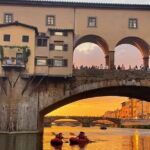
Ponte Vecchio is the headline bridge. It dates back to Roman times, was rebuilt in 1345 after floods destroyed earlier construction, and it even survived the devastating 1966 flood.
Then there’s the Vasari Corridor, a private elevated passage connecting Palazzo Vecchio and the Medici court at Palazzo Pitti. It’s famous because it shows how power, privacy, and architecture blended together.
Time note: even though the stop window is short, Ponte Vecchio is the spot where most people stop, look, and take the classic photos.
Palazzo Pitti (Stop 15)
Palazzo Pitti dominates Piazza Pitti. It was commissioned by Luca Pitti and designed by Filippo Brunelleschi.
Why this works in a highlights route: it gives you the “someone tried to outshine the other rich families” story in building scale form.
How to Use Your Short Stop Times Like a Pro
Because stops are brief, your method matters.
- Take your photo first only if the light is fading; otherwise look, orient, then shoot.
- If you’re deciding whether to enter any church later, use the cart stop to judge lines and entrance layout.
- Bring a comfortable layer. The cart is outdoors, even if you’re in motion.
Also: some reviews praised the guides for not rushing even when traffic slowed things down. That’s a real-world factor in Florence. Narrow streets and closures happen. Your best strategy is to keep a flexible mindset and enjoy the ride between stops.
What the Best Guides Tend to Do (and Names to Watch For)
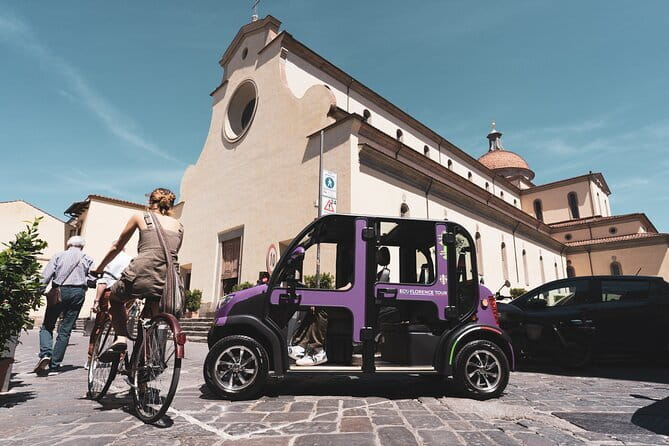
A pattern shows up in the strongest reviews: the ride is better when the guide treats you like people, not like a checklist.
Names that came up with high praise include Tommaso, Ruben, Tommy, Marcello, Michael, and Grazia. Many of these reviews highlight enthusiasm, clear English, and pacing that doesn’t steamroll your questions.
One standout theme: good guides add extra context you can feel in your imagination—why places mattered, how families shaped the city, and where to grab good local meals after you’re done touring.
If you can request a guide (or choose a ride option that tends to match your preferences), prioritize those who emphasize conversation and restaurant tips rather than only reciting facts.
Comfort, Vehicle Size, and Group Reality
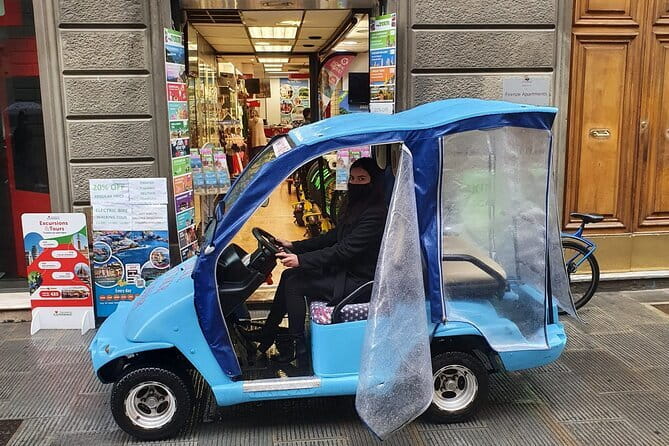
This tour uses electric vehicles, and capacity can limit you. One review noted that for groups of six, they split into two EVs. Another mentioned that the second vehicle wasn’t comfortable.
So if you’re booking for a group, ask internally: are you okay splitting up briefly, or do you want the whole group together in one vehicle? Since this is private, you control a lot—but vehicle rules still apply.
Also, expect tight seating for some layouts. The upside is you’re saving steps. The downside is you might not have a ton of personal space.
Ticket Planning: What You’ll Need to Pay For Later
Because entry tickets aren’t included, I recommend a simple approach:
- If you want interiors, pick one or two big-ticket entries (chapels, basilica interiors, or other “inside” priorities) to buy ahead.
- Use the cart stop to decide which place you truly want to spend real time inside.
- If you prefer outside-only sightseeing, you’ll still get a strong highlights set without extra ticket planning.
This tour is especially satisfying for people who don’t want museum time and don’t need to sit through long guided indoor sessions.
Who This Tour Fits Best in Your Florence Plan
This tour is a smart match if:
- You have limited time and want a quick orientation across central Florence.
- You want a comfortable way to see bridges and viewpoints without doing a long walking day.
- You prefer exterior viewing of churches and palaces more than timed ticket entry.
- You like the idea of an organized route with just enough story to connect the dots.
It’s less ideal if:
- You want a fully live guide with constant narration at every stop.
- You strongly dislike audio delivery through onboard speakers.
- Your group is sensitive to cramped seating or vehicle splitting.
The Bottom Line: Should You Book This Florence Highlights Electric Tour?
If you want a fast, comfortable way to cover Florence’s greatest hits in about 90 minutes, I’d say yes—especially for first-timers and anyone planning a busy itinerary.
Book it when you can accept two facts: tickets aren’t included, and the audio-guide format is part of the deal. If you’re okay with that, you’ll come away with photos, orientation, and a clear sense of where Florence’s power centers and view points sit.
If you’re picky about live narration, message your expectations early and ask how much the driver will talk versus using audio. And if you can, aim for a guide with strong English and real conversation style—names like Ruben and Tommaso keep showing up for a reason.
FAQ
How long is the Private Florence Highlights Electric Tour?
It runs about 1 hour 30 minutes.
What language is offered on the tour?
The tour is offered in English.
Is entry to attractions included?
No. Entry to attractions is not included, so you may need to buy tickets separately if you want to go inside.
Where do we meet for the tour?
Meet at Trattoria Sergio Gozzi, Piazza di San Lorenzo, 8R, 50123 Firenze FI, Italy.
Does the tour end at the same place where it starts?
It starts at the meeting point, and it can end at any point within the tour route upon request.
Is WiFi included?
Yes. WiFi is included on board.
Is this tour private?
Yes. It’s private, and only your group participates.
Does the tour use an audio guide?
Based on the provided details and guest feedback, this experience includes an audio guide component.
Is the tour affected by weather?
Yes. It requires good weather. If canceled due to poor weather, you’ll be offered a different date or a full refund.
Are service animals allowed?
Yes. Service animals are allowed.
You Might Also Enjoy
More Tour Reviews in Florence
- Tuscany Day Trip from Florence: Siena, San Gimignano, Pisa and Lunch at a Winery
★ 5.0 · 21,634 reviews - The Best tour in Florence: Renaissance & Medici Tales – guided by a STORYTELLER
★ 5.0 · 12,316 reviews