REVIEW · SYRACUSE
Syracuse: Neapolis and Greek Theater guided tour
Book on GetYourGuide →Operated by Empeeria · Bookable on GetYourGuide
One walk through Neapolis, and Syracuse feels prehistoric and modern at the same time. This 2-hour guided circuit hits the big names—Latomie del Paradiso, the Ear of Dionysius, the Greek Theater, and the Roman Amphitheater—so you get meaning, not just monuments. I love how the guide turns myths and stonework into something you can picture in real life.
Two things I really like: you’ll get a skip-the-line style entry into the Neapolis Archaeological Park, and the guided stops are paced so you’re not sprinting past the main sights. The park is gorgeous even on its own, but with a guide you understand why each place mattered.
One drawback to consider: if your group ends up split across Italian and English at the same time, the pace can feel a bit slower. And if you’re in a larger group, it’s worth being aware that some visitors found it harder to hear clearly.
In This Review
- Key highlights at a glance
- Syracuse Neapolis: the quickest way to understand the city
- Meeting points and skip-the-line entry (don’t arrive late)
- Latomie del Paradiso: quarry work turned into quiet garden rooms
- Ear of Dionysius: cave acoustics and the tyrant story
- Greek Theater: views, fountains, and why performance mattered
- Altar of Hieron II and the Roman Amphitheater switch in tone
- How the 2-hour pace actually feels in real life
- Price and value: is $51 worth it?
- Who should book this Neapolis and Greek Theater tour?
- Should you book the Syracuse Neapolis and Greek Theater tour?
- FAQ
- How long is the Syracuse Neapolis and Greek Theater guided tour?
- What is included in the $51 per person price?
- Which sites will we visit during the tour?
- Do we skip the line?
- What languages are the guides speaking?
- Where is the meeting point?
- Can I get a refund if I cancel?
Key highlights at a glance
- Skip-the-line entry via a separate entrance, with your park ticket provided by the guide at the meeting point
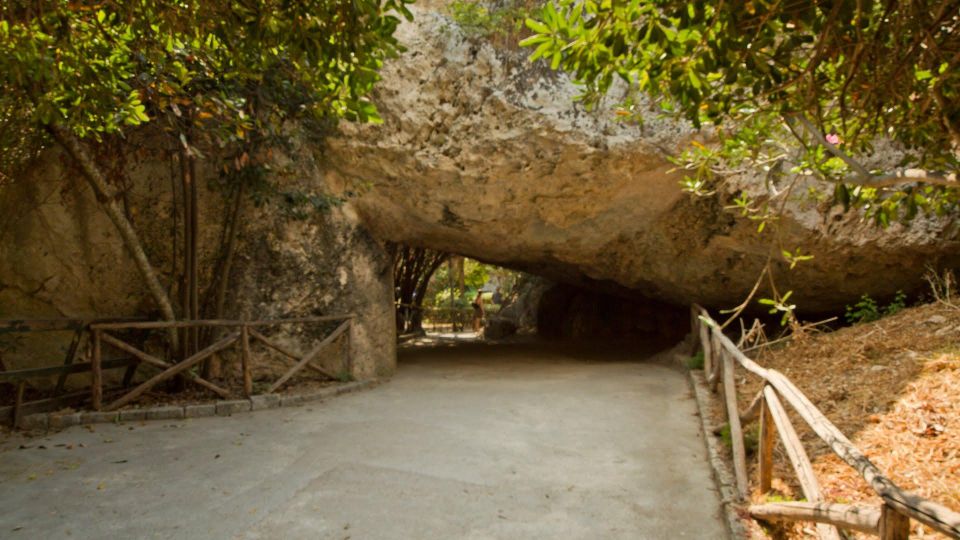
- Latomie del Paradiso: former stone quarries that now feel like shaded garden rooms
- Ear of Dionysius: the famous cave with legendary acoustics and Dionysius-era intrigue
- Greek Theater viewpoint: you’ll also catch the Nymphaeum Fountain and a wide look over the Grand Harbor
- Roman Amphitheater: gladiator-game storytelling tied to Syracuse under Roman rule
- Two-language guiding (Italian/English), which can slightly affect how long each stop feels
Syracuse Neapolis: the quickest way to understand the city
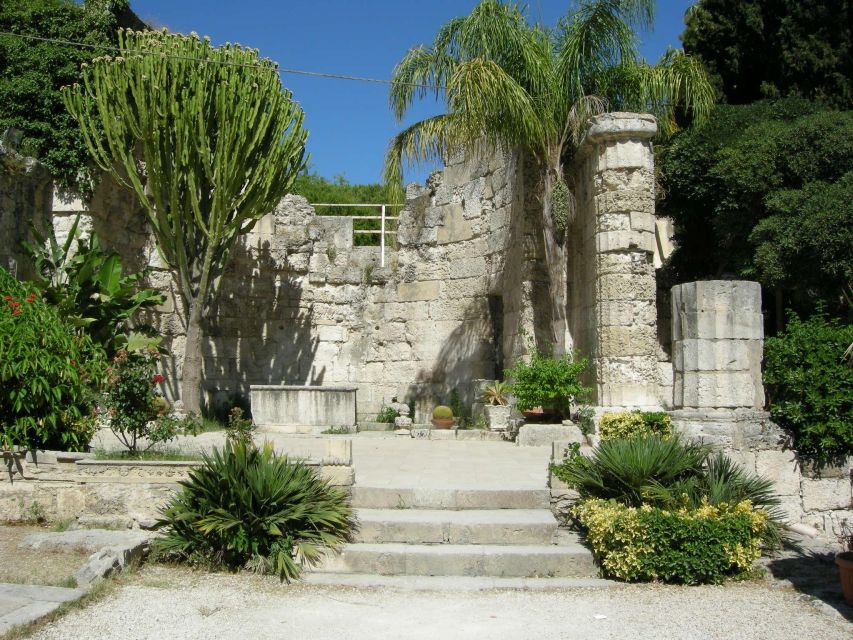
Neapolis is where Syracuse starts acting like an ancient city instead of a museum you walk through. The ruins are laid out in a way that makes sense once someone puts the story in order: quarries that fed building projects, caves tied to power and rumor, and theaters built for public life. On this tour, you move from one “chapter” to the next, with a local guide explaining what you’re seeing and why it exists.
I like that the tour doesn’t pretend everything is straightforward. The Neapolis area is famous for myths and legends, but you also get the physical clues: how people carved stone, how they shaped space for gatherings, and how Roman rulers repurposed dramatic venues. If you only have a short window in Syracuse, this is one of the most efficient ways to get your bearings.
You can also read our reviews of more tours and experiences in Syracuse.



Meeting points and skip-the-line entry (don’t arrive late)
The start is flexible depending on what you book, with two possible meeting spots: Biglietteria Parco Archeologico Neapolis or MOMENTO Ristorante. Meeting point details can vary, so check your exact confirmation and plan to arrive 20 minutes early.
The practical win here is the entrance ticket to the Neapolis Archaeological Park: the guide gives it to you at the meeting point, and you go in through a separate entrance to skip the line. That matters in summer and shoulder season, when entry lines can eat a chunk of your visit.
If you’re traveling with kids or anyone who gets impatient in lines, this is a solid choice. It also helps you start viewing the site while your energy is still high—Neapolis is big, and there’s a lot to take in quickly.
Latomie del Paradiso: quarry work turned into quiet garden rooms
Your first major stop is Latomie del Paradiso, the paradise quarries. This is one of those places that makes you slow down even without being asked. You’re looking at rock that was cut for building projects, but over time it became something else—cooler, greener, and full of shadows.
This part of the tour is more than scenery. The guide connects the “why” behind the space: the titanic labor needed to carve stone and the darker secrets tied to what happened there. You’ll get the sense that these were not just engineering sites; they were tied to power, planning, and control.
Practical tip: bring water and wear something that handles uneven ground. One review mentioned how a guide actively found shaded places to explain points when it was hot and sunny—that’s smart behavior. If you’re sensitive to heat, this stop will feel like a relief because it naturally cools down your pace.
Ear of Dionysius: cave acoustics and the tyrant story
Then you head to the Ear of Dionysius, the legendary cave with the famous acoustics. The name alone makes you think of special effects, but what you get on the tour is context: why this location became linked to Dionysius, his reputation, and the atmosphere of intrigue around him.
If you love theater and human drama, this is one of the strongest moments. The cave setting does part of the work for you—it’s a real physical space that makes the myth feel less like a headline and more like something people experienced firsthand.
One highly praised touch from the guides: Laura sang in the cave, and it’s the kind of detail that helps you remember the acoustics as something experiential, not just a trivia fact. Even if you’re not there for performances, it’s a good reminder that in ancient Syracuse, public life and storytelling often blurred together.
Greek Theater: views, fountains, and why performance mattered
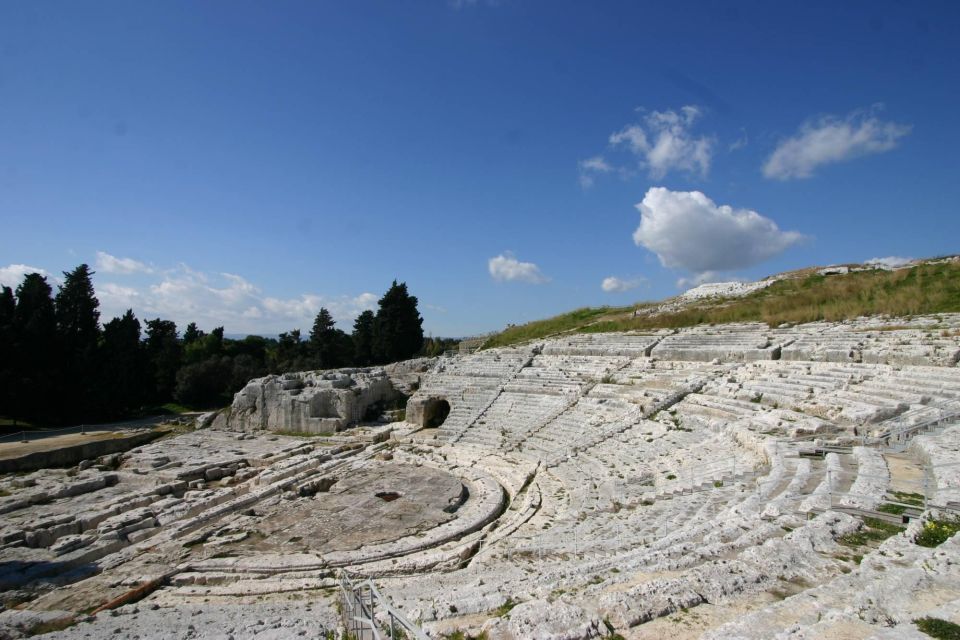
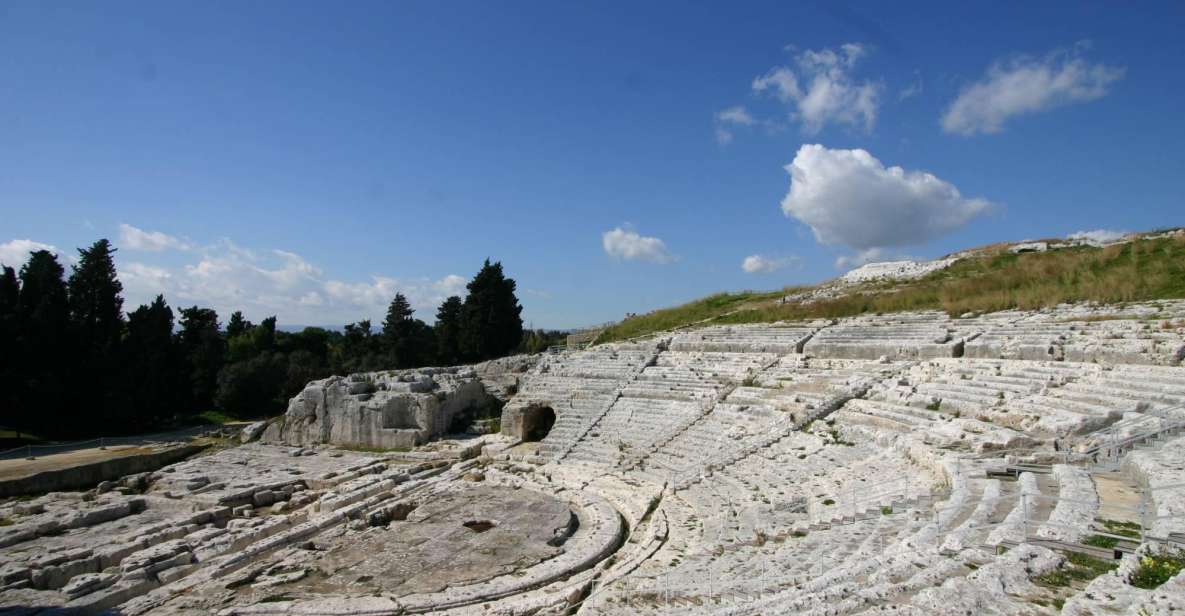
The tour moves into the Greek Theater, where you’ll see major features tied to public gatherings and ceremonies. Here’s what makes this stop more valuable than a simple viewpoint: you don’t just look at the stone seats and call it done. The guide ties the architecture to the audience experience and the culture behind it.
As you listen, you’ll also get two of the best “bonus” sights in the same area:
- the Nymphaeum Fountain
- a breathtaking view over the Grand Harbor
That view is a big deal. It helps you understand how the ancient city connected its dramatic spaces to the wider world beyond the ruins. You start to see the site as functioning—people weren’t isolated on a hilltop; they were looking out over a working harbor and a living coastline.
One possible consideration: one visitor said they would have liked to go down to the bottom of the Greek Theater. So if you’re someone who wants the full vertical experience, I suggest asking the guide what access you’ll have during your specific group flow. The main value here is still the story and the perspective, but your expectations can shape how satisfying the viewing feels.





Altar of Hieron II and the Roman Amphitheater switch in tone
Next comes the Altar of Hieron II, described during the tour as a majestic testimony to Syracuse’s past. Even if you’re not a hardcore monument reader, the guide’s job is to translate the symbolism: how rulers used architecture to broadcast identity and authority, and how Syracuse changed while keeping familiar dramatic spaces.
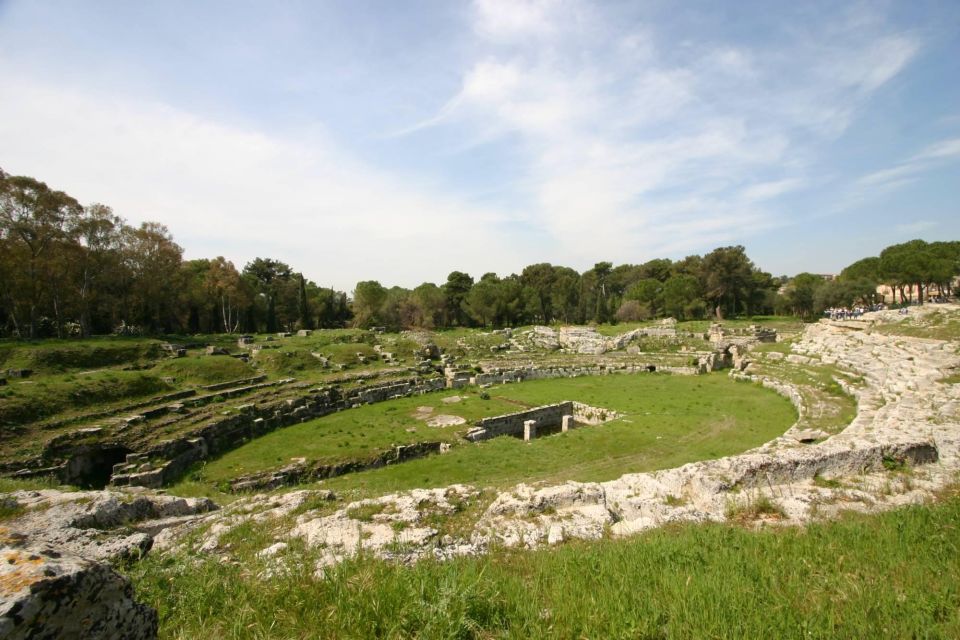
After that, the tone shifts again with the Roman Amphitheater. This is where the tour leans into the entertainment side: the guide explains gladiatorial games and the nuances of Syracuse under Roman rule. You’ll feel the change in style—Roman power brought a different kind of public spectacle, and this venue is where that story becomes visual.
What I like about ending with the Roman amphitheater is that it gives you a clean mental timeline. Greek Syracuse wasn’t wiped out; it overlapped, adapted, and got interpreted through new rulers.
How the 2-hour pace actually feels in real life
This tour runs about 2 hours, which is a tight, efficient format for Neapolis. The tradeoff is simple: you can’t linger forever, and the guide has to keep the group moving between quarry shadows, caves, viewpoints, and theater spaces.
In practice, that pacing seems to work best when:
- your guide speaks clearly and keeps a steady rhythm
- the group stays together
- you’re comfortable taking short walks between each stop
One review praised a guide for not rushing even while covering both Italian and English, and another highlighted that the English was spoken slowly enough for people not to fall behind. That’s the ideal setup.
The main friction point to watch for is this: because the tour can run in Italian and English at the same time, you might spend extra time waiting while the guide covers a point for both languages. If you strongly prefer one language and your group is mixed, ask at the start how the guide handles the split so you can plan your attention and photos accordingly.
Price and value: is $51 worth it?
At $51 per person for a 2-hour guided experience, the value comes from what’s included. You get:
- entrance ticket to the Neapolis Archaeological Park
- a live guided tour with a local guide
- skip-the-line entry through a separate entrance
That’s important because the biggest cost for many ruins visits is often the entrance ticket plus the time lost in queues. Here, the guide provides your ticket and helps you avoid that wasted time at the start. For many visitors, saving that first hour of friction is part of the real value, not just the sightseeing.
If you were to visit Neapolis on your own, you’d still enjoy the physical remains—but you’d miss the glue that connects stone features to myths, social life, and Roman transitions. In other words: the guide isn’t optional flavor. It’s what turns the park from a collection into a story you can follow.
Who should book this Neapolis and Greek Theater tour?
This tour fits best if you want:
- a high-impact Syracuse experience in a short time window
- a clear explanation of the big stops: Latomie del Paradiso, Ear of Dionysius, Greek Theater, Nymphaeum Fountain, Altar of Hieron II, and the Roman Amphitheater
- local context delivered in Italian or English
It’s also a good match for classics students, casual history lovers, and anyone who likes architecture with a human story attached. One review even described how the explanations added details not covered in university lectures—so if you’re studying ancient worlds, you’ll probably enjoy the way myths and ruins are connected.
Where it may be less ideal: if you’re very noise-sensitive or if hearing the guide is a problem for you. One visitor said they had difficulty hearing in a large group. That doesn’t mean it’s bad for everyone, but it’s worth knowing that group size and guide volume can matter.
Should you book the Syracuse Neapolis and Greek Theater tour?
Yes, if you want the best use of limited time in Syracuse and you care about understanding what you’re walking through. The combination of skip-the-line entry, a live local guide, and a tight route across the most important Neapolis spaces is a strong value at this price.
I’d skip it only if you’re planning a long, slow self-guided archaeological day and you don’t want any group pacing at all. Neapolis rewards lingering—but if your schedule is short, this guided format helps you see the whole arc: quarry to cave myth, cave to theater, theater to Roman spectacle.
If your top priority is access to the absolute lowest seating area of the Greek Theater, ask the guide what your group route allows before you commit. Otherwise, this is one of the cleanest ways to make Neapolis feel alive.
FAQ
How long is the Syracuse Neapolis and Greek Theater guided tour?
The tour lasts about 2 hours.
What is included in the $51 per person price?
Your price includes the entrance ticket to the Neapolis Archaeological Park and a guided tour of the park.
Which sites will we visit during the tour?
You’ll visit Latomie del Paradiso, the Ear of Dionysius, the Greek Theater, and the Roman Amphitheater. The tour also includes views and highlights around the Nymphaeum Fountain and the Altar of Hieron II.
Do we skip the line?
Yes. You enter through a separate entrance to skip the line.
What languages are the guides speaking?
The tour is offered in Italian and English.
Where is the meeting point?
The meeting point can vary by option, with starting locations listed as Biglietteria Parco Archeologico Neapolis or MOMENTO Ristorante.
Can I get a refund if I cancel?
Free cancellation is available up to 24 hours in advance for a full refund.