REVIEW · ROME
Private Tour – City Center
Book on Viator →Operated by Rome Guides · Bookable on Viator
Rome in 2.5 hours? Yes, if you go smart. I love the dedicated guide plus the quick hit of key sights like the Spanish Steps. The trade-off: you start and end in set piazzas, so you must handle getting there yourself (no hotel pickup).
The private setup means you only share the route with your group, not a crowd. With guides like Martina or Vincent, the storytelling stays interactive and fun, and the flexible pace helps you ask questions without feeling rushed.
In This Review
- Key Highlights You’ll Feel Right Away
- Why This Private Rome City-Center Walk Works
- Price and Value: What $139.13 Per Person Buys You
- Starting at Piazza di Spagna: The Best Place to Get Oriented
- Stop 1: Spanish Steps (15 minutes) and the Story Behind the Stairs
- Stop 2: Fontana di Trevi (20 minutes) and the Coin-Flip Tradition
- Stop 3: Piazza di Pietra and the Temple of Hadrian (5 minutes)
- Stop 4: Chiesa di Sant’Ignazio di Loyola (25 minutes) and the Illusionary Dome
- Stop 5: Pantheon (25 minutes) and Why It’s Still So Impressive
- Stop 6: Church of St. Louis of the French (20 minutes) and Caravaggio’s Work
- Stop 7: Piazza Navona (20 minutes) and the Four Rivers Fountain
- What Makes the Guide Matter Here (Martina, Vincent, and the Interactive Approach)
- Who Should Book This Tour
- Practical Tips Before You Step Out
- Should You Book This Private Rome City Center Tour?
- FAQ
- How long is the private City Center tour in Rome?
- What time does the tour start?
- Where do we meet for the tour?
- Where is the end point of the tour?
- Is this a private tour?
- What language is the tour offered in?
- Are tickets included?
- Is hotel pickup or private transportation included?
- What fitness level is required?
- What is the cancellation policy?
Key Highlights You’ll Feel Right Away
- Piazza di Spagna to Piazza Navona route: a smooth walk across Rome’s showpiece historic center
- Private, English-guided experience: commentary focused on culture, history, and what you’re seeing in front of you
- Baroque meets ancient Rome: Spanish Steps, Trevi, Sant’Ignazio, and Piazza Navona in one compact run
- Pantheon time is built in: step into one of the best-preserved ancient buildings of Rome
- Caravaggio connection at St. Louis of the French: a focused stop for people who care about his work
- Tickets included for the listed sights: each stop is marked admission ticket free on the itinerary
Why This Private Rome City-Center Walk Works
Rome is a big museum with streets. The hard part is not seeing famous landmarks—it’s understanding what you’re looking at while you’re standing there, in real time, with only a few hours.
This tour is built for that. In about 2 hours 30 minutes, you cover a high-impact stretch of the historic center, from the elegant Spanish Steps area all the way to Piazza Navona. That means you spend less time figuring out logistics and more time getting the story behind the stones.
I also like that it’s designed around a private guide, not a one-size-fits-all lecture. In practice, that usually means you can pace the walking, ask questions, and get explanations that match your interests. The guides mentioned in feedback—Martina and Vincent—are repeatedly described as engaging and interactive, which is exactly what you want when Rome is moving fast and attention spans start to fade.
One small caution: because this is point-to-point, you’ll need to plan how you get to the start at Fontana della Barcaccia (Piazza di Spagna). There’s no hotel pickup or private transport included.
You can also read our reviews of more tours and experiences in Rome.
Price and Value: What $139.13 Per Person Buys You
At $139.13 per person, this isn’t the cheapest way to do Rome’s highlights. But you are paying for three things that matter in the Eternal City:
First, you’re paying for time. The route is tightly programmed, with stop lengths ranging from 5 to 25 minutes. If you’ve ever tried to DIY these landmarks, you know how quickly “I’ll just walk over there” turns into detours and dead ends.
Second, you’re paying for guidance. The itinerary is packed with architecture styles and layers of time—Baroque churches, Renaissance connections, and ancient engineering. A guide turns that into a sequence you can remember, not a list you forget.
Third, you’re getting a truly private format with English commentary. Even if you travel as a small group, that dedicated attention is what makes the day feel personal rather than like a stamp-collecting exercise.
Also note the practical side: group discounts are offered, and the tour is frequently booked well in advance (average booking is 148 days). That popularity isn’t proof you must book—just a hint that the timing fits a lot of schedules.
Starting at Piazza di Spagna: The Best Place to Get Oriented
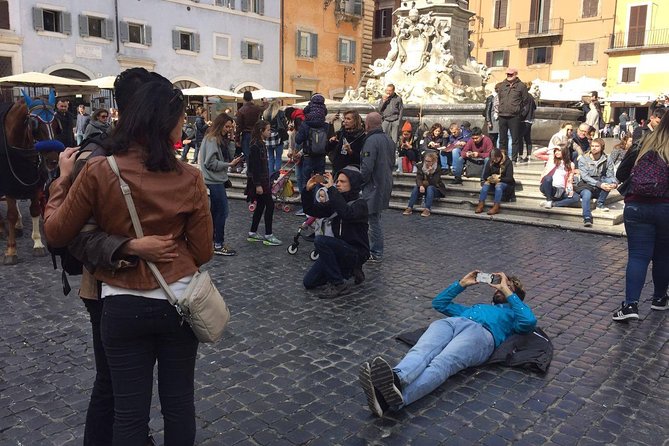
The tour starts at Fontana della Barcaccia, Piazza di Spagna at 2:30 pm, and it ends at Piazza Navona. If you’re new to Rome, this is a good trade. Piazza di Spagna is central, recognizable, and it sets you up right where Rome’s grandest walking streets and major sites begin.
Here’s what to expect right away:
- A clear meeting point at Fontana della Barcaccia
- Easy access to public transport nearby
- A walk that’s mostly manageable with moderate physical fitness
Because it starts in the afternoon, you’ll get daylight for the outdoor landmarks like the Spanish Steps and Trevi. If you plan to add other sights before this tour, just remember you’ll be on your feet afterward too.
And since the end point is Piazza Navona—with two taxi stations close by—you have a simple way to continue your day without having to reverse-engineer your route back to your hotel.
Stop 1: Spanish Steps (15 minutes) and the Story Behind the Stairs
The Spanish Steps are one of Rome’s most iconic monuments. They’re also a living social space, not a silent photo backdrop. This stop is described as a fashion area and social meeting point for all Romans, and that matters for how you experience it.
In 15 minutes, you’re not there to watch them empty out. You’re there to get the “what and why”:
- Baroque architecture you can recognize by its dramatic feel and theatrical proportions
- The way the steps function as a stage for daily life, shopping energy, and people-watching
A quick practical thought: because this is a fast stop, decide what you want from it. If you care most about the architecture, spend extra time looking up and across the lines. If you care more about the human side, shift your focus to the stairs as a meeting place and think about how Romans actually use public spaces.
Stop 2: Fontana di Trevi (20 minutes) and the Coin-Flip Tradition
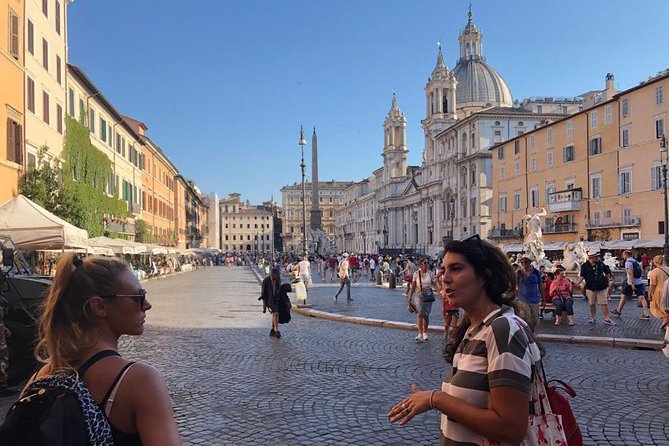
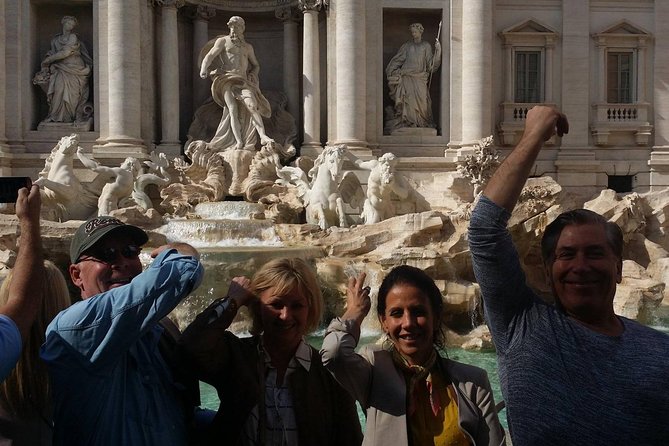
Next up is the Fontana di Trevi, where the tour gives you the famous myth in plain terms. You’re told to flip a coin to be back in the Eternal City, and the center of the fountain is described as an ocean with a guardian of your coins—dominating waves and Tritons.
This is a good example of why a guided route helps. Trevi is crowded and everyone has a camera. A guide gives you something else to look for: the symbolism. When you understand the figures and the message, the fountain becomes more than a postcard.
You’ll also appreciate the allocated time—20 minutes is long enough to take a few photos, but short enough that you keep momentum instead of getting stuck in a loop of waiting.
Small drawback to keep in mind: if you’re the type who needs 45 minutes to absorb details, this stop might feel short. That’s not the tour’s fault—it’s just the nature of a compact highlights program.

Stop 3: Piazza di Pietra and the Temple of Hadrian (5 minutes)
Piazza di Pietra is quick: about 5 minutes. But it’s not a random stop. The route brings you past the ancient temple of Emperor Hadrian, one of Rome’s notable leaders.
This is a classic “pass-by stop” that helps you connect the dots. You’re walking through Rome’s historic center and realizing that many Baroque masterpieces sit on top of older Roman foundations. Even without a long stay, you get the key idea: the city keeps rewriting itself.
If you’re the kind of person who reads plaques and loves inscriptions, this brief moment might still leave you wanting more. But it also keeps the overall pacing tight for the rest of the itinerary.
Stop 4: Chiesa di Sant’Ignazio di Loyola (25 minutes) and the Illusionary Dome
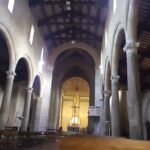
Now you get the kind of church Rome does so well: theatrical Baroque design. The Chiesa di Sant’Ignazio di Loyola is described as having an illusionary dome, a marvellous ceiling, and the tomb of Pope Gregory XV.
In 25 minutes, you can do more than look at the outside. You can study the interior’s effect—how the illusion makes the space feel bigger, how the ceiling pulls your eye upward, and how symbolism and religion share the same visual language.
Here’s the value of this stop in a practical sense: it trains your eye for Baroque. After Sant’Ignazio, Piazza Navona later will make more sense, because you’ll recognize the same design principles—drama, movement, and controlled chaos.
If there’s any consideration here, it’s simple: churches ask for a little patience. If you’re in a mood to sprint between sites, this is the stop where you’ll need to slow down.
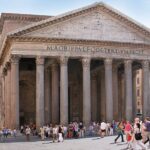
Stop 5: Pantheon (25 minutes) and Why It’s Still So Impressive
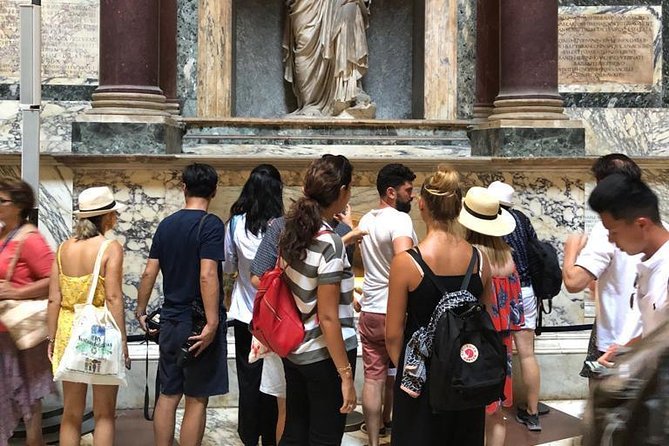
The Pantheon is the big anchor stop. You’ll enter and spend about 25 minutes at the best-preserved ancient Roman building.
The tour frames it in a way that’s easy to remember:
- It shows the perfect engineering of Romans
- There are legends about the monument
- It includes a symbolic tomb of Raffaello
You don’t need to be a Roman-stone engineer to appreciate what’s happening here. Even without special expertise, you can focus on the structure’s clarity and the way the building still holds its power.
In a short window, I’d aim for three things:
- Look up first, so your eyes catch the scale immediately
- Notice how the space feels “designed,” not just built
- Listen to the guide’s connection between the ancient monument and later cultural memory like Raffaello
The possible drawback: if you want maximum time here, 25 minutes can feel like a taste, not a meal. But for most people doing a tight center loop, it’s a strong balance.
Stop 6: Church of St. Louis of the French (20 minutes) and Caravaggio’s Work
If you care about art that feels intense and human, this stop is for you. The Church of St. Louis of the French is presented as a must because it contains three of the most famous paintings by Caravaggio.
That’s the kind of statement that makes planning easier. Instead of hoping you’ll stumble on the right museum or the right chapel, the tour directs you straight to a specific reason to go: Caravaggio.
This is also one of the most personality-driven stops in the itinerary. If you already know Caravaggio, you’ll be eager. If you don’t, you’ll still walk away knowing why his name comes up again and again. Either way, you get a focused introduction rather than a random art detour.
Time is 20 minutes, which is usually enough to understand what the paintings are and why they matter, without draining your energy before the final outdoor highlight.
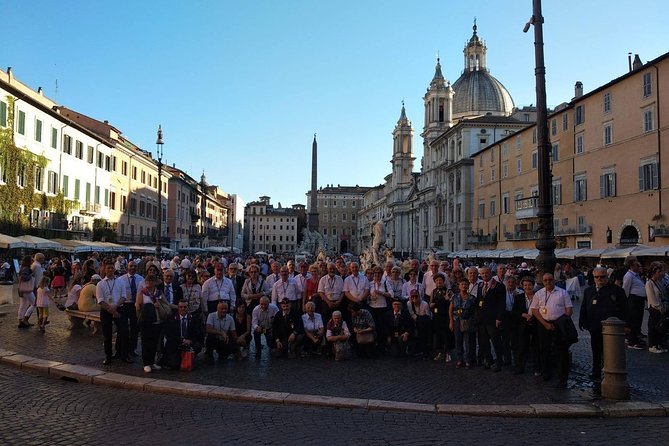
Stop 7: Piazza Navona (20 minutes) and the Four Rivers Fountain
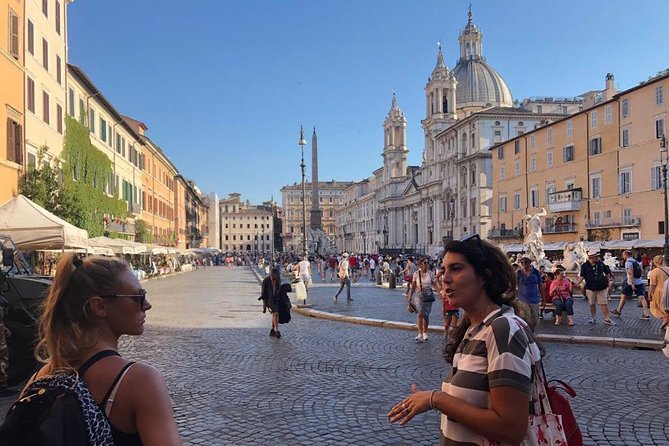
The last major stop is Piazza Navona, for about 20 minutes. The tour explains that the square is based on an ancient Roman stadium and is one of the best examples of Baroque style.
You’ll also see:
- The Church of St. Agnes
- The Fountain of the Four Rivers
This is where the walk starts to feel complete. You’ve seen Baroque churches and Roman engineering. Now you see how Rome turns public space into a stage—an urban set design where art and daily life sit side by side.
If you want to get the most out of this stop, take a slow lap and let your eyes rest on the fountain and the church façade patterns. Your guide can connect the ancient stadium concept to the Baroque layout, so you understand the square instead of just photographing it.
And because this is the tour’s endpoint, you finish in a spot with taxis close by, which keeps your afternoon from getting messy.
What Makes the Guide Matter Here (Martina, Vincent, and the Interactive Approach)
One thing that keeps this tour highly rated is how the guiding style shapes the experience. In feedback tied to named guides like Martina and Vincent, the common thread is interaction: questions are welcomed, and the guide keeps the tone engaging—sometimes even funny.
That matters in Rome because the sites can feel “over famous.” If you only hear dates and names, you’ll forget them ten minutes later. If you get guided commentary about culture and history while you’re actually looking at details—then it sticks.
It also helps that the tour’s pace is flexible. You’re not forced through a rigid conveyor belt. Instead, you can spend a little more time at the places you care about and keep the rest moving smoothly.
Who Should Book This Tour
This private City Center tour fits best if you:
- Want a first introduction to Rome’s historic core without spending your day planning
- Like the mix of ancient Rome + Baroque churches
- Prefer a guide who can answer questions and keep things lively
- Are working with about half a day and want high value per hour
It may feel less ideal if you:
- Need long, unhurried time at each site (this tour is built around short stops)
- Want a hotel pickup or private transportation included (it’s not part of the package)
- Are looking for a heavy museum day focused on one indoor collection rather than multiple landmarks
Practical Tips Before You Step Out
A few tips that help you enjoy this kind of compact walk in Rome:
- Wear comfortable shoes with grip. You’ll be moving between Piazza di Spagna and Piazza Navona, with multiple church interiors.
- Bring a small water plan for yourself. The tour covers multiple stops, and you’ll have short segments rather than long breaks.
- Have your meeting-point moment handled well. Since there’s a set start at 2:30 pm, arrive a few minutes early so you’re not stressing.
- Use the guide time well. Ask one or two questions that match your travel style—Baroque details, ancient engineering, or the Caravaggio connection.
Should You Book This Private Rome City Center Tour?
If you want a well-paced, English-guided run through Rome’s top historic center landmarks, this is an easy yes. The combination of Spanish Steps, Trevi, Pantheon, and the art-and-architecture stops like Sant’Ignazio and the Caravaggio connection makes it efficient without turning into a blur.
I’d book it especially if you like structure: you know where you’ll be, what you’ll see next, and you’ll have a guide to help you notice what you might otherwise miss. The main reason not to book is simple: if you need hotel pickup, private transport, or lots of extra time at each site, you’ll probably want a different format.
FAQ
How long is the private City Center tour in Rome?
It runs for about 2 hours 30 minutes.
What time does the tour start?
The start time is 2:30 pm.
Where do we meet for the tour?
The meeting point is Fontana della Barcaccia, Piazza di Spagna, 00187 Roma RM, Italy.
Where is the end point of the tour?
The tour ends at Piazza Navona, 00186 Roma RM, Italy.
Is this a private tour?
Yes. It’s a private tour/activity, and only your group participates.
What language is the tour offered in?
The tour is offered in English.
Are tickets included?
Yes. Tickets are included, and the itinerary lists admission ticket free for each stop.
Is hotel pickup or private transportation included?
No. Hotel pickup and drop-off are not included, and private transportation is not included.
What fitness level is required?
Travelers should have a moderate physical fitness level.
What is the cancellation policy?
Free cancellation is available. You can cancel up to 24 hours in advance for a full refund.