REVIEW · ROME
Rome: Colosseum, Forum, & Palatine Hill Entry & Audioguide
Book on GetYourGuide →Operated by City Wonders Ltd. · Bookable on GetYourGuide
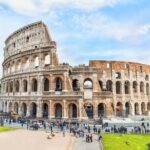
Three big ancient sites, one smooth plan. This tour links the Colosseum, Roman Forum, and Palatine Hill with escorted entry and a phone audioguide so you can move at your speed. There’s also an option to step onto the arena floor if you want the extra wow factor.
What I like most is the mix of structure and freedom: you get escorted access, but you explore on your own timeline with an audio guide on your phone. I also appreciate the built-in route logic—Colosseum first, then the Forum’s public-life core, and finally Palatine Hill for those Rome rooftop-style views.
One thing to consider: the experience leans heavily on your phone app working well in-country and inside the sights, and check-in is strict about names and ID. If your meeting-point timing is off or your phone audio setup glitches, the tour can feel less smooth than you expected.
In This Review
- Key things to know before you go
- What You Get: Colosseum, Roman Forum, Palatine Hill in 3 Hours
- Entering the Colosseum Fast (and Not Getting Tripped Up)
- The Phone Audioguide: Great When It Works, Worth Testing Early
- Colosseum Layout Time: How to Experience the 3 Key Moments
- Arena Floor Upgrade: Worth It If You Want Foot-on-Stone Reality
- Roman Forum Entry: Turning Around and Seeing the City Logic
- Palatine Hill: The Finish Line for Panoramic Rome Views
- Meeting Point at Largo Gaetana Agnesi: How to Find It Under Pressure
- Price and Value: Is $58 a Good Deal?
- Who This Tour Suits (and Who Might Be Happier Elsewhere)
- Small Practical Tips That Make the Whole Day Feel Easier
- Should You Book This Tour?
Key things to know before you go
- Escorted entry gets you through the hard part faster so you can spend more time walking and less time waiting.
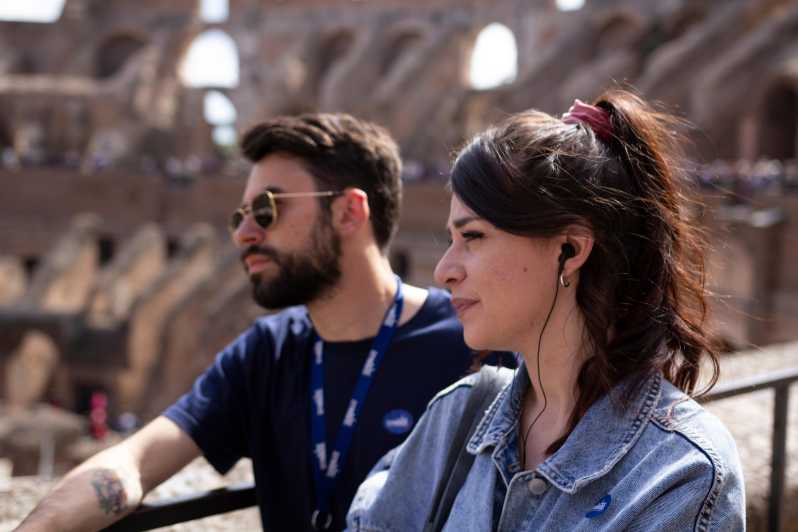
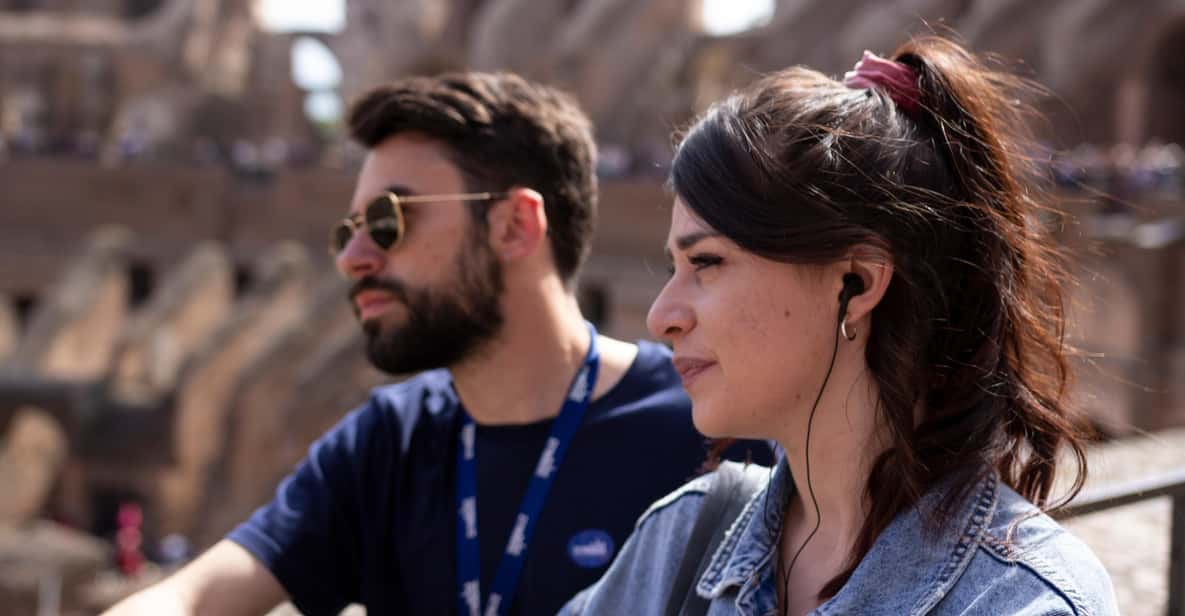
- Phone audioguide, offline-capable means you control pace and language once you have the app downloaded.
- Optional arena floor access can turn the Colosseum from a view-and-photos stop into a floor-level experience.
- Palatine Hill ends with panorama value when you’re ready to slow down and take in the whole spread.
- Strict ID/name matching is part of the entry rules for the Colosseum—double-check everything before you arrive.
- Meeting point is specific (Largo Gaetana Agnesi above Metro Line B), so plan extra time to find it.
What You Get: Colosseum, Roman Forum, Palatine Hill in 3 Hours
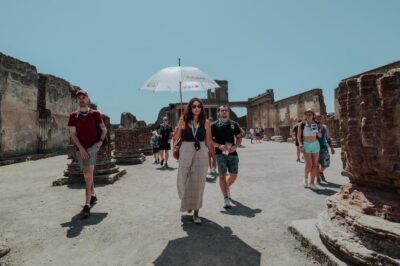
This is a 3-hour “best-of” hit for ancient Rome. You start at the Colosseum, then move into the Roman Forum area, and finish on Palatine Hill. The biggest practical win is that you don’t have to stitch together separate tickets and routes on your own—you’re guided to the right places, while still deciding how long you linger at each stop.
The format is straightforward: you get escorted entrance to the Colosseum, then you’re set up to explore by audioguide. That pacing matters. Colosseum ticket lines and entry flows can be chaotic, and this sort of escorted start helps you avoid losing your energy before you even reach the monument.
The tradeoff is that it’s not a classic live guide who stays by your side every minute. You’re mostly responsible for your own flow, guided by the audio segments on your phone. If you like learning on-the-go and hate being rushed, that’s a good match. If you want a person to explain everything in real time, you may find the audio-only approach less satisfying.
You can also read our reviews of more tours and experiences in Rome.


Entering the Colosseum Fast (and Not Getting Tripped Up)
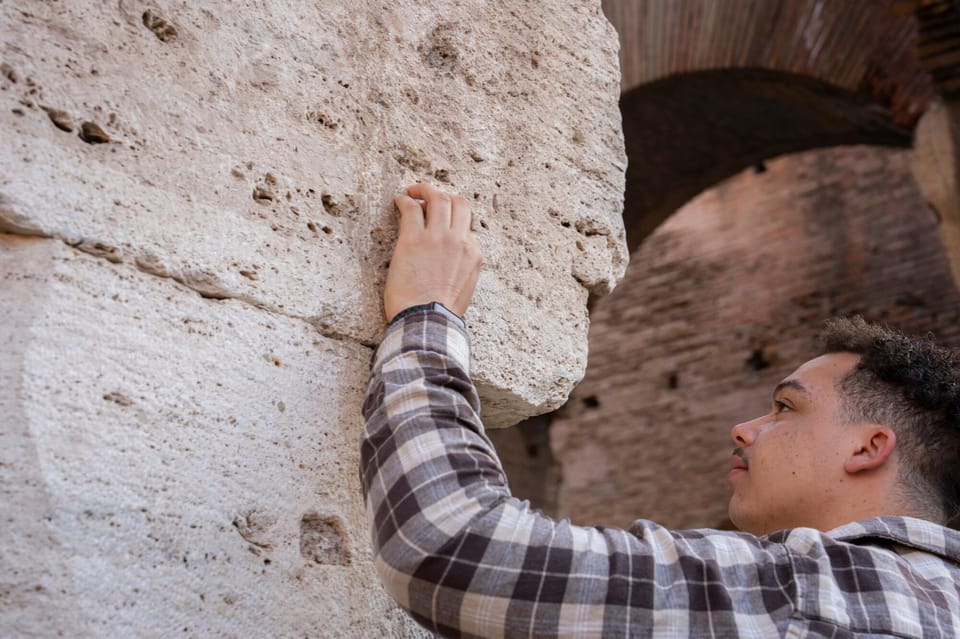
The core benefit is the escorted entrance to the Colosseum. In practical terms, that means less time figuring out lines and entrances and more time inside the arena walls—where the scale is the whole point.
Colosseum entry here comes with a strict requirement: you must book using the full participant names, and your ID must match what’s on the ticket. Name changes aren’t permitted after confirmation, and entry can be refused if your document doesn’t match. That’s not a “nice to have.” It’s the rule that matters most on arrival day.
Also plan for the restrictions: you can’t bring luggage or large bags. Rome in summer is hot; you still want a small bag that fits the rules, plus water and sun protection.
The Phone Audioguide: Great When It Works, Worth Testing Early
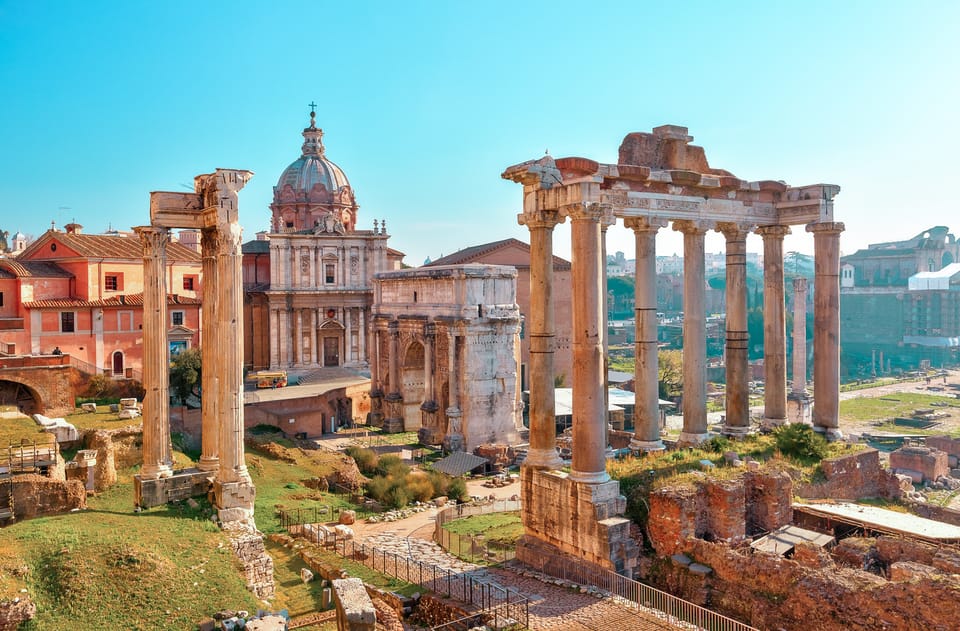
You’ll use an audio guide on your mobile phone. The instruction is clear: download the app before the tour, and once it’s downloaded you can use it offline. This matters a lot in Italy. If you rely on cellular data, you can end up with silence exactly when you want the narration the most.
The languages listed for the audio guide are wide: Chinese, German, English, French, Italian, Polish, Portuguese, and Spanish. If you’re traveling with someone who doesn’t want to read wall signs, that’s a big convenience.
Here’s the practical expectation: the app is meant to guide you through the Colosseum-Forum-Palatine route by triggering content as you move through the areas. One risk is that phone location detection can be finicky inside big stone sites, and then you may need to use the on-screen controls to get the right segment playing. To keep this painless:
- Arrive with the app already opened at least once before you reach the crowds.
- Bring earbuds/headphones so audio stays clear and private (and so you’re not stuck hearing through a speaker).
- If GPS/location seems off, don’t assume the app is useless. Try to manually select the correct stop/section in the interface.
When it’s functioning well, you get a lot from the walk without needing to coordinate a group. You can speed up for photos, slow down to read what’s in front of you, and replay a segment if you want better context.
Colosseum Layout Time: How to Experience the 3 Key Moments
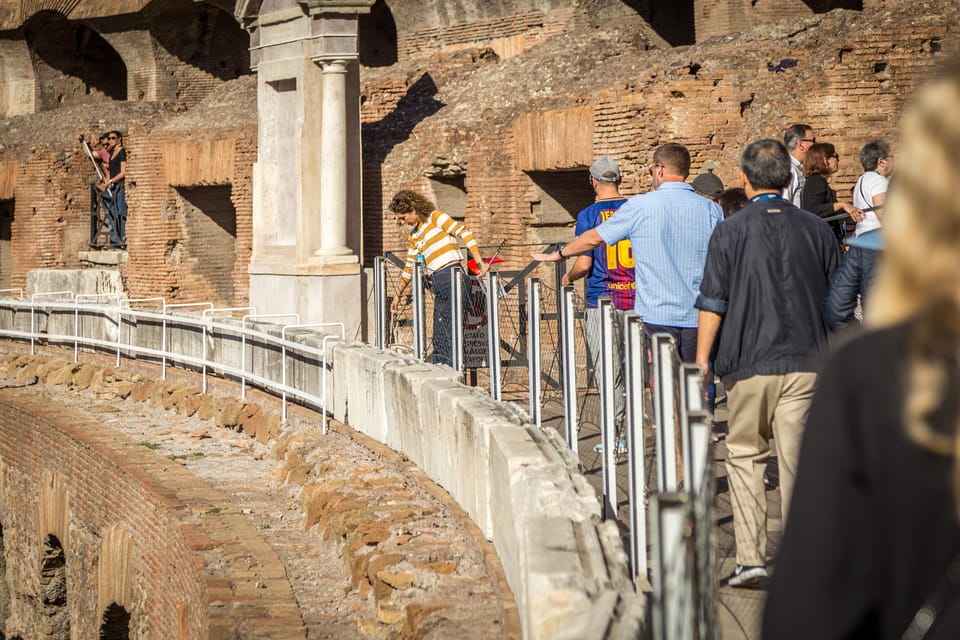
The tour focuses on walking through the Colosseum as you follow the audio guide. Even without an in-person speaker, the building delivers a lot if you pace yourself.
I’d plan around three emotional beats:
1) First impact inside the seating bowl
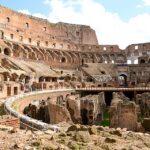
As soon as you enter, the Colosseum hits you visually. The audio helps you place what you’re seeing in a Roman entertainment context. Don’t rush this first section. Stand still for a minute. Watch how light hits the stone and how the sightlines angle toward the center.
2) Movement through the walkable corridors
This is where the audio can make your steps more meaningful. When you hear about crowd life, entrances, and how spaces were used, the building stops feeling like a museum shell and starts feeling like an actual arena.
3) Leaving with a sense of scale
Once you’ve walked your way through, you’ll probably understand the monument better just by moving around it at your own pace. That matters for what comes next: the Roman Forum.
Arena Floor Upgrade: Worth It If You Want Foot-on-Stone Reality
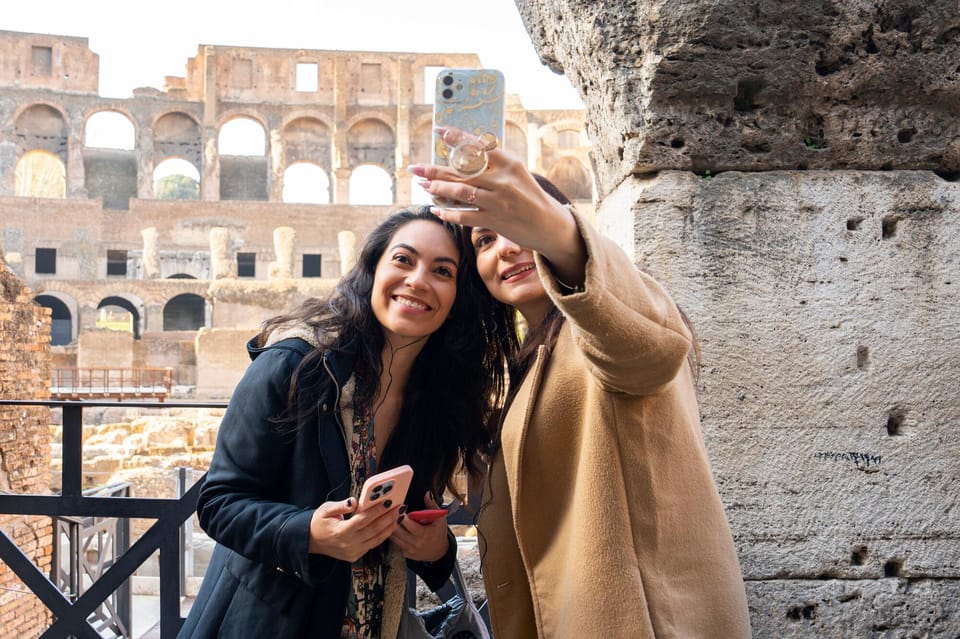
There’s an optional upgrade that adds access to the Colosseum arena floor. If you’re deciding whether to pay extra, use this simple test: do you want photos from above and inside, or do you want to stand where events happened?
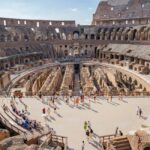
With the upgrade, you descend down to the arena floor and walk in the footprint zone associated with the Colosseum’s performances. Even if you’ve seen the arena floor in pictures before, standing on it changes how the whole venue reads. The walls don’t just loom; they frame a specific view at your eye level.
The upgrade is optional. If you’re short on time or on energy, the standard Colosseum walk still feels like the main attraction. But if you love “walk where it happened” moments, this is the most direct upgrade choice in this experience.


Roman Forum Entry: Turning Around and Seeing the City Logic
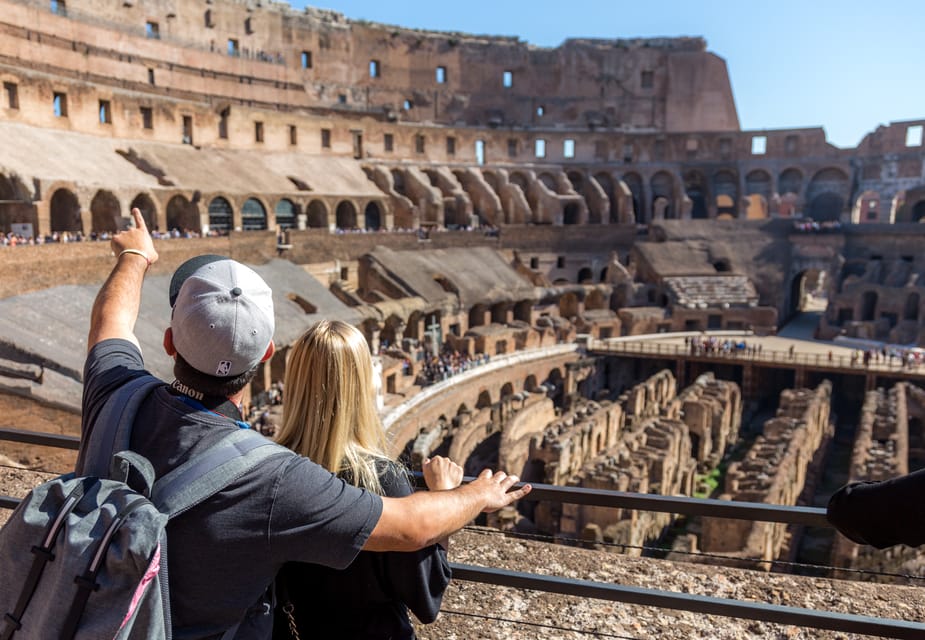
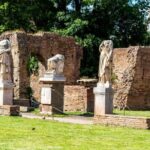
After the Colosseum, you move into the Roman Forum, described as the center of Roman public life. This stop is less about one single dramatic view and more about understanding how a city worked.
What makes the Forum special on foot is how quickly the space can go from impressive to confusing. Audio helps here because you can connect the dots while you’re walking—temples, monumental structures, and the feeling of civic movement.
The best way to experience the Forum is to think like a pedestrian in an ancient city, not like a person hunting for the perfect photo. Pause where the audio prompts you to notice something. Then take a few slow steps forward and let the next part re-orient you.
Also, don’t underestimate the walking heat. If you’re going midday, plan water access and take a few short breaks rather than pushing until you feel fried.
Palatine Hill: The Finish Line for Panoramic Rome Views
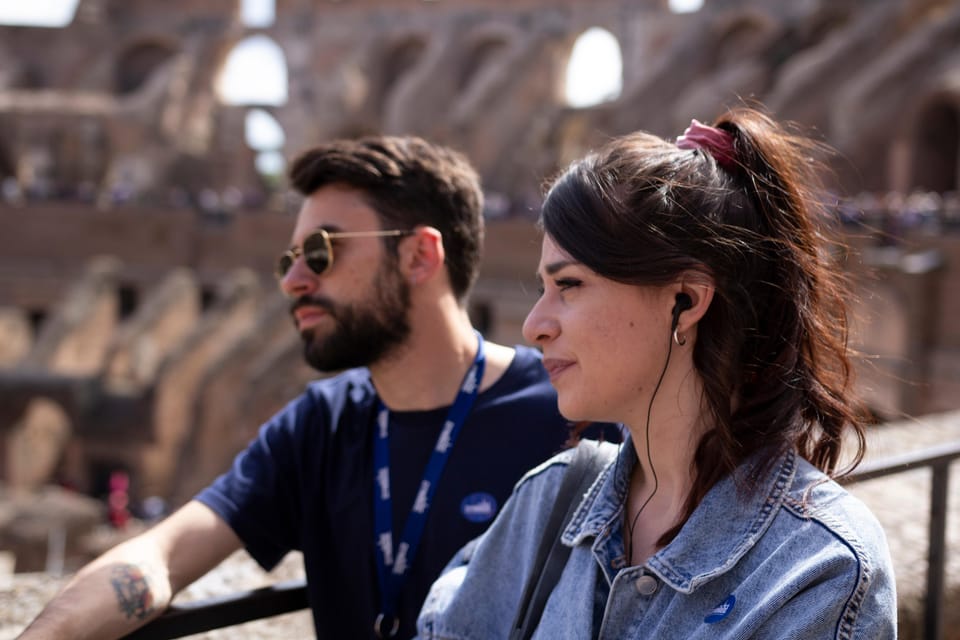
Palatine Hill is where the tour ends, and it’s a strong choice to finish here. The hill gives you a chance to slow down and look outward over Rome while also seeing ruins below.
This is the moment that often makes the whole itinerary feel “complete.” Colosseum is theatre. Forum is public life. Palatine is legendary origins and royal-era association. When you climb up, you stop thinking only about ruins as objects and start seeing them as part of a larger city picture.
If you’re taking photos, take some from higher up and then a few from lower angles. The stone textures and distant skyline can look very different depending on where you stand. And because you’re ending the tour, you can linger without worrying about your next big transition.
Meeting Point at Largo Gaetana Agnesi: How to Find It Under Pressure
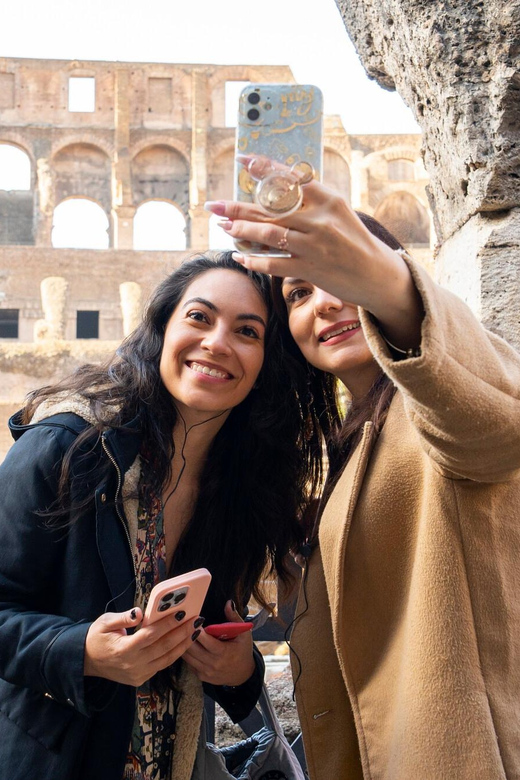
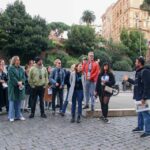
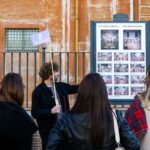
This tour has a clear meeting point: Largo Gaetana Agnesi, above the 2nd floor of the Colosseo metro stop on Metro Line B (blue line). A representative wears a blue polo shirt or jacket.
Getting there by metro is doable, but don’t do it at the last second. Here’s the core route logic:
- Exit the metro turnstiles.
- Take an immediate right down the tiled hall to the escalator or stairs inside the station.
- At the top, turn right and go up the short stairs to exit.
- Turn left and take the stairs ahead on the left to the small, oval-shaped square: Largo Gaetana Agnesi, with views toward the Colosseum.
If the metro stairs are closed, the backup instruction is to walk down the road on your left passing in front of the Colosseum, then keep following Via Nicola Salvi upstairs until you reach the square.
One “don’t risk it” note: check-in is tied to entry. If you miss your meeting window, you may lose your shot at the timed entry you paid for—so give yourself buffer time.
Price and Value: Is $58 a Good Deal?
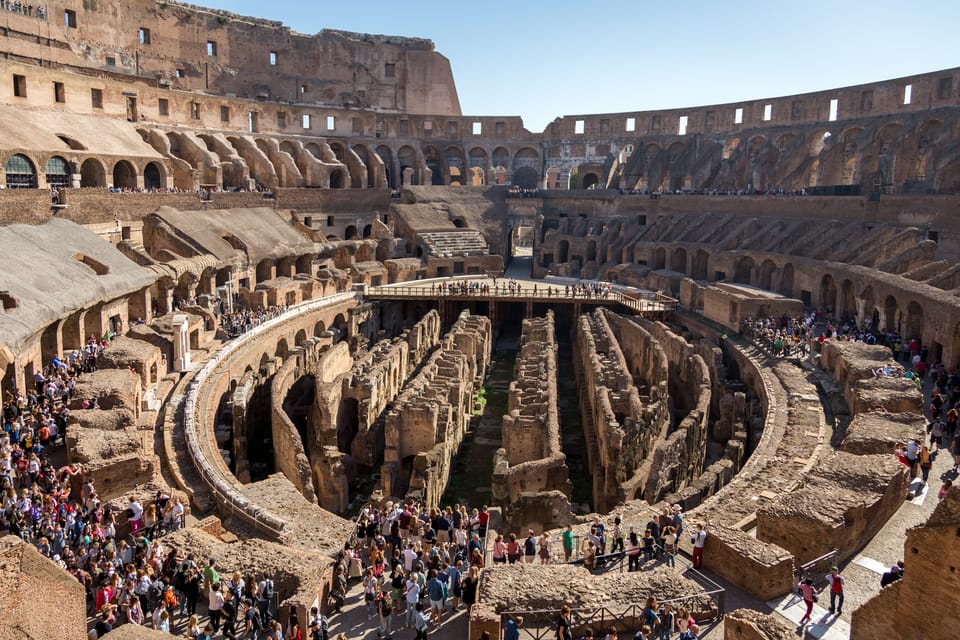
At about $58 per person for 3 hours, you’re paying for a combo that’s hard to replicate cheaply on your own: escorted entry plus paid entries for the Colosseum, Roman Forum, and Palatine Hill, plus a phone audioguide included in the price.
The value question comes down to what you’d otherwise spend time on:
- If you dislike line-studying and entrance-hunting, escorted entry is worth real money in stress saved.
- If you’re the type who likes learning while walking, the audioguide adds practical value beyond “just tickets.”
- If you’re the type who wants the arena floor, you may end up choosing the optional upgrade anyway, which changes the “effective” price.
One caution: if your expectations are for a live guide doing the talking the whole time, your value perception might dip. This is structured around self-paced audio, not continuous narration from a person. That’s not wrong—just know what you’re buying.
Who This Tour Suits (and Who Might Be Happier Elsewhere)
This experience is a good fit if you:
- Want easy entry to three major sites with minimal fuss.
- Like exploring on your own time rather than sticking to a strict walking pace.
- Appreciate a phone audioguide and don’t mind managing a screen in busy spaces.
- Want panoramic Rome views at the end without planning the route yourself.
I’d think twice if you:
- Prefer a fully live guided explanation throughout every stop.
- Expect the phone app to always nail location detection perfectly.
- Are relying on strict phone hardware or headphone compatibility and haven’t tested your setup.
This is also not suitable for people with mobility impairments or wheelchair users, since it’s not wheelchair accessible.
Small Practical Tips That Make the Whole Day Feel Easier
These aren’t flashy, but they help a lot:
- Bring water, sunscreen, and a sun hat. The walking adds up quickly across Colosseum-Forum-Palatine.
- Bring your ID (not just a photo). Colosseum entry requires it to match ticket names.
- Download the app before you arrive and confirm you can open it offline.
- If you use headphones, bring your own earbuds. A phone mismatch can ruin audio quick.
Should You Book This Tour?
Book it if you want the best ancient Rome “triangle” (Colosseum + Forum + Palatine) handled with escorted entry and a phone audioguide, and you’re comfortable exploring mostly by yourself while the audio keeps you oriented. This is a smart value choice for independent travelers who want structure at the start and freedom on the walk.
Skip or reconsider if you need constant live guiding, or you know you’ll struggle with app setup, offline audio, or strict meeting-point timing. In those cases, you’ll likely feel the friction more than the benefits.