REVIEW · ROME
Rome: Colosseum, Roman Forum & Palatine Hill Guided Tour
Book on GetYourGuide →Operated by Walks of Italy · Bookable on GetYourGuide
Gladiators, democracy, and myth—under one tight clock. This tour is a smart way to cover three headline sites with express access and a small group (max 8), plus an expert guide who helps you read the ruins instead of just staring at them. I especially like the Colosseum time on the first and second levels, where the guide turns arches, inscriptions, and battle stories into something you can actually picture. I also love the Roman Forum walkthrough, where you learn what you’re looking at—shops, bath areas, civic spaces—so it stops feeling like random stone. One drawback: this is a walking tour with steps, and you should not plan on lots of extra free time inside the Colosseum for wandering.
It runs about 3 hours (with focused chunks at each stop), starts at 11:15 AM only, and is led in English. You’ll meet near the Oppio area or a Colosseum-side option depending on what you book, then finish back near the meeting point.
In This Review
- Key things to know before you go
- Why this Colosseum-Forum-Palatine route feels so much faster than going solo
- Meeting point and timing: what the 11:15 AM start means for your day
- Entering the Colosseum: pre-reserved entry plus real context on gladiator life
- Roman Forum: the art of reading ruins so they stop looking the same
- Palatine Hill: founding myth meets palace ruins
- The pacing: how 3 hours works (and what you’ll do with it)
- Price and value: what $75.45 includes that you’d otherwise pay for twice
- What to bring, what not to bring, and how to make the day smoother
- Who should book this tour, and who should choose a different style
- Tips that can save you time once you’re in Rome
- Book it or skip it? My honest recommendation
- FAQ
- Where is the meeting point for this Colosseum, Forum, and Palatine Hill tour?
- What time does the tour start?
- How long is the tour, and how is the time split between the sites?
- Does this tour include Colosseum tickets and skip-the-line access?
- Do I need an ID?
- What should I bring with me?
- Is this tour suitable for strollers or wheelchairs?
Key things to know before you go
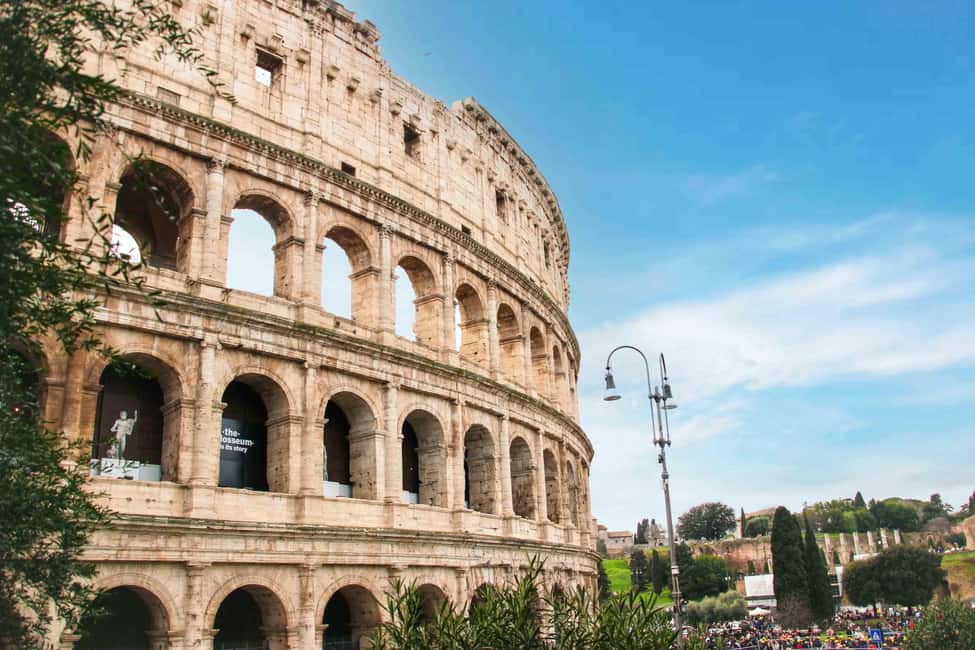
- Skip-the-crowds approach with pre-reserved Colosseum entry, so your morning doesn’t start in a long line
- Max 8 guests keeps the pace human and makes it easier to ask questions
- Colosseum first and second levels with stories about gladiators, emperors, and graffiti marks
- Roman Forum structure-spotting (you learn what differs and what those differences likely meant)
- Palatine Hill + the Romulus and Remus legend paired with palace ruins where the city’s origin myth lives
- Headsets are included when groups run over 6, which helps a lot in noisy, echoing spaces
Why this Colosseum-Forum-Palatine route feels so much faster than going solo
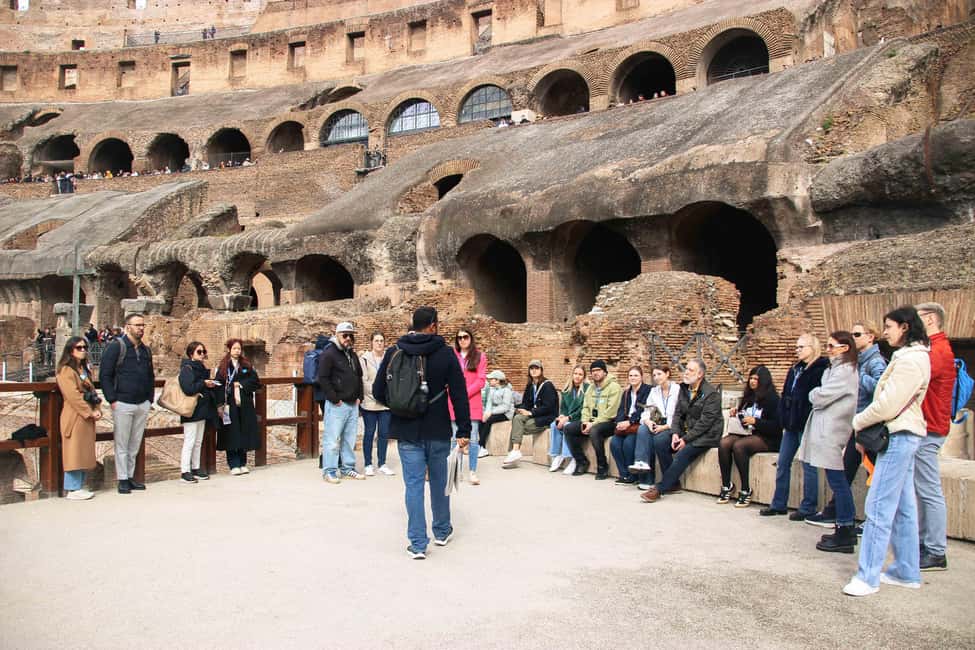
Rome’s ancient sites are famous for a reason. They’re also famous for one annoying thing: you can spend half the day doing what I call map-and-mystery tours—walking, looking, guessing, and hoping you’re standing in the right place for the right story.
This tour fixes that by doing two practical things. First, it gives you reserved entry into the Colosseum so you don’t start the day stuck in peak-hour bottlenecks. Second, it pairs each location with a guide who can translate stone into meaning—how the spaces worked, what the details suggest, and why certain ruins matter.
I like that it’s not trying to cram every corner of Rome into 3 hours. It focuses on the three big “what is Rome?” chapters: spectacle at the Colosseum, civic life in the Roman Forum, and the founding myth at Palatine Hill.
You can also read our reviews of more tours and experiences in Rome.


Meeting point and timing: what the 11:15 AM start means for your day
The tour starts at 11:15 AM only. That single start time matters because it shapes your whole plan. If you’re the type who hates “we’re late, now we sprint,” this helps. You can treat the morning as a set-up for a structured afternoon: arrive early enough to find your meeting spot, use the restroom if needed, and get your photos ready before you enter the ruins.
There are two start-location options, depending on your booking:
- Via delle Terme di Tito, 72, at Oppio Caffè (listed start option)
- Another meeting point option is also provided and can vary by what you booked
Either way, you’ll get guided coordination at the start. One practical tip I’d follow: if your map app sends you toward a closed path, try routing yourself by the Colosseo metro station side to reach the pickup area. It’s the kind of small fix that saves time and stress.
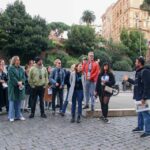
The group heads inside and walks steadily. Expect comfortable-but-firm pacing. You’ll cover enough ground to feel you really saw the sites, without spending the whole time trapped behind a slow-moving pack.
Entering the Colosseum: pre-reserved entry plus real context on gladiator life
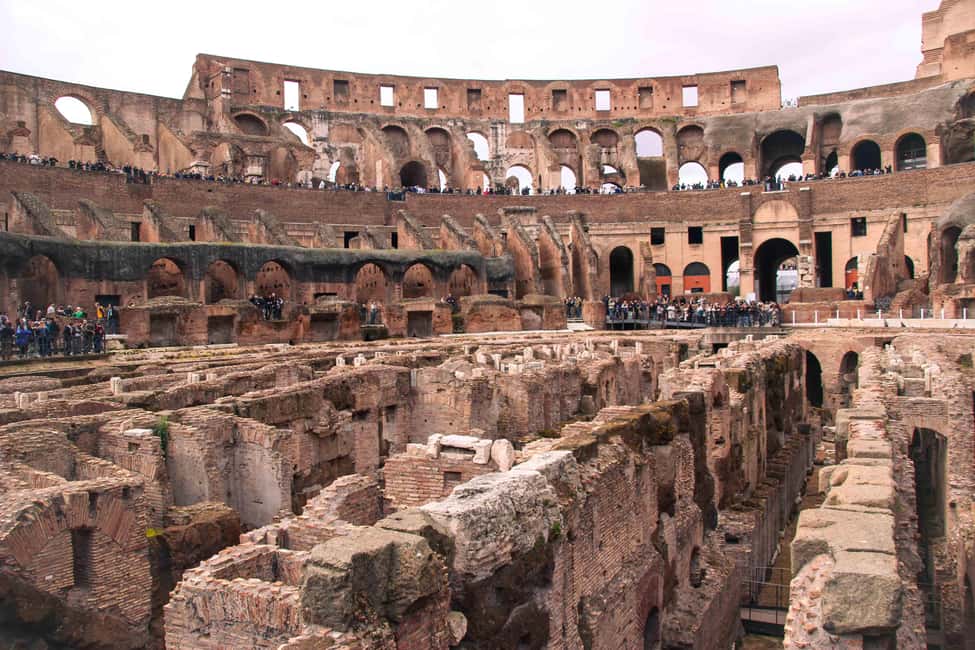
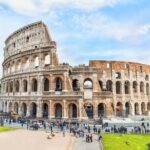
The Colosseum is the headline, but the entrance moment is where this tour earns its keep. You start with pre-reserved passes and bypass the most time-wasting crowd crush. That alone can turn a frustrating arrival into a smooth “walk in, look up, then listen” kind of start.
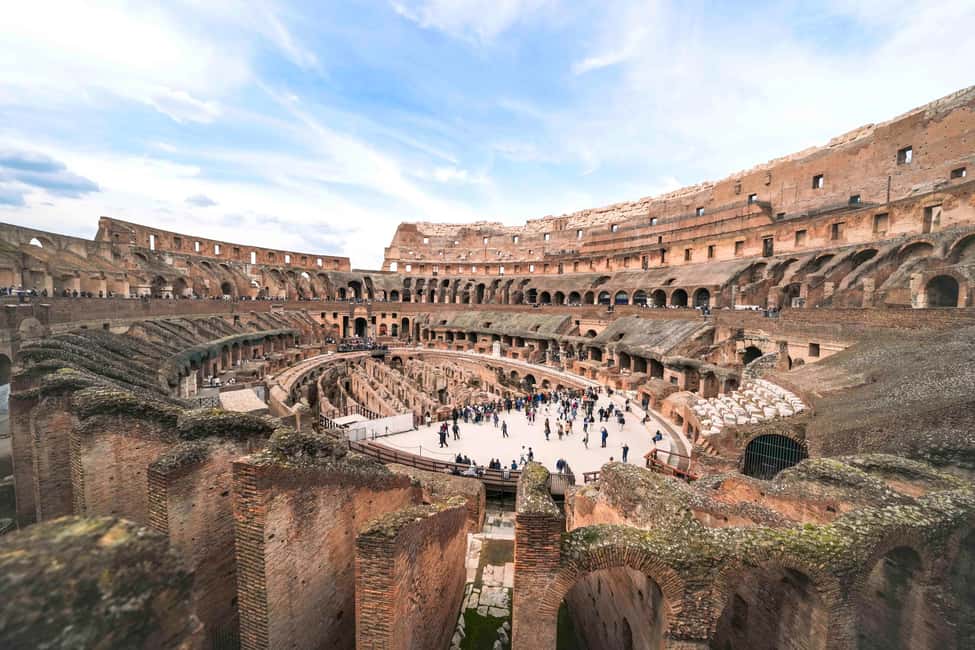
Once you’re inside, your guide leads you up a set of stairs and through the arches, giving you an early view that sets the scene fast. Then you explore the first and second levels. That’s key. Many people assume they’re only visiting the arena floor, but the upper levels are where you get a better sense of how spectators were arranged and how the spectacle worked.
What you’ll hear isn’t just gladiator trivia. The best part is the guide’s way of connecting the human stories to physical details:
- Gladiators and the choices around fighting (and the pressures behind those choices)
- Emperors and the decisions that shifted lives in seconds
- Captive-audience details that connect to graffiti still visible on walls
There’s also the “wait, what?” factor: the Colosseum had more uses than people usually expect. Even if you think you already know the basics, I’d bet your guide will hand you at least a couple of plot twists that make the structure feel like a living Roman machine rather than a frozen photo backdrop.
One small consideration: this is a guided experience with a scheduled route. You should plan to treat your Colosseum time as “story + viewing,” not as “wandering + gift shop stop.” In other words, arrive with the mindset that the guide’s route is the product.
Roman Forum: the art of reading ruins so they stop looking the same
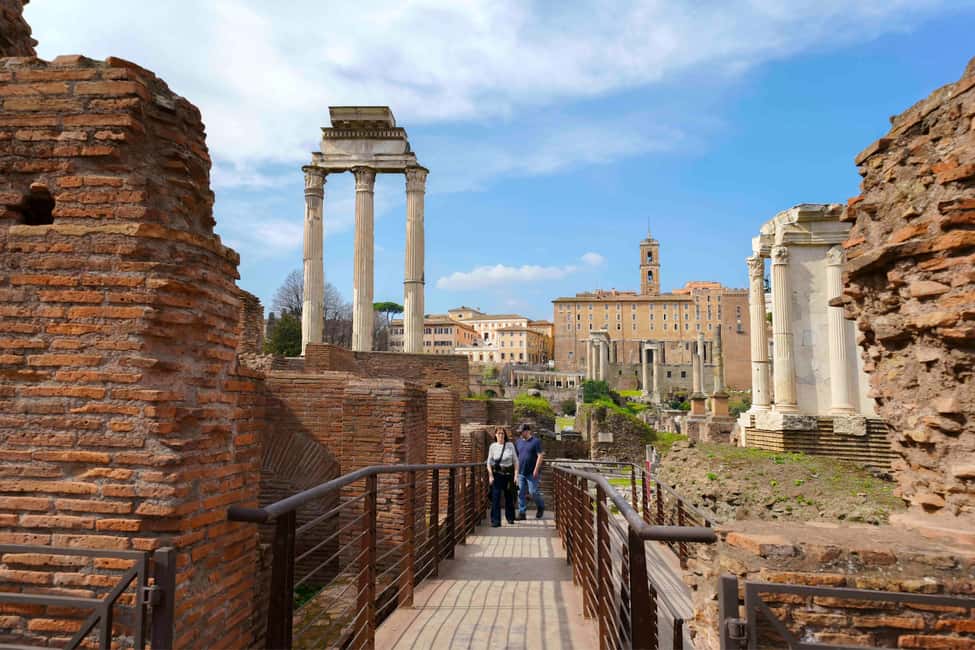
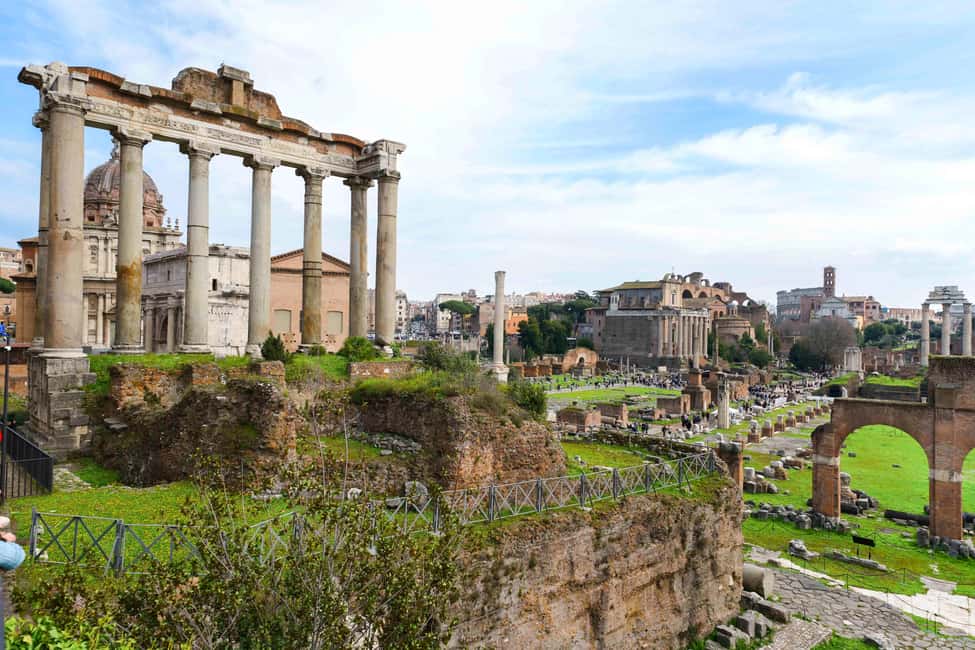
The Roman Forum is where people either fall in love—or get tired and start taking random shots from random angles. The difference is whether you can identify what you’re actually looking at.
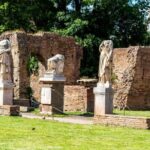
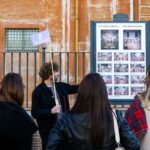
This tour makes the Forum feel legible. Your guide walks you through the ruins and points out subtle differences that help you tell one kind of place from another: for example, how you might recognize a moneylender’s shop, a public bath, or other common ancient building types just by the way parts of the structure sit and connect.
The guide also uses the setting to explain how Roman society functioned—life in the days of Caesar, Nero, and Hadrian. Even if you only catch a few names and a few dates, the real payoff is that the guide turns the Forum into something like a timeline you can walk through. You start seeing it less as a pile of old rooms and more like a city’s working hub.
The Forum stop is about 45 minutes. That’s enough to get oriented and start making connections, but it also means you won’t linger for an hour on every single arch. If you love slow archaeology-style wandering, you might want extra time on your own after the tour. If you want your first Forum visit to feel meaningful and not confusing, the guided structure is exactly the point.
Palatine Hill: founding myth meets palace ruins
Then you climb to Palatine Hill, and the mood changes in a good way. The Forum is about civic life and public spaces; Palatine is about origins, power, and the kind of elite presence that comes with being near the mythic beginning of the city.
Palatine Hill is tied to the legend of Rome’s founding—Romulus and Remus discovered by the she-wolf. Your guide brings that story into the context of what you can still see: the ruins of palace areas built on this legendary ground.
This stop is also about 45 minutes. It’s timed so you finish with a sense of closure: you’ve seen the public spectacle, the political and everyday civic core, and then the “where the city’s leaders wanted to be” layer of Rome.
What I like here is the blend of myth and physical evidence. Even if you know the story already, the guide’s role is to help you connect the legend to the actual geography and building remains.

The pacing: how 3 hours works (and what you’ll do with it)
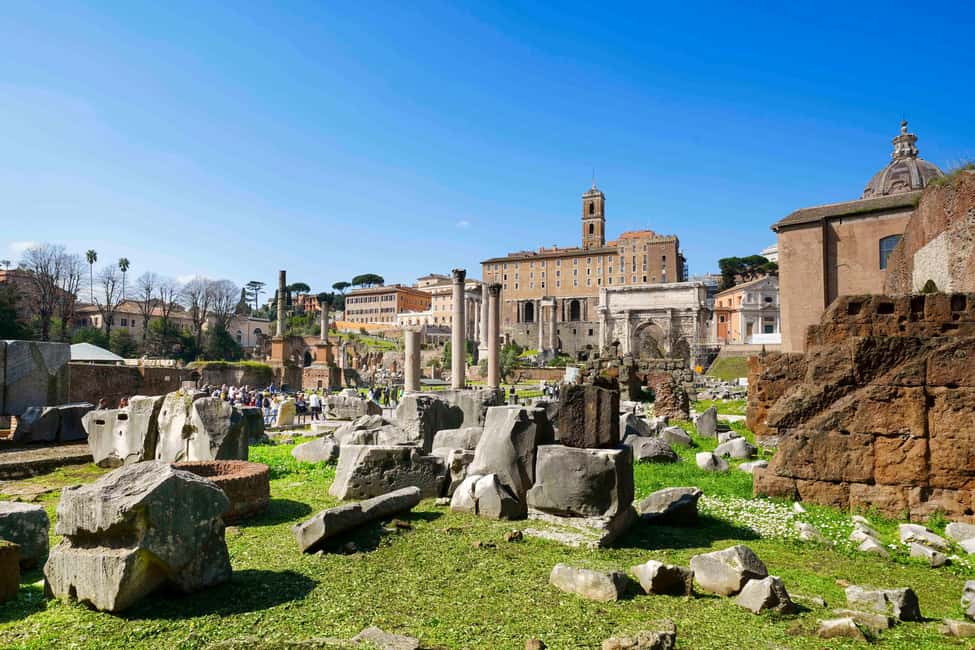
This experience is designed to be efficient without feeling like speed tourism. You get:
- 1.5 hours at the Colosseum
- 45 minutes at the Roman Forum
- 45 minutes at Palatine Hill
That adds up to the full 3 hours. The value isn’t only in the ticket access. It’s in the way the tour sequences your attention: big wow moment first, interpretive walk in the Forum next, then myth + elite space on the hill last.
A useful way to think about it: the time is balanced for first-time comprehension. If you’re a history superfan who already knows every emperor and building type, you might leave wanting more time at one location. If you’re a first-timer who wants to understand what matters, you’ll probably feel like the guide gave you a mental map you can use immediately when you return on your own later.
Also, because it’s a small group (max 8), you’re less likely to feel trapped behind other people’s slow stops. That matters at the Colosseum arches and along tighter Forum paths.
Price and value: what $75.45 includes that you’d otherwise pay for twice
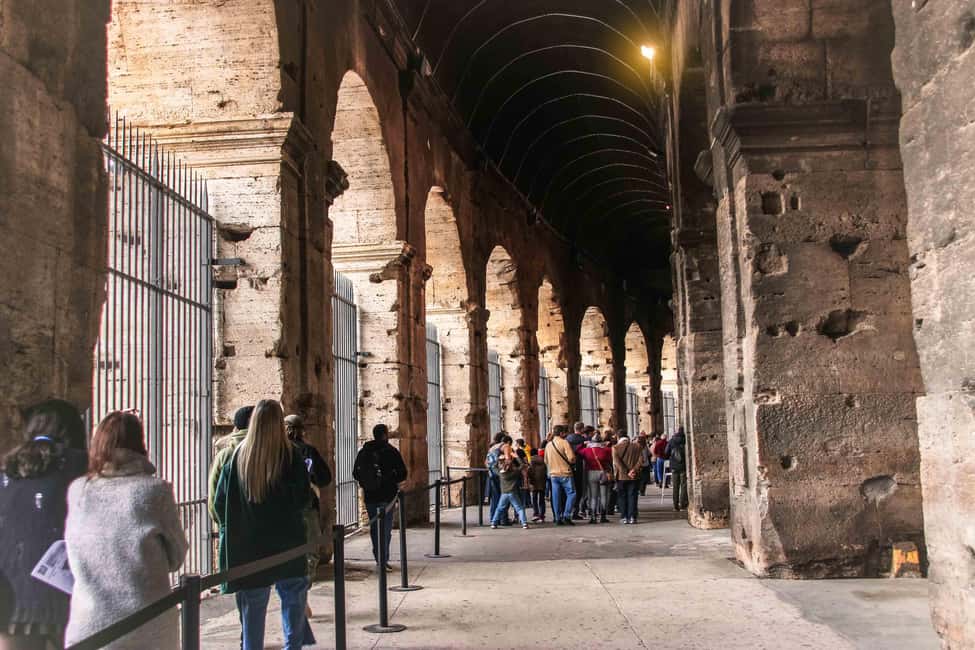
At $75.45 per person, you’re not just paying for entry. You’re paying for:
- A live guide and walking tour
- Ticket to the Colosseum
- Access to the Roman Forum and Palatine Hill
- Headsets when the group is over 6 (so you can hear clearly while walking)
That’s the main value equation. If you self-plan, you still need tickets, and you still face the “what am I looking at?” problem. When you add a guide who can explain the subtle differences in Forum structures and connect Colosseum details to gladiator and imperial stories, the price starts to feel less like “a tour premium” and more like “buying time and clarity.”
It’s also worth noting the human side: reviews you can’t ignore point to guides staying engaged, pacing the group, and handling the day practically—especially in heat. Names like Francesca and Eddy show up with praise for managing breaks, shade, and keeping people comfortable. I’m not saying every guide will do the exact same thing, but it’s a strong signal that comfort and flow matter, not just reciting facts.
Practical note: the tour is fully refundable up to 5 days in advance, and then it becomes 100% non-refundable within 5 days. That’s not something to stress about now, but it’s good to know your flexibility window.
What to bring, what not to bring, and how to make the day smoother
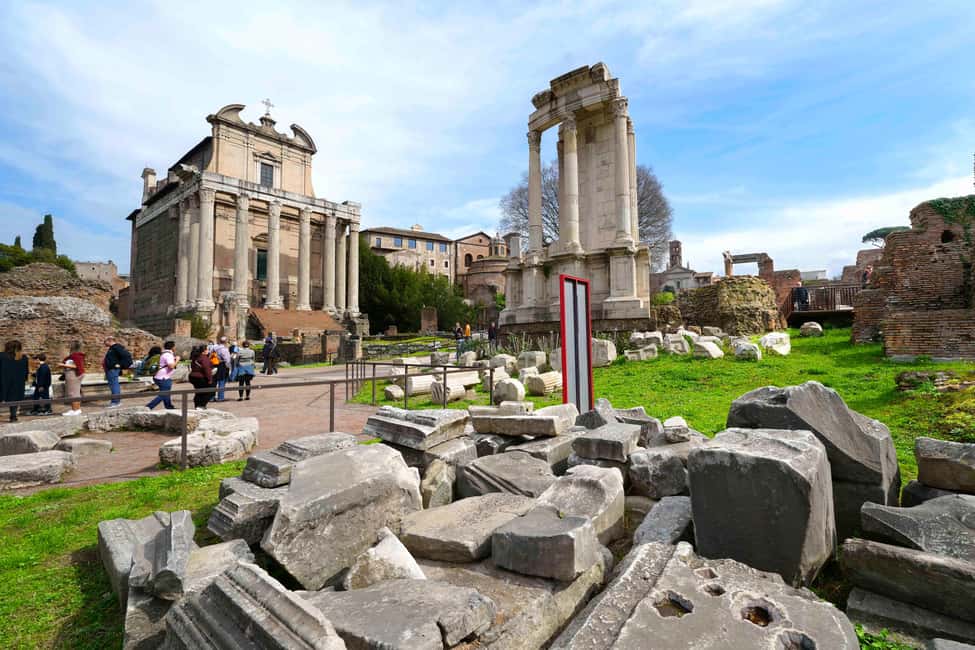
This tour is straightforward, but Rome’s ancient sites are rough on the body if you show up unprepared.
Bring:
- A passport or ID card (all participants, including children, need it)
- Comfortable shoes
Leave behind:
- Baby strollers
- Luggage or large bags
- Weapons or sharp objects
A couple more practical reminders:
- You’re walking and climbing, so plan for steps and uneven ground.
- The Colosseum, Forum, and Palatine Hill can close occasionally. If something changes, you’ll be informed in advance when possible, or at the start of the tour.
If you have mobility needs, you should know this tour is not suitable for people with mobility impairments or wheelchairs. Same story for strollers. If that’s you, you’ll want a different kind of visit with step-free options.
Who should book this tour, and who should choose a different style
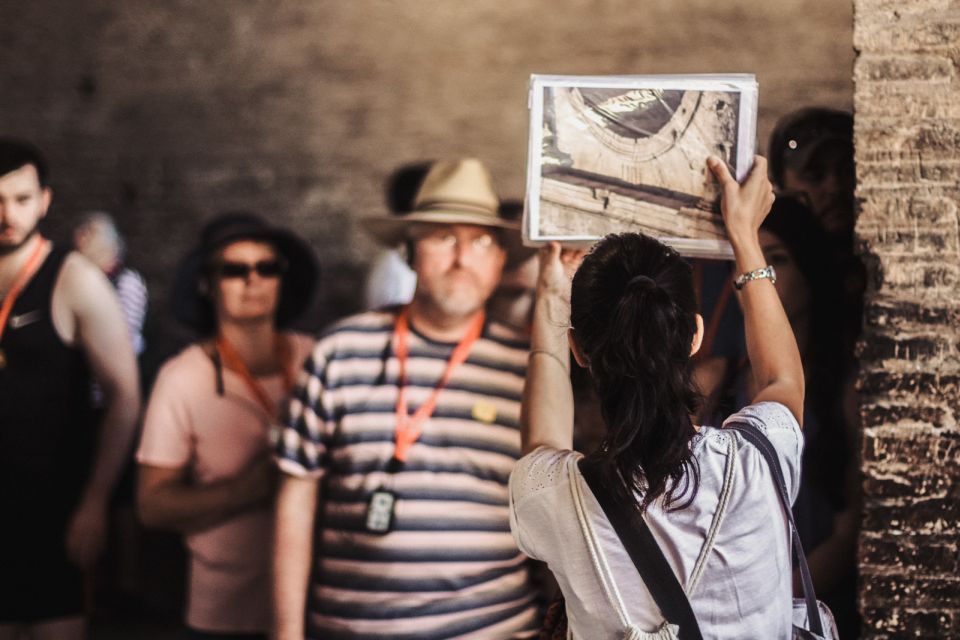
This is a great fit if:
- You want to see the Colosseum, Roman Forum, and Palatine Hill in one efficient morning block
- You like explanations that help you identify what you’re looking at
- You’d rather ask questions in a small group than listen to big-bus loudspeaker chaos
It’s also a good choice if you’re traveling with people who get bored by “read-this-sign” history. A guide keeps the story moving and turns ruins into a narrative.
You might consider another approach if:
- You want lots of independent time inside the Colosseum for wandering at your own pace
- You struggle with standing, steps, and walking durations (this one is not designed for mobility limitations)
Tips that can save you time once you’re in Rome
Here are a few no-drama ideas that match how this tour runs:
- Plan to arrive early enough to find your meeting point without rushing. When you’re sweaty and flustered, ruins are less fun.
- If your navigation keeps sending you to a dead-end route, use the Colosseo metro station-side access to reach the pickup area. That can fix a common map mismatch.
- If the day is hot, wear breathable layers and expect shade gaps. Guides are set up to manage the flow, including water and restroom needs.
- Keep your questions ready. The best guides (the kind you’ll recognize from names like Marta, Nicola, Dario, Sarà, and Marco) tend to answer in a way that connects back to what you’re seeing right then.
Book it or skip it? My honest recommendation
If you’re doing Rome for the first time and want to understand what you’re seeing at the Colosseum, Roman Forum, and Palatine Hill, I’d book this. The express entry and the timed routing make it a strong value at $75.45, especially because it includes the Colosseum ticket and the guide’s interpretation.
Skip it only if you strongly prefer unguided freedom or you need step-free access. Otherwise, this is one of the most practical ways to get from awe to understanding without burning your whole afternoon in lines and confusion.
FAQ
Where is the meeting point for this Colosseum, Forum, and Palatine Hill tour?
The meeting point can vary depending on the option booked. One listed option is Via delle Terme di Tito, 72, Oppio Caffè. Your exact start location will be determined based on the option you choose.
What time does the tour start?
This tour has 11:15 AM start time only.
How long is the tour, and how is the time split between the sites?
The total duration is 3 hours. You spend about 1.5 hours at the Colosseum, 45 minutes at the Roman Forum, and 45 minutes at Palatine Hill.
Does this tour include Colosseum tickets and skip-the-line access?
Yes. It includes a ticket to the Colosseum and access with pre-reserved passes to help you bypass crowds at entry.
Do I need an ID?
Yes. A government-issued ID or passport is required for all participants, and security may deny entry without it. Children must bring ID too.
What should I bring with me?
Bring a passport or ID card and wear comfortable shoes. You may also want to plan for a warm day with basic water needs.
Is this tour suitable for strollers or wheelchairs?
No. It is not suitable for baby strollers and not suitable for guests with mobility impairments or wheelchairs.