REVIEW · ROME
Rome: Domus Aurea Tour with Virtual Reality Experience
Book on GetYourGuide →Operated by Open Mind Tours · Bookable on GetYourGuide
A palace under Rome, rebuilt in 3D.
This tour brings you into Nero’s Domus Aurea—Rome’s largest active archaeological site—then adds a 3D virtual reconstruction so you can finally picture what the Golden Palace looked like at its peak. You’ll also get access to the east and the newly reopened west wing, with guide-led storytelling that ties together art, engineering, and the messy politics around Nero.
What I really like is how the visit uses restoration details to make the frescoes feel real, not just old walls. And the VR moment is not a gimmick: it’s the part that turns the scale of the palace into something your brain can hold onto. One thing to consider: the meeting point and early timing can be confusing, and entry into the Domus happens after the outside intro—so build in a little patience and arrive early to find your guide.
In This Review
- Key things that make this tour worth your time
- Finding Nero’s Domus: Meeting Point, Timing, and Skip-the-Line Reality
- The Outside Intro: Nero’s Personality, the Fire of 64 AD, and His Real Stakes
- East Wing First: Frescoes, Vaulted Halls, and the Feel of a Hidden City
- West Wing After the Reopen: High Alleys and Restored Painting
- The Octagonal Room and the Scale Shock
- Busting the Nero Myths: Fire, Blame, and a Ruler Under Pressure
- VR Peak Moment: Seeing the Golden Palace Like It Might Have Looked
- From Nero to Vespasian to Trajan: Why the Domus Vanished
- How to Get the Most Out of the 2 Hours
- What I’d Pack and What You Must Leave Behind
- Who This Tour Fits Best (And Who Might Want Another Option)
- Price and Value: What You’re Paying For Here
- Should You Book the Rome Domus Aurea Tour With VR?
- FAQ
- How long is the Domus Aurea tour with VR?
- Is there a separate entry or is it first-come, first-served?
- What language is the live guide?
- What happens during the virtual reality part?
- Which parts of the Domus Aurea are included?
- What should I bring, and what items are not allowed?
- Is it refundable if my plans change?
Key things that make this tour worth your time
- Newly reopened west wing access alongside the classic east-wing route
- Myth-busting Nero storytelling, including what did and didn’t happen around the fire of 64 AD
- Restored frescoes and vaulted spaces that show Roman taste and trickery in architecture
- A major VR peak moment that reconstructs key halls and an outside lavish portico
- More room than you expect at this site, compared to the biggest Rome headliners
Finding Nero’s Domus: Meeting Point, Timing, and Skip-the-Line Reality
The whole experience starts with one practical detail: your voucher is not your entry ticket. Your guide handles the ticketing, and you meet outside with a sign that says OPEN MIND TOURS. Give yourself time to locate the group before you even worry about lining up.
Plan for a small lag between the outside presentation and going inside. Entrance to the Domus is at least about 20 minutes after the scheduled guide presentation. In plain terms, don’t show up thinking you’ll walk straight in the moment the clock starts.
This matters because the Domus Aurea area can feel spread out. If you’re the kind of traveler who hates rushing, you’ll like this tour’s pacing. If you’re the type who arrives late and hopes for the best, you’ll probably spend the first 10 minutes stressed instead of settling in.
One more helpful tip: wear shoes you’re comfortable in for a lot of walking on uneven ground. A jacket can also be smart since the site interiors can feel cooler than you expect in Rome heat.
You can also read our reviews of more tours and experiences in Rome.
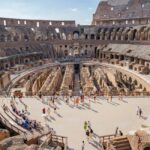
The Outside Intro: Nero’s Personality, the Fire of 64 AD, and His Real Stakes
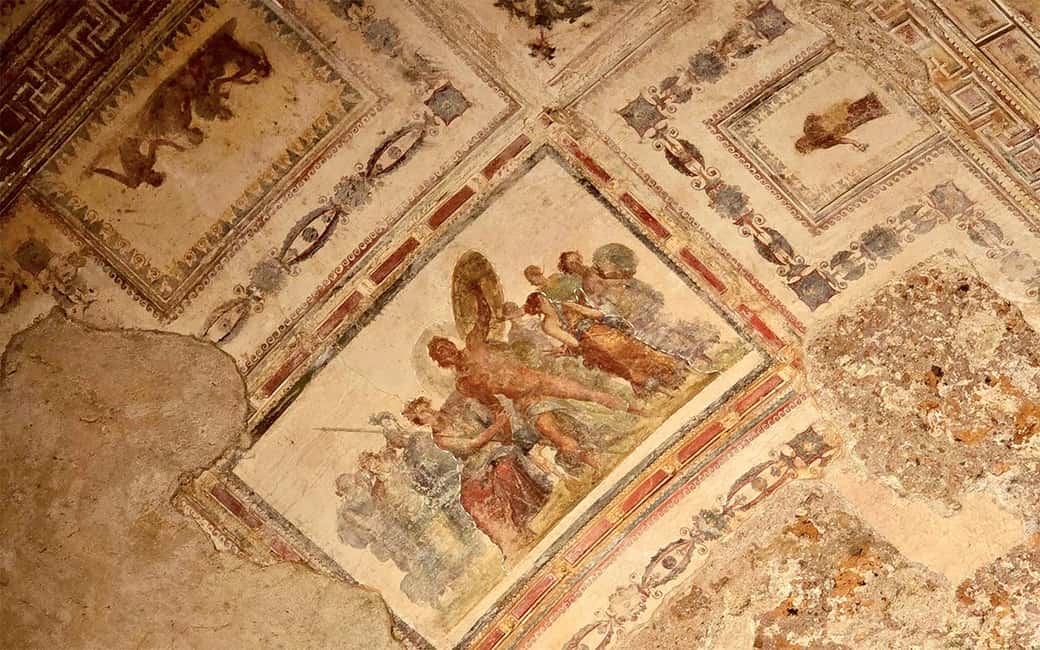
Before you walk into the archaeological spaces, your guide sets the story. This isn’t just a quick background lecture. You’re being guided through traits of Nero’s personality—his tastes, his sharp intellect, and the way his reign connects to the strange, sometimes theatrical figures you’ll see painted on the walls.
You’ll also tackle the big historical accusation tied to 64 AD. The tour clearly frames the common myth around the great fire and then steps you through why Nero was not the one behind it. The logic of the story is practical: Nero was described as being at his seaside villa outside Rome during that period, which helps explain why the accusation doesn’t hold up.
What makes this intro valuable is that it changes how you look at the frescoes later. Instead of seeing decoration, you start seeing signals—of ego, control, art taste, and a ruler shaping a world around himself.
And yes, guides matter here. Different English-speaking guides can bring different pacing and clarity. People have highlighted guides including Linda, Yev, Rosario, Alexei, and Laura for making the complex history feel understandable, with explanations that link architecture to story.
East Wing First: Frescoes, Vaulted Halls, and the Feel of a Hidden City
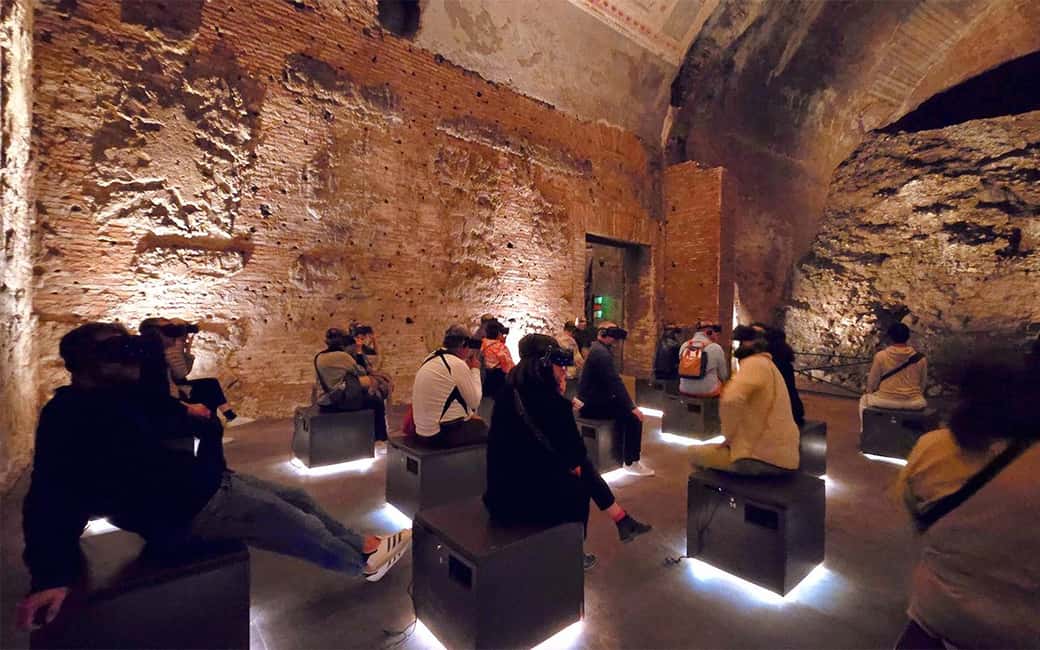
Once you enter, the east wing becomes your foundation. This is where you get your bearings in Nero’s world: vaulted halls, wide-enough corridors that still feel tucked away, and painted surfaces that show serious artistic skill under preservation conditions.
You’re not just walking through rooms. You’re walking through Roman decisions. The tour emphasizes how the space was designed for effects—how porticoes, fountains, and gardens helped create delicate beams of light that would have changed the look of frescoes throughout the day.
That detail is worth paying attention to because it shifts frescoes from flat pictures into part of a staged environment. In most major Roman ruins, you can’t imagine how the light used to hit the walls. Here, the tour gives you enough context to start visualizing that moment.
A second thing I like about the east wing approach is that it builds scale gradually. Your first impressions become stronger because you’re not asked to absorb everything at once. You get a rhythm: listen, look up, read the architectural shapes, then connect that to Nero’s larger palace vision.
West Wing After the Reopen: High Alleys and Restored Painting
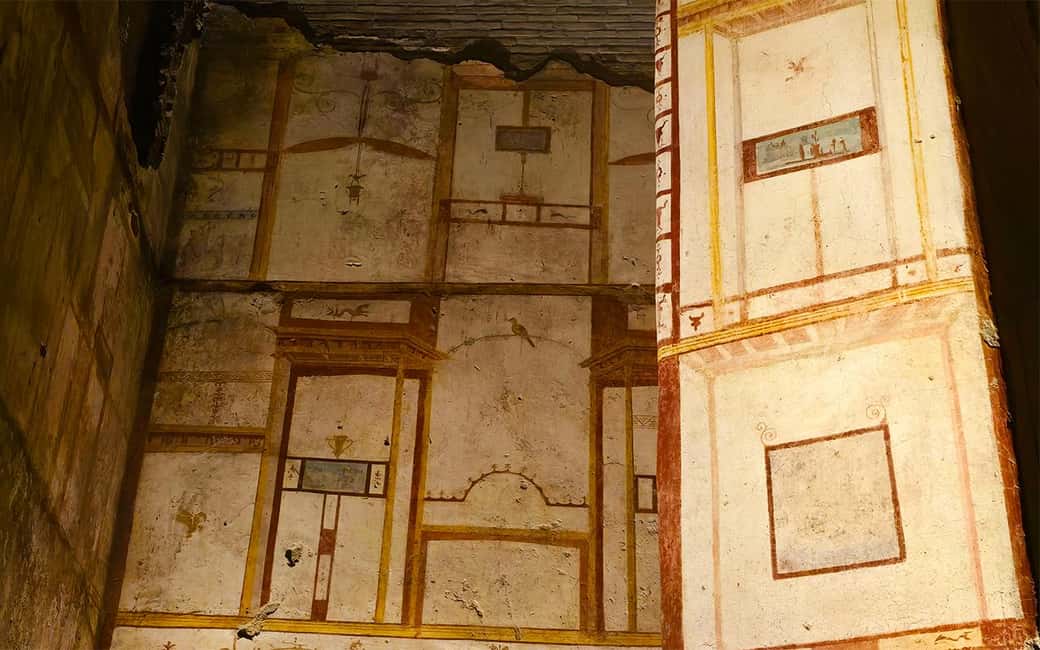
The big modern hook is that the tour includes the newly reopened west wing. That adds a sense of discovery even if you’ve studied Rome’s museums before. You’ll move through additional spaces with stunning hallways and frescoes that have been properly restored.
This is also where you’ll notice the “maze” feeling the Domus can create—high alleys, curved passageways, and room transitions that don’t work like a museum corridor. Instead, they feel like parts of a private world: designed for movement, controlled sightlines, and staged reveal.
If you’re the kind of traveler who wants to see Domus Aurea at a deeper level, the west wing inclusion is the difference between a quick look and an experience that feels like a real visit to a palace, not a collection of rooms.
The Octagonal Room and the Scale Shock
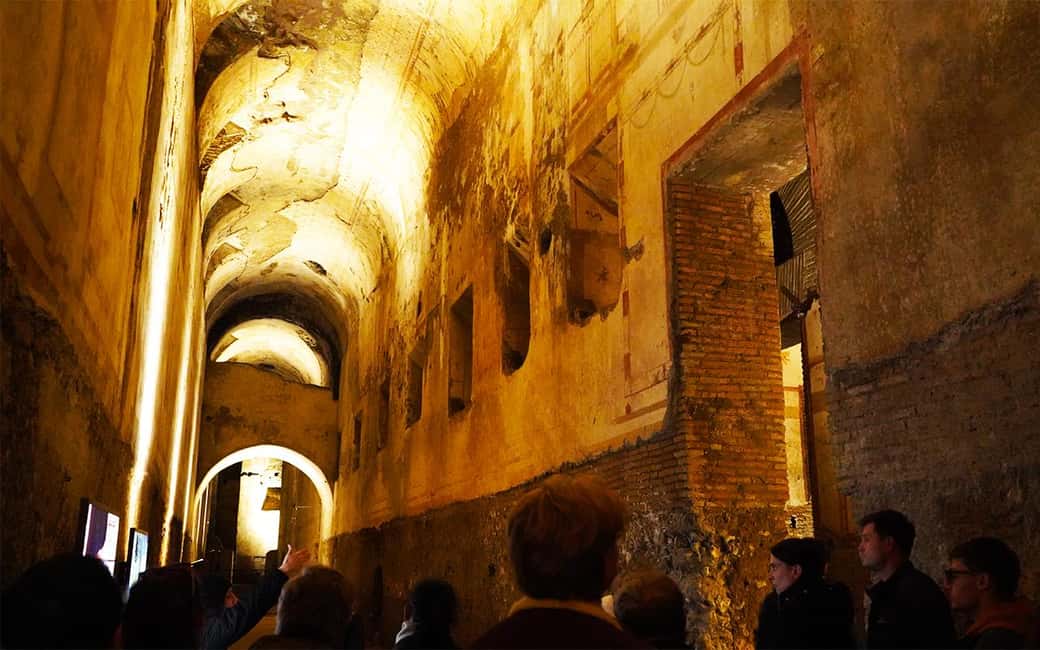
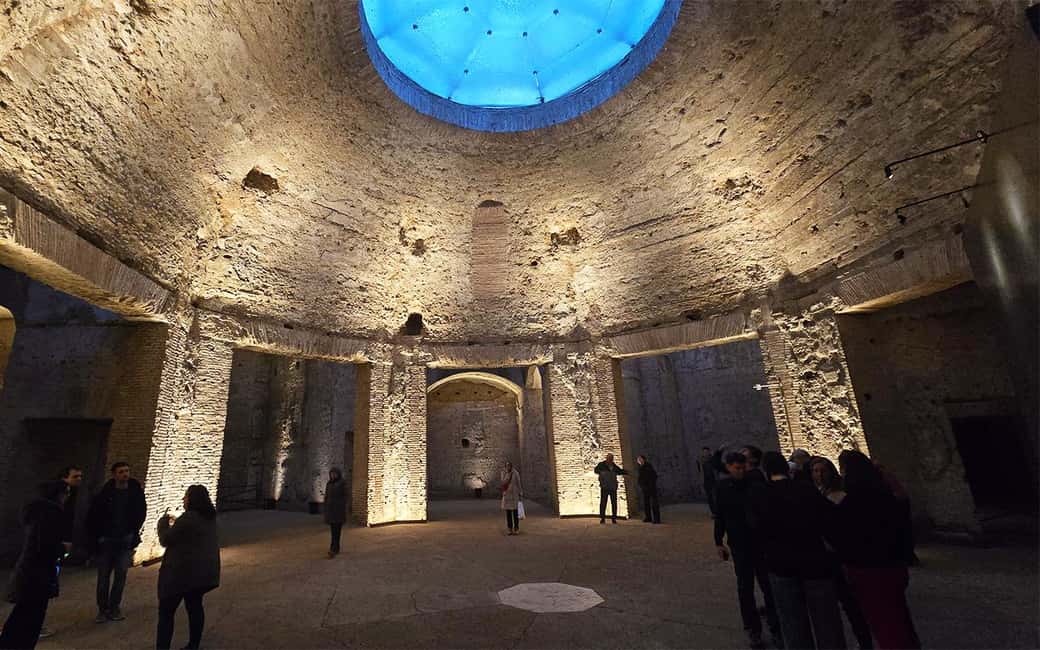
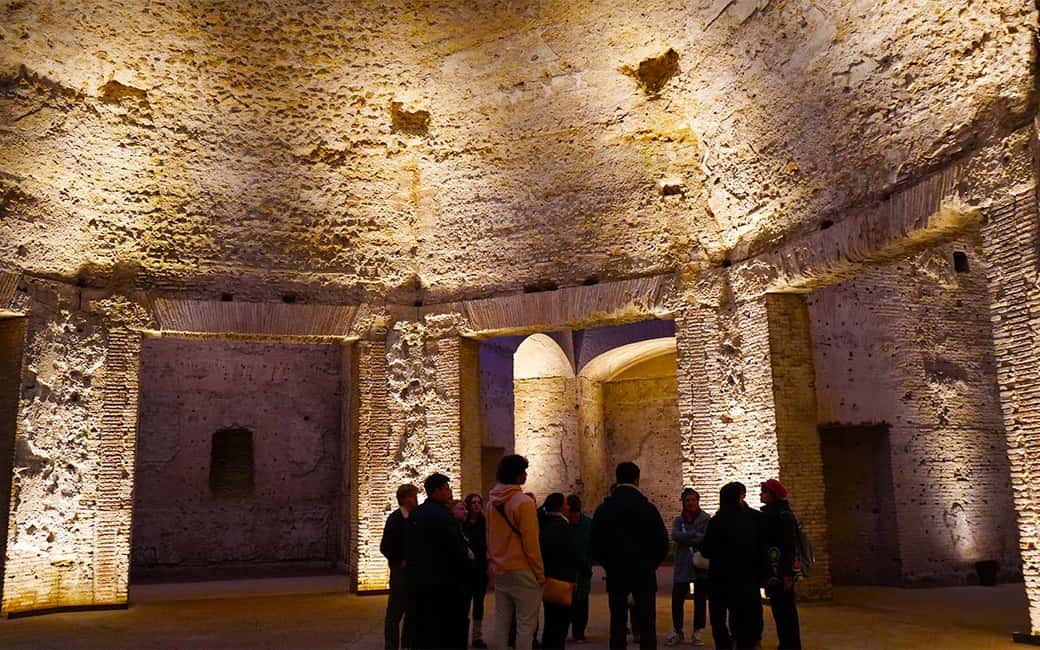
As the tour progresses, you reach a major architectural stop: the Octagonal Room. It’s identified as a possible highlight with features that may include a rotating ceiling—an idea that instantly makes you picture the space as performance, not storage.
Even without a perfect mental model of how it rotated, the shape itself is a statement. Roman elite spaces often use geometry like a flex. An octagon isn’t just a design flourish; it signals control and planning, and it helps explain why the Golden House became so legendary.
This is the point where the Domus Aurea stops feeling like an old ruin you pass through and starts feeling like a system you’re trying to understand. And the guide’s job here is to keep you oriented. If you lose the thread, the rooms can blur. If your guide keeps tying features to Nero’s taste and the broader story after the fire and after his death, the site becomes much easier to follow.


Busting the Nero Myths: Fire, Blame, and a Ruler Under Pressure
The tour doesn’t treat Nero like a cartoon villain. It gives you a more complicated picture: a ruler accused over the fire of 64 AD, but also one taking action afterward—opening gardens to shelter homeless people, distributing essential goods, and lowering grain prices.
You also hear about reconstruction choices and urban planning rules that aimed to prevent similar disasters. The focus is practical: minimum distance between buildings, and shifts toward stone and bricks instead of wood. That kind of detail matters because it connects Nero’s legacy to real consequences in daily city life, not just dramatic headlines.
At the same time, the tour also acknowledges the political fallout. Nero faced accusations about delays in rescue efforts and insufficient reconstruction funding. That tension helps explain why popularity collapsed and why the story turns darker later.
In other words, you’re getting Nero as a public figure in crisis. That context makes the weirdness of the fresco figures feel less like random fantasy and more like a ruler building an identity—art plus power plus personal eccentricity.
VR Peak Moment: Seeing the Golden Palace Like It Might Have Looked
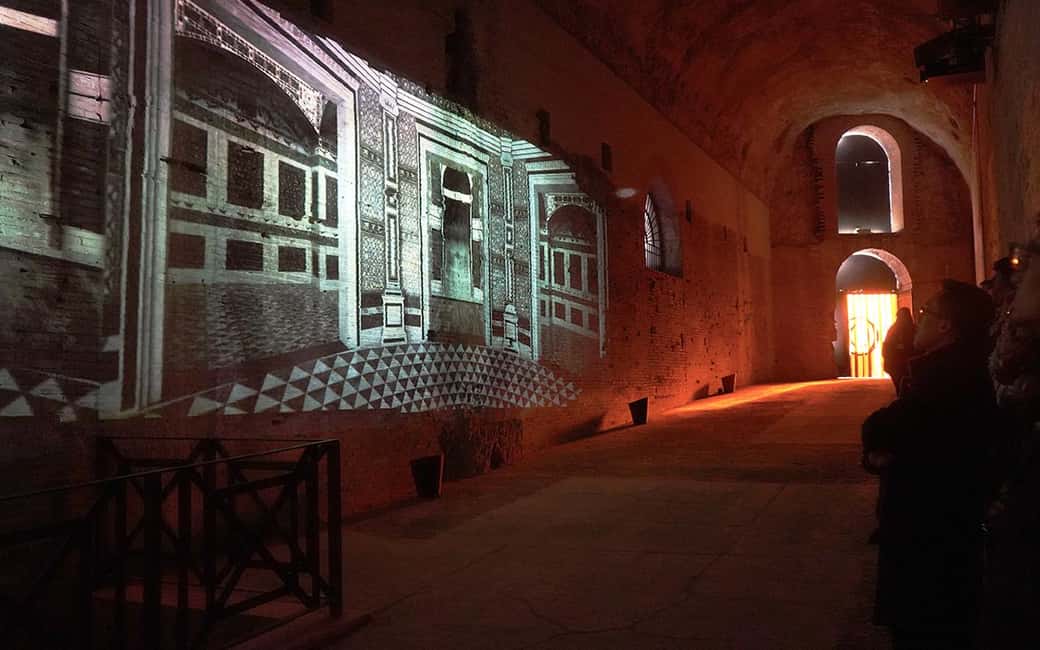
The most dramatic moment is the 3D virtual reality reconstruction. This is described as the peak of the visit, and it’s structured as a seated VR segment, so you can focus fully on the visuals instead of trying to scan a room while walking.
During the VR, the reconstruction shows halls in 3D and includes an outside lavish portico of the palace—specifically noted as not yet completed when Nero committed suicide. That detail helps you grasp that you’re not seeing a finished museum version. You’re seeing a work in progress frozen in time by tragedy.
One practical tip from how the VR is presented: look around. In a seated VR experience, it’s easy to stare straight ahead and miss the context around you. But the format is designed so turning your head changes what you notice—so take full advantage of the 360 experience.
The payoff is emotional as much as visual. It can feel like your brain suddenly understands why the Domus Aurea was such a cultural shock in antiquity. You go from walking through odd fragments of a palace to seeing the palace as a coherent place with big, deliberate design choices.
From Nero to Vespasian to Trajan: Why the Domus Vanished
After the VR and the interior walking, you get the palace’s timeline. It’s not just a tour of walls. You’re also touring a long disappearance.
The story goes like this: Nero expands his palace at the Palatine Hill even after the fire, adding a private oasis with a lake in the heart of the complex. But Rome’s discontent grows. Nero takes his own life in June 68 AD.
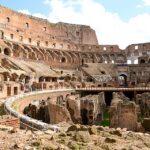
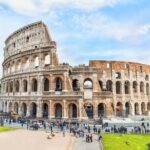
Then Vespasian takes over. Instead of keeping Nero’s lake as private luxury, he chooses public symbolism. He builds the Colosseum on that spot—a grand public project meant to support Rome’s reconstruction and send a clear political message. The palace luxury gets replaced by a venue for gladiatorial games that was already popular.
Later, Trajan buries Nero’s Golden House. He builds a massive baths complex above it about 50 years later. After that, the Domus fades into oblivion for nearly 1,500 years. It’s rediscovered by Renaissance artists in the 1500s, kicking off a long European process of re-learning what ancient Rome had created.
This long arc is one of the strongest parts of the tour if you like understanding not only what survived, but why it survived—or didn’t. The Domus Aurea isn’t just a room. It’s a story about Rome’s politics changing how art and space get used.
How to Get the Most Out of the 2 Hours
At two hours total, you don’t have time to wander and guess. This tour works best when you treat it like a guided storyline: listen, then look, then connect.
A few ways to make that easier:
- Keep your eyes up in vaulted spaces. Frescoes and architectural curves often make more sense when you can see the whole composition.
- If you’re in a session with a larger group, position yourself where you can hear. Some spaces can be tricky for sound if you’re stuck off to the side.
- During VR, move your attention. Look around during the seated segment so the reconstruction feels three-dimensional in your mind, not just like a single video view.
Also, the tour is designed with comfort and temperature in mind. People have noted how it feels cooler during summer visits, which is a real practical perk if you’re packing Rome into tight daylight hours.
What I’d Pack and What You Must Leave Behind
This tour is very specific about allowed items. You should plan light.
Bring:
- Comfortable shoes
- A jacket
Leave at home:
- Weapons or sharp objects
- Luggage or large bags
- Drones
- Pets (assistance dogs allowed)
- Selfie sticks
- Professional cameras
- Tripods
- Sprays or aerosols
- Glass objects
If you’re traveling with camera gear, keep it simple. If you’re the type who carries a tripod, you’ll want to adjust your plan ahead of time.
Who This Tour Fits Best (And Who Might Want Another Option)
This experience is a strong match for you if you:
- Want context, not just monuments
- Like art plus architecture plus history in one package
- Appreciate a guided format that helps you understand what you’re seeing quickly
It also tends to work well if you’ve already done other big Rome hits. One of the best compliments this tour earns is how it can improve your overall Roman history and archaeology understanding after visiting places like Pompeii earlier in the week.
Two groups should think twice based on the stated limits:
- People with mobility impairments
- Wheelchair users
Beyond that, you’ll be fine as long as you can manage walking on site terrain and follow the no-large-bag rule.
Price and Value: What You’re Paying For Here
There’s no price listed in the info I have, but I can still talk value in a useful way. This tour earns its cost by combining three things that are hard to line up on your own:
- Skip-the-line access via a separate entrance (guided ticket handling, not just a receipt on your phone).
- A guided story that connects Nero’s personality, the fresco world, and the fire/reconstruction politics.
- A VR reconstruction that gives you a finished-palace visual while you’re physically standing in a site that has fragments.
If you hate paying for tours, you may feel tempted to go solo and read signs. But this site is complex, and the VR is not something you can just replicate cheaply elsewhere. For many people, that “visual understanding” moment is exactly why they choose this format.
Should You Book the Rome Domus Aurea Tour With VR?
Book it if you want to see Nero’s palace in a way that actually explains itself. The combo of east and newly reopened west wings, plus the VR reconstruction of major spaces and the portico, makes it easier to understand what you’re looking at. Add the myth-busting context around 64 AD and Nero’s actions afterward, and you get a visit that feels more like a guided journey than a checklist.
Skip it (or choose something else) if you:
- Need full accessibility accommodations
- Want total freedom to wander without a fixed structure
- Are extremely sensitive to hearing issues in enclosed spaces, especially with larger groups
If you’re flexible on timing, arrive early enough to find the OPEN MIND TOURS guide sign, and keep your eyes open during the VR segment, this is one of the more memorable ways to experience ancient Rome beyond the usual postcard stops.
FAQ
How long is the Domus Aurea tour with VR?
It lasts about 2 hours in total, including a guided tour inside.
Is there a separate entry or is it first-come, first-served?
You get skip-the-line entry through a separate entrance. Your guide has the entry ticket, not your voucher.
What language is the live guide?
The live guide speaks English.
What happens during the virtual reality part?
You’ll experience a 3D virtual reconstruction of Nero’s Golden Palace areas, including halls and an outside lavish portico. The VR section is described as seated.
Which parts of the Domus Aurea are included?
The tour covers the east wing and the newly reopened west wing, including a stop near the Octagonal Room.
What should I bring, and what items are not allowed?
Bring comfortable shoes and a jacket. Not allowed include luggage or large bags, drones, pets (assistance dogs allowed), selfie sticks, professional cameras, tripods, sprays or aerosols, and glass objects.
Is it refundable if my plans change?
Yes. Free cancellation is available up to 3 days in advance for a full refund.
If you tell me your travel month and whether you plan to pair this with the Colosseum/Forum or Vatican day, I can suggest the best order so the history connects smoothly.