REVIEW · ROME
Rome Food Tour & Wine: Trastevere & Campo de’ Fiori Like a Local
Book on Viator →Operated by Tours and the City · Bookable on Viator
Rome tastes better with a local guide, and this 3-hour walk delivers it across Campo de’ Fiori and Trastevere. I like how it adds up to a true full meal with multiple tastings and drink pairings, and I like the small-group format that gives the guide real time with you (names you may get include Annamaria or Marco). One possible drawback: it’s built for eating and walking, so go easy beforehand and come with comfy shoes, especially if the weather is cool or damp.
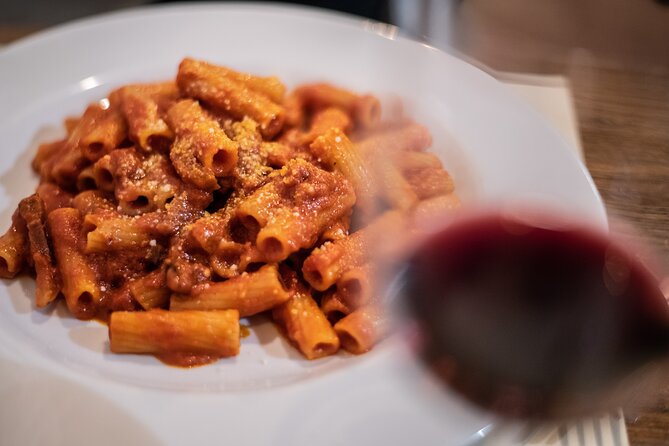
What makes it feel Roman is the mix of street food crunch, classic pasta, and the finishing ritual of gelato. You’ll hit fried favorites like supplì al telefono, then move into a Trastevere osteria for homemade pasta standouts like Amatriciana and Cacio e Pepe.
You’ll meet at Piazza Farnese (42, corner with the pharmacy) and end at Fonte della Salute for gelato, which is a nice payoff. Tastings can vary seasonally, and if you need gluten-free or vegetarian options, you must request them in advance.
In This Review
- Key highlights to know before you go
- How this Rome food tour “sets the table” for real local eating
- Piazza Farnese start: where you’ll gather and how the evening flows
- The aperitivo start: cheeses, cold cuts, and the “why” behind Roman cured meats
- Dar Filettaro a Santa Barbara: fish, street-food style, and wine
- Crossing the Tiber with a St. Peter’s view: why this walk makes sense
- Piazza Trilussa: supplì al telefono and the art of a Roman snack
- Trastevere Osteria sit-down: Amatriciana and Cacio e Pepe with wine
- La Norcineria di Iacozzilli: porchetta with fresh beer from Piero
- Fonte della Salute gelato finale: the best happy ending
- Group size and guide style: why the best tours don’t feel scripted
- Who this tour fits best (and who might want to adjust)
- Price and value: what $91.95 buys you in Rome
- Timing, walking, and what to bring
- Should you book this Rome Food Tour & Wine: Trastevere and Campo de’ Fiori?
Key highlights to know before you go
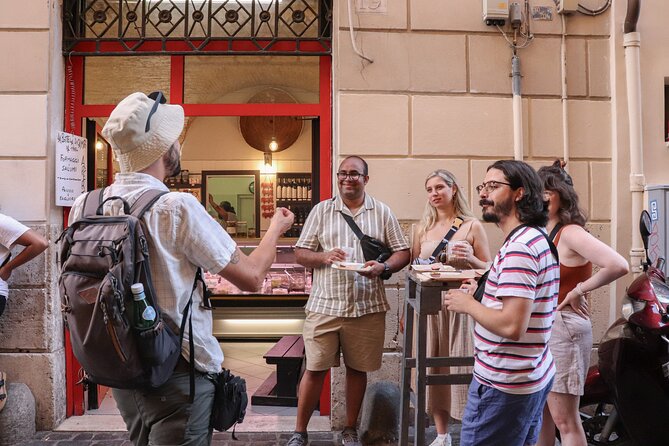
- A real full-meal approach: multiple savory and sweet tastings plus drink pairings
- Wine and beer pairings across several stops, not just one pour
- Trastevere osteria time to sit down and learn the story behind Roman classics
- Porchetta at Iacozzilli (Piero, the King of Porchetta) paired with fresh beer
- Gelato finale at Fonte della Salute since 1981
How this Rome food tour “sets the table” for real local eating
This is the kind of Rome food tour that saves you from the biggest Rome mistake: wandering into places that look good but don’t really serve what the neighborhood is famous for. Here, the route is designed to move from lively Campo de’ Fiori energy to Trastevere’s eating culture, with food stops that build toward a satisfying full meal.
I also like the pacing. You’re not just hopping from one bite to another without context. The guide brings in the food history and local customs as you go, which makes each taste feel less random and more like a theme—Roman street food, Roman pasta, Roman meat, and the Roman gelato habit.
And since the group is capped at 12, you’re less likely to get lost in the shuffle. Several guides mentioned by name in past tours—like Annamaria, Marco, and Paola—are described as friendly and able to connect the dots between dish, ingredient, and neighborhood.
You can also read our reviews of more tours and experiences in Rome.

Piazza Farnese start: where you’ll gather and how the evening flows
You begin at Piazza Farnese, address 42, right at the corner with the pharmacy. It’s a straightforward meeting point, and from there the tour transitions from “I’m sightseeing” into “I’m eating my way through Rome.”
This first stretch matters because it gets you oriented fast. You’ll start with the basics of Roman flavors and what to look for, then you’ll roll into your first proper tasting. Even if you’re new to Rome, you’ll feel like you’re getting your bearings quickly, because the guide’s commentary focuses on what you’re actually about to eat.
A practical tip: bring water before you start. Once the tastings and wine pairings begin, you’ll be glad you’re not starting dry. Also, if you tend to get cold easily, a light layer helps—this route is outdoors and you’ll walk.
The aperitivo start: cheeses, cold cuts, and the “why” behind Roman cured meats
The tour begins its food stack with an aperitivo + wine in a family grocery store. This is where you sample 10+ types of cheeses and cold cuts, and the guide helps you understand what you’re tasting—what’s cured, what’s cheese-first, and how Roman choices differ from what you might expect elsewhere in Italy.
This part is valuable because it teaches you how to read a menu in Rome. Instead of ordering by instinct, you start to notice patterns: salty cured meats, different textures, and how the wine pairing changes the way each bite lands. It’s also a smart opener because it sets your palate before you hit the fried and saucy stuff later.
If you’re the type who likes learning while you eat, this stop is one of the reasons people rave about the experience quality. And if you’re not a big cheese person, don’t worry: you’ll still get plenty of other savory tastes soon after.
Dar Filettaro a Santa Barbara: fish, street-food style, and wine
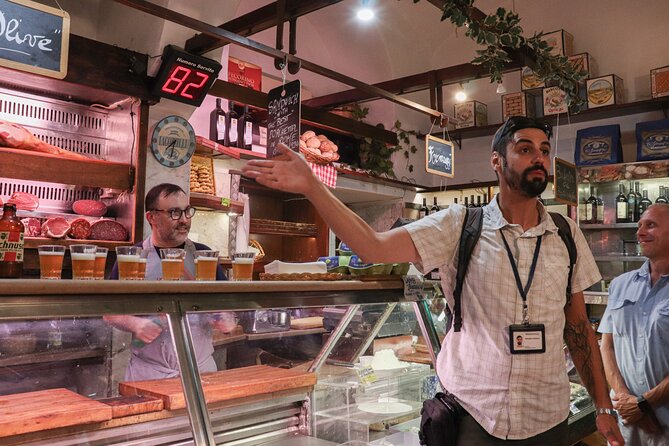
Next comes Dar Filettaro a Santa Barbara, described as an historic Roman eatery focused on local street food. You’ll try a crispy breaded hake fillet, paired with a local wine.
This is a great stop because it breaks the idea that Roman food is only pasta and meat. Rome has strong street-food traditions, and a crisp fish bite paired with wine helps show how Roman flavors can be simple, direct, and still feel special.
A drawback to consider: if you don’t handle breaded, fried textures well, this stop may feel intense. On the flip side, if you love crunchy food, this is the kind of taste that keeps you moving to the next stop instead of making you wait for the “main event.”
Crossing the Tiber with a St. Peter’s view: why this walk makes sense
Between the food stops, you’ll take a pleasant walk—about 1.5 km—with a view of St. Peter’s Basilica as you cross the Tiber. This segment does two useful things.
First, it gives your stomach a chance to process between tastings. Second, it turns the tour from pure eating into a genuine “Rome by foot” experience, where you see the city’s layers while you’re still fueled by curiosity (not just hunger).
Wear shoes you trust. Rome streets can be uneven, and you’ll want steady footing when you’re also trying to enjoy the scenery.

Piazza Trilussa: supplì al telefono and the art of a Roman snack
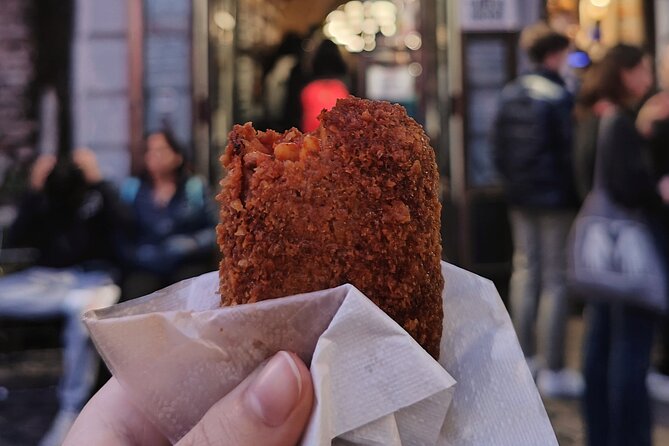
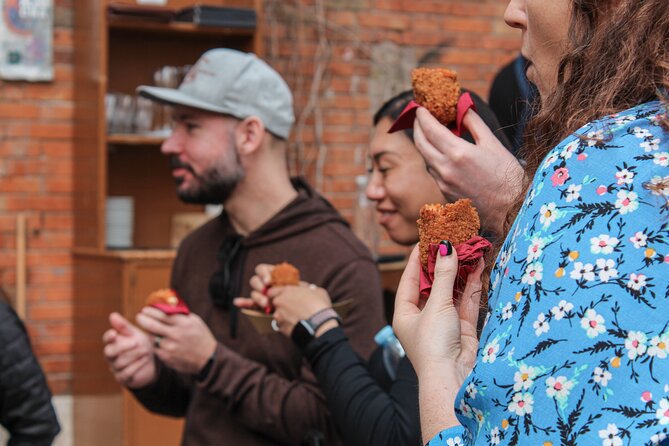
At Piazza Trilussa, you’ll have suppli al telefono, a Roman fried snack made from a ball of risotto with tomato sauce. This is the kind of food that looks small but hits hard, because it’s crispy on the outside and rich inside.
Why this works in a guided tour is simple: the guide’s explanation helps you understand why supplì is such a Rome staple. It’s easy to think of it as just fried food. But once you know what it’s built from—risotto, tomato, and that classic fried format—you taste it differently.
Another consideration: this is fried comfort food. If you’re trying to keep the evening light, you might want to pace yourself. But if you like a true food tour style, this stop is part of the payoff.
Trastevere Osteria sit-down: Amatriciana and Cacio e Pepe with wine
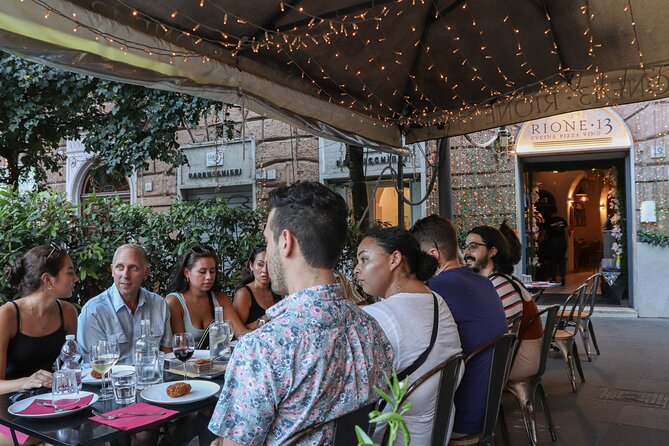
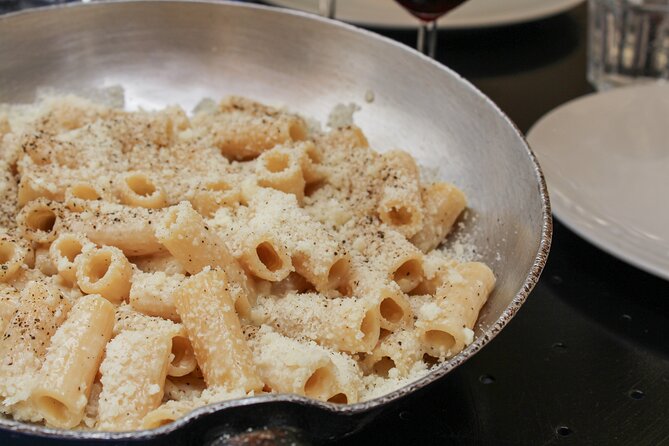
Now you reach one of the highlights: a sit-down at a Trastevere osteria to taste two homemade pasta sauces paired with wine. You’ll try combinations like Amatriciana and Cacio e Pepe—Roman classics that many people list as must-eats for a reason.
This part is valuable because the guide doesn’t treat pasta like generic Italian comfort. You’ll learn the customs and traditions around Roman cuisine, and you’ll hear the history behind the famous combinations. That context makes you pay attention to how the sauce coats the pasta, how salt and pepper show up in different ways, and how the wine pairing supports the richness.
The pacing here also helps you reset. After fish and fried snacks, you finally get something warm, saucy, and satisfying. It’s the moment where the tour really feels like a full meal rather than a sequence of appetizers.
La Norcineria di Iacozzilli: porchetta with fresh beer from Piero
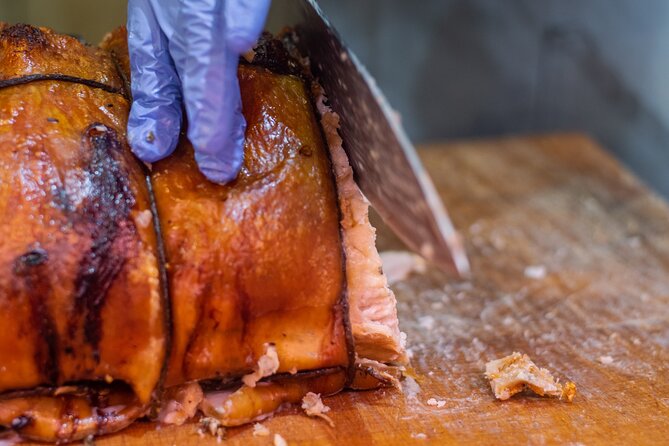
When it’s time for meat, the tour goes straight to one of Trastevere’s standout traditions: porchetta. You’ll visit La Norcineria di Iacozzilli to taste Piero’s famous roast pork, known as the King of Porchetta, paired with fresh beer. You’ll also try pizza bianca alongside it.
This is the stop where the whole tour theme—Roman eating culture—locks in. Porchetta in Rome is less about fancy plating and more about flavor, roast technique, and that satisfying combination of salty pork and crunchy bread.
If you like pork, this will be a core memory. If you don’t, the guided explanation can still be useful, because you’ll learn what makes this roast style distinct, not just that it exists.
Fonte della Salute gelato finale: the best happy ending
You end at Fonte della Salute, where the gelato tradition runs since 1981. The tour describes it as artisanal and biological gelato, and after multiple savory stops, this ending feels exactly right.
This final taste is more than dessert. It’s a palate reset and a way to experience how Rome food culture handles sweetness—not as a random add-on, but as the final ritual.
If you’ve ever left a gelato shop wishing you’d tasted more, this is your chance to do it right. You’ll finish feeling like you completed the meal, not just collected more snacks.
Group size and guide style: why the best tours don’t feel scripted
With a maximum group size of 12, this experience tends to feel personal. That matters in a place like Rome, where food questions come fast—what’s the difference between cured meat styles, why this pasta, why this pairing, what should I order next?
The guide’s personality also comes through. Names that show up in past tours include Marco, Ilaria (or Anastasia/Anya), Eduardo, Valentina, Paola, and Mariela. People also highlight that guides can connect the food to Roman life—Christmas traditions, neighborhood details, and why certain combos became local favorites.
One practical note echoed in feedback: arrive hungry. The tastings and drinks add up quickly, and the tour is designed to feed you, not just sample you.
Who this tour fits best (and who might want to adjust)
This Rome food tour is a strong match if you want:
- A guided way to eat across Campo de’ Fiori and Trastevere
- Wine and beer pairings with multiple food types—fish, pasta, porchetta, and gelato
- A small group size that keeps questions and conversation easy
It’s also a good choice if you’re a solo diner who wants an evening with people and a plan. The tour format naturally creates shared experiences at each stop.
You might want to think twice if:
- You hate fried foods or you’re not into wine/beer pairings
- You already plan a big dinner later the same night (the “full meal” part is real)
If you have dietary needs, gluten-free or vegetarian options are available with prior notice. Tastings can vary seasonally, so you’ll still get the spirit of the menu even if details shift.
Price and value: what $91.95 buys you in Rome
At $91.95 per person for about 3 hours, the value comes from the scale of what’s included. This isn’t a “two bites and a sip” situation. You’re sampling across multiple places, including a sit-down pasta stop, porchetta with beer, and a gelato finale—plus wine pairings along the way.
Add in that the tour is built for entry to local and traditional restaurants, and the guide is included throughout. You’re paying for both the food and the expertise that helps you taste with intention.
One more value point: this tour covers ground by foot and keeps the evening from becoming guesswork. In Rome, that matters. Knowing where to go (and what to order) can save time and help you avoid spending your budget on “almost right” meals.
Timing, walking, and what to bring
Plan for a true evening walk. Between the food stops and the 1.5 km stretch that crosses the Tiber, you’ll be on your feet more than you might expect.
Bring:
- Comfortable walking shoes
- A light layer if evenings run cool
- A bit of space in your stomach (seriously)
The tour also depends on good weather. If it’s canceled due to poor weather, you’ll be offered a different date or a full refund, so don’t assume it’s just “Roman rain.” It’s a structured walking experience.
Should you book this Rome Food Tour & Wine: Trastevere and Campo de’ Fiori?
I’d book it if you want a single evening that gives you a broad, Roman-style spread: cheese and cured meats, fish, supplì, homemade pasta sauces, porchetta with beer, and gelato to close it out. The small-group size and the guide-driven story behind dishes are what make it feel more like a guided Roman meal than a checklist.
If you’re short on time and want your food strategy handled, this is a smart use of your hours. Just show up hungry, wear good shoes, and be ready for a guided walk that turns eating into learning.