REVIEW · ROME
ROME: Golf-Cart Private Tour
Book on Viator →Operated by Fun Moving Golf cart tour · Bookable on Viator
Rome feels faster from a golf cart.
This private, English-guided loop is built for seeing a lot without wearing out your feet, with multiple get-down photo stops and driver commentary as you roll through town. I especially like the choice of three cart itineraries, which helps you shape the tour to your interests, not just follow a one-size route.
My other big win: stops are timed for photos and viewpoints, including time at Trevi and Navona, plus a longer photo break at the Pantheon area. One consideration: the 3-hour window can feel quick if you love to linger at monuments, and Trevi requires a short 1–2 minute walk in a pedestrian-only stretch (skip/substitute is possible if you want to avoid that).
Key points to know before you go
- Three itinerary choices let you tailor the route instead of getting only one fixed plan
- Hotel pickup within golf-cart range saves time and hassle on a first day in Rome
- Multiple photo get-downs make iconic stops actually usable for pictures
- Trevi is pedestrian-only for a short stretch, so expect a quick walk unless you swap it
- Pantheon entry isn’t included, so budget for that if you want inside time
- Guide-led storytelling can turn a drive-by into a real sense of place
In This Review
- Why A Rome Golf Cart Makes Sense For Getting Oriented Fast
- Choose Among Three Golf-Cart Itineraries (And Pick Your Pace)
- Hotel Pickup And The Meeting Point: The Simple Plan
- Stop 1: Piazza del Popolo—A Grand Start With A Pilgrim-Entrance Story
- Stop 2: Spanish Steps—Classic Photos, Real City Views
- Stop 3: Trevi Fountain—Coin Tradition Plus A Short Walk Tradeoff
- Stop 4: Piazza Navona—Bernini’s Fountain Energy In Real Time
- Stop 5: Pantheon—The Dome Stop With A Ticket You Should Plan For
- Stop 6: Largo di Torre Argentina—Julius Caesar’s End And Rome’s Cat Colony
- What The Driver-Guide Commentary Actually Adds (Names Matter Here)
- How Fast Does It Feel In Real Life? (And Who Should Pick This Tour)
- Price And Value: Is $185.03 Per Person Fair?
- Heads-Up: Traffic, Events, And Route Adjustments
- Should You Book This Rome Golf-Cart Tour?
- FAQ
- How long is the Rome golf-cart private tour?
- Is this tour private?
- Do you offer pickup from my hotel?
- Which stop admissions are included?
- Does Trevi Fountain require walking?
- What’s the cancellation policy?
Why A Rome Golf Cart Makes Sense For Getting Oriented Fast
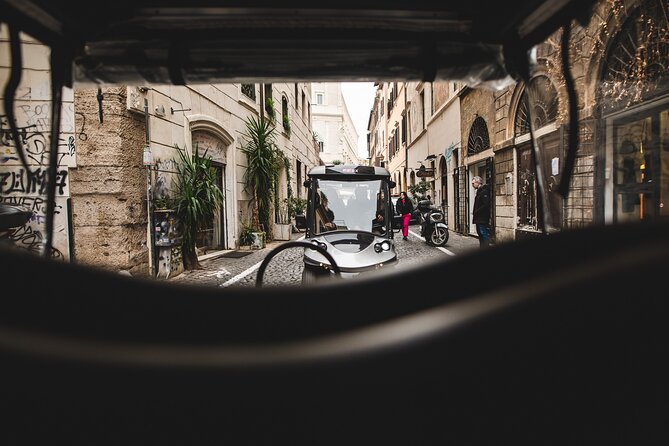
Rome is gorgeous, but it can also be a time thief. Streets are busy, walking adds up fast, and some areas are simply hard to move through at your own pace. This golf-cart format solves a lot of that by trading foot pain for smart shortcuts and frequent photo stops.
You’re not just sitting in the vehicle and “passing by.” The driver is there to talk through what you’re seeing and connect monuments to the people who lived around them. That matters because Rome looks like one big museum, but it’s actually layers of different eras stacked on top of each other. A guided drive helps you notice those layers instead of just memorizing names.
The other practical advantage is comfort and flexibility. Carts can be a lifesaver if you’re managing mobility limits, or if you simply want to save your energy for later neighborhoods. A number of ride reports highlight how the cart setup made the day smoother even when conditions weren’t ideal—like rain—since the carts can be covered for visibility and comfort.
Choose Among Three Golf-Cart Itineraries (And Pick Your Pace)
One of the best parts of this experience is that you don’t have to force yourself into a rigid “big sights only” checklist. You can choose among three golf-cart itineraries, which is a big deal in Rome where crowds and traffic can change your best options day to day.
I like this structure because it lets you steer the tour based on what matters most to you:
- If you want classic Rome icons, you’ll pick a route that leans heavily on the headline stops.
- If your priority is photos and viewpoints, you’ll choose the itinerary that gives you more get-down time.
- If you want to avoid extra walking, you can ask for swaps when a stop has a pedestrian-only portion.
You’ll still get a tight overview in about 3 hours, but the route choice helps keep it from feeling like a rushed highlight reel.
You can also read our reviews of more tours and experiences in Rome.


Hotel Pickup And The Meeting Point: The Simple Plan
Logistics are often where Rome tours go to die. Here, the setup is straightforward: the tour begins at Piazzale delle Canestre, 00197 Roma RM, and it ends back at the meeting point.
The key convenience is pickup offered if your hotel is within golf-cart range. That can make a huge difference when you’re tired from travel or you’re trying to coordinate meeting times around a busy schedule.
You should also plan on the fact that pickup within “golf car range” is not always the same as being close on a map. Rome streets can be narrow, gated, or controlled. So if your hotel is farther than expected, you may be directed to the meeting point instead.
Stop 1: Piazza del Popolo—A Grand Start With A Pilgrim-Entrance Story

You begin at Piazza del Popolo, one of Rome’s most scenic squares. It used to be the main entrance for pilgrims heading toward the Vatican, and that background gives the plaza a sense of arrival and ceremony—not just a photo spot.
What makes this stop work well:
- You get a quick orientation to the scale of Rome’s public spaces.
- The famous Egyptian obelisk anchors the view and helps you understand how Romans built around dramatic landmarks.
The time here is about 10 minutes, so it’s not a long museum moment. Instead, it’s a strong kickoff: you’ll feel Rome’s “big picture” right away.
Stop 2: Spanish Steps—Classic Photos, Real City Views

Next is Spanish Steps (Piazza di Spagna). This is one of those Rome scenes that looks instantly familiar in photos—but it changes when you’re actually there. In person, you’ll notice how the stairs function like a social stage: people watch, people pause, and the square acts like a meeting point for the entire area.
You’ll also get around 10 minutes here to:
- capture your main shot from a comfortable angle
- take in the view that spreads out from the steps
If you’re the kind of visitor who likes to get the iconic photo early, this stop is a good anchor. If you’re sensitive to crowds, you’ll still likely feel the energy of the area—but the cart approach helps you reduce extra wandering time afterward.
Stop 3: Trevi Fountain—Coin Tradition Plus A Short Walk Tradeoff

Trevi Fountain is where the tour leans into romance: La Dolce Vita is the vibe, and the fountain is a symbol of how Rome performs for the camera.
You’ll get about 15 minutes at Trevi, plus a built-in tradition: throw a coin for a return to Rome. That’s the famous part—but the more useful part is the guided timing. You’re getting enough time to actually enjoy the moment rather than just sprinting through.
Here’s the catch: the fountain is in a pedestrian-only area, and you’ll need to cover a short distance on foot—typically 1–2 minutes. The good news is that you can plan for it. If you prefer to skip it, you can request a substitution for a different stop that requires no walking.
Practical tip: if you’re bringing a stroller, traveling with limited mobility, or your group just wants zero sidewalk stress, ask about skipping or swapping Trevi before you arrive.

Stop 4: Piazza Navona—Bernini’s Fountain Energy In Real Time

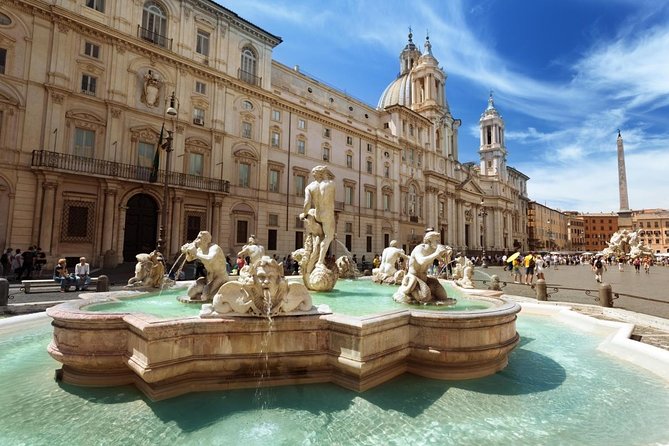
Then you move to Piazza Navona, which sits on the ruins of the ancient stadium of Domitian. That layering is part of why this square feels alive: you’re looking at baroque beauty, but it sits on top of older Roman structures.
You’ll get about 15 minutes, which is enough time to:
- take in street performers and artists (when they’re there)
- get close to Bernini’s Fountain of the Four Rivers
- absorb how people use the space now, not just how it looked in the past
The drawback here, like anywhere central in Rome, is that Navona can get busy. The cart tour helps by keeping you from adding extra walking time around the edges of the square.
Stop 5: Pantheon—The Dome Stop With A Ticket You Should Plan For
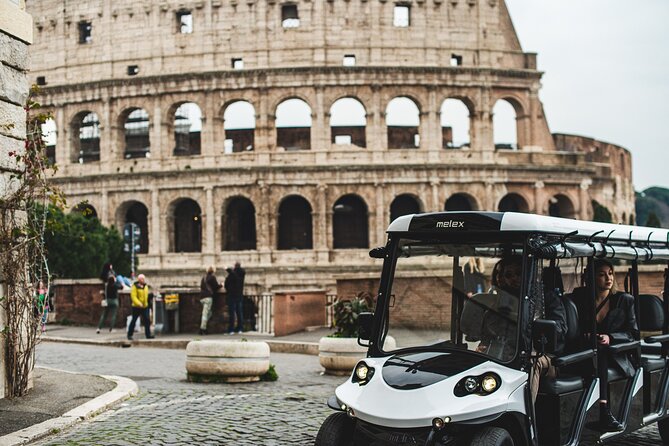
The tour includes Pantheon, with about 30 minutes on site. This is the “engineering flex” stop: the massive dome is still a marvel, even by today’s standards.
But there’s one important line in the sand: Pantheon admission is not included. So if you want to go inside and see the interior properly, you’ll need to factor in ticketing and time for entry.
Why this stop is worth the budgeting:
- The Pantheon changes your sense of what Roman architecture could do.
- The dome dominates your attention instantly, so even a shorter visit feels meaningful.
If you’re trying to do Pantheon on a tight trip, a 3-hour cart tour plus Pantheon time can work well—as long as you don’t assume entry is automatic.
Stop 6: Largo di Torre Argentina—Julius Caesar’s End And Rome’s Cat Colony
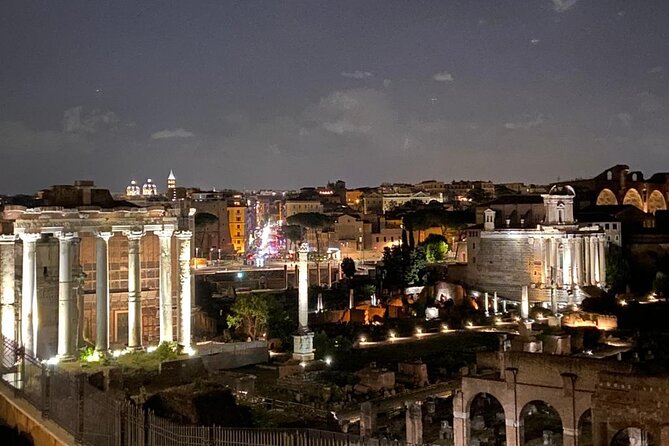
You finish with a stop that’s equal parts history and modern oddball charm: Largo di Torre Argentina. This square is where Julius Caesar was killed in 44 BCE—a detail that turns the location into something heavier than a typical sightseeing stop.
On top of that, it’s also home to Rome’s oldest cat colony. So you get two stories in one small area: political history and an ongoing piece of daily life.
You’ll have about 20 minutes here, which feels like the right amount of time. It’s enough to take in what happened there and still enjoy the atmosphere without feeling trapped in a single point of interest.
What The Driver-Guide Commentary Actually Adds (Names Matter Here)
A golf-cart tour lives or dies by the guide. In the ride stories tied to this experience, the driver-guide role shows up again and again: the best guides don’t just name places; they explain why they matter and how to read what you’re seeing.
A few guide names come through repeatedly:
- Carlo is praised for going beyond the usual “typical sites” with extra historic context.
- Flavio is singled out for making the 3 hours feel well-paced and for tailoring what you can see.
- Edoardo stands out for clear English and a confident, informative approach.
- Jacob gets noted for bringing energy to families and customizing the route when the group already planned other sights.
- Morris is praised for adapting when flights ran late, which is exactly when you need a flexible guide.
Then there are the practical touches:
- Some guides manage timing in a way that reduces stress at transitions.
- One guide experience includes getting into a church quickly during a stop, which shows how route timing and planning can matter.
If you care about understanding Rome more than just ticking boxes, this commentary is where the tour earns its keep.
How Fast Does It Feel In Real Life? (And Who Should Pick This Tour)
Three hours sounds short until you’re in Rome. With a cart, you’re covering major areas without spending your day weaving across streets on foot. The feeling is: a smooth overview, with time to get out, look, and photograph—without a full-day commitment.
Still, speed is a real factor. One important note to keep in mind: if you want to linger for long photo sessions or slow museum-style pacing, this may feel like it moves too quickly. The tour is designed for a high “I got the main impressions” payoff, not for deep study.
This tour is a great fit if you:
- have limited time and want an organized first look
- want fewer steps because of energy, weather, or mobility needs
- like learning stories while you see the landmarks
- prefer a private setup so the guide can adjust for your interests
It’s less ideal if you want a long, detailed visit inside major sites without managing time tightly.
Price And Value: Is $185.03 Per Person Fair?
At $185.03 per person for about 3 hours, this is not the cheapest way to see Rome. But it can be fair value depending on what you’re buying.
You’re paying for:
- a private tour (your group only)
- hotel pickup when within golf-cart range
- the convenience of not walking between far-apart stops
- guide commentary
- multiple get-down photo stops concentrated in a short window
For a one-day plan, this can actually be a budget saver. If you’ve already booked tickets for major sites and you’re trying to make the most of daylight, the cart reduces wasted time. That can be worth more than it looks on paper.
And multiple ride reports call out a “worth every penny” feeling when the guide nails pacing and when the group gets exactly the experience they wanted inside the 3-hour cap.
Heads-Up: Traffic, Events, And Route Adjustments
Rome has a habit of changing plans. Road closures happen. Crowds happen. Even major events like marathons can shift where a cart can go or how you reach certain areas.
The tour can still work when routes change, but you should go in with flexibility. If your trip overlaps an event day, it’s smart to keep your expectations open and stay ready for a different route path than the smooth one you imagined.
Should You Book This Rome Golf-Cart Tour?
Yes—if your goal is a high-impact first look at classic sights with minimal walking and a guide who explains what you’re seeing, this is one of the easiest ways to do it. It’s also a strong choice if you want a private format and you appreciate flexibility, like asking to swap Trevi if you don’t want the short pedestrian walk.
Skip or reconsider if you:
- want a slow pace with long entry time at major monuments
- are counting on Pantheon entry being included (it isn’t)
- need absolute certainty about every route point on an event day
If you’re trying to make Rome fit into a tight schedule, this tour can give you the “starter map” feeling that helps the rest of your days make sense.
FAQ
How long is the Rome golf-cart private tour?
It runs for about 3 hours.
Is this tour private?
Yes. It’s a private tour/activity, with only your group participating.
Do you offer pickup from my hotel?
Pickup is offered if your hotel is within the golf car range. Otherwise, you’ll meet at Piazzale delle Canestre, 00197 Roma RM.
Which stop admissions are included?
Admissions for Piazza del Popolo, Spanish Steps, Trevi Fountain, Piazza Navona, and Largo di Torre Argentina are listed as free. Pantheon admission is not included.
Does Trevi Fountain require walking?
Yes. Trevi is in a pedestrian-only area, and you’ll need to walk a short distance (1–2 minutes). You can ask to skip Trevi and substitute another stop that requires no walking.
What’s the cancellation policy?
You can cancel for a full refund up to 24 hours in advance of the experience start time.