REVIEW · ROME
Rome: Jewish Ghetto Walking Tour
Book on GetYourGuide →Operated by Roman Vacations · Bookable on GetYourGuide
Rome has a second clock here. This 2.5-hour walk through the Jewish Ghetto connects 2000 years of change, from Trajan’s Column to Tiber Island, with stops that still look usable today. You’ll hear how the neighborhood shaped lives through wars, exile, and survival.
I love the way guides such as James and Angela tell it like a story, not a lecture—so the Turtle Fountain’s unrequited-love tale lands, and the Portico d’Ottavia feels like real street life. I also love the practical payoff of homemade Kosher gelato or coffee, which gives you a breather before the later streets and bridges. One possible drawback: you need to arrive on time, because the tour can’t wait, and if you’re hoping for an inside visit to the Great Synagogue, this walk may focus more on what you can see around it.
In This Review
- Key highlights you’ll feel right away
- From Foro Traiano to the Theatre of Marcellus: start with Roman scale
- Piazza Mattei and the Turtle Fountain: a love story with real street drama
- The Jewish Ghetto streets: where you see enclosure, resilience, and community layers
- Portico d’Ottavia: ancient architecture that still feels like daily Rome
- Tiber Island crossing: the oldest functioning bridge and a WWII survival story
- The Kosher gelato (or coffee) break: small stop, big value
- Time, pace, and what $65 buys you
- Weather-proofing: how to dress so you don’t suffer
- Who should book this Jewish Ghetto walking tour?
- Should you book the Rome Jewish Ghetto walking tour?
- FAQ
- Where does the tour start?
- How long is the walk?
- How much does it cost?
- What’s included in the price?
- What should I bring?
- Does the tour run in bad weather?
- Are late arrivals handled with extra time?
- What if I want to cancel?
Key highlights you’ll feel right away
- Trajan’s Column start: You launch the walk with a Roman landmark that sets the scale fast.
- Theatre of Marcellus first: You get ancient Rome before you even reach the Ghetto streets.
- Piazza Mattei and the Turtle Fountain: A small square with a big romance story.
- Wall traces in the Ghetto: You see the last physical reminder of centuries of enclosure.
- Tiber Island’s WWII hospital story: History isn’t abstract here—it’s personal.
- Asclepius, then church: A temple story that shows how places get reused in Rome.
From Foro Traiano to the Theatre of Marcellus: start with Roman scale

Your tour meets at Foro Traiano, 84—look for an orange Roman Vacations sign. If you like getting oriented quickly, this is a smart launch point: you’re in the Rome of emperors, before you move into older and quieter neighborhoods.
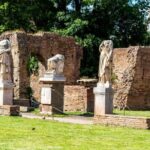
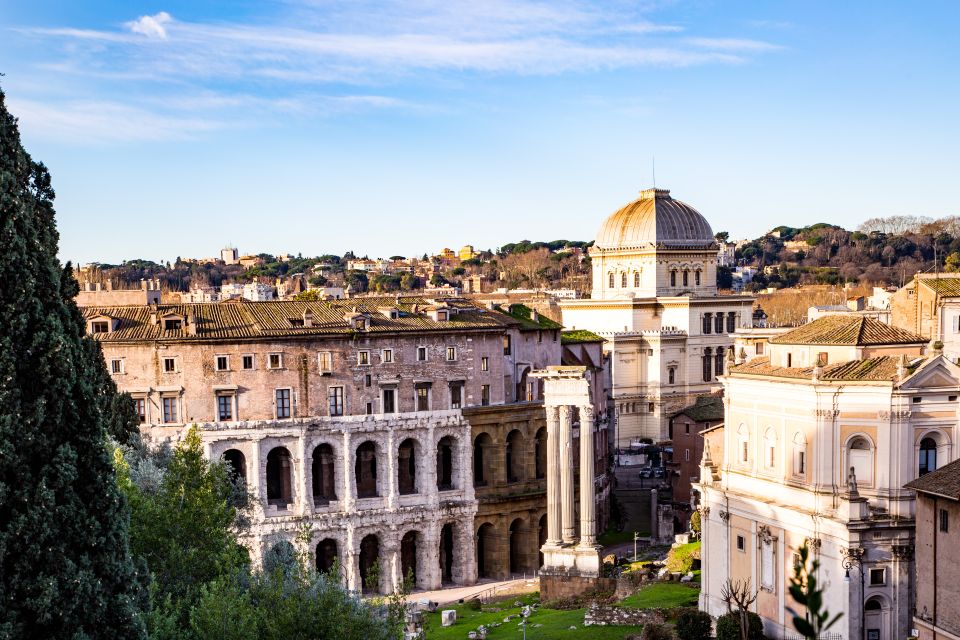
From there, you head toward the Theatre of Marcellus. The guide sets up the big idea: this structure is older than the Colosseum, so it helps you “read” Rome’s timeline in the right order. You’re not just looking at a ruin—you’re learning how Roman entertainment and politics lived side by side.
What I like here is the pacing. You get a dramatic stop early, but the pace stays gentle enough that you’re not exhausted before the Ghetto story begins.
You can also read our reviews of more tours and experiences in Rome.


Piazza Mattei and the Turtle Fountain: a love story with real street drama
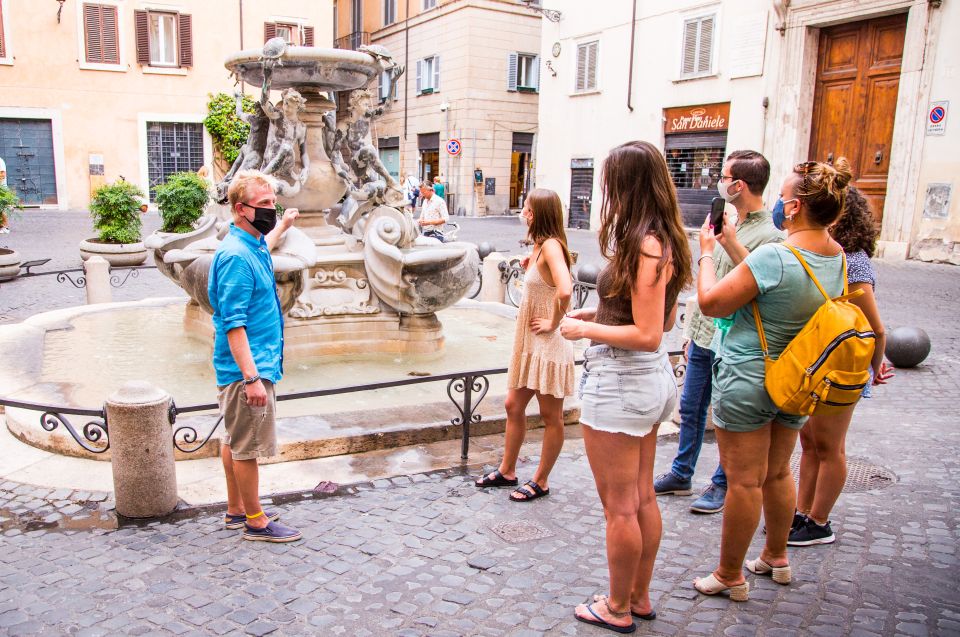
Next comes Fontana delle Tartarughe in Piazza Mattei. This is where the tour does something I always appreciate: it uses a visual detail to hook you into the emotional side of history. The guide shares the story tied to the fountain—unrequited love—so you’re not just memorizing names.
Practically, Piazza Mattei is also a nice pause. It’s open enough to regroup, and it’s a great place for photos that don’t feel like the usual Rome “everyone shoots the same monument” angle. You’ll also notice how quickly the neighborhood vibe changes from grand Rome to intimate Rome.
If you have teenagers or friends who tune out on “history facts,” this stop is often where they wake up. A good guide can make legend feel like gossip from the street.
The Jewish Ghetto streets: where you see enclosure, resilience, and community layers

When you enter the Jewish Ghetto area, the tour shifts tone. It becomes slower, more reflective, and more grounded in what you can actually see around you. You’ll be talking about a neighborhood that has carried centuries of pressure and endurance.
The guide points out the last remaining piece of the wall that kept the Jewish community in this area for centuries. Seeing that physical boundary is one of those moments that changes how the rest of the stories land—suddenly history isn’t only dates, it’s a line drawn in stone.
You’ll also pass key religious and cultural points, including the Great Synagogue of Rome. The emphasis is on context and continuity: how Rome’s Jewish community lived through shifting rules, neighborhood changes, and periods of danger. Guides like Tom and Daniel are especially praised for weaving the bigger Roman world into what happened inside this community, so the Ghetto isn’t treated like a side exhibit.
One thing to keep in mind: the tour is a walking experience, not a museum day. If you strongly want an inside visit to the Great Synagogue, this particular format may not satisfy that expectation on its own. I’d plan to treat your stop as an encounter with the neighborhood’s story in public space.
Portico d’Ottavia: ancient architecture that still feels like daily Rome

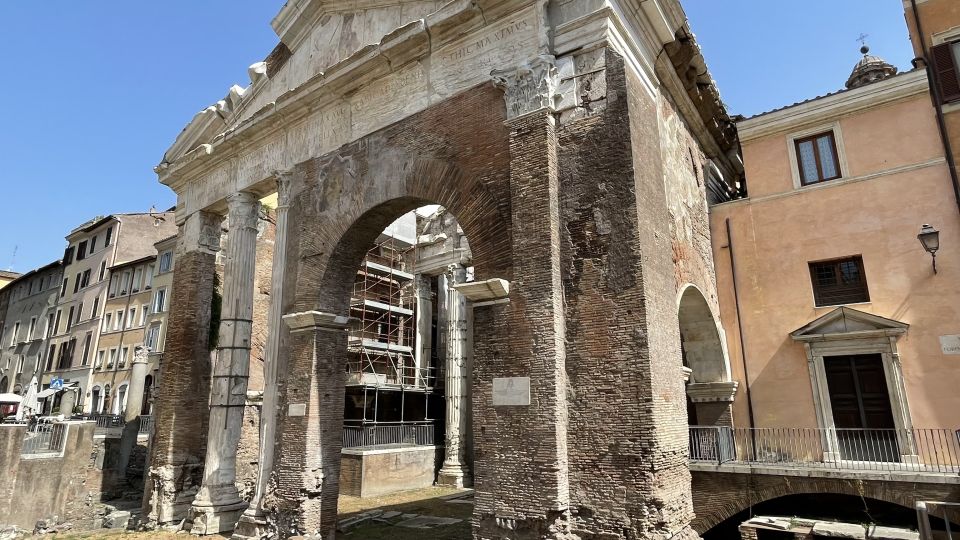
After the Ghetto streets, you head toward the Portico d’Ottavia. This is a useful stop because it restores a sense of “city function.” Yes, you’re in historical layers—but the portico also helps you understand how Romans organized movement, commerce, and shelter.
The guide explains what to look for, and the time here is short but focused. You’ll notice how these structures create a kind of quiet rhythm: you walk, pause, and then move on, rather than rushing from one headline site to the next.
Why this matters for you: the tour doesn’t only ask you to feel the past. It also shows you how Rome’s architecture keeps working. That’s one of the differences between seeing ruins and understanding a living city.
Tiber Island crossing: the oldest functioning bridge and a WWII survival story
Next comes a classic Rome transition—crossing the river to Tiber Island. The guide has a specific focus here: you’ll cross the oldest functioning bridge in Rome. Even if you’re not a bridge-nerd, this is a fun detail because it connects modern strolling to centuries of movement.
Once you’re on the island, the stories pivot into the 20th century. You’ll hear about a hospital on Tiber Island that helped save people during WWII. This is one of the most emotionally serious parts of the walk, and the guide keeps it tied to place, not just generalities.
You’ll also hear about Asclepius and the temple that’s now a church. That’s a very Rome kind of transformation: a site with deep roots, repurposed over time, still holding meaning.
This is where I think the tour feels most “worth it.” You’re not only getting ancient Roman sights—you’re getting a guided narrative that reaches into your own century, with a specific location anchor.




The Kosher gelato (or coffee) break: small stop, big value
Yes, there’s food. But it’s more than a sugar moment.
You’ll be taken to a gelateria for homemade Kosher gelato, or you can have coffee instead. That’s a real help during a 2.5-hour walking route, especially in Rome heat or sudden spring rain. It also creates a natural pause so your brain can reset between heavier topics.
And since it’s included in the price, it keeps the tour from turning into a “nickel-and-dime” day. You’re paying for a guided walk plus a built-in treat, which is better value than paying separately for every stop.
Time, pace, and what $65 buys you
The tour runs for about 2.5 hours and costs $65 per person. For Rome walking tours, that’s in the reasonable middle range—what makes it feel fair is that you’re getting a real guide plus multiple landmark stops, not just a couple of photo stops.
The stops are chosen to tell a full story arc: start in imperial Rome, move through ancient architecture, enter the Ghetto for centuries of community history, then finish on Tiber Island with WWII and religious layers. With a good guide, the value is in how they connect those dots.
Pace-wise, guides often adjust for the group. In smaller groups, you’ll usually get more time for questions without feeling rushed. If you want discussion, this is the kind of tour format that can work well.
If you’re expecting a museum-style “sit and listen,” you might find it more active than that. It’s built around walking and stopping, with a guide doing the heavy lifting.
Weather-proofing: how to dress so you don’t suffer
The tour runs in all weather conditions. That means you should dress like you’re going out for a focused walk, not like it’s an optional stroll.
Bring comfortable shoes, sunscreen, and a hat—Rome can hit you fast. An umbrella is a smart idea because sudden showers happen. Also, consider clothing you can handle if you enter any church spaces; you’ll need a cover for bare shoulders inside churches.
This is the kind of tour where you’ll be glad you planned for comfort. You’ll enjoy the stories more when you’re not thinking about sore feet.
Who should book this Jewish Ghetto walking tour?
Book it if you want history with street context. You’ll see major landmarks like the Theatre of Marcellus, the Turtle Fountain, Portico d’Ottavia, the Great Synagogue area, and Tiber Island—then you’ll connect them through a guided story about Roman Jewish life and survival.
It’s also a strong choice for mixed groups. The reviews mention strong results with teenagers, and the way the guide uses anecdotes helps people who don’t usually love tours stay engaged.
You might skip it if you want a long inside-access day. This experience is built around what you can view on the route, plus one included food stop. If inside access is your top goal, you may want to pair this with another synagogue-focused visit on a separate day.
Should you book the Rome Jewish Ghetto walking tour?
In my view, it’s a yes—if your idea of a great Rome day includes guided walking, historical context, and meaningful place-based stories. The combination of ancient sites (like the Theatre of Marcellus), neighborhood specifics (including the wall trace), and the ending on Tiber Island with WWII and Asclepius is a well-shaped route that doesn’t feel random.
Two practical reasons to say yes: you get the guide plus homemade Kosher gelato or coffee included, and the meeting point is clear—foro Traiano with the orange Roman Vacations sign.
My final advice is simple: arrive a little early, wear comfortable shoes, and go in ready to listen. If you do that, you’ll come away with a much clearer picture of how Rome’s story includes Jewish life across centuries, not just as footnotes on a map.
FAQ
Where does the tour start?
The meeting point is Foro Traiano, 84. Look for an orange Roman Vacations sign at the start.
How long is the walk?
The duration is about 2.5 hours.
How much does it cost?
It’s $65 per person.
What’s included in the price?
Your tour includes a live English-speaking guide and homemade Kosher gelato (or coffee).
What should I bring?
Bring comfortable shoes, a sun hat, an umbrella, sunscreen, weather-appropriate clothing, and a reusable water bottle.
Does the tour run in bad weather?
Yes. Tours proceed in all weather conditions.
Are late arrivals handled with extra time?
No. Tours cannot be delayed for late arrivals, and there are no refunds for late arrivals or missed tours.
What if I want to cancel?
You can cancel up to 24 hours in advance for a full refund.