REVIEW · ROME
Rome: Pasta and Tiramisu Cooking Class in Piazza Navona
Book on GetYourGuide →Operated by IPM COETUS SRL · Bookable on GetYourGuide
You cook pasta in the most famous square. In this Piazza Navona class at Ristorante Tucci, you learn to make fettuccine and classic tiramisu, then you enjoy what you made while Rome does its fountain-and-strolling thing. It’s part kitchen lesson, part proper sit-down meal.
I especially love the hands-on feel: small-group coaching turns fresh pasta from intimidating to doable in a couple of hours. I also love the payoff—your pasta and tiramisu are made real by the restaurant service, so you finish by eating in a beautiful, central setting with drinks included.
One watch-out: the class isn’t suitable for everyone. It’s not a fit if you’re vegan, and it also isn’t suitable for gluten or lactose intolerance (and diabetes). If any of that applies, double-check before you book.
In This Review
- Key Things to Know Before You Go
- Where You Cook: Ristorante Tucci in Piazza Navona
- How the 2.5 Hours Work: From Fresh Pasta Dough to Chilled Tiramisu
- Phase 1: Pasta making (fettuccine)
- Phase 2: Tiramisu making
- Choosing Your Sauce: Carbonara, Cacio e Pepe, Pomodoro, or Pesto
- Bruschetta, Wine or Beer, and Your Pasta Served Like a Real Meal
- Piazza Navona at Mealtime: Why the Location Changes the Taste
- Tiramisu Skills You Can Actually Use Back Home
- Who This Class Fits Best (And Who Should Skip It)
- Price and Value: Why $64 Makes Sense Here
- Practical Tips Before You Arrive at Tucci
- Should You Book This Piazza Navona Pasta and Tiramisu Class?
- FAQ
- How long is the Rome pasta and tiramisu cooking class?
- Where is the meeting point?
- What do I make during the class?
- Can I choose what sauce I get with my pasta?
- What’s included in the meal after the cooking?
- Is the class suitable for vegans or gluten/lactose intolerance?
- Is the class offered in English?
Key Things to Know Before You Go
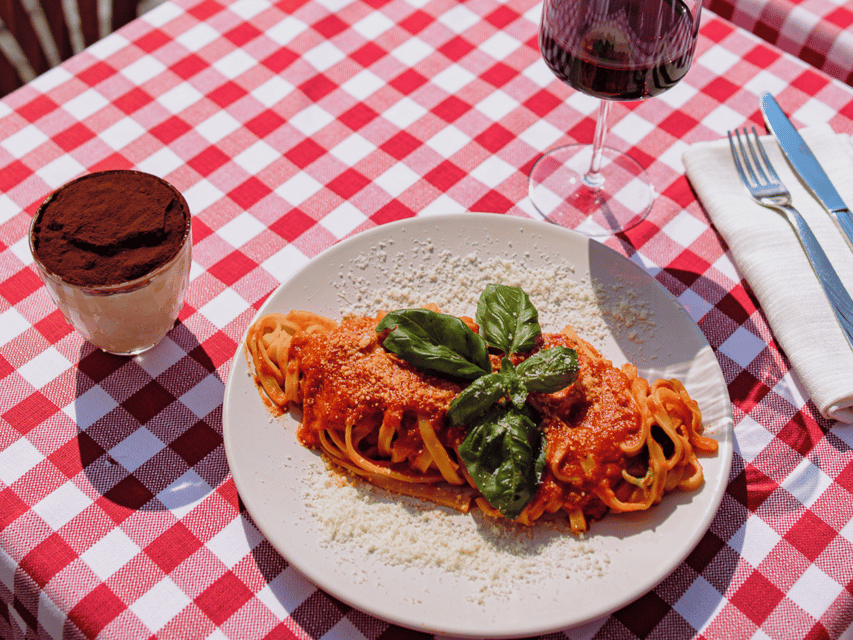
- Small group, up to 10 people keeps the vibe friendly and helps the instructor get to you fast.
- Pasta dough + fettuccine technique is taught step by step, not as a vague demo.
- Tiramisu is made by you and then chilled before serving so it tastes like the real thing.
- Choose your sauce from 4 options: Carbonara, Cacio e Pepe, al Pomodoro, or al Pesto.
- A full Rome meal follows: bruschetta, your pasta dish, and dessert, plus included drinks.
- In Piazza Navona, inside Ristorante Tucci means you get location drama without hunting all day.
Where You Cook: Ristorante Tucci in Piazza Navona
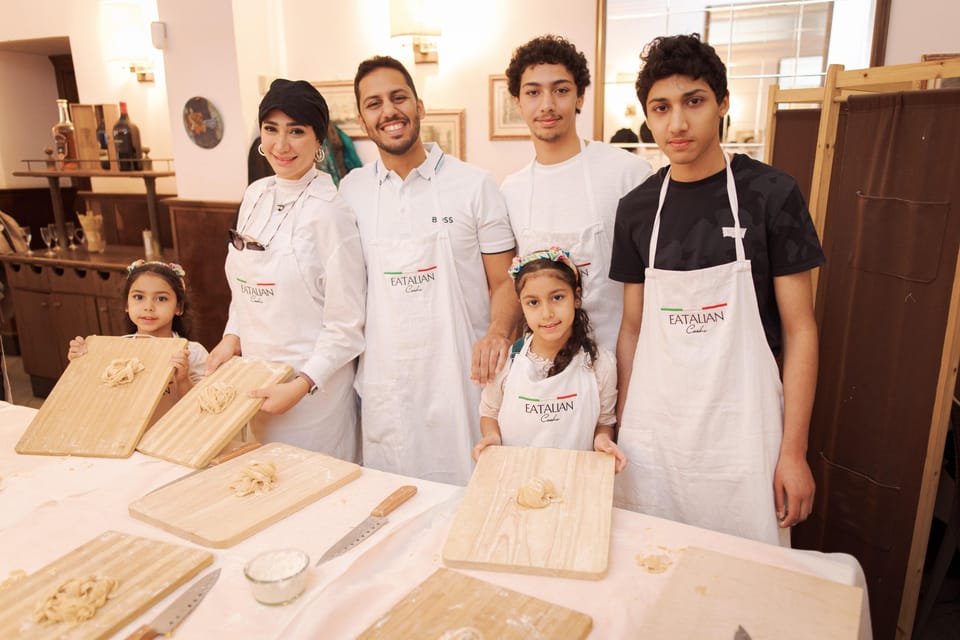
The best part of this class is the setting. You start and then enjoy the meal at Ristorante Tucci, right in the area of Piazza Navona—the kind of place you normally just walk through and take photos. Here, you slow down and actually do something. That matters. Food experiences stick when they’re tied to a specific moment, and Piazza Navona is an excellent moment.
Inside, you’ll meet the team and get directed to where the class happens. The vibe is relaxed: it’s designed for learning, not performing. The group is intentionally small (limited to 10 participants), so you aren’t swallowed by a crowd.
One practical note: you’ll meet the group inside the restaurant, not out in the square. So once you arrive, go straight to the staff and ask for the cooking class. And do arrive on time—there’s a firm pace to the schedule once everyone’s seated.
You can also read our reviews of more tours and experiences in Rome.


How the 2.5 Hours Work: From Fresh Pasta Dough to Chilled Tiramisu
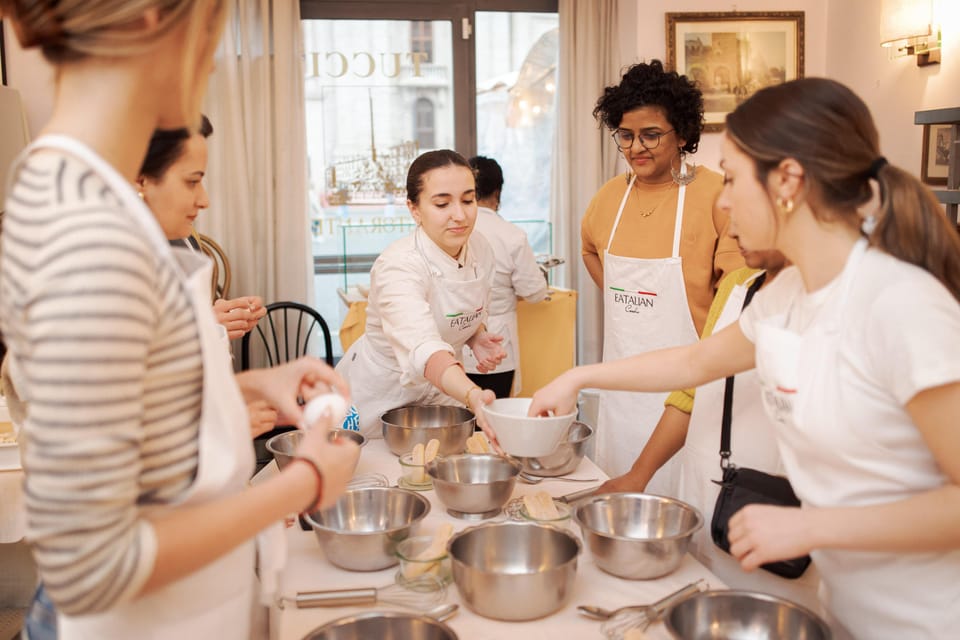
This runs about 2.5 hours, with two big phases: pasta first, tiramisu second. The tempo is paced so you don’t feel rushed, but you’re also not stuck waiting while other people finish.
Phase 1: Pasta making (fettuccine)
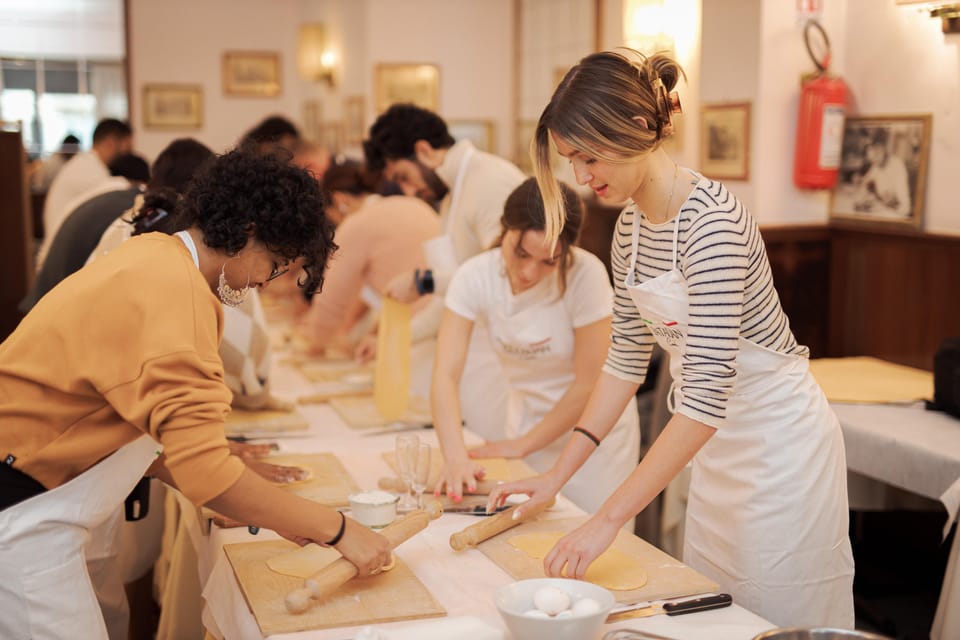
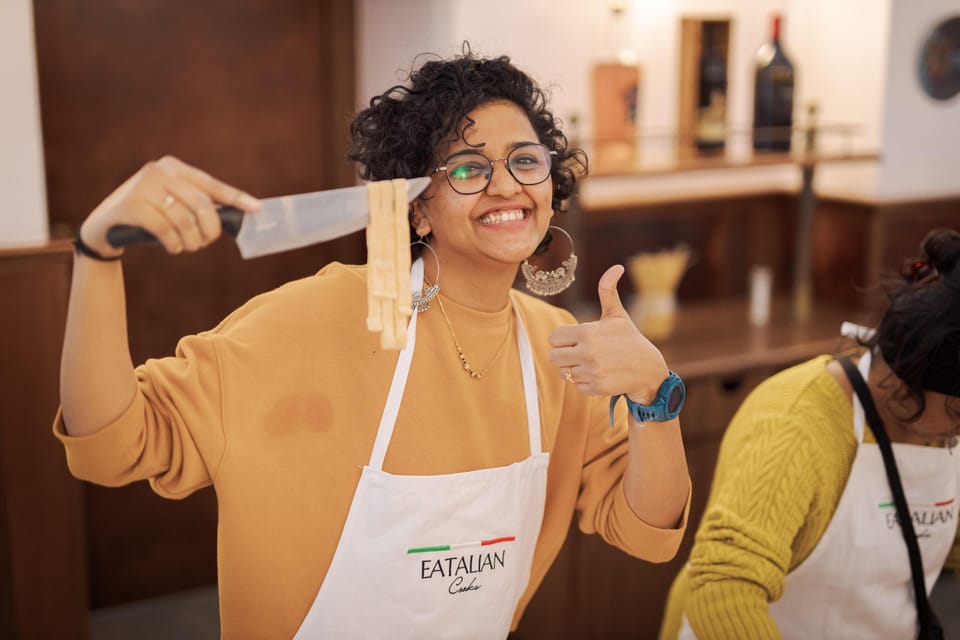
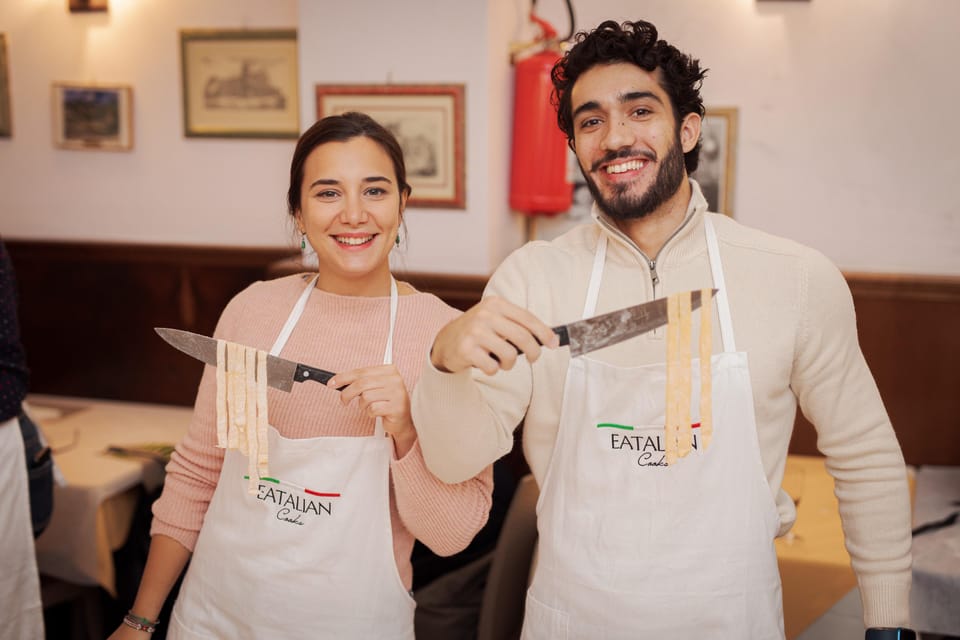
You’ll learn how to make fresh pasta dough and form it into fettuccine. Expect real technique, not just instructions you read while someone else handles the work. Many instructors keep it simple and hands-on—people mention teachers like Luca, Sarah, Sara, Simone, Enea, Cleo, Georgia, and Alessandra, all known for clear English guidance and patience.
Once your dough work is done, you don’t just take food home. You’re going to choose a sauce next and then head straight into the restaurant portion so your pasta experience stays connected end to end.
Phase 2: Tiramisu making
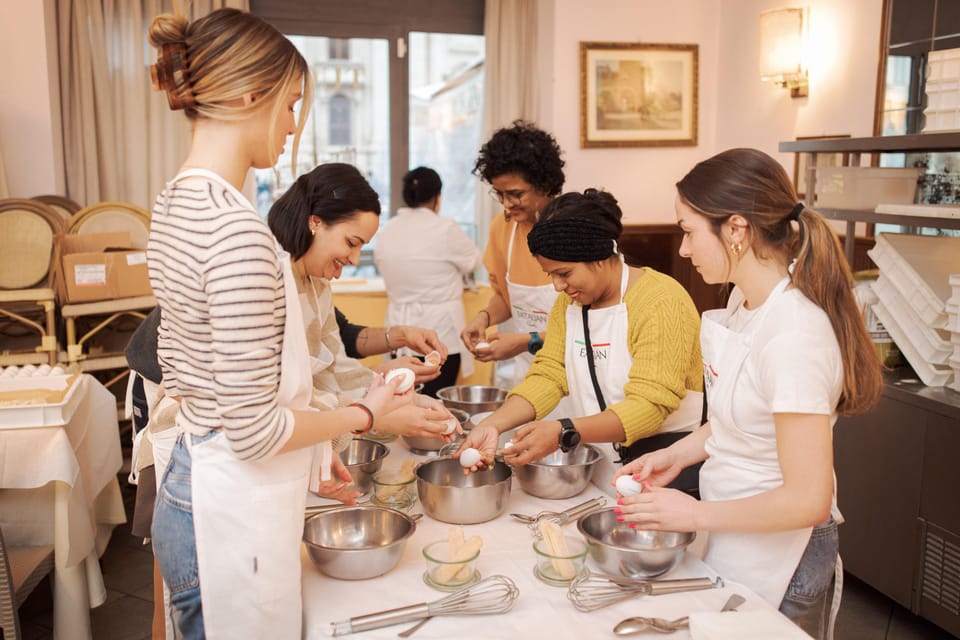
After the pasta portion, you shift to tiramisu. One reason this dessert works so well in a class setting is that it’s structured—there’s a method you can follow without needing to invent anything. You’ll assemble it with your own hands, and then your tiramisu is taken to the restaurant fridge so it can set before serving.
What that means for you: you get the satisfaction of making it, and you still get the benefit of professional timing for the chilling step. That’s a nice balance for home cooks who want results without chaos.
Choosing Your Sauce: Carbonara, Cacio e Pepe, Pomodoro, or Pesto
This part is surprisingly fun because it turns a cooking class into a mini decision. You get to pick from four traditional sauce options:
- Carbonara
- Cacio e Pepe
- Al Pomodoro
- Al Pesto
Then you write a note for your pasta choice, and the chef takes it from there.
Here’s why that’s a smart setup: you do the heavy lifting (the dough and shaping), and the restaurant team handles the sauce timing and final cooking. That removes a common problem with cooking classes—where guests make something, but it’s finished inconsistently because people are learning and multitasking. In this format, you still get ownership, but the end result is far more predictable.
Also, if you’re unsure what to choose, here’s an easy way to think about it:
- If you want comfort and richness, go Carbonara.
- If you like pepper-forward simplicity, choose Cacio e Pepe.
- If you prefer tomato freshness, pick al Pomodoro.
- If you’re a basil fan, al Pesto is usually a crowd pleaser.




Bruschetta, Wine or Beer, and Your Pasta Served Like a Real Meal
Once you’re seated, the experience shifts from kitchen mode to table mode. You’ll get an appetizer: bruschetta—bread topped with tomatoes, oil, and basil.
You also get drinks included with the meal: one glass of wine or beer, plus coffee or limoncello at the end. Soda and water are included too. That’s a big part of the value here, because it turns the class into an actual dining experience, not just a snack between lessons.
Then comes the best trick of the whole format: while you relax with your appetizer and drink, the restaurant kitchen cooks your pasta with the sauce you selected. You’re not waiting in the kitchen with flour on your hands. You get to sit, watch the meal become a real plate, and enjoy being done with the hard parts.
Finally, you eat your pasta and then your tiramisu, served after it’s been chilled.
Several people highlight the satisfaction of this pairing: cook it, then eat it immediately, in the same Rome setting. That makes the learning feel practical, not theoretical.
Piazza Navona at Mealtime: Why the Location Changes the Taste
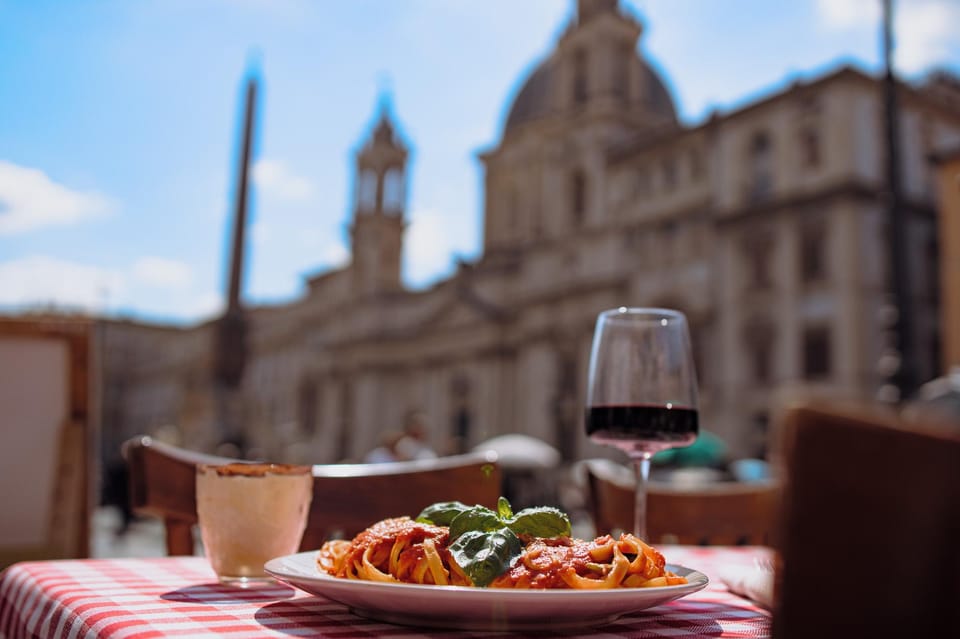
Cooking classes can feel forgettable when the setting is generic. This one doesn’t. Sitting for your meal with Piazza Navona nearby adds a sense of occasion that you can’t replicate at home.
It also changes the pace. Instead of spending your afternoon sprinting between attractions, you settle into a two-and-a-half-hour rhythm. You get conversation time with your group, an included drink, and a meal built from your own choices. Even if you’re traveling solo, you’re not stuck eating alone.
And because the restaurant is part of your experience, you get a natural flow: lesson → sauce choice → meal service → dessert. No awkward in-between.
One practical tip: if you want your best views and photo angles, arrive a bit early and be ready to follow staff guidance when they seat you. You’ll spend less time figuring out logistics and more time enjoying the moment.
Tiramisu Skills You Can Actually Use Back Home
Tiramisu is one of those desserts people think only specialists can nail. This class takes away that fear. You don’t just eat it—you build it, step by step.
What you learn is practical:
- how to assemble layers in the right order,
- how to handle the components so the texture works,
- and why chilling time matters for the final set.
Because your tiramisu goes to the fridge before serving, you also see how the timing affects the outcome. That’s useful information if you want to repeat it later.
People consistently mention that the tiramisu portion feels simple once the method is explained, and that the final dessert tastes exactly like what you expect from an Italian classic. If you’ve ever made tiramisu at home and wondered why it didn’t taste like the version from restaurants, this kind of guided structure helps you spot where problems usually happen.
Who This Class Fits Best (And Who Should Skip It)
This experience is a great fit if you want:
- a hands-on food lesson,
- an English-speaking guide,
- a small group (up to 10),
- and a real meal with drinks included.
It’s also a solid choice for first-time cooks. The class format keeps the tasks manageable. Many past participants mention that the instructions made pasta-making less intimidating than they expected.
But it’s not suitable for certain needs:
- not for vegans
- not for gluten intolerance
- not for lactose intolerance
- not for people with diabetes
- children under 7 years aren’t recommended
That doesn’t mean nobody with dietary restrictions can enjoy the experience—vegetarian options and other diets are mentioned as supported. Just don’t assume every restriction will be workable. If your needs are specific, message the provider when booking and ask directly.
Price and Value: Why $64 Makes Sense Here
At $64 per person for 2.5 hours, the price looks reasonable once you break down what’s included.
You’re paying for:
- a structured pasta-making class (hands-on dough + fettuccine guidance),
- a tiramisu-making class (with your dessert assembled by you),
- a full meal afterward (bruschetta, your pasta dish, and dessert),
- and drinks (wine or beer, plus coffee or limoncello, and soda/water).
In a city like Rome, that’s key. Many “food experiences” are either:
- mostly entertainment with little food, or
- mostly food with little instruction.
Here, you get both. And because your pasta is cooked for you after the lesson, you get restaurant-level results without needing to master sauce timing while you’re still learning dough technique.
So I’d call it good value if you want one activity that turns into a meal—and gives you a technique you can reuse at home.
Practical Tips Before You Arrive at Tucci
A few small moves will make this smoother:
- Arrive 10 minutes early. The class is not private, and the schedule runs on time.
- Meet inside Ristorante Tucci. Ask a waiter to point you to the cooking class.
- Wear comfortable clothes. Pasta-making can get a little messy even when it’s taught calmly.
- Go with your sauce decision in mind, but don’t stress. The options are straightforward, and the team handles the cooking afterward.
- Bring your appetite. The meal after the class is part of the deal: bruschetta, pasta, and tiramisu.
One more thing: it’s an English-instruction class. That’s a plus if you’re not fluent in Italian and want to understand why each step works.
Should You Book This Piazza Navona Pasta and Tiramisu Class?
If you want an activity that feels like Rome, not a detour, I’d book it. The combination is what makes it click: Piazza Navona location, hands-on pasta and tiramisu, and a meal where your creations actually get served. It’s also one of those experiences that works well for both couples and small groups because you’re doing something together without needing the perfect conversation script.
Skip it only if your dietary needs match the stated limits (vegan, gluten or lactose intolerance, diabetes) or if you need a longer, more flexible schedule with no firm pacing.
If you’re a first-timer who wants a technique you can recreate—this class is exactly the kind of thing that turns into a satisfying souvenir, not just a photo.
FAQ
How long is the Rome pasta and tiramisu cooking class?
It lasts about 2.5 hours.
Where is the meeting point?
You meet inside Ristorante Tucci. When you arrive, ask a waiter to guide you.
What do I make during the class?
You make fresh pasta (fettuccine) and you also make tiramisu.
Can I choose what sauce I get with my pasta?
Yes. You can choose among Carbonara, Cacio e Pepe, al Pomodoro, or al Pesto.
What’s included in the meal after the cooking?
You get bruschetta, your pasta dish made with your chosen sauce, and tiramisu. Drinks included are one glass of wine or beer, plus coffee or limoncello, along with soda and water.
Is the class suitable for vegans or gluten/lactose intolerance?
No. It’s not suitable for vegans, gluten intolerance, or lactose intolerance.
Is the class offered in English?
Yes, the instructor teaches in English.