REVIEW · ROME
Rome: Private Golf Cart Tour with Artisanal Gelato
Book on GetYourGuide →Operated by Parisa in Rome · Bookable on GetYourGuide
Rome feels faster when you’re not stuck walking. I love the 100% electric, whisper-quiet golf cart and the restricted-traffic access, which lets you see more while dodging Rome’s worst slowdowns. The one thing to weigh is the 2–2.5 hour pace: it’s made for highlight viewing, not long inside-the-museum hangs.
This is a truly private experience, and the driver-guide is the key ingredient. You’ll meet them at your hotel, chat about what you care about, and fine-tune the route on the spot. In the feedback I’m using to guide my expectations, guide names like Ciro, Emmanuel, and Giacomo show up repeatedly for friendly English and smooth, practical driving.
Value-wise, I like that the tour includes hotel pickup in central Rome, plus small comfort perks like bottled water and a brief gelato or coffee stop. Do note: entry tickets aren’t included, so if you want to go inside major sites, you’ll still need to handle that separately.
In This Review
- Key Things I’d Focus On Before You Go
- Why a Private Electric Golf Cart Works So Well in Rome
- Hotel Pickup, Custom Route, and Meeting Your Driver-Guide
- Spanish Steps: Photo Stop, Quick Story, and Scenic Rolling Views
- Trevi Fountain: The Classic Moment, Timed for Photos and Movement
- Pantheon: Ancient Grandeur Without the Full-Day Commitment
- St. Peter’s Basilica and the Orange Garden: Big Icons Plus Quiet Views
- Circus Maximus and the Colosseum: Two Icons, One Short High-Impact Loop
- Piazza Navona: A More Relaxed Break in the Middle of the Classics
- Aventine Keyhole: Short Stop, Worth It if You Love Views
- Trastevere: Closing the Tour with Local-Feeling Streets
- Gelato or Coffee Breaks: Turn a Sightseeing Loop Into a Real Taste Memory
- Price, Value, and Who This Tour Fits Best
- Should You Book This Rome Golf Cart Tour?
- FAQ
- How long is the Rome private golf cart tour?
- Is the tour private?
- What is included in the price?
- Are entry tickets included for the sights?
- Where does pickup happen?
- Is the tour suitable for children or wheelchairs?
Key Things I’d Focus On Before You Go
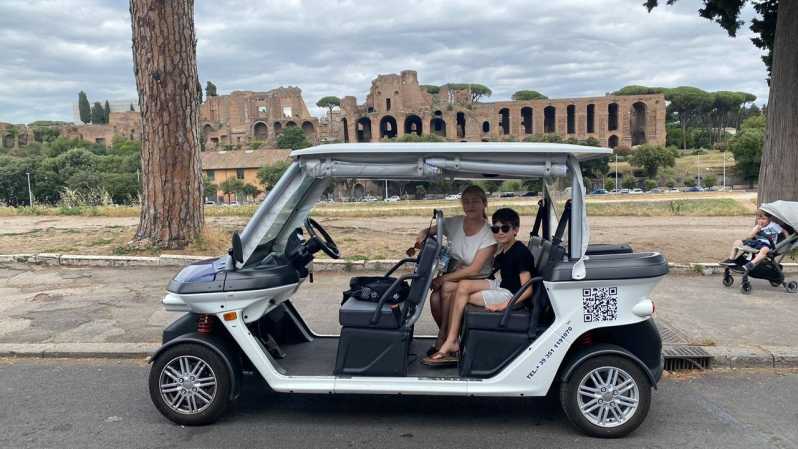
- 100% electric golf carts that cut traffic stress and keep the ride quiet
- Private, customizable route shaped around what you want to see
- Access to restricted traffic zones that regular cars can’t enter
- Photo-stop timing that balances famous landmarks with quick guided context
- Gelato or coffee breaks built in to stop the tour from feeling like a sprint
- Stops that cover both classics and lesser-known corners in one smooth loop
Why a Private Electric Golf Cart Works So Well in Rome
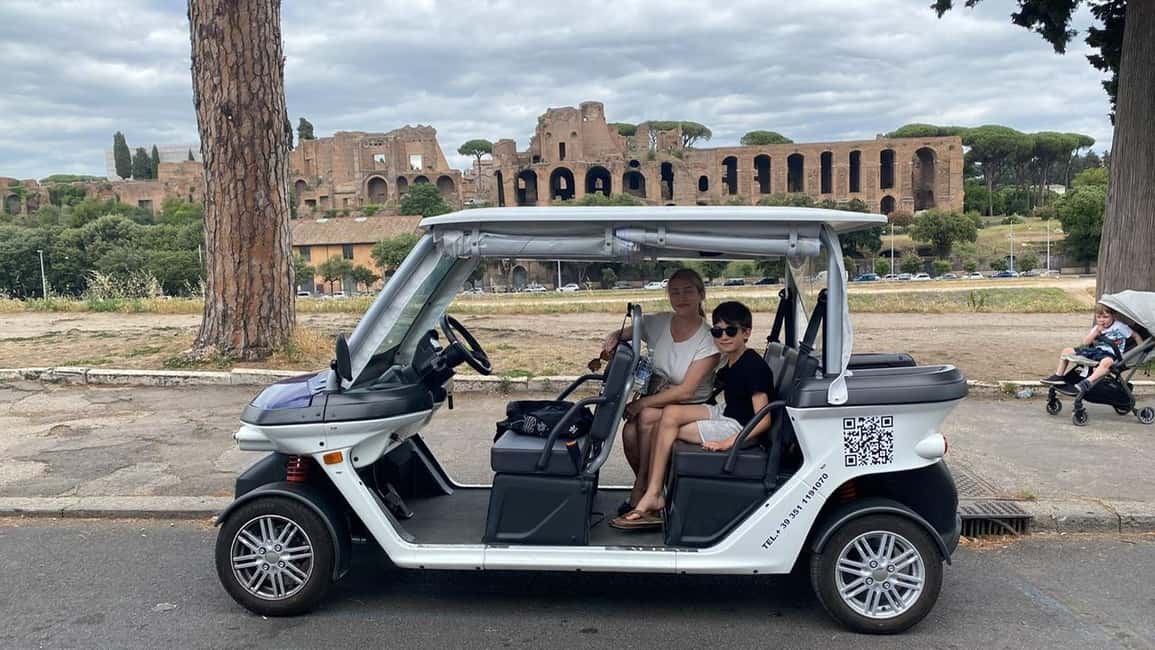
Rome is gorgeous, but moving through it can feel like a full-time job. That’s exactly where a private golf cart shines. The ride is 100% electric and described as whisper-quiet, which matters more than you’d think. When you’re not hearing constant engine noise, you can actually listen to the explanations and enjoy the streets you’re rolling through.
The cart also changes the shape of the day. Instead of losing 30 minutes to taxis stuck in bottlenecks or buses packed like sardine soup, you keep moving. Better yet, this experience includes access to restricted traffic zones normally closed to regular vehicles. Translation: you get closer, faster, and you spend more time at the landmarks that matter.
And because it’s private, you’re not sharing your stops with a dozen people trying to herd themselves toward the same photo. That’s a big deal at Rome’s most popular spots, where timing and patience make or break the experience. In the feedback trail, a common theme is how much older visitors appreciated the cart for making the day enjoyable instead of exhausting.
Two practical realities to keep in mind:
- This isn’t a wheelchair-friendly tour, and baby strollers and luggage/large bags aren’t allowed.
- You’ll cover a lot of ground in a short time, which is great for orientation, but you won’t replace a slower “go inside everything” day.
You can also read our reviews of more tours and experiences in Rome.


Hotel Pickup, Custom Route, and Meeting Your Driver-Guide
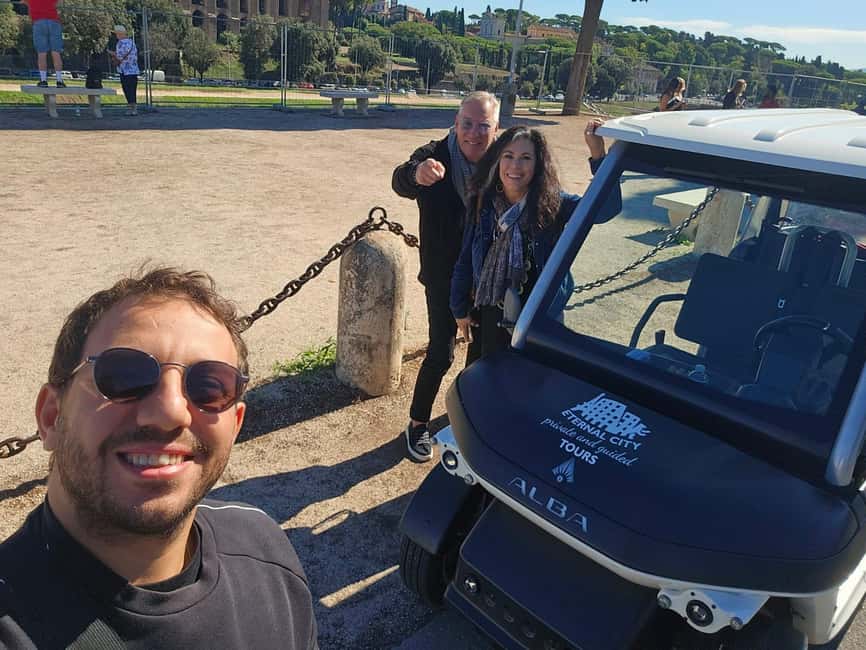
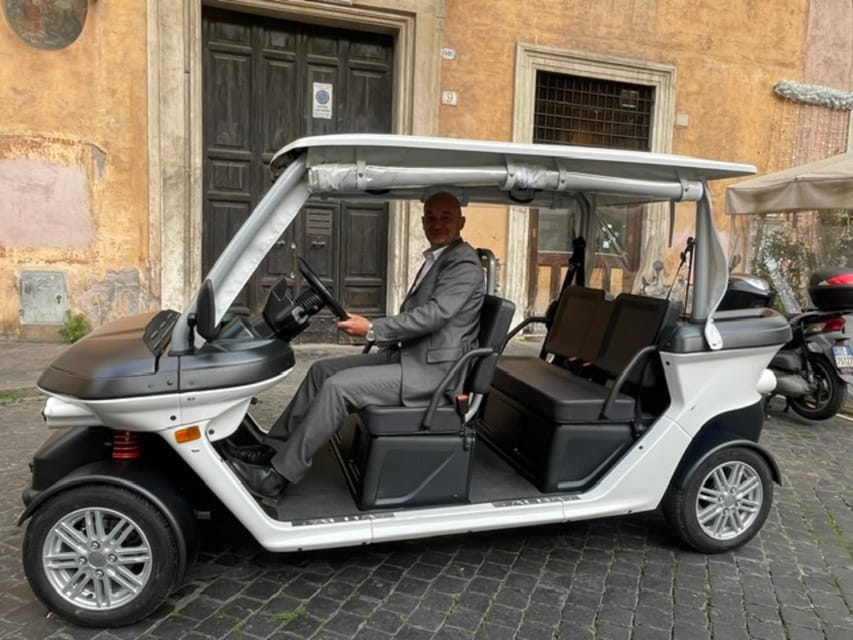
The start is simple: you meet your driver at your hotel, then hop into the cart and roll out. If you’re staying in central Rome, pickup and drop-off are part of the deal. If your hotel is outside that area, you’ll get directions to a closer meeting point so you’re not left guessing.
Before you drive off, you have a real advantage: you can discuss and customize the itinerary with your guide. That turns the tour from a fixed checklist into something more like a smart, local circuit. I like that because Rome is personal. One person wants maximum architecture time. Another wants food stops and photo angles. The best outcome is a route that matches your energy and interests, not just a rigid schedule.
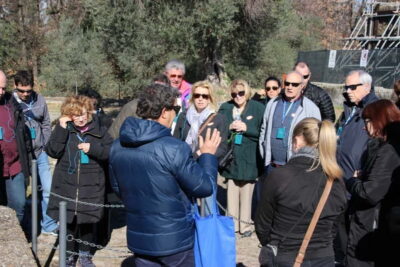
English-speaking guidance is part of the experience. In the strong feedback you provided, guides like Ciro, Emmanuel, Emilia, and Giacomo are repeatedly credited for clear communication and friendly personalities. That matters because the cart isn’t magic by itself. The real value is what you learn while you’re moving—how the city grew, why these places are placed where they are, and what to notice even when you only have a few minutes at each stop.
Bring a passport or ID card (a copy is accepted). Also, keep your day lightweight. No big bags. No strollers. This is a small-vehicle experience, and you’ll feel it if you show up overloaded.
Spanish Steps: Photo Stop, Quick Story, and Scenic Rolling Views
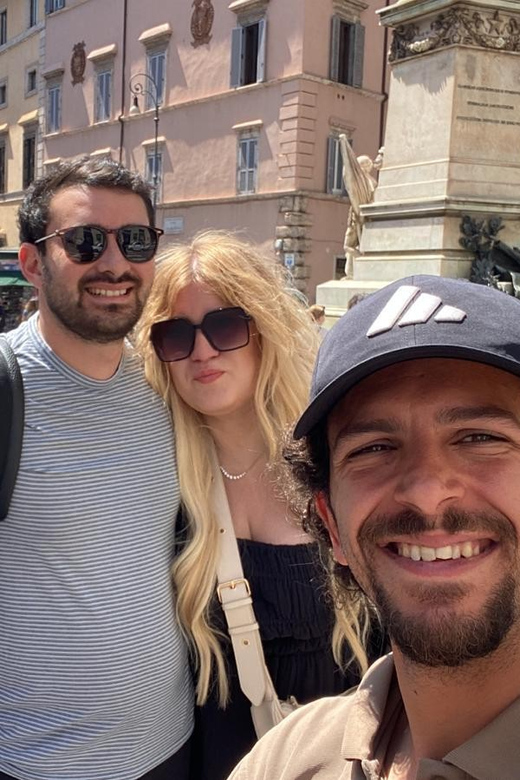
Your first major stop is the Spanish Steps. Expect about 20 minutes for a photo stop, a guided tour, and time to look around while you take in views from the surrounding streets.
Here’s why this stop works on a golf cart tour. You get the payoff of one of Rome’s most recognizable panoramas without spending half your day trying to find your way through crowds. Your guide can also point out what you should pay attention to—how the steps connect to the neighborhood atmosphere and why this area keeps drawing people back.
Practical tip: treat this as a “get your bearings” stop. Don’t obsess over getting every perfect shot. Instead, use the time to note sight lines and nearby streets you might want to return to later on foot.
If you’re the type who likes photos but hates long queues, the cart format is a win. You’ll often find that an earlier start time helps with calmer viewing, and your guide can help you choose the easiest viewing angles while you still have momentum.
Trevi Fountain: The Classic Moment, Timed for Photos and Movement
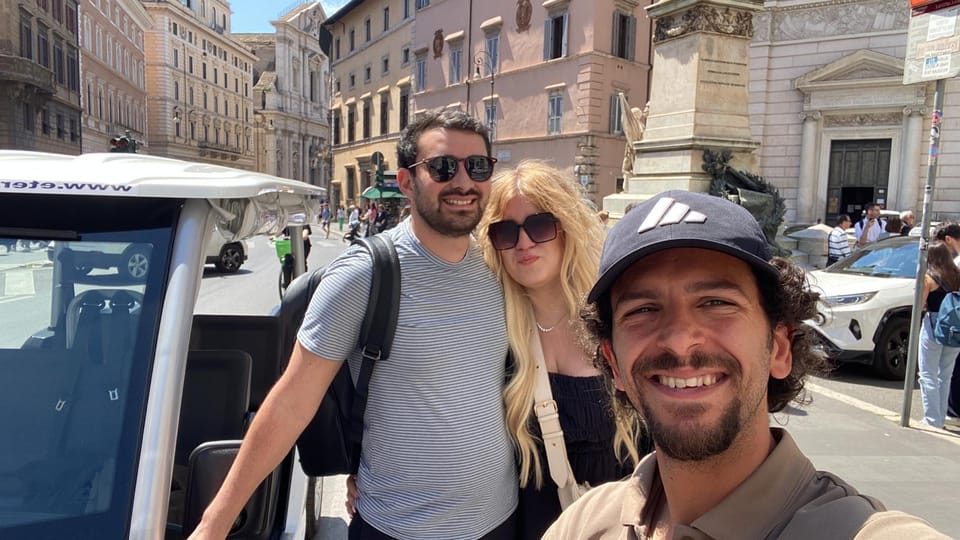
Next up is Trevi Fountain with about 15 minutes for photo stops and guided sightseeing. This is the “throw a coin” moment most people recognize immediately. Even if you don’t care about the tradition, you’ll care about the building details, the setting, and the way the area turns into a stage for tourists and locals alike.
The drawback of Trevi is obvious: it’s popular. The benefit of doing it with a private cart tour is that you’re not lost in the shuffle. You arrive, you get context, you take your photos, and you move on before the area becomes even more crowded.
If you want one strategy, here it is: when your guide gives you your best photo spot, take it. Trevi moves fast. Light changes. People shift. Your 15 minutes can vanish if you keep chasing an ideal angle.
Pantheon: Ancient Grandeur Without the Full-Day Commitment
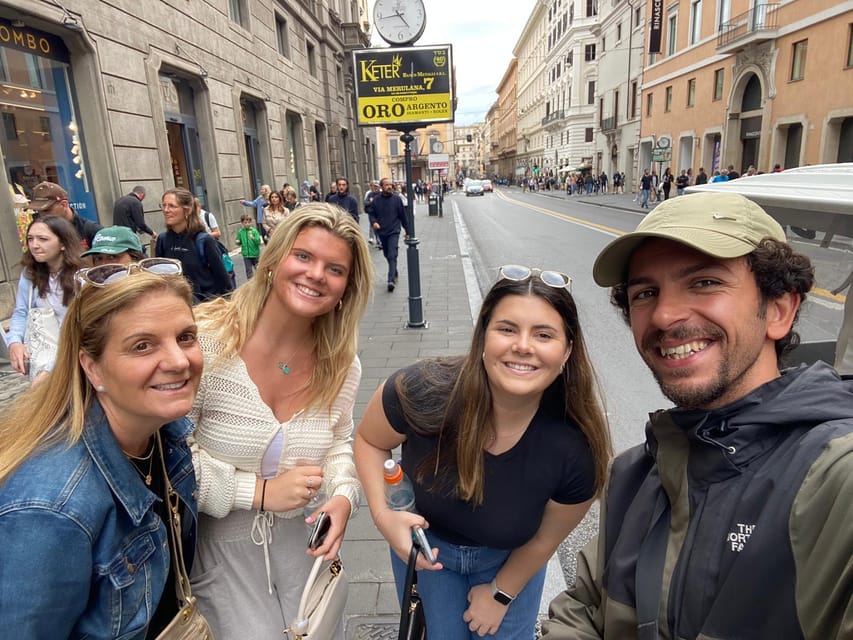
Then you head to the Pantheon for about 20 minutes. You’ll get a photo stop plus guided sightseeing and scenic drive time on either side.
This stop is valuable because the Pantheon rewards attention. Even when you don’t spend hours inside, you can still appreciate what makes it iconic: the scale, the engineering, and the way the space holds its own in modern Rome.
One caution: entry tickets aren’t included. So while you’ll get the story and close viewing time, don’t count on a long inside visit unless you’ve arranged entry separately. If you’re the type who wants to linger, plan a second trip to go deeper.
Also, wear shoes you can stand in if you do choose to go inside. Rome can surprise you with how “short stops” still mean some walking on cobblestones.

St. Peter’s Basilica and the Orange Garden: Big Icons Plus Quiet Views
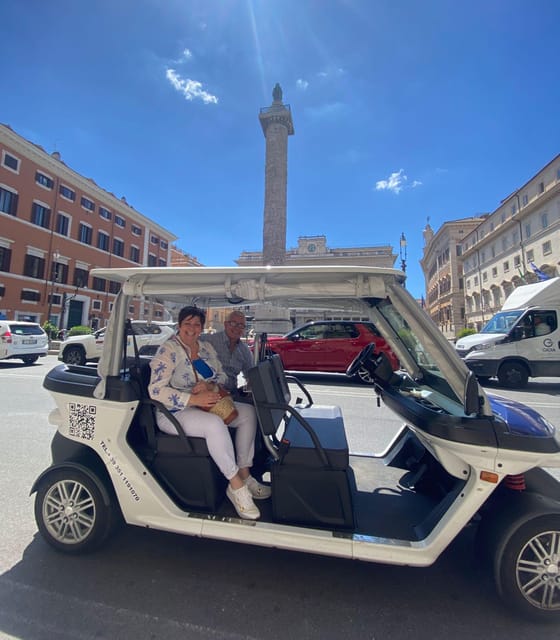
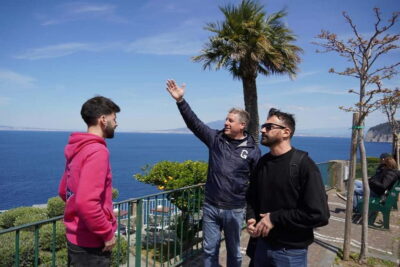
You’ll spend about 20 minutes at St. Peter’s Basilica for a photo stop and sightseeing. Then later you’ll reach the Giardino degli Aranci (Orange Garden) for roughly 15 minutes, including a photo stop, a visit, and guided time.
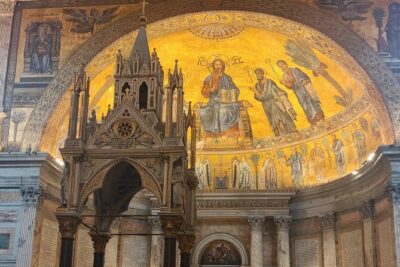
What I like about this pairing is emotional pacing. St. Peter’s is monumental and loud in its own way—architecture that dwarfs your sense of scale. The Orange Garden flips the script into something calmer and more viewpoint-oriented, letting you digest what you just saw.
You might not get unlimited time inside. That’s the trade for covering so much in one short day. But some guides are willing to make time when it counts—your guide may even step away from the cart and join you in a church interior when the timing allows. That one-on-one feel is a big reason people keep praising specific guide-driver personalities.
At the Orange Garden, keep your camera ready, but also keep your head up. This is one of those Rome moments where the view is part of the story. You’re looking at the city from a different angle, and that helps you understand how all the famous sights relate to each other.
Circus Maximus and the Colosseum: Two Icons, One Short High-Impact Loop
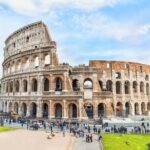
Your tour includes Circus Maximus with about 15 minutes for a photo stop and guided sightseeing. Then you continue to the Colosseum, with about 20 minutes for photo stops, guided tour, and sightseeing time.
This is where the cart really earns its keep. The Colosseum is the headline, but the real magic comes from context. A quick guided explanation can turn the Colosseum from a photo background into something you can actually read: its scale, its setting, and what the surrounding streets suggest about how people moved through this part of ancient Rome.
Circus Maximus is a clever addition too. It’s famous, but it’s not always on every basic “top sights only” plan. On this kind of loop, it adds depth without stealing your day.
Practical note: both of these are popular areas. Your guide’s job is to choose the best spots in the time you have. If you want your best shots and your best explanations, don’t treat this like a rushed self-guided checklist. Listen when your guide points out the lines and angles.
Piazza Navona: A More Relaxed Break in the Middle of the Classics
Next comes Piazza Navona for about 20 minutes, including a photo stop, a visit, and sightseeing time.
This square is often a good mental reset. The cart tour has been hitting big names and fast photo moments. Piazza Navona lets the pace soften just enough to feel like you’re actually in a living city, not just passing through it.
You’ll likely spend your time looking at the architecture and street energy, plus getting guided context so you understand what you’re seeing. It’s one of the places where you can slow down for a minute without falling behind.
Aventine Keyhole: Short Stop, Worth It if You Love Views
Then you head to the Aventine Keyhole with about 10 minutes for a photo stop and guided visit.
This is a small moment, but it’s famous for a reason. The value here isn’t the time—it’s the shortcut to a very specific, very Rome detail. A good guide will tell you what to look for and how to make the most of your minute or two here.
This is also a great stop for couples and first-timers because it creates a quick “we did that” memory, even if you’re saving your long explorations for another day.
Trastevere: Closing the Tour with Local-Feeling Streets
Your loop ends with Trastevere, again with about 10 minutes for photo stop and guided sightseeing time.
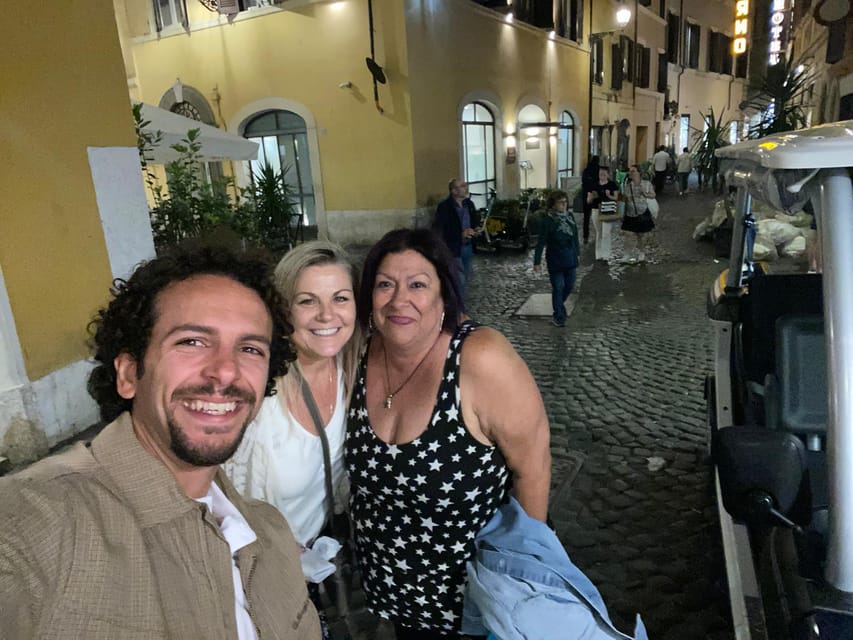
Even with a short stop, Trastevere can change the mood of your day. You’re moving away from the strict “tour route” feeling and toward a neighborhood atmosphere. It’s the kind of area where you might find a street that makes you want to come back later for dinner or a slower walk.
Because your time here is short, treat it as a teaser. If you like what you see, make a note of the streets and landmarks so you can return when you’re not on a schedule.
Gelato or Coffee Breaks: Turn a Sightseeing Loop Into a Real Taste Memory
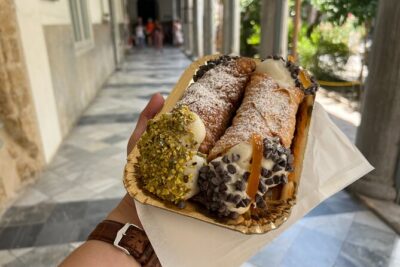
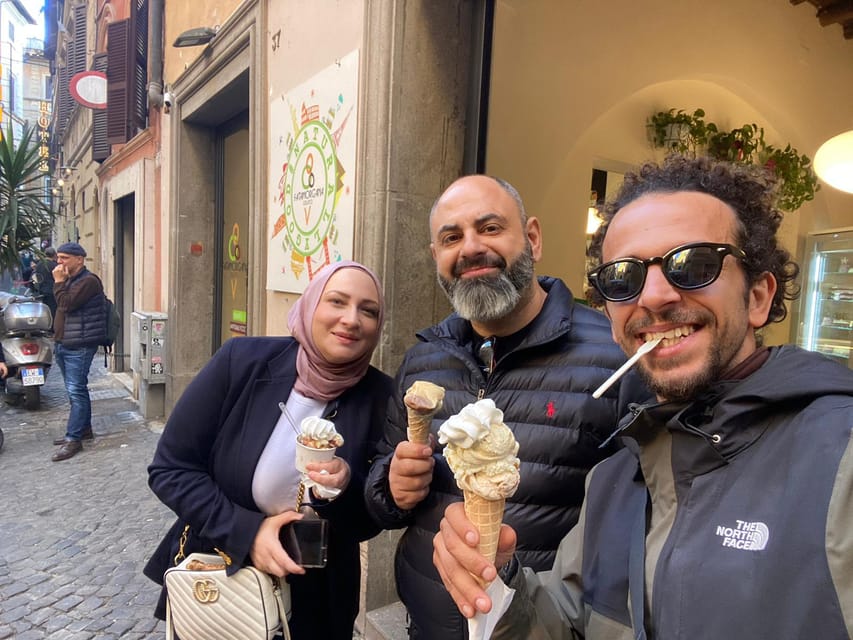
One of the best parts of this tour design is the built-in break. You get brief free stops for gelato or coffee, and the cart keeps you moving so the break doesn’t turn into a half-hour detour.
In the feedback you shared, there’s a standout theme: some guides bring people to gelato spots outside the busiest tourist lanes. That can make a huge difference. You get something delicious, but you also get a calmer sense of Rome in the middle of the highlight circuit.
If coffee is your thing, keep it simple: choose one place, enjoy it, and use the break to recharge before the next photo stop.
Small perk: you also get bottled water. In Rome’s sun and stone streets, that matters more than it sounds.
Price, Value, and Who This Tour Fits Best
At $72 per person for 2–2.5 hours, this tour is best judged by what’s included, not what’s not. You’re paying for:
- a private guide
- an eco-friendly, electric cart (with quiet comfort)
- hotel pickup and drop-off in central Rome
- photo stops at major landmarks
- guided context that saves you from reading every sign yourself
- access to restricted traffic zones
- bottled water and gelato/coffee breaks
Is it cheap? No. But it can be a smart value when you compare the full package. A taxi only gets you transportation, usually without guided context and often with limited access. A group bus can move you around, but it strips away the flexibility and “at your pace” feeling that makes Rome enjoyable.
Where it really pays off:
- You have limited time (you want highlights plus orientation)
- You want a lower-walking option
- You care about getting good photo angles and clean route planning
- You want a local driver to help you dodge traffic and busy streets
Who should think twice:
- If you want to spend a lot of time inside major sites, remember: entry tickets aren’t included, and the day is timed for quick stops.
- If you’re traveling with young kids under 6, or if you use a wheelchair, this tour isn’t suited.
- If you need to travel with large luggage or a stroller, the cart setup won’t work.
Should You Book This Rome Golf Cart Tour?
Yes, if your goal is a high-quality Rome overview without the stress of navigation, queues, and tiring walk-and-wait logistics. The private setup, the electric whisper-quiet cart, and the ability to adjust the route with an English-speaking guide make it especially attractive for first-time visitors and people who want to save their legs.
Skip it (or plan a different format) if your dream day is slow, ticket-heavy museum time. This tour is built for movement, viewpoint moments, and stories at a pace that keeps you excited, not drained.
If you book, do one thing that will improve your day: tell your guide what you care about most during the pre-start chat. Then lean in when they suggest a photo angle or a better viewing spot. That’s where the private experience turns from “nice tour” into a genuinely memorable Rome day.
FAQ
How long is the Rome private golf cart tour?
It runs for about 2 to 2.5 hours.
Is the tour private?
Yes. This is a completely private tour for your group.
What is included in the price?
Hotel pickup and drop-off (within central Rome), a private tour, transportation on an eco-friendly electric golf cart, a local guide in English, customizable itinerary/route, photo stops at iconic sites, brief free stops for gelato or coffee, informative commentary, access to restricted traffic zones normally closed to regular vehicles, and bottled water.
Are entry tickets included for the sights?
No. Entry tickets are not included.
Where does pickup happen?
Pickup is at your hotel located in city center. If your hotel is outside the city center, the provider will send you detailed directions to the closest meeting point.
Is the tour suitable for children or wheelchairs?
Children under 6 are not suitable. Wheelchair users are not suitable, and baby strollers, luggage or large bags are not allowed.