REVIEW · ROME
Rome: Private Guided City Highlights Tour by Golf Cart
Book on GetYourGuide →Operated by Rolling Rome Segway & Golf-Cart · Bookable on GetYourGuide
Rome is easier on wheels. This private street-legal golf cart tour trades heavy walking for smart driving, letting you cover major piazzas and quieter hills in one smooth loop. You start in the center and glide through places like Trevi Fountain and Piazza Venezia, with time for side stops that most foot tours skip.
My favorite part is the balance of big icons and Roman “in-between” spots. I also like that the route can be tailored to your pace and interests, from the baroque center to hilltop views around Aventine and Celio. One thing to consider: if the weather turns cold or windy, the cart’s cover may not feel like full weatherproofing, so bring layers.
You’ll also be in good hands with an English live guide and a cart built for comfort and safety—seat belts, front and rear lights, horn, and a license plate. Guides such as Leonard, Benni, Angelo, Elaina, Gabriel, Nico, and Beatrice are repeatedly praised for keeping things fun while answering questions and adapting to different ages. The only real drawback I’d plan around is weather comfort: one guide even worked through a downpour, but you’ll still want to dress for the conditions.
In This Review
- Key things you’ll enjoy most
- Why a private golf cart is a smart way to see Rome fast
- Piazza del Popolo to Trevi Fountain: baroque Rome at driving speed
- Central piazzas: Barberini, Colonna, and Venezia in one loop
- Celio Hill and Villa Celimontana: calmer views and major basilicas
- Aventine Hill and the Knights of Malta: oranges, roses, and a different legend
- Tailoring the route so it matches your group
- The guides: English narration that actually helps you make sense of Rome
- Price and value: is $198.25 per person worth it?
- Weather reality: what to pack for a 3-hour cart ride
- Who should book this tour (and who might skip it)
- Should you book the Rome Private Guided City Highlights Tour by Golf Cart?
- FAQ
- How long is the Rome golf cart highlights tour?
- Where does the tour start?
- Is hotel pickup included?
- Is this tour private?
- What language is the guide?
- Is the tour wheelchair accessible?
- What’s included with the golf cart ride?
- Can I cancel and get a refund?
Key things you’ll enjoy most
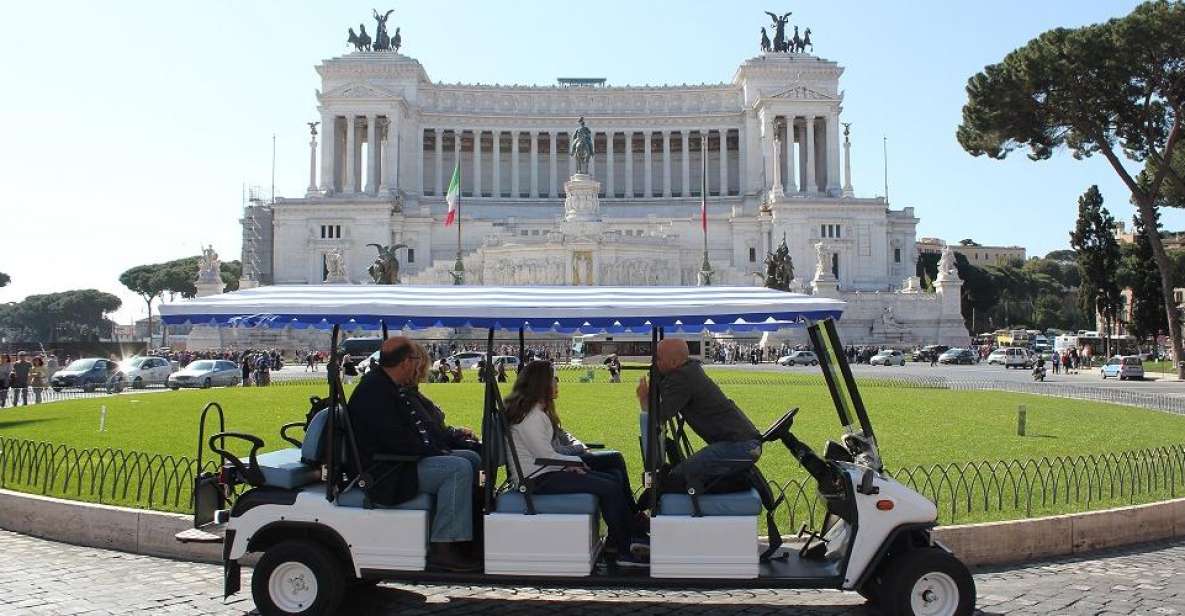
- Street-legal golf cart power: Licensed, lighted, belt-equipped riding that saves your legs.
- Piazzas in one sweep: Driving through Venezia, Barberini, and Colonna puts you where postcards start.
- Aventine Hill access: Orange grove views and the Knights of Malta story come with minimal huffing.
- Celio Hill basilicas + Villa Celimontana: Lesser-driven roads reach spots walking tours often miss.
- Route tailored to you: The stops are suggestions, and you can steer the day toward what you want.
- Guides who handle questions and surprises: People mention great explanations and quick pivots in rain.
Why a private golf cart is a smart way to see Rome fast
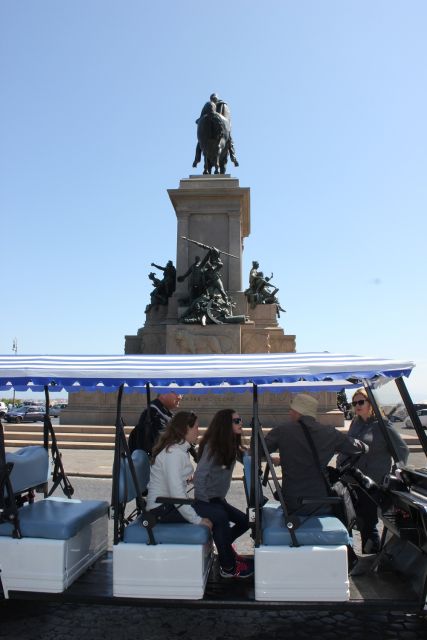
Rome looks “walkable” on a map. In real life, it’s hills, crowded sidewalks, and long stretches of staring at stone while your legs quietly file a complaint.
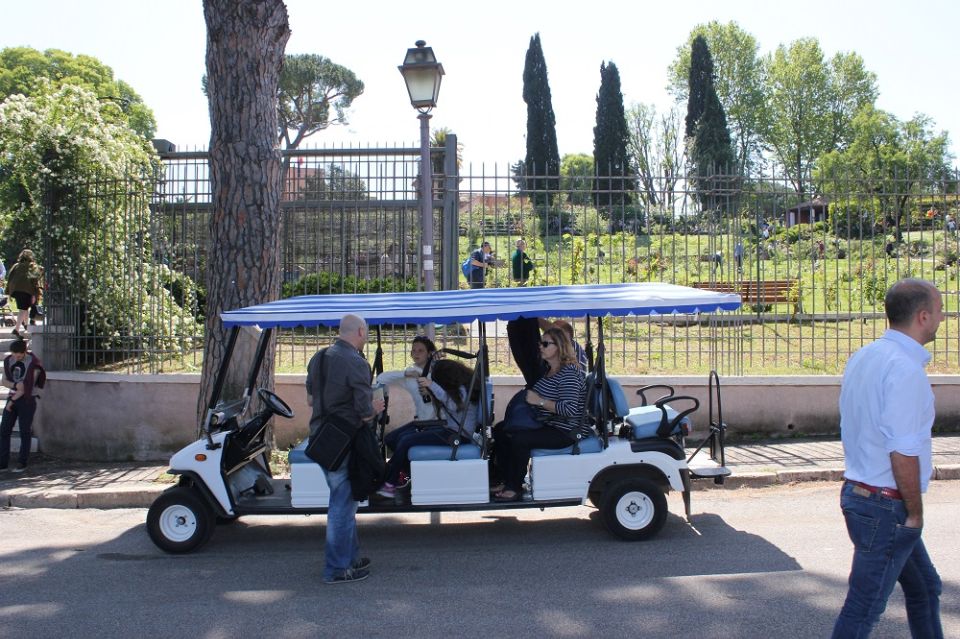
A street-legal golf cart fixes that. In about 3 hours, you get vehicle access to central piazzas and hill areas that are a workout on foot. The cart also has safety belts, front and rear lights, and a horn, plus a license plate and a cover for the ride—comfort features that matter when you’re doing a compact sightseeing sprint.
Now, does this replace a walking day? Not fully. Walking is best for small details: the texture of a doorway, the pause before a church entrance, the “how did they build that” moments at close range. But for getting your bearings fast and hitting major landmarks without turning the trip into a leg marathon, this is a strong trade.
You can also read our reviews of more tours and experiences in Rome.


Piazza del Popolo to Trevi Fountain: baroque Rome at driving speed
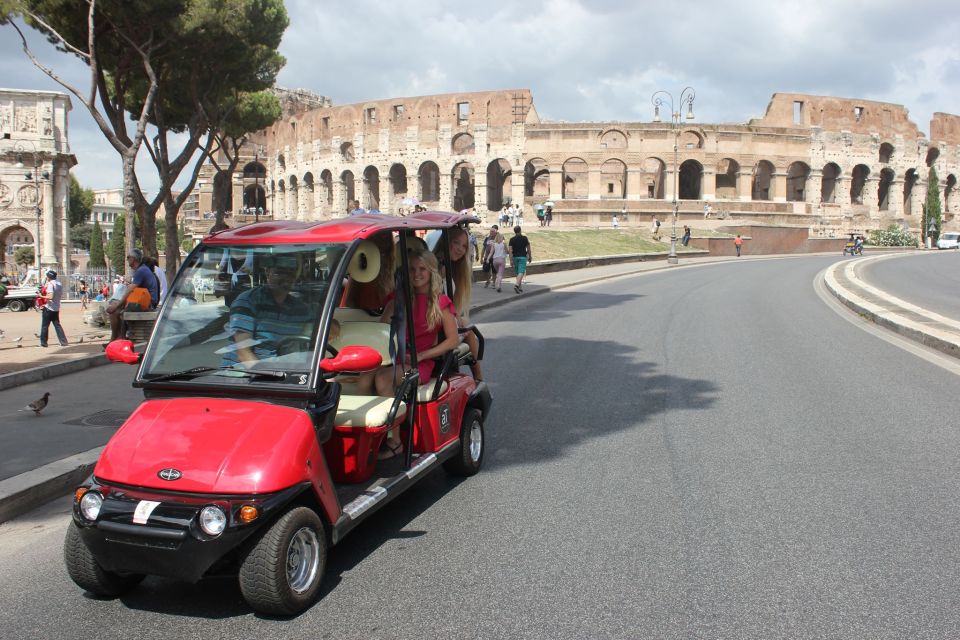
The tour’s vibe starts right in the center: you meet at Piazza del Popolo, in front of the twin churches Santa Maria in Montesanto and Santa Maria dei Miracoli. It’s a great starting point because it’s a clean visual anchor before you plunge into the tighter historic core.
From there, you roll into the historic district with major stops coming early, so you’re not guessing what’s around each corner. Trevi Fountain is one of the first “wow” moments. You pass it as part of the standard highlight arc, and you can still pause for the classic coin-throwing legend about returning to Rome—simple, but it works because you’re there without burning time on queue lines or long uphill detours.
One practical upside of this format: the cart keeps your timing under control. In Rome, crowds can turn a quick photo stop into a 30-minute shuffle. Here, you’re less exposed to that kind of slow-down because you’re not constantly weaving on foot between stops.
Central piazzas: Barberini, Colonna, and Venezia in one loop
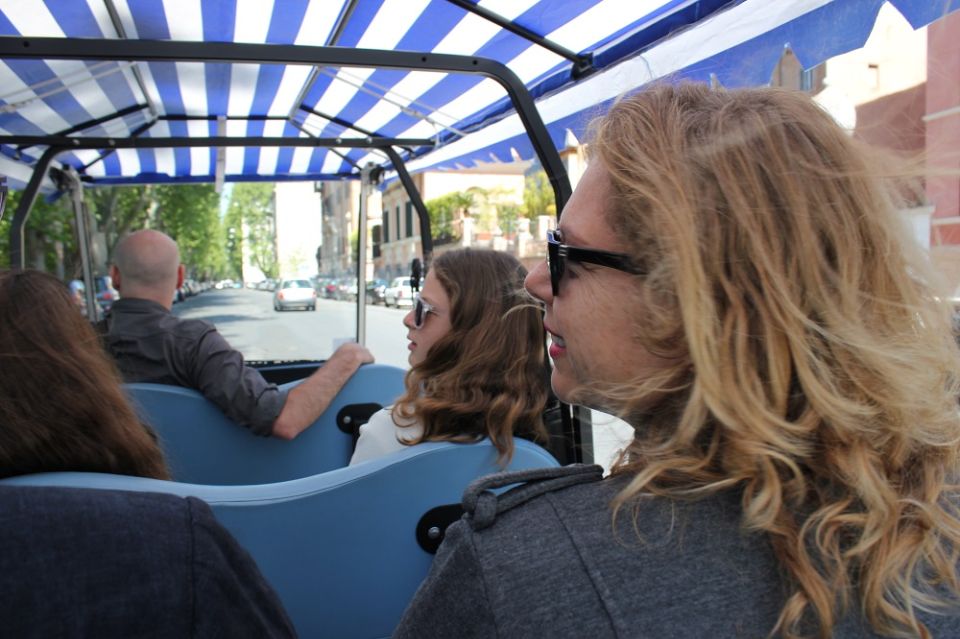
After Trevi, you get the “Roman stage” version of the city: big squares, clear monuments, and lots of marble. The cart drives you through Piazza Barberini, Piazza Colonna, and Piazza Venezia, which are central enough that they feel like Rome’s main intersections of sight and story.
Piazza Colonna is named for the marble Column of Marcus Aurelius. That matters because it’s a landmark you can recognize even if you don’t know every detail of Roman imperial iconography. Seeing it from a cart—close enough to appreciate scale, but without spending an hour wandering around—helps you connect the dots later when you’re exploring on your own.
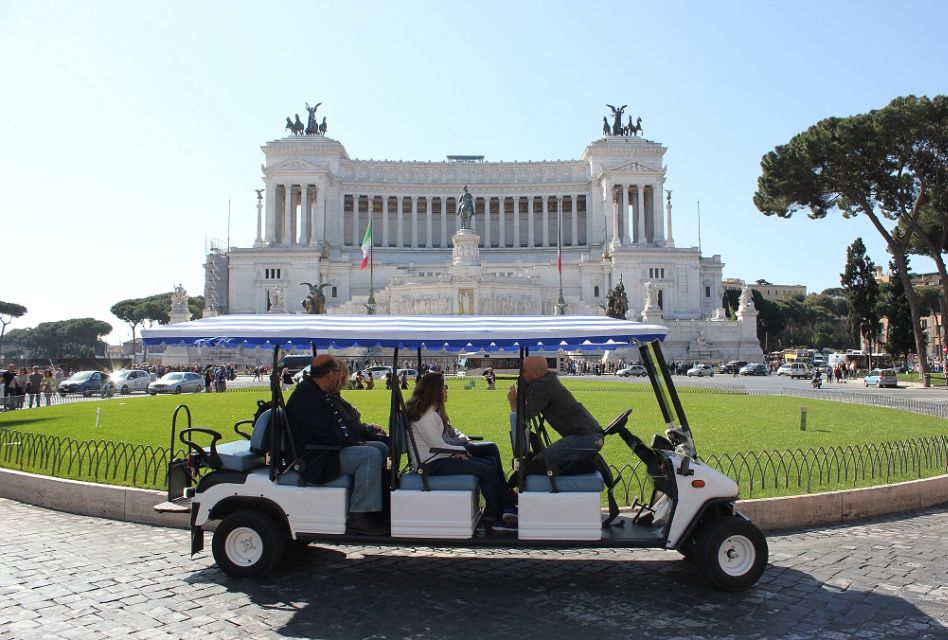
Then you roll into Piazza Venezia, dominated by the Victor Emmanuel II monument, a major symbol of Italy’s unification. This is the kind of stop that can feel overwhelming if you approach it only on foot, especially if you’re already tired. On the cart, you’re more likely to actually enjoy the transition from one square to the next, instead of just surviving it.
A tip if you like photos: ask your guide to time short pauses around the best light and crowd levels. The cart makes it easy to reposition without turning the whole outing into a photo sprint.
Celio Hill and Villa Celimontana: calmer views and major basilicas
Not every highlight tour climbs. This one reaches Celio Hill, a part of the city you can miss if you only follow the most obvious walking routes.
On Celio, you get Villa Celimontana and its gardens, plus a couple of early Christian heavy hitters: Santo Stefano Rotondo and Santi Giovanni e Paolo. These are the kinds of sites where you start noticing how Rome layers time—Roman-era bones, early Christian structures, and later transformations all stacked in the same neighborhood.
Why this is valuable: when you skip hill areas, Rome can start to feel like a straight line from one famous plaque to the next. Celio interrupts that pattern. It gives you a different kind of Rome—one that still feels historic, but less pressured, and often easier to experience without the same nonstop crowds.
The cart helps you get to these places efficiently. You’re not sacrificing the chance to see them just because they’re harder to reach on foot. Instead, you trade effort for attention.
Aventine Hill and the Knights of Malta: oranges, roses, and a different legend
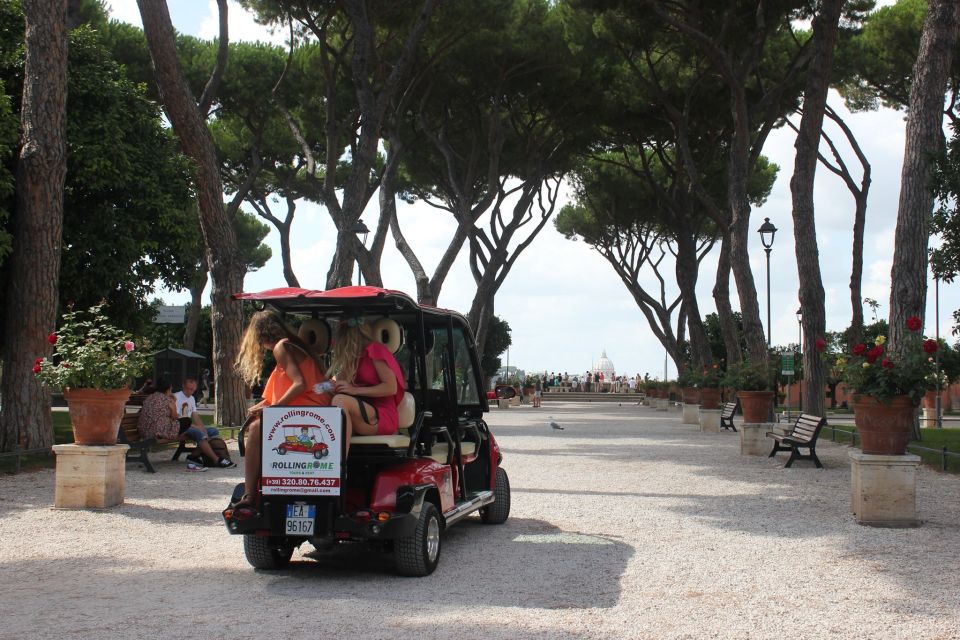
Aventine Hill is one of the big reasons to choose this tour. It’s specifically mentioned as part of the experience, including the southern suburb atmosphere and the area’s famous orange grove—the kind of detail you don’t just stumble into on a typical stroll.
This stop also includes a story angle that feels more than just postcard sightseeing: the Knights of Malta set up home in Rome after they fled Napoleon’s army in Rhodes. That context changes how you see the hill. It’s no longer only a viewpoint; it’s a place with a migration story tied to power, exile, and survival—less about ruins-as-decoration and more about people-as-history.
You’ll also pass by the city rose garden. Even if you don’t catch flowers at peak bloom, it’s the kind of Roman “soft spot” that balances all the stone monuments elsewhere on the route. And yes, the orange grove is unforgettable because it’s fragrant and very real. It’s a sensory detail that makes Rome feel less like a museum and more like a living city.
This is also where the “private” part pays off. If your group includes older adults or anyone who wants a slower pace, hill access is often the first thing that gets compromised on standard tours. Here, you get to include Aventine without turning your day into a slow crawl.

Tailoring the route so it matches your group
The tour is designed to be flexible. The plan gives a strong structure, but the purpose is suggestions—your guide can adjust the focus based on what you want to prioritize.
That matters more than it sounds. Some people want maximum landmark density. Others want time at fewer stops to read plaques, ask questions, or just sit and watch the city move. A guide can also steer the ride to match the group’s mobility and energy level, which is especially helpful if you’re visiting with kids, teens, or older relatives.
You can also use the customization for personal interests:
- art and architecture cues at the major piazzas
- early Christian sites like Santo Stefano Rotondo
- “story stops” connected to the Knights of Malta and Aventine
- photo-first pacing when the light is good
Guides such as Benni, Gabriel, Nico, and Alex are praised for tailoring the ride, including keeping it fun for mixed ages and answering questions without making it feel like a lecture.
If you want to maximize value, come with a quick plan for yourself: pick 5 or 6 must-sees (Trevi, Colonna, Venezia, Celio, Aventine, for example). Then tell your guide your priorities for pace and photo time. That turns the tour from a schedule into a day that fits you.
The guides: English narration that actually helps you make sense of Rome
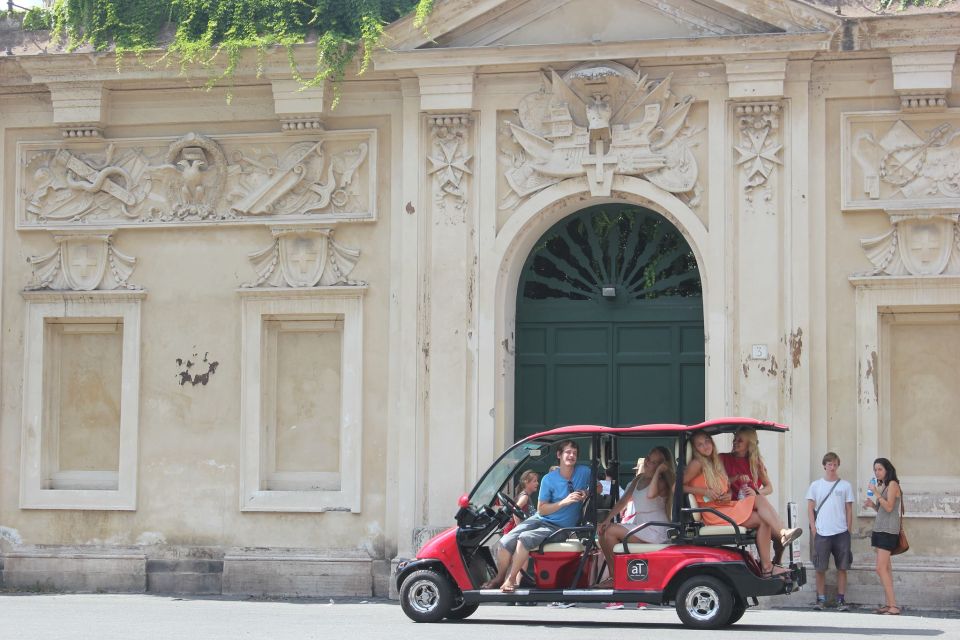
This tour uses a live English guide, and the difference shows. The best guides do two things: they connect landmarks to a bigger story, and they make you feel comfortable asking questions as you go.
People frequently highlight guide names like Leonard, Elaina, Angelo, Giulio, Beatrice, and Yuval for being professional, engaging, and attentive. A few specific examples from the experience descriptions: one guide named Angelo is praised for stopping for gelato halfway through, and Beatrice is credited with helping manage a bathroom situation—more challenging than it sounds in Rome.
Those aren’t trivia. They’re practical proof that the guide is thinking about real comfort, not just talking at you through a playlist of sites.
A small but meaningful point: because you’re moving by cart, your guide can often answer questions in the moment—before you forget what you were looking at. You’re not waiting until the next stop or trying to hold details in your head while walking uphill.
Price and value: is $198.25 per person worth it?
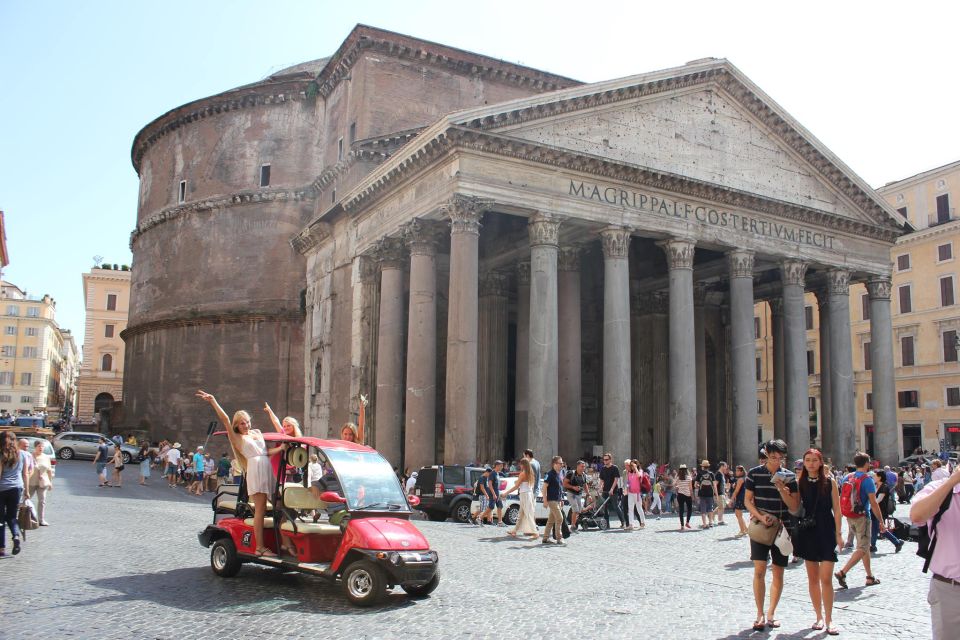
At $198.25 per person for 3 hours, this isn’t a “budget” activity. But it’s also not just a ride. You’re paying for a private, street-legal vehicle experience plus an English tour guide and hotel pickup from accommodations in Rome’s historic center.
Here’s how it can still be good value:
- You save time on hard-to-walk segments. In Rome, time is money. A car-style tour that lets you include hills like Aventine can reduce the need to cut those areas from your plans.
- You see more in less energy. This matters if you’re traveling with anyone with limited mobility. If you’d otherwise spend half a day picking slower routes, the cart can be the difference between “we saw Rome” and “we survived Rome.”
- Insurance and safety features are included. The cart comes with the practical gear you’d want for peace of mind—lights, license plate, and safety belts—so you’re not guessing about basics.
- It’s private. Even if you’re a solo traveler or a couple, private means your guide can slow down for questions and tailor the stops without negotiating with a bigger group.
If you’re the type who loves deep walking and doesn’t mind hills, you may prefer a walking day plus a museum ticket list. But if you want efficiency, comfort, and a clear orientation of Rome’s layout—especially across central piazzas and hill districts—the price is easier to justify.
Also, the tour is rated 4.9 with 210 reviews, which suggests consistent quality, not a one-off good day.
Weather reality: what to pack for a 3-hour cart ride
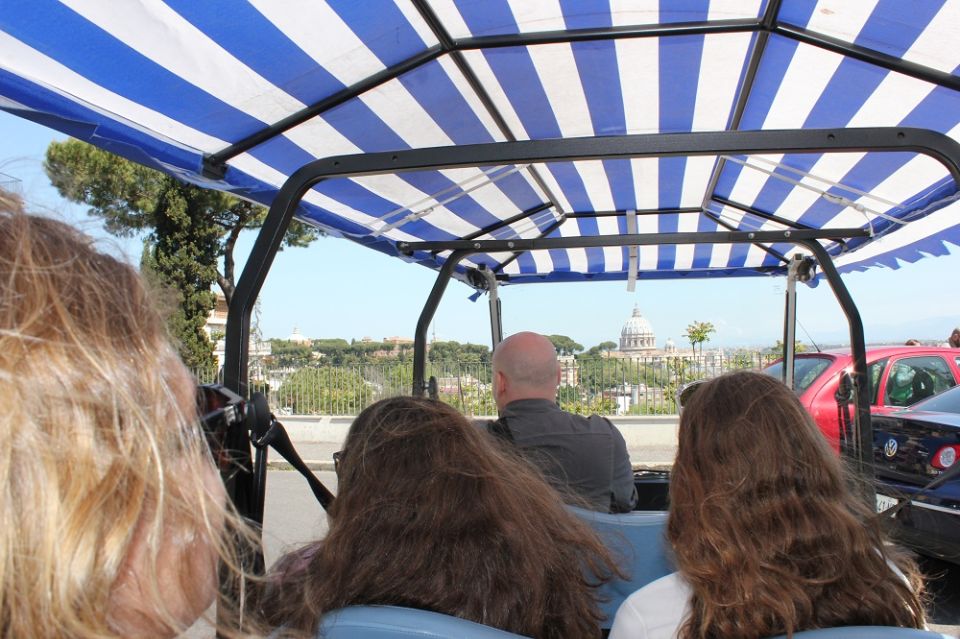
This tour is designed for normal sightseeing conditions, but Rome weather doesn’t always cooperate. One experience description mentions that the cart sides weren’t handled well for cold weather, and it got freezing, even though the guide was great and paused for photos.
So pack like it’s an outdoor ride with wind exposure:
- a light layer that blocks chills
- a rain option if storms pop up
- comfortable shoes for quick stepping out at stops
Even with a cover, cold and wind can change how you feel after an hour. The cart makes movement easy, but it doesn’t erase the outdoor air.
Who should book this tour (and who might skip it)
This is ideal if:
- you want to cover central Rome plus Celio and Aventine without exhausting uphill walking
- you’re traveling with mixed ages or anyone who needs easier mobility
- you have limited time and want iconic sights like Trevi Fountain, Piazza Colonna, and Piazza Venezia plus a few quieter stops
- you like the idea of a guide-driven day that you can steer based on your interests
You might skip it if:
- you’re staying long enough to explore Rome at a slow pace on foot every day
- you mainly want detailed street-level wandering where you can pause for hours at small streets
- you prefer to read guidebooks independently without narration
The sweet spot is a short trip and a desire to get your bearings fast, then spend remaining time wandering on your own.
Should you book the Rome Private Guided City Highlights Tour by Golf Cart?
Yes—if your goal is a high-sight-to-effort ratio. This tour is built for covering major squares and hill areas like Aventine and Celio in 3 hours, with hotel pickup and an English live guide. The cart setup, private format, and the ability to tailor the route make it especially good for groups with different energy levels.
Book it when you want structure without rigidity: you’ll hit the big names (Trevi, Colonna, Venezia) and still get to areas that don’t always make it into walking-only plans. Just come prepared for outdoor riding conditions so weather doesn’t steal your comfort.
FAQ
How long is the Rome golf cart highlights tour?
It lasts 3 hours. The exact starting times vary, so you’ll want to check availability.
Where does the tour start?
It’s described as starting from Piazza del Popolo, with the ride covering Rome’s central areas and then returning with the tour.
Is hotel pickup included?
Yes. Hotel pick-up is included if your hotel is in Rome’s historic center.
Is this tour private?
Yes. It’s a private group tour.
What language is the guide?
The tour includes a live English guide.
Is the tour wheelchair accessible?
Yes, it’s listed as wheelchair accessible.
What’s included with the golf cart ride?
The cart is street legal and includes a license plate, front and rear lights, safety belts, a horn, and a cover, along with insurance.
Can I cancel and get a refund?
Yes. It offers free cancellation up to 24 hours in advance for a full refund.