REVIEW · ROME
Rome: Santa Maria Maggiore Upper Areas Skip-the-Line Ticket
Book on GetYourGuide →Operated by Litiberi SRLS · Bookable on GetYourGuide
Santa Maria Maggiore feels busy at street level, but the Upper Areas add a quieter, high-value layer. I like that this ticket is both priority (through express security) and flexible, so you can fit the visit around your day instead of wrestling a rigid tour schedule. One thing to watch: in slower times, the skip-the-line can be less dramatic than you hope, and you still have to follow the basilica’s rules on dress and bags.
What makes this visit special is what’s waiting upstairs: the Loggia of Blessings with medieval mosaics, the grand Hall of the Popes, the famous Bernini staircase spiral, and the Liberian Historical Museum. You’re not just ticking boxes—you’re moving through rooms that explain how this basilica gathers art, faith, and legend in one place. The possible drawback is that you may be asked to pick a time slot when booking, and a mismatch or late arrival can cause denial at the door, so treat the ticket details seriously.
If you’re planning a self-guided stop with big visual payoffs, this ticket makes sense—just be ready to follow the entry rules and manage expectations about how much “skipping” you’ll truly do.
In This Review
- Key highlights (what you’ll notice right away)
- What the Santa Maria Maggiore Upper Areas are really about
- Skip-the-line vs. reality: how this ticket works at the entrance
- Open-time flexibility: choosing a slot without getting trapped
- The Upper Areas route: Loggia of Blessings → Popes’ Hall → Bernini Staircase → Liberian Museum
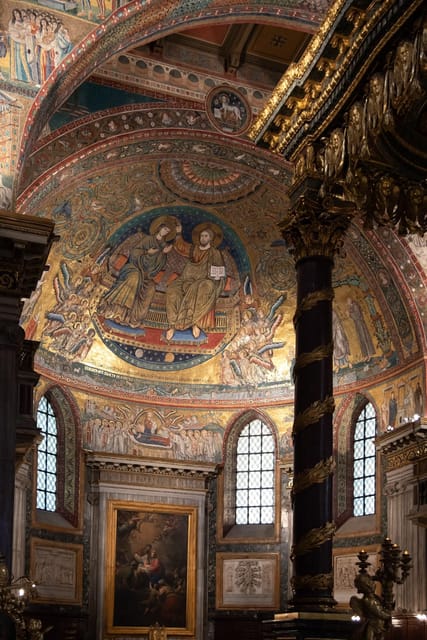
- 1) Loggia of Blessings and the mosaic focus
- 2) Hall of the Popes: power, portraits, and political memory
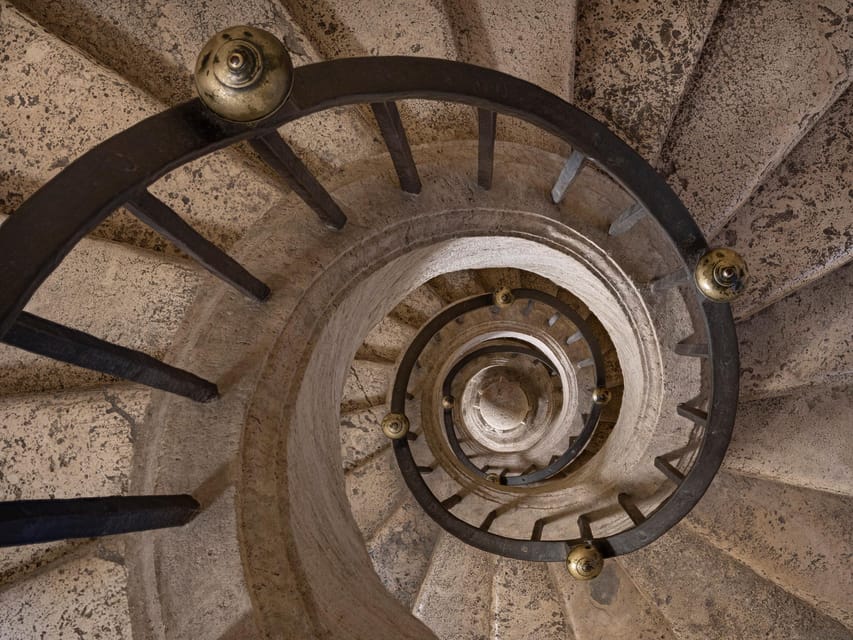
- 3) Bernini Staircase: the symbolic spiral
- 4) Liberian Historical Museum: art, music manuscripts, relics
- The Sunday issue: Holy Mass changes access timing
- Dress code and security rules that can stop entry fast
- Price and value: is $21 worth it for the Upper Areas?
- Who this ticket suits (and who might not)
- Practical tips for a smoother Upper Areas visit
- Should you book the Rome Santa Maria Maggiore Upper Areas skip-the-line ticket?
- FAQ
- What do you actually get with the Santa Maria Maggiore Upper Areas ticket?
- Do I need to pick a specific time slot when I book?
- How do I use the voucher when I arrive?
- What are the Upper Areas opening hours?
- What should I wear?
- Are bags and luggage allowed?
- How long is the experience?
- Is this visit wheelchair accessible?
- What’s the best order to visit the sites?
Key highlights (what you’ll notice right away)
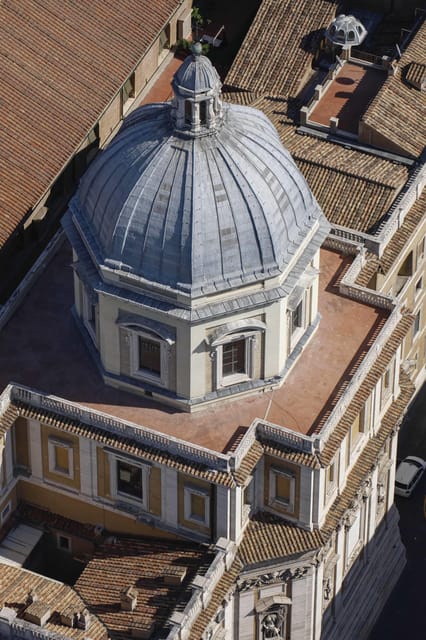
- Open-time flexibility: you can typically visit earlier or later than the chosen time on the date you book.
- Express security + special Upper Areas access: you’ll go through security checks and get access to the upstairs spaces reserved for ticket holders.
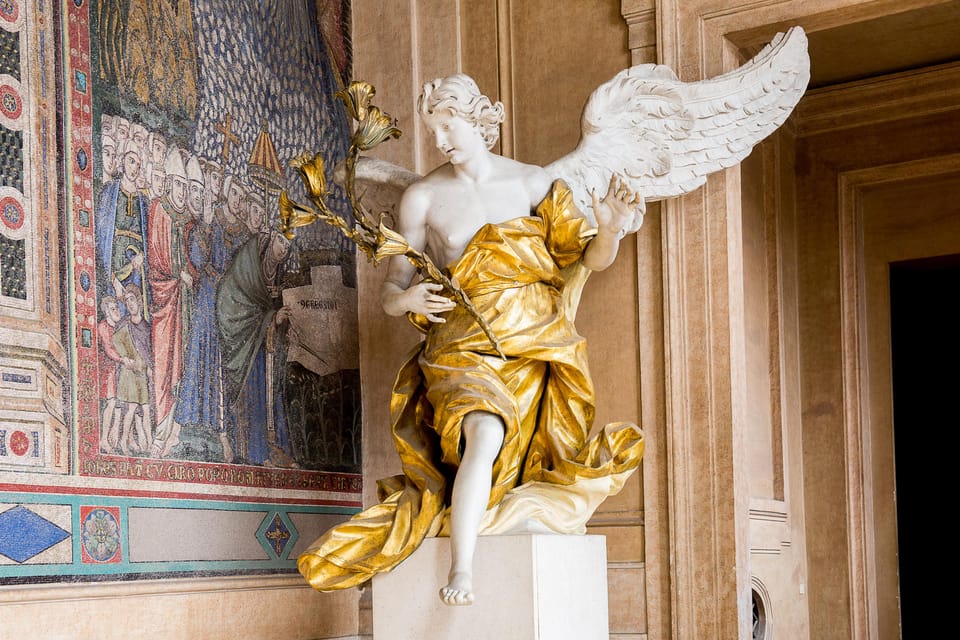
- Loggia of Blessings mosaics by Filippo Rusuti: medieval artwork plus a view back down to the square.
- Hall of the Popes: portraits and memorabilia tied to popes, cardinals, and even the Spanish royal family.
- Bernini Staircase: a travertine spiral that visually reinforces the ascent toward divine light.
- Liberian Historical Museum: art, ancient musical manuscripts, and sacred relics in one self-guided flow.
What the Santa Maria Maggiore Upper Areas are really about
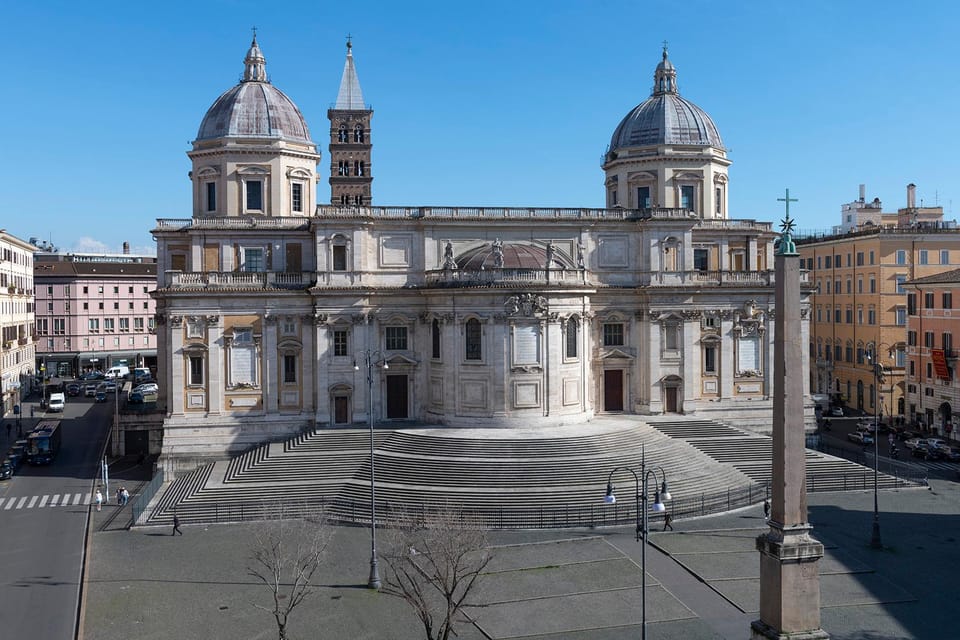
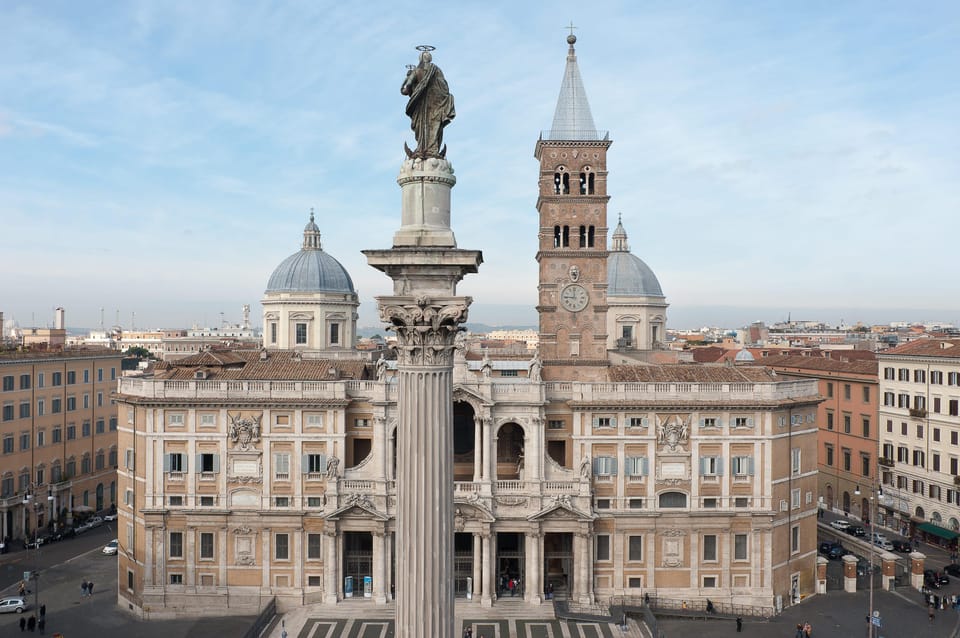
Santa Maria Maggiore is one of those Roman basilicas that looks impressive from the outside and still surprises you once you move beyond the main nave. The Upper Areas change the tone of your visit. Instead of the usual church-visit pattern, you get a more curated storyline: blessing, power, ascent, and memory.
You’ll see named sections tied to the basilica’s identity—especially the Loggia of Blessings and the Hall of the Popes—so it’s not just “pretty rooms.” It’s also a practical way to understand why this church matters to Rome’s story: art is used like a language, and the building itself becomes part of the message.
If you like experiences that are self-paced (not rush-rush), you’ll appreciate the layout: you can spend time with the mosaics and then carry that focus into the upstairs museum spaces.
You can also read our reviews of more tours and experiences in Rome.
Skip-the-line vs. reality: how this ticket works at the entrance
This ticket is designed around a simple idea: reduce waiting by using priority and express security. After you arrive, you go through security checks like everyone else, but your ticket comes with special access once you’re cleared.
Here’s the key operational detail that affects your day: you must convert your voucher into the official ticket. You’ll do that at the desk on the right after security. That moment matters because you don’t just show a voucher and walk in—you’ll be issued access for the Upper Areas from that desk.
Also note the self-guided nature. This is a ticket-only visit: you get access, but not a guided tour or escorted entrance. That’s good value if you enjoy reading signs and moving at your own speed.
Open-time flexibility: choosing a slot without getting trapped
When you book, you might be asked to select a time slot. The important part is that the ticket is described as open-time, meaning you’re free to visit at your convenience on your chosen date. In other words, even if you pick a slot, you can generally visit before or after that selected time during the day.
That flexibility is one of the best reasons to buy this rather than a strict-timed option. In Rome, plans drift: metro delays, lunch runs long, and your feet decide the pace. An open-time ticket keeps your basilica visit from becoming a schedule hostage.
One consideration: your ticket must be shown to staff at the entrance in printed or digital format, and each participant needs a personal, named ticket plus ID that matches the first and last name. Keep your ID handy and make sure each person’s ticket lines up with the person walking through the door.
The Upper Areas route: Loggia of Blessings → Popes’ Hall → Bernini Staircase → Liberian Museum
Think of the upstairs visit like a guided sequence you control with your feet. You’ll be granted access to the Upper Areas, and you should visit them before entering the church.
1) Loggia of Blessings and the mosaic focus
Start in the Loggia of Blessings. This is where you’ll get medieval mosaic work attributed to Filippo Rusuti, and it’s paired with a view back down toward the square. That “look back” moment is more than scenery—it helps connect the artwork to the real-life Rome outside, where the basilica sits as part of daily movement, not just a landmark.
I like this first stop because it reframes the building. Instead of entering straight into the main worship space, you begin with a section built for messages of blessing and meaning.

2) Hall of the Popes: power, portraits, and political memory
Next up is the Hall of the Popes. Expect portraits and memorabilia tied to popes, cardinals, and even the Spanish royal family. The value here is that it turns “church history” from abstract into visual, with names and artifacts doing the teaching.
If you enjoy art-and-authority overlaps—how imagery supports institutions—this room is likely to be your favorite.
3) Bernini Staircase: the symbolic spiral
Then you ascend the Bernini Staircase, described as a travertine spiral. The design is meant to represent the climb toward divine light, and the physical shape of the staircase helps you feel that concept rather than just read it.
It also works as a rhythm break. After the portrait-heavy Hall of the Popes, the staircase gives you a chance to shift from “looking at people and objects” to “moving through a symbolic space.”
4) Liberian Historical Museum: art, music manuscripts, relics
Finish at the Liberian Historical Museum, which includes art, ancient musical manuscripts, and sacred relics. If you usually skip museum rooms inside churches because you want only paintings or only artifacts, this one can surprise you because it includes music-related material.
That mix helps the upstairs visit feel like more than a checklist. Even if you’re not a manuscript specialist, seeing preserved musical works inside a sacred setting is the kind of detail that makes the visit stick.
The Sunday issue: Holy Mass changes access timing
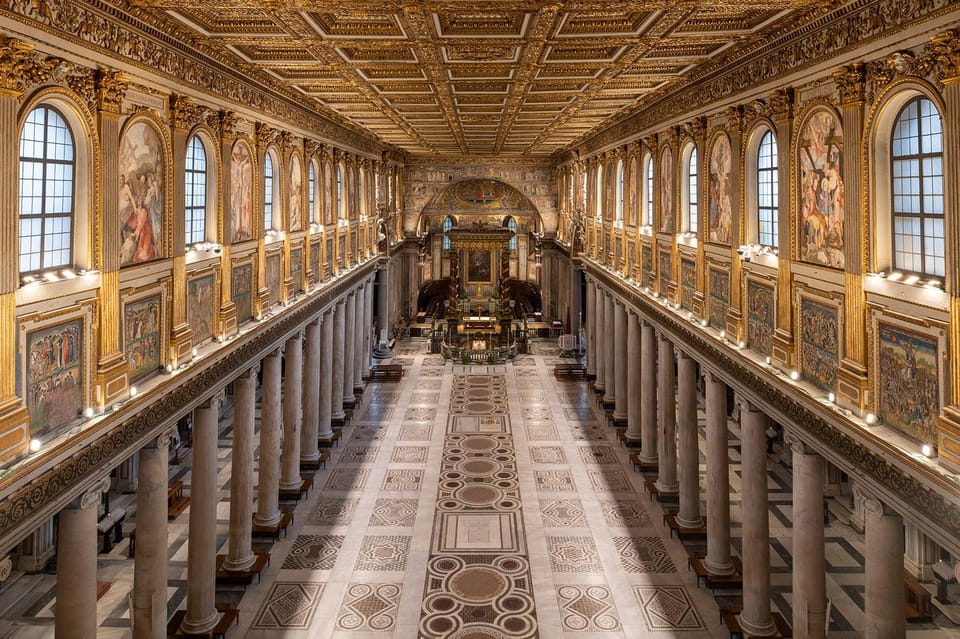
Timing changes on Sundays, and this is worth planning around. The Upper Areas are open from 12:30 PM to 5:30 PM on Sundays. The basilica itself is open in the morning for Holy Mass, and access during the service is free and open to all.
So if you’re aiming for the Upper Areas on a Sunday, build your schedule around the afternoon opening. You don’t want to arrive early and discover you can’t use the Upper Areas ticket until the post-Mass window.
If you’re flexible, Sunday afternoon can be a good choice because you’ll avoid the morning service crowds while still benefiting from a full day’s church hours.
Dress code and security rules that can stop entry fast
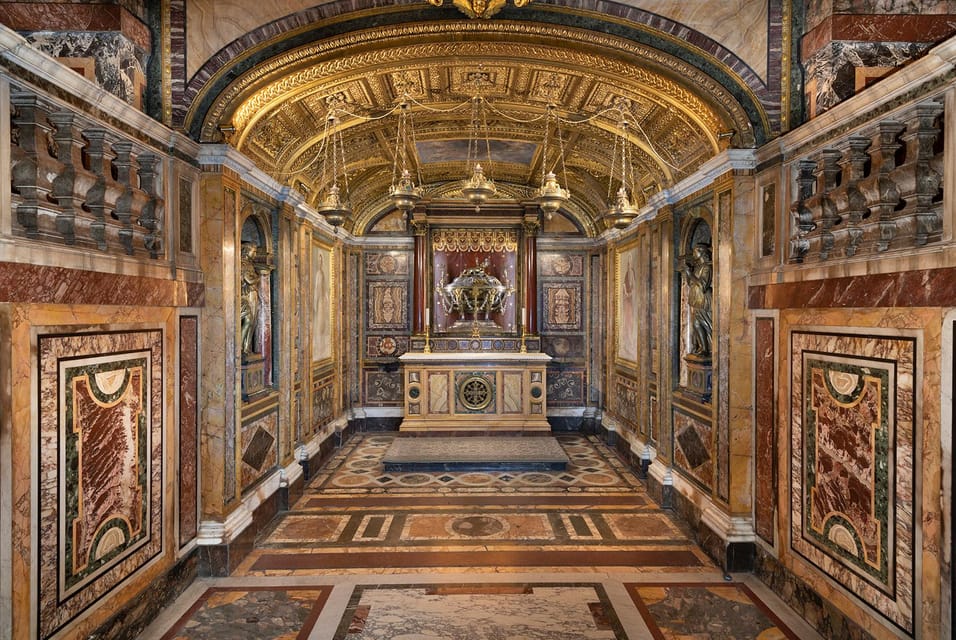
This ticket is only valuable if you can physically enter. Santa Maria Maggiore enforces a dress code: cover shoulders and knees. That’s why the “bring” list is so specific: long-sleeved shirts and long pants are recommended.
The list of not-allowed items and clothing includes practical items that catch people off guard in summer: shorts, short skirts, sleeveless shirts, and smoking (including indoors). There are also restrictions on bags and luggage: access will not be granted with bags or luggage, and you shouldn’t bring pets or oversize luggage.
If you want the visit to feel smooth, treat this like a formal church day. Wear something you can walk in, keep your outfit compliant, and plan what you’ll leave behind.
Price and value: is $21 worth it for the Upper Areas?
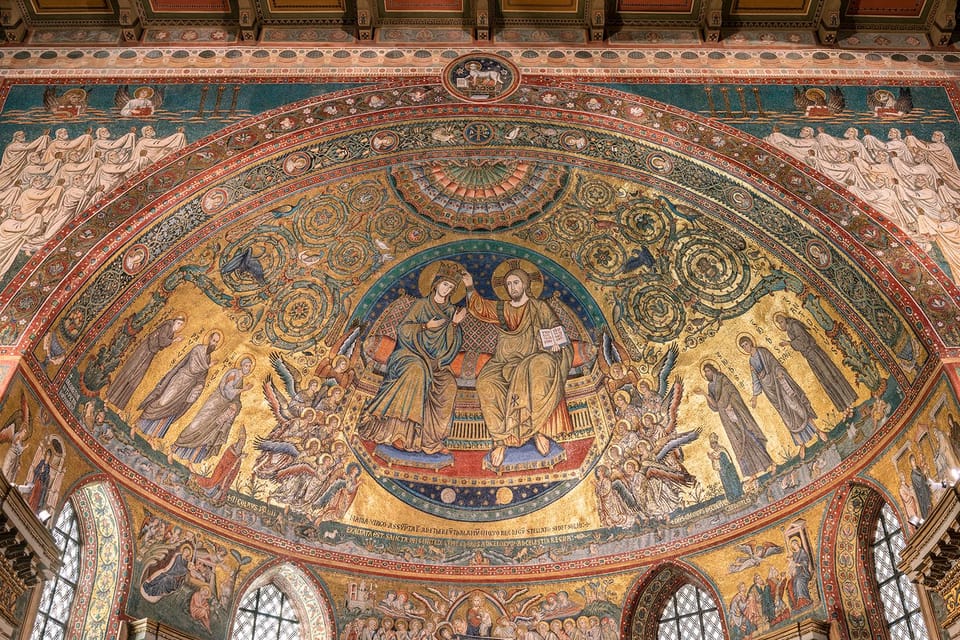
The price is listed as $21 per person, and value depends on what you care about. If your priority is the Upstairs experience—mosaics, a popes-focused hall, the Bernini staircase, and the Liberian Museum—then you’re paying for access to spaces that aren’t always part of a basic visit.
That said, the “skip-the-line” part isn’t guaranteed to feel dramatic. In low season, some people found that priority didn’t create a clearly separate experience and that waiting still felt limited. In that scenario, the money might feel better spent on food and time elsewhere—especially if you’re flexible with when you arrive.
My practical take: buy this for the Upper Areas access first. If you’re also benefiting from shorter security time, great. But don’t assume it will always feel like a shortcut. Rome’s tempo changes day to day.
Who this ticket suits (and who might not)
This is a strong fit for you if:
- You want a self-guided visit rather than a tour with set pacing.
- You care about the upstairs story sections (mosaics, Popes’ Hall, staircase, museum items).
- You can follow rules: ID matching, appropriate clothing, and no bag-lugging.
It may be a weaker fit if:
- You’re expecting a guided walkthrough with explanations at every stop.
- You’re traveling with a style-of-day outfit that doesn’t meet the shoulders-and-knees rule.
- You’re hoping the skip-the-line will replace all waiting, every time.
Also, because the visit is described as wheelchair accessible, it can work for travelers who need that option—just plan ahead for how you’ll handle the no-bags requirement.
Practical tips for a smoother Upper Areas visit
A few details can make the difference between an easy afternoon and a stressful one.
First, plan to handle the voucher conversion quickly. The process is straightforward: after security, you go to the desk on the right so staff can convert your voucher into an official ticket and let you access the Upper Areas.
Second, bring what they ask for. You’ll need a passport or ID, and copies are accepted. The ticket is personal and named, so each person should have ID that matches.
Third, wear comfortable shoes. You’re moving between rooms and up a staircase, and church floors in Rome can be uneven or hard underfoot. Comfortable footwear is a simple way to protect your enjoyment.
Finally, go in knowing you’ll visit the Upper Areas before entering the main church. If you reverse the order, you might feel like you’re wasting time or doubling back.
Should you book the Rome Santa Maria Maggiore Upper Areas skip-the-line ticket?
Book it if you’re excited by specific upstairs content: medieval mosaics at the Loggia of Blessings, a Hall of the Popes with portrait and memorabilia focus, the Bernini staircase, and the Liberian Historical Museum with art and ancient music manuscripts. In that case, the price feels like access to a “second Rome” inside one of the city’s most meaningful basilicas.
Consider skipping or waiting to compare options if you mainly want a quick inside peek and you’re thinking the skip-the-line will be a guaranteed zero-wait experience. Some visitors found the savings smaller than expected when crowds are light.
Bottom line: if your goal is to see the Upper Areas with less friction and a flexible schedule, this ticket is a smart buy. Just treat the dress code, ID matching, and voucher conversion steps as non-negotiable, and you’ll set yourself up for a smooth, memorable visit.
FAQ
What do you actually get with the Santa Maria Maggiore Upper Areas ticket?
You get a flexible skip-the-line priority ticket plus a named open-time ticket for special access to the Upper Areas of Santa Maria Maggiore. You do not get a guided tour or escorted entrance.
Do I need to pick a specific time slot when I book?
You may be asked to select a time slot during booking. The ticket is described as open-time, meaning you’re free to visit the basilica at any time on your selected date, before or after the chosen time.
How do I use the voucher when I arrive?
After security checks, go to the desk on the right. Staff will convert your voucher into a ticket and allow access to the Upper Areas. You must show your personal, named ticket and ID at the entrance.
What are the Upper Areas opening hours?
Monday to Saturday: 08:00 AM to 06:30 PM. Sunday: 12:30 PM to 05:30 PM (after Holy Mass).
What should I wear?
You must cover your shoulders and knees. Bring or wear long-sleeved shirts and long pants. Short sleeves without coverage, shorts, short skirts, and sleeveless shirts can lead to denied entry.
Are bags and luggage allowed?
No. Access will not be granted to visitors with bags or luggage.
How long is the experience?
It’s listed as a 1-day activity. The ticket is valid for visiting during the basilica’s opening hours on your selected date.
Is this visit wheelchair accessible?
Yes, it is listed as wheelchair accessible.
What’s the best order to visit the sites?
You should visit the Upper Areas before entering the church. The ticket grants access to the Upper Areas, and you’re instructed to follow the provided visit sequence.