REVIEW · ROME
Rome: The Original Fiat 500 Self-Drive Tour
Book on Viator →Operated by Rome 500 exp. · Bookable on Viator
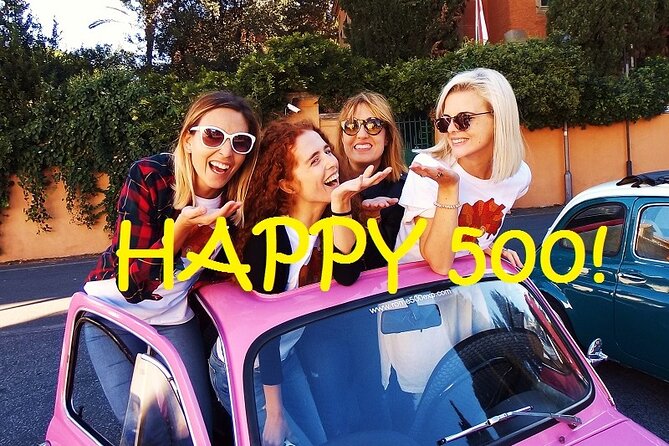
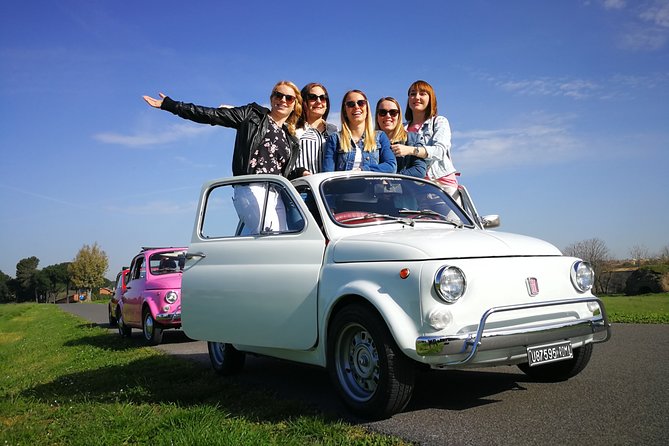
Pink cars make Rome feel brand-new.
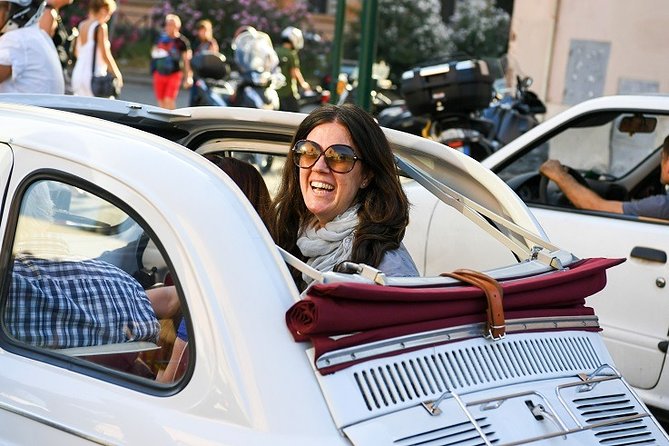
This Rome Fiat 500 self-drive tour turns the Eternal City into a hands-on experience: you meet your guide, get paired with a classic candy-colored Cinquecento, and roll through calmer lanes where big buses never go. I love the way the tour mixes headline stops with street-level moments, plus scheduled photo breaks that make it easy to grab great shots without sprinting between crowds.
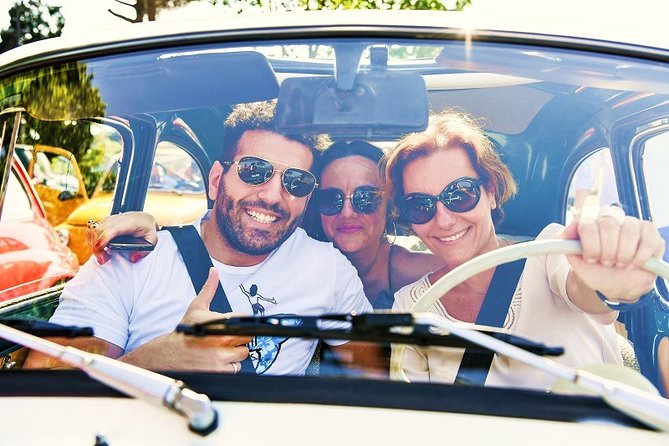
My other favorite part is the feel of the day: small group, tight convoy driving, and a guide who keeps you moving at a manageable pace while sharing practical Rome context. The main drawback is simple: the cars are manual, and the Fiat is small—there are height and weight limits, and you need to be comfortable driving a stick shift.
In This Review
- Key highlights to know before you go
- Getting started at Palazzo Manfredi: what the first 30 minutes feel like
- Driving a manual Fiat 500 in Rome without losing your nerve
- How the route balances big icons with quieter Rome
- Terme di Caracalla: massive Roman baths from the car and the ruins
- Buco della Serratura and Parco Savello: keyhole views that feel like a prank
- Circo Massimo: Roman “fast and furious” energy without the modern noise
- Janiculum terrace at Piazzale Giuseppe Garibaldi: the view that helps everything click
- Porta San Paolo and the Pyramid connection you might miss otherwise
- Via Galvani: the hill made from 50 million broken vases
- Trastevere by Fiat: narrow streets, real street life, and endless photo stops
- Porta San Sebastiano: a quieter ancient stop to close the loop
- Coffee, photos, and what you pay for on your own
- Price: is $211.72 worth it for 3 hours in a Fiat 500?
- Who should book this tour, and who should skip it
- Guides you may meet: what their style seems to be about
- Should you book the Rome Original Fiat 500 Self-Drive Tour?
- FAQ
- How long is the Fiat 500 tour?
- Where do I meet, and where does it end?
- Is the tour offered in English?
- Do I need a driver’s license to drive the Fiat 500?
- Are the Fiat 500 cars automatic?
- What’s included in the tour price?
- Is gelato or coffee included?
Key highlights to know before you go
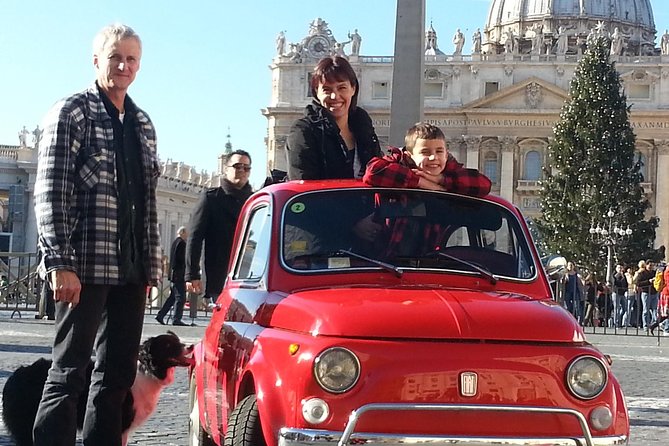
- Cinquecento cruising: A classic Fiat 500 (open top) is the mode of transport, not a prop.
- A photo-friendly route: Planned stops for pictures and short walks when the sites deserve it.
- Off-limits-to-bigger-vehicles feel: You’ll get to quieter streets that feel far from standard sightseeing loops.
- Manual driving requirements: The stick shift is real; you need experience or you may be refused a rental.
- Tight group energy: Overall caps exist, but you’ll be in a small, personal convoy, often split into separate Fiats.
- Real landmarks plus “wait, what is this” stops: From Caracalla-area ruins to keyhole views and Trastevere streets.
Getting started at Palazzo Manfredi: what the first 30 minutes feel like
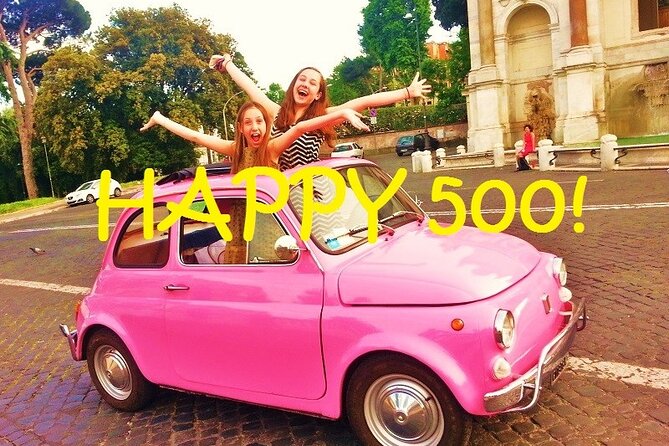
Your tour meets at Palazzo Manfredi, Via Labicana 125 (00184 Roma RM). You’ll gather in central Rome, meet your guide, and then get paired with your specific vintage Fiat 500. The vibe is part meeting, part “gear check.” The company gives a quick safety briefing and walks you through the basics of operating the Fiat, including its manual controls.
This matters more than it sounds. Rome traffic can be intimidating even when you’re not the one driving. Having a guide set expectations early helps you stay calm when you shift from parked car to moving car.
Before you head out, you’ll also see how the day is structured: you follow the guide’s car, stay aware of the convoy, and stop often enough to make the route enjoyable instead of exhausting. Also, wear closed-toe shoes—not sandals—because you’ll step around the car and in and out of spots during short breaks.
You can also read our reviews of more tours and experiences in Rome.


Driving a manual Fiat 500 in Rome without losing your nerve
Let’s talk reality: this is a self-drive tour, so the driving is the attraction. The Fiat 500 is not automatic (stick/clutch), and there’s no workaround mentioned. The driver must be at least 18, and you’ll need a valid EU license or an International Driving Permit. If you’re not experienced with a manual transmission, the company reserves the right to refuse the car rental, and there’s no refund in that case.
So how do you make this work in practice?
- Practice mindset: focus on smooth clutch use and not rushing shifts.
- Stay convoy-smart: follow the guide’s line and don’t try to “thread gaps” on your own.
- Use the guide to your advantage: in past tours, the guide has used walkie talkies/radios to keep cars coordinated and together when traffic gets messy.
If you’re wondering whether you can handle it, I’d frame it like this: you don’t need to be a race driver. You do need to be comfortable driving a manual in stop-and-go situations.
One more comfort note: the car is tiny. The booking rules limit each Fiat to a maximum of three adults or two adults plus two children. There are also limits for weight (over 220 lb / 100 kg not suitable) and height (taller than 6.2 ft / 1.9 m not suitable). If you fit those limits, the experience feels fun and nimble. If you don’t, it won’t.
How the route balances big icons with quieter Rome
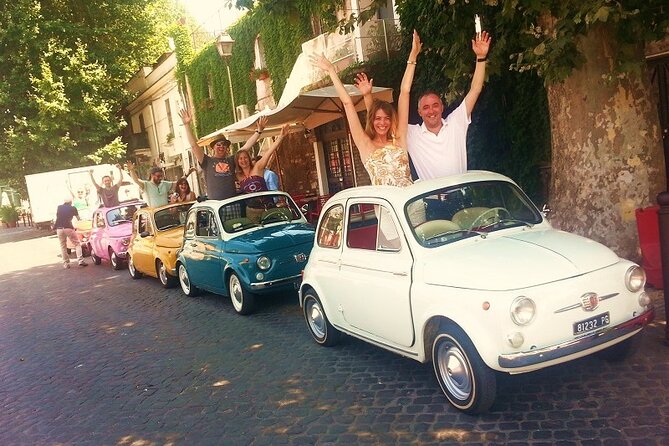
Rome can feel like two cities at once: the famous postcard spots and the lived-in streets between them. This tour leans hard into the second part—quiet roads, smaller access points, and short photo stops that let you see more than you’d manage on foot alone.
The highlights list is packed with major names, but the driving helps you experience them in a different way. Instead of just standing and looking, you’re rolling past, pausing for photos, then turning toward less obvious sights. That shift is what makes this feel like more than just a checklist.
The tour is also designed to keep you moving at a human pace. Breaks are built in: think around 10 to 20 minutes at stops, enough time for a quick look, photos, and a short listen from the guide.
Terme di Caracalla: massive Roman baths from the car and the ruins
One of the first deeper stops is Terme di Caracalla, the ruins of one of Rome’s largest and more sophisticated bath complexes. The scale here is hard to picture until you’re near it: the tour notes it was big, comparable to 15 football pitches, and it functioned like a health center for ancient Rome.
What makes this stop worth your time is that baths weren’t just for washing. You can see the idea of a full day’s routine: cold and hot baths, plus spaces that included things like libraries, gyms, theatre, seminar rooms, gardens, and fountains. That blend of public life and leisure is very “Rome,” and Caracalla gives you a strong sense of the city as a place built for routines, gatherings, and status.
Admission is listed as free for this stop, and the visit time is about 10 minutes. That’s short, so keep your expectations realistic: you’re here to catch the scope and take in the setting, not do a museum-length deep study.
Buco della Serratura and Parco Savello: keyhole views that feel like a prank
Then you hit a very different style of Roman attraction: keyhole viewpoints. The tour includes two places tied to the same wow-factor: Buco della Serratura and Parco Savello.
At Buco della Serratura, you look through what’s described as the biggest Renaissance church through a keyhole. The tour’s pitch is visual and fun: you’ll line up views that let you see three countries through the keyhole. It’s a simple activity, but it works because it turns Rome into a photo game. You’re positioned, frame-ready, and you get instant gratification.
Parco Savello is similar in concept but lands in a park setting. You’ll get another keyhole-style view with time for photos and a quick listen.
One caution: this kind of stop is best when you stay patient and follow the guide’s timing. People love the keyhole idea, so the viewing area can get a little crowded. Keep your phone up when it’s your turn, then step back so others can try too.

Circo Massimo: Roman “fast and furious” energy without the modern noise
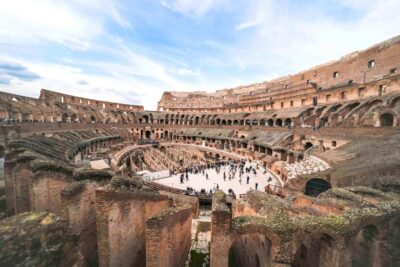
Next up is Circo Massimo (Circus Maximus). This is where the tour leans into pure spectacle. The stop notes that the venue hosted chariot races and that it was built centuries before the Colosseum.
The guide angle here is the scale and the vibe: it’s described as a site built for crowds and speed, and it’s still used sometimes for modern events like rock concerts. When you stand near the space, it’s easier to understand why the Romans loved public shows—this is an open-air stage designed for thousands.
Your time on this stop is about 20 minutes. That’s plenty to walk a bit, get the “you’re standing in an ancient arena” feeling, and grab photos from angles that show the size of the setting.
Janiculum terrace at Piazzale Giuseppe Garibaldi: the view that helps everything click
Rome looks different when you get above it. The tour includes Piazzale Giuseppe Garibaldi, also called the Janiculum terrace, and the promise here is panoramic.
The tour’s framing is specific: from this viewpoint you can see major landmarks like the Colosseum, Pantheon, Altare della Patria, and lots of church domes. That “map in the sky” moment is incredibly useful if it’s your first time in the city. Even if you already know the names, this lets you connect them spatially.
You also get about 20 minutes here. It’s a great spot for a calm pause in the middle of driving, where your brain catches up with what you’ve seen and what you’re going to see next.
Porta San Paolo and the Pyramid connection you might miss otherwise
A standout educational moment is Porta San Paolo, where the tour points out something most visitors don’t clock: Rome contains an Egyptian-style pyramid. The stop notes it’s the 4th biggest ancient Egyptian pyramid in Rome, built around 18 BCE, and associated with Gaius Cestius.
Why this works on a short tour: it gives you variety in the Roman story. You’re not only looking at Roman-built monuments—you’re spotting how different cultures left their marks on the city.
This is listed as a 20-minute stop. It’s a good length for taking pictures and letting the guide connect the dots so it doesn’t feel like just another roadside stop.
Via Galvani: the hill made from 50 million broken vases
Then comes one of those “wait, that’s real?” Rome facts: Via Galvani, linked to the hill of broken vases. The tour explains that the Romans created an artificial hill from terracotta pieces that had been used to transport olive oil, fish sauce, and wine.
The numbers given are eye-opening: the hill is estimated at around 40 meters high and 700 meters in circumference, made thanks to terracottas from around 50 million vases. That scale is what turns it into a story, not just a random pile.
At about 20 minutes, you can look at the structure, let the story land, and take photos without burning the whole tour on one spot.
Trastevere by Fiat: narrow streets, real street life, and endless photo stops
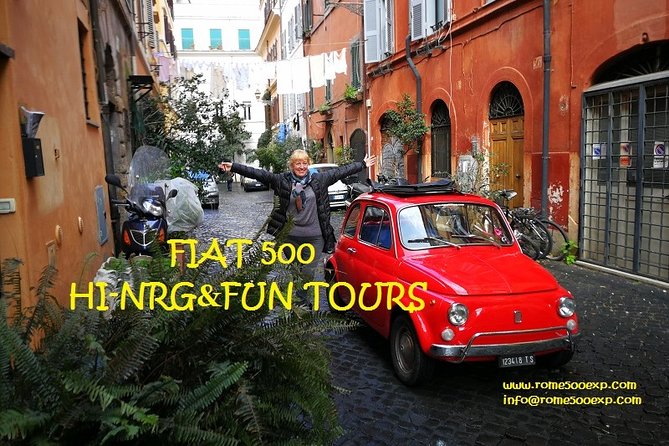
If you want Rome that feels like Rome, you end up in Trastevere. This tour includes driving through the neighborhood’s tiny streets, and it’s one of the biggest reasons to choose a Fiat 500 instead of a bus.
The car’s size becomes the point. You can slip through lanes and turns that feel too tight for larger vehicles. You also get those side-street moments where you see people hanging out, shop fronts, and everyday life—then you suddenly pop out somewhere view-worthy.
The stop here is about 20 minutes, and it’s framed as a chance to ride through places that cars like Ferraris and Lamborghinis won’t realistically handle the same way. It’s fun, photo-friendly, and it helps you understand why Trastevere feels so alive compared with the big monument zones.
Porta San Sebastiano: a quieter ancient stop to close the loop
The route also includes Porta San Sebastiano, with another 20-minute stop. Even without a long explanation time here, these gate areas are useful because they remind you Rome wasn’t built as one flat museum. It was once a walled system—entry points, movement corridors, and defenses. Gates like this help round out the picture after the tour’s big-name highlights.
After the final stop, you return to the meeting point. The tour notes that it ends back where you started, keeping it simple.
Coffee, photos, and what you pay for on your own
The tour includes coffee and/or tea, listed as one espresso or cappuccino per participant. There’s also free photo shooting with your phone or camera, which is a big deal because you’ll want portraits during stops without feeling awkward about asking strangers.
Food and extra drinks are not included. The tour mentions you can stop for gelato or coffee on your own expense before the ride ends. So budget a little extra for that last treat moment.
Price: is $211.72 worth it for 3 hours in a Fiat 500?
At $211.72 per person for about 3 hours, you’re paying for three things at once: a guide, a vintage car you actively drive, and a route that mixes major landmarks with smaller access points.
For perspective, this is not a cheap activity, but it’s also not priced like a private driver plus a normal sightseeing bus ticket. You’re getting:
- A professional guide who coordinates stops and convoy pacing
- The Fiat 500 experience itself (not just a ride)
- Included espresso/cappuccino
- Phone/camera photo help during the best moments
Where the value really shows is in the kind of memories this creates. People walk away with images of themselves driving through tight Roman streets, plus the “oh wow” feeling of seeing places like Circo Massimo and Caracalla without just standing in one spot.
Who should book this tour, and who should skip it
This tour fits you well if you want:
- A hands-on Rome experience, not another passive walking loop
- Classic cars as part of the memory (the candy-colored Fiat 500 is central here)
- Photo stops built into the day, plus a guide to explain what you’re seeing
It may not fit if:
- You’re not comfortable driving a manual car
- Your height or weight exceeds the posted limits for the Fiat
- You want lots of time inside sites like a full museum visit (this is a short, driving-focused tour)
If you’re traveling with kids, the tour lists a minimum age of 5. You’ll also want to think about spacing inside the car, since each Fiat has specific limits for adults and children.
Guides you may meet: what their style seems to be about
Across the guide names connected with this experience, one pattern shows up: people praise the guides for making the drive feel manageable and the stops feel worth it. Names you may run into include Alexis, Francesco, Marco, Mike, Fernando, and Nando. The consistent theme is clear communication and patience, especially for first-time manual drivers in a hectic city.
That’s important because your confidence can change your whole day. A calm, organized lead makes the driving feel like a fun challenge instead of a stressful one.
Should you book the Rome Original Fiat 500 Self-Drive Tour?
I think this is a strong choice if you want Rome from street level with a dash of cinematic fun. The included espresso, the photo help, and the mix of major landmarks with less-expected stops make it feel like a full 3 hours, not a rushed drive-by.
Book it if you:
- Can drive a manual confidently
- Fit within the Fiat’s size limits
- Want photos, street scenes, and a guided “route story,” not just a list of monuments
Skip it if manual driving in busy traffic sounds like a stress test. Rome is already intense, and this tour puts you in the driver’s seat on purpose.
If you match the basics, this one is the kind of tour you’ll talk about long after your photos are filed away.
FAQ
How long is the Fiat 500 tour?
The tour is about 3 hours.
Where do I meet, and where does it end?
You start at Palazzo Manfredi, Via Labicana, 125, 00184 Roma RM, Italy, and the activity ends back at the meeting point.
Is the tour offered in English?
Yes, the tour is offered in English.
Do I need a driver’s license to drive the Fiat 500?
Yes. The driver must be 18+ and have a valid European Union driving license or an International Driving Permit.
Are the Fiat 500 cars automatic?
No. The cars have manual stick/clutch controls, not automatic.
What’s included in the tour price?
Included are a professional guide, use of a vintage Fiat 500, one espresso or cappuccino per participant, and free photo shooting with your cellphone or camera.
Is gelato or coffee included?
Food and drinks are not included. The tour notes a stop where you can get gelato or coffee on your own expense.