The best part of Rome is often off to the side, and this tour is built for that. You’ll move through Trastevere and the Jewish Ghetto with a local guide, picking up context you won’t get from a quick photo stop.
What I like most is the mix of famous names and quieter corners: you get up close to a Bernini work that most visitors miss, then you step into Santa Cecilia’s layered world, including an underground look tied to her story. I also love the small-group feel—max 12 people—so the guide can actually answer questions and keep the pace human.
One thing to consider: it’s a walking tour through older streets and church interiors, so plan for a steady, on-your-feet style of sightseeing rather than a sit-and-watch itinerary.
In This Review
- Key takeaways before you go
- Trastevere and the Jewish Ghetto: the Rome most people skip
- San Francesco a Ripa Grande and Bernini’s Blessed Ludovica Albertoni
- Santa Cecilia in Trastevere: the saint and her underground layers
- Vicolo Dell’Atleta: a peaceful alley with serious hidden connections
- Isola Tiberina: the island myth and the Caesar bridge moment
- Il Portico di Ottavia: the ghetto’s story, the Colosseum link, and where to eat
- Group size, pacing, and how the guide makes the difference
- Price and value: what $67.72 buys you in Rome
- Timing and meeting points: a smooth start and finish
- Who should book this tour, and who might not
- Should you book? My take
- FAQ
- How long is the tour?
- What’s included in the price?
- Does this tour require paid tickets at every stop?
- Is the tour offered in English?
- Where do I meet the guide, and where does it end?
- Can I get a full refund if I cancel?
Key takeaways before you go
- Small group, max 12 people keeps the experience personal and question-friendly
- Bernini stop you’ll likely miss on your own, focused on Blessed Ludovica Albertoni
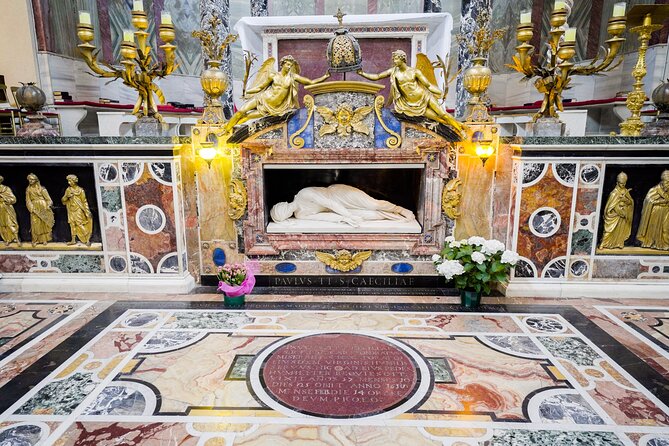
- Santa Cecilia’s underground access includes entry to the crypt area
- A quiet alley detour at Vicolo Dell’Atleta connects old synagogue history with what’s there today
- Jewish Ghetto context ties Il Portico di Ottavia to one of Europe’s oldest Jewish communities
- English guided with direct contact support for questions
Trastevere and the Jewish Ghetto: the Rome most people skip
Rome’s neighborhoods are more than a location on a map. Here, you’ll see how Trastevere’s atmosphere and the Jewish Ghetto’s story rub against each other—different vibes, same city. The guide helps you connect the dots so the streets feel like they have meaning, not just scenery.
This is also a smart length: about 2 hours 30 minutes keeps you from turning the tour into a marathon. You still get several distinct stops—church, underground spaces, and tight lanes—without feeling dragged from place to place.
And because the group is limited to 12, the walking stays calm. That matters in places like the ghetto, where the lanes and viewpoints can get crowded fast on your own.
You can also read our reviews of more tours and experiences in Rome.

San Francesco a Ripa Grande and Bernini’s Blessed Ludovica Albertoni
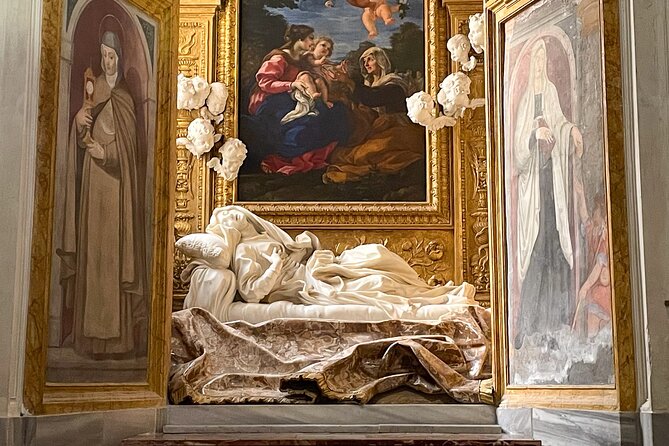
Your first stop sets the tone: Chiesa di San Francesco a Ripa Grande. This is the kind of place that rewards a guide. The highlight is the Blessed Ludovica Albertoni by Bernini—less famous than the headline Berninis in major squares, but close enough to feel real rather than postcard-level.
The big value here is learning how to look. Without guidance, you might notice the work and move on. With the guide, you start understanding what you’re seeing and why it matters in the church’s story.
You also get a practical advantage: the entry at this stop is free, so you can enjoy the art without adding extra ticket planning. It’s a good warm-up before you shift from visual art into personal, faith-linked history.
Santa Cecilia in Trastevere: the saint and her underground layers
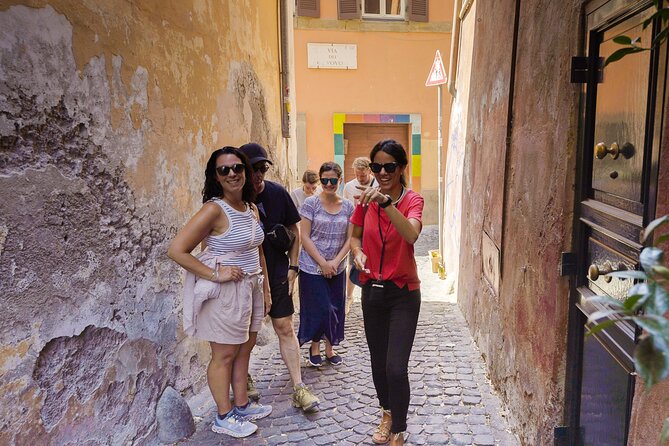
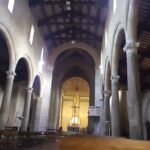
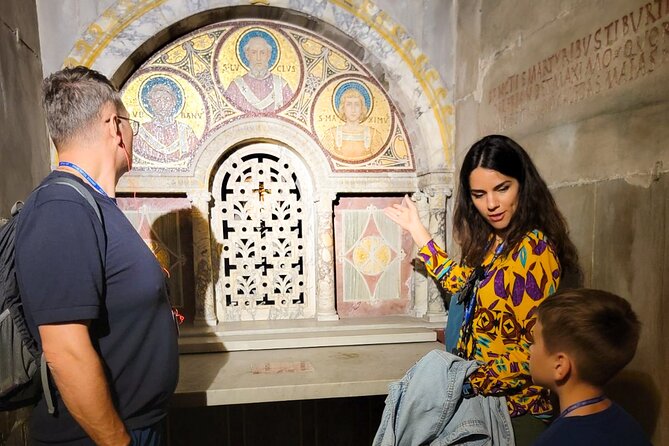
Next comes Santa Cecilia in Trastevere, where the tour leans into drama and persistence. You’re visiting a church built where Saint Cecilia once lived in some form of proximity to her life story, and the guide connects her biography to the physical layers of the site.
What makes this stop special is the approach: you don’t just hear a name. You get her resilience in plain terms, then you move from the main church spaces into the underground area tied to her story.
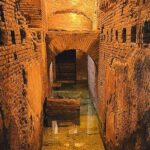
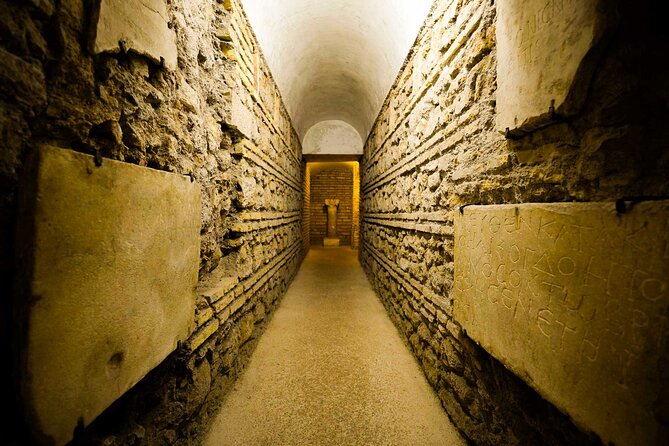
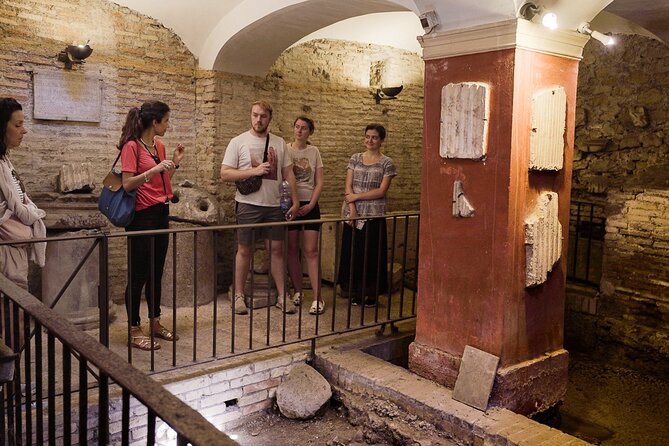
This stop includes entry to the underground crypt area, and the tour notes special access involving the nuns. Even if you’re not religious, that adds a human element you won’t get in a typical museum-style visit. It’s not only about seeing a room; it’s about understanding why that room exists and what it protected over time.
Plan your expectations for this one. Underground spaces tend to feel more enclosed and cooler, so give yourself a moment when you arrive and follow the guide’s timing. The time budget here is about 1 hour, which is enough to feel the story without rushing.
Vicolo Dell’Atleta: a peaceful alley with serious hidden connections
Then you step into Vicolo Dell’Atleta, a narrow lane that feels like a pause button in the middle of Rome. This is exactly the sort of street the city uses to hide meaning in plain sight.
The guide’s focus here is that you’re not just walking an old postcard lane. You’re passing by places tied to deep Jewish history in Rome—specifically the most ancient synagogue of Rome, which today houses a restaurant. That contrast—sacred space to modern daily life—is striking, and it’s the kind of thing that makes the neighborhood feel lived-in, not frozen in time.
You’ll also hear about one of the most ancient athletes of Rome. Even with only a short stop length (about 15 minutes), this is where the tour feels like a conversation with the city: quick, specific, and memorable.
A practical tip: keep your phone and camera handy here. Short lanes move fast, and you’ll want a clean shot before your group flows on.
Isola Tiberina: the island myth and the Caesar bridge moment
From the quiet lane, you move to Isola Tiberina, the river island in the middle of the Tiber. This stop is brief—around 15 minutes—but it’s chosen well because it changes your perspective. You’re not just looking at Rome from street level; you’re seeing how the city relates to its river.
The guide points out the place where, as the story goes, only true Romans are born. Then you’ll hear about the bridge where Julius Caesar walked, described as one of the most ancient in Rome. Even if you treat parts of this as legend rather than literal fact, the point still lands: Rome keeps reusing its geography to build identity.
What I like about this segment is that it resets your head. After churches and alleyways, the river air and island views give you a mental breather, so the next neighborhood stop doesn’t feel like nonstop walking.
If you’re the type who likes to triangulate facts, this is also a good stop. You’ll probably look at the surroundings afterward and realize the city’s layout makes more sense than you assumed earlier.



Il Portico di Ottavia: the ghetto’s story, the Colosseum link, and where to eat
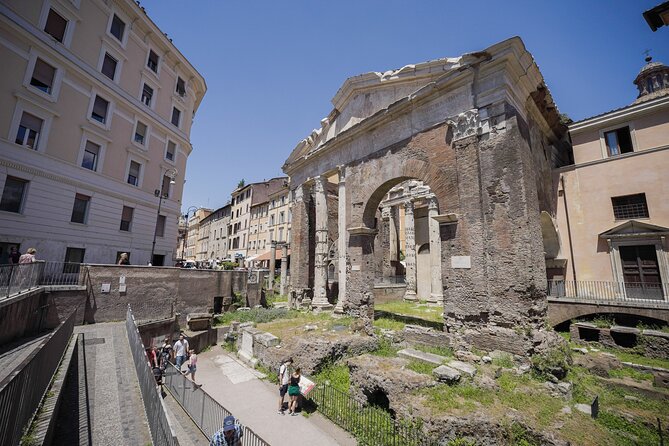
Finally, the tour lands in the Jewish district area known as the ghetto, centered on Il Portico di Ottavia. This is one of the most meaningful segments because it ties multiple threads together: community story, architecture references, and today’s street life.
You’ll hear about a building here that inspired the design of the Colosseum. That connection helps you understand Rome’s buildings as a conversation across centuries, not isolated masterpieces. The guide also frames the Jewish community of Rome as one of Europe’s oldest—so you’re not only learning a church or a family legend. You’re learning about a long-lived community and how Rome shaped it, and vice versa.
There’s also a modern angle: the Portico di Ottavia area is known for many food destinations, and the tour brings you into that vibe. That matters because history isn’t only for history books. It’s also what you’re walking past while deciding where to eat next.
This segment lasts about 30 minutes, and it feels like enough time to absorb the context without turning it into a lecture. When you finish, you’re set up to continue your evening with a plan, not just a vague sense of where you are.
Group size, pacing, and how the guide makes the difference
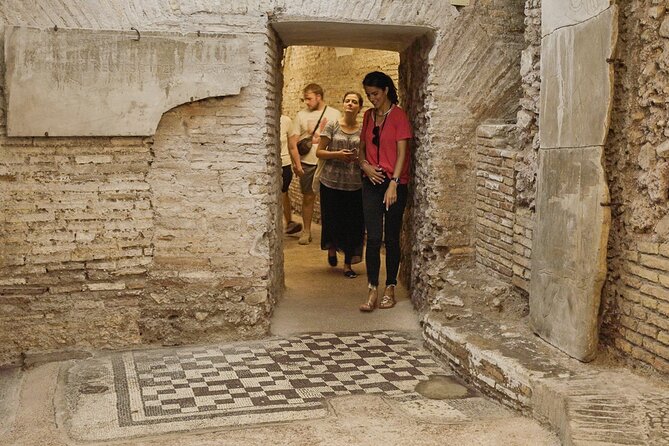
This is the kind of tour where the guide’s voice changes everything. The stops might look similar on paper—church, alley, island—but the guide links them through details that help you remember what mattered.
The experience is designed for a small group of max 12 people, and that’s a real advantage. You’re not fighting for attention, and the guide can keep the pacing smooth through tighter spaces.
Direct contact support is also mentioned, which is helpful if you have questions before you meet up. In practical terms, it means you’re not left guessing when the city gets confusing.
And the best sign of guide quality in this case is the feedback around how personable and knowledgeable the guiding is. Names that came up include Frederica and Francesca, both praised for explaining Rome clearly and making the tour feel enjoyable, not stiff.
Price and value: what $67.72 buys you in Rome
At $67.72 per person, this tour isn’t trying to be the cheapest option in Rome. It is priced like a true guided experience for two big reasons: you’re paying for interpretation, and you’re also paying for included entry to the underground crypt area.
Here’s what you’re getting in return:
- a local guide for roughly 2.5 hours
- a guaranteed small group (max 12)
- included ticket access to Santa Cecilia’s underground crypt site
- multiple additional stops, with several entry points listed as free
Value in Rome is often about time and attention. This tour saves you from “random wandering” because it stitches together places that you’d otherwise treat separately. You also avoid guesswork about what to prioritize when you’re in Trastevere and the ghetto for the first time.
If you like walking tours that teach you how to see, and you specifically want that Santa Cecilia underground access plus the Bernini stop, the price starts to make sense fast.
Timing and meeting points: a smooth start and finish
The tour starts at Piazza di San Francesco d’Assisi & Via Jacopa de’ Settesoli, 00153 Roma RM and finishes at Piazza Mattei, 00186 Roma RM. That end point is in a neighborhood that’s easy to keep exploring after the tour, which is great for planning dinner without backtracking.
It also notes it’s near public transportation. You don’t need a car, and you can connect with other sightseeing plans before or after.
The tour uses a mobile ticket, which is useful in a city where paper tickets get forgotten in pockets.
If you want this to feel effortless, give yourself a few extra minutes to find your exact meeting spot—Rome streets can be easy to underestimate when you’re navigating without a plan.
Who should book this tour, and who might not
This works especially well if you:
- want a guided walk through lesser-known areas rather than only the biggest hits
- care about the story behind places, especially around the Jewish community of Rome
- like a mix of art (Bernini) and human history (Saint Cecilia and her underground site)
- prefer intimate group settings and a pace that doesn’t feel rushed
It might be less ideal if you:
- want a mostly outdoor experience with minimal church/indoor time
- expect a fully seated tour format
- hate walking for about 2.5 hours total
If you’re traveling with kids, the tour notes it’s suitable for children too, which is a plus for families who still want something meaningful without museum fatigue.
Should you book? My take
I’d book this tour if you want Rome with context. The combination of Bernini at San Francesco a Ripa Grande, Santa Cecilia’s underground access, and the ghetto-focused stops at Vicolo Dell’Atleta and Il Portico di Ottavia makes it feel like a real neighborhood story, not a list of monuments.
Also, the small-group cap and the repeated praise for guides like Frederica and Francesca are strong signs you’ll get a thoughtful, friendly explanation instead of a rushed script.
If you’re only in Rome for a short time, this is the kind of tour that helps you understand what you’re seeing afterward—because it gives you the why, not just the where.
FAQ
How long is the tour?
The tour lasts about 2 hours 30 minutes.
What’s included in the price?
The tour includes a local guide, a small group of max 12 people, entry tickets to the underground crypt, and direct contact support via phone or WhatsApp for questions.
Does this tour require paid tickets at every stop?
No. The underground crypt entry is included, and several other stops are listed with free admission.
Is the tour offered in English?
Yes, it’s offered in English.
Where do I meet the guide, and where does it end?
Meet at Piazza di San Francesco d’Assisi & Via Jacopa de’ Settesoli, 00153 Roma RM and end at Piazza Mattei, 00186 Roma RM.
Can I get a full refund if I cancel?
Yes. It offers free cancellation, with a full refund if you cancel up to 24 hours in advance of the experience’s start time.