REVIEW · ROME
Rome: Vatican, Sistine Chapel, St. Peter Early Morning Tour
Book on GetYourGuide →Operated by LivTours - We craft tours, you live them · Bookable on GetYourGuide
First light in Rome beats the Vatican crush. With early morning entry, you’re in the Vatican Museums when most people are still walking over, and you get a small-group feel as the guide keeps things moving. I especially like how guides such as Sarah and Marty focus your attention on the big art and the big ideas, instead of just pointing at things.
Second, you get real momentum from the start, with classic anchor stops like the Laocoon and Apollo Belvedere before the day’s crowd energy takes over. My only real caution is schedule changes: Raphael Rooms access depends on crowding and guard routes, and St. Peter’s Basilica can close unexpectedly during 2025 Jubilee activity.
In This Review
- Quick hits (what matters most)
- Entering the Vatican Museums early: where the tour earns its price
- Meeting point at Caffè Vaticano: start calmly, not frantic
- Pinecone Courtyard to the Belvedere classics: ancient Rome as the warm-up
- Gallery of Maps and Gallery of Tapestries: the court mindset in art form
- Sistine Chapel timing: getting space to look at the ceiling
- Raphael Rooms (with the right expectations): short time, big payoff
- St. Peter’s Basilica skip-the-line: Pietà and Bernini up close
- Piazza San Pietro and the wrap-up walk: orientation through scale
- Price, pace, and who this tour fits best
- Should you book this early-morning Vatican tour?
- FAQ
- How long is the early morning Vatican tour?
- Where do we meet for the tour?
- Do I need photo ID for entry?
- Is there a dress code?
- Can I take photos in the Sistine Chapel?
- Is access to the Raphael Rooms guaranteed?
Quick hits (what matters most)
- Early entry to Vatican Museums and the Sistine Chapel means more viewing time, less shoulder-to-shoulder stress
- Semi-private small group (up to 6) helps you actually hear the guide and see the details
- Must-see sculpture and gallery mix like Laocoon, Apollo Belvedere, Gallery of Maps, and Gallery of Tapestries
- Sistine Chapel rules you’ll follow easily: no photos inside, and silence is required
- Skip-the-line into St. Peter’s Basilica for up-close highlights like Michelangelo’s Pietà and Bernini’s Baldacchino
- Modest dress and ID are non-negotiable for entry and smooth museum routing
Entering the Vatican Museums early: where the tour earns its price
This tour is built around timing. You start near the Vatican Museums entrance and go in early, when the museum is quieter and your first views of the highlights land better. That matters in the Vatican because even the best art can feel chaotic if you arrive when the streams of people are fully running.
I like that the experience is not just ticket-based. You’re guided through key stops in a planned order, so you don’t waste energy figuring out where to go next. And because the group is capped at 6, you’re less likely to get lost in the shuffle or miss explanations while people bottleneck around famous artworks.
One more practical win: the itinerary is designed so you can reach the Sistine Chapel and Raphael Rooms before the main crush forms. If you’re visiting once and want the big stories explained, this kind of structure is usually worth paying for.
You can also read our reviews of more tours and experiences in Rome.
Meeting point at Caffè Vaticano: start calmly, not frantic
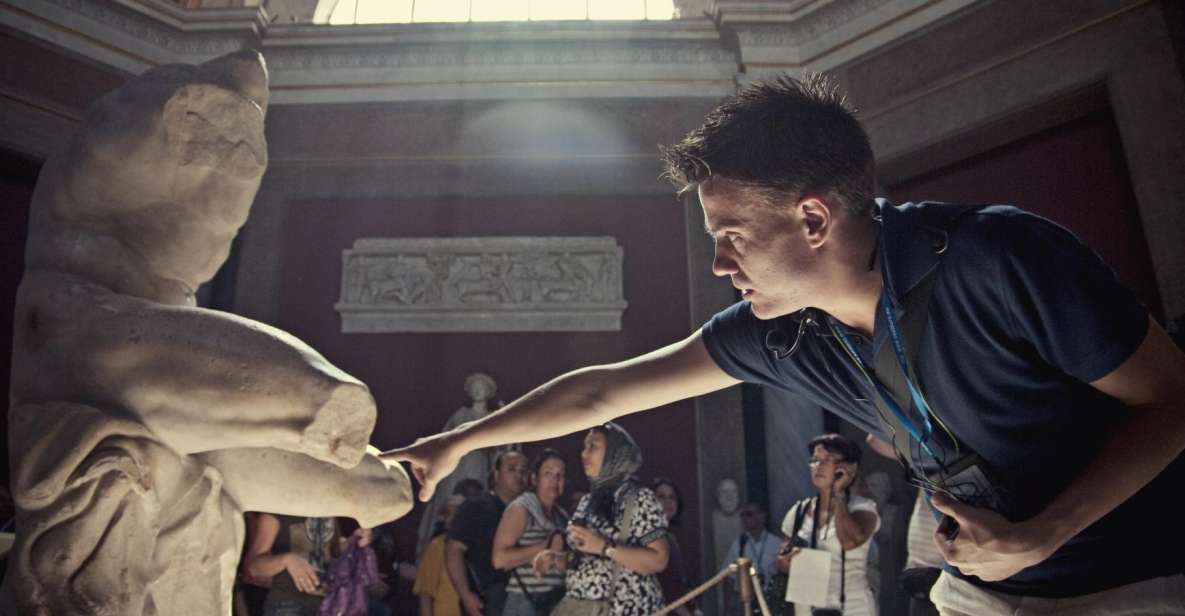
You meet in front of Caffè Vaticano at Viale Vaticano, right across from the Vatican Museums entrance. That location is convenient because you can orient fast, and it puts you at the right doorway without trekking around trying to match maps to real streets.
Bring your photo ID (passport or ID card). The Vatican is strict, and having the right document ready is one of those small steps that can save your whole morning.
A heads-up on clothing: shoulders and knees must be covered. Shorts, short skirts, and sleeveless shirts are not allowed. I consider this part of the value equation: when everyone is dressed correctly, the group moves faster and the guide doesn’t have to pause to handle common issues.
Pinecone Courtyard to the Belvedere classics: ancient Rome as the warm-up
Right at the beginning, you’ll be guided through the Pinecone Courtyard and the Octagonal Courtyard, then into the Belvedere palace area. This is a smart opening because it gives you context before the Vatican Museum hype begins.
You’ll see famous antiquities through the guide’s framing, including the Laocoon and Apollo Belvedere. The Laocoon is especially good early in the day because you can actually stand and look without a line forming behind you. You’ll also get attention on the Belvedere Torso, which many artists studied for its form even in ruined, partial state.
Why I like this setup: it helps you stop thinking of the Vatican as only religious art. It’s also a museum of power and collecting, with classical sculpture feeding later European imagination.
If you’re someone who likes to understand why something is famous, this opening works well. If you just want the fastest path to the Sistine Chapel, you might feel the pace is slightly art-history heavy at first, but it pays off later.
Gallery of Maps and Gallery of Tapestries: the court mindset in art form
After the sculpture courts, you’ll move into major galleries, including the Gallery of Maps and the Gallery of Tapestries. These rooms are a nice change of pace from crowd-driven paintings, and they set you up for how the Vatican thinks in big statements.
The Gallery of Maps is exactly what it sounds like: maps built into art and design, reflecting how geography and politics intertwined. The Gallery of Tapestries adds another layer by showing large-scale decorative storytelling, again connecting Rome’s cultural authority to visuals that impressed visitors and dignitaries.
This is where a guide earns their tip. The rooms can look like eye-candy if you just walk through them, but with commentary you start to see what the Vatican was trying to project: order, control, and a sense that everything important fits into one grand narrative.
Sistine Chapel timing: getting space to look at the ceiling
The Sistine Chapel stop is the reason most people wake up early. Your guide brings you to it after you’ve already seen major museums, so you’re not entering at the peak moment when everyone has the same idea.
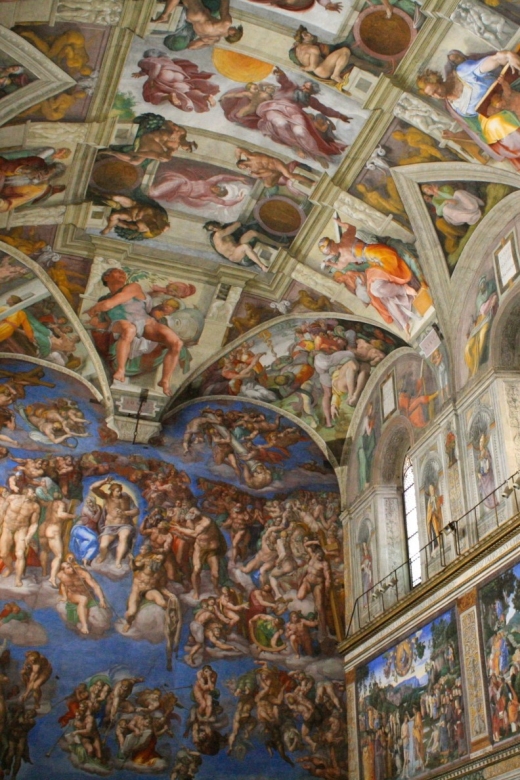
You’ll get time and space to appreciate Michelangelo’s ceiling frescoes, then move on to The Last Judgment before the larger crowd surge. That part is key. The ceiling is breathtaking, but it also rewards slow looking: faces, gestures, and details mean more when you aren’t constantly being pushed along.
Inside, you’ll follow rules: no photography in the Sistine Chapel, and silence is required. Your guide will brief you before you go in, which makes the experience feel calmer and easier to follow.
Also note: the Sistine Chapel may open late for religious reasons, and museum time will be extended accordingly. That can shift your timetable slightly, but it’s built into the plan so the overall experience still feels full.

Raphael Rooms (with the right expectations): short time, big payoff
After the Sistine Chapel, you’ll visit the Raphael Rooms. Here’s the honest part: inclusion depends on crowding, timing, and guard-regulated routes, so it’s not 100% guaranteed the same way every day.
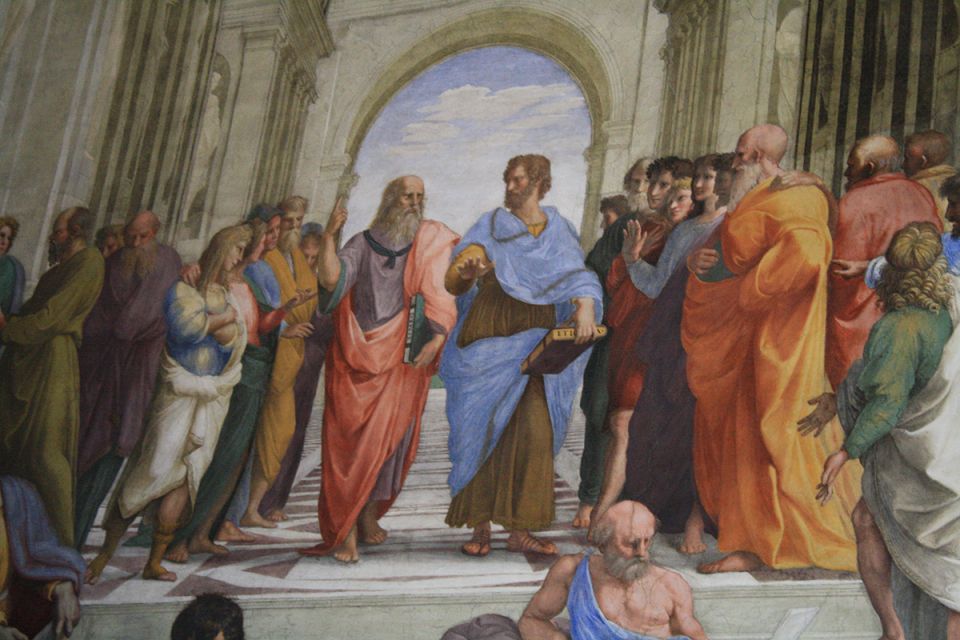
That said, the stop is still valuable because it changes how you read what you just saw. You’ll focus on standout works such as The School of Athens, and you’ll hear the stories and meaning behind the paintings connected to the pope’s private apartments.
You might only get about 15 minutes here, but the guide’s job is to choose what to point out so that 15 minutes feels like it counted. In practice, the best guides help you look with a purpose, not just glance and move on.
If Raphael Rooms access matters a lot to you, I’d treat it as a high-probability bonus rather than an absolute. The tour is designed to adjust itinerary to maintain quality when conditions change.
St. Peter’s Basilica skip-the-line: Pietà and Bernini up close
Once the museum portion is done, you move directly into St. Peter’s Basilica with VIP-style access that helps you skip the line. Vatican lines can be brutal, so skipping that friction is a real quality-of-life upgrade.
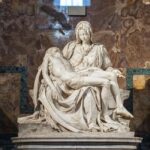
Inside, you’ll see major highlights up close, including Michelangelo’s Pietà and Bernini’s bronze altar canopy (often referred to as the Baldacchino). This is the kind of art where proximity changes everything. Details look sharper, scale feels real, and the architecture starts to make sense as a designed experience.
Your guide will also explain Papal Tombs and share how to access the dome of St. Peter’s. Even if you don’t climb the dome on this tour, knowing what’s possible and how to plan for it next is useful.
One more caution: due to 2025 Jubilee, St. Peter’s Basilica may close unexpectedly. If that happens, the guide revises the tour to maintain full value, but it can affect what you get to do on site.
Piazza San Pietro and the wrap-up walk: orientation through scale
When you finish, you’ll walk around Piazza San Pietro Square and take in the grandeur of St. Peter’s. This part sounds basic, but it’s a smart final step because it helps you reset your sense of scale after hours inside.
In the museums, you’re often moving from room to room. Outdoors, you get a sense of how everything connects: the basilica as a destination, and the square as the stage for public life.
Your tour ends back at the meeting point area. That makes it easy to continue your day with a plan, whether you head to a nearby café or line up another Vatican or Rome visit.
Price, pace, and who this tour fits best
At $225.44 per person for a 2 to 3.5 hour tour, it’s not a budget option. The value comes from three things you can’t easily replicate solo: early entry timing, skip-the-line routing, and a focused guide who helps you see fewer highlights in more depth.
You’re paying for time savings and interpretive help. The Vatican Museums alone are huge, and trying to DIY the best order often leads to either missed highlights or constant rechecking maps. Here, the route is planned so you hit key sculpture, major galleries, and then the Sistine and basilica.
The pace is generally efficient rather than leisurely, but many people love it because you’re not stuck waiting in the wrong place. The small group helps a lot with that.
This tour is a great match if:
- you want the Vatican’s biggest art stops without spending a full day wandering
- you like structured storytelling that makes famous works easier to understand
- you’re traveling with kids or a mixed group and want adults to get answers fast
It’s less of a match if:
- you want unlimited free roaming time in the museums
- you’re not comfortable with strict rules (dress code, silence in the Sistine, no photos there)
- you rely on wheelchair access, since this is not suitable for wheelchair users and you should book an accessible private tour route instead
Should you book this early-morning Vatican tour?
If your goal is to see the Sistine Chapel and St. Peter’s with less crowd pressure and more guidance than you’d get on your own, I think this is a strong buy. The early start and small-group format are the backbone of the experience, and the highlights are chosen so your time doesn’t disappear into museum sprawl.
Book it if you can meet the practical requirements (ID in hand, shoulders and knees covered, no backpacks) and if you’re okay with the possibility that Raphael Rooms timing can change based on crowd and route decisions.
Skip it (or consider another option) if you want maximum flexibility and don’t care about guided pacing, or if you need accessibility accommodations that are better handled through an accessible private tour.
In short: for most first-timers, this is one of the smarter ways to tackle the Vatican in a few focused hours.
FAQ
How long is the early morning Vatican tour?
The tour runs about 2 to 3.5 hours. Starting times vary, so you’ll want to check availability for the slot you want.
Where do we meet for the tour?
You meet in front of Caffè Vaticano, right across the street from the Vatican Museums’ entrance.
Do I need photo ID for entry?
Yes. You must bring a passport or ID card (government-issued photo ID) to guarantee entry to the Vatican.
Is there a dress code?
Yes. Modest dress is required, with shoulders and knees covered. Shorts, short skirts, and sleeveless shirts are not allowed.
Can I take photos in the Sistine Chapel?
No photos are allowed inside the Sistine Chapel. Elsewhere in the experience, flash is prohibited.
Is access to the Raphael Rooms guaranteed?
No. Access to the Raphael Rooms depends on crowding, timing, and guard-regulated routes, and the guide may adjust the itinerary to keep the experience high quality.