Two hours, four icons, and a smart route. You’ll get a small-group walk through central Rome with a real guide, and the Trevi Fountain moment lands at night when it feels more like theater than sightseeing.
I especially like how the tour explains what you’re seeing as you move. Starting up near Piazza Venezia, you trace Rome’s shift from ancient power center to later eras, then you drop into calmer pockets like the Galleria Sciarra courtyard—complete with art nouveau decoration and fresco-style detail. Guides such as Sharon and Yussef are often highlighted for making the stories clear, funny, and easy to follow.
One thing to keep in mind: Pantheon access isn’t included, so don’t assume you’re automatically entering. Also, double-check your meeting instructions before you head out—some people have gotten tripped up by mismatched map directions.
In This Review
- Key takeaways before you go
- How This 2-Hour Rome Walk Helps You See Rome Fast
- Starting at Piazza d’Aracoeli and Piazza Venezia: Where Rome Keeps Layers
- Galleria Sciarra: The Courtyard Stop That Resets Your Eyes
- Trevi Fountain at Night: Legend, Lighting, and a More Human Moment
- Chiesa di Sant’Ignazio di Loyola: The Fake Dome Moment
- The Pantheon Stop: What You’ll See and How to Plan
- Piazza Navona Finale: Where the Walk Ends and the Evening Starts
- Guides, English, and Group Size: Why This Feels Personal
- Price and Value: Is $30.23 a Good Deal?
- Weather, Timing, and Comfort (The Stuff That Actually Affects Your Day)
- Should You Book This Pantheon, Trevi, and Navona Walking Tour?
- FAQ
- How long is the Rome walking tour?
- How much does the tour cost?
- Where does the tour start and end?
- Is the tour offered in English?
- Is Pantheon access included?
- How large is the group?
- Is a mobile ticket provided?
- Are service animals allowed?
- What if the weather is bad?
Key takeaways before you go
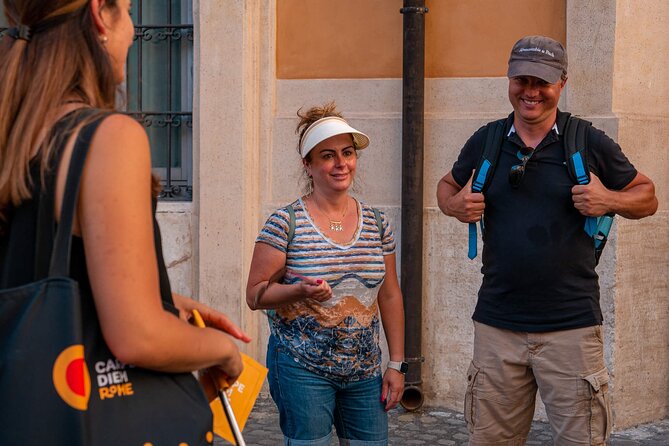
- Small group cap (max 15) means more time for questions and less time playing crowd dodge
- Trevi at night gives you legend + lighting without turning it into a daytime sprint
- Quiet stops like Galleria Sciarra break up the big-site crowds
- Chiesa di Sant’Ignazio di Loyola delivers real Baroque “what am I looking at?” trickery
- Piazza Navona finish sets you up for dinner/drinks right where the action is
- English-language guide for a smoother first-time orientation
How This 2-Hour Rome Walk Helps You See Rome Fast
Rome is big, and the center is busy. This tour is built for the moment when you want the essentials without spending your whole first day walking in circles. At about 2 hours, it’s long enough to connect the dots, but short enough that you still have energy for gelato, a museum later, or just a long passeggiata.
The value here is the guiding. You’re not only stopping at famous places; you’re learning what to look for as you arrive—materials, layout, symbolism, and the little “wait, that’s not what I expected” details that make Rome stick in your brain.
You’ll also appreciate the pace. Many guides on this kind of route are praised for keeping people together and making it possible to ask questions without derailing the walk.
You can also read our reviews of more tours and experiences in Rome.


Starting at Piazza d’Aracoeli and Piazza Venezia: Where Rome Keeps Layers
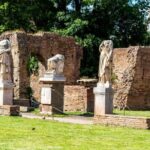
You begin near Piazza d’Aracoeli and move into the story-heavy zone around Piazza Venezia and the Imperial Forums area. The key benefit of starting here is perspective. From this part of the city, Rome feels like it’s stacked—ancient foundations, later political decisions, and newer landmarks built on top of older power.
This is the part of the walk that helps your brain stop treating Rome as one big “ruins + churches” blur. You’ll get a sense of how this area evolved from a Roman power center into something that later eras re-used and re-framed. It’s not just trivia; it’s a map for understanding why certain buildings look the way they do and why the city’s sightlines feel the way they do.
Practical tip: wear comfortable shoes right away. The tour is walking-forward from the start, and you’ll be glad you didn’t save your energy for later.
Galleria Sciarra: The Courtyard Stop That Resets Your Eyes
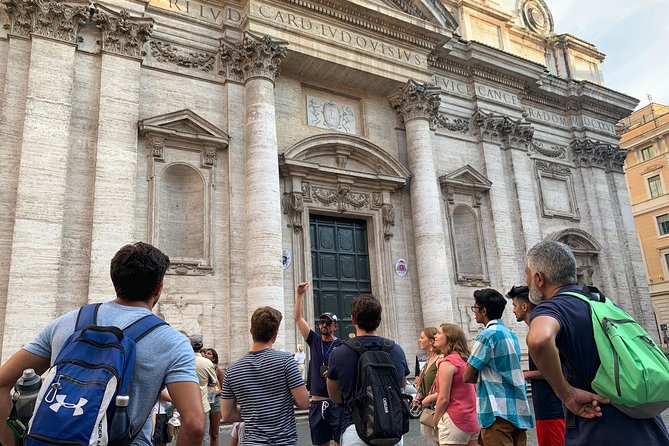
After the big-stops energy, you slip into Galleria Sciarra, a 19th-century courtyard that many first-timers would miss on their own. This is the kind of place that makes the tour feel smarter than a standard “photo line” route.
What to look for: the art nouveau fresco-style decoration and intricate painted scenes. It’s a quick stop, but it changes your day. Rome can overwhelm you with scale, and this kind of smaller interior space helps you slow down and actually notice details.
This stop also works as a buffer. If you’re sensitive to crowds or heat, a courtyard like this gives your group a brief breather before the fountains and churches.
Trevi Fountain at Night: Legend, Lighting, and a More Human Moment
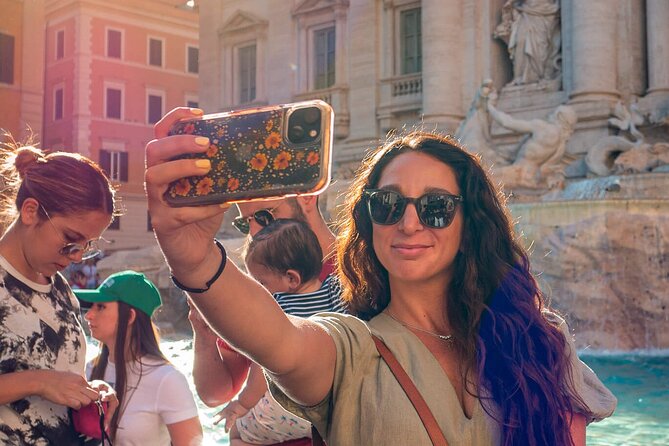
Trevi is famous for a reason. But the way this tour schedules it—at night—matters. Daytime Trevi can feel like a constant roar of cameras. Night adds mood: softer light, slower movement, and a better chance to hear the guide’s legends without fighting your way to a viewpoint.
You’ll also get the story behind Trevi’s sculpted design, plus the tradition of tossing a coin for good luck. Even if you already know the legend, it’s different when someone explains how the fountain’s elements connect to the message of the work.
Practical tip: bring a phone flashlight only if you need it. Otherwise, enjoy the lighting the way it’s meant to be seen.
If your goal is a classic Rome photo without the worst of the daytime crush, this is one of the strongest reasons to choose this particular walking route.
Chiesa di Sant’Ignazio di Loyola: The Fake Dome Moment
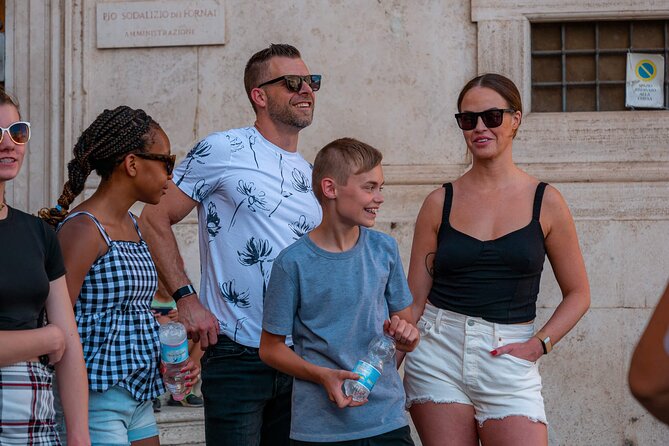
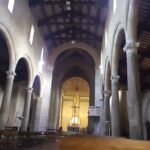
Next up is Chiesa di Sant’Ignazio di Loyola, a grand Baroque church known for illusionist art—especially an awe-inspiring fake dome effect. This is the stop that turns sightseeing into a bit of magic.
What makes it worth your time is that you don’t just look—you learn what you’re looking at. Baroque illusion works because of how light, perspective, and design trick your eyes. When you know that ahead of time, the experience becomes more satisfying and less random.
If you’re the kind of traveler who loves churches, architecture, and “how did they do that” moments, you’ll get a lot out of this section. And if you’re traveling with kids or anyone who gets restless, the illusion aspect helps keep attention.


The Pantheon Stop: What You’ll See and How to Plan
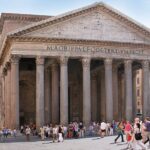
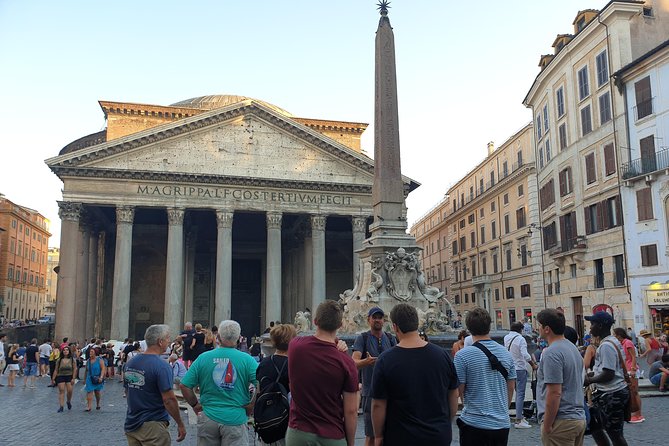
The Pantheon is one of Rome’s true architectural anchors. Even without a long lecture, it’s hard not to feel the scale: a temple turned church, with a dome that still looks engineered rather than built.
However, here’s the key planning point: Pantheon access isn’t included. So you can expect a stop designed to help you appreciate the building, but you should not assume your ticket is bundled or that you’ll automatically be inside for as long as you want.
What you can do to make the Pantheon part smooth:
- Check whether your specific booking time aligns with when you’ll be able to enter.
- Plan for possible lines or restrictions so you don’t feel rushed.
- If you care deeply about interior details, treat your Pantheon time as a separate priority and not just a quick photo stop.
This also explains why people often feel very satisfied with the overall tour even when the Pantheon entry isn’t part of the package. The building itself is obvious; the guide’s job is helping you see it correctly.
Piazza Navona Finale: Where the Walk Ends and the Evening Starts
You finish at Piazza Navona, one of central Rome’s most lively squares. It’s a great ending because it’s practical: once you wrap up, you’re already in an area full of places to eat, drink, and keep wandering.
The guide doesn’t just point you to the famous sights. You’ll also get direction on nearby eateries, bars, and even rooftop-style options. That’s a small detail that actually matters, because Rome’s best meal decisions often come down to “where should we go right now?”
What to do in the first 15 minutes after the tour:
- Walk a loop around the square so you understand the geometry.
- Then pick a spot based on shade, sound level, and how close you want to be to the action.
Guides, English, and Group Size: Why This Feels Personal
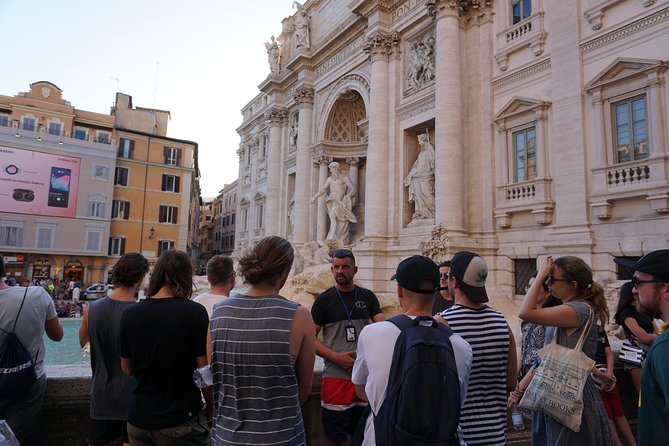
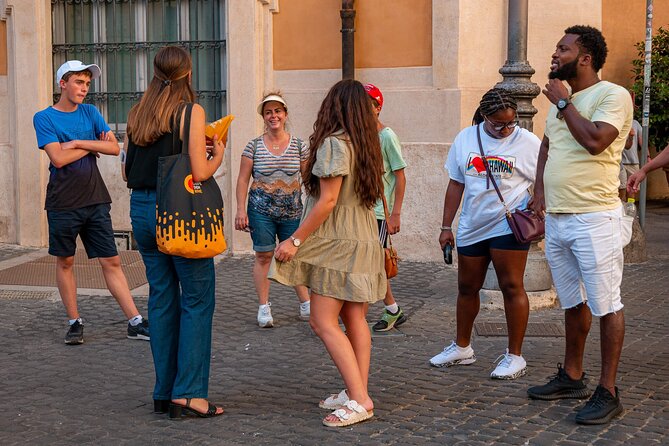
This is offered in English, and the group size tops out at 15 travelers. In Rome, that’s a meaningful limit. Small groups give you two things that bigger tours can’t: clarity and breathing room.
You’ll benefit from a guide who explains as you go and who can answer follow-up questions without everyone getting lost. Many people mention guides like Sharon, Yussef, Dan, Sila, Eva, and Vlad for their ability to make the walk feel organized and lively. The best ones also tailor attention to the group—first-timers who need orientation and repeat visitors who want deeper stories.
Also worth noting: some guides are praised for keeping the group comfortable, including using route choices that avoid major congestion and getting people into shade when conditions call for it. On a hot day, that kind of planning can be the difference between a fun walk and a grumpy one.
Price and Value: Is $30.23 a Good Deal?
At $30.23 per person for about 2 hours, the price is positioned as an affordable orientation tool. The big value isn’t just that you cover major sights. It’s that you cover them with a guide and include quieter stops that you’d likely skip if you were self-guiding.
Here’s how I think about value for this kind of Rome tour:
- If you’re first-time visiting, a guided route saves time and mental effort. You start with context instead of guessing.
- If you’re not a museum person, the design + church + fountain storytelling can feel like a mini course without a ticket price.
- If you’re traveling with limited time, the short duration lets you pair this with other plans the same day.
Yes, Pantheon access isn’t included. But even with that, the tour still gives you strong architecture moments and a logical, efficient route through central Rome.
Bottom line: it’s a good deal if you want a guided overview plus a few places you wouldn’t find quickly on your own.
Weather, Timing, and Comfort (The Stuff That Actually Affects Your Day)
This experience requires good weather. If weather is poor, you’ll be offered a different date or a full refund. Walking tours in Rome can be great—until the city turns into a slippery obstacle course. So check the forecast the day you go.
Timing matters, too. The tour is scheduled around nighttime Trevi, so you may feel the evening vibe more than a midday “run-and-gun” sightseeing session. That’s usually an advantage, but it also means you’ll want comfortable shoes and a light layer if evenings feel cooler.
One more comfort tip: bring water. Even if you’re not walking a marathon, Rome’s central streets add up over two hours, and you’ll be happy you came prepared.
Should You Book This Pantheon, Trevi, and Navona Walking Tour?
I’d book this if:
- You want a first-visit Rome overview with a guide explaining what matters
- You care about the main classics but still want at least a couple of lesser-seen stops like Galleria Sciarra
- You like architecture and church interiors, especially the illusion work at Sant’Ignazio
- You want an evening-friendly plan that ends at a great meal area
I might skip or adjust expectations if:
- You’re counting on included Pantheon entry. Since access isn’t included, plan that separately.
- You prefer fully self-paced sightseeing where you can linger at one site for a long time without a group schedule.
If you want a clean, efficient day plan with Roman stories and a route that makes sense, this is the kind of walking tour that earns its spot on your itinerary.
FAQ
How long is the Rome walking tour?
It runs for about 2 hours.
How much does the tour cost?
The price is $30.23 per person.
Where does the tour start and end?
It starts at Piazza d’Aracoeli (Via di S. Venanzio, 8, 00186 Roma RM, Italy) and ends at Piazza Navona (00186 Roma RM, Italy).
Is the tour offered in English?
Yes, it is offered in English.
Is Pantheon access included?
No. Access to the Pantheon is listed as not included.
How large is the group?
The tour has a maximum of 15 travelers.
Is a mobile ticket provided?
Yes, it includes a mobile ticket.
Are service animals allowed?
Yes, service animals are allowed.
What if the weather is bad?
This experience requires good weather. If it’s canceled due to poor weather, you’ll be offered a different date or a full refund.