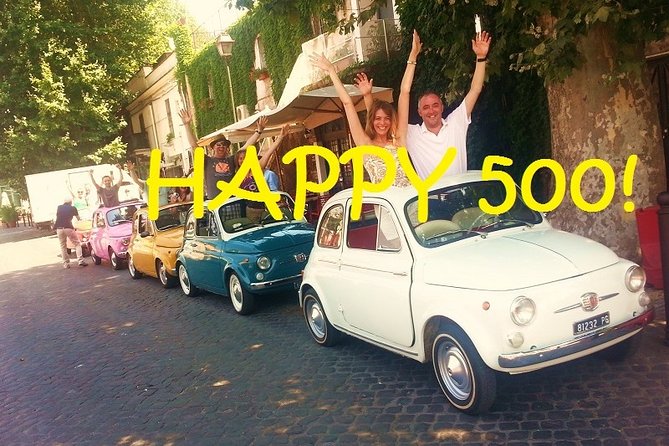
A Fiat 500 makes Rome feel small and personal. In about 3 hours, you bounce from Caracalla’s baths to keyhole viewpoints, Trastevere lanes, and major monuments, all while a driver-guide steers the route and keeps the stories moving. It’s also built for photos, with the guide stepping in to shoot pics with your phone or camera.
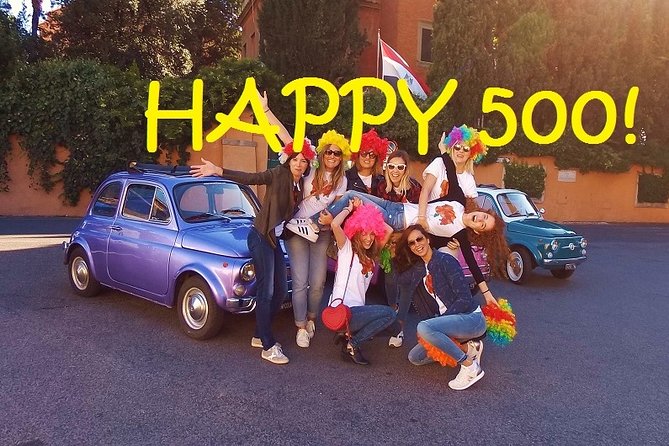
What I really liked is how this tour mixes big-famous Rome with off-the-radar corners you’d likely miss on your own, without turning the day into museum homework. I also like that the vibe stays light: groups of up to 20 people means you still feel like you’re with real humans, not standing shoulder-to-shoulder all day. For example, people have praised guides such as Francesco and Alexis for humor and smart explanations, while others highlighted guides like Emmanuelle and Giorgio for making narrow street drives fun. One consideration: this is a driving tour with short stops, so don’t expect a long, in-depth visit at any one site.
In This Review
- Key highlights to know before you go
- A vintage Fiat 500 is the right kind of fast in Rome
- Getting there: the Via Labicana meetup and small-group convoy
- Caracalla in 20 minutes: baths, libraries, gyms, and theater
- Piazza dei Cavalieri di Malta: the famous keyhole view
- Parco Savello: oranges, lovers, and an optical illusion
- Trastevere from the inside: tiny streets and fast photo moments
- Piazzale Giuseppe Garibaldi: a terrace view with big-city layers
- Circus Maximus: where chariots once turned chaos into spectacle
- Porta San Paolo and the “Egyptian pyramid” story
- The Colosseum stop: the right expectations for a short visit
- Via Galvani and Monte Testaccio: the hill made from broken vases
- Price and value: $205.67 for a 3-hour Rome sampler with perks
- Who this tour suits best (and who should reconsider)
- Should you book this Fiat 500 tour?
- FAQ
- FAQ
- How long is the Fiat 500 tour?
- How much does the tour cost?
- Is the tour offered in English?
- How many people are on the tour?
- Where does the tour start and end?
- Are tickets or admission fees included for the stops?
- What’s included in the tour besides the guide?
- Do I choose a departure time?
- What is the cancellation window?
Key highlights to know before you go
- Vintage Fiat 500, low-key pace: you cover a lot of ground without the heavy-tour-group feel
- Photo help included: your driver-guide will take pics using your phone or camera
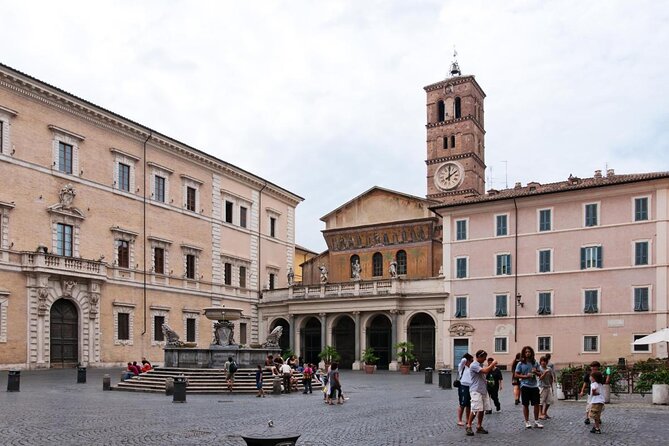
- Perfect viewpoints for skyline shots: Parco Savello, Piazza dei Cavalieri di Malta keyhole views, and Garibaldi’s terrace
- A sweep through Roman life: baths, circus racing, emperors’ monuments, and the hill made from broken amphorae
- Small group limit: up to 20 participants keeps conversations possible
- Snug car fit matters: there’s a weight limit, and the ride involves getting in and out of a tiny vintage vehicle
A vintage Fiat 500 is the right kind of fast in Rome
Rome has a way of wearing you down. Streets go up. Lines get long. And somehow you end up spending your best light-time inching along behind buses. This tour flips the script.
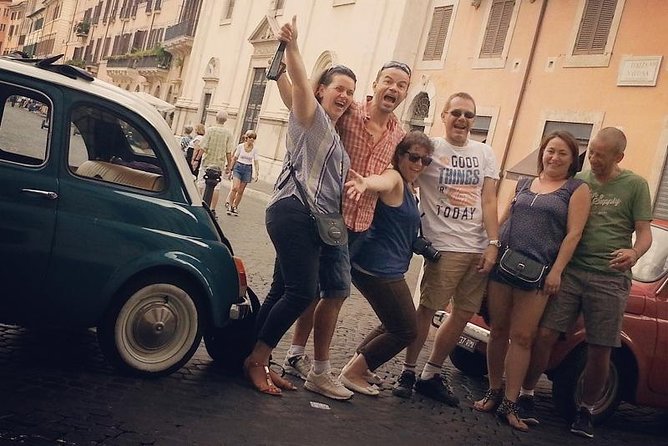
You ride in a chauffeured, vintage Fiat 500, which does two things at once. First, it lets you slip through tight neighborhoods and narrow streets where regular cars can feel awkward. Second, it gives you a fun reason to pay attention while you’re moving, not just when you stop.
The tour also has a “Rome-by-ear” rhythm. Instead of reading history from a wall, you hear it while the city glides by. Expect quick context, practical photo tips, and a guide who helps you interpret what you’re seeing.
You can also read our reviews of more tours and experiences in Rome.


Getting there: the Via Labicana meetup and small-group convoy
Your tour starts and ends at Via Labicana, 125 (00184 Roma RM). There’s no long back-and-forth hopping between pickup points. You show up, get in your car group, and roll.
Plan on a shared experience with up to 20 travelers, and that number matters more than you think. With a smaller max group, you’re less likely to feel swallowed by crowd-control chaos. You also get chances to ask questions, even if the tour is still moving.
One more reality check: this is a convoy-style setup. That means you’re not just sitting still on one spot and waiting. You’re traveling as part of a small cluster, which is exactly what makes the schedule work—several stops in one 3-hour window.
Also, the Fiat is a tiny classic. There are no safety belts in the back seats and no airbags in the car. If you’re sensitive to that, this matters more than whether the itinerary sounds exciting on paper.
Caracalla in 20 minutes: baths, libraries, gyms, and theater
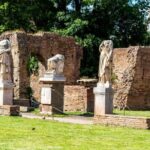
Caracalla is one of those places that makes Rome feel like a whole civilization by itself. The stop is built around ruins of massive Roman baths described as among the biggest and more sophisticated of their kind in ancient Rome.
You’re not aiming for a slow, all-day “read every inscription” visit here. You’re getting an overview fast: cold and hot baths, plus the idea that the complex wasn’t just for washing. Think libraries, gym space, theater areas, seminar rooms, gardens, and fountains. The point is scale and variety.
Why this works on a short tour: Caracalla gives you a mental model of how Romans organized daily life. When you later see arenas and public spaces, the story clicks into place.
What to keep in mind: the stop is around 20 minutes, so arrive ready to absorb the big shapes and highlights rather than expect full immersion.
Piazza dei Cavalieri di Malta: the famous keyhole view
Next comes one of Rome’s most famous visual tricks: the keyhole view associated with St. Peter’s Church. The appeal isn’t just that you see a famous landmark. It’s that you see it framed like a composition, with a line of sight that lines up views of multiple countries.
The payoff is obvious when you’re standing there with your camera. You’ll want a few tries because a tiny change in your position changes the framing. The tour also leans into this with the “grab photos from the best angle” vibe.
Why I think it’s worth a stop even if you’ve seen Rome photos before: most keyhole pictures look like Instagram luck. Here, you get the reason it works, plus a guided reminder of where to stand and how to aim.
Parco Savello: oranges, lovers, and an optical illusion

Parco Savello (also nicknamed the Garden of the Oranges) is a viewpoint stop with a story behind it. You get an amazing panoramic look over Rome, and the highlight is an optical illusion that makes St. Peter’s Church look like it’s in the right spot at the right time.
This is the kind of stop that feels short on paper, but it’s great in practice. You’re not walking a mile. You’re standing in a garden-like spot with a wide view and a clear mission: get the perspective, then enjoy the scene.
You’ll also hear the romantic nickname—Garden of the Lovers. Whether you’re traveling as a couple or solo, the atmosphere is the point. It’s a quick break from city noise, and it makes the rest of your photos look more layered than simple street shots.

Trastevere from the inside: tiny streets and fast photo moments
Trastevere is where Rome starts to feel like it’s living in the present. On this tour you’re not just looking from far away. You get whizzed through tiny streets aboard the Fiat 500, which is exactly the kind of movement that keeps Trastevere from becoming a checklist.
This is a good time to think about what you want from Trastevere photos. Narrow lanes can produce magical framing if you’re quick. The tour’s style encourages short stops and quick capture, so you’ll likely get a few chances to step out, pose, and then get back to the driving rhythm.
Why it’s valuable: Trastevere is easy to approach wrong on your own. You can end up stuck in the busiest stretches. This tour helps you see the area in motion, which feels more like how neighborhoods actually function.
Piazzale Giuseppe Garibaldi: a terrace view with big-city layers
Then you’re up at Piazzale Giuseppe Garibaldi, often described as one of the best panoramic terraces for Rome.
What makes this stop special is the mix of sightlines. You can see major anchors like the Colosseum, the Pantheon, and the Altare della Patria. You’ll also catch those layers of church domes that give Rome its signature skyline.
This is also where a “photo mission” approach pays off. Instead of wandering and hoping you find the view, you go with a plan. You’ll know what to look for, which makes the panorama feel more satisfying.
Circus Maximus: where chariots once turned chaos into spectacle
At Circus Maximus, you’re looking at the site of ancient chariot racing. The tour framing helps you understand scale: this was built centuries before the Colosseum and was described as the biggest chariot-racing venue of the ancient world, with the energy of 250,000 spectators in its heyday.
You also get context for why it still feels alive. The space has been used for modern rock concerts, and that mix of past and present adds something to the stop.
Expect another quick stop. You’re not touring a museum gallery here. You’re learning how to read the site so it looks like what it was, not just what’s left.
Porta San Paolo and the “Egyptian pyramid” story
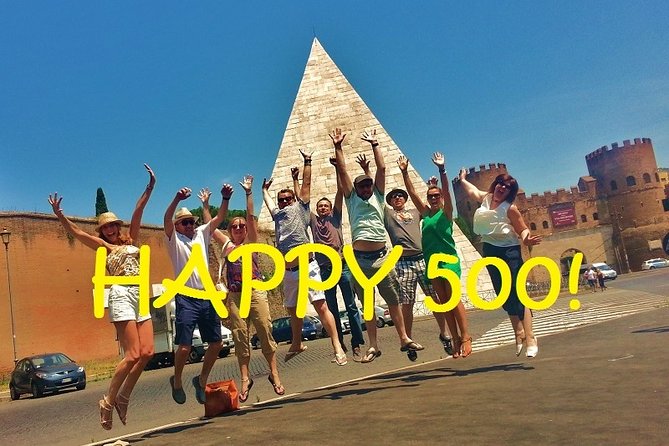
Porta San Paolo is a clever shift from Roman and imperial grandeur into something more unusual. You’ll hear about an ancient Egyptian pyramid in Rome: the 4th biggest Egyptian Pyramid, built around 18 BCE, tied to the tomb of Gaius Cestius.
This is one of those “only Rome” facts that makes you feel like the tour earns its title. Even if you’ve done big-name sights before, the pyramid story widens your mental map of the city.
You’ll likely just take it in and snap a few photos, then continue. That brevity works here, because the value is the story and the surprise factor.
The Colosseum stop: the right expectations for a short visit
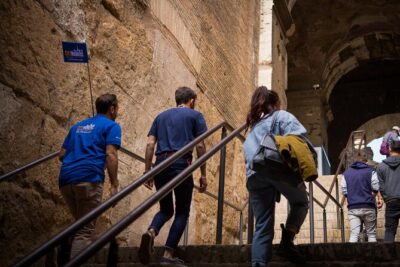
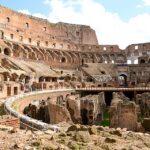
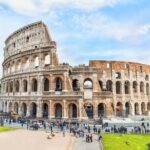
Colosseum is stop number eight, and you’ll circle one of the most recognizable ancient arenas in the world. The tour highlights its construction around 80 CE and the grim entertainment mix: gladiator fights, executions, and naval-style combats.
But here’s how to keep your expectations realistic. The stop is listed as 20 minutes, and not every group experience matches a fantasy of lingering at every angle. One write-up specifically said the Colosseum time wasn’t what was implied, so if you care deeply about museum-level time at the Colosseum, this tour may feel tight.
What this tour does best at the Colosseum: it helps you connect what you’re seeing with what happened there, so the structure doesn’t become just a postcard. You’ll leave understanding the context, even if you don’t spend hours inside.
Via Galvani and Monte Testaccio: the hill made from broken vases
The final stop leans into Rome’s “built from everyday leftovers” engineering. At Via Galvani, you’ll hear the story of an artificial hill made from broken pottery used for transporting things like olive oil, fish sauce, and wine.
Over centuries, a dump became a hill about 40 meters high with an estimated circumference of 700 meters. The numbers are wild: around 50 million vases contributed to the mound.
Why I like this as a finale: it changes how you think about ancient cities. You’re not just seeing marble power and imperial monuments. You’re seeing logistics and industry. It’s Roman history with fingerprints you can imagine.
It also gives your tour a satisfying ending point. You go from sight-seeing to a kind of mind-blown “wait, that’s what that is?” moment.
Price and value: $205.67 for a 3-hour Rome sampler with perks
At $205.67 per person for about 3 hours, this isn’t a budget-only activity. So the question isn’t whether it’s expensive. It’s whether it buys you something you can’t easily get another way.
Here’s what you’re paying for, and why it can feel like good value:
- Transportation and a guide in one: you get narration while you move between very different parts of the city
- Short-stop planning: the stops are grouped so you can cover a lot without commuting your whole day
- Included light refreshments: small, but it helps keep the energy up
- Free photo shooting with your phone or camera: this is a real perk because you’ll get better angles and less awkward self-timer hopping
The price also makes sense when you consider the target vibe. This is not a “stand and listen for hours” tour. It’s a fast, fun sampler that gives you strong Roman context while also letting you play photographer.
Who should skip it? If you want a deep, ticket-heavy day with long stays at major sites, you’ll likely find the time short. This tour is for seeing and learning at speed.
Who this tour suits best (and who should reconsider)
This fits best if you:
- Want a fun, efficient way to see multiple areas without exhaustion
- Like photo-friendly viewpoints and tight photo windows
- Enjoy hearing historical context while driving through neighborhoods
- Are traveling with teens, since multiple people noted their kids had fun even with the fast pace
You might reconsider if:
- You need long time inside major monuments
- You’re uncomfortable with a vintage car setup, especially since back seats have no safety belts and no airbags
- You want hotel pickup. The stated meetup is Via Labicana, and not everyone gets curbside convenience
Should you book this Fiat 500 tour?
If your goal is a 3-hour Rome highlights-and-stories run that feels personal, I think it’s a strong yes. The guide-led format, the photo help, and the mix of baths, viewpoints, and oddball Roman facts like the Egyptian pyramid and Monte Testaccio make it more than a simple sightseeing loop.
Book it when you want your first couple days in Rome to feel organized. Skip it if you’re chasing long stays, deep museum time, or fully flexible on-the-ground wandering.
FAQ
FAQ
How long is the Fiat 500 tour?
The tour lasts about 3 hours.
How much does the tour cost?
The price is listed as $205.67 per person.
Is the tour offered in English?
Yes, the experience is offered in English.
How many people are on the tour?
The tour has a maximum of 20 travelers.
Where does the tour start and end?
It starts at Via Labicana, 125, 00184 Roma RM, Italy and ends back at the meeting point.
Are tickets or admission fees included for the stops?
Admission tickets are listed as free for the stops in the itinerary.
What’s included in the tour besides the guide?
Light refreshments are included, and there is free photo shooting using your cellphone or camera.
Do I choose a departure time?
Yes, you can choose between morning or afternoon departure times.
What is the cancellation window?
You can cancel up to 24 hours in advance for a full refund.