REVIEW · ROME
Trastevere & Campo de’ Fiori Street Food Tour, Eat Like a Local
Book on Viator →Operated by Hili Travel s.r.l. · Bookable on Viator
Food hits different on foot. This Trastevere and Campo de’ Fiori street-food tour strings together iconic neighborhoods, classic viewpoints, and a handful of tastings, all in about 2.5 hours. You start by Fontana di Piazza San Simeone and finish near Piazza di San Giovanni della Malva, with a local guide leading the pace.
I especially like two things: the small-group size (max 14) means the guide can actually talk with you, not just at you. I also like the food plan, since food and gelato are included and the stops line up with real Roman everyday favorites, with guides like Silvia, Leonardo, and Daniel praised for keeping things fun and specific.
One consideration: the format is built for a walking “taste and learn” experience, not a long, classroom-style lesson on Roman food culture. If you’re after lots of deep food-history details and tons of stops, you may feel a bit underfed on the education side.
In This Review
- Key things worth knowing before you go
- Piazza di San Simeone start: where the pace feels local
- Via del Governo Vecchio: the street that teaches you to look
- Campo de’ Fiori: one of Rome’s oldest market stages
- Ponte Sisto: your chance to see Rome from the river
- Trastevere: where the streets feel like stories
- Santa Maria in Trastevere and the fountain legend that sticks
- What you eat and drink: Roman street classics plus gelato
- Guides on this tour: why personal attention is the secret ingredient
- Walking tour reality check: comfortable shoes are not optional
- Price and value: is $53.23 worth it?
- Who should book (and who might want a different format)
- Should you book the Trastevere and Campo de’ Fiori street food tour?
- FAQ
- How long is the Trastevere & Campo de’ Fiori Street Food Tour?
- How much does it cost?
- What language is the tour offered in?
- What’s included, and are drinks part of the price?
- Where does the tour start and end?
- Is it suitable for celiacs?
- How many people are in a group?
Key things worth knowing before you go
- Small group, real attention: Guides can tailor the flow, with names like Silvia, Leonardo, and Daniel showing up repeatedly in the best-feedback stories.
- Market-to-neighborhood route: You connect Campo de’ Fiori to Trastevere, so the tastings sit inside a sense of place.
- A skyline moment at Ponte Sisto: The bridge stop gives you a classic view toward St. Peter’s and Rome’s rooftops.
- Legend talk at Santa Maria in Trastevere: You’ll hear the 8th-century fountain tradition and a 1471 map detail tied to Pietro del Massaio.
- Included gelato, drinks extra: You’ll get gelato as part of the tour, but drinks are not included.
Piazza di San Simeone start: where the pace feels local
You begin at Piazza di San Simeone, right by the fountain. It’s a good way to kick off because it gives your guide an easy, visible meeting spot and lets you settle into the walking rhythm fast. Expect the group to move at a human pace, not a rushed line.
This first stretch matters more than it sounds. Rome can feel like one big maze if you arrive cold. A guided start helps you get your bearings early—especially when the route immediately turns into narrow streets rather than staying on big tourist arteries.
You can also read our reviews of more tours and experiences in Rome.


Via del Governo Vecchio: the street that teaches you to look
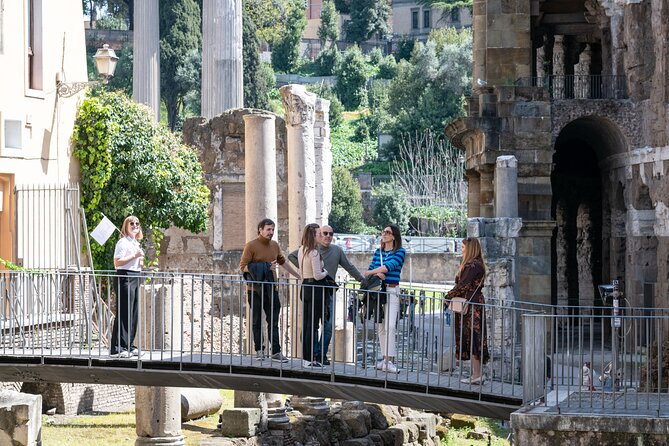
One of the route highlights is the walk along Via del governo Vecchio. The point here is not just scenery. It’s the feeling of old Rome in motion—tight lanes, small storefronts, and that sense that you’re seeing how the city actually functions day to day.
This is also where a good guide makes a difference. In well-rated departures, the guide tends to explain what you’re seeing and why it matters, instead of listing names with zero context. If you care about street-level Rome, this segment is part of the value.
Campo de’ Fiori: one of Rome’s oldest market stages
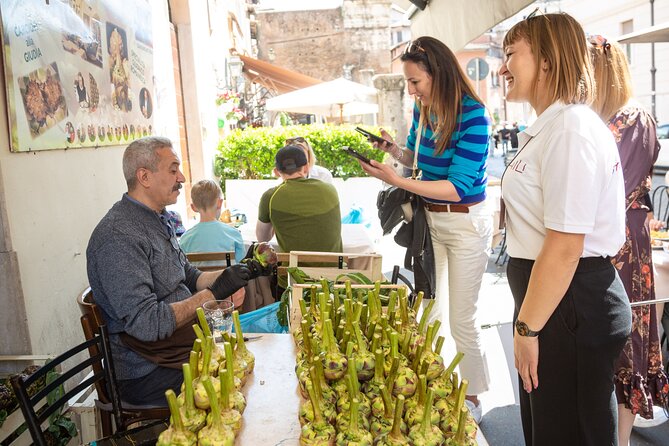
You spend time at Campo de’ Fiori, home to what’s described as the oldest market in Rome. The market atmosphere is the real draw: it’s the kind of place where food feels tied to routines, not just sightseeing.
Even if your timing doesn’t perfectly match peak morning energy, the area itself is worth it. Campo de’ Fiori is a built-in contrast to the quieter corners of Trastevere. It’s also a natural place to talk about how Italians shop, snack, and keep meals flexible.
From the food angle, this stop often sets up the tastings. One featured guide flow included condiments from the market area before moving into heartier bites later. That sequencing makes sense: you get a taste of the ingredients and flavors first, then you graduate into the heavier classics.
Ponte Sisto: your chance to see Rome from the river
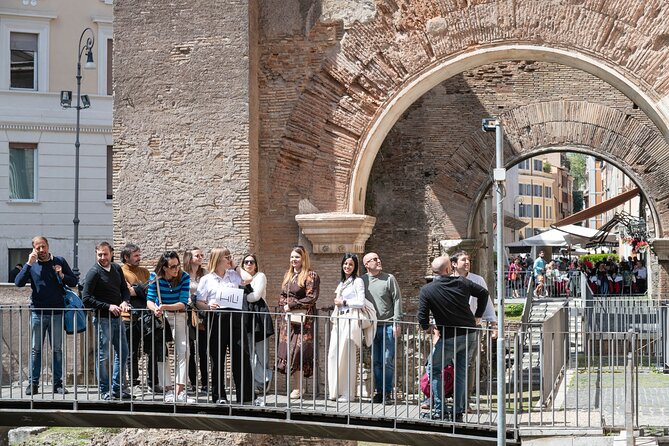
Next comes Ponte Sisto, the bridge that connects the historic center with Trastevere across the Tiber. It’s popular because it’s photogenic, yes, but more importantly, it gives you a skyline perspective that feels like Rome on pause.
The key viewpoint noted for this stop is toward St. Peter’s and the cityscape beyond. When you’re walking neighborhoods all evening, you need one or two “open-air” breaks to reset your eyes. This bridge stop does that without breaking the flow of the tour.
Trastevere: where the streets feel like stories
You spend time walking through Trastevere and its intricate alleys. This area sits on the west side of the Tiber, south of the Vatican, and it’s known for an authentic, long-remembered feel. People often come here to browse craft shops, small emporiums, and local-style boutiques, then linger for dinner or a night out.
I like Trastevere on a guided walk because it’s easy to get distracted when you’re on your own. The alleys look like they all lead somewhere interesting, but your route can turn into aimless wandering. With a guide, you get little payoffs: a street that explains an old tradition, a vantage point, and a few small “why this place exists” moments.
Several guides—names like Emilia, Alessandra, and Hanna show up in the best-feedback stories—are praised for mixing humor with city context. That combo matters in Trastevere, where the setting can either feel enchanting or chaotic depending on your navigation skills.


Santa Maria in Trastevere and the fountain legend that sticks
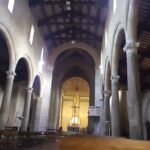
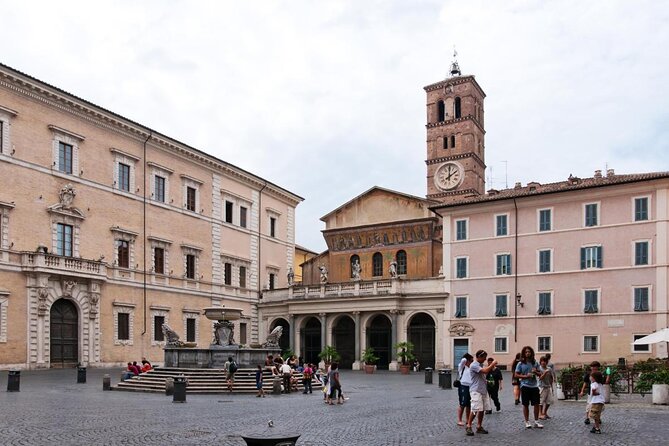
You finish with a visit around Basilica di Santa Maria in Trastevere and the fountain in Piazza Santa Maria in Trastevere area. What makes this stop memorable is the story: tradition links this fountain to the oldest fountain in Rome, with origins rumored to go back to the 8th century, even though the exact construction date is unknown.
There’s also a specific historical detail that your guide may mention: the fountain was featured in a city map from 1471, drawn by Pietro del Massaio. In that original drawing, the fountain is described as having two basins, one above the other, pouring water into the basin below.
This is one of those stops where you’ll either remember it, or you’ll forget it fast. But when a guide tells it with clarity, it turns a pretty square into a time-travel point. Even if you’re not a Roman-history person, it’s a great example of how Rome layers meaning into ordinary corners.
What you eat and drink: Roman street classics plus gelato
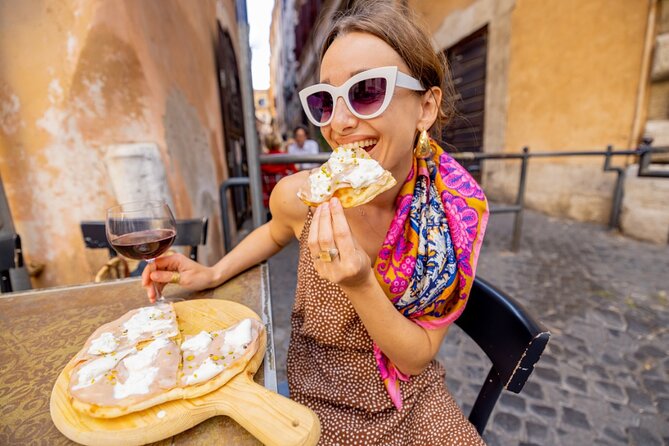
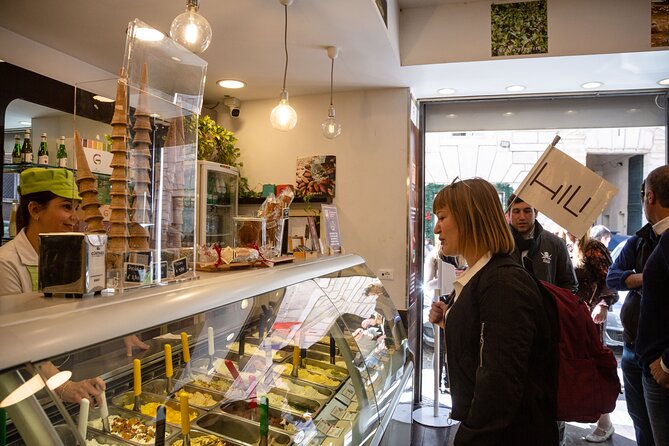
Here’s the core deal: food and gelato are included, and drinks are not. That means you should plan for water or other beverages on your own if you want them during the walk.
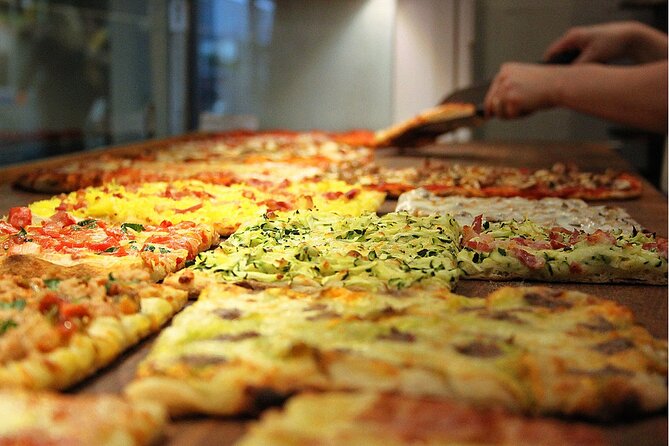
The best-rated departures also keep the tastings varied, so you don’t just repeat one type of bite. One guide flow that’s been specifically praised ran through suppli, lemoncello, Roman-style pizza in multiple flavors, pork sandwiches, maritozzi, and then gelato. Another description of a menu style included market condiments, a porchetta sandwich-style stop, pizza, and gelato, with maritozzi mentioned in at least one guide’s sequence.
If you like a tour that gives you a “walkable sampler platter” of Rome, this fits. If you want a deep dive into one single dish (how it’s made, where it originated, and why it tastes the way it does), you might feel the tour is broader than you expected.
Also note: celiacs cannot do this tour. If you’re gluten-free for medical reasons, you’ll need a different plan.
Guides on this tour: why personal attention is the secret ingredient
The biggest pattern in the strong feedback is that the guides don’t just recite. They connect. People mention guides who are friendly, funny, and willing to answer questions with real substance, not just a script.
Names that come up often include Silvia, Emilia, Leonardo, Daniel (and Daniele), Alessandra, Alex, Gabrielle, Anna, Hanna, Matt, Tiziana, and Fiametta. Some of the standout traits mentioned with these guides include:
- swapping in extra small sights during the walk, like short detours you might miss on your own
- adding local restaurant recommendations for after the tour, so you can build the rest of your eating plan
- adjusting the pacing and storytelling for smaller groups, including days where the group was especially small
- bringing a specialty background, such as archaeology, which shows up as extra detail when the tour touches older sites
If you’ve had disappointing tours in other cities, the difference here is simple: the guide is part educator, part friend. You’ll feel that in the way the walk is paced and in how quickly you can ask questions about what you’re eating or seeing.
Walking tour reality check: comfortable shoes are not optional
This is a walking tour, and the footwear advice is spot-on: wear comfortable shoes. Rome stone can be sneaky, and after a couple of hours, your feet will tell you the truth.
The route also mixes outdoor walking with stops where you pause and look around. That’s why the timing feels right: you get food breaks, plus sight breaks, without a long sit-down component.
Good weather matters too. The experience requires it, and if conditions are poor you’ll be offered a different date or a full refund. So if you’re traveling in a rainy stretch, consider planning your Rome walking activities with flexibility.
Price and value: is $53.23 worth it?
At $53.23 per person for about 2 hours 30 minutes, the value question depends on how you like to travel. I think it makes sense if you want:
- a guided route through multiple neighborhoods
- included food tastings and gelato
- small-group attention
Because drinks are not included, your total spending may rise a bit if you like a sit-down beverage during the evening. But even with that, you’re paying for your guide time and the guided “try a bunch of things” structure.
What helps justify the price is that the tour isn’t only about food. You’re also getting meaningful stops tied to actual places: market area Campo de’ Fiori, river-view Ponte Sisto, and the basilica/fountain legend area. It’s a smart way to combine eating with learning about how the city is built and remembered.
Who should book (and who might want a different format)
This tour is a strong fit if you want a classic Rome food-and-neighborhood sampler. It’s especially good for people who:
- like walking with stops rather than sitting in one spot
- want a local guide to point you toward places to eat later
- enjoy humor and conversation, not just facts
It may be less ideal if you’re expecting a long, highly detailed food culture seminar with lots of stops and heavy explanation every step. One person felt the education portion was lighter than expected. That doesn’t make the tour bad, it just means you should match the tour style to your expectations.
Should you book the Trastevere and Campo de’ Fiori street food tour?
Yes, if your goal is to get a satisfying first pass at Roman street flavors in the neighborhoods people actually talk about, with gelato included and a guide who tends to make the walk feel personal. The route hits the market area, a river viewpoint, and Trastevere’s alley magic, then lands you at Santa Maria in Trastevere with a fountain story that’s specific enough to remember.
Book it early in your trip if you like using the tour as a springboard for restaurant ideas. If you’re celiac, skip this one since it can’t be done for that dietary need. And if you want deep, dish-by-dish food anthropology, consider adding a separate, more focused food or history experience.
FAQ
How long is the Trastevere & Campo de’ Fiori Street Food Tour?
The tour runs for about 2 hours 30 minutes.
How much does it cost?
The price is $53.23 per person.
What language is the tour offered in?
The tour is offered in English.
What’s included, and are drinks part of the price?
Food and gelato are included. Drinks are not included.
Where does the tour start and end?
It starts at Piazza di S. Simeone and ends at Piazza di San Giovanni della Malva.
Is it suitable for celiacs?
No. This tour cannot be done for celiacs.
How many people are in a group?
The tour has a maximum group size of 14 travelers.