REVIEW · ROME
Vatican City: Sistine Chapel, Museums, Basilica Private Tour
Book on GetYourGuide →Operated by Crazy4rome srls · Bookable on GetYourGuide
The Vatican deserves a plan. This private tour strings together the Vatican Museums, the Sistine Chapel, and St. Peter’s Basilica in one smooth, guided half-day route. You’ll see major landmarks that most visitors miss when they wander, including the Cortile della Pigna and the Raphael-painted apartments.
I especially like two things. First, the itinerary targets high-impact rooms, not random corners of the galleries, so you leave with real context. Second, a private guide helps you make sense of what you’re seeing—down to why certain artworks and courtyards matter.
One heads-up: four hours moves fast in a place that is crowded by nature. If you want to linger for long stretches or you’re easily overwhelmed, you may feel a bit rushed.
In This Review
- What I think is smart about this tour (and what to watch)
- Key highlights to care about
- A 4-hour plan for the Vatican Museums, Sistine Chapel, and St. Peter’s Basilica
- The time reality: it’s short, so the guide matters
- Meeting near TMark Hotel Vaticano and getting inside fast
- Bring what you need before you get to the door
- Vatican Museums highlights: Cortile della Pigna, Egyptian collections, and ancient galleries
- Cortile della Pigna: the pine cone courtyard moment
- Ancient objects you can actually picture
- Raphael’s rooms, Julius II connections, and the Borgia contrast
- Entering Raphael-painted apartments for Julius II
- The Borgia Pope Alexander VI private chambers
- Vatican weaving rooms: maps, woven wall hangings, and the point of it all
- Why these rooms work on a short schedule
- The Sistine Chapel: what to expect in 30 minutes
- Michelangelo’s ceiling and the Last Judgment experience
- Expect quiet rules and crowd pressure
- St. Peter’s Basilica and St. Peter’s Square: scale, art, and spirituality
- Don’t miss the Pietà and the Bernini Baldachin
- Finishing with St. Peter’s Square
- Price and logistics: what you’re paying for (and what you’re not)
- What’s not included
- Headsets for larger groups
- Who this private tour suits best
- Who should consider a different approach
- Notes to make your day smoother
- Should you book this Vatican City private tour?
- FAQ
- How long is the Vatican tour?
- Where do I meet the guide?
- What’s included in the tour?
- Is the Sistine Chapel included?
- Does it include St. Peter’s Square?
- What languages are available for the guide?
- Do I need to bring any identification?
- What should I wear (and what is not allowed)?
- Is the tour wheelchair accessible?
- Is there a cancellation option?
What I think is smart about this tour (and what to watch)
I also like the practical details built into the experience: live guiding in multiple languages, wheelchair accessibility, and the option to use headsets for larger private groups (more than 5 people). You get a rhythm: guided time inside, then a calmer moment at St. Peter’s Square to reset before you wrap up.
The main consideration is not the walking so much as the building rules. You’ll need ID (passport or ID card), and you can’t wear shorts, short skirts, or sleeveless shirts. That dress code is strict, and it matters because the Sistine Chapel and Basilica are not place for last-minute fixes.
Key highlights to care about
- Skip-the-line entry to the Vatican Museums helps you start with momentum instead of queuing.
- Cortile della Pigna: the pine-cone fountain tied to ancient myth and the Temple of Isis.
- Egyptian Museum artifacts: a clear taste of Ancient Egypt inside Vatican collections.
- Raphael and Julius II: the apartments where Raphael painted for Pope Julius II.
- Borgia Pope Alexander VI’s chambers: a darker counterpoint to the Renaissance brightness.
- St. Peter’s Basilica: major works like Michelangelo’s Pietà and Bernini’s St. Peter’s Baldachin.
You can also read our reviews of more tours and experiences in Rome.
A 4-hour plan for the Vatican Museums, Sistine Chapel, and St. Peter’s Basilica
This tour is built as a tight arc through Vatican City’s biggest emotional moments. In four hours, you go from the sprawling Vatican Museums to the hush of the Sistine Chapel and then into the sheer scale of St. Peter’s Basilica. It’s the kind of route that works best when you want to see the essentials and understand what they are.
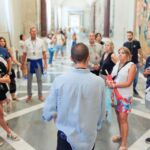
You don’t just get a ticket and a map. You get a guide, and that changes the experience. In the Museums, paintings and sculpture can feel like a blur. With guidance, you start noticing patterns: symbols, religious references, historical shifts, and why certain rooms were designed the way they were.
The time reality: it’s short, so the guide matters
Four hours sounds “half-day,” but inside the Vatican, time disappears quickly. You’ll move through galleries, cover big highlights, and still stop long enough to actually process what you’re looking at. If you love museum marathons, you’ll likely want a second visit later.
But if you only have one shot (and most people do), this is a smart compromise: you see the big works and the stories behind them, without trying to cover everything.
Meeting near TMark Hotel Vaticano and getting inside fast
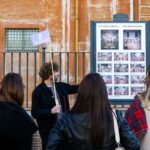
You meet at the entrance of the Vatican Museums, Viale Vaticano 99, at the exit of TMark Hotel. That location matters because it places you at the right threshold early, with less wandering time.
The standout advantage here is the skip-the-line ticket for the Vatican Museums. The Vatican is crowded in a way that can crush even good plans. Skip-the-line doesn’t make the day empty, but it can reduce the most frustrating part: waiting with no progress.
Bring what you need before you get to the door
Bring a passport or ID card. The tour notes this clearly, and I treat it like a must-do. Also plan for dress-code compliance from the start. Shorts, short skirts, and sleeveless shirts are not allowed—if you show up dressed wrong, you’ll lose time dealing with it.

Vatican Museums highlights: Cortile della Pigna, Egyptian collections, and ancient galleries
You’ll spend about two hours in the Vatican Museums with a guided visit. This is where the tour earns its keep. The Museums are enormous, and trying to “do it all” is the fastest way to end up exhausted and oddly unmoved.
Instead, your guide takes you through museum zones that connect to the bigger story of Vatican collecting: ancient worlds, Renaissance ambition, and art made for power and worship.
Cortile della Pigna: the pine cone courtyard moment
One of the most memorable stops is the Cortile della Pigna—the Pine Cone Courtyard. You’ll see the pine cone fountain that once stood next to the Temple of Isis. It’s one of those details that makes the Vatican feel less like a museum building and more like a layered history engine: ancient religion, later reuse, then Vatican grandeur.
You also get the feel of the Cortile Ottagono, the octagonal courtyard. A shape like that doesn’t happen by accident. It’s the kind of architectural choice that tells you this place was always about display.
Ancient objects you can actually picture
Next, you’ll continue through galleries featuring antiquities, including items from Ancient Egypt in the Egyptian Museum. Even if you’re not an Egypt specialist, it helps to see those pieces in context, because you start noticing how the Vatican presented whole civilizations to visitors over centuries.
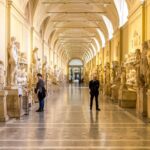
You’ll also see a stop for the Gallery of Candelabra, including second-century candelabra from Otricoli. These aren’t just decorative. They give you a sense of scale—how ancient art filled public and ceremonial spaces.
Raphael’s rooms, Julius II connections, and the Borgia contrast
After the early museum highlights, the tour shifts into the Renaissance-and-beyond chapters. You’ll visit rooms where the Vatican’s political and artistic power become obvious.
Entering Raphael-painted apartments for Julius II
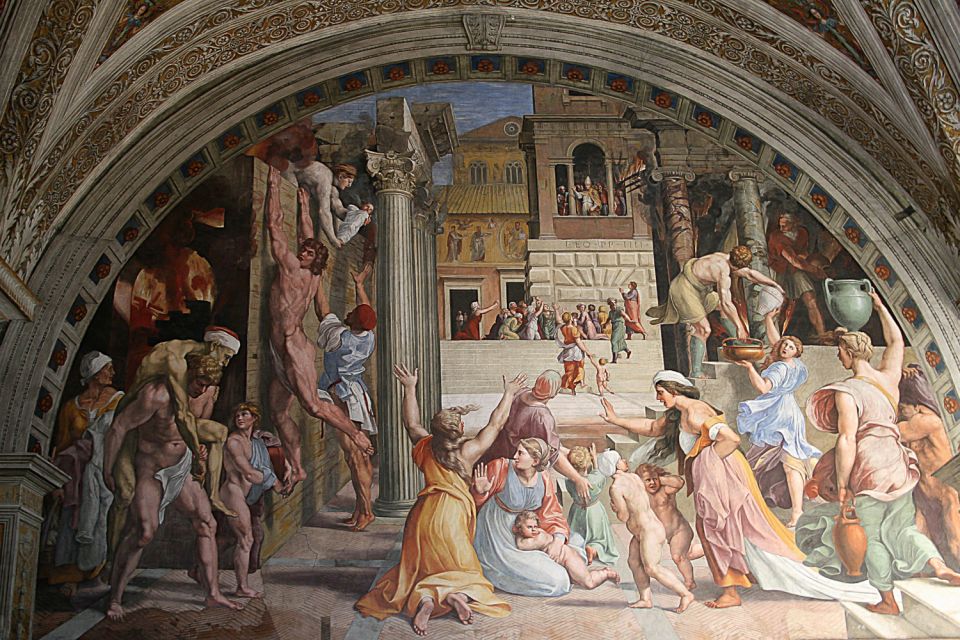
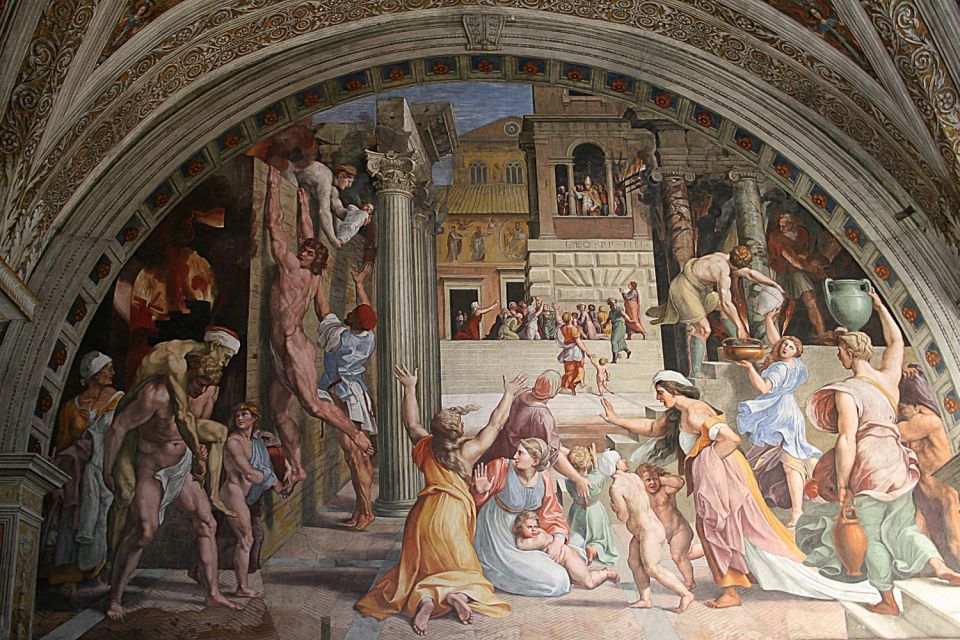
You’ll go into the apartments Raphael painted for Julius II. This is a major draw because you’re not viewing Renaissance art at arm’s length behind glass. You’re stepping into the spaces created to communicate status, belief, and legitimacy.
A guide helps here. With the right commentary, murals stop being “pretty ceiling stuff” and start turning into visual messaging. You’ll understand why the themes mattered to a pope and what the art was trying to persuade you to feel.
The Borgia Pope Alexander VI private chambers
Then comes the tonal shift: the private chambers of the Borgia Pope Alexander VI. That’s useful, because it prevents the visit from becoming one-note Renaissance glow.
You end up with a more honest sense of Vatican history as lived politics. The Vatican isn’t only saints and skylight light. It’s also human ambition, rivalry, and systems of influence—dressed in art.
Vatican weaving rooms: maps, woven wall hangings, and the point of it all
The tour also includes rooms such as the Gallery of Maps. Here, you’re seeing historic ideas about the world, not just geography. It’s the kind of visual history that shows how people understood power, distance, and discovery in earlier centuries.
You’ll also visit the Gallery of woven wall hangings created by Flemish artists connected to Raphael’s students. I like this stop because it reminds you that Vatican art isn’t only marble statues and painted ceilings. It includes crafted textiles and the logistics of producing art for display at scale.
Why these rooms work on a short schedule
If you try to skip these “secondary” galleries, you miss the connective tissue. The Museums can otherwise turn into a string of famous names. Stops like Maps and the woven works fill the gaps so the big masterpieces don’t feel random.
They also break up the pace. When you’re moving for hours, variety matters. It keeps your attention from fatiguing.
The Sistine Chapel: what to expect in 30 minutes
The Sistine Chapel portion is guided for about 30 minutes. That’s short, but it’s also the right length for most people. The space demands attention, and you won’t be “lost in the weeds” if your guide sets you up with where to look and what to notice.
Michelangelo’s ceiling and the Last Judgment experience
Inside, you’ll see Michelangelo’s frescoes and ceiling painting, plus the Last Judgment. This is the big emotional ceiling—literally. The key is how you view it.
A good guide helps you look in the right order and interpret the symbolism without turning it into a textbook. You’ll get a sense of why these works are so associated with the Vatican identity, and how they connect to what came before them in the Museums.
Expect quiet rules and crowd pressure
The chapel is one of the most controlled-feeling rooms you’ll visit. Even with guidance, it can be crowded. So keep expectations realistic: you’re there for a concentrated look, not a private meditation session.
St. Peter’s Basilica and St. Peter’s Square: scale, art, and spirituality
Next up is St. Peter’s Basilica with a guided visit of about one hour. Then you’ll spend about 30 minutes at St. Peter’s Square.
This is where the tour changes again—from art-as-collection to art-as-worship. The Basilica is enormous, and it can feel like sensory overload if you don’t understand what you’re seeing. A guide gives you anchors: the major works and what they represent.
Don’t miss the Pietà and the Bernini Baldachin
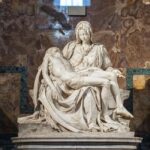
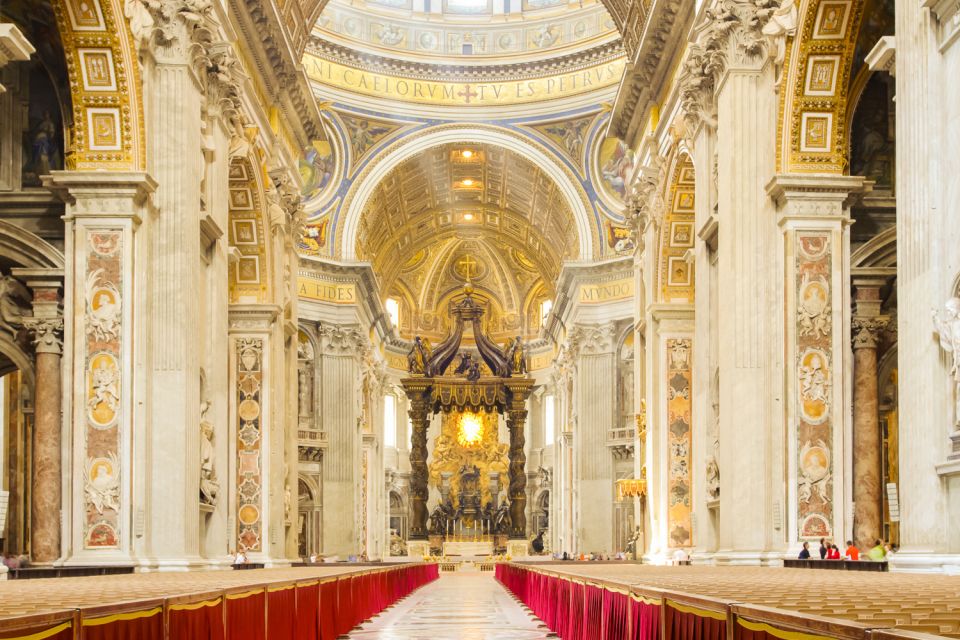
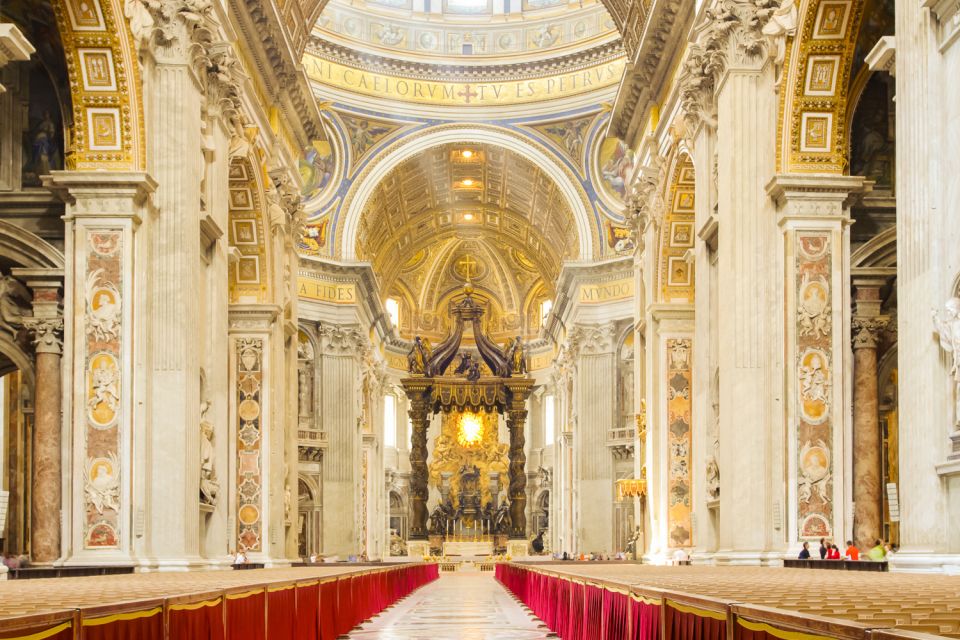
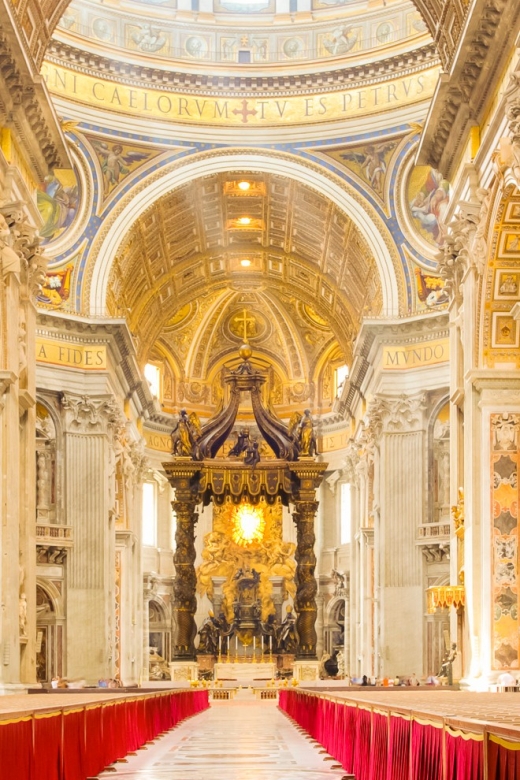
You’ll discover major treasures inside, including Michelangelo’s Pietà and Gian Lorenzo Bernini’s St. Peter’s Baldachin. Those two alone are worth the hour, because they represent different approaches to sculpture and storytelling.
The Basilica’s power isn’t only artistic. It’s also spatial. Standing in there, you understand why this is not just a museum stop.
Finishing with St. Peter’s Square
Ending with time at St. Peter’s Square lets your brain catch up. You leave the Basilica with a quieter reset point and a final view of the setting.
It’s a nice close, because you can take in the geometry and the scale outside without the same interior crowd intensity.
Price and logistics: what you’re paying for (and what you’re not)
Price is listed at $717.06 per group up to 1. That’s a private-tour price point, and the value comes from three pieces combined:
- Skip-the-line Vatican Museums entry
- Guided access to the Museums and Sistine Chapel
- Guided visit to St. Peter’s Basilica
That package matters because the most expensive “cost” in the Vatican is time wasted waiting. The skip-the-line ticket helps you protect your tour hours.
What’s not included
Hotel pickup and drop-off are not included. Food and drinks aren’t included either. So plan on handling your own pre- and post-tour needs around the Vatican area.
Headsets for larger groups
If your private group is more than 5 people, headsets are necessary and available at €3 per person. If you’re a small group, you may not need them—but it’s good to know the plan is set up for clear audio.
Who this private tour suits best
This tour is a strong match if you:
- Want the Vatican highlights in one shot without building a self-guided route
- Prefer context while you’re moving through major rooms
- Have limited time in Rome and want to protect it
- Care about accessibility support, since the tour is listed as wheelchair accessible
It can also work well for families, since a private guide can adjust pace and attention. If someone in your group has health constraints, the private structure can help you slow down when needed rather than being dragged along by a crowd flow.
Who should consider a different approach
If you want to do a “stay all day and chase every masterpiece” Vatican strategy, four hours may feel too short. This is a highlight route. You’ll get a lot, but you won’t get everything.
Notes to make your day smoother
A few practical ideas that keep this tour from feeling like a sprint:
- Dress for the Vatican rules before you leave your hotel. You don’t want to improvise.
- Bring a form of ID because it’s explicitly required.
- Keep your expectations aligned with guided highlights. You’ll cover key spaces like Cortile della Pigna, Raphael’s rooms, and the chapel, but you’re not touring every gallery.
- Wear comfortable shoes. You’ll be walking through multiple large museum sections in one morning/afternoon block.
Also, the meeting point guidance is specific, but meeting at the Vatican can still be a little chaotic with lots of people around. Arrive a few minutes early so you can find your guide without stress.
Should you book this Vatican City private tour?
If you want a high-return Vatican experience, I’d book it. The combination of skip-the-line, a private guide, and the three big targets—Vatican Museums, Sistine Chapel, and St. Peter’s Basilica—makes it a practical choice for most schedules.
I’d especially recommend it if you like structure. The Vatican is too big to “wing it” successfully. With this tour, you get a guided hit list that still leaves room to breathe at St. Peter’s Square.
On the other hand, if you’re the type who needs hours in one room to fully absorb it, you might feel constrained by the four-hour format. In that case, consider adding a separate slow visit later.
If you’ve only got one Vatican day, this is one of the smartest ways to turn that day into something you can remember for the right reasons.
FAQ
How long is the Vatican tour?
The tour lasts about 4 hours.
Where do I meet the guide?
You meet at the entrance of the Vatican Museums, Viale Vaticano 99, at the exit of TMark Hotel.
What’s included in the tour?
It includes skip-the-line Vatican Museums entry, admission to the Sistine Chapel, a visit to St. Peter’s Basilica, and a private live tour guide.
Is the Sistine Chapel included?
Yes. You’ll have a guided visit to the Sistine Chapel.
Does it include St. Peter’s Square?
Yes, you’ll also have a guided visit time at Saint Peter’s Square.
What languages are available for the guide?
The guide can be in Spanish, Dutch, English, French, Portuguese, German, Italian, or Russian.
Do I need to bring any identification?
Yes. You should bring a passport or ID card.
What should I wear (and what is not allowed)?
Shorts, short skirts, and sleeveless shirts are not allowed.
Is the tour wheelchair accessible?
Yes, the tour is listed as wheelchair accessible.
Is there a cancellation option?
Yes. You can cancel up to 3 days in advance for a full refund.