REVIEW · ROME
VIP Colosseum, Roman Forum & Palatine Hill & Special Access Sites
Book on Viator →Operated by Walks - Italy & Spain · Bookable on Viator
Three monuments, one fast-moving time machine. This VIP route pairs special access on Palatine Hill with reserved entry to the Colosseum, plus a guide who helps you read what you’re looking at instead of just walking past stones.
I especially like the small group size (up to 16). And I like how your guide ties the sights to real people and power—so you understand why these places mattered, not just what they looked like.
One thing to keep in mind: access varies depending on what’s open that day and what’s available at the Colosseum. So if you’re expecting one exact ground-level highlight every time, plan for the experience to be a bit flexible.
In This Review
- Key things to know before you go
- Entering the Roman Forum with context, not just ruins
- Palatine Hill SUPER Sites: how special access actually feels
- The Colosseum: reserved entry, then tier-by-tier storytelling
- What your guide is really doing (and why names matter)
- Pacing, weather, and how to prepare for real walking
- Meeting point, route flow, and where you end up
- Price and value: what your $139.13 is paying for
- Who this tour suits best
- Should you book this VIP Colosseum, Forum, and Palatine tour?
- FAQ
- What sites are included in this VIP tour?
- How long is the tour?
- Is the Colosseum entrance ticket included in the price?
- What kind of access do I get at the Colosseum?
- What does SUPER Sites at Palatine Hill mean?
- What do I need to bring for entry?
Key things to know before you go
- Small groups (max 16): less jostling and better odds of hearing your guide clearly.
- Forum first, then Palatine Hill, then the Colosseum: a logical walk through how Rome ruled, lived, and performed.
- Palatine Hill SUPER Sites are changeable: you might see places like the House of Augustus, Santa Maria Antiqua, or Domus Tiberiana.
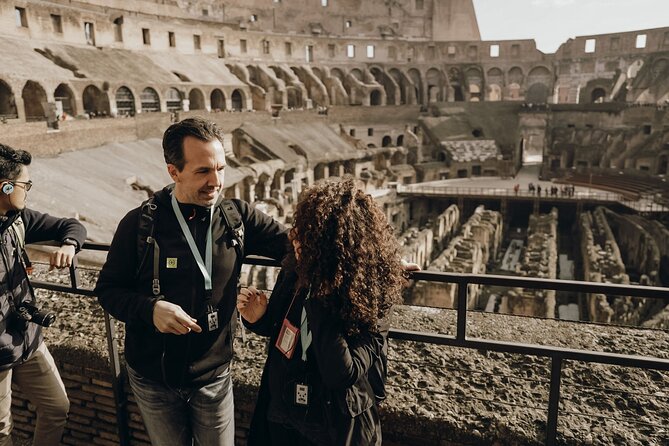
- Colosseum reserved entry + tier access: you’ll reach the first and second tiers rather than just standing outside.
- Tickets are handled for you: your package includes the Colosseum entrance ticket and the reservation fee.
- Bring ID and exact names: security checks can block entry if names don’t match your documents.
Entering the Roman Forum with context, not just ruins
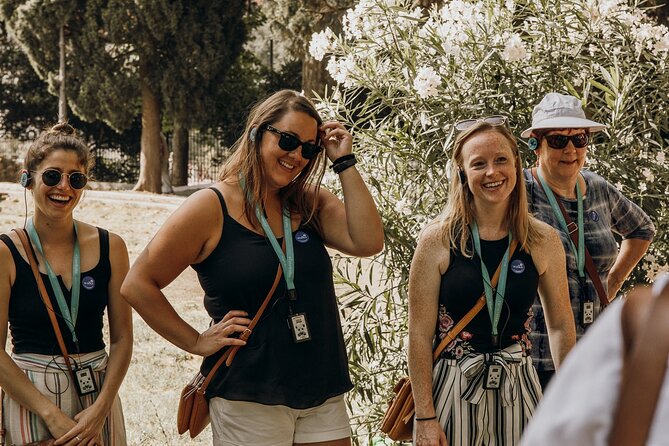
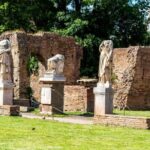
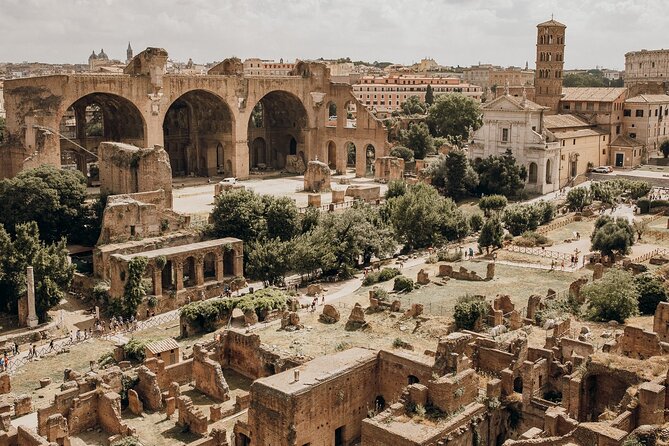
The Roman Forum is where “ancient Rome” stops being a vague label and starts feeling like a city that actually worked. You begin with a guided walk focused on daily life and the political machine behind it, while you’re on the same general ground that powerbrokers and rivals once crossed.
What I like about starting here is the way the Forum sets the stage. You learn how public space functioned: where people gathered, where influence was displayed, and how politics mixed with everyday movement. The guide doesn’t just point at surviving walls; they help you connect the dots between Roman rule and the layout of the area.
You’ll have about an hour in this stop. That’s enough time to see the highlights without turning it into a sprint, but it’s also not an open-ended wander. If you’re the type who likes to linger, go into it knowing the guide’s job is to keep you moving so you can hit Palatine and the Colosseum too.
One practical note: the Forum can be visually confusing because many structures overlap and only parts survive. A good guide helps you avoid that feeling of standing in the middle of a puzzle with half the pieces missing. Think of this stop as your orientation: once you understand what the Forum was for, the other two areas make more sense.
You can also read our reviews of more tours and experiences in Rome.

Palatine Hill SUPER Sites: how special access actually feels
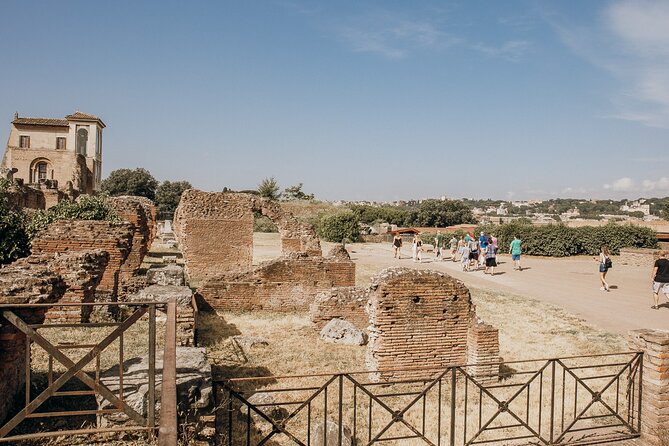
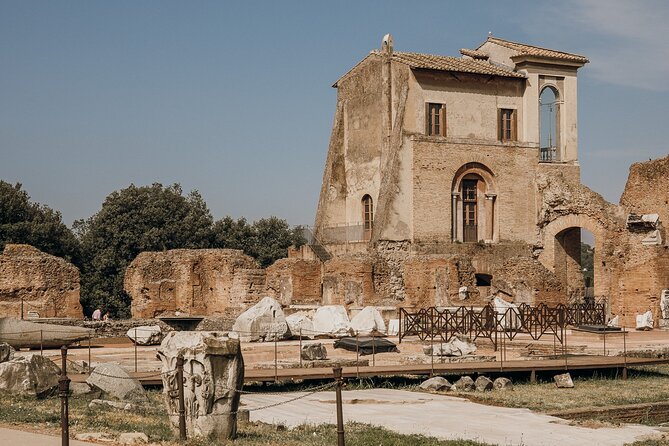
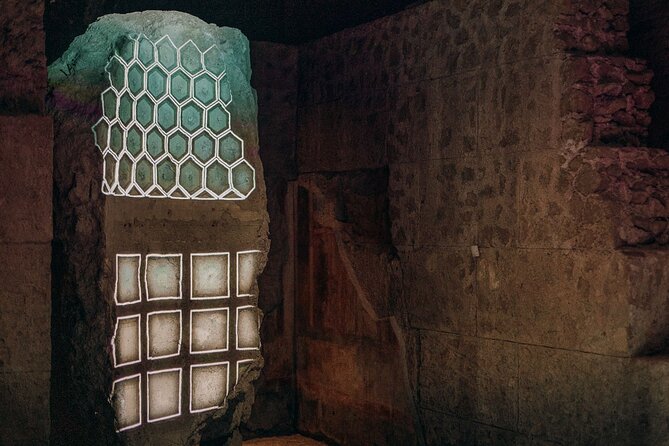
Then you move up to Palatine Hill—Rome’s “legend” hill—with SUPER Sites access that most casual tickets don’t get you. This is where the tour turns from famous sightseeing into something more rare: you’re allowed into well-preserved ancient spaces that are often closed off from typical visitor routes.
Here’s the key detail: the exact sites you visit can change based on what’s open. The possibilities listed for this tour include:
- the House of Augustus, known for frescoes that many visitors compare to the best-preserved painting scenes they’ve seen elsewhere in Italy
- Santa Maria Antiqua, an early Christian church that’s a real contrast to the Roman layers around it
- the Domus Tiberiana, described as an early imperial palace dating to the first century AD
Why this matters: Palatine is not just one monument. It’s multiple eras layered over each other. When you get special access, you’re not only looking at views from above—you’re stepping into the physical “before and after” of how Roman life evolved. You see how elite spaces were decorated and used, and how later religious life reused or transformed earlier settings.
You’ll get about an hour at this stop. That time is tight, but it’s structured. You won’t spend it hunting for information on your own or deciding what’s worth your attention. The guide is there to point you toward the parts that best explain the story—especially details that casual viewing would likely miss.
The drawback is simple: because the SUPER Sites vary day to day, your exact highlights might not match what you were hoping for. It’s not a problem with the tour itself so much as the nature of special access in a working archaeological complex. If you have a must-see (for example, a specific building name), you’ll be happier if you keep your expectations flexible.
The Colosseum: reserved entry, then tier-by-tier storytelling
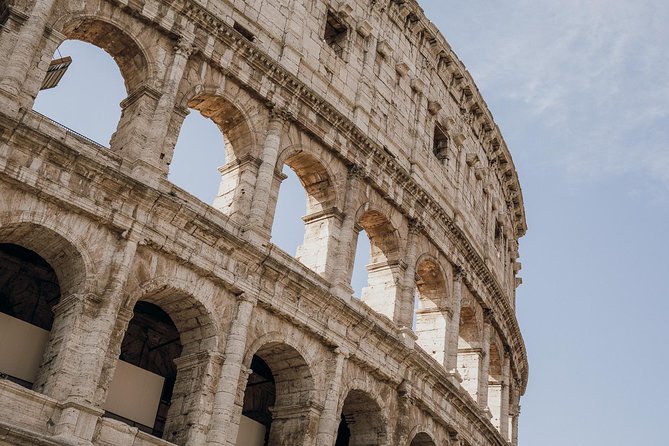
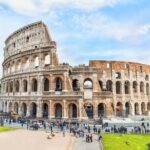
Finally, you reach the Colosseum, and this is where VIP pricing starts to make sense fast. The tour’s structure includes reserved entry and a guided route that gets you into the action areas rather than just orbiting the perimeter.
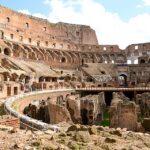
You’ll go up to the first and second tiers. That’s important because the Colosseum can feel overwhelming if you’re trying to take it all in at once. From these levels, you get a broader sense of how the crowd would have moved, where people sat, and how the building was organized to stage mass entertainment.
The guide also connects the Colosseum to Rome’s political role. This isn’t only about gladiators as spectacle; it’s about emperors using entertainment to shape public loyalty and distract from the harder realities of empire. Once you hear that framing, you start noticing how the building was designed for control as well as drama.
You’ll spend about 1 hour 30 minutes here, which is long enough for real orientation. You can usually see a lot of the major features without feeling stuck at one point. And because the tour is timed, you’re less likely to lose your energy to slow-moving queues.
A quick expectation check: this tour is sometimes described as including extra access elements beyond the standard viewing areas, and some people talk about getting close to the arena experience. Still, don’t assume you’ll get the exact same level of ground access every day. Security rules and operational constraints can affect what’s possible, especially during busy periods.
Also: the Colosseum includes stairs and uneven stone. It’s manageable, but it’s not a stroll. Bring water, take pauses when you need them, and let the guide set the pace—because when you’re tired, the storytelling lands less.
What your guide is really doing (and why names matter)
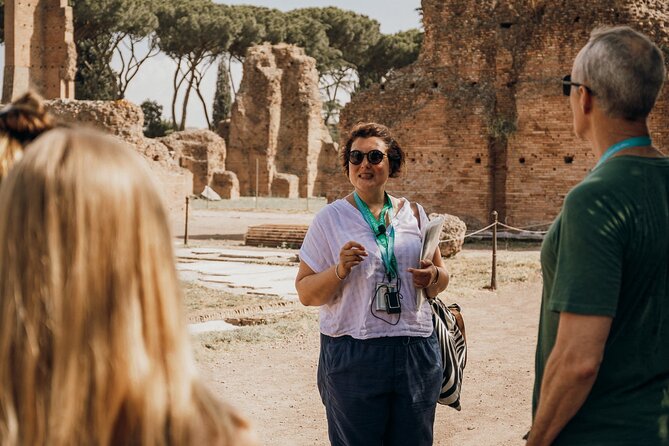
A tour like this succeeds or fails on the guide. Not because of theater, but because you need help reading the place.
When the guide performs well, you’ll notice three things:
1) they explain why each site exists, not only what’s left of it
2) they turn structure into story (politics, family, religion, daily life)
3) they keep the route organized so you don’t waste time guessing where to look next
This operator is approved to lead guided tours of the Colosseum, Roman Forum, and Palatine Hill, and the guides often bring academic strength. In past groups, you may hear from people like Luigi, Guido, Paula, Marco, Mariela, Eddy, Anna, Vincenzo, Davide, Camilla, Ricardo, Sev, and Federica. (If you see the name when it’s confirmed, don’t be shy—choose the tour partly based on that guide match.)
Even if you’re not a “history nerd,” you’ll still benefit from the way these guides explain the connections. For example, Palatine Hill can look like scattered ruins from a distance. With the right explanation, the House of Augustus or Santa Maria Antiqua stop being random stops and start becoming evidence of how Romans lived, believed, and rebuilt over time.
One more practical benefit: your guide helps you manage crowd pressure. The Colosseum and Forum attract tour buses and big groups, but a well-led small group can keep moving and keep hearing the key facts.
Pacing, weather, and how to prepare for real walking
This is a walking tour of about 3 hours 30 minutes. Most people should handle it at a moderate pace, but you’re dealing with Roman stone underfoot, steps, and long periods in the sun.
So I treat this tour like a day hike with a museum payoff. Wear shoes you can trust on uneven surfaces. Bring sun protection and water, especially in warmer months. If you’re visiting in shoulder season, bring a light layer because you can still get cooler air in the ruins once shade shifts.
Weather can change quickly in Rome. One of the most useful things you can do is pack smart rather than stress. If rain shows up at the end, you’ll still want your shoes to cope.
The other pacing detail: because you’re going Forum → Palatine → Colosseum, you’ll keep walking and switching mental gears. The guide’s job is to make those transitions feel coherent, but your job is to stay present. If you zone out halfway through the Forum, it’s harder to appreciate why Palatine matters.

Meeting point, route flow, and where you end up
You start at Via delle Terme di Tito, 72, 00184 Roma RM. The tour ends at the Colosseum area on Piazza del Colosseo, 1, 00184 Roma RM. There’s no hotel pickup, so you’ll want to plan your own transit to the meeting point.
This is also helpful for planning your day. You don’t need to figure out how to get back to a far-away starting location after your Colosseum time. Finishing near the Colosseum keeps your logistics simpler.
It also means you should arrive early enough to find your group and get through any pre-entry checks without panic. When security is involved, it’s not the time to be rushing around holding your passport loosely in one hand.
Price and value: what your $139.13 is paying for
At $139.13 per person, this isn’t a budget-only option. But it’s priced to buy you three things that DIY visits often don’t deliver as smoothly: expert guidance, reserved access, and time savings.
Your package includes the Colosseum entrance ticket (valued at €18) plus a Colosseum reservation fee (valued at €2). That matters because it shows the cost isn’t only the ticket price—it’s also paying for the guided route and the special access elements that take coordination.
In plain terms, you’re paying so you can:
- spend more time at the best parts instead of waiting around
- get explanations while you’re standing in front of the evidence
- move through a complex site with fewer dead ends
If you’re visiting Rome for a short time and you care about understanding what you see, this kind of guided VIP access usually feels worth it. If your idea of a great day is silent wandering with no planning, you may feel the cost more than the value.
The fair warning comes from a common mismatch: people sometimes expect every VIP Colosseum version to include the exact same ground-level access, like the Gladiator Gate area. That may not happen on every day. The tour is designed for first-and-second-tier viewing and special access on Palatine, but what’s available at ground level can be variable. If you’re making the Colosseum the single emotional highlight of your trip, message the provider before booking so your expectations match what the day can deliver.
Who this tour suits best
This works especially well if:
- you’re seeing ancient Rome for the first time and want a guide to give you a framework
- you like structured routes with reserved entry that reduce wasted time
- you want rare access on Palatine Hill through SUPER Sites rather than only standard viewpoints
- you’re traveling as a couple or small group and want an experience that stays readable and organized
Families can enjoy it too. It’s a long day of walking, and kids may tire. The upside is that the guide can help keep things moving and less frustrating.
If you’re mobility-limited, you’ll want to think carefully. The sites involve stairs and uneven paths, and even when the tour is well organized, the terrain is still the terrain. I’d treat this as a “comfortable footwear required” type of outing rather than a low-impact stroll.
Should you book this VIP Colosseum, Forum, and Palatine tour?
I’d book it if you want your first pass at these sites to feel guided, efficient, and intellectually satisfying—especially because the Palatine Hill SUPER Sites stop is the big differentiator. The small group size (up to 16) and reserved Colosseum entry are practical wins, not fluff.
I’d think twice if your top priority is one very specific Colosseum ground-level feature and you’re not comfortable with day-to-day variability. Also, if you’re the type who hates walking and stairs, pick a slower Rome plan or pair this with lighter days.
If you want the “see it, understand it, then move on” version of ancient Rome, this tour is a strong match. Just do yourself a favor: bring ID, wear good shoes, and keep one open mind about which SUPER Sites you’ll get that day. That flexibility is what turns a VIP ticket into a memorable experience.
FAQ
What sites are included in this VIP tour?
You’ll visit the Roman Forum, Palatine Hill with SUPER Sites access, and the Colosseum.
How long is the tour?
The tour runs about 3 hours 30 minutes.
Is the Colosseum entrance ticket included in the price?
Yes. The Colosseum entrance ticket and the Colosseum reservation fee are included in the experience.
What kind of access do I get at the Colosseum?
The route includes access to the first and second tiers.
What does SUPER Sites at Palatine Hill mean?
It refers to special access to preserved ancient areas on Palatine Hill. Which specific sites you see can vary depending on what is open that day.
What do I need to bring for entry?
You need a government-issued ID or passport. The full names of all participants must match the ID/Passport, or security may deny entry.