REVIEW · ROME
3 hours Private Golf Cart Tour – The major highlights in 3 hours.
Book on Viator →Operated by Tour One - My Best Tour Group · Bookable on Viator
A 3-hour cart loop can turn Rome from overwhelming to obvious. This private, electric golf cart tour strings together the big-name sights with quick, comfortable stops and a guide who talks to just your group. I especially like the airy ride and the way it keeps the day moving without the usual foot-torture.
Two highlights I really appreciate: the Trevi Fountain coin toss stop and the included time at the Pantheon. If you’re doing Rome on a tight schedule, this kind of “hit the icons first” plan is a smart move. And the feedback I’ve read points to real personality in the guides—names like Mimmo, Lorenzo, and Andrea show up with the same theme: they explain what you’re seeing, not just where it is.
One thing to consider is that you’re trading lingering time for coverage. Each stop is about 20 minutes, and the order can shift depending on where you’re picked up and traffic—so plan to save any long “wander and linger” moments for later on your own.
In This Review
- Key things I’d plan around
- Why this 3-hour electric golf cart plan works in Rome
- Pickup, timing, and how the route order can change
- Trevi Fountain coin toss: how to use your 20 minutes
- Pantheon entry included: the dome, the scale, and the payoff
- Piazza Navona: the fountains, Bernini, and quick street-level magic
- Colosseum from the road: what you’ll see and what you might skip
- Spanish Steps: a classic staircase and an easy shopping stop
- Electric cart comfort and the small details that matter
- Price and value: what $235.92 buys you here
- Who should book this private cart tour (and who shouldn’t)
- Should you book the 3-hour private golf cart tour?
- FAQ
- How long is the private golf cart tour?
- What’s included in the price?
- Is pickup included?
- Are tickets included for all stops?
- Do you need to arrange Pantheon tickets in advance?
- Is this a private tour?
- Are headsets provided?
- Can service animals join the tour?
Key things I’d plan around
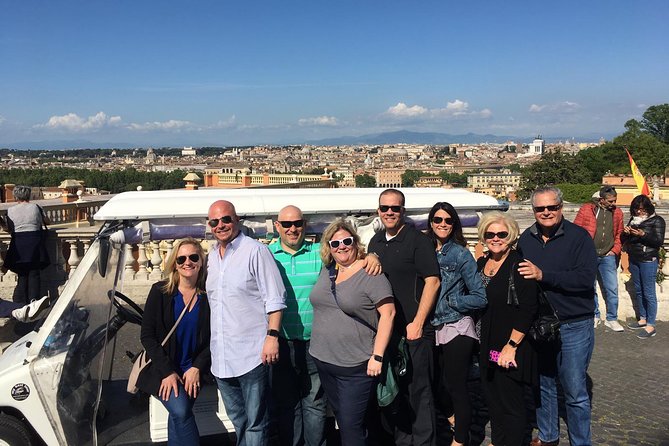
- Private group setup: only your group rides, so you don’t get stuck listening to strangers’ questions
- Electric, lower-impact ride: a more sustainable option than gas cars, plus an easier way to cover distance
- Trevi + Pantheon, done right: coin toss time at Trevi, then Pantheon entry arranged in advance
- Colosseum is outside (entry optional): you’ll see it and learn about it; full entry needs a different plan
- A guide who brings Rome to life: coins at Trevi and custom pacing show up in feedback
- Hotel pickup from select central addresses: it saves time and energy right when you most need it
Why this 3-hour electric golf cart plan works in Rome
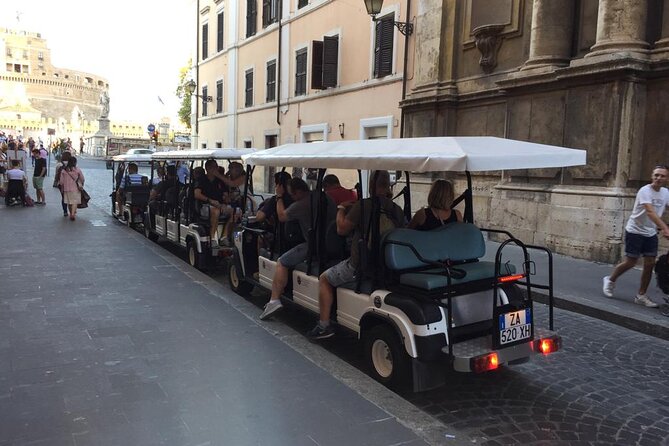
Rome rewards slow wandering. But your legs might revolt before your brain gets its fill. That’s where a 3-hour private golf cart tour makes practical sense: you get transportation plus narration, without long transfers or a full day of walking.
The ride itself is part of the appeal. These are open-air, covered in some cases (which matters on hot days), and you’re not stuck in traffic on foot. The cart also keeps your day lighter if you’re traveling with anyone who needs a gentler pace—though the itinerary is still built for short sight visits, not long museum-style stops.
And the sustainability angle isn’t just marketing fluff. An electric cart is a lower-impact alternative to gas cars, which fits better with a city that has been trying to clean up how it moves visitors around. You’re also getting water included, which sounds basic until you’re standing in bright sun and realizing Rome does not care about your hydration plans.
You can also read our reviews of more tours and experiences in Rome.


Pickup, timing, and how the route order can change
This is a private tour, so your guide is coordinating the flow for just your group. Pickup is offered from select central hotel/B&B addresses. If you’re outside the pickup range, you’ll meet at an office or at a spot you agree on with the operator.
Then there’s the reality of Rome: traffic and timing. The order of stops isn’t guaranteed exactly as written. Since the tour starts from your pickup point, it will begin with the closest location first. That flexibility is useful because it helps the tour hit key sights within the 3-hour window without burning most of your time stuck between neighborhoods.
You should also think of the schedule as a series of 20-minute sprints. Each stop is short enough to keep the tour moving, but long enough for photos and a mini lesson from your guide. If you want more time at one place, you’ll need to build that into the rest of your day.
Trevi Fountain coin toss: how to use your 20 minutes
Trevi Fountain is the kind of place that looks photoshopped even when you’re standing right next to it. Your stop here is around 20 minutes, with admission not required.
The classic rule is simple: toss your coin. It’s a symbolic moment, and it’s also a natural “pause” in the tour where everyone can regroup, take photos, and get oriented for the rest of the day. One guide even handled the details for people who didn’t have coins ready—so if you show up with nothing in your pocket, you might be pleasantly surprised.
Because your time is limited, aim for one smart photo angle, then move. You’ll get the best experience if you don’t park yourself for the full 20 minutes waiting for the perfect shot. Watch for the swirl of people near the fountain, then step slightly back or to the side so you can actually see the details while you listen.
Also, remember that Trevi is busy. If your group is sensitive to crowds, this is still worth doing—just treat it like a quick ceremony, then move on while you’re still fresh.
Pantheon entry included: the dome, the scale, and the payoff
If there’s one stop that’s usually worth your “special attention” time, it’s the Pantheon. Here, entry is included, but you need to let the operator know in advance so they can arrange your tickets.
Your time on-site is also about 20 minutes. That’s enough to understand why this building is famous, even if you don’t plan to do a slow, lingering read of every corner. The Pantheon’s claim to fame is its near-perfect hemispherical dome—built by the Romans using concrete almost 1,900 years ago. When you’re inside, that engineering idea stops being trivia and starts feeling real.
One practical note: you may be asked to coordinate ahead of time for tickets. So when you book, double-check that you’ve provided what they need, especially if your group has names spelling issues, timing constraints, or special considerations.
The biggest value of having a guide here is not just access. It’s interpretation. In a short visit, you want someone telling you what your eyes should grab first: the shape, the materials, the lighting, and what makes it feel so “designed” even by ancient standards.
Piazza Navona: the fountains, Bernini, and quick street-level magic
Piazza Navona is one of those Roman squares that feels like it’s always in action. Your visit is about 20 minutes, and admission is free.
The key detail to notice: it’s the only major Rome square decorated with three fountains. In the center is the Fountain of the Four Rivers, made by Bernini. Even in a short stop, the four-river idea gives you something concrete to look for instead of just admiring the vibe.
This is also a good “reset” point in the tour. After Pantheon’s enclosed drama, you’re back outside with open views and room to breathe. It’s a place to stand back and take in the shape of the square, then move closer so you can see the fountain work without blocking other people’s photos.
If you love architecture but don’t want to spend your vacation reading wall plaques, this quick stop hits the sweet spot: you get the name, the meaning, and the visuals without a long sit-down.



Colosseum from the road: what you’ll see and what you might skip
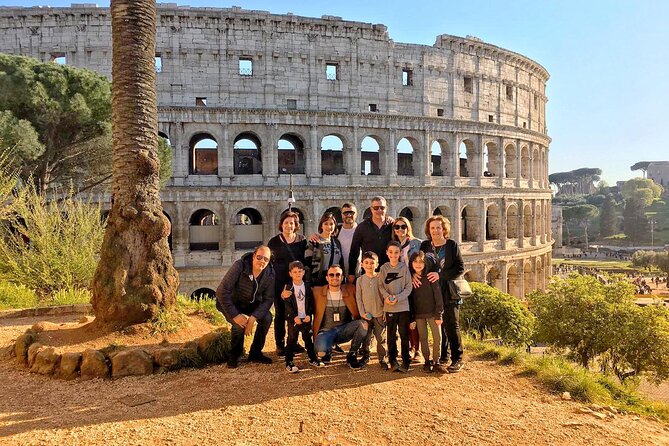
The Colosseum is the big one—literally. From the outside, you’ll look at it with your guide pointing out the basics, including that it was built in the first century BC and was the largest stadium in the ancient world.
Your time here is about 20 minutes, and admission is not included. That matters. If you’re the type who wants to walk inside and picture what it looked like when it was full of spectators, you’ll need a separate plan.
The good news: the tour setup includes a workaround. If you want to enter the Colosseum, the operator says they can arrange a special walking tour. That additional plan also includes the Roman Forum, which is the area where many people go to connect the dots between the monument and daily ancient life.
So think of this stop as the “preview.” You’ll get the scale and the story cues. If your bucket list includes inside access, plan an extra add-on rather than counting on this cart stop to deliver it.
Spanish Steps: a classic staircase and an easy shopping stop
Next up is the Spanish Steps, built in the 1700s and leading toward the church of Trinità dei Monti. Your visit is about 20 minutes, and admission is free.
Your time here also comes with an added bonus: the area at the bottom of the steps is Rome’s most fashionable shopping district. That makes the Spanish Steps stop useful even if you’re not there for shopping. You can do photos, then wander a few storefront streets for the feeling of the neighborhood.
This is a good stop for a group that likes variety. You can keep it classic—stairs, views, pictures—or you can treat it like a mini neighborhood taste. Just don’t plan on doing any serious shopping and tour walking at the same time. Your cart schedule is your time constraint here.
Also, remember the steps are a magnet for crowds. If you’re traveling with anyone who dislikes shoulder-to-shoulder situations, aim for the edges, not the center. A short stop is actually easier than a long one in this area.
Electric cart comfort and the small details that matter
The “big ticket” items are the sights. But the small choices can make or break the day.
This tour includes bottled water, which is practical and you’ll notice it more than you think you will. Large groups—more than seven passengers—get headsets so the guide can speak through a microphone. Even if your group is small, this setup usually improves how clearly you hear explanations at each stop.
The carts also function as a compromise between comfort and access. You’re not trapped in a van, and you’re not walking every step. It’s a win for heat management, too. One highlight from feedback: the covered cart option saved the day on a hot afternoon.
Finally, it’s worth noting that service animals are allowed and the tour is near public transportation. Most people can participate, and it’s private, so the pace can feel more tailored to your group.
Price and value: what $235.92 buys you here
$235.92 per person is not a cheap afternoon. So the question isn’t “is it worth it?” The real question is: when does this price stop feeling expensive?
This tour gives you five things that cost money separately if you were piecing them together:
- A private guide for a compact Rome highlight run
- Transportation in an electric cart so you’re not walking long distances
- Entry included for the Pantheon (with advance ticket arrangement)
- Water included
- Time saved with pickup from select central addresses
Where the value gets better is when you’re on a tight schedule or you want your first day to feel organized. If you’re the kind of visitor who hates choosing between the Pantheon and the Colosseum because you don’t want to lose half a day, this format solves that problem.
If you’re traveling solo with unlimited time and you prefer to roam freely, you might feel the price more. But if you want a guided orientation plus icon stops in three hours, it can be a very efficient way to spend money so you can spend the rest of your trip slower.
And since this tour is frequently booked well ahead—about 97 days on average—that also tells you something: people plan around it as a first-day anchor.
Who should book this private cart tour (and who shouldn’t)
I’d steer you toward this tour if you want:
- A first-day Rome overview that helps you understand what you’ll want to revisit
- Icon sights with minimal walking while still getting real explanations
- A private setup that avoids the noise and timing chaos of larger group tours
It might not be your best fit if you want long stays inside major sites. The cart schedule is built for short stops. The Colosseum here is outside only, with entry handled as an optional add-on if you choose.
Also, if your group has very flexible tastes and wants to “wander where the mood goes,” a cart tour can feel too scheduled. In that case, you might prefer a shorter walking tour or a freeform route with a map and local suggestions.
Should you book the 3-hour private golf cart tour?
Book it if you want your Rome day to feel organized without feeling rushed to the point of stress. The mix of Trevi, Pantheon, Piazza Navona, Colosseum viewpoints, and Spanish Steps is a strong set of icons, and the private guide makes the time count. The electric cart and water are practical bonuses that turn hot, busy Rome into something more manageable.
Hold off if you’re hoping for deep time inside major sites, especially the Colosseum. This format gives you an excellent preview, then you choose what to extend later.
If you’re unsure, my rule of thumb is simple: if you’ll benefit from a guided orientation on your first or second day, this is a very solid choice.
FAQ
How long is the private golf cart tour?
It lasts about 3 hours.
What’s included in the price?
The tour includes a private electric golf cart experience with a guide, bottled water, and Pantheon entry arranged in advance. It also includes Trevi Fountain time and other sightseeing stops as listed.
Is pickup included?
Pickup is offered from select central hotel or B&B addresses. If your address is not within the pick-up range, you’ll meet at one of the provider’s offices or at a meeting place you agree on.
Are tickets included for all stops?
Pantheon admission is included. Trevi Fountain, Piazza Navona, and Spanish Steps are free stops. Colosseum entry is not included.
Do you need to arrange Pantheon tickets in advance?
Yes. Pantheon entry is included, but you need to let the operator know in advance so they can arrange tickets.
Is this a private tour?
Yes. It’s private, and only your group participates.
Are headsets provided?
For larger groups of more than seven passengers, headsets are provided and the guide speaks through a microphone.
Can service animals join the tour?
Yes, service animals are allowed.