REVIEW · ROME
Ancient Rome Guided Tour: Colosseum, Forum and Palatine & Pick Up
Book on Viator →Operated by Gray Line I Love Rome by Carrani Tours · Bookable on Viator
Hot cobblestones in Rome. Worth it if you plan smart. This small-group tour strings together Palatine Hill, the Colosseum, and the Roman Forum into one efficient half-day, so you’re not spending your vacation bouncing between ticket lines and transit stops.
I like that you get hotel pickup (when your hotel is covered) and wireless audio headsets, which makes a big difference when you’re moving through crowds and trying to hear stories without craning your neck. It also includes the key site admissions, so you’re not doing extra ticket math mid-trip.
The main consideration is simple: this is a lot of walking on uneven surfaces in direct sun. If you’re heat-sensitive or you hate cobblestones, you’ll want the right shoes and a serious water plan before you go.
- 3.5-hour hit list: Palatine Hill + Colosseum + Roman Forum, all in one coordinated route
- Pickup where it’s offered: you start from your hotel lobby instead of hunting meeting points
- Timed entry support: Colosseum reservation fees are included along with your admission
- Wireless headsets: easier listening while you’re moving and standing in line
- Small group cap (20): better control than the giant herd
In This Review
- Why this half-day Rome highlight route makes sense
- Hotel pickup and meeting points: the part that can make or break your morning
- Palatine Hill: the views and the power story behind Rome
- The Colosseum: what you get besides photos
- Roman Forum: where politics happened before it became ruins
- Via dei Fori Imperiali: the straight-line shortcut that reveals layered Rome
- What the 3.5 hours really feels like (and how to handle it)
- Price and value: what $98.86 buys you in real terms
- Who should book this (and who should skip it)
- Should you book this Colosseum, Forum and Palatine tour?
- FAQ
- What’s the duration of the Ancient Rome Colosseum, Forum and Palatine tour?
- How much does the tour cost?
- Is hotel pickup included?
- What’s included in the ticket price?
- What do I need to bring for entry?
- Is the tour suitable for people with mobility issues?
Why this half-day Rome highlight route makes sense
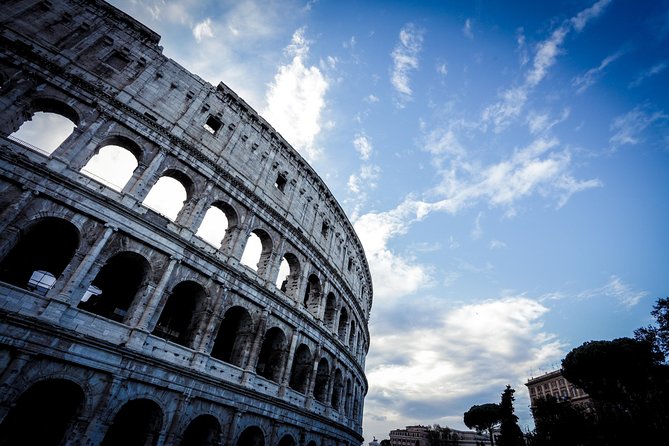
Rome’s “top three” are close on the map, but not on your schedule. The Colosseum area plus the Forum and Palatine Hill can eat an entire day if you try to do it solo—because tickets, queues, and backtracking slow you down fast.
This tour gives you a tight, guided route that’s designed for one thing: seeing the big names with less friction. In about 3 hours 30 minutes, you’re led through the sights that define Roman power and spectacle—then you’re done before evening plans get wrecked.
And you’re not just wandering. You’re guided with wireless audio headsets, which is a practical upgrade in busy sites. It means you can hear the story while still paying attention to where you’re walking.
The other quiet win is that admissions are handled as part of the package. You still need your ID (more on that below), but you’re not scrambling to buy and validate tickets on the spot.
Hotel pickup and meeting points: the part that can make or break your morning
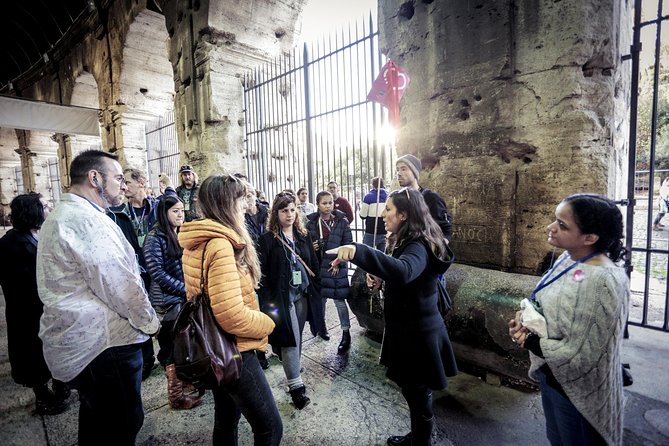
Pickup is offered, and that’s a real value in Rome. The city’s compact, but traffic and walking can turn a short day into a long slog. Being picked up reduces the mental load: you show up, get organized, and go.
Here’s the timing you should plan around: you need to be ready 45 minutes before departure in the hotel lobby, or 60 minutes if you’re in a non-central hotel area. Don’t treat this as a suggestion. Rome runs on schedules that can feel elastic until you miss the window.
Also, not every hotel is covered. If pickup doesn’t reach your hotel, your meeting point is Colle Oppio Park, Via delle Terme di Tito (corner Via Nicola Salvi), inside the park. If you’re staying near major sights, you’ll often be covered. If you’re farther out, it may be a self-guided commute to the park.
One more practical note: the tour uses mobile tickets. That helps—just make sure your phone is charged and your booking details are easy to find.
You can also read our reviews of more tours and experiences in Rome.


Palatine Hill: the views and the power story behind Rome
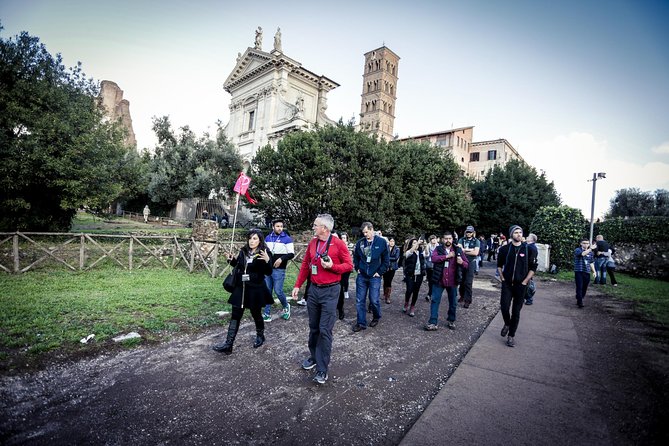
Palatine Hill sits right at the heart of the Seven Hills. It’s also one of Rome’s oldest layers, which matters because the hill isn’t just scenic—it’s political. Palatine looks down about 40 meters toward the Roman Forum, and it also faces the Circus Maximus side of the city.
What I like about starting here is that it gives your brain context before you hit the Colosseum. The hill is tied to early centers of power, and the site connects to the age when Augustus built imperial palaces here. Standing on Palatine, you get a sense of how rulers wanted to be seen—literally above the machinery of the city.
The route also includes a moment centered on the Roman triumph (triumphus): a civil ceremony and religious rite used to celebrate and sanctify a commander’s victory. That’s more than trivia. Once you understand how Rome turned military success into public ritual, the Colosseum’s pageantry makes more sense.
You’ll likely feel the walk in your legs here. The surfaces around these historic areas can be uneven, including cobblestones and marble slabs. Wear shoes you can trust for an hour of steady moving.
The Colosseum: what you get besides photos
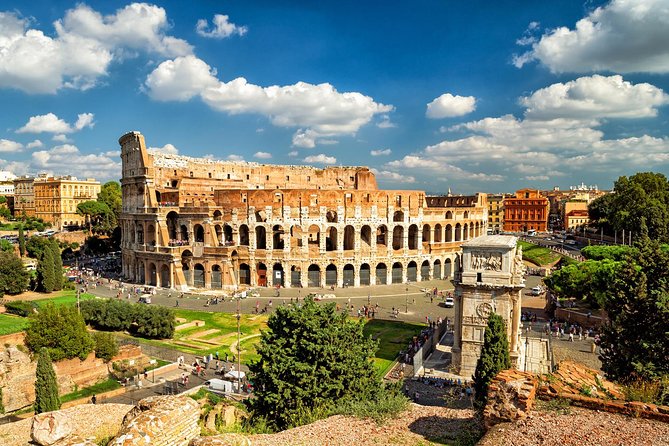
The Colosseum is the headline because it’s enormous, but it’s also specific. It’s the oval amphitheatre in central Rome, built with materials like travertine, tuff, and brick-faced concrete, and it’s considered the largest amphitheatre ever built.
The tour includes Colosseum admission and a Colosseum reservation fee, which is the practical part that helps you avoid wasted time. Even if lines still move slowly sometimes, having the reservation structure reduces the chaos of trying to enter at peak moments on your own.
What your guide brings here is pacing plus story. Multiple excellent guides are named in the feedback for strong storytelling and practical handling—people mention guides such as Marcello V, Nicoletta, Alessa, Daniel, Luciana, Rita, Roger, Lina, Leticia (Letty), Eglie, Caro, and Yuri. You’ll see a repeating theme: guides work to keep things moving, answer questions, and handle heat with small pauses.
One reality check: the Colosseum area can be brutally sunny. Plan for standing in bright stretches. The best advice from the experience pattern is to bring water, sunscreen, and a hat, and to wear breathable layers you don’t mind sweating through.
Also, get your documents ready. It’s mandatory to bring your passport or ID card. One important wrinkle that can catch people: if you have a pacemaker, you’ll need to show a certificate for admission screening.
Roman Forum: where politics happened before it became ruins
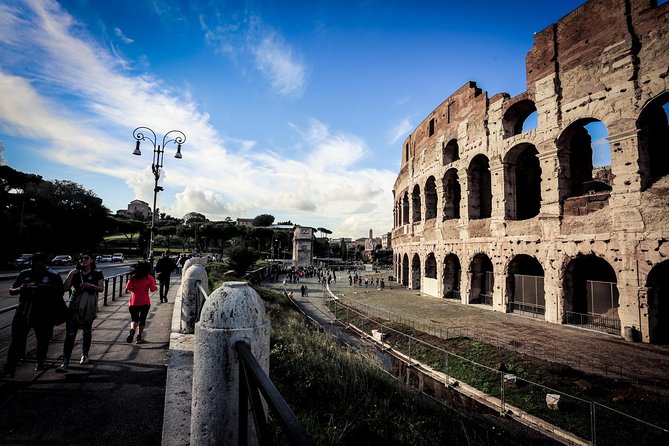
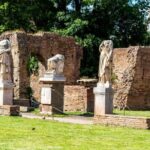
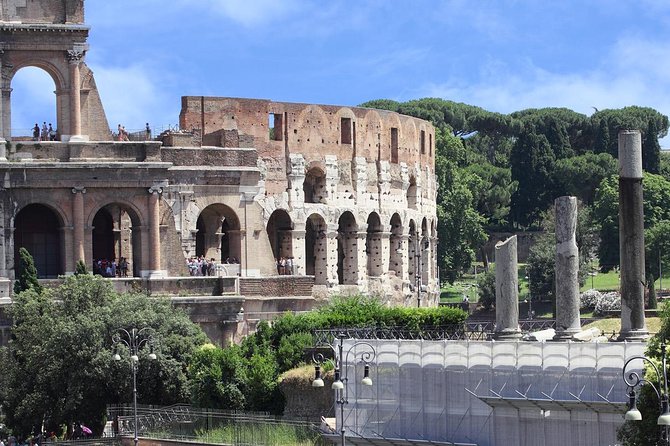
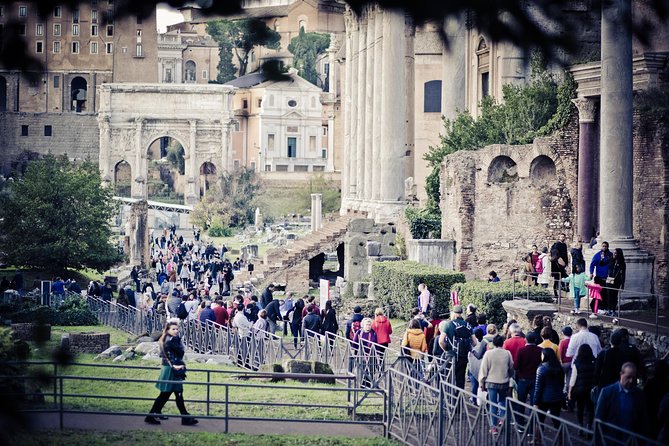
The Roman Forum is what you look at when you want to understand what everyday Roman power looked like. It’s a rectangular forum surrounded by the remains of key government buildings at the center of the city. People originally treated this space as a marketplace, and the Forum Magnum name stuck.
In practical terms, the Forum feels less like a single monument and more like an open-air explanation of how Rome ran. You’re seeing the shapes of institutions—law, religion, public life—stretched into stone fragments.
One reason I like this tour includes the Forum after the Colosseum: you can connect spectacle to governance. The Colosseum shows what Rome could stage. The Forum shows what Rome needed to control to stage it.
The tour materials also point you along the Via Sacra, the Sacred Road—the main street of ancient Rome. It ran from the Capitoline area through the Forum’s religious sites and led toward the Colosseum. That’s a powerful mental map: you’re not just looking at random ruins; you’re moving through the kind of route people would have experienced on foot.
Via dei Fori Imperiali: the straight-line shortcut that reveals layered Rome
Even when you’re not focusing on every marker, the route between the big sites helps you see Rome as a timeline. The tour follows the idea of moving along Via dei Fori Imperiali, a straight line from Piazza Venezia to the Colosseum. Along the way, it crosses areas connected to the Forum of Trajan, Forum of Augustus, and Forum of Nerva.
This road is also known for the way it cuts across layers of history—and why modern archaeology keeps finding major remains underneath it. So you get that sense that Rome is not just old; it’s continuously uncovered.
Think of it as your guided spine through the city’s most readable “chapters.”

What the 3.5 hours really feels like (and how to handle it)
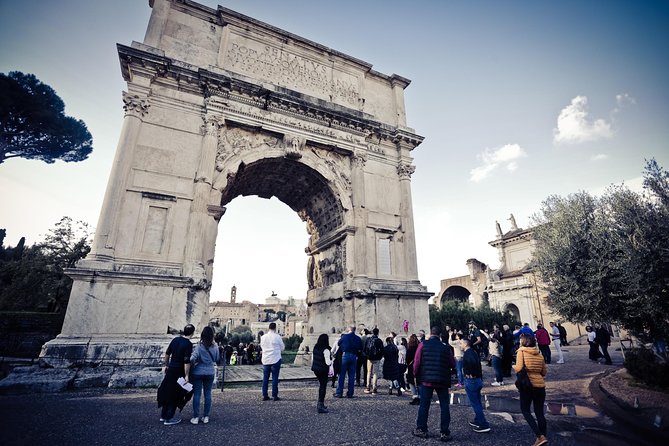
This is a “half-day” tour, but it doesn’t feel leisurely. You’re covering three major zones, and each stop includes walking and standing in crowds. The duration is listed at about 3 hours 30 minutes, and that time moves quickly once you factor in security screening and group coordination.
A few practical expectations that match what people consistently report:
- Wear running shoes or other supportive footwear. Cobblestones and marble slabs can punish flimsy sandals.
- Bring water, sunscreen, and a hat. Even when guides try to use small shade breaks, you’ll still be in direct sun at times.
- Expect your group to be guided through tight spaces. Wireless headsets help you hear directions without shouting.
- Photo time may not be evenly distributed. When you want your shots, be ready to step quickly when your guide pauses.
The group size is capped at 20 travelers, which helps with movement and makes it easier to stay together than larger tours. Still, it’s smart to keep your pace consistent with the group so you don’t feel left behind.
Price and value: what $98.86 buys you in real terms
The price listed is $98.86 per person for about 3.5 hours. That sounds steep until you break down what’s included.
You’re paying for:
- Guided access to Palatine Hill, the Colosseum, and the Roman Forum
- Colosseum admission (valued at €18)
- Colosseum reservation fee (valued at €2)
- Professional guide plus wireless audio headsets
- Transportation (pickup where offered, with the tour operating from a coordinated starting point)
- A mobile ticket for smoother entry
You’re not just buying the monuments. You’re buying the coordination that helps you get into the Colosseum area with less wasted time and less guesswork.
Is it worth it if you’re the type who loves planning every detail? Maybe not. But if you want your Rome day to run like a plan instead of a series of ticket errands, this is a strong value package.
Who should book this (and who should skip it)
This tour is a good fit if you:
- Want Rome’s highlights in one morning or early afternoon block
- Prefer a guided narrative over reading everything yourself
- Appreciate wireless headsets in crowded historic sites
- Like the idea of hotel pickup to reduce commute stress
It may be a weaker fit if you:
- Have impaired mobility (it’s not recommended for that)
- Can’t handle long stretches of walking and standing
- Don’t want to deal with ID screening requirements (you’ll need passport or ID, and pacemaker certificate if applicable)
Should you book this Colosseum, Forum and Palatine tour?
If you’re trying to see the Roman core without turning your day into logistics, yes, I’d book it. The combination of admissions, guide, headsets, and a pickup option makes it feel efficient in a way that’s hard to recreate solo—especially in peak heat.
But don’t book it half-ready. Bring solid shoes, sun protection, and your passport or ID. If you’re heat-sensitive, treat that as part of the deal, not a surprise.
If your Rome plan includes at least one big “wow” moment, start here. This route gives you the storyline behind the ruins—how power was displayed, celebrated, and governed—without wasting your time hopping between sites.
FAQ
What’s the duration of the Ancient Rome Colosseum, Forum and Palatine tour?
The tour runs for about 3 hours 30 minutes.
How much does the tour cost?
The listed price is $98.86 per person.
Is hotel pickup included?
Pickup is offered, but your hotel must be covered. If it’s not, you’ll need to use the meeting point at Colle Oppio Park.
What’s included in the ticket price?
The tour includes a guided visit to the Colosseum and archaeological area, entrance to the Colosseum, Roman Forum and Palatine Hill, a professional guide with wireless audio headsets, transportation, and a Colosseum reservation fee and admission.
What do I need to bring for entry?
You must bring your passport or ID card on the day of the tour. If you have a pacemaker, you’ll need to show a certificate for admission screening.
Is the tour suitable for people with mobility issues?
It is not recommended for individuals with impaired mobility. Travelers should have a moderate physical fitness level.