REVIEW · ROME
Become a Masterchef in Rome: Pasta, Ravioli and Tiramisù Class
Book on Viator →Operated by Insideat · Bookable on Viator
Fresh pasta class in Rome, done right.
This experience turns a classic Roman meal into a hands-on session, from rolling dough to building a tiramisù with your own toppings, all in a small group. I love the English-speaking chef instruction, plus the fact you don’t just watch. You sit down afterward in the cozy restaurant (or outside terrace) and eat what you made.
Two things I particularly like: you get a personal working station with an apron and rolling pin, so your hands do the work. And the menu covers three real Roman staples, not filler: fettuccine with iconic sauces, ravioli you shape yourself, and a tiramisù you customize. One consideration is that it’s a structured cooking rhythm. If you’re looking for a totally low-effort, sightseeing-only experience, this will feel more hands-on than that.
In This Review
- Key Takeaways Before You Go
- A Rome Cooking Class That Feels Like Real Life
- Where You Meet and How the Timing Works
- The Welcome Spread: Spritz, Chips, and Bruschetta
- Your Personal Pasta Station (And Why That Matters)
- Making Fresh Fettuccine: The Roman Sauce Lesson
- Ravioli from Scratch: Filling, Folding, and Finishing
- Tiramisù That’s Actually Yours: Toppings, Not Just Assembly
- Wine, Soft Drinks, and the Post-Cooking Meal
- Price and Value: What You’re Really Paying For
- Dietary Needs: How Flexible Is It?
- Who This Class Is Best For (And Who Might Prefer Something Else)
- Instructor Energy: Why Names Like Carlo and Mersad Come Up
- Should You Book This Rome Masterchef Class?
- FAQ
- What do I make during the 3-hour class?
- Is the cooking class offered in English?
- What’s included with the meal and drinks?
- Can the class accommodate vegan, vegetarian, or gluten-free diets?
- How big is the class group?
- Is there free cancellation, and how far in advance can I cancel?
Key Takeaways Before You Go
- Small group, max 14: more attention and faster help when dough gets sticky.
- Two hours hands-on: fettuccine, ravioli, and tiramisù, with ingredients included.
- Roman flavor lineup: you’ll work with sauces like cacio e pepe and carbonara.
- Eat immediately after cooking: your meal is lunch or dinner, not a tasting you’ll forget.
- Take-home cookbook: a recipe guide so you can re-create it at home.
- Dietary options available: vegan, vegetarian, and gluten-free options exist if you tell them ahead.
A Rome Cooking Class That Feels Like Real Life
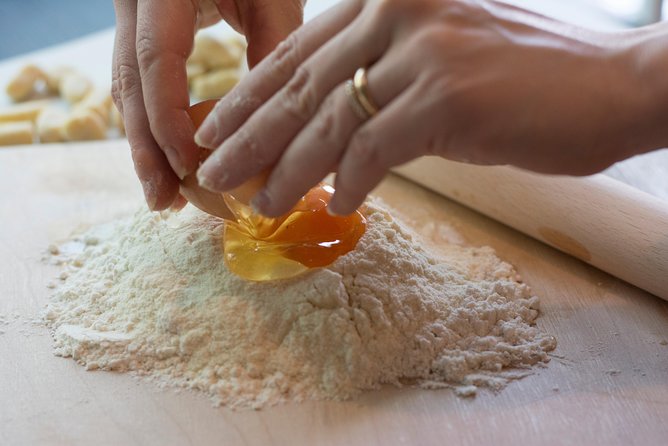
Rome can tempt you with a hundred cooking demos. This class is different because it treats you like part of the kitchen team, not a spectator. You start with drinks and snacks, then you get elbow-deep in dough and end with tiramisù that you actually assemble.
What makes it especially appealing is the balance. You learn technique, but you also get food, wine, and time to chat at a shared social table. That mix matters. Cooking classes can be either too formal or too casual. Here, it aims for the sweet spot: clear steps, good energy, and food you can be proud of.
Also, the class runs in a restaurant that’s air-conditioned. That’s not a tiny detail in Rome. It means you can focus on dough instead of overheating.
You can also read our reviews of more tours and experiences in Rome.


Where You Meet and How the Timing Works
You’ll meet at Via Andrea Doria, 41 M, 00192 Roma RM. The class ends back at the meeting point, so you’re not stranded across town after dessert.
The activity is about 3 hours total, with roughly 2 hours hands-on in the kitchen. Plan to arrive a bit early so you can start relaxed. Once the cooking gets going, you’ll want both your hands and your brain ready for the next step.
There’s also a mobile ticket. So you skip the paper scramble and move straight to checking in.
The Welcome Spread: Spritz, Chips, and Bruschetta
Before you start rolling anything, you get a welcome aperitif. Expect a spritz to begin, plus their signature homemade cheese and pepper chips. It’s a smart warm-up. It gets you tasting Roman flavors immediately, and it keeps your energy up before the dough stage.
You’ll also see tomato bruschetta appear in the menu. Garlic, oregano, basil, and tomato on toasted bread is classic Rome comfort food. It’s the kind of starter that sets the theme: simple ingredients, proper technique, and not overcomplicating things.
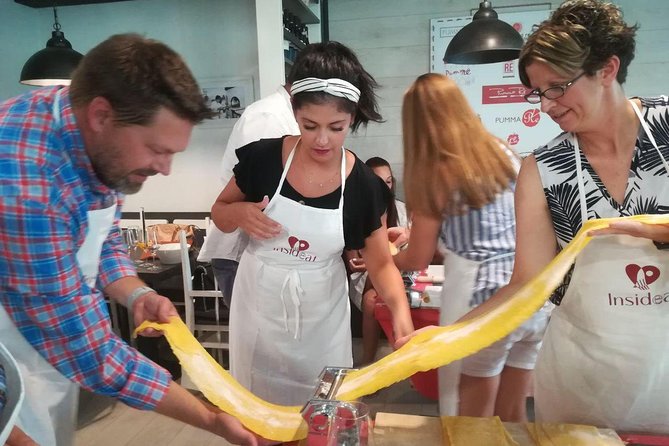
And yes, the setup is social. You’ll sit with others at a communal-style table, so the class doesn’t feel like you’re hiding behind your cookbook. The vibe is relaxed enough that even first-timers tend to feel comfortable asking questions.
Your Personal Pasta Station (And Why That Matters)
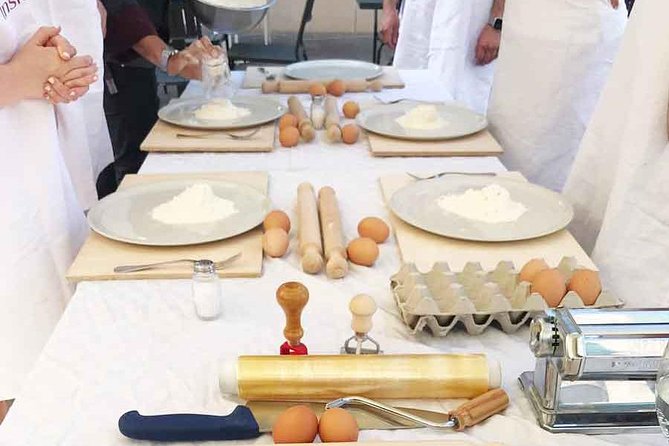
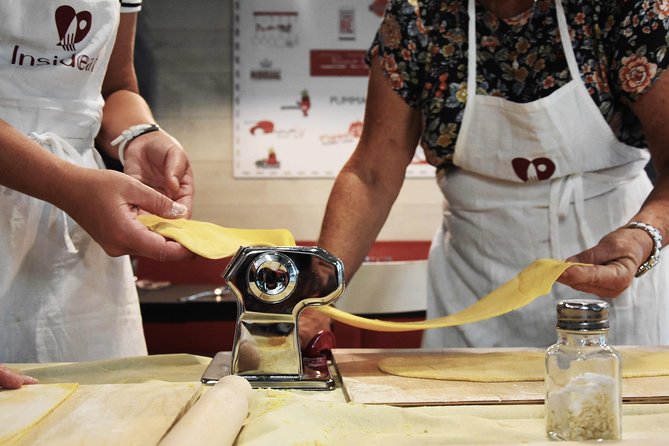
This is not a one-big-table situation. Each person gets a personal station with the essentials: a wooden board, an apron, and a rolling pin. That setup makes a huge difference for beginners.
If you’ve ever taken a class where everyone queues around one counter, you know what happens. You wait. You get nervous. You miss steps. Here, the station-per-person approach keeps you moving and lets the instructor spot problems fast.
You’re also cooking in a small group, with a maximum of 14 people. That size is big enough to meet people, but small enough that the chef instructor can actually correct your technique instead of shouting from the front.
Making Fresh Fettuccine: The Roman Sauce Lesson
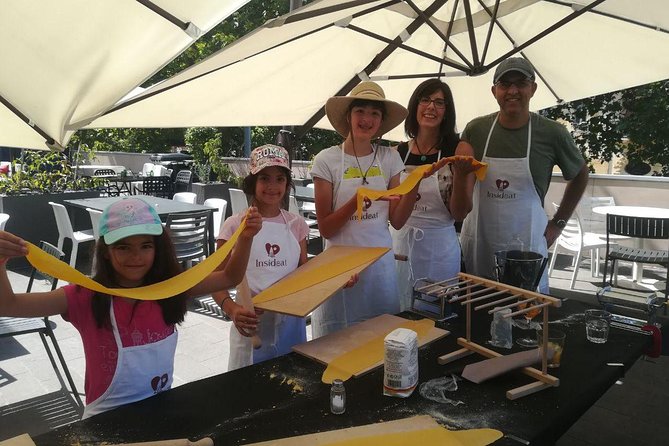
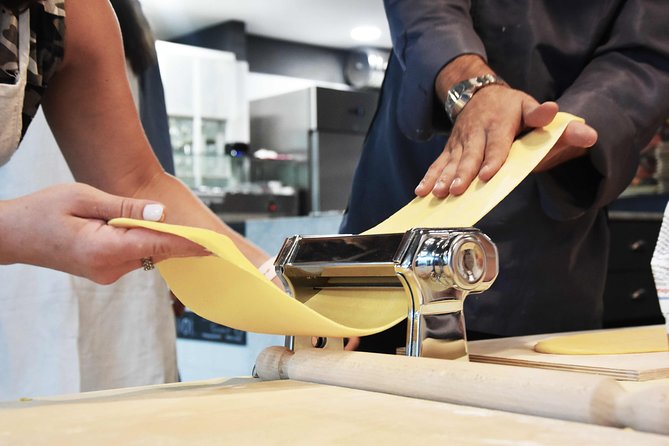
The main hands-on items start with fresh pasta, including fettuccine. You’ll learn how to go from dough to something you can roll and cut, then you’ll pair it with iconic Roman sauces.
The sauces listed include:
- Cacio e pepe
- Carbonara
- Plus additional Roman sauce options
Even if you’ve eaten these dishes in restaurants for years, making fresh pasta puts sauce into sharper focus. You start to understand why Roman sauces tend to cling and coat. The texture of pasta affects everything: how it catches pepper in cacio e pepe, how it holds richness in carbonara, and how quickly it turns from raw to ready.
One practical note: fresh pasta is a process. It takes a little muscle and patience. The good news is the instruction pace is designed for mixed skill levels. People in the class have ranged from complete first-timers to cooks who already know their way around a kitchen.
And the best part is that you don’t “collect learning points” and then leave. You cook and then eat what you made.



Ravioli from Scratch: Filling, Folding, and Finishing
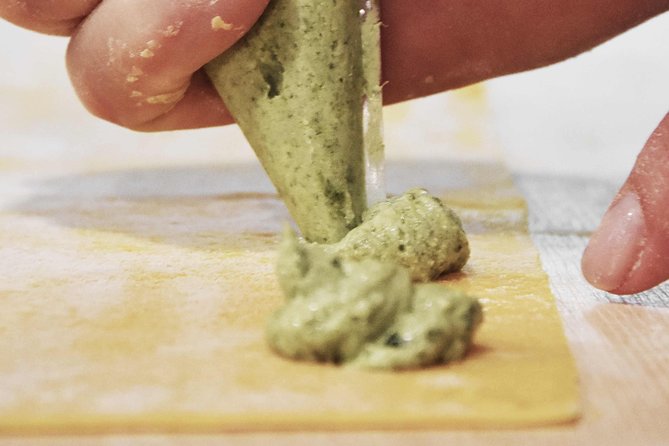
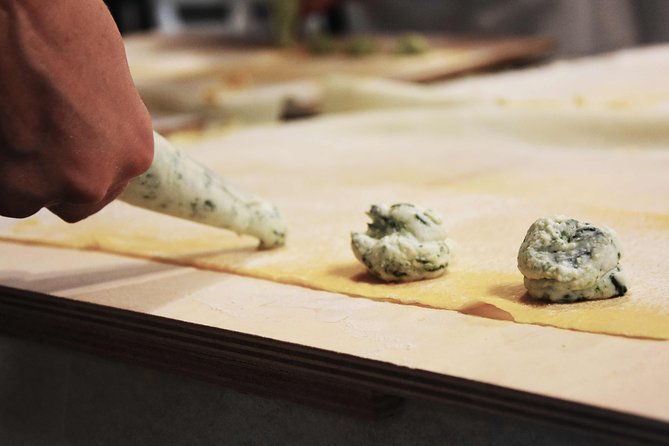
Next comes homemade ravioli, and this is where you get to feel fancy without a culinary degree. You’ll make the ravioli yourself, then the chef finishes them with sauce.
That chef-finish detail matters. Ravioli can go from perfect to overcooked quickly. Having the instruction team help with the final finishing step means you’re learning the build while still ending up with something that tastes right and doesn’t turn into a soggy mess.
Ravioli is also the best “confidence builder.” Once you understand filling and sealing, it’s surprisingly satisfying. You get that moment where you think, I made that. Then you taste it, and you can’t stop smiling.
The class is also set up so you can ask about ingredient handling and dough speed. One person specifically noted learning how quickly flour needs to be used. That’s the kind of small technical point that makes your homemade pasta improve fast at home.
Tiramisù That’s Actually Yours: Toppings, Not Just Assembly
Dessert is tiramisù, and the big twist is that you customize it. You create your own tiramisù and tailor it with different toppings from the options provided.
This is a friendly lesson in how the classic recipe becomes your version. Some classes treat tiramisù like a strict ritual where you must do everything exactly the same way. Here, you still learn the base method, but you get playful with toppings.
It’s also a great ending because you’ll likely be tired in a good way. After pasta dough and ravioli, tiramisù feels almost like relief. Creamy, sweet, and forgiving compared to pasta work.
If you’re watching portion sizes, don’t. The class is set up for you to eat the meal you make. And in at least one story from the experience, the team handled a late arrival by saving dessert so the person didn’t miss out. That’s a reassuring sign of how they treat the class as an experience, not just a checklist.
Wine, Soft Drinks, and the Post-Cooking Meal
The experience isn’t just hands-on cooking. It also includes the meal with drinks.
Included drinks:
- A welcome aperitif (spritz)
- Your meal drink choice: wine/beer or soft drink
- Water
- A second drink is included after that (as part of the included offering)
During the meal, you can relax in the restaurant or on the terrace. You get time to talk, ask the chef questions, and compare notes with people who are just as food-focused as you are.
That’s also where the value shows up. You leave with recipes, yes. But you also leave with a “why.” Why this sauce works. Why this step matters. Why the dough behaves the way it does.
And yes, the class includes an exclusive cookbook filled with recipes to make at home. There’s even mention of recipe help via QR access in the course, which is useful if you don’t want to rely on memory after a fun, busy cooking session.
Price and Value: What You’re Really Paying For
At $47.16 per person, you’re not just paying for a meal. You’re paying for:
- an English-speaking chef instructor,
- ingredients,
- use of tools and an apron,
- a small-group format with personal station time,
- and a full meal plus drink.
For Rome, that price lands in the sweet spot for a real cooking class. You’re getting something you usually associate with pricier experiences: hands-on instruction with a structured menu and a take-home recipe book.
Also, it’s booked fairly far in advance on average, which usually means people want this exact combo: pasta making plus a proper Roman dinner format in one evening/afternoon. If you’re thinking about doing a food activity, this is one of the more practical picks.
Dietary Needs: How Flexible Is It?
The class is designed to accommodate multiple dietary preferences if you notify them in advance. Options include:
- Vegan
- Vegetarian
- Gluten-free
- Dairy-free (also available)
So if you’re avoiding wheat or dairy, you don’t have to just sit there while everyone else cooks. But do tell them before the class. That’s the key practical step.
It’s also fully suitable for vegetarians and pescatarians based on the details provided.
If you have multiple restrictions, send them clearly. The more specific you are, the better they can match ingredient choices to your menu.
Who This Class Is Best For (And Who Might Prefer Something Else)
This class fits best if you want food skills, not just food photos.
It’s ideal for:
- first-time cooks who want step-by-step guidance,
- couples looking for a shared activity with a satisfying dinner afterward,
- solo travelers who want a friendly group setup and an easy way to talk to the instructor,
- families with kids who can handle a structured lesson (there are examples of kids joining and having a good time).
It might be less ideal if:
- you want mostly sightseeing and very little time in a kitchen setting,
- you’re not comfortable doing hands-on cooking tasks,
- you prefer large group tours where the vibe is more passive.
The class is designed for beginners and experienced cooks. But it’s still a cooking class. Your hands will get involved.
Instructor Energy: Why Names Like Carlo and Mersad Come Up
You’ll be guided by an English-speaking chef throughout. In the experience stories, instructors like Carlo and Mersad are described as funny, engaging, and patient. That matters because pasta dough and ravioli can feel intimidating at first. When the instructor uses clear steps and keeps the mood light, you learn faster and stress less.
There are also mentions of other instructors (like Vincenzo, Manu/Manuela, Marina, and Matheo) with similar themes: good teaching, humor, and making the group feel included. The consistent point is that the chef instructor doesn’t just explain. They help you get the technique right.
So if you’re anxious about cooking in front of others, you can relax a bit. The setup and teaching style aim to make it comfortable.
Should You Book This Rome Masterchef Class?
I’d book it if you want a serious food experience in Rome that still feels fun and doable. You get three full classics you can replicate later: fettuccine, ravioli, and tiramisù. You also get a small-group setting, an English-speaking chef, and a real meal afterward with drinks.
Skip it only if you want mostly sightseeing time or you’re looking for something very passive. Otherwise, this is one of those Rome activities that pays off on the day—and again when you recreate the recipes back home.
If you can only do one food class, this is a strong candidate because it teaches technique and delivers a full dinner. And in Rome, that’s about as close to a perfect souvenir as you can get.
FAQ
What do I make during the 3-hour class?
You’ll make fresh fettuccine, handmade ravioli, and tiramisù. The hands-on cooking time is about 2 hours.
Is the cooking class offered in English?
Yes. The chef instruction is provided in English.
What’s included with the meal and drinks?
You’ll get a welcome aperitif, bruschetta, and the meal you prepare (fettuccine and ravioli plus tiramisù). One meal drink is included (wine/beer or soft drink) along with water.
Can the class accommodate vegan, vegetarian, or gluten-free diets?
Yes. Vegan, vegetarian, and gluten-free options are available. Let them know your dietary restrictions before the class.
How big is the class group?
The group has a maximum size of 14 travelers.
Is there free cancellation, and how far in advance can I cancel?
Yes. You can cancel for a full refund up to 24 hours before the experience starts. If you cancel less than 24 hours before, the amount paid is not refunded.