REVIEW · ROME
Colosseum, Roman Forum, Palatine Guided Tour or AudioGuide Option
Book on Viator →Operated by Italy Wonders SRLS · Bookable on Viator
Rome feels big—then your tour shrinks it. You’ll cover the Colosseum, Palatine Hill, and the Roman Forum in one smooth run, with a guide turning stone and arches into real stories. I also like that you can choose a morning or afternoon time slot, so this fits how you actually plan your day in Rome.
Two things I really like: you spend your Colosseum time in the right places—the stage where gladiators fought and the dungeons where they waited—and you’re not stuck staring at the far seats. Then you head up to Palatine Hill for emperor villas (including Tiberio’s Palace) plus a terrace view over Circus Maximus, which helps you understand the city layout fast.
One consideration: the pace is efficient, and the schedule spends meaningful time at the Forum too. If your main goal is Colosseum only, you may wish the tour leaned harder into the amphitheater.
In This Review
- Key highlights and what matters
- Entering the Colosseum: where your time actually goes
- A small tip that helps
- Palatine Hill and the emperor-villa view over Circus Maximus
- The main drawback at Palatine
- Roman Forum: daily life, civic power, and Julio Caesar’s tomb
- Where the pacing might bother you
- Guided tour vs audio guide: pick the right style for your day
- Who should choose what
- Price and value: what you’re paying for
- The meeting point and how not to lose 40 minutes
- What to bring (and what not to bring) for Colosseum security
- Guide personalities that actually improve the day
- Best time to go and how to plan the rest of your day
- Should you book this Colosseum + Forum + Palatine tour?
- FAQ
- How long is the tour?
- What’s included in the ticket price?
- Where do I meet the tour?
- Do I need to bring an ID for entry?
- Is there an audio guide option?
- What if my plans change and I need to cancel?
Key highlights and what matters
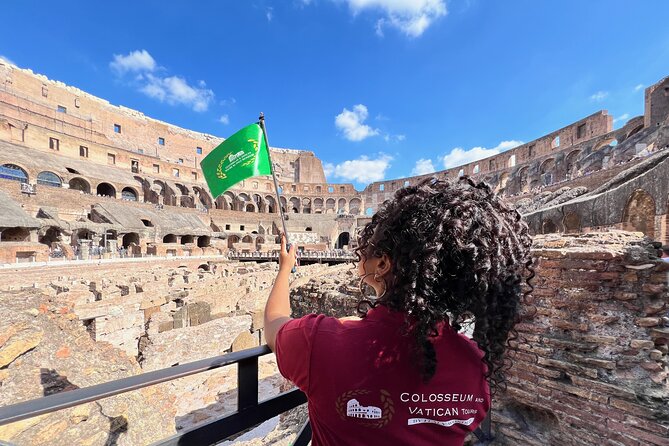
- First two rings of the Colosseum: you’ll get stage-and-dungeon context instead of just the outer walls
- Palatine Hill emperor villas: including Tiberio’s Palace plus a panorama that makes the ruins make sense
- Roman Forum center stage: you’ll see key civic spaces and landmarks like the Tomb of Julio Caesar
- Small-group feel (max 25): easier movement through crowded areas and better Q&A
- Guided or audio guide option: flexible if you prefer to roam at your own pace
- Real-world ID rules: your name must match your ID exactly for Colosseum entry
Entering the Colosseum: where your time actually goes
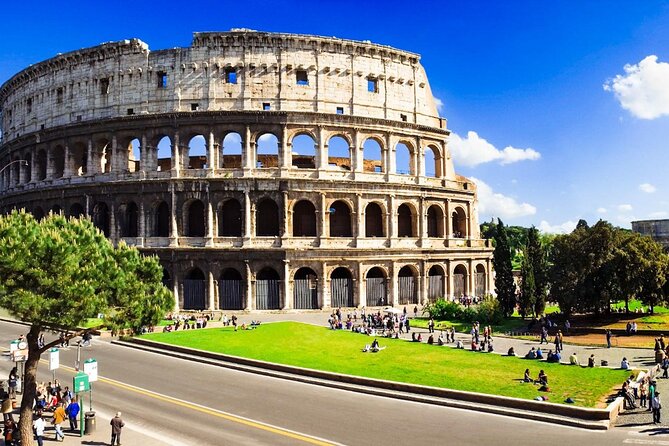
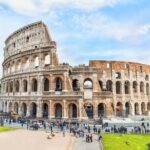
The Colosseum can be overwhelming. So I like that this tour gets you inside with a guide and a smaller group, then directs you to the portions that help you “read” what you’re seeing.
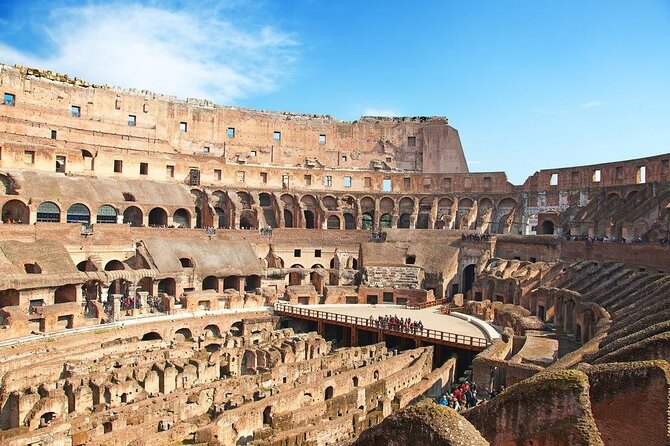
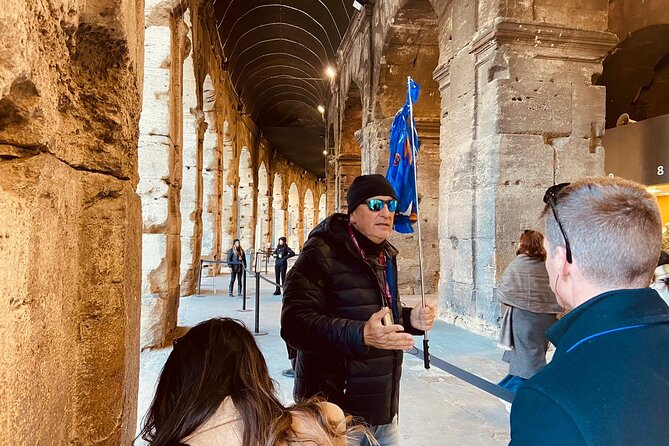
You’ll enter and visit the first two rings. That choice matters. The views from there are closer to the action than the high-level overlooks, and the guide can explain what you’re looking at: the stage area where fights played out, and the underground spaces described as dungeons—where people waited before going up to the show. You’re also hearing context about emperors, senators, gladiators, and wild animals while you walk, which makes the structure feel more than just photos and guesswork.
Also note the practical reality: you still have to pass through security and a metal detector to enter. The tour helps with the reservation and ticket access, but it does not remove security checks. Think of it as: you skip the ticket purchase step, not the safety step.
You can also read our reviews of more tours and experiences in Rome.


A small tip that helps
Bring a small bag you can carry through the detector. One of the best bits of advice I’ve seen is to use a simple plastic bag to keep items together when trays aren’t provided and things end up on the table messily. It’s a minor thing, but it makes the entry process smoother.
Palatine Hill and the emperor-villa view over Circus Maximus
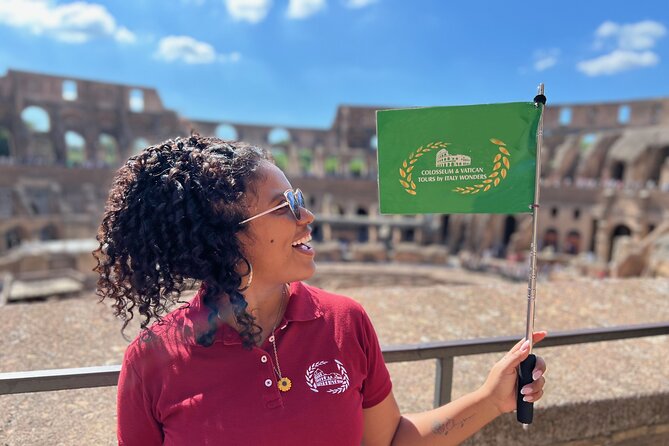
After the Colosseum, you head to Palatine Hill, the place people often describe as “the emperors moved in and never left.” This stop is where the tour changes gears—from entertainment to power and luxury.
You’ll spend about 45 minutes walking Palatine. The focus is on the emperor villas—especially Tiberio’s Palace—and you’ll see how the hill connects to the city around it. One of the most useful parts is the terrace panorama over Circus Maximus, where chariot races happened. Even if the track itself is mostly gone, the sightline tells you how Rome staged spectacle on a massive scale.
What I like here is that Palatine isn’t just random ruins. The guide helps connect the dots: who lived where, why this hill mattered, and how the view of the surrounding area fits the political story. The terraces also give you moments to pause and take photos without feeling like you’re standing in a crowd shoulder-to-shoulder the whole time.
The main drawback at Palatine
Time is tight. You get the highlights, but you won’t have hours to wander every path. If you love architectural detail and want to crawl slowly, you might want to add extra time on your own later. This tour is built for efficient first-time orientation.
Roman Forum: daily life, civic power, and Julio Caesar’s tomb
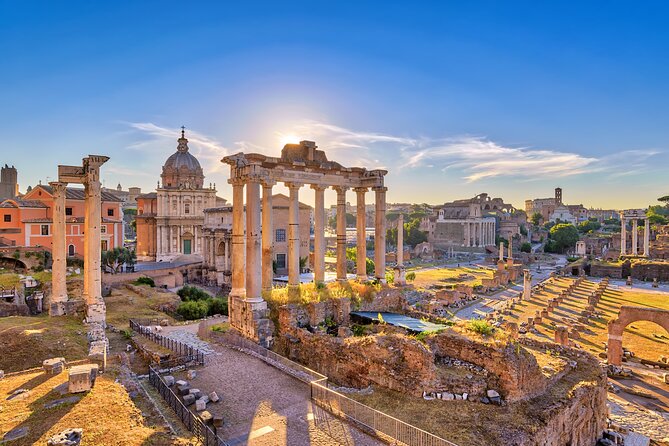
Then comes the Roman Forum. This is where Rome shifts from buildings to systems—political, commercial, and social life all in one compact area.
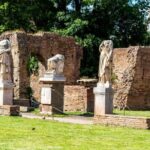
You’ll walk through the ruins of temples, arches, and religious monuments, and the tour explains why the Forum was the center of everyday power. You’ll also get to see the Tomb of Julio Caesar, a landmark that helps you anchor the timeline. The Forum stops can feel like “more ruins” if you show up with zero context. With a guide, it becomes a map.
You’ll also hear about daily life in Ancient Rome, which is exactly what you need here. The Forum is big on roles and rituals—courts, speeches, trade, religion—so hearing those ideas while you walk makes the shapes in front of you easier to recognize.


Where the pacing might bother you
The Forum gets around 45 minutes. For many people, that’s plenty because it keeps the tour lively and doesn’t burn the whole day. For anyone who expected the afternoon to be mostly Colosseum time, it can feel like a trade: Forum is a key stop, but you don’t spend a full separate afternoon there on this tour.
Guided tour vs audio guide: pick the right style for your day
This experience comes with two modes: a guided tour or an audio guide option for independent explorers. The difference isn’t just “a person vs no person.” It changes how you experience the ruins.
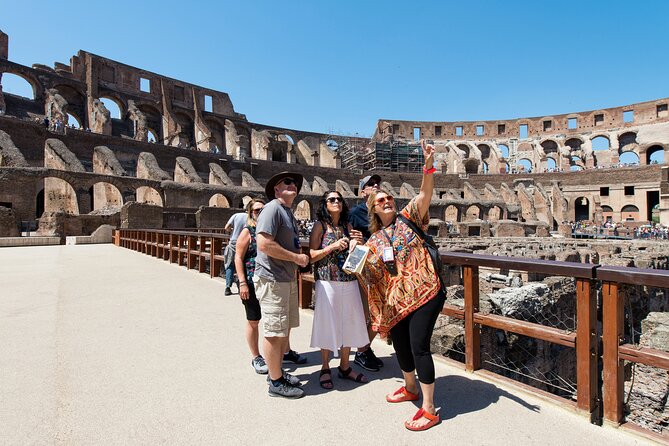
With a guided tour, you get:
- Direction about where to look inside the Colosseum (including first two rings)
- Explanations timed to each stop (Colosseum → Palatine → Forum)
- A chance to ask questions while you’re moving
With the audio option, you’ll rely on a downloadable app. Here are the exact things to know so it doesn’t turn into frustration:
- Download the app in advance using Wi‑Fi, then it works offline
- Bring your own earphones (the tour does not provide them)
- Your smartphone needs compatibility; older phones may not support the app properly
- If you book for after 4:00 PM, you may not have enough time to visit the Roman Forum and Palatine Hill. In that case, you can arrive earlier or visit the Forum area the next day
One more important reality check: the idea of skipping lines is not a free pass. Even with an audio option, you still have to go through scans and security checks. The “skip the line” benefit is mainly about not waiting to buy tickets you already hold.
Who should choose what
- Choose the guided tour if you want quick clarity and zero guesswork, especially the first time you face these sites.
- Choose the audio guide if you like moving at your own pace and you’re comfortable pulling information from your phone while you walk.
Price and value: what you’re paying for
This costs $31.32 per person and runs about 2 hours 30 minutes (roughly). That price includes entrance to the Colosseum, Roman Forum, and Palatine Hill, plus a Colosseum reservation fee. The included ticket value is listed as €18 for the Colosseum entrance, plus a €2 reservation fee.
Why that’s good value: these aren’t small attractions. You’re paying for timed access and a pre-arranged entry flow across three major stops that are often easiest to do together. You’re also saving decision fatigue—rather than piecing together routes and arrival windows for each site.
What’s not included is just as important:
- No hotel pickup or drop-off
- You handle transport on your own
So the value is best if you’re already in Rome’s center and comfortable arriving at a set meeting point by public transit or walking.
The meeting point and how not to lose 40 minutes
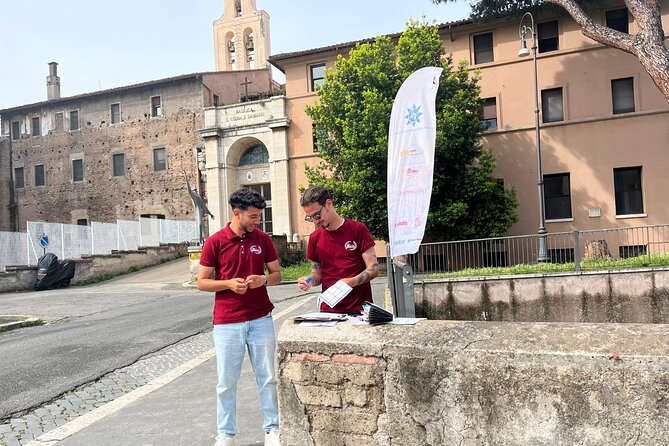
This is one of those tours where being early matters. You’ll check in at the start point on Via dei Fori Imperiali, 1 near Santi Cosma e Damiano (meeting location listed with a Google Maps link). The tour ends outside the Roman Forum at Piazza del Colosseo, 1, 00184 Roma RM.
Plan to arrive at least 15 minutes early. It’s not just “nice to have.” You’ll need time for check-in before the group moves.
Also, keep your phone ready and your contact info correct. Meeting time can change, and you may receive a call or message if it does.
What to bring (and what not to bring) for Colosseum security
Colosseum entry has a strict ruleset, and this tour expects you to follow it.
Do bring:
- A valid ID that matches the booking names exactly
- Enough time margin for security and metal detector screening
Do not bring (examples listed):
- Big backpacks
- Pets
- Weapons or sharp items
- Large bags
- Alcohol, drugs
- Sprays
- Glass
And here’s the part that trips people up: your name must match your passport/ID exactly. Nicknames and missing names aren’t accepted by Colosseum guards. If you have multiple travelers or minors, the details for each person must be correct, or entry can be denied.
Guide personalities that actually improve the day
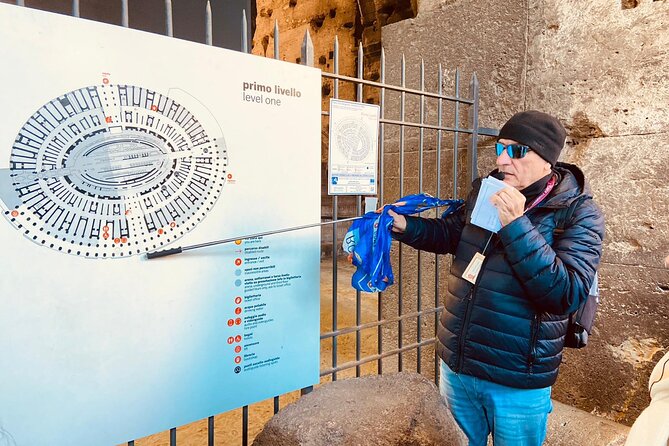
The structure matters, but so does the guide. The names that come up repeatedly in the provided experiences include George, Francesca, Massimo, Diego, Marcus, Max, Grigio, and Francesca again—plus people praising how organized and friendly several of them were.
A couple useful patterns from those accounts:
- Some guides manage group logistics well on hot days, finding spots with a bit of shade when possible.
- Some guides give just enough context without turning the walk into a lecture, and a few are praised for keeping everyone together.
- One guide (Francesca) was noted for having a helpful handmade photo book, which can make it easier to connect the stories you hear to what you’re seeing.
You can’t guarantee which guide you’ll get, but the repeated praise for organization and communication suggests this is a tour where the guide experience affects the value a lot.
Best time to go and how to plan the rest of your day
You can pick a morning or afternoon start time when you book. That choice isn’t just convenience—it helps decide how you’ll handle crowd energy and heat.
If you go in the afternoon, you’ll want a plan for timing, especially if you’re in the position where an audio option after 4:00 PM might not include both Palatine and the Forum. Guided tours are less likely to become “oops, we ran out of time,” but still, Rome is Rome: lines, security, and walking take real time.
A smart way to structure your day:
- Do this tour earlier, then let your remaining hours be flexible for photos and extras nearby.
- If Colosseum is your priority, schedule the rest of your day with breathing room after the tour ends outside the Forum—so you can return to the area if you feel you missed anything.
Should you book this Colosseum + Forum + Palatine tour?
If it’s your first time seeing these sites, I’d say yes, book it. The tour format is built for orientation: you move through the three big zones in about 2.5 hours, with explanations timed to what you’re looking at. The included tickets make it easier to commit, and the first two rings approach gives you a more “stage-and-underworld” feel at the Colosseum than many rush-through options.
I’d reconsider if:
- Your dream day is mostly Colosseum time and you hate splitting attention with the Forum
- You’re very detail-obsessed and want to spend long hours inside each area on your own
If you do book, follow the rules exactly (especially ID matching) and arrive early. Do that, and you’ll get what you came for: a fast, guided way to understand why these ruins still matter.
FAQ
How long is the tour?
The experience is about 2 hours 30 minutes, depending on the exact flow on the day.
What’s included in the ticket price?
Entrance is included for the Colosseum, Roman Forum, and Palatine Hill, including the Colosseum reservation fee.
Where do I meet the tour?
You meet at Santi Cosma e Damiano, Via dei Fori Imperiali, 1, 00186 Roma RM, Italy. The tour ends at Piazza del Colosseo, 1, 00184 Roma RM.
Do I need to bring an ID for entry?
Yes. You must bring a valid ID, and the name on your booking must match the name on your passport/ID exactly. Nicknames or incorrect names can lead to denied entry.
Is there an audio guide option?
Yes. If you choose the audio guide option, you’ll download the app in advance using Wi‑Fi, listen offline, and you should bring your own earphones.
What if my plans change and I need to cancel?
You can cancel up to 3 days in advance of the experience start time for a full refund. If you cancel later than that, the amount paid won’t be refunded.