REVIEW · ROME
Colosseum with Arena Floor Access, Roman Forum & Palatine Hill
Book on Viator →Operated by City Wonders Ltd · Bookable on Viator
Arena-floor access makes the Colosseum feel real. I love the arena floor special access with reserved entry, and I love that the tour runs with clear audio headsets so you don’t miss the stories while the crowds roar around you. You’ll also hear the origin story of Rome and learn what’s really going on architecturally, not just the movie version. One thing to consider: this is a walking-heavy, mostly outdoors route, and the heat (or sudden weather) can make it tiring.
The route works best if you have moderate physical fitness and you’re okay with uneven surfaces and uphill steps on Palatine Hill. You should skip this if you need stroller access, since group tours can’t accommodate baby carriages.
In This Review
- Key reasons this tour hits the right notes
- Entering the Colosseum with arena-floor access
- Meeting at Largo Gaetana Agnesi and planning your timing
- Stop 1: The Colosseum walk-through, from arena to the second level
- Stop 2: Roman Forum in 30 minutes, with reserved entry
- Stop 3: Palatine Hill views and the Romulus legend
- How the guide and headsets make this tour work
- Small-group size and the value of moving with the right pace
- Price: what $66.37 buys you (and what it avoids)
- Weather and crowd realities (and how to handle them)
- Who should book this tour, and who should reconsider
- Should you book this arena-floor Colosseum tour?
- FAQ
- How long is the tour?
- What access do I get at the Colosseum?
- Is Roman Forum and Palatine Hill included in the same tour?
- Do I need an ID to enter the Colosseum?
- Where do I meet and where does the tour end?
- What group size should I expect?
- Is the tour physically demanding?
- What is the cancellation policy?
Key reasons this tour hits the right notes
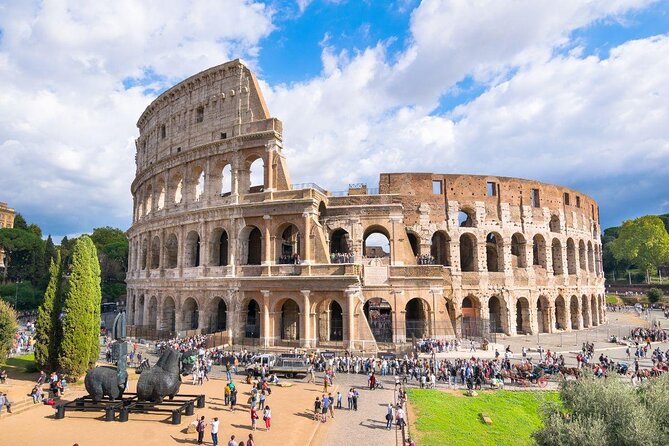
- Arena floor entry plus Emperor’s Box: You see the Colosseum from the level gladiators and performers would have known.
- Reserved access to Forum and Palatine Hill: Less time hunting tickets, more time learning what you’re looking at.
- Audio headsets: Even in peak noise, your guide’s explanations stay clear.
- Small-group formats: Options run from smaller groups (and private) up to limited group sizes, so you get real interaction.
- Start-time flexibility: Multiple departure times help you fit it into a tight Rome schedule.
- Guides with energy: Guides like Amber, Giorgio, Favio, Eddy, Sylvia, Francesca, and Patrick are repeatedly praised for clarity and keeping things moving at the right pace.
Entering the Colosseum with arena-floor access
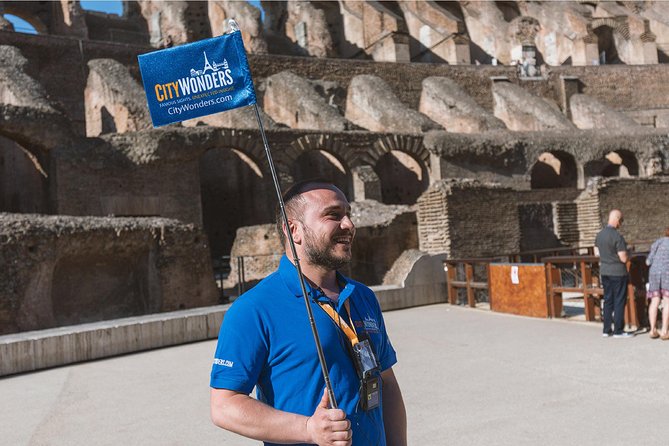
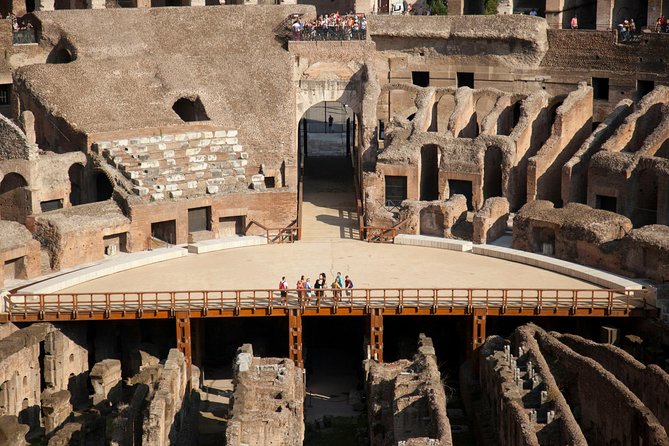
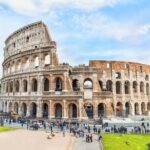
If you’ve ever stared at the Colosseum from outside and thought, I get the shape, but do I really get the scale, this is the fix. The headline feature is arena-floor access, which gets you past the “look-but-don’t-touch” feeling and onto the same ground where the action happened. It changes how the building reads. From the floor, you can better understand how the tiers, corridors, and sightlines were designed for spectatorship.
Another reason I like this setup: you’re not just wandering. You’re guided to key vantage points, including the Emperor’s Box area (and other exclusive areas tied to the special access). That means you’re not stuck guessing why certain spaces exist or what you’re supposed to notice as you move.
And yes, you’ll still get the drama. But the best part is that the guide frames it as engineering plus society plus politics, not as a generic gladiator theme. In Rome, that difference matters.
You can also read our reviews of more tours and experiences in Rome.
Meeting at Largo Gaetana Agnesi and planning your timing
The tour starts at Largo Gaetana Agnesi (00184 Roma) and ends on Palatine Hill at Via di S. Gregorio, 30 (00186 Roma). That end point is convenient if you want to keep exploring immediately on Palatine Hill, but you should plan your next stop nearby, not across the city.
Expect some variation in how quickly you get through security. This type of site can have delays clearing checks, and you’re touring during peak hours unless you chose an off-peak start time. The practical move: arrive early, not fashionably early. You’ll thank yourself if there’s a line at the entrance gate.
Also, the tour order can shift. If a portion of the route faces a last-minute closure, the operator may adjust the itinerary and sometimes add time within the total tour length. It’s not something you can control, but it’s reassuring that there’s a plan when the site doesn’t cooperate.
Stop 1: The Colosseum walk-through, from arena to the second level
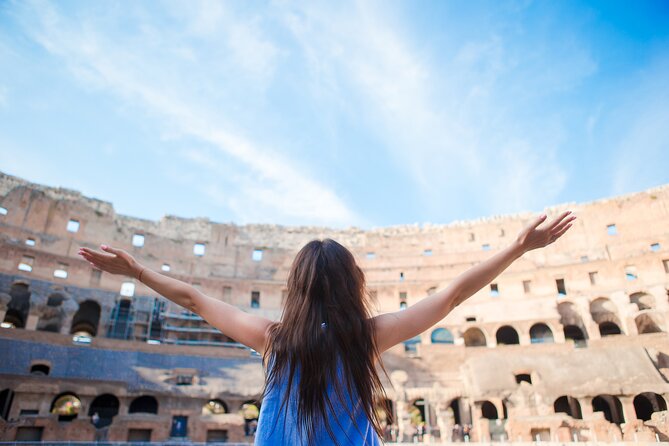
The Colosseum portion is about 1 hour 30 minutes, and it’s built around a clear arc: you start inside with a reserved route, then move through the spaces that explain how the games worked.
Here’s what you can expect in plain terms:
- Special access areas: You’ll spend time on the arena floor. This is the moment most people remember because it puts you at the human scale. The stadium stops being a postcard and starts being a working venue.
- Architectural storytelling: Your guide connects what you’re seeing to how the building functioned—levels, circulation, and sightlines. One of the most common compliments about guides on this tour is that they make Roman technology and structure feel alive. If you happen to get a guide with that style, like Sylvia (praised for positive energy and an archaeologist mindset) or Eddy (praised for humor plus deep knowledge), you’ll get more than facts—you’ll get understanding.
- Second level viewpoints: After the arena experience, you’ll ascend to the second tier/second level. Standing higher gives a different sense of crowd geometry and how the building “frames” the action.
One practical note: this is a big site with lots of steps and uneven stone. The tour is designed for visitors with moderate fitness, but don’t underestimate it on a warm day. In the Colosseum, shade is limited, and walking through crowds can feel like walking through a slow-moving furnace.
Bring a small bottle of water and wear shoes with grip. In multiple experiences, people specifically called out the need for footwear suitable for uneven surfaces. If you’ve got a pair you normally wear in museums, switch them for your walking shoes.
Stop 2: Roman Forum in 30 minutes, with reserved entry
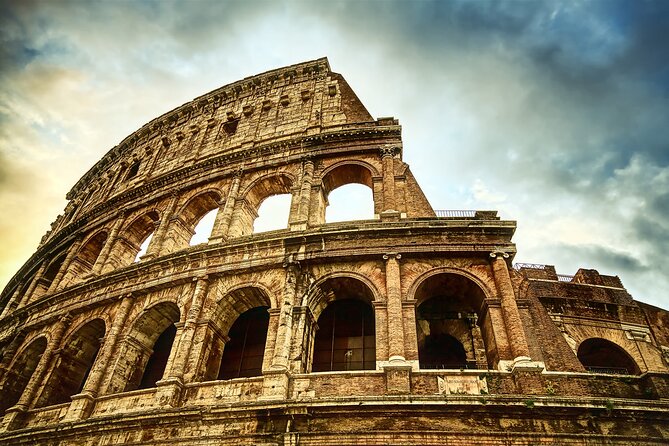
After the Colosseum, you head to the Roman Forum (included, no extra ticket cost). Your time here is about 30 minutes, and that’s a good thing to know up front. The Forum is sprawling and it can swallow time if you let it. This tour gives you just enough structured time to connect the dots.
The Roman Forum is often described as the heart of civic life—and this visit keeps that idea practical. You’ll be pointed toward the key “why this place matters” features, and your guide will tie events and power struggles back to the physical space of the ruins.
What I like about this Forum portion is the reserved entry element. It removes one of the biggest sources of stress on a Rome day: standing in the wrong line and wasting the best daylight. With reserved access, you can focus on what your guide is pointing out and ask questions instead of planning your escape route.
The trade-off is speed. Some people want to linger longer at every cluster of ruins, but 30 minutes means you’ll move. If you love photos, you’ll likely be fine, especially if your guide gives you a moment to step aside and shoot without the whole group creeping forward. That kind of group pacing gets praised a lot with these tours.
Stop 3: Palatine Hill views and the Romulus legend
You’ll then make your way to Palatine Hill, with about 30 minutes here too. It’s a short walk uphill, and the payoff is the bird’s-eye perspective over the Forum and Circus Maximus.
Palatine Hill is more than a scenic finish. It’s tied to the founding myth: the area is associated with Romulus and Remus, including the story of how Romulus chose the site for Rome around 753 BC and the tragic outcome for Remus. Your guide brings that legend into the geography, so it doesn’t feel like a random bedtime story pasted onto ruins.
The practical piece: Palatine Hill is where your legs feel it. If you’re sensitive to stairs or steep sections, wear shoes with good traction and keep an eye on your footing. Some guests report that guides are willing to help with mobility issues when possible, including directing people toward elevators rather than forcing them up stairs.
If you’re traveling in heat, this hill can be exposed. Plan water breaks even if the tour is running on schedule. Short breaks are better than pushing too far and slowing down the whole group later.

How the guide and headsets make this tour work
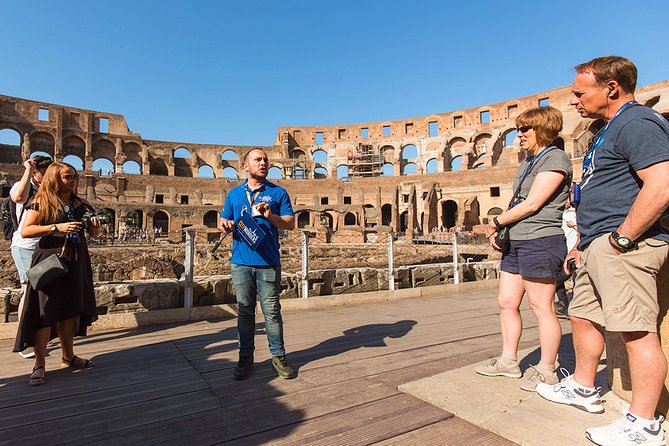
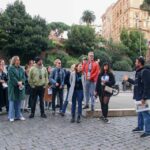
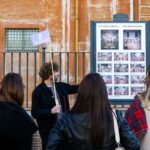
In a big, noisy place like the Colosseum, your guide matters. And in the strongest versions of this tour, the guide doesn’t just recite dates—they makes the site readable.
You’ll see that reflected in the kinds of compliments people give: guides like Giorgio are praised for charm and attention to photo timing; Favio gets praised for clear English and a mix of humor and detail; Francesca gets praised for practical routing that reduces unnecessary queueing; Patrick and Barbara get praised for politeness and easy-to-follow explanations; and Amil gets praised for making the story feel like you’re in the real arena rather than watching a reenactment.
Even if you don’t know who you’ll get, this tour’s setup helps: audio headsets mean you can keep your eyes on the ruins and still follow along. When you’re surrounded by loud groups and constant movement, headsets are the difference between enjoying the tour and constantly asking, What did they say?
Small-group size and the value of moving with the right pace
This experience comes in different group sizes depending on what you choose:
- Some options cap larger groups (like group tours limited to 25).
- Semi-private options can be smaller (up to 10).
- Small group/private formats keep it tighter (and the tour is capped at a maximum of 15 travelers in the general setup described).
Why you should care: at the Colosseum and Forum, the bottleneck isn’t only entrances. It’s also crowd navigation and time spent standing still to listen. Smaller groups are usually easier for your guide to reposition you without turning the experience into a traffic jam.
If you want the “I can ask questions and get an answer” feel, choose the smaller option. If you’re okay being more passive and just want the big highlights, a larger group option might still work. But the most consistently praised aspect is that the tour stays focused and not chaotic.
Price: what $66.37 buys you (and what it avoids)
This tour is priced at $66.37 per person, runs about 3 hours, and includes key components that are expensive and time-sensitive in Rome: the right tickets plus guided access.
The Colosseum ticket portion includes arena entry, with the base ticket amount listed as €24, plus a reservation fee of €2. That means a meaningful part of what you pay isn’t just the guide—it’s also the cost of securing access to specific areas with the right timing.
The remainder covers the parts that are hard to DIY:
- an English-speaking expert guide
- audio headsets
- the reserved route timing and coordination
- the structured route that links Colosseum to Forum to Palatine Hill
Is it cheaper than buying tickets and wandering? Often, no. But it’s a better value if you’d otherwise waste time deciding where to go, where to stand, and how to connect the ruins to each other. In Rome, time is your most expensive currency.
Also, these tours tend to book ahead. If you see decent availability now, I’d treat that as a signal to grab your start time rather than holding out for a perfect afternoon slot.
Weather and crowd realities (and how to handle them)
Rome’s crowds can be intense, especially at the Forum and on Palatine Hill. Even with reserved access, you can still be packed in certain corridors. This is where headsets help, and where your expectations matter.
Heat is a recurring theme. One reason people love the tour is that it moves efficiently with a guide who keeps the group comfortable and staged for photos. Still, there’s limited shade, and the walking is real. If you’re visiting in summer, aim for a cooler start time.
Rain can happen too. In one case, a group was caught in a hail storm and conditions were miserable by the end. That doesn’t mean the tour is unsafe, but it does mean you should dress for weather you don’t control. Bring a light layer and consider a small rain cover.
Finally, there can be last-minute venue closures. If something changes, you may get extra time within the advertised total length. That flexibility is one reason this type of guided ticket package can feel smoother than trying to improvise everything yourself.
Who should book this tour, and who should reconsider
This is a great choice if:
- you want arena-floor access rather than a distant view
- you like guided context that makes architecture and Roman society click
- you prefer a small-group pace that keeps things moving
- you want to cover Colosseum + Forum + Palatine Hill in one organized run
It might not be the best fit if:
- you need stroller accommodation on a group tour (strollers and baby carriages aren’t accommodated)
- you’re dealing with serious mobility limitations that make stairs and uneven surfaces difficult
- you’re the type who wants to linger for long periods in each ruin area without moving
Should you book this arena-floor Colosseum tour?
I’d book it if you’re excited by the idea of standing where the games happened and you want a guide to translate the building into real understanding. The price becomes easier to justify when you factor in arena ticket access, reserved entry routing, and the small-group feel that helps you actually enjoy the time you spend there.
If you’re on the fence, choose the option that keeps the group small, pick a start time that fits your energy level, and wear shoes made for uneven stone. Do those three things, and you’ll likely walk away with the kind of memory that lasts longer than photos.
FAQ
How long is the tour?
The Colosseum with arena access, plus Roman Forum and Palatine Hill, is about 3 hours total.
What access do I get at the Colosseum?
You get special access to the Colosseum arena floor, plus entry areas that include views such as the Emperor’s Box, along with time on the second level.
Is Roman Forum and Palatine Hill included in the same tour?
Yes. After the Colosseum visit, your guide leads you to the Roman Forum and then Palatine Hill, with reserved entry for both.
Do I need an ID to enter the Colosseum?
Yes. You must present a valid government-issued ID or passport at the Colosseum that matches the name on the reservation, and name changes are not permitted after booking.
Where do I meet and where does the tour end?
You start at Largo Gaetana Agnesi (00184 Roma) and end at Palatine Hill, Via di S. Gregorio, 30 (00186 Roma).
What group size should I expect?
The tour/activity is capped at a maximum of 15 travelers. Depending on the option selected, group sizes can be larger (up to 25) for group tours or smaller (up to 10) for semi-private experiences.
Is the tour physically demanding?
It requires moderate physical fitness. You should expect walking on uneven surfaces and an uphill walk to Palatine Hill.
What is the cancellation policy?
You can cancel up to 3 days in advance for a full refund. If you cancel less than 3 full days before the experience start time, the amount paid is not refunded.