REVIEW · ROME
Dark Heart of Rome: Facts, Legends, and Mystery Tour
Book on GetYourGuide →Operated by City Wonders Ltd. · Bookable on GetYourGuide
Rome gets scarier when the sun goes down. This 1.5-hour night walking tour mixes real locations with ghost stories and darker history, from Campo de’ Fiori to Castel Sant’ Angelo. I like how it’s built for atmosphere, not just facts, so you get Rome at its most cinematic under evening lights, including quieter streets.
I also love that you walk into parts of the historic center most people skip on the big headline tours—especially Via Giulia, one of the first Renaissance planning projects, and the mausoleum site tied to Hadrian. One drawback to plan for: the pace can feel quick in a few stretches, and the format leans story-forward, so if you want a lot of straight, detailed history, you may wish for more.
In This Review
- Key things that make Dark Heart of Rome worth it
- The point of this tour: Rome after dark, with a darker angle
- Where you meet and how to get there without stress
- Campo de’ Fiori at night: executions, legends, and street-level intensity
- Piazza Farnese: granite basins and the Renaissance mood
- Via Giulia: walking through one of Renaissance Rome’s first plans
- Via del Governo Vecchio: narrow lanes and a photo stop that earns its place
- Castel Sant’ Angelo: Hadrian’s Mausoleum under evening light
- Price and value: what $14 buys you in Rome
- What to expect from the guide style (and why it matters)
- How much walking you’ll do in 1.5 hours
- Who should book Dark Heart of Rome (and who should skip it)
- Final verdict: should you book this night mystery walk?
- FAQ
- How long is the Dark Heart of Rome tour?
- Where do I meet the guide?
- What’s included in the price?
- Is hotel pickup or drop-off included?
- Is this tour wheelchair accessible?
- Are strollers allowed?
- What should I bring?
Key things that make Dark Heart of Rome worth it
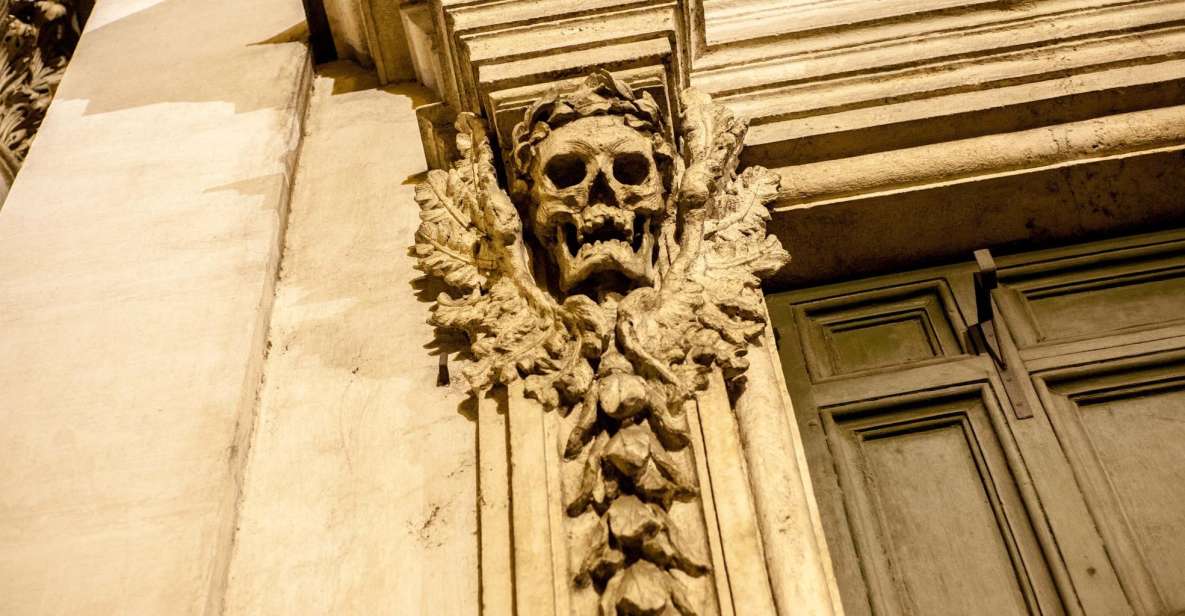
- Nighttime storytelling that turns landmarks into scenes
- Campo de’ Fiori after dark, tied to executions and legend
- Via Giulia and Renaissance planning, explained while you walk
- Castel Sant’ Angelo with the Hadrian’s Mausoleum connection in the spotlight
- A small-feeling route through narrow lanes and compact squares
- Guides known for clear, engaging English and theatrical presentation
The point of this tour: Rome after dark, with a darker angle
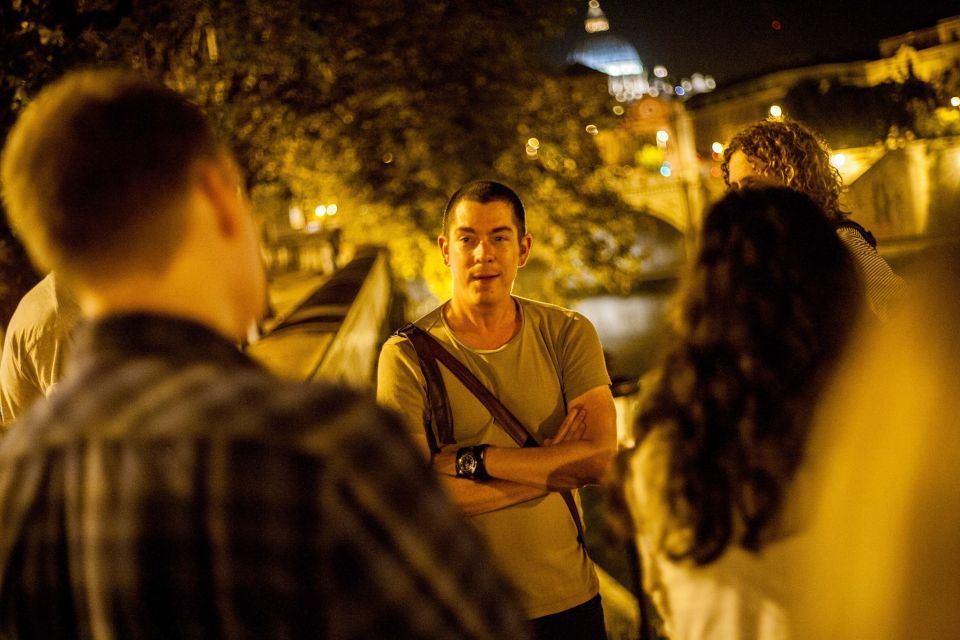
Rome at night is different. The daylight version is loud and busy; the evening version is slower, moodier, and easier to picture as a city of secrets. This tour leans into that. Instead of treating the historic center like a postcard, you’re guided through spots where stories grew—mixing facts you can anchor to real places with legends meant to keep your imagination switched on.
The value here is the pacing and format. In 1.5 hours, you’re not trying to cover everything; you’re aiming for the parts that feel connected to crime, punishment, rumor, and power. That makes the tour especially good as a second or third Rome day—when you want something beyond the usual Rome checklist.
Also, the timing matters. One reviewer specifically mentioned that in June the evening temperature was nicer and the streets and piazzas felt less crowded. Even if your dates aren’t in peak summer, night tours tend to be easier on your feet and your patience.
You can also read our reviews of more tours and experiences in Rome.


Where you meet and how to get there without stress
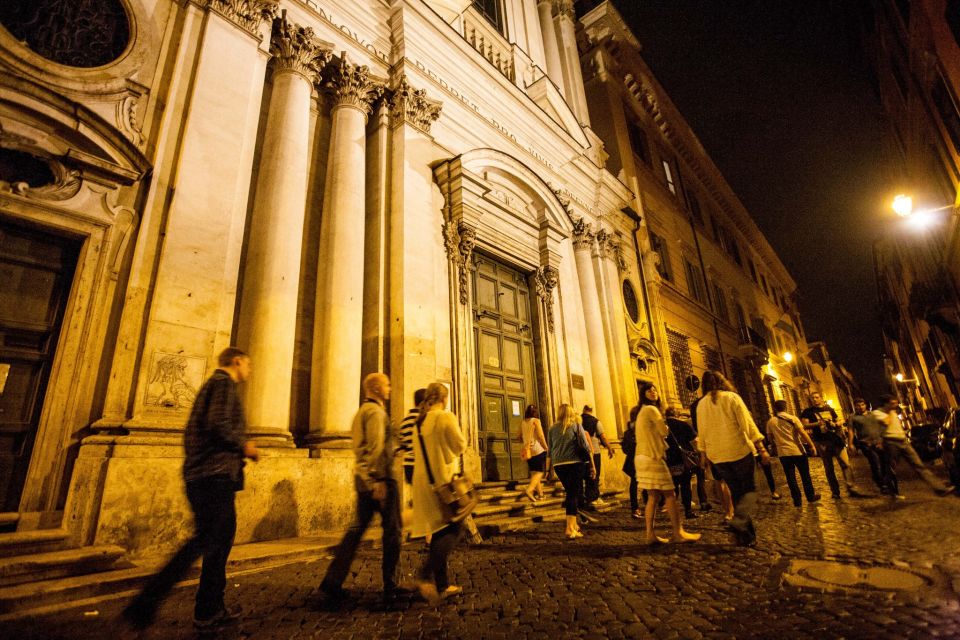
You start at the San Andrea della Valle Church steps, on Corso Vittorio Emanuele II. The meeting spot is about 150 meters from Largo di Torre Argentina, on the left-hand side when heading toward the Tiber River. It’s right next to Piazza Vidoni and Piazza Sant’ Andrea della Valle, so once you’re in that small pocket, it’s not hard to triangulate.
Your guide wears blue attire. That sounds small, but at night it matters. One of the easiest ways to enjoy a guided walk is to avoid the first 15 minutes of panic. Aim to arrive a bit early so you can settle and spot your guide quickly.
No hotel pickup is included. So plan to make your own way to the meeting point. The tour ends at Lungotevere Castello, 50, so you can also think of this as a “walk toward the river” experience rather than a loop back to where you started.
Campo de’ Fiori at night: executions, legends, and street-level intensity
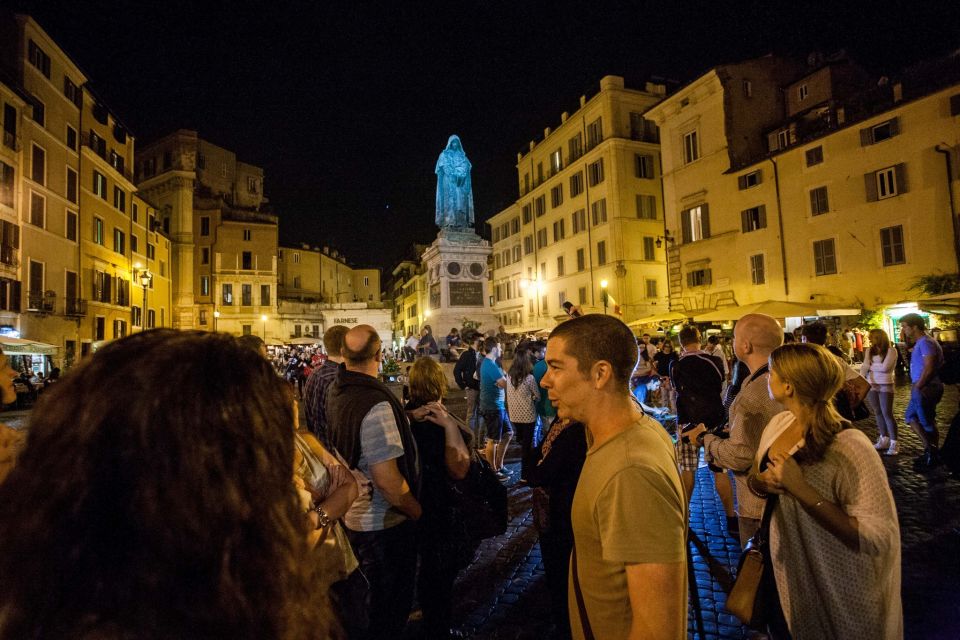
Campo de’ Fiori is one of those squares that always feels busy—even when you’re not there at market hours. On this tour, it becomes a stage set for a darker chapter. You’ll be led through the area with stories connected to the square’s past, including public executions.
What I like about starting here is that the square is instantly recognizable, but the tour angle flips your understanding. During the day, Campo de’ Fiori can read as just a lively central hub. At night, with a guide framing what happened here and why it mattered, it starts feeling like a place where fear and power were on display.
This stop also works as a warm-up. You get your footing in the story-telling style early, so the rest of the route feels more connected. If you’re the type who gets bored on purely lecture-style tours, this is a good start because it’s location-driven and moving.
Practical tip: bring comfortable shoes and expect a night walk. The itinerary is designed for steady strolling, and you’ll spend most of the time walking between compact stops.
Piazza Farnese: granite basins and the Renaissance mood
Next comes Piazza Farnese, dominated by fountains built from granite stone basins. Even if you’re not a fountain scholar (totally fine), you’ll feel what the guide is doing: pointing out how art, architecture, and urban design all reinforce status and control.
In Rome, plazas can look like open spaces, but they often function like stages. Piazza Farnese fits that idea. At night, with lights reflecting off stone and water, the “grandness” factor rises. The guide’s job is to connect that visual power to the human stories tied to the area.
One small benefit: passing through Piazza Farnese gives you a breather without breaking the flow of the walk. It’s a pass-by stop, not an hours-long detour, so you keep the momentum while still getting a meaningful visual moment.
Via Giulia: walking through one of Renaissance Rome’s first plans
This is the portion of the route I’d highlight for people who want a little more structure under the legends. Via Giulia is described as one of the first planning projects of Renaissance Rome, and you’ll walk it with the guide framing why that matters.
Here’s why this stop is valuable: it’s a reminder that Rome’s “dark” side isn’t only about ghosts or gruesome tales. It’s also about how leaders shaped the city. Urban planning can be political. Streets can be designed to control movement, prestige, and perception. When you hear that while standing in the street itself, it stops being trivia and starts being real context.
If you’re the type who likes to take one new idea home from a tour, Via Giulia is that moment. You’ll leave thinking about Rome not just as ancient ruins, but as a living city that was re-engineered and re-imagined long before modern times.



Via del Governo Vecchio: narrow lanes and a photo stop that earns its place
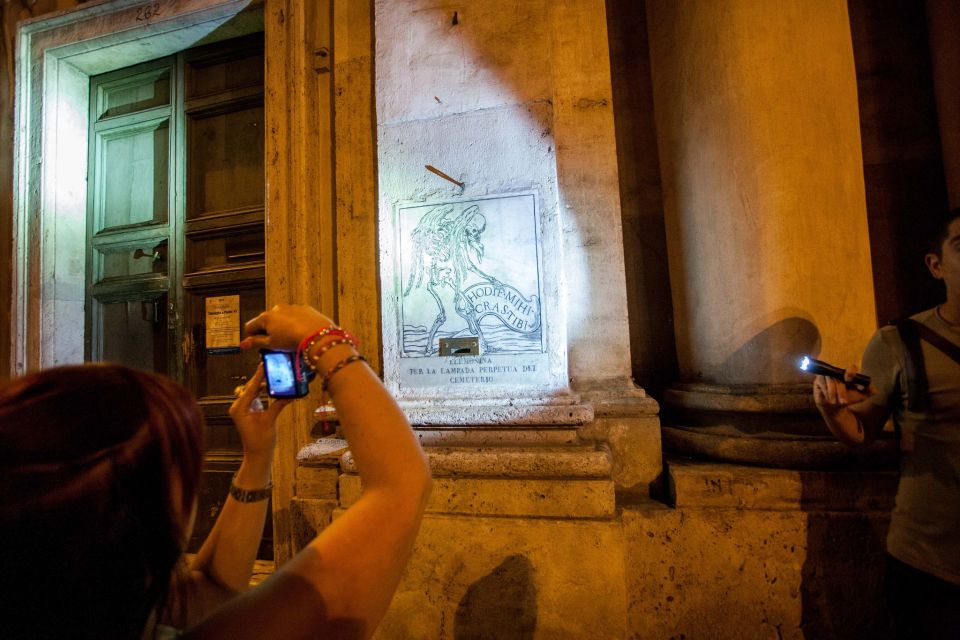
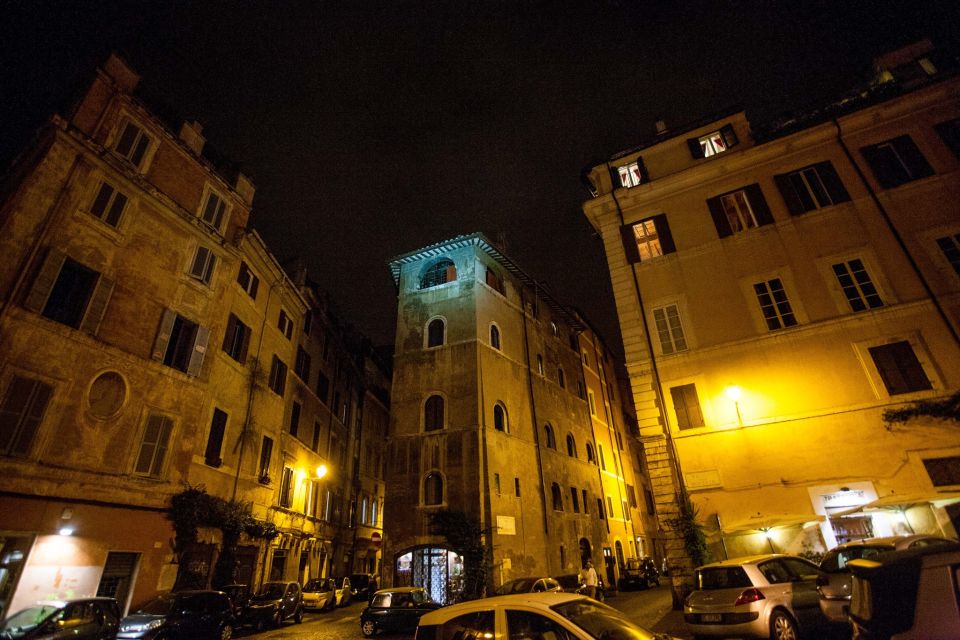
From Via Giulia, the route turns toward Via del Governo Vecchio, with a photo stop. This section is where the tour leans most into mood: winding lanes, shadowed street corners, and the feeling that you’re walking through the “older” Rome that most first-time itineraries rush past.
Even when it’s just a short photo pause, this stop is still useful. It helps you reset your brain after the more conceptual discussion of Renaissance planning. Now you’re back in the everyday geometry of old Rome—tight passageways, small sightlines, and little moments that feel like they belong to the stories being told.
If you’re hoping for iconic wide views, this section may not deliver that. But if you’re here for atmosphere and interpretation, it fits perfectly.
Castel Sant’ Angelo: Hadrian’s Mausoleum under evening light
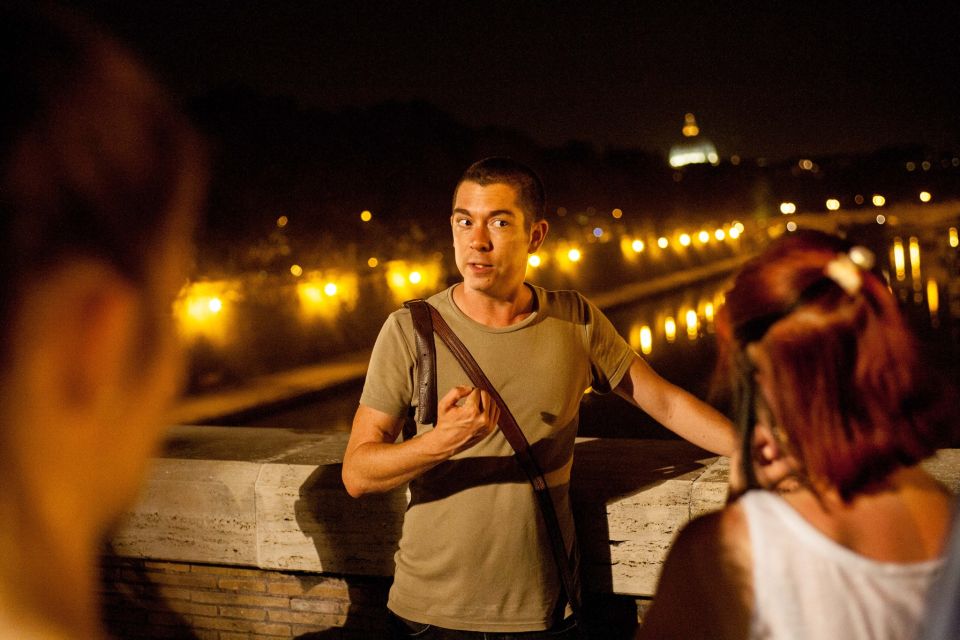
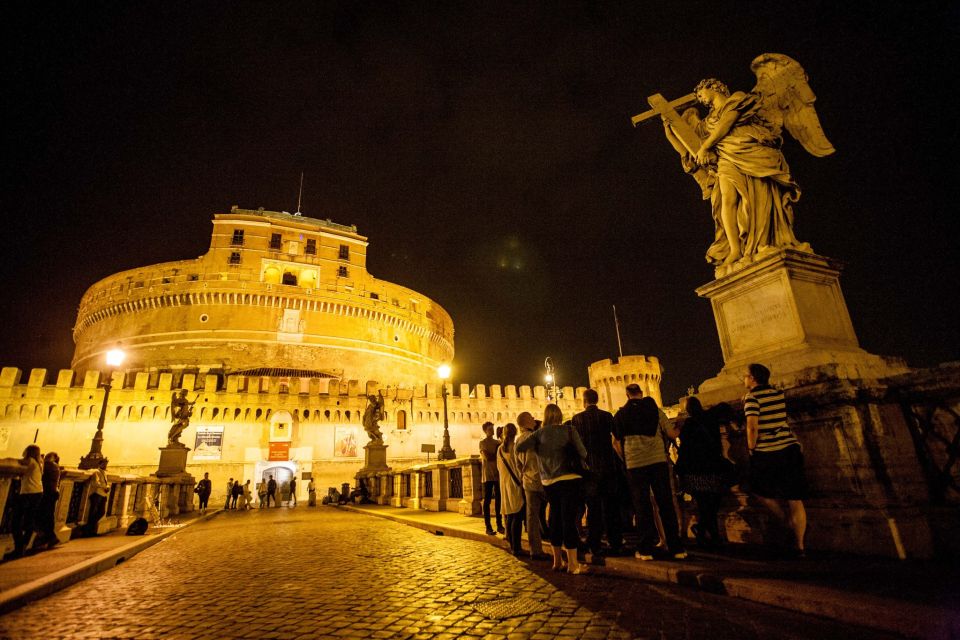
The big finale is Castel Sant’ Angelo, tied to the mausoleum of Hadrian. Seeing it at night changes how it reads. In daylight, it can seem like a landmark you’ve heard about. At night, with fewer visual distractions, it becomes more like a fortress—an object that looks like it was built for long-term power and long-term memory.
This is also where the tour’s “fact + legend” style tends to click hardest. A mausoleum is already dramatic on its own. Add the stories the guide brings in, and you get a sense of how this place could become a magnet for myth.
You’ll have a photo stop and a guided walk through the area. Practically, it’s a strong closer because it gives you something you can stare at while the story makes sense around it. Emotionally, it’s satisfying: you started with a public square tied to punishment, and you end at a structure tied to legacy.
When the tour finishes at Lungotevere Castello, you’ll be right near the riverfront. That’s handy if you want to keep the night going with a walk of your own afterward.
Price and value: what $14 buys you in Rome
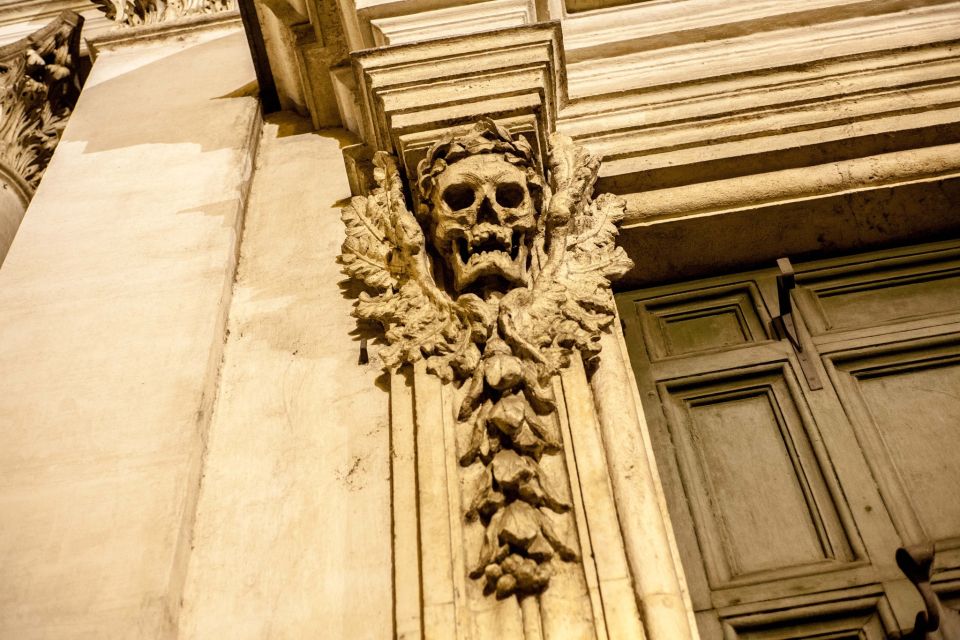
At $14 per person for an evening walk, this tour sits in the “high value” category for Rome. The reason isn’t just cost—it’s how the time is used. You’re paying for an organized route, an English-speaking guide, and a story format that makes multiple locations feel connected.
Big-ticket tours can be worth it, but they often split time between logistics and ticketing. Here, you’re mostly paying for interpretation: someone helping you notice details you might miss if you were wandering alone. If you’ve already seen the Coliseum or Vatican area, this is the type of experience that gives Rome a second identity.
Is it perfect value for everyone? Not necessarily. If you want heavy academic-style history, the story-first approach may leave you wanting more. If you want a memorable evening walk that makes Rome feel alive and slightly eerie, the price feels fair.
What to expect from the guide style (and why it matters)
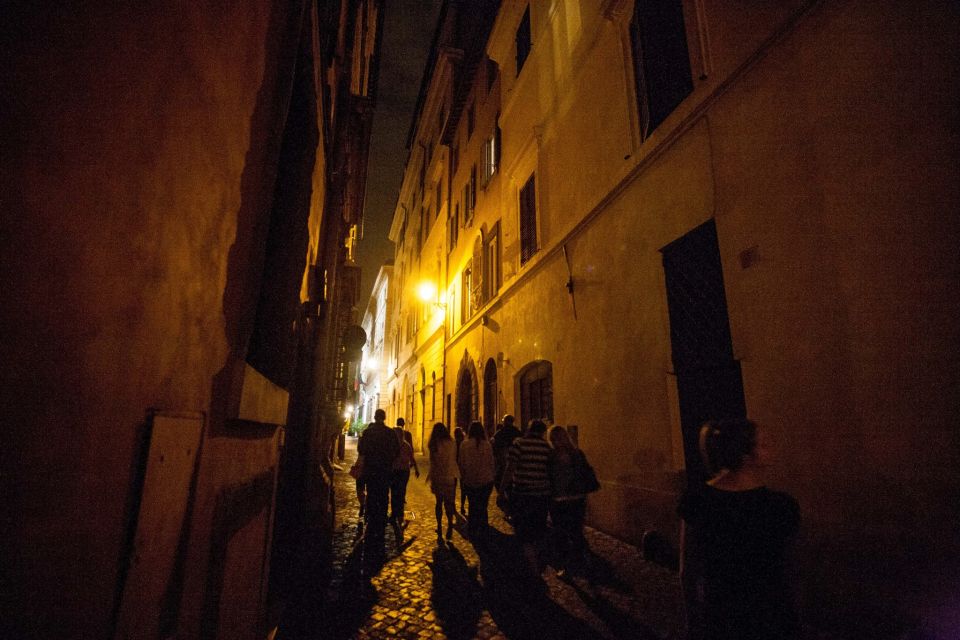
Guides are a huge part of whether this kind of tour works for you. In the feedback, guides like Elisabetta/Elizabeta, Serena, Rob, Max, Pete, and Alithia (spelling may vary) are repeatedly praised for clear storytelling and engaging presentation.
A useful takeaway for you: this tour is meant to be entertaining. One review even described the tour as fun for true-crime fans. That tells you the tone. You should come ready for tales that may feel gruesome, not come expecting a quiet museum lecture.
At the same time, keep your expectations balanced. One note flagged that the tour can feel a bit rehearsed and that the content might feel thin compared with how long Rome’s history is. So think of it as “stories with real anchors,” not a full course in Roman history.
How much walking you’ll do in 1.5 hours
The duration is 1.5 hours, and you’ll be moving between the historic center stops without long breaks. The itinerary includes several guided segments, plus a photo stop at Via del Governo Vecchio and Castel Sant’ Angelo.
This matters because a night walking tour can feel longer than a daytime one, even with the same time allotment. You’ll be switching between walking, listening, and taking photos. If your feet get tired easily, plan for that.
On the good side: night tours often mean cooler temps, and less crowd pressure. That can make the same distance feel easier.
Who should book Dark Heart of Rome (and who should skip it)
I’d point this tour toward three types of travelers:
- You want a night activity that feels different from the standard morning sightseeing grind.
- You enjoy legends and want the stories tied to real streets and landmarks.
- You’ve already done the major sites and want Rome’s personality, not just its monuments.
I’d think twice if:
- You need step-by-step wheelchair-friendly access. This tour is not able to accommodate wheelchairs or guests with mobility impairments.
- You use a stroller. Pushchairs and strollers aren’t allowed.
- You want a slow pace and lots of dense historical detail. The experience is story-forward and can feel quick.
If you fit the walking-friendly, able-bodied, story-curious profile, this tour is a strong choice.
Final verdict: should you book this night mystery walk?
Book Dark Heart of Rome if you want an easy, well-priced way to see the historic center through a darker lens—starting at San Andrea della Valle, passing through Campo de’ Fiori and Piazza Farnese, walking Via Giulia’s Renaissance planning story, and ending at Castel Sant’ Angelo connected to Hadrian’s Mausoleum.
Skip it if you’re mobility-limited, traveling with a stroller, or if you only enjoy tours that feel like a deep academic seminar. For everyone else, it’s a fun evening plan that trades crowds and big-ticket logistics for a walking route, real landmarks, and guides who know how to make the night feel like a story you want to keep reading.
FAQ
How long is the Dark Heart of Rome tour?
The tour lasts 1.5 hours.
Where do I meet the guide?
Meet on the steps of the San Andrea della Valle Church on Corso Vittorio Emanuele II, about 150 meters from Largo di Torre Argentina on the left-hand side heading toward the Tiber River.
What’s included in the price?
It includes the tour as described and an English-speaking guide.
Is hotel pickup or drop-off included?
No. Hotel pickup/drop-off is not included.
Is this tour wheelchair accessible?
No. The tour can’t accommodate wheelchairs or guests with mobility impairments.
Are strollers allowed?
No. Pushchairs and strollers are not allowed.
What should I bring?
Wear comfortable shoes for a night walking tour.