REVIEW · ROME
Games & Treasures Hunts Tour in Rome
Book on Viator →Operated by Mariaclaudia Tours · Bookable on Viator
Rome can test your patience, especially with kids.
This tour is built to keep young minds busy while you hit key A-list sights in a tight, kid-friendly route. I like how the experience uses games and quizzes instead of lectures, so the history feels like something you do, not something you sit through. One thing to consider: it’s only about 2 hours, so it’s not the slow, deep stroll kind of sightseeing—more sprint than marathon.
What you’ll notice fast is the structure. Short stops, clear prompts, and a fun competitive element keep energy up from Piazza di Trevi to the finish at Piazza Navona. The guide team (Mariaclaudia Tours, including guides like Maria Claudia) brings the art-and-history facts through play, which is exactly what makes this work for families.
If your group is expecting long time at each monument, you might feel slightly rushed. The good news: the timing is the point.
In This Review
- Key things to know before you go
- Why a Rome treasure hunt actually makes sense
- Meeting at Piazza di Trevi and starting with momentum
- Fontana di Trevi: 15 minutes of secrets, not a half-day
- Galleria Alberto Sordi: a surprising Rome stop that feels like a game break
- Column of Marcus Aurelius: learning by answering (and looking up)
- Piazza di Pietra and the “street level” trick
- Pantheon time: quick orientation, big monument, line-saving value
- Sant’Eustachio square hunt: listen closely, then find
- Piazza Navona finale: the prize moment in the right location
- How much is it, and is it worth the money?
- What group size and “kid 6+” means for your day
- Who should book this family hunt in Rome?
- Final verdict: should you book?
- FAQ
- How long is the Games & Treasures Hunts Tour in Rome?
- Where does the tour start and end?
- What time does the tour begin?
- Is the tour offered in English?
- Is the Pantheon ticket included, and is there timed entry?
- Can I get a full refund if I cancel?
Key things to know before you go

- A treasure-hunt format for kids 6+ keeps everyone engaged without turning Rome into a classroom.
- Short, timed stops help you see major sights before attention fades.
- Pantheon timed entry is part of the value, designed to cut down the line hassle.
- Games, quizzes, and a final prize give the whole walk a payoff at the end.
- Max group size is small (12 people), which usually means more back-and-forth during activities.
- Mobile ticket in English makes planning easier on the day.
Why a Rome treasure hunt actually makes sense
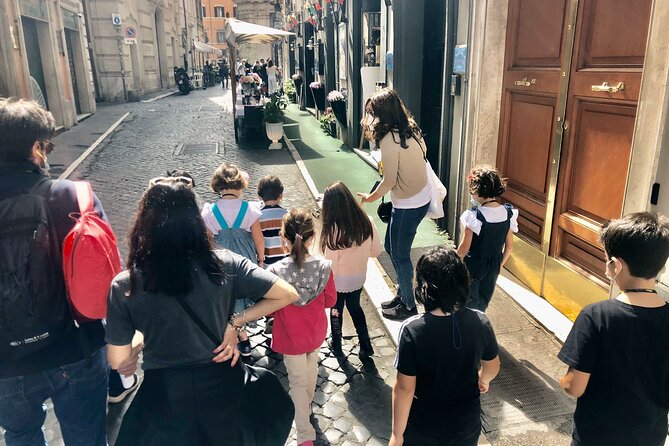
Rome is loaded with big monuments, but big monuments can be a tough sell to kids. This is why the games matter. Instead of you trying to entertain everyone while reading plaques, the guide turns each stop into a quick challenge. The result is that you get to see the highlights while kids feel like they’re playing along, not being dragged from place to place.
The pacing is also smart. The route moves in short bursts—often around 10 to 15 minutes per stop—so you’re not stuck waiting for the whole group to finish one long photo moment. For adults, it still works because you’re getting context as you go, not after the fact.
And the best part for value: there’s a built-in reason to pay attention. When there’s a quiz, a hunt, and a closing win moment, you don’t have to hope everyone “suddenly likes history.”
You can also read our reviews of more tours and experiences in Rome.


Meeting at Piazza di Trevi and starting with momentum
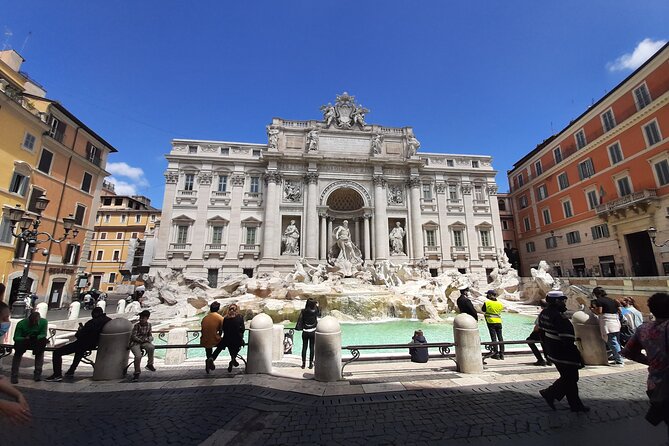
The tour begins at Piazza di Trevi, 89, 00187 Roma RM, with a 10:00 am start. That’s a good place to start because the Trevi Fountain is instantly recognizable, even if you’re arriving after a long trip. You get the famous wow-factor early, before energy dips.
Expect the opening to feel like a warm-up. You’re there long enough to orient, take the classic fountain photos, and get the first set of “watch for this” secrets from your guide. The stop is listed at 15 minutes, which is just enough time to make the fountain feel like more than a photo spot.
Practical tip for families: plan on standing. The fountain area can get busy, and this is a short stop by design. If you need extra space for strollers or kids who get wiggly, arrive a few minutes early so you’re not trying to organize everyone while the game is already starting.
Fontana di Trevi: 15 minutes of secrets, not a half-day
The Trevi Fountain is basically Rome’s shortcut to wonder. Here, the point isn’t to study every detail like an art textbook. The point is to quickly give you the story behind it, then send you into the fun part: learning by looking.
You’ll get facts and prompts related to the fountain as you’re there, then you move on. That might sound like not enough time if you love slow wandering. But for families, it’s a win. Kids don’t usually need 45 minutes of fountain appreciation—they need 10 to 15 minutes of “wait, look at that” attention.
Also, this early stop sets expectations for the rest of the tour. If the kids buy in at Trevi, they usually stay bought in all the way through the Pantheon.
Galleria Alberto Sordi: a surprising Rome stop that feels like a game break
After Trevi, you head to Galleria Alberto Sordi for 10 minutes. This is one of those Rome details that many people miss because it doesn’t scream ancient. It’s a place that shows a different side of the city—modern-era shopping architecture—while still staying very central.
For kids, it’s a relief stop. The pace doesn’t stop, but the setting changes. You go from an outdoor landmark to an indoor-like corridor feeling (without it being a long detour). The tour keeps the tone playful: you’ll play a family game tied to what you see there.
For adults, it’s a nice reset. If you’ve been dealing with crowds around major piazzas, a quick structured break helps. Just remember: it’s brief. Use it for a short photo, a snack if you bring one, and then get ready for the quizzes ahead.
Column of Marcus Aurelius: learning by answering (and looking up)
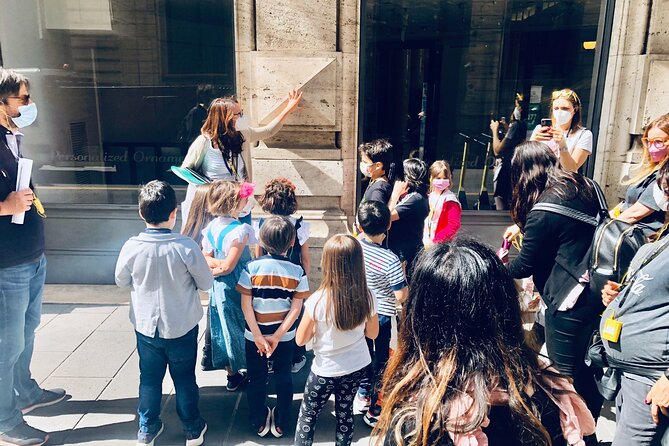
Next up is the Column of Marcus Aurelius for 10 minutes. This stop is set up as a quiz moment—solve questions your guide asks, tied to the column built for Emperor Marcus Aurelius.
Why this works: you’re forced to actively notice the details instead of passively listening. Columns like this can feel like “that big thing over there” unless someone points out what to look for. The game format turns that looking into a challenge.
A good expectation to set: don’t plan to read every carving. The goal is engagement, not completion. The guide is helping you get the main idea fast, then you move on.




Piazza di Pietra and the “street level” trick
At Piazza di Pietra, you get 10 minutes, and the tour includes a fun “find the ancient Roman street level” idea. Rome is layered. If you don’t know what you’re looking for, you’ll walk past the evidence and never realize it’s there.
This stop is basically Rome’s magic trick in pocket size: you learn that the ground level you’re standing on isn’t the only ground level. The guide prompts you to spot the remnants tied to ancient street layers, turning a subtle site into an active hunt.
If your kids are the type who likes scavenger challenges, this is likely to be one of the better moments. And adults benefit too, because it gives you a mental model you can use later in Rome: look down, not just forward.
Pantheon time: quick orientation, big monument, line-saving value
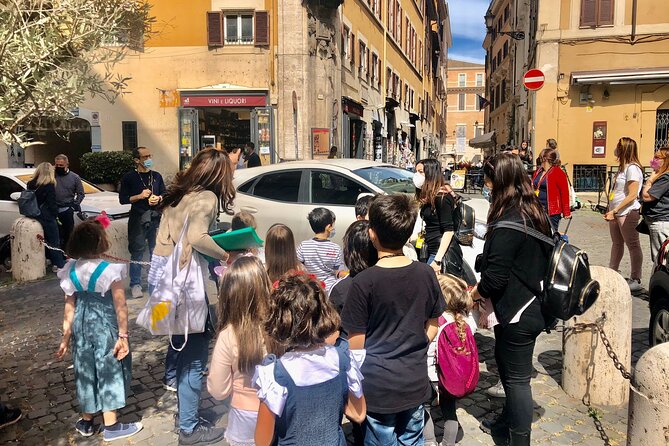
You’ll reach the Pantheon for 15 minutes. The Pantheon is the kind of building that makes everyone stop talking. Even if you’ve seen it in photos, it has that “how is this still standing?” effect.
Here’s where the tour’s planning pays off. The highlight notes timed Pantheon tickets to bypass the long line to enter. That’s not just convenience; it changes the whole experience for a family. Less waiting usually means fewer meltdowns, and more time actually seeing the place.
One small note to keep you safe: the tour info you’ll receive may mention ticket details in slightly different ways, but the big takeaway is that Pantheon entry is part of the deal and the timing is meant to reduce the line. When you book, double-check your confirmation details for exactly what’s included.
What to expect in the 15 minutes: you’ll likely get a quick look outside and then the experience of standing inside long enough to appreciate the scale. The guide keeps it interactive, with prompts that help you look at shapes and design rather than just admire the dome from afar.
Sant’Eustachio square hunt: listen closely, then find
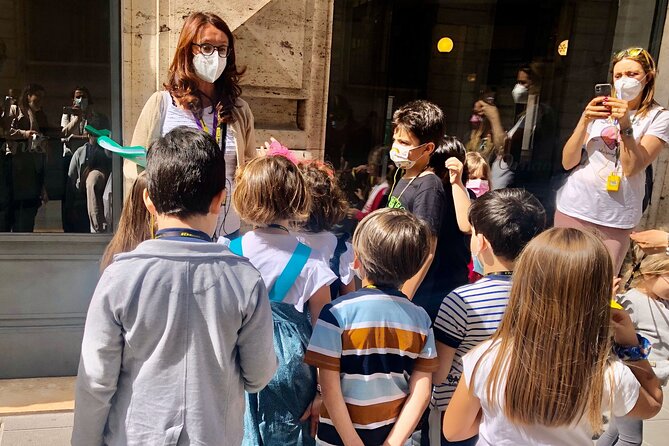
Then comes Sant’Eustachio for 10 minutes. This part is a “listen well” moment paired with a quick hunt: you’ll hear what your guide is telling you and then find what the prompt is pointing to.
This is a classic family-tour move, and it’s underrated. Kids often tune out when the instruction is long. When you give them something to search for, they suddenly want to pay attention because they can win.
It’s also a good “brain switch” stop. You’ve just been in awe mode at the Pantheon. Now you’re back into play mode. That rhythm is what keeps the tour from becoming one long endurance test.
Practical thought: this stop is short. Keep your eyes up and your questions ready, but don’t expect a long Q&A. Save deeper questions for after the tour if you want them.
Piazza Navona finale: the prize moment in the right location
Your last stop is Piazza Navona for 10 minutes. This is where the tour ends with a final treasure hunt and a team win moment—plus a prize for the winning group.
Finishing here makes sense. Piazza Navona feels like a stage: open space, lots of visual energy, and easy rallying after the hunt. The prize element gives everyone a clear emotional landing. Even kids who were having an off day can perk up when there’s a final win moment.
For adults, it’s a nice way to close the loop. You see the sights, you learn the basics, and then you get a fun recap of what stuck. It’s also a good time to point out to kids what they remember so they feel ownership of the experience.
The tour ends at Piazza Navona, 00186 Roma RM.
How much is it, and is it worth the money?
The price is $105.22 per person for about 2 hours. That may sound steep until you look at what’s actually included and what it saves you.
You’re paying for:
- A guided route that hits several major sites in a tight window
- A game and final prize that keeps kids engaged
- Pantheon timed entry, which can be the biggest time-saver in Rome
- A mobile ticket and an English guided experience
- A small group size (max 12 people), which generally makes it easier for the guide to manage the activity
For many families, the value comes down to one thing: time and stress. A timed-entry advantage at the Pantheon can help you avoid waiting around in lines with kids who have hit their limit. When the tour is designed to prevent that, you’re not just paying for sightseeing—you’re paying for a smoother day.
A practical tradeoff: it’s not a slow, detailed museum-style tour. If you want long explanations and lots of free time to linger, you may prefer a different type of guide. But if your goal is to get big Rome moments with less friction, this one fits.
What group size and “kid 6+” means for your day
The recommended age is 6 and over, and most people can participate. The tour is also limited to 12 participants, so it’s built for a semi-active game format rather than passive sightseeing.
In real life, that means:
- You’ll be moving more than you might on a standard adult tour
- You’ll likely spend time standing in public spaces while looking for clues
- Kids who like “find it, answer it, win it” will have an easier time
If you have very young kids who can’t reliably sit through short outdoor stops, this may feel like too much. If your kids are at that 6+ age where they can follow simple instructions and answer quiz questions, you’ll probably see the magic happen.
Also, it’s an English tour, and the meeting point is easy to locate using public transit. Service animals are allowed as well.
Who should book this family hunt in Rome?
This tour is especially well-suited if:
- You’re visiting Rome with kids who get bored fast
- You want a structured way to cover the big sights without overplanning
- You’d rather do short guided activities than wander without a plan
- You care about saving time at the Pantheon
It’s not ideal if:
- You want long stays at fewer sites
- Your group wants a quiet, contemplative pace
- You’re hoping to treat this as a deep-history archaeology lesson
If you’re in the middle—some sightseeing stamina, some need for kid engagement—this is a strong match.
And based on the guide approach, you can expect a friendly, energetic teaching style. One review specifically called out Maria Claudia’s tour as a perfect Rome introduction after a delayed flight, with both kids and adults appreciating her art and history knowledge delivered through the games. That’s a good sign for families who need the day to start working quickly.
Final verdict: should you book?
I’d book it if your priority is big Rome sights + a family-friendly format in about 2 hours. The timed Pantheon entry concept, the game structure, and the prize at the end create a day plan that doesn’t collapse when kids get restless.
Skip it if you want a slow-paced, meaty history experience or lots of free time at each stop. Rome offers both styles—but this one is clearly built for keeping kids engaged while you still see the headline monuments.
If your family wants a smart starter course for Rome that doesn’t take all day, this treasure hunt is a solid bet.
FAQ
How long is the Games & Treasures Hunts Tour in Rome?
It runs for about 2 hours.
Where does the tour start and end?
It starts at Piazza di Trevi, 89, 00187 Roma RM and ends at Piazza Navona, 00186 Roma RM.
What time does the tour begin?
The start time is 10:00 am.
Is the tour offered in English?
Yes, it’s offered in English.
Is the Pantheon ticket included, and is there timed entry?
The tour highlights timed Pantheon tickets to bypass the long line, and the tour details indicate Pantheon entry is part of what you get. Double-check your booking confirmation for the exact ticket coverage.
Can I get a full refund if I cancel?
Yes. You can cancel for a full refund if you cancel up to 24 hours before the experience’s start time.