REVIEW · ROME
Rome: Colosseum, Roman Forum and Palatine Hill Group Tour
Book on GetYourGuide →Operated by Tour in the City - Travel Agency Rome - · Bookable on GetYourGuide
A single ticket for the biggest Roman sights. This half-day Colosseum + Forum + Palatine Hill experience is built for speed and meaning: you skip the worst queues, then you get the stories of gladiators, Roman engineering, and imperial power as you move from arena to ruins to viewpoints.
I especially like the option for either a live guide with headsets or a self-guided downloadable audioguide, so you can match the experience to your travel style. I also like the way the tour pairs the “what you’re looking at” with the “why it mattered,” from trapdoors and mechanisms to where emperors actually lived.
One thing to plan for: the Colosseum does security checks on your ID/name, so the “skip the line” part can still mean you’ll queue a bit. You’ll also want to arrive on time because late entry can’t be fixed once tickets are issued.
In This Review
- Key Things That Make This Tour Worth It
- Rome’s Colosseum, Roman Forum, and Palatine Hill: the Perfect Half-Day Setup
- Price and Value: What You’re Really Paying For
- Guided Tour vs Self-Guided Audioguide: Pick Your Style
- Guided option (English live guide + headsets)
- Self-guided option (smartphone audioguide)
- Entering the Colosseum: Fast-Track, IDs, and First Impressions
- Meeting point matters
- Colosseum Arena Time: Gladiators, Trapdoors, and Roman Engineering
- Best views and the “second tier” moment
- Stopping at Constantine, Titus, and Other Power Symbols
- Roman Forum: Where Politics Was the Main Event
- Palatine Hill: Emperors’ Views, Circus Maximus, and Caesar’s Mark
- Timing, Heat, and What to Wear (Because Rome Is Rome)
- Quick Practical Tips That Make the Day Smoother
- Should You Book This Colosseum, Roman Forum, and Palatine Hill Tour?
- FAQ
- How long is the Colosseum, Roman Forum and Palatine Hill group tour?
- Is this tour guided or self-guided?
- Does the ticket include fast-track entry?
- What languages are available?
- What should I bring for the tour?
- Are there any rules about bags, gadgets, or sunscreen?
- Is the tour wheelchair accessible?
Key Things That Make This Tour Worth It
- Fast-track entrance keeps you from losing half your day to the biggest crowds
- Live guide + headset (for the guided option) helps you hear the stories without crowd noise
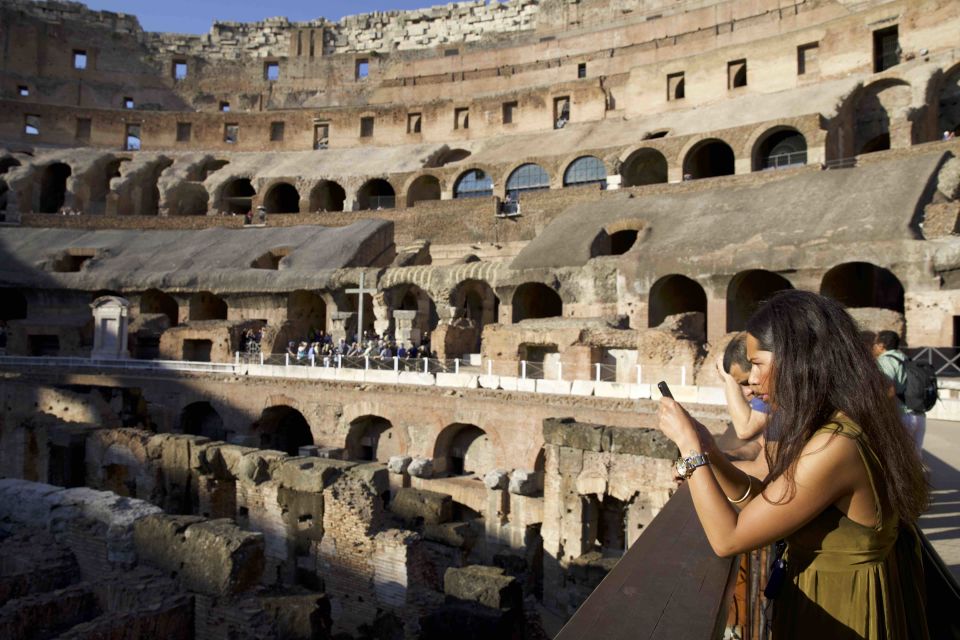
- Colosseum engineering details explain how Romans pulled off the arena action
- Palatine Hill viewpoints give context for how emperors dominated Rome
- A clear stop-by-stop route blends big monuments with the smaller, meaningful ruins
Rome’s Colosseum, Roman Forum, and Palatine Hill: the Perfect Half-Day Setup
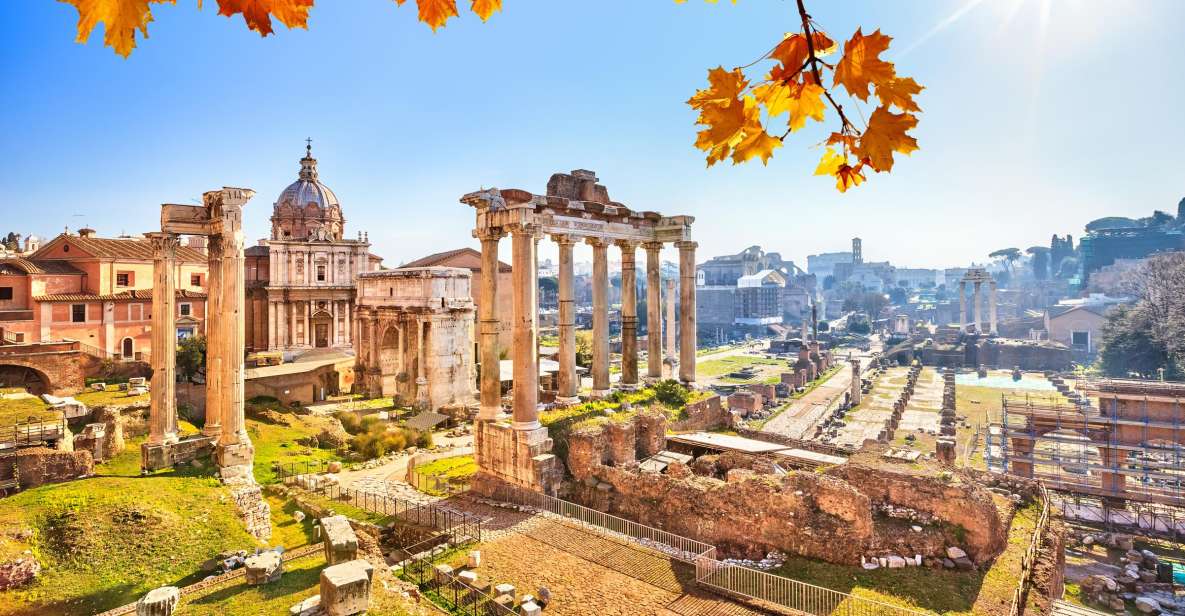
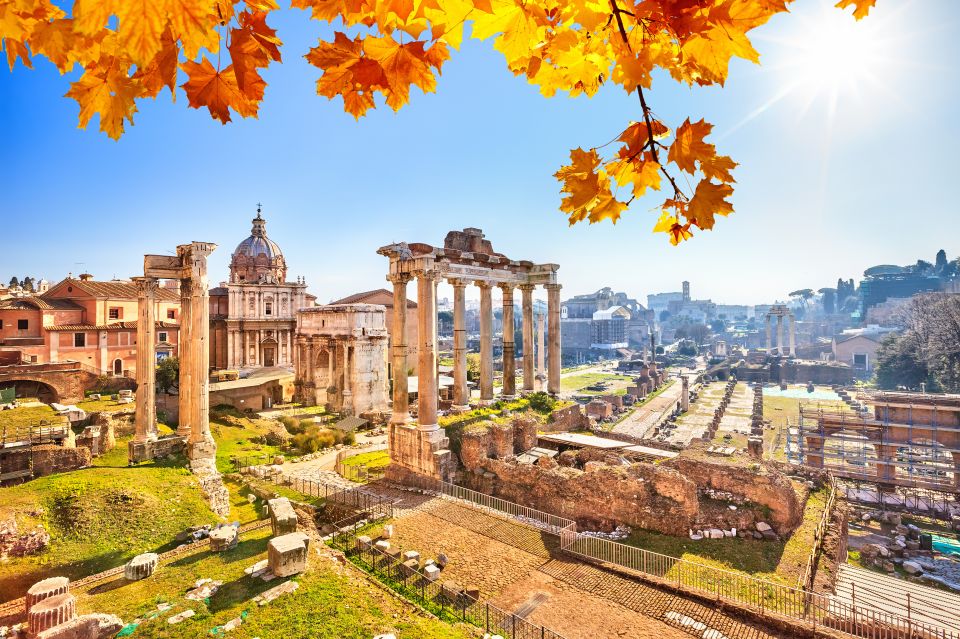
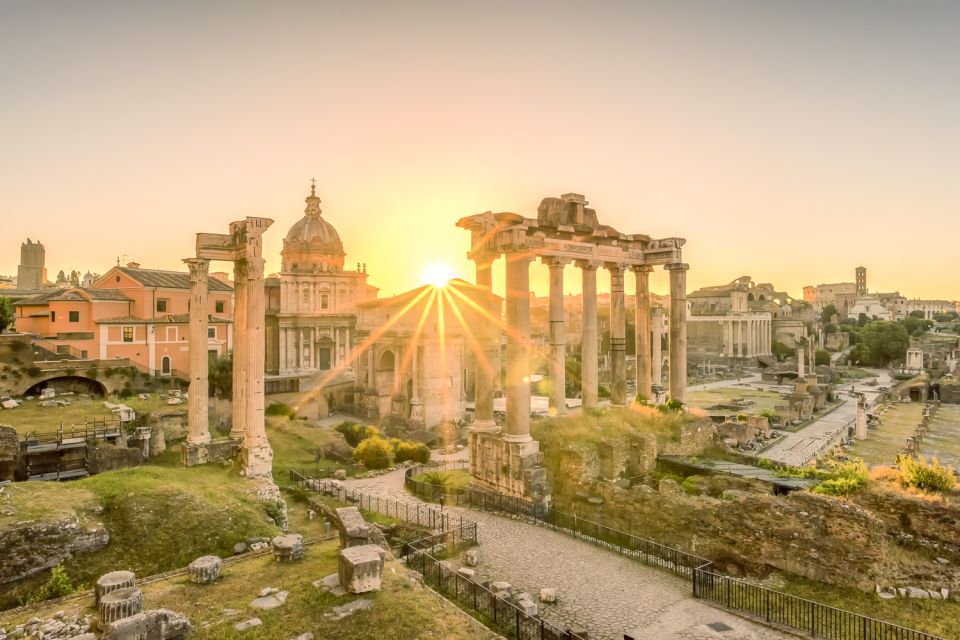
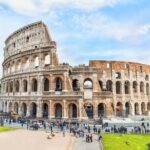
This tour hits the Roman trio that most visitors most want to see. The Colosseum gives you the headline moment. The Roman Forum shows you the political heart. Palatine Hill answers the question people always ask: where did the emperors actually live?
It works because the pacing is built around short, high-impact stops. You’re not wandering and guessing. You’re walking a line that makes the city’s story click into place, especially if it’s your first time in Rome.
And there’s flexibility. You can choose a guided English tour (with an official licensed guide and headset system), or go self-guided with a multilingual audioguide you download to your phone. That matters in Rome, where some days are hot, some days are loud, and everyone’s stamina is different.
You can also read our reviews of more tours and experiences in Rome.


Price and Value: What You’re Really Paying For
The tour price is listed as $28 per person, and the math behind it is pretty fair.
The underlying Colosseum + Palatine Hill + Roman Forum tickets cost 18 euros for adults. Your extra amount covers the services: a professional guide (for the guided option), headset system, staff, and taxes.
If you’re comparing this to buying tickets alone, the value is in two places:
- Time saved: fast-track entry means less waiting when you’d rather be looking up at the arches and into the ruins.
- Interpretation: hearing the “what happened here” parts makes the stone feel less like museum debris and more like a place where real people lived, planned, fought, and performed.
If you enjoy history only when someone points out the “aha” details, the guided option usually feels like the better buy. If you prefer control—pausing for photos, reading at your pace—the self-guided option can still be strong because the audioguide includes lots of points of interest.
Guided Tour vs Self-Guided Audioguide: Pick Your Style
You effectively get two different experiences with the same destination set.
Guided option (English live guide + headsets)
You’ll have a professional, licensed English-speaking guide and a headset system so you can hear instructions and storytelling even when you’re surrounded by other tour groups.
This is the route if you like conversation, questions, and a flow that doesn’t require you to constantly check your phone.
The reviews give you a feel for the guide impact. Names that came up include George (patient and informed), Riccardo (accommodating when people struggled with steps), Barbara (engaging and fast-paced), Caterina (moved the group through while still allowing photo time), and Francis (friendly and clear). The takeaway is simple: the guide often shapes whether the day feels like a guided walk or a chaotic stampede.
Self-guided option (smartphone audioguide)
If you choose the self audio-guided route, you can visit at your leisure without following a group, using a multilingual storytelling audioguide in English plus other languages. It includes 44 points of interest, and you download it to your smartphone.
This is great if you don’t want to keep pace with a group, or if you want to linger when the light hits the stone just right.
One practical note: headphones aren’t listed as included. Also, you’ll need a charged smartphone.

Entering the Colosseum: Fast-Track, IDs, and First Impressions
Getting into the Colosseum is where good planning pays off. Your ticket includes fast-track entrance, and the tour starts by getting you oriented so you don’t just walk in blind.
Even with fast-track access, expect security to matter. The Colosseum security checks the names and ID cards of visitors, so arrival timing still affects how smooth the day feels. If your ID isn’t ready, or if you show up late, it can slow things down.
Also, be ready for the usual “Rome rules” that keep the site safe and manageable:
- No selfie sticks
- No pets
- No luggage or large bags
- No backpacks
- No sunscreen
That last one can catch people off guard, so I’d plan on sun protection that doesn’t involve bringing a sunscreen container into the area.
Meeting point matters
The start location can vary by option. The listed possibilities include:
- Piazza di San Clemente
- Clivo Argentario, 1
- Via Labicana, 96
This is worth double-checking the day-of. One small mismatch wastes time. And time is everything here.
Colosseum Arena Time: Gladiators, Trapdoors, and Roman Engineering
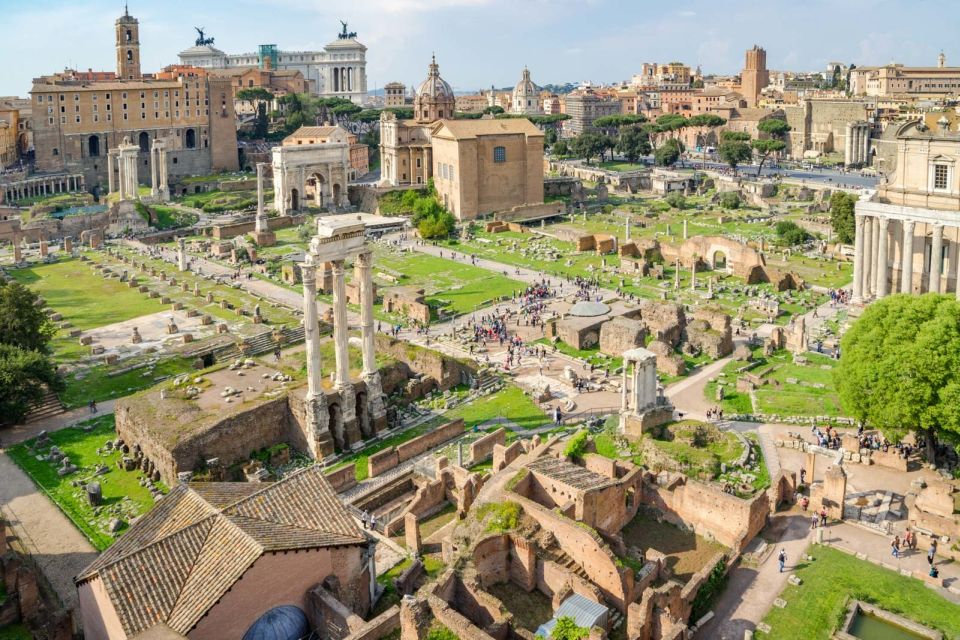
Once you’re inside, the tour approach is smart. You get a description from the outside first, then you head in after skipping the worst line. That outside explanation helps because you’ll start noticing details while you’re still standing in the open air.
Inside, you’re not just looking at arches and seating. You’re being guided through the logic of the show:
- Roman engineers’ construction techniques
- The entertainment behind gladiator combats
- The tech behind the spectacle, including trapdoors and mechanisms
- Stories like mock sea battles
- Details about the cages where lions were kept
That last category is intense. The point isn’t gore—it’s context. This arena was built for control, timing, and dramatic reveal. Understanding that changes how you look at the space.
Best views and the “second tier” moment
The route includes time for the best views of the Colosseum and highlights the second tier as a key vantage point. In practical terms, this helps you see the arena’s scale without having to fight for position at the busiest angles.
If you’re the type who likes photos, the stop also includes photo time and photo-spot guidance in many cases. One review noted a guide even helped take photos, which is nice if you’re traveling with someone who doesn’t always want to play photographer.
Stopping at Constantine, Titus, and Other Power Symbols
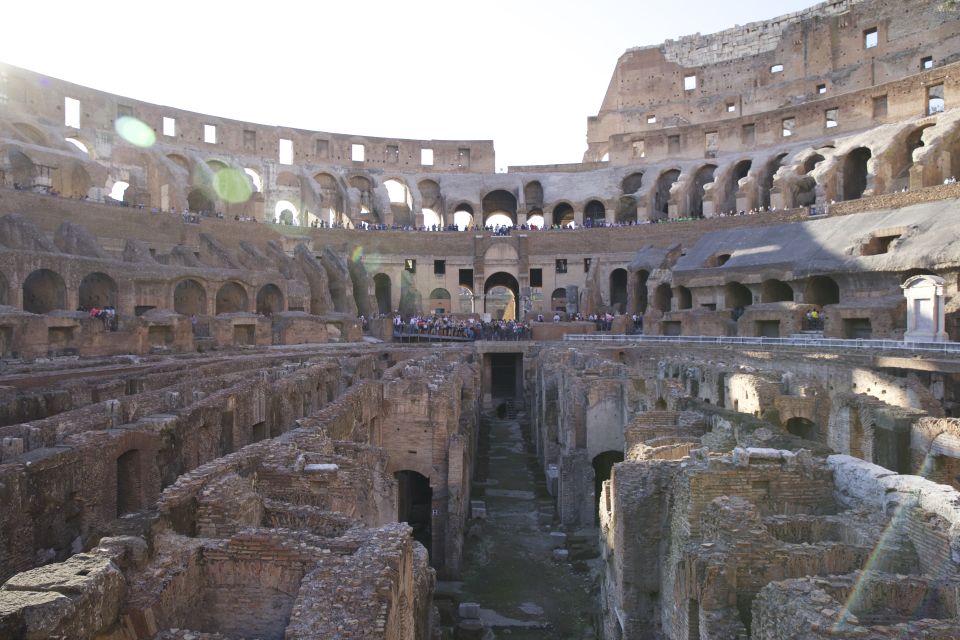
After the Colosseum, the walking loop keeps the story moving through Roman symbolism. These short photo-and-walk stops aren’t there for filler. They teach you how Romans advertised authority.
You’ll hit:
- Arch of Constantine for a quick, visible reminder that imperial Rome loved monumental messaging
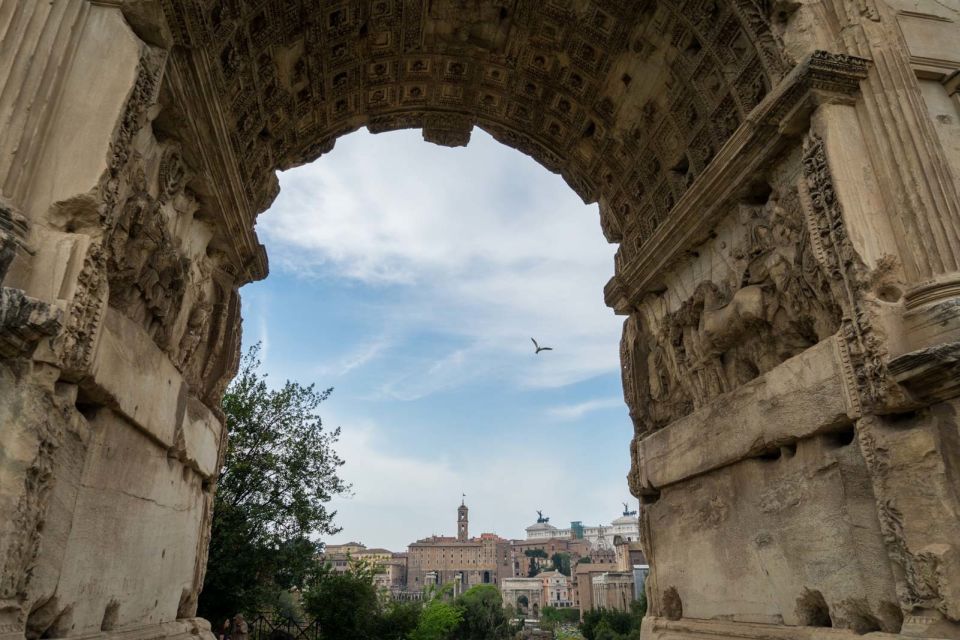
- Arch of Titus, a classic stop that ties the Forum area to broader themes of conquest and power
- Basilica of Maxentius and other nearby ruins, which help you understand how Rome’s elite built spaces that outlasted individual rulers
- Temple of Antoninus Pius and Faustina, a small stop that’s easy to miss if you’re sightseeing alone
- Curia of the Senate House area and Arch of Septimius Severus, both reinforcing the political stage theme
Because the time allocations are short at each of these stops, the tour stays efficient. The potential drawback is that you can’t expect to slow down for deep reading at every monument. If you love to linger, plan to do a little extra self-guided wandering afterward.
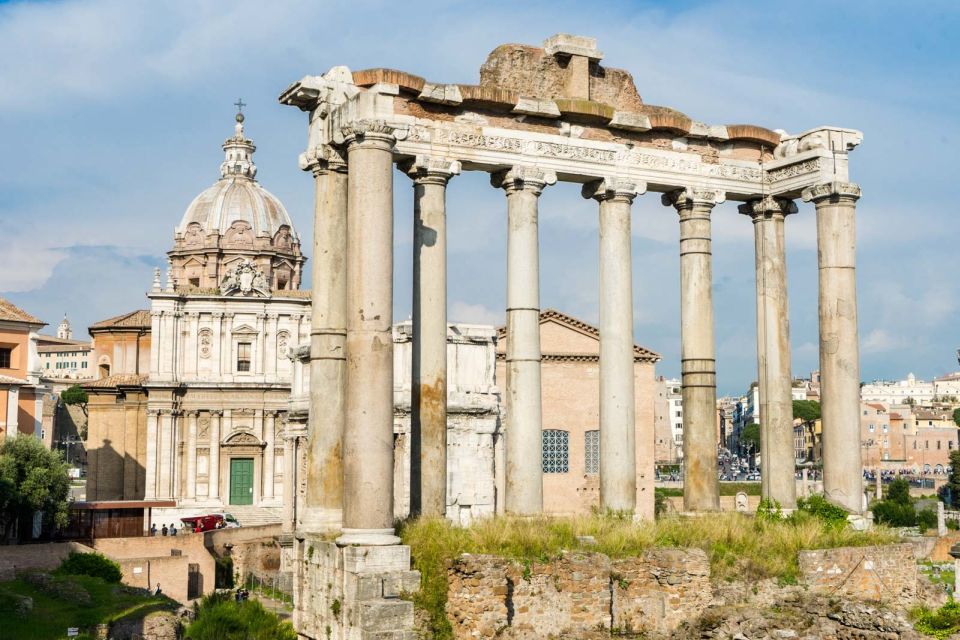
Roman Forum: Where Politics Was the Main Event
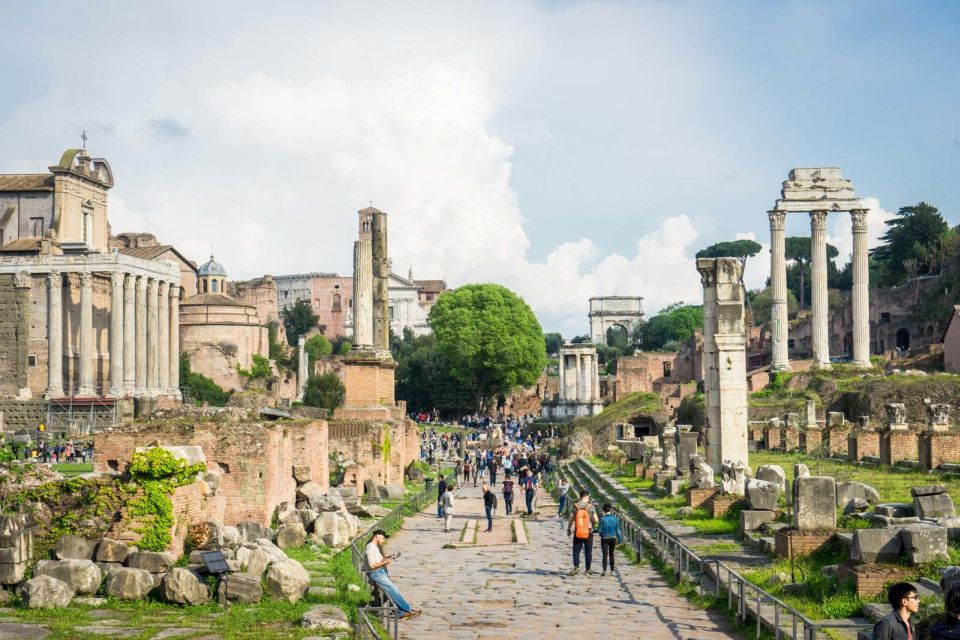
The Roman Forum portion is where the day turns from spectacle to governance. You don’t just see ruins—you get guided context for what they represented.
This part of the route is built around quick, high-value viewing points, plus time to walk and look. You’ll see key structures connected with:
- Senate and government spaces (including the Curia area)
- Temples and civic monuments
- The wider sense of Rome as a place where public life happened in the open
The Forum also works as a “translation” zone. Once you’ve seen the Colosseum’s entertainment mechanics, the Forum helps you see Rome’s other machinery: politics, messaging, and control of public space.
If you’re the type who likes explanations, the guide storytelling here is often what makes the Forum feel legible. Without that help, the ruins can blur together fast.
Palatine Hill: Emperors’ Views, Circus Maximus, and Caesar’s Mark
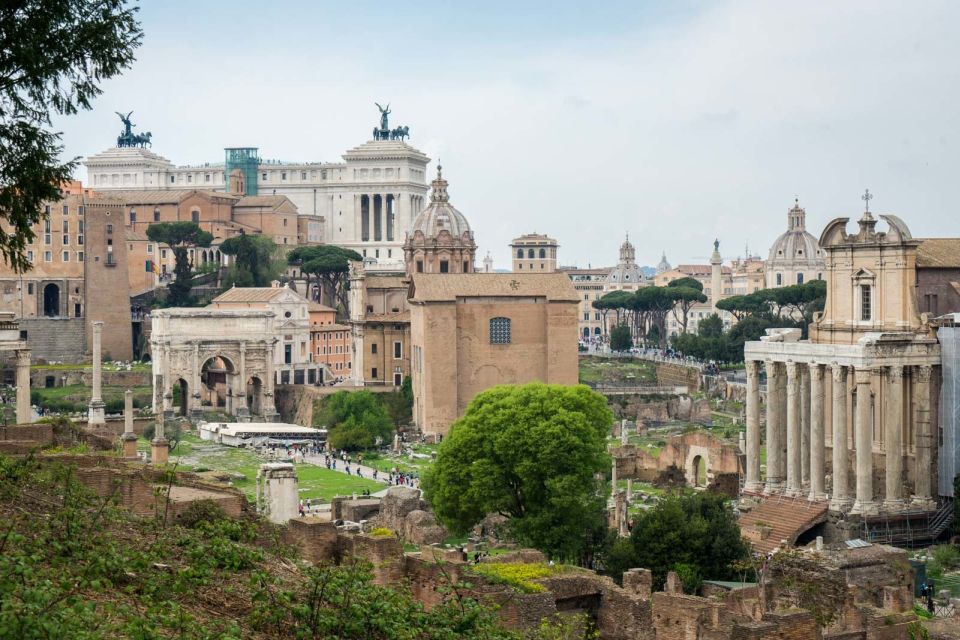
Next up is Palatine Hill, a hillside that feels like a shortcut to understanding imperial mindset. This is where power lived up close—literally.
The tour goes up to see where the elite emperors took residence and you’ll get sweeping viewpoints, including sightlines toward:
- Circus Maximus on one side
- The Roman Forum on the other
Then comes one of the most meaningful stops on the route: the Temple of Julius Caesar, built on the spot where his body was cremated.
That detail matters because it links legend, politics, and physical space. When you’re standing on Palatine Hill, it’s easier to understand why Rome didn’t separate myth from authority. The monument wasn’t just commemoration—it was messaging that lasted.
Timing, Heat, and What to Wear (Because Rome Is Rome)
Plan for walking. Even though the total tour time is about 2.5 to 3 hours, you’ll cover a lot of ground with stairs and uneven surfaces.
Wear comfortable shoes. Seriously. The tour notes emphasize comfortable footwear for a reason, and Palatine Hill can be a real test if you show up in trendy sandals.
Weather matters too. The tour runs in all weather conditions. There’s no option stated to amend or cancel entry if you decide not to go because of rain. The Colosseum management doesn’t allow admission tickets to be refunded or changed, so if you’re risk-averse, take that into account.
Also, Rome in summer is its own category. In July and August, the tour lasts 2 hours due to excessive heat and the itinerary may vary. If you’re visiting during those months, expect a tighter route and prioritize staying hydrated before you meet up.
Quick Practical Tips That Make the Day Smoother
- Bring your passport or ID card. Security checks names and IDs.
- Have a charged smartphone especially if you’re choosing the self-guided audioguide.
- If you’re doing self-guided, bring your own headphones since they’re not included.
- If you’re sensitive to walking stairs, ask in advance about options. One guide (Riccardo, in particular) was noted for offering options when people weren’t able to handle steps as well.
- Double-check your meeting point and arrive early. Late arrival can’t be fixed because tickets can’t be amended.
Should You Book This Colosseum, Roman Forum, and Palatine Hill Tour?
Book it if you want the best mix of big sights plus clear explanations in a manageable time window. The fast-track entry reduces the most painful part of Rome sightseeing, and the structure helps you connect the Colosseum to the Forum to Palatine Hill without turning the day into a scavenger hunt.
Skip it (or consider a different format) if:
- You hate walking and stairs and need full step-free access (this tour is not suitable for wheelchair users).
- You want to spend long, quiet hours reading every plaque without any schedule pressure.
- You might arrive late or can’t keep IDs handy for security checks.
If you’re deciding based on value: the extra cost over the base ticket price buys you organization, interpretation, and less queue stress. For most first-timers, that’s the kind of “pay a little more to enjoy more” decision that actually holds up.
FAQ
How long is the Colosseum, Roman Forum and Palatine Hill group tour?
The guided tour is listed at about 2.5 to 3 hours. In July and August, it runs about 2 hours due to heat, and the itinerary may vary.
Is this tour guided or self-guided?
You can book either a guided tour with an official English-speaking guide or a self audio-guided tour with a downloadable multilingual storytelling audioguide.
Does the ticket include fast-track entry?
Yes. The activity includes fast-track entrance at the Colosseum, Palatine Hill, and Roman (Imperial) Forum, with a separate entrance to skip the longest lines.
What languages are available?
The activity lists English, Chinese, French, German, Italian, Spanish, and Portuguese. The guided option includes English and other languages, and the self-guided audioguide also includes multiple languages.
What should I bring for the tour?
Bring passport or ID card, comfortable shoes, and a charged smartphone. If you’re using the self audio option, you should also have your own headphones.
Are there any rules about bags, gadgets, or sunscreen?
Yes. Pets, luggage or large bags, selfie sticks, and backpacks are not allowed. Sunscreen is also listed as not allowed.
Is the tour wheelchair accessible?
No. It is not accessible for wheelchairs and is listed as not suitable for people with mobility impairments.