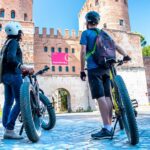
Rome looks different at two speeds: walking pace and bike pace. This 4-hour e-bike loop lets you cover real ground while still making time for food breaks, viewpoints, and neighborhoods like Testaccio and the Jewish Ghetto.
What I like most is how the route mixes iconic sights with everyday Rome. You get a market-and-street-food moment in Testaccio, then a high viewpoint on Janiculum Hill, and finally a quieter historic stop that adds context fast.
One thing to keep in mind: it’s not for everyone. If you can’t comfortably ride a bike, or if you’re dealing with pregnancy, wheelchair use, or mobility limits, this tour won’t be a fit.
In This Review
- Key points to know before you go
- Why a 4-hour e-bike loop feels better than a checklist
- Getting rolling from 22 Via Antonio Rosmini
- Testaccio: start with a real Roman neighborhood vibe
- The panino break: Roman street food the right way
- Trastevere to Janiculum: viewpoint time without the sweat tax
- Campo de’ Fiori: a sweet stop that makes sense
- Jewish Ghetto: history that adds weight to the ride
- E-bikes in real Rome traffic: what to expect
- Food stops, plus the little extras that matter
- Price and value: $105 for a ride-and-taste day that adds up
- Who this tour is for (and who should skip it)
- Should you book Hidden Rome’s e-bike street food tour?
- FAQ
- How long is the tour?
- What is the maximum group size?
- What does the price include?
- Where do we meet?
- What languages are offered?
- Is the tour suitable for pregnant women or wheelchair users?
- Are kids allowed?
- What happens if it rains?
Key points to know before you go
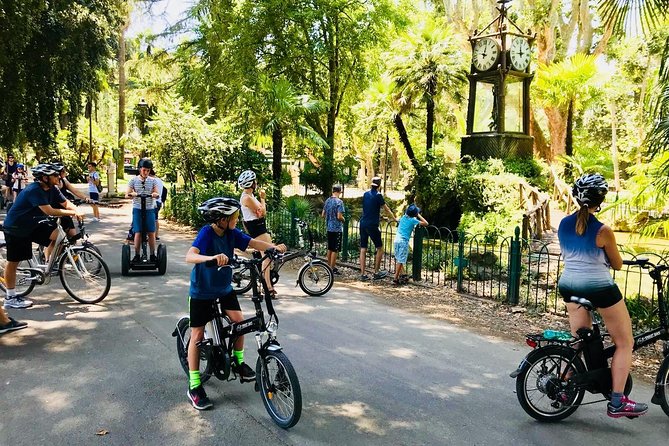
- E-bike makes hills manageable, even when you’re trying to see more than you can on foot
- Testaccio market stop focuses on Roman street food, including a classic panino moment
- Janiculum Hill panoramic views give you that wide, city-spreading perspective
- Campo de’ Fiori ice cream stop is built into the ride so you don’t “plan around it”
- Jewish Ghetto remnants add a meaningful historic layer to the food-and-fun format
Why a 4-hour e-bike loop feels better than a checklist
Rome can overwhelm you. Not because it’s hard to see things, but because it’s hard to choose what to see first, and when. This tour solves that by putting you on a simple rhythm: ride, stop, eat, look, ride again. In a compact time window, you get enough variety that the city stops feeling like a grid of landmarks.
I also like the tone. The guides keep the day moving without making it feel rushed, and the stops are the point, not extra. People rave about guides like Elias and Duarte for making the experience fun while also keeping the group together, which matters when you’re riding through real Roman streets (yes, traffic is part of the deal).
Finally, you’ll get the feeling of “neighborhood Rome,” not just Rome-as-a-photo. Places like Trastevere and Testaccio show up differently when you arrive by bike: you glide past everyday scenes instead of stopping at every corner to reorient.
You can also read our reviews of more tours and experiences in Rome.


Getting rolling from 22 Via Antonio Rosmini
The tour starts at the operator’s office at 22 Via Antonio Rosmini, 00184 Rome. That matters more than you’d think, because it sets you up for a route that can flow: you’re not stuck in a long transfer before the fun begins.
This is a small group (up to 8 people), which is part of why the tour works. With fewer riders, the guide can keep you close for the road sections and spend more time where it counts: at viewpoints, markets, and food counters.
Expect a live guide in Italian, English, Spanish, or French (depending on what’s running that day). In practice, this type of guide-led structure is one reason the day feels “easy.” You’re not constantly deciding what’s next; you’re just doing it.
Testaccio: start with a real Roman neighborhood vibe
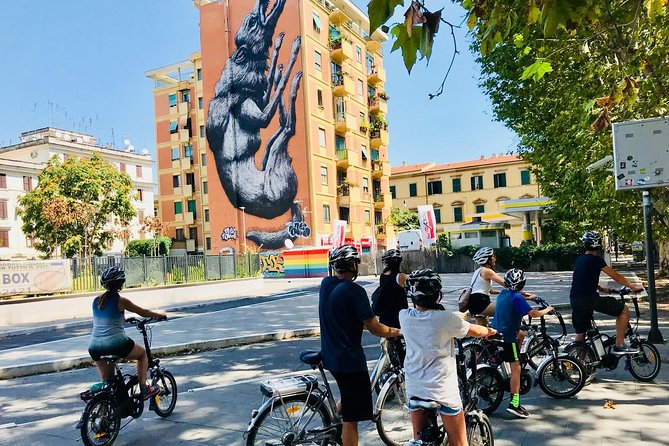
The ride kicks off with a pedal-to-Testaccio moment. This neighborhood is known for its food culture and local rhythms, and it’s one of the best places to experience Rome as something lived-in.
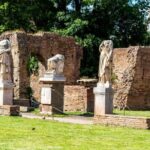
In Testaccio, you’ll also see the area’s pyramid, a distinctive local landmark that gives the neighborhood a sense of identity. It’s the kind of detail you’d likely miss if you were only chasing the big postcard sites.
Why this stop works for you: it sets the “story” of the day early. Food in Rome isn’t just eating—it’s the social fabric. Testaccio is where that becomes obvious fast.
Practical note: you will be riding through city streets, so you’ll want to be alert and follow the guide’s instructions. The upside is that the e-bike helps you stay comfortable through the ride sections.
The panino break: Roman street food the right way
A tour is only as good as its food moments, and this one builds them into the route rather than treating them like an add-on. In Testaccio, you’ll taste a delicious panino, described as the king of Roman street food.
What makes this more than just a snack is the context. A panino in Rome isn’t always the same as a generic sandwich. You’re tasting it as a local habit—quick, satisfying, and very much part of daily life.
Also, the pace is designed so food doesn’t slow the whole day. You get the break, you try the flavors, and then you’re back on the bike without losing momentum. People highlight that the stops feel well timed, especially with the way the guide keeps everyone together.
If you have dietary needs, one review mentions that a vegan option was provided for the street food portion. That’s not something to count on blindly (since it depends on the day and the shop), but it’s a good sign that the operator thinks about alternatives.
Trastevere to Janiculum: viewpoint time without the sweat tax
After Testaccio, the tour moves through Trastevere, which is picturesque in the classic Rome way—narrower streets, older-feeling corners, and a neighborhood atmosphere that feels calmer than the tourist center.
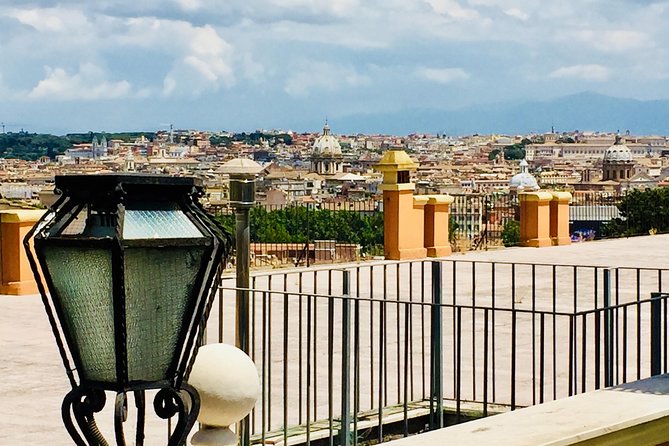
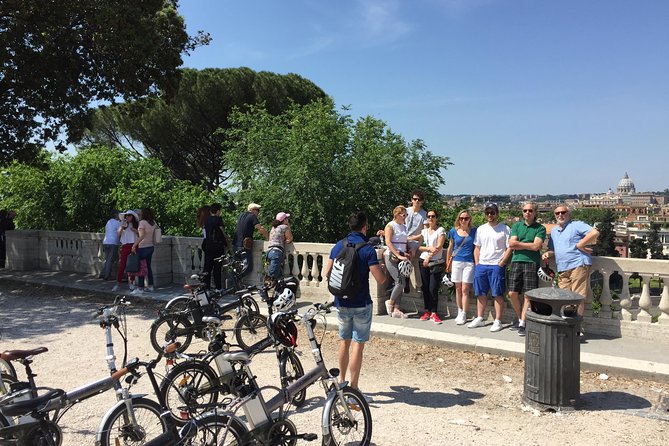
Then you reach Janiculum Hill, where you get the broad, city-spreading view. This is one of those Rome moments where everything clicks: roofs, domes, the long lines of buildings stretching across the city. You don’t need to be a “history person” to appreciate the panorama. It just hits visually.
Here’s the value of doing it by e-bike: you’re not spending half your time fighting steep walking routes. The e-bike helps you preserve energy so you can actually enjoy the view instead of arriving drained.
From the experience style and rider feedback, the bikes handle hills well. One rider even called out that the bike can “really shift up those hills,” and that’s exactly what you want on Janiculum.

Campo de’ Fiori: a sweet stop that makes sense
Back toward Campo de’ Fiori, you’ll have time for one of the most satisfying add-ons to a food-and-views day: ice cream. Campo de’ Fiori is a lively place in its own right, and it also works as a “reset point” in the middle of the tour.
The way the stop is built in helps you avoid the common Rome problem: you finish a big attraction and then scramble for dessert while everything else is busy. Here, the ice cream is part of the route plan, so you can just enjoy it.
Why it’s a smart choice for you: it balances the salty Roman street-food energy with something cold and simple, and it keeps the day feeling playful.
If you’re the type who likes to taste Rome, this is also a good place to pay attention to texture and flavor. Roman gelato has a different feel than some mass-market versions, and the contrast is noticeable when you’re eating it as part of a themed day.
Jewish Ghetto: history that adds weight to the ride
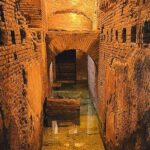
Then comes one of the more meaningful parts: the Jewish Ghetto and its incredible remnants. This is where the tour stops being only about food and scenery and becomes more about place.
I like this sequence—food earlier, viewpoint in the middle, history near the end—because your brain is ready to absorb more at that point. After riding and eating, you’re more alert to details on the street and better able to connect what you see to the larger story.
A good guide makes this land. People mention strong guide presence here, with humor and facts threaded through the route. That matters because historic stops can turn into a lecture if they’re handled poorly. The best version of this tour keeps the tone human: you walk, you look, and you get the why behind what you’re seeing.
This part is also a reminder that Rome isn’t one single Rome. It’s layers—some celebrated, some harder to hold in a few sentences.
E-bikes in real Rome traffic: what to expect
Riding in Rome can feel like a sport. You’re dealing with narrow streets, cars moving unpredictably, and a constant flow of pedestrians and cyclists.
The good news: riders describe the experience as made easy by the guide and the bikes. More than one person points out that the guide keeps things safe and organized, and that you spend only short stretches in busier roads while the rest stays calmer.
You should still take it seriously. This tour is not suitable for people who can’t ride a bike, and it’s also not for wheelchair users. It’s also listed as not suitable for pregnant women.
Bike confidence tip: if you’re rusty, you’ll want at least basic comfort with starting, stopping, and holding a line. The e-bike helps with effort, but it doesn’t remove the need to steer and react.
Food stops, plus the little extras that matter
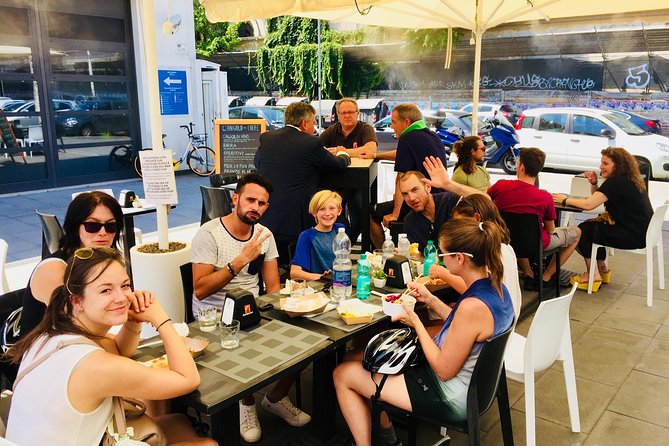
This tour is built around food, but it’s not only about quantity. It’s about variety, timing, and getting the “Roman” way of eating in different moments.
You’ll have:
- a Roman street-food panino in Testaccio
- a coffee stop described as a traditional Italian experience
- ice cream near Campo de’ Fiori
- and you may encounter other paired treats during the food breaks, with one rider specifically mentioning wine alongside the day’s meals and gelato
That mix is part of why people call it great value: you’re not just buying sightseeing. You’re buying tasting time that would be harder to stitch together on your own without losing energy or ending up at the wrong places.
Also, small-group days often mean the guide can steer you toward the right counter and the right moment—so you spend less time deciding and more time eating.
Price and value: $105 for a ride-and-taste day that adds up
At $105 per person for 4 hours, you’re paying for three things bundled together:
1) an e-bike for the whole ride window
2) a live guide to manage the route and context
3) Roman street food during the stops (plus additional food moments like gelato and coffee, based on what’s included in the flow)
If you tried to recreate this yourself, you’d likely spend time (and money) on: bike rental, navigation, figuring out where to eat, and building a route that works with hills and neighborhoods. Here, the guide handles the sequencing so you can focus on the experience.
The small group size (up to 8) is key to the value. A big tour bus can cover a lot, but you don’t get the same road comfort or stop quality. With fewer riders, you get a more personal rhythm and fewer wait times.
One other note: a review called the experience worth the money, and another mentioned it as a top part of a multi-day Rome stay. That aligns with how this tour is designed—efficient coverage plus food stops plus real context.
Who this tour is for (and who should skip it)
This is a strong fit if you:
- want a more active Rome day without walking nonstop
- like food and want Roman street flavors explained through the neighborhoods
- enjoy viewpoints but don’t want to earn them with a long hike
- have limited time and want more than one neighborhood in a half day
It can also work for families, but check the age/ride rules. There are restrictions: no children under 2, and kids under 12 ride either on an electric cargo bike or on a seat with one parent (depending on the setup for the day).
Skip it if you:
- can’t ride a bike confidently
- need wheelchair access (wheelchair users aren’t suitable)
- are pregnant
- have mobility impairments or you’re outside the stated weight limit (over 287 lbs / 130 kg isn’t suitable)
Should you book Hidden Rome’s e-bike street food tour?
Yes, if you want a Rome day that feels like neighborhoods, not just monuments. The mix of Testaccio food, Janiculum panoramic views, and the Jewish Ghetto stop gives you a strong variety-per-hour ratio that most walking tours can’t match.
I’d also book it if you’re the type who gets overwhelmed in Rome. A guide who can keep the group together, manage street conditions, and make the day fun (with people specifically praising guides like Elias and Duarte) can turn a chaotic city into a smooth adventure.
Skip it if you don’t meet the riding/physical requirements. The tour is built around cycling, and the best part—the hills handled by e-bike—only works if you can ride safely.
If you’re looking for one “anchor” experience for a first trip or a short visit, this is a very reasonable choice.
FAQ
How long is the tour?
The tour lasts 4 hours.
What is the maximum group size?
The group is limited to 8 participants.
What does the price include?
You get an e-bike, a guide, and Roman street food as part of the experience.
Where do we meet?
Meet at 22 Via Antonio Rosmini, 00184 Rome, Italy.
What languages are offered?
The live guide can be in Italian, English, Spanish, or French.
Is the tour suitable for pregnant women or wheelchair users?
No. It is not suitable for pregnant women and wheelchair users, and it also isn’t suitable for people with mobility impairments.
Are kids allowed?
No children under 2 years. Kids younger than 12 will ride in an electric cargo bike or on a seat with one parent.
What happens if it rains?
Tours depend on favorable weather and may be rescheduled or refunded if rain affects the tour.