REVIEW · ROME
Leonardo da Vinci Experience Museum Admission
Book on Viator →Operated by TOURISTATION · Bookable on Viator
Leonardo’s ideas are only a short walk from St. Peter’s. This Leonardo da Vinci Experience gives you guaranteed access to a compact, self-guided exhibit in Vatican City, built around working concepts, reproductions, and explanations in multiple languages. If you like seeing inventions explained with your own hands and eyes, it’s a smart add-on when your Vatican time is already packed.
I especially like two things. First, the five-room route keeps the pacing easy, so you can spend a little or a lot of time per display. Second, the English audio guide (with other languages too) helps you connect the machines and drawings to what Leonardo was trying to solve.
One thing to consider: the museum is small, and the exhibits are mostly reproductions and models. If you’re expecting original masterpieces or a large, museum-style collection, you may feel slightly let down.
In This Review
- Key things to know before you go
- Leonardo da Vinci Experience: why it fits so well near St. Peter’s
- Admission and value: what your ticket includes (and what it doesn’t)
- Where the museum is: finding Via della Conciliazione 19 fast
- Your self-guided route: five rooms, one steady storyline
- Room I: flying machines and a Last Supper reproduction
- Room II: war machines and a multi-directional gun concept
- Room III: music, optics, and the Room of Mirrors
- Room IV: everyday principles turned into inventions
- Room V: paintings and reproductions
- The audio guide and interaction style: how to get the most out of it
- Timing it with the Vatican Museums and St. Peter’s
- Who will love it, and who might feel it’s too small
- Potential downsides: reproductions, disclaimers, and the room-to-room feel
- Practical advice to enjoy it more (and waste less time)
- Should you book Leonardo da Vinci Experience Museum Admission?
- FAQ
- What is included with Leonardo da Vinci Experience Museum admission?
- Is this a guided tour with a live guide?
- Where is the ticket redemption point?
- How long should I plan for the visit?
- Can I choose my entry time?
- What are the opening hours?
- What languages are available for the audio guide?
- What is the cancellation policy?
Key things to know before you go
- Guaranteed entry to the Leonardo da Vinci Exhibition in Vatican City, with flexible timing during opening hours
- Self-guided audio tour in English, plus other major languages for groups
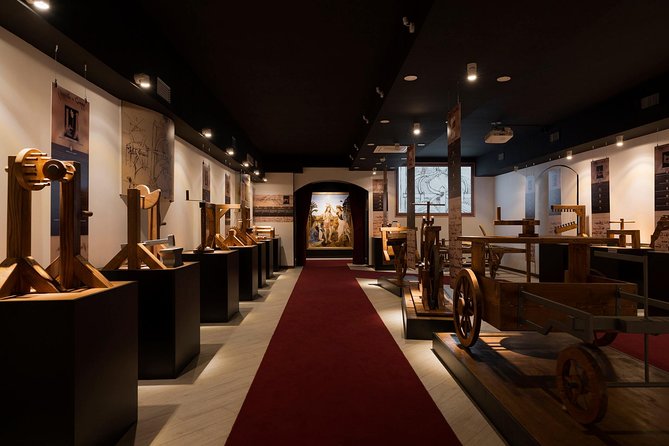
- Five themed rooms that move from flying machines to war concepts, optics, everyday inventions, and paintings
- Hands-on displays and interactive elements that work well for kids and busy adults alike
- A quick pairing with St. Peter’s Basilica and other Vatican sights since it’s nearby
- Worth planning around your energy level: this is a short, focused stop, not a full day museum
Leonardo da Vinci Experience: why it fits so well near St. Peter’s
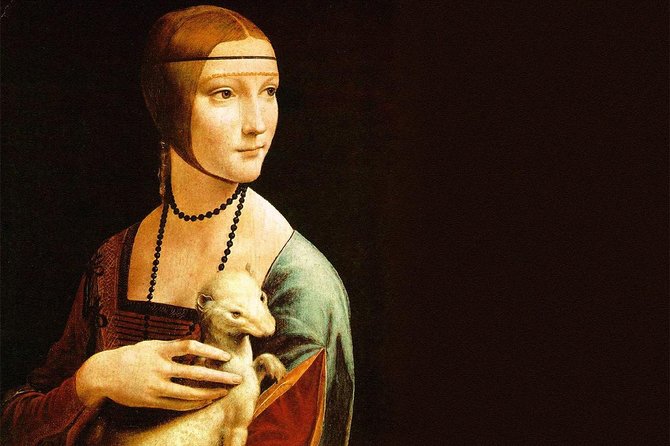
Rome has a way of turning even relaxed days into long walking marathons. This museum is a good reset button. You’re in Vatican City territory, just a short distance from St. Peter’s Basilica, and you can build the visit around your day instead of the other way around.
The format is also refreshing: it’s not a “follow the guide and stand still” kind of museum. With your admission voucher in hand, you go in and explore at your pace using an included audio guide. That matters when you’re trying to balance art, architecture, and crowds in the same area.
Another plus is the theme. You’re not only looking at Leonardo the painter. You’re also seeing Leonardo the inventor: flight concepts, engineering ideas, optics tools, and everyday “why didn’t I think of that” inventions—presented in a way that’s easy to track room by room.
You can also read our reviews of more tours and experiences in Rome.

Admission and value: what your ticket includes (and what it doesn’t)
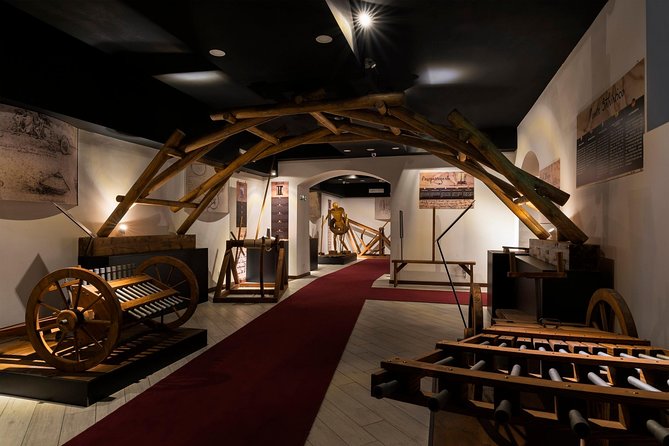
This Leonardo da Vinci Experience Museum Admission costs $19.22 per person and is designed to be straightforward. Your ticket includes entrance to the museum and an audio guide in English (plus Italian, French, Spanish, German, Russian, Chinese, and Portuguese). There’s no tour guide included, so the experience is built around your own timing and attention.
Is $19.22 a good deal? For many people, yes, because:
- You get a timed, focused experience that usually fits into about 1 to 2 hours
- You have a self-guided format, which is ideal if your group has different interests
- The included audio guide helps you understand what you’re looking at without needing extra paid add-ons
Where value can dip is if you’re very picky about originals. Some displays are reproductions and models, and a few exhibit descriptions note that certain models might not have been made or used exactly as shown. If your “must-see” list is about original artworks, adjust your expectations and treat it more like an interactive concept museum.
Where the museum is: finding Via della Conciliazione 19 fast
The redemption and entry point is Via della Conciliazione 19, 00193 Roma RM, next to St. Peter’s. This is one of those locations that feels easy once you’re standing there, even if the approach streets can be a little confusing.
A practical tip: give yourself time to route through the Vatican-area sidewalks on foot. The museum is near public transportation, but the busiest flow is often the walking flow—especially when St. Peter’s crowds peak.
If you’re already in the Vatican zone, this stop is perfect as a “short break” after you’ve seen the big-ticket sights. You get out of the main crowd current, sit with a different theme, and still feel like you’re sightseeing.
Your self-guided route: five rooms, one steady storyline
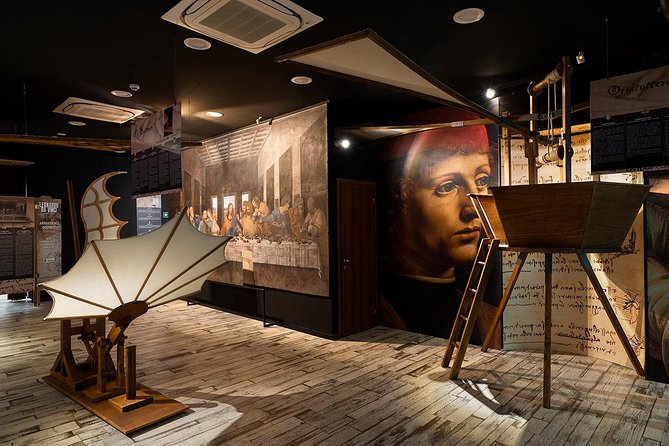
The museum is staged as a loop through five themed rooms, each with a clear focus. The best part is that your brain doesn’t have to work too hard to “figure out” what Leonardo is doing. Each space groups the ideas so you can make sense of them without a checklist.
Plan on roaming. This isn’t a museum where you’ll enjoy it by rushing. Most people find about 45 minutes to 1.5 hours is a comfortable pace, depending on how long you linger over interactive parts and audio explanations.
Room I: flying machines and a Last Supper reproduction
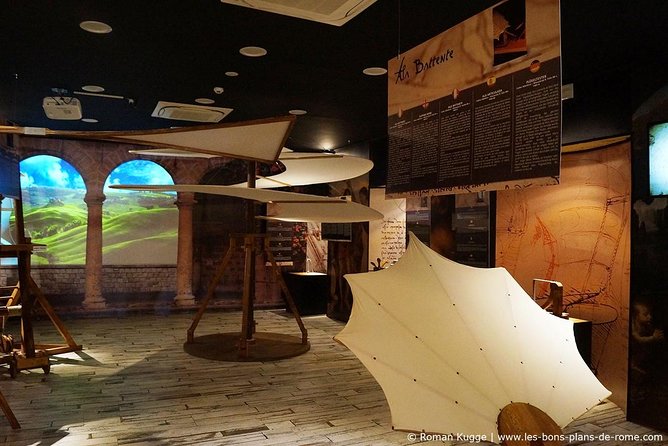
Room I leads with Leonardo’s flying machines, including a prototype-like concept such as a hang glider idea. You also see a life-size reproduction related to the Last Supper.
This room works well because it does two things at once:
- It shows how Leonardo thought in engineering terms (not just art)
- It brings in a familiar subject so you can compare artistic composition with mechanical “how it works” thinking
If you like flight concepts, don’t sprint through this room. The audio guide helps connect the visuals to Leonardo’s design thinking.



Room II: war machines and a multi-directional gun concept
Room II focuses on drawings and models connected to artillery and war machines. One standout described here is a multi-directional gun machine with twelve barrels, plus a catapult concept.
Even if you’re not interested in weapons, this section helps explain how Leonardo approached mechanics: force, motion, alignment, and the idea of turning drawings into workable systems. It’s also a reminder that Leonardo’s curiosity didn’t only serve beauty or comfort; it also served power and strategy.
If you’re with younger kids, expect this room to be the most exciting or the most surprising, depending on your family’s preferences.
Room III: music, optics, and the Room of Mirrors
Room III shifts to the “how we see and how we measure” side of Leonardo. You’ll find devices tied to music and optics, including a projector and a perspectograph, plus a Room of Mirrors.
This is usually where the exhibit feels most “science museum” and least like “art museum.” You get a chance to see how optical ideas connect to art—especially perspective—and how tools can help translate observation into design.
If you like anything related to photography, visual illusions, or perspective drawing, linger here. This is the room that often makes adults say, wait, that’s Leonardo too?
Room IV: everyday principles turned into inventions
Room IV highlights everyday objects that are described as coming from Leonardo’s genius. You’ll see references and models connected to a bicycle, a spring, and a life preserver.
This room is valuable because it connects the “wow” factor of the machines to actual daily needs: mobility, resilient movement, and safety. Leonardo’s ideas didn’t live in notebooks only—they’re presented here as practical thinking.
It’s also a good room to visit if your group has mixed ages. The concepts are recognizable enough that kids can follow along, while adults can appreciate the engineering logic.
Room V: paintings and reproductions
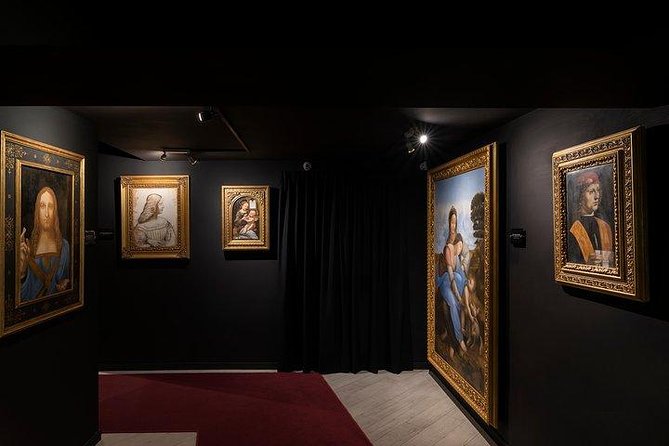
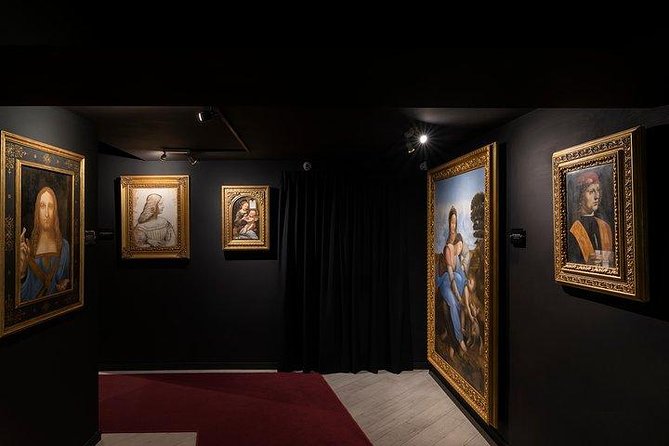
Room V turns toward art. It contains 20 works of art, including reproductions tied to some of Leonardo’s most famous painting themes.
This room is where your expectations matter most. The museum leans toward reproductions rather than original paintings, so treat this as a “context and connection” finale rather than a gallery of museum-grade masterpieces.
If you came expecting original canvases, it may feel small. But if you’re happy to use it as a bridge between Leonardo’s art and his inventions, it can land well—especially after the engineering-focused earlier rooms.
The audio guide and interaction style: how to get the most out of it
The included audio guide is the backbone of the experience. You’ll be listening in English if you selected that option, and it’s also available in a wide set of languages.
Most visitors like how the audio keeps the pace moving. Instead of staring at labels all the time, you can use the audio and move on when you’re ready. That’s why the self-guided approach often feels less exhausting than a guided tour: you decide when to speed up or slow down.
A small caution: sound and presentation quality can vary by device and setup. One visitor described the audio experience as not great, with information presented in a more basic way than expected. Another noted an odor and cramped feel as part of the space. So if you’re sensitive to sound quality or crowded interiors, plan for that possibility and keep a flexible mindset.
My advice: choose your pace early. If you like details, you’ll naturally take longer. If you prefer highlights, you can finish in about an hour and still feel like you got the main ideas.
Timing it with the Vatican Museums and St. Peter’s
This museum is easiest to place when you think in “zones.” Since it’s near St. Peter’s, you can do a morning or afternoon Vatican loop and then pop over for a calmer, tighter experience.
It also helps that entry timing is flexible within opening hours. That means you don’t have to micromanage your itinerary to the minute. You can hit the museum when your feet and head say, okay, we need a different kind of sightseeing.
A smart pairing is to visit:
- St. Peter’s Basilica area first, then
- Use the museum as a shorter, less exhausting add-on
You’ll get a different side of Leonardo’s legacy than you’d get from focusing only on Vatican art and architecture.
Who will love it, and who might feel it’s too small
This experience tends to work best when you match the museum’s strengths.
You’ll likely enjoy it if you:
- Want a quick, hands-on stop that’s not a whole-day commitment
- Like inventors and enjoy seeing concepts visualized
- Are traveling as a family or with mixed ages, since the interactive and approachable format helps everyone participate
- Prefer self-guided pacing instead of listening to a group guide for hours
It may not hit as well if you:
- Need original artworks and museum-grade paintings
- Want a large, multi-gallery experience with lots of extensive written scholarship
- Are very sensitive to cramped spaces or strong smells
One review even described it as more of a short stop for kids, while another argued it worked even for adults. That split makes sense. The museum is designed like an interactive learning space, not like a quiet art library.
Potential downsides: reproductions, disclaimers, and the room-to-room feel
Let’s talk about the friction points so you’re not surprised.
1) Reproductions rather than originals
The museum includes replica paintings and drawings, plus models of inventions. If you’re expecting to stand in front of Leonardo originals, you’ll likely be disappointed.
2) Some exhibits come with “not exactly used” notes
One visitor noted that some models have disclaimers about whether they were developed or used by Leonardo in the form displayed. If you’re the type who wants strict historical certainty, it helps to treat models as educational representations rather than definitive historical artifacts.
3) Space can feel tight
A visitor described the facility as cramped with an unpleasant odor throughout. Another praised cleanliness. So your experience here may depend on the day and crowd level. If you’re sensitive, consider choosing a less crowded time of day.
4) Audio and interactive tech may vary
One person felt the audio guide wasn’t as engaging as it could be, and mentioned sound quality issues with the touch device setup. If you love audio storytelling, you’ll still likely get value, but don’t assume it’s a perfect “cinema-quality” experience.
Practical advice to enjoy it more (and waste less time)
Here’s how I’d make this visit smooth:
- Set a goal: pick two rooms to focus on deeply (often Room I for machines, and Room III for optics/perspective).
- Use audio selectively: if you’re reading slowly or stopping often, audio will help you decide what’s important. If you’re speed-walking, keep the audio moving so the tour doesn’t drag.
- Pair it with your energy level: after Vatican walking, this museum feels like a breather because it’s contained and self-paced.
- Shop lightly, if you shop at all: the museum has a gift shop based on visitor comments, so you can grab prints or related books without leaving the area.
Should you book Leonardo da Vinci Experience Museum Admission?
I’d book it if you want a short, self-guided, English audio experience near St. Peter’s that shows Leonardo as both inventor and artist. At $19.22, the value is best when you treat it as an interactive learning stop rather than a collection of original masterpieces.
I wouldn’t book it as strongly if your top priority is seeing authentic, museum-grade Leonardo paintings. In that case, you’ll likely want to spend your time (and budget) on bigger art collections and classic Vatican highlights.
If you’re planning a Vatican day and want one smart, low-stress add-on that’s still fun, this one makes a lot of sense.
FAQ
What is included with Leonardo da Vinci Experience Museum admission?
Your ticket includes entrance to the Leonardo da Vinci Experience Museum and an audio guide in English (with additional language options also available).
Is this a guided tour with a live guide?
No. This is a self-guided experience, and the ticket does not include a tour guide.
Where is the ticket redemption point?
The ticket redemption point is at Via della Conciliazione 19, 00193 Roma RM, Italy, near St. Peter’s Basilica.
How long should I plan for the visit?
Plan on about 1 to 2 hours for the museum.
Can I choose my entry time?
Yes. Entry timing is flexible, and you can visit at any time during opening hours.
What are the opening hours?
Opening hours are listed as 9:00 AM to 6:00 PM daily for the date range shown.
What languages are available for the audio guide?
The audio guide is available in English, Italian, French, Spanish, German, Russian, Chinese, and Portuguese.
What is the cancellation policy?
Cancellation is free if you cancel up to 24 hours in advance for a full refund. If you cancel less than 24 hours before the start time, the amount paid is not refunded.