REVIEW · MOUNT ETNA
Mount Etna: Volcano Craters Hiking Tour
Book on GetYourGuide →Operated by Guide Vulcanologiche Etna Nord · Bookable on GetYourGuide
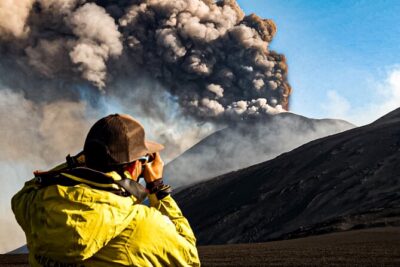
Etna hits you fast. This volcano crater hike mixes real terrain—basalt, steam, and sharp views—with a strict safety rhythm. You climb toward active craters to see fumaroles and fresh lava features up close, while a licensed guide keeps you inside the safe zone.
I love the way the hike turns geology into something you can feel: hot rocks underfoot, sulfurous steam from the ground, and a lunar-feeling route near the Southeast Crater. My only caution is the height and exposure—this is not for people who get nervous around narrow edges or who have medical limits like vertigo, heart or respiratory problems.
In This Review
- Key points to know before you go
- Entering Mount Etna from the Esagonal Bar: where the trip really starts
- The cable car to 2,500 meters: the shortcut that changes everything
- Climbing with a scientific altitude authorization: up to 3,000 meters
- Fumaroles and fresh lava: the best kind of hands-on geology
- Southeast Crater base and the 2002 craters: epic views with careful footing
- Valle del Bove and the descent: where knees and weather come into play
- Gear, clothing, and the little things they actually check for
- Price and value: $28 is the hook, but €30 and €52 are the real budget
- Guide team matters: you want pros who can read the mountain
- Who should book this Mount Etna craters hiking tour (and who shouldn’t)
- FAQ
- How long is the Mount Etna volcano craters hiking tour?
- Where do I meet the guides, and where does the tour end?
- What should I pay on-site in addition to the tour price?
- Is equipment included?
- What languages does the live guide speak?
- Who can’t join this excursion?
Key points to know before you go
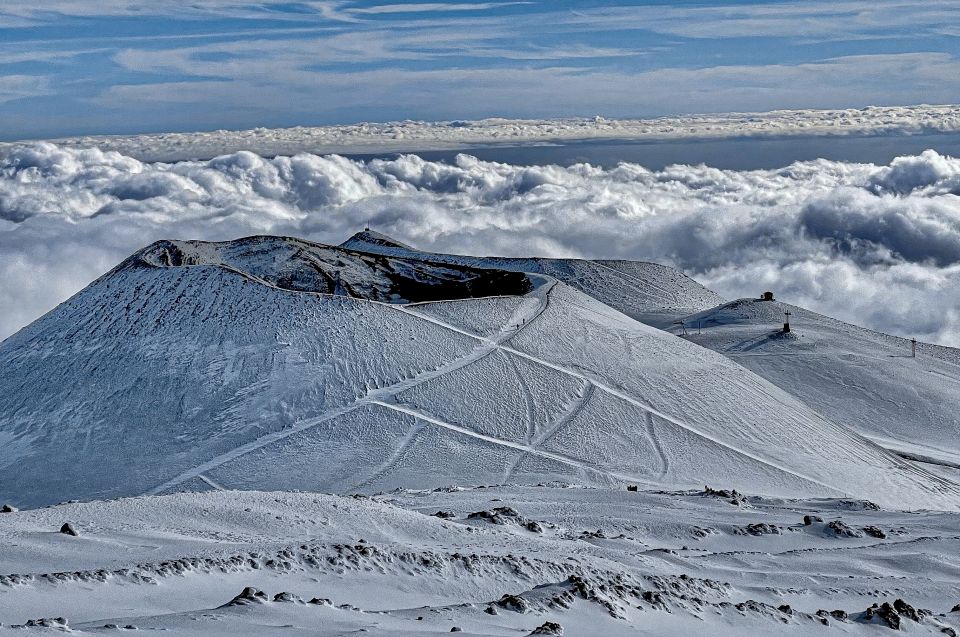
- Cable car + crater hike combo: you gain serious altitude without spending all day walking uphill to start.
- Hot ground right on the route: you’ll walk past steaming lava flow banks and fumaroles spewing gases.
- Up to about 3,000 meters: there’s a special scientific authorization to go beyond the usual 2,750-meter limit with the guide.
- Narrow paths at altitude: dizziness is a real risk for sensitive hikers near crater edges.
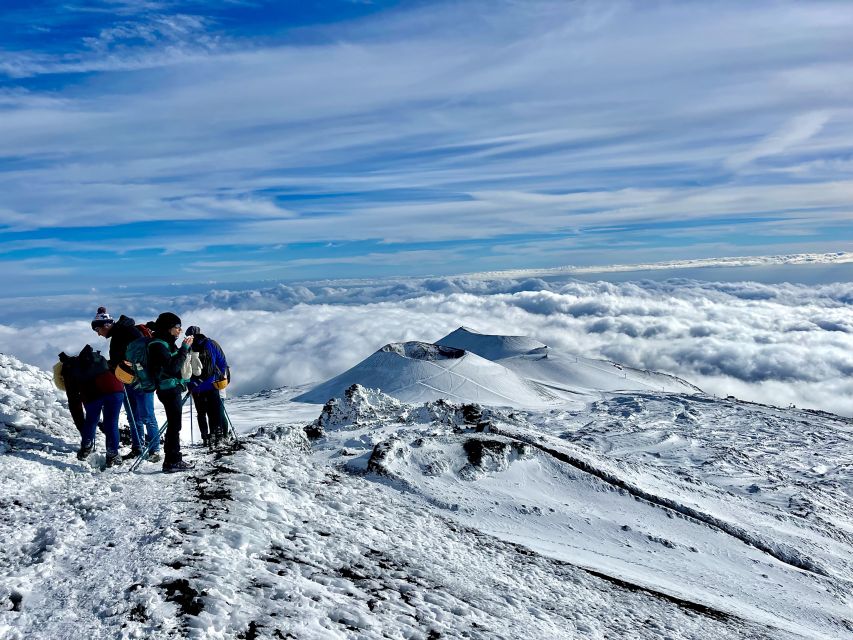
- Weather can change fast: wind and winter snow/ice have shown up on departures, so dress for cold and slip-prone ground.
Entering Mount Etna from the Esagonal Bar: where the trip really starts
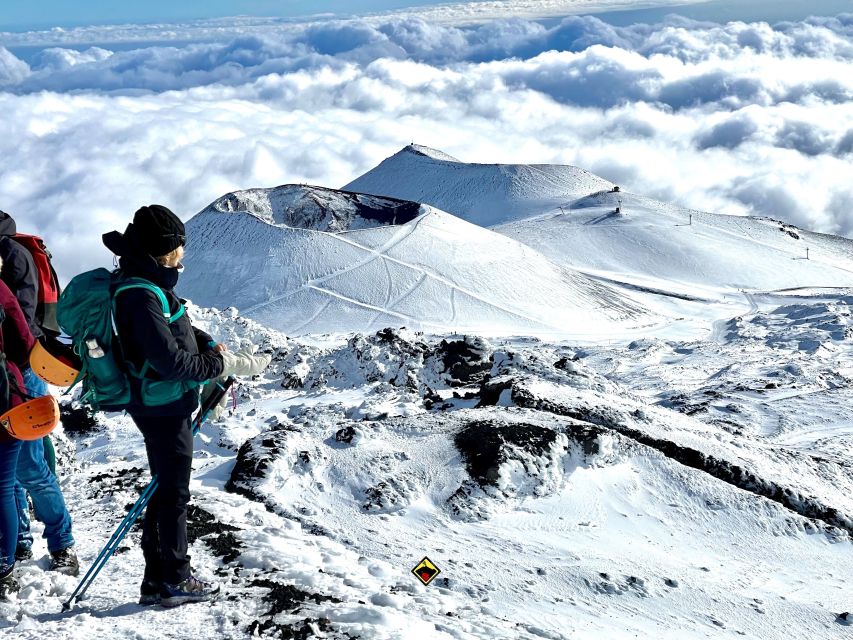
You meet the guide team at the parking lot in front of the Esagonal Bar, with the official meeting point labeled Etna Guides Official. This matters because the day is built around transitions: walking, ticket moments, and altitude segments. Once you’re with the group, you’ll transfer onward briefly and get set for the climb.
What I like here is the pacing. You’re not dropped into chaos. You start at Bar Esagonal around 1,900 meters, then you climb in stages. That staged approach helps you handle the day without feeling like you’re fighting the mountain from the first minute.
Also, this is a hike with rules for safety and gear. You can’t wear open-toed shoes, and high heels and sandals are out. It’s a small thing, but it signals the overall tone: they want stable footing on volcanic ground and crater-edge paths.
You can also read our reviews of more tours and experiences in Mount Etna.
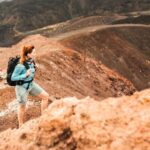
The cable car to 2,500 meters: the shortcut that changes everything
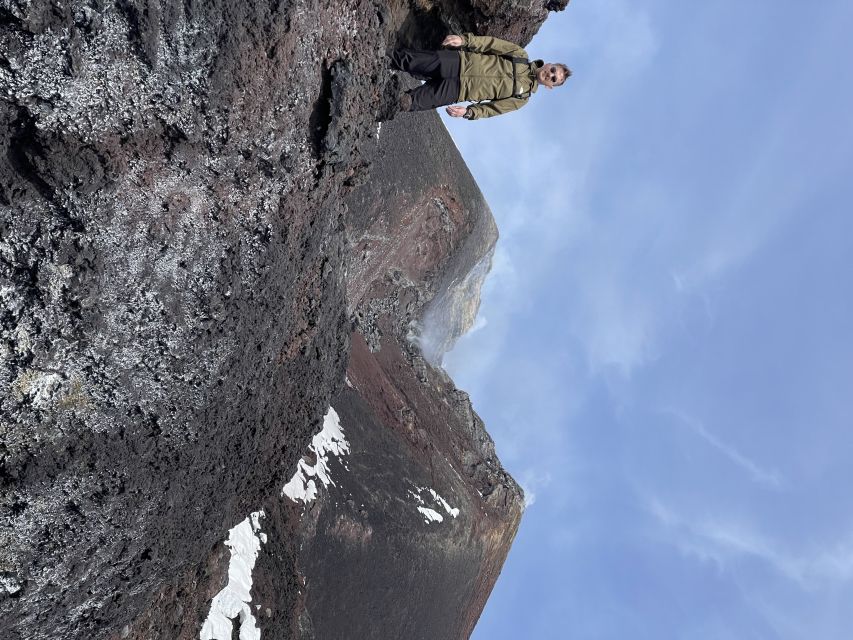
After beginning near Bar Esagonal, you take a scenic cable car ride to about 2,500 meters before the trek really begins. This is one of the best value parts of the day. It’s what lets a “5-hour tour” actually include crater-side walking and not just a long slog of elevation gain.
Cable car timing can be a small bottleneck—on at least one departure, the queue to buy cable car tickets was noticeable. The good news is your guide will help you purchase the tickets at the Funivia dell’Etna office just before departure, so you’re not left chasing the right counter.
One practical note: don’t assume the cable car means comfort. Even when you’re “only” moving to 2,500 meters, wind and cold can still bite. Bring layers and a windbreaker. The summit zone gets harsher fast.
Climbing with a scientific altitude authorization: up to 3,000 meters
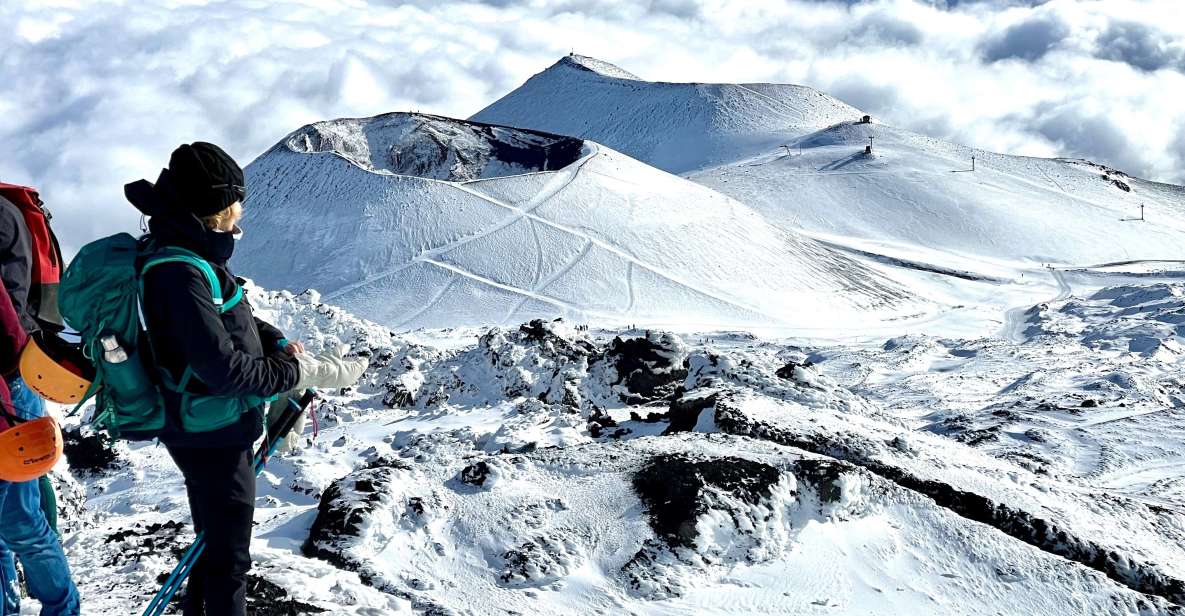
The route is designed for trained hikers and it gets serious on altitude. You’ll climb toward 3,000 meters with your guide, passing an altitude limit of 2,750 meters due to special authorization for scientific purposes.
That doesn’t mean it’s reckless. The plan is still conditional on the group: the itinerary indicates you push to 3,000 meters only without major altitude sickness in the group. In practice, your guide’s job is to read people, not just the terrain. Expect frequent pauses and route choices that keep the group moving safely.
Here’s what you should take seriously: the higher you go, the more exposure you feel—cold, wind, and thinning air. One review described brutal wind conditions in mid-March, so even if you’re traveling in spring, you should pack like it’s winter on top.
I also appreciate that this tour is explicit about who it suits. It’s not framed as a casual walk, and it shouldn’t be. If you have low fitness, recent surgery, heart or respiratory issues, epilepsy, mobility limits, or you struggle with vertigo, skip this one.
Fumaroles and fresh lava: the best kind of hands-on geology
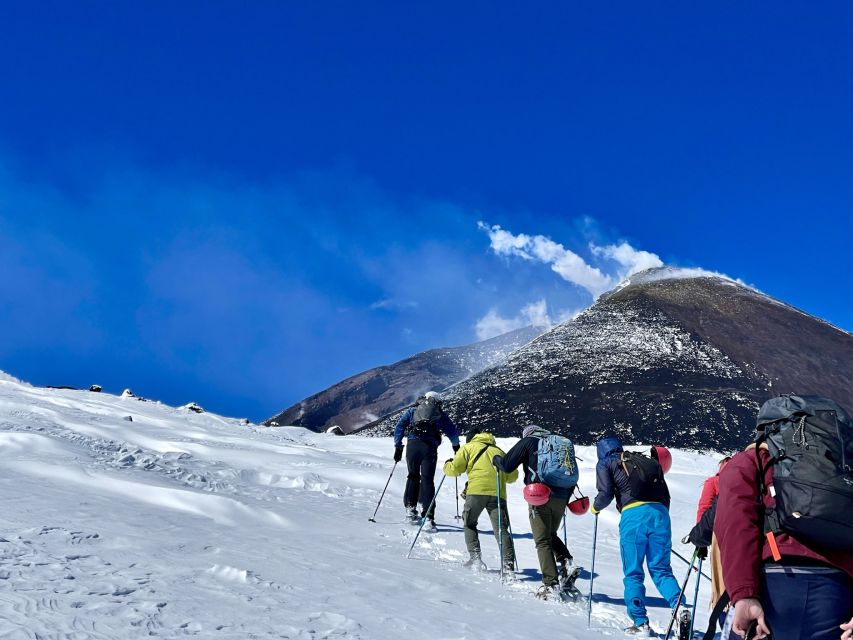
This is where the tour becomes special. You walk through a volcanic world that looks wrong in the best way—dark basalt ground, steam vents, and the near-surface effects of recent eruptions.
As you approach the higher zone, you’ll get close to fumaroles, hot vents that spew underground gases. The tour even includes the chance to touch hot volcanic materials under the right guidance. That sensory detail is the whole point: this is not just looking at rocks from far away. You’re learning with your body—sound, smell, and heat.
You’ll also pass banks of still-steaming lava flows from recent activity. That’s not the kind of view you replicate anywhere else in Italy. Mount Etna is one of Europe’s most active volcanoes, so the tour is built around staying away from the danger zone while still letting you see the real impact of eruptions.
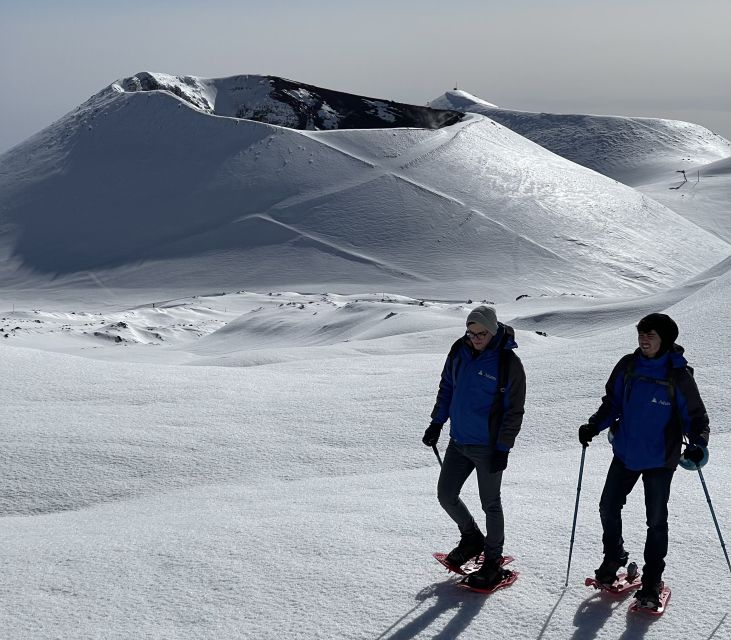
If you’re lucky with snow conditions, you’ll also visit a small basalt canyon near the top craters. In winter, snow can bury sections of the route, so you should treat this as a seasonal bonus rather than a guaranteed highlight.
Southeast Crater base and the 2002 craters: epic views with careful footing
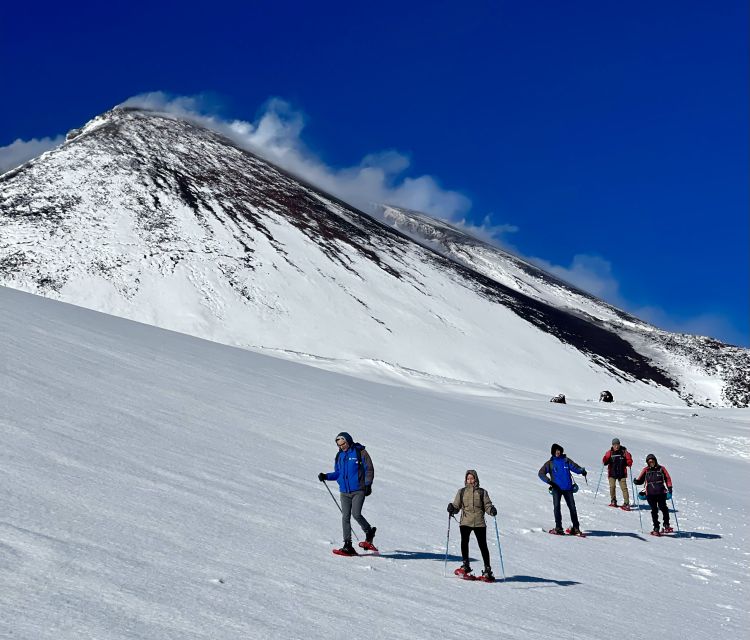
Near the top, you arrive at the base of the Southeast Crater and then continue toward the larger craters associated with the 2002 eruptions. This is crater-edge walking at altitude, so expect narrow paths, steep or uneven ground, and places where dizziness could show up for sensitive hikers.
The upside is obvious: once you’re up there, the views near the crater rims are the payoff for the cold climb. Even on days with wind, the group is positioned to see Etna’s active features and understand how the terrain connects to eruptions.
A few reviews mention the hike can feel tricky despite not always being ultra-long. One group clocked about 7.5 km total with roughly 760 meters of ascent, and still found the upper section the hardest part—mainly because of weather, wind, and footing near the crater. That tracks with how Etna hikes typically feel: it’s not only distance; it’s exposure and traction.
Also, you’ll have photo stops built in. There’s a 40-minute photo stop around Mount Etna and another break/photo/visit segment later. Those pauses aren’t filler. They let you catch your breath at altitude and reset before the next section.
Valle del Bove and the descent: where knees and weather come into play
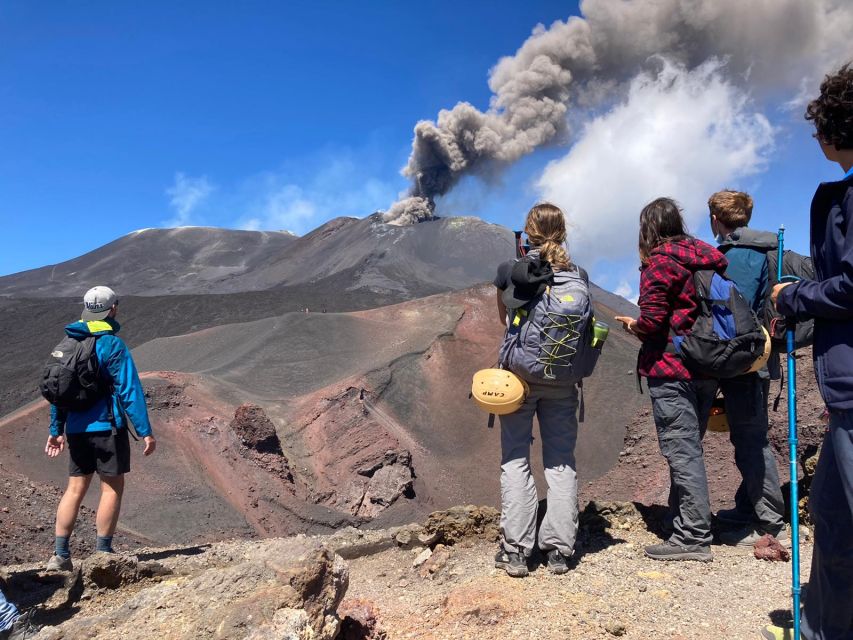
After the higher crater area, the tour shifts into descent mode. You head down a path toward the cable car station. In winter, the route may include snow, and the ground can be icy. That’s when trekking poles matter and when your shoes matter even more.
You’ll return through the Valle del Bove area with a short transfer before getting back to the meeting point. The descent is usually where people start thinking about knees. The terrain can be sandy shale and uneven, so take it slow. You don’t win prizes for speed on volcanic slopes.
The practical rhythm of the day helps here: the climb and crater viewing are spread out, then you methodically work back down. It’s not a “summit and sprint” style tour.
Gear, clothing, and the little things they actually check for
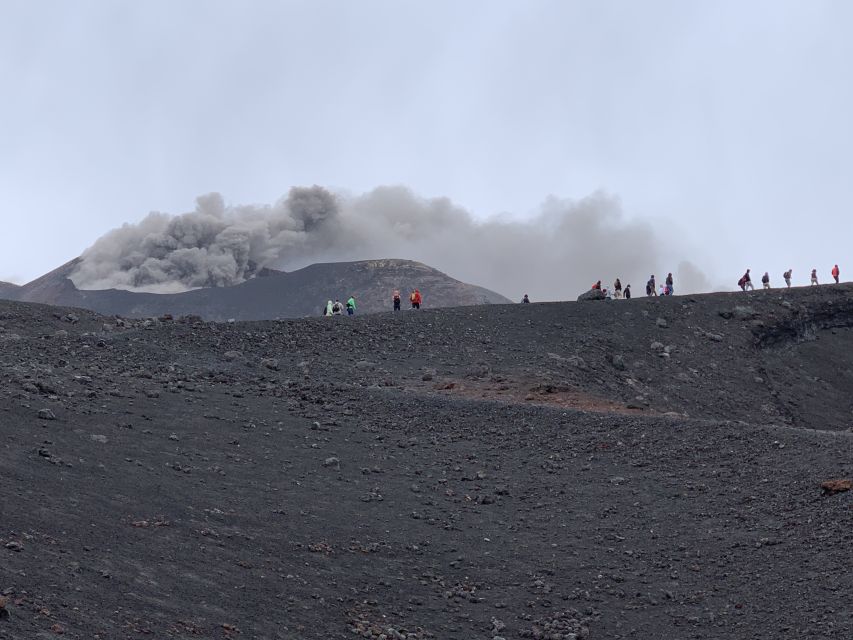
This tour is built around cold and windy conditions. You’re provided with warm jackets, helmets, trekking poles, trekking shoes, and a backpack. There’s also accident insurance and an Etna entry fee included.
But don’t treat that as permission to show up underdressed. The most important things you should bring are the ones that handle weather fast:
- a windbreaker
- sunglasses
- sunscreen (high altitude sun is no joke)
- long pants
- comfortable layers and spare clothes
- snacks and drinks
One thing I love seeing spelled out: gloves and hats are not included. Bring your own. In wind, bare hands and numb fingers ruin photo time.
Also check the rules on behavior and gear: no alcohol or drugs, and no open-toed shoes. These restrictions keep the group safer when the ground is hot, uneven, or slippery.
Finally, the “Not suitable for” list is long for a reason. This isn’t just comfort; it’s risk. If you have heart problems, respiratory issues, epilepsy, recent surgeries, low fitness, or issues with dizziness, you’re being protected from conditions that could become dangerous.
Price and value: $28 is the hook, but €30 and €52 are the real budget
The listing price shows $28 per person, but the day has clear on-site add-ons you should budget for.
Here’s what’s explicitly not included:
- a volcanological guide service fee: €30 per person, paid on-site
- round-trip cable car tickets: €52 per person, paid on-site
- optional snowshoe rental for deep snow: €15 per person
What is included, beyond the hike itself:
- trekking poles, helmets, warm jackets, trekking shoes, and a backpack
- accident insurance
- Etna entry fee
So the real math is roughly: $28 plus about €82 more (science service + cable car), plus any optional snowshoe cost, and your own food/drinks.
Is it worth it? For the experience type—high-altitude crater edges, fumaroles, and guided interpretation with the scientific fee—yes, especially if you don’t want to coordinate permissions and logistics yourself. If you’re comparing to a cheaper “look at Etna from below” outing, this is different. You’re paying for time at the volcanic features and the safety framework to reach them.
Guide team matters: you want pros who can read the mountain
This hike is run by Guide Vulcanologiche Etna Nord, and the guide role isn’t just pointing. Reviews highlight guides like Andrea Montemagno, Vincenzo, Fabio, and Nikkos, with strong praise for their professionalism, humor, and ability to explain volcanology in a way that lands even for non-experts.
That matters because you’re not just hiking—you’re interpreting an active system. When the guide explains what you’re seeing (fumaroles, lava effects, crater activity), your walk becomes a lesson you can actually remember.
The guides also manage group safety in rough conditions. One review described a group dealing with ice and snow while still getting to the top area, using provided poles and frequent stops. That’s exactly what you want from someone who’s working with wind, cold, and volcanic terrain every day.
Who should book this Mount Etna craters hiking tour (and who shouldn’t)
Book it if:
- you’re a trained or confident hiker who handles altitude and uneven ground
- you want a structured way to reach the crater zone safely
- you care about volcanology, not just photos
- you can dress for wind, cold, and possible snow/ice
Consider skipping it if:
- you have vertigo, heart or respiratory problems, epilepsy, or recent surgeries
- you have low fitness or no hiking experience and you’re not willing to prepare
- you have back problems, mobility impairments, or recent limitations that affect balance
- you’re traveling with kids (the tour states children under 12 are not allowed, and it also lists not suitable for under 11)
If you’re on the fence, think about one question: can you enjoy a cold, windy, crater-edge walk without needing wide, flat paths? If yes, this tour can be a highlight of Sicily in a way few other day trips can match.
FAQ
How long is the Mount Etna volcano craters hiking tour?
The duration is listed as 5 hours.
Where do I meet the guides, and where does the tour end?
You meet in the parking lot in front of the Esagonal Bar, with Etna Guides Official as the start point. The tour ends back at the same meeting point.
What should I pay on-site in addition to the tour price?
You pay €30 per person on-site for the volcanological guide service (scientific information fee). You also pay €52 per person on-site for round-trip cable car tickets. Snowshoe rental is €15 per person if you need it for deep snow.
Is equipment included?
Yes. The tour includes trekking poles, helmets, warm jackets, trekking shoes, and a backpack, plus accident insurance and the Etna entry fee.
What languages does the live guide speak?
The guide offers live interpretation in Italian, French, and English.
Who can’t join this excursion?
Children under 12 are not allowed. It is also listed as not suitable for people with back problems, mobility impairments, vertigo, heart problems, respiratory issues, epilepsy, low fitness, no experience, and those with recent surgeries.