REVIEW · ROME
Pantheon: The Iconic Ancient Roman Temple – Semi-Private Tour
Book on Viator →Operated by OLGA DI CAGNO · Bookable on Viator
Step into Rome’s best-preserved wonder. This semi-private Pantheon experience meets you at Piazza della Rotonda and puts you with Olga di Cagno, an archaeologist guide who helps you read the building’s Roman symbols and design choices like they actually matter. I also love the small-group feel (max 10), which makes it easy to ask questions instead of just staring at stone.
The main thing to consider is time and setup: it runs about 50 minutes to 1 hour, and the Pantheon entry rules mean you’ll need shoulders covered.
In This Review
- Key things you’ll notice on this Pantheon tour
- A semi-private Pantheon visit with archaeologist Olga di Cagno
- Meeting at Piazza della Rotonda: where to find your guide
- How long is the tour, and what you’ll realistically cover
- Pantheon inside: symbols, meaning, and how to look smarter
- Pantheon outside too: spotting the monumentality without getting lost
- iPad visuals, photos, and drawings that make the structure click
- Small-group format: why max 10 travelers matters at the Pantheon
- Price and value: is $66.54 worth it?
- Who this tour suits best (adults, kids, and curious first-timers)
- Practical tips before you go (dress code and timing)
- Should you book this semi-private Pantheon tour?
- FAQ
- FAQ
- Where does the Pantheon tour meet?
- How long is the Pantheon tour?
- Is the tour offered in English?
- What’s the group size?
- Do I get a mobile ticket?
- Is admission included for the Pantheon?
- Do I need to cover my shoulders?
- Are service animals allowed?
- What happens if I book close to my travel date?
- What is the cancellation window?
Key things you’ll notice on this Pantheon tour
- Meetup at Piazza della Rotonda keeps things simple and low-stress
- Archaeologist Olga di Cagno brings a specialist’s eye, not generic tour talk
- Small-group cap (max 10) makes this feel truly semi-private
- Roman-to-Christian layers help you understand why the Pantheon still feels important
- iPad visuals plus photos/drawings make construction and symbolism easier to follow
- Dress code matters: plan for covered shoulders before you head in
A semi-private Pantheon visit with archaeologist Olga di Cagno

The Pantheon can feel like a single, unforgettable stop. This tour makes it feel like a connected story instead. You’re not just looking at a famous building—you’re learning how Roman architects and engineers created something that lasted, and how later history added new meaning to the same space.
What makes this experience click is the guide’s background. Olga di Cagno is an archaeologist, so her explanations stay grounded in structure, symbolism, and how people actually built and used spaces. From there, you start noticing details you would probably miss on your own, especially when she helps you shift perspective from sightseeing mode to interpretation mode.
And because the group is capped (max 10), you get more of that give-and-take feeling. You’re not stuck with a rigid script and zero room to ask follow-ups.
You can also read our reviews of more tours and experiences in Rome.



Meeting at Piazza della Rotonda: where to find your guide
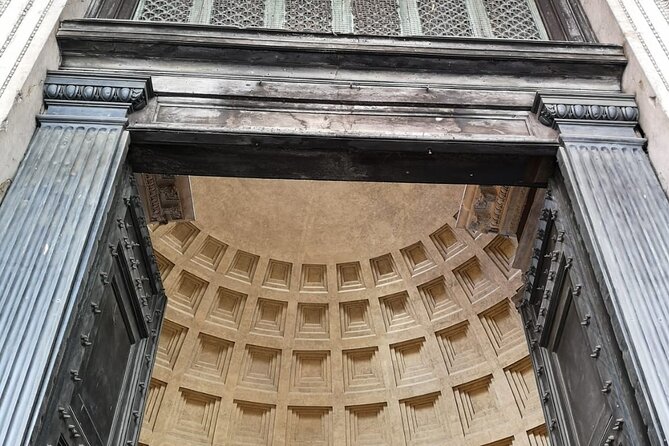
Your tour starts at Piazza della Rotonda, right where the Pantheon anchors the square. That matters more than you might think. Rome has plenty of beautiful chaos, and a clear meetup point helps you avoid the first-stress-first-lose-time spiral.
This also ends back at the meeting point. So you’re not left trying to navigate a new area after the tour. You can plan a lunch walk nearby or head to your next stop without juggling directions at the end.
If you’re using public transport, this location is described as near public transportation, which is handy if you don’t want to rely entirely on taxis or a long walk across busy streets.
How long is the tour, and what you’ll realistically cover
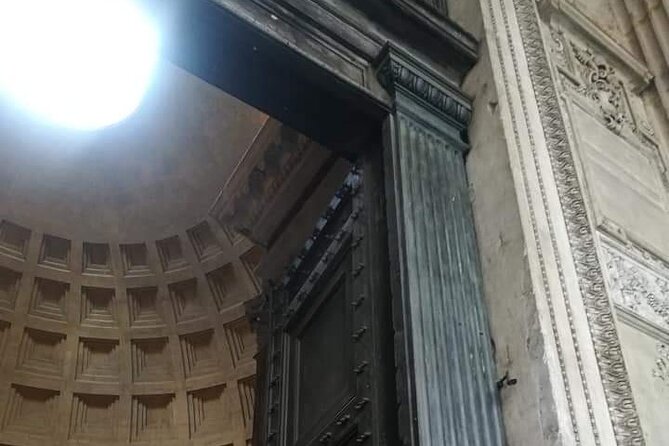
The time on the ground is about 50 minutes to 1 hour. That’s a good length for the Pantheon because the building is intense, and you want your brain switched on while you’re inside—not 2 hours later, after you’ve wandered off.
You’ll cover the Pantheon’s interior and exterior. The stop is short, but the goal isn’t to wear you out with facts. It’s to give you a strong framework: what the Roman elements are doing, why the monument still feels powerful, and how later layers of meaning shaped what you’re seeing today.
One practical note: because the tour is time-limited, you should come in ready to look closely. If you arrive distracted and keep checking your phone, the short format can feel too fast. If you’re paying attention, that same short format feels like a smart use of your time.
Pantheon inside: symbols, meaning, and how to look smarter
Inside the Pantheon, crowds can make everything feel like noise. What I like about having a guide here is the way she directs your attention. The space is busy even when it’s “just a visit,” but the tour is designed to help you feel what’s going on beneath the busy surface.
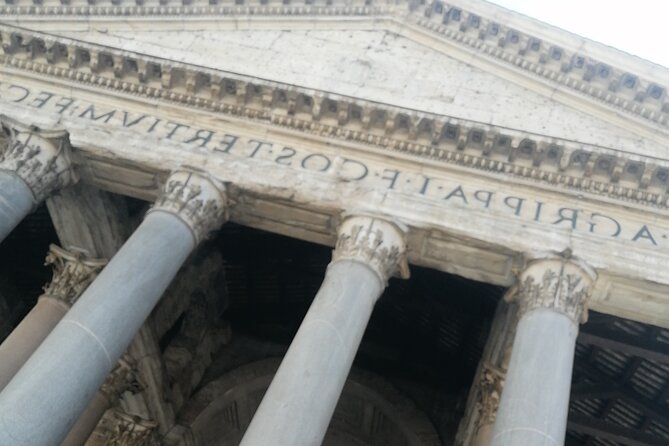
You’ll learn about the Pantheon’s ancient Roman symbols and its architectural traditions. That matters because the Pantheon isn’t just old—it’s old with intent. The guide connects what you’re seeing to why Roman builders made these choices, including how the monument expresses Roman ambition and control through building “monumentality.”
This is also where the guide’s archaeologist lens pays off. Instead of treating the Pantheon as a static postcard, she helps you understand it as a structure with layers. One of the standout ideas highlighted in this tour’s descriptions is how the Pantheon connects pagan Roman origins with later Christian use—so you’re not just seeing one story, you’re seeing how multiple eras interpreted the same place.
You’ll also have time to ask questions. That’s huge for the Pantheon because people usually have the same handful of “why does it look like that?” questions. A short tour only works if you can actually clarify points while you’re still standing in front of the building.
Pantheon outside too: spotting the monumentality without getting lost
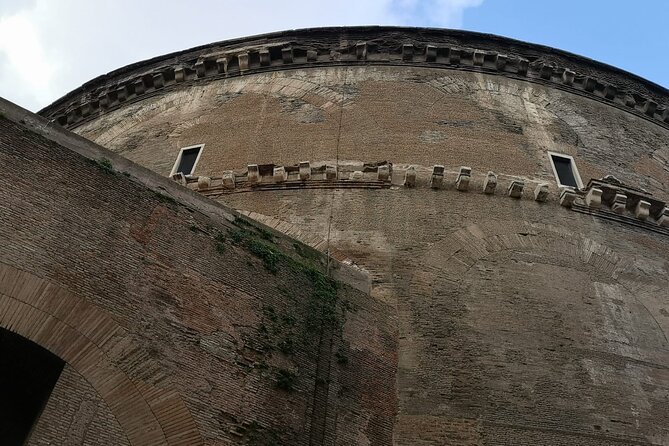
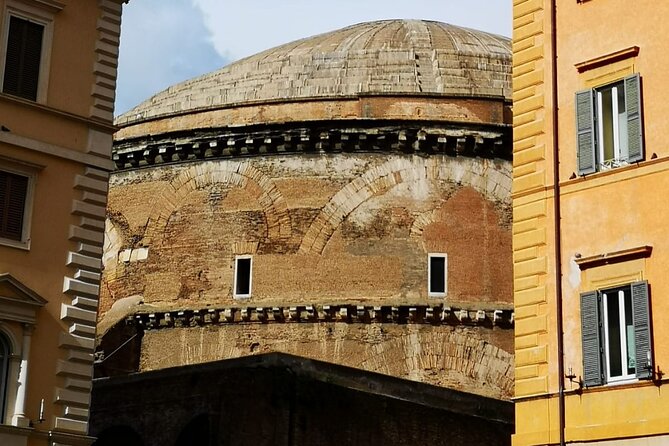
The exterior might look simple at first glance—until you’re listening. Outside, you focus on how the Pantheon communicates Roman power through architecture and engineering choices. The tour frames it as a monument that survived almost completely intact, which is rare in Rome. That survival turns the building into a kind of living reference point for how Romans built for the long haul.
Even if you’re not an architecture nerd, you can still get something out of the exterior portion. You learn what to look for so the exterior stops being just “a famous facade” and starts being part of the same logic you’re hearing about inside.
And because the experience loops back to the meeting point, you’re not forced to rush off and find your way. You can finish the tour, look around for a moment in your own time, then move on with your day.





iPad visuals, photos, and drawings that make the structure click
Here’s a practical thing I always appreciate on architecture tours: when the guide brings material you can’t easily see from where you stand.
In this case, Olga uses iPad visuals as support, plus photos and archaeological drawings referenced during explanations. That support helps you follow construction concepts without the frustration of hearing about parts you can’t comfortably inspect on the fly.
This kind of visual aid is especially useful for the Pantheon because so much is “obvious” once it’s explained. You can stare at the space and miss how the pieces relate. With the guide’s visuals, those relationships start to make sense, and you leave feeling like you truly understood what you saw.
If you’re traveling with kids, this also helps. Visuals keep attention from drifting, and the guide’s explanations are described as engaging for multiple ages, which is exactly what you want in a family-friendly stop.
Small-group format: why max 10 travelers matters at the Pantheon
Group size isn’t just a comfort detail. It changes the whole energy of the tour.
With a maximum of 10 travelers, you’re more likely to hear the guide clearly, ask questions without feeling rushed, and stay connected to what she’s pointing out. The Pantheon draws crowds, so having a quieter bubble around you makes the experience feel smoother and more personal.
It also helps when you’re trying to learn a lot in a short time. When the group is big, the guide has to speed up. Here, the pace stays more human, and the tour stays focused on meaning instead of only facts.
And if you care about photos, small groups also tend to make it easier to position yourself for a quick look at what the guide is describing.
Price and value: is $66.54 worth it?
At $66.54 per person, this isn’t the cheapest way to see the Pantheon. But you’re not just paying for access—you’re paying for interpretation.
For this price, you get:
- A guide who’s an archaeologist, not a generic script
- A semi-private group format (max 10)
- English service
- A mobile ticket
- A short, structured visit focused on what matters
The tour also lists Pantheon admission as free for this stop. If that’s accurate for your booking, that improves the value a lot, since it cuts out a common expense for major sights.
You’ll get the most value if you’re the type of traveler who wants more than a quick walk-through. If you love history and want to connect Roman design choices to how the Pantheon has been re-used and re-interpreted over time, you’ll likely feel this price is fair.
If you only want a casual look and you’re happy with audio or guidebook basics, you might decide to spend your money elsewhere. But if you’re hoping the Pantheon feels like a story you can understand, this tour is built for that.
Who this tour suits best (adults, kids, and curious first-timers)
This experience is described as suitable for both adults and children alike. That’s a good sign, because a lot of Rome tours either skew too academic or too fast for families. Here, the emphasis on symbols, meaning, and structure seems to work at different attention levels.
It’s also a smart choice if:
- You want to understand the Pantheon beyond the obvious
- You like architecture talk but don’t want to drown in technical jargon
- You care about how Roman and Christian histories overlap in real space
- You want answers to questions while you’re standing there
And if you’re traveling with a mixed group—people who want history and people who want something fun—this style often helps bridge the gap. Olga’s passion and energy are repeatedly mentioned in the descriptions, and that kind of enthusiasm matters at a site this famous. It keeps you from feeling like you’re reading facts off a wall.
Practical tips before you go (dress code and timing)
One rule you can’t ignore: you need to cover the shoulders to enter. That’s the one practical detail most likely to slow you down if you’re unprepared, especially in warmer months when people show up in summer tops.
The tour includes a mobile ticket, which is convenient in a city where paper tickets can be one more thing to manage. Plan to have your phone charged and ready.
Because the Pantheon is a busy, high-foot-traffic area, arrive with a clear plan. The tour duration is short, so you don’t want to spend your best minute negotiating your outfit or re-checking where you’re supposed to meet.
Finally, service animals are allowed, and the meeting point is near public transportation—both helpful for smoother logistics.
Should you book this semi-private Pantheon tour?
If you want the Pantheon to feel like more than a famous room, I’d book it. The combination of a small group (max 10), an archaeologist guide named Olga di Cagno, and explanation style supported by iPad visuals and archaeological drawings is exactly what turns a quick stop into something that sticks.
I’d especially recommend it if you’re in Rome for a limited number of days and you want to get smart fast—about Roman symbols, architectural intent, and the long story of how the Pantheon stayed relevant across eras.
Skip it only if you’re happy with a self-guided walk and you don’t care much about structure and meaning. In that case, you can get a decent experience on your own and save the money for something else.
FAQ
FAQ
Where does the Pantheon tour meet?
The tour meets at Piazza della Rotonda, 00186 Roma RM, Italy, and it ends back at the same meeting point.
How long is the Pantheon tour?
The tour runs about 50 minutes to 1 hour (approx.).
Is the tour offered in English?
Yes, the tour is offered in English.
What’s the group size?
The activity states a maximum of 10 travelers, keeping it semi-private.
Do I get a mobile ticket?
Yes, the tour includes a mobile ticket.
Is admission included for the Pantheon?
The Pantheon stop is listed as Admission Ticket Free in the tour information you provided.
Do I need to cover my shoulders?
Yes, you must cover the shoulders to participate.
Are service animals allowed?
Yes, service animals are allowed.
What happens if I book close to my travel date?
You’ll receive confirmation at booking unless you book within 1 day of travel. If you book within that window, confirmation is received as soon as possible, subject to availability.
What is the cancellation window?
You can cancel for a full refund up to 24 hours in advance of the experience’s start time. If you cancel less than 24 hours before, the amount paid is not refunded.