REVIEW · ROME
Private Rome Food Tour in the Historic Centre with 8+Tastings
Book on Viator →Operated by Secret Food Tours · Bookable on Viator
Rome tastes different when someone else orders.
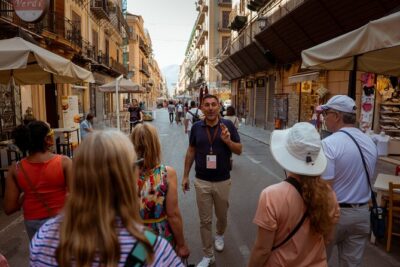
This private Rome food tour blends classic sights with a proper 8+ tasting menu, so your walk through the center feels like a story you can eat. I love that you get Italian culture plus food in one go, and I really like the way the guide helps you order without getting stuck on language.
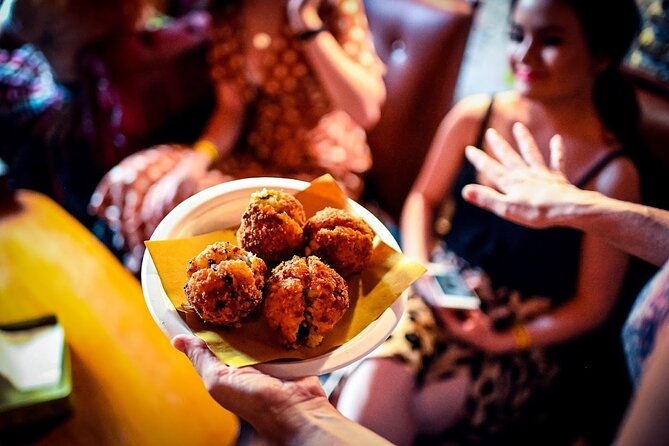
Two things stand out fast: the homemade pizza and the classic Rome comfort of suppli—fried risotto balls that actually live up to the hype. One possible drawback to plan for: you’re walking for a little over 3 hours, so if your pace is slow or you get tired easily, this might feel like more than you bargained for.
In This Review
- Key highlights worth planning around
- Why this private Rome food tour works in the real world
- What $405.14 per person buys you (and why it can feel worth it)
- The walking route: from Piazza Navona area to ancient Campus Martius
- Campo de’ Fiori: the square south of Piazza Navona
- The French Embassy palace: High Renaissance Rome in a food-tour context
- The Jewish Ghetto (Rione Sant’Angelo): history that still shows up on plates
- Four Rivers fountain: Roman symbols made easy to remember
- Ancient walkway remains: linking temples in the 2nd century B.C.
- Campus Martius and Pompey’s Theatre footprints
- The 8+ tastings: what you’ll eat and why it’s a smart mix
- Your guide: where the humor and ordering help really show up
- Timing, pace, and footwear: plan for a 3.5-hour walking day
- Dietary needs: what to do before you book
- Who should book this tour (and who might want another option)
- Should you book this Private Rome Food Tour in the Historic Centre?
- FAQ
- How long is the private Rome food tour?
- What’s the starting and ending point?
- Is the tour only for my group?
- Is it offered in English?
- Does the price include hotel pickup or drop-off?
- Can you accommodate dietary requirements?
Key highlights worth planning around
- A private format: only your group, so you can ask lots of questions as you go
- 8+ tastings covering pizza, suppli, cheeses/cold cuts, Roman pastas, cannoli, gelato, plus a Secret Dish
- Your guide orders for you, helping you avoid menu guesswork and language friction
- Historic stops in the center: Campo de’ Fiori, the French embassy palace, the Jewish Ghetto, and ancient Campus Martius
- Food + sight pairing: you get context for why each area tastes the way it does
Why this private Rome food tour works in the real world
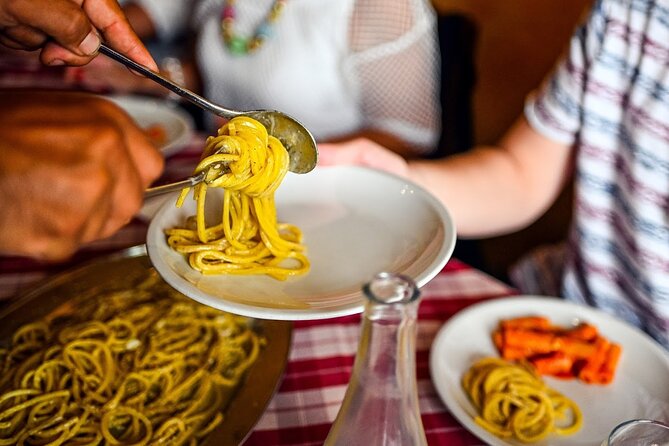
Rome food tours can be either “eat, then scroll” or “see, then snack.” This one tries to do both, and that matters when you only have a few days. You start near Piazza Navona, then your route threads through major landmarks while you’re also sampling a sequence of Roman favorites.
I also like the ordering style. Instead of you trying to translate a menu and guessing what will show up, your guide selects dishes for the group. That means less awkward decision-making and more time actually enjoying the food and the stories behind it.
Finally, this is a private tour, which usually changes the energy. When you’re not sharing the table with a random mix of people, it’s easier for your guide to tailor the pace and answer follow-up questions. You also get the chance to ask for extra eating recommendations beyond the stops—something I find genuinely useful when you’re trying to repeat success on your own.
You can also read our reviews of more tours and experiences in Rome.

What $405.14 per person buys you (and why it can feel worth it)
At $405.14 per person, this isn’t a bargain-basement food crawl. The value comes from the combination: a private guide, a structured route through the historic center, and a long tasting list that isn’t just “one bite each.”
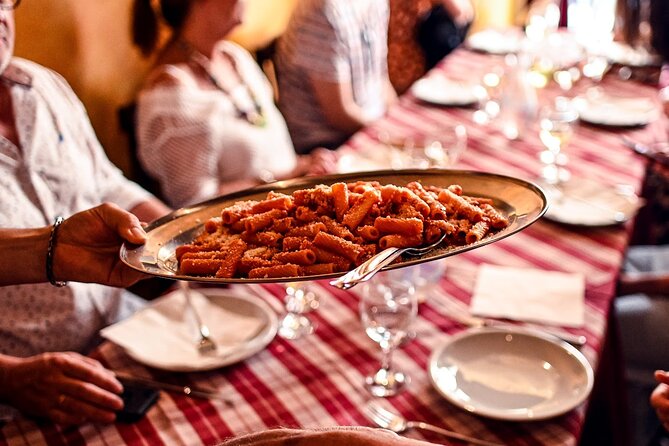
You’re looking at about 3 hours 30 minutes in total, with multiple tastings that include two homemade pizza types, suppli, Italian cold cuts and cheeses, two Roman pastas, cannoli, artisanal gelato, and a Secret Dish. That’s a lot of items for one afternoon, and it reduces the chance you’ll leave Rome feeling like you ate “enough to check a box.”
There’s also real convenience built in. You don’t need to line up or compare menus across several spots, and the guide helps you choose foods that match the theme of each neighborhood. If your goal is to eat well without wasting time, this price can start to make sense.
The walking route: from Piazza Navona area to ancient Campus Martius
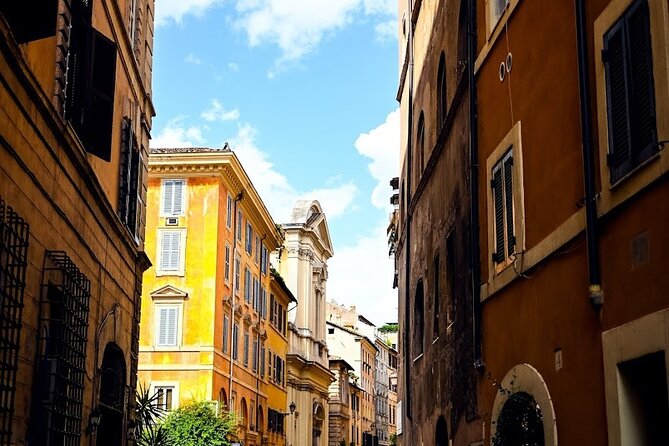
The meeting point is Sant’Agnese in Agone, Piazza Navona, then the tour ends at Largo di Torre Argentina. That end point is handy because it sits near more ruins and walking options—so you don’t feel trapped at the finish.
The tour runs a little over 3 hours, which means you should treat it like an active sightseeing block, not a sit-down meal. You’ll be moving between stops that are closely linked to Roman street life and key landmarks, which is exactly why a guided walk works well here: you get the “why” behind what you’re seeing while your taste buds get fed.
You also get a mobile ticket, and the meeting area is near public transportation. If your day in Rome is tightly packed, being able to coordinate around the end point matters.
One note: this experience requires good weather. If the forecast looks rough, plan to be flexible, since the operator may move the date or offer a full refund in weather-related cancellations.
Campo de’ Fiori: the square south of Piazza Navona
Your first big setting is a rectangular square just south of Piazza Navona: Campo de’ Fiori, literally “field of flowers.” It’s the kind of Rome place where street energy meets everyday life, and it’s a great place to start because it’s central and easy to orient yourself.
From a food-tour perspective, Campo de’ Fiori is useful because it anchors the day. Your guide can point out how neighborhoods shape food choices—what’s nearby, what’s traditional, and where people naturally gather to eat. It sets the tone: you’re not just touring buildings, you’re walking through the geography that influences daily meals.
A practical tip: arrive a few minutes early, then settle into the pace your guide sets. This is the kind of tour where momentum helps—waiting too long for the first tastings can make the start feel slower than it needs to be.
The French Embassy palace: High Renaissance Rome in a food-tour context

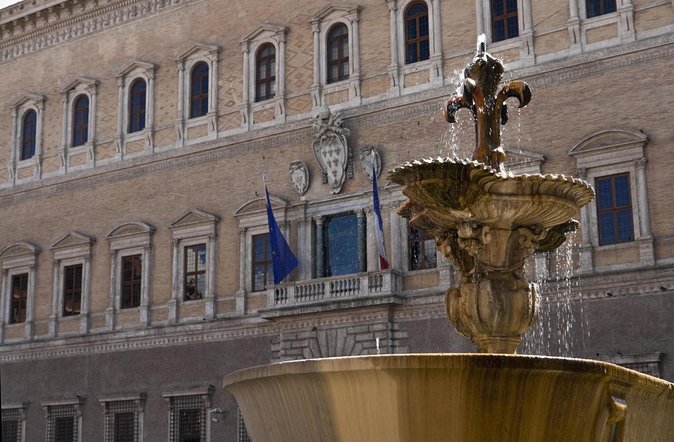
Next up is one of Rome’s most important High Renaissance palaces, currently serving as the French embassy in Italy. Even if you’ve seen photos of the exterior, being there in person changes the scale and detail.
Why this stop matters on a food tour: Rome’s center isn’t just “ancient plus restaurants.” It’s layers of power, wealth, and influence, and that shows up in the way people still live and eat around these landmarks. Your guide’s job is to connect the dots between culture and menu choices, so you understand what you’re tasting as part of a larger pattern.
You may not spend ages here like you would at a major museum, but you’ll get the “spotlight” effect: enough time to appreciate the place, then back to tasting and walking.

The Jewish Ghetto (Rione Sant’Angelo): history that still shows up on plates
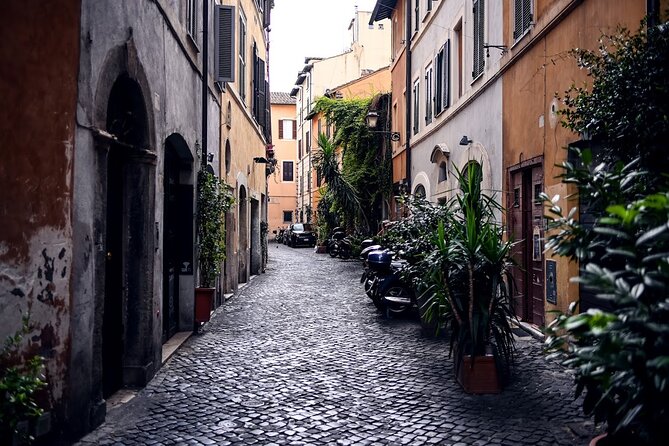
One of the most unique parts of the itinerary is the Jewish ghetto established in 1555 in the Rione Sant’Angelo area. This neighborhood is known for history and culture, but on this tour it’s also treated like a food district with real character.
Food tells you a lot about a community—what survives, what adapts, and what stays. When your guide brings you through this area, you’re not just hearing dates. You’re learning how neighborhoods create culinary identity, and you’re tasting items that connect to that sense of place.
The practical takeaway: when you reach the ghetto stop, slow down your mind a notch. Let the stories land, then taste with intention. You’ll likely enjoy the flavors more when you know what your guide is aiming for with each pairing.
Four Rivers fountain: Roman symbols made easy to remember
You’ll also see a classic 17th-century fountain: a homage to the 4 rivers, topped by a Roman obelisk with a dove. It’s the kind of landmark that looks decorative from far away, but on foot you notice how much thought went into the composition.
This stop works well mid-tour. When you’re full from tastings, fountains are a mental reset. You get a break from hunger, and you also get a visual anchor for the day’s theme: Rome’s past is everywhere, and it’s not only buried in museums.
If you like learning where symbols come from, ask your guide a question here. Your tour guide’s humor and quick facts have been a standout theme in the tour experience, and this is a good moment to use it.
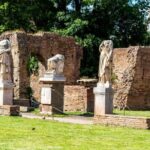
Ancient walkway remains: linking temples in the 2nd century B.C.
The itinerary includes remains of an ancient walkway originally built in the 2nd century B.C. to link two Roman temples. Seeing the leftover structure in context helps you understand how Rome was designed to move people between important spaces.
Again, this is where a guided food walk has an advantage over a pure walking tour. When you hear how ancient Romans connected religious or civic sites, you start to see why modern neighborhoods still feel connected. You’re moving through lines laid down centuries ago.
Practical note: this kind of stop can involve uneven ground. Keep your shoes comfortable and your pace steady, especially if you’re carrying water or planning to snack lightly between tastings.
Campus Martius and Pompey’s Theatre footprints
The tour ends by going through an area connected to Campus Martius, a square with four Roman Republican temples and the remains of Pompey’s Theatre. This is a powerful “last stop” because it feels like stepping into the scale of ancient Rome.
The value of ending here is that it leaves you with options. If you want to keep exploring, the finish at Largo di Torre Argentina is a naturally active area for additional walking and sightseeing. You’re not done just because the tour ends—you’re positioned near more Roman ruins and photo opportunities.
Don’t rush your attention at this point. By the time you reach ancient Campus Martius, you’ve already been eating and listening. Give the final stop a little focus so it actually sticks.
The 8+ tastings: what you’ll eat and why it’s a smart mix
This tour is built around a sequence of Roman flavors, and the included menu is the kind that keeps you from repeating the same thing over and over.
Here’s what’s included:
- Two different types of homemade pizza
- Supplí: fried risotto balls
- Italian cold cuts and cheeses
- Two Roman pastas
- Cannoli
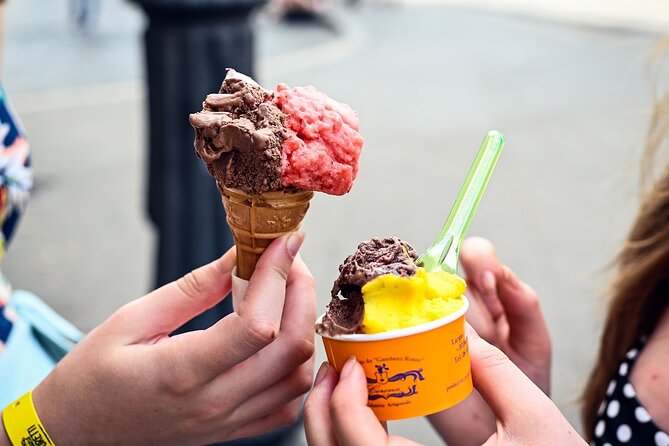
- Artisanal gelato
- Our Secret Dish
I like this menu structure because it covers the range: savory snacks, baked comfort, fried crunch (suppli), and then the sweet finish with cannoli and gelato. It also means you’re not stuck waiting for one “big meal.” You eat in steps, so you stay comfortable while walking.
Supplí deserve a quick note. They’re fried, yes—but what makes them memorable is the contrast: crisp outside, creamy inside. When you’re walking in the center, that bite-size snack energy is perfect. It’s also very Roman without being touristy in a way that feels like it’s only there for pictures.
Pizza is also a key inclusion. You’re getting homemade pizza, and because there are two types, you can taste variation instead of doing a single generic slice. It’s a smart way to learn what “Roman pizza” means in practice.
And then there’s gelato at the end. If you’ve ever had gelato in Rome and wished it had been cooler or better-timed, you’ll understand why this matters. Here, it becomes a proper wrap-up after the heavier items.
Your guide: where the humor and ordering help really show up
The guide is the engine of this experience. In the past, guides like Rocio, Ludovica, Massi, Edoardo, and Robbie have been praised for blending food with facts and jokes without turning the tour into a lecture.
That “food + funny facts” approach matters because it keeps you engaged while still giving context. You get more than where to eat—you learn why a neighborhood’s food identity exists and what to notice as you walk.
The ordering help is practical too. If your Italian isn’t strong, you don’t have to guess names or point randomly at menu items. Your guide selects the dishes for you, and that reduces the risk of ending up with something you didn’t want or didn’t expect.
You should also use your guide for recommendations after the tour. This is especially useful because Rome has a lot of places that look good from the outside. When someone local tells you where to go next, you can steer toward success for the rest of your trip.
Timing, pace, and footwear: plan for a 3.5-hour walking day
This is not a short, hop-on-hop-off experience. It’s about 3 hours 30 minutes and includes multiple stops, which means you’ll want to keep your body comfortable.
Wear walking shoes. The tour is described as requiring comfortable footwear, and that advice is exactly right for this kind of Rome route. You’ll be on streets and between landmarks, so good grip and comfort make the whole day better.
Also, you’ll get more out of the experience if you arrive hungry but not starving. The tastings are substantial, and by the later stops you’ll likely feel the momentum build. A full appetite helps, but you don’t want to show up over-tired.
Finally, the weather matters. Since it requires good weather, keep an eye on the forecast close to your date. If conditions are poor, you’ll typically be offered a different date or a full refund.
Dietary needs: what to do before you book
Food tours are where dietary rules can either work beautifully or turn into stress. Here, you’ll want to plan ahead.
The operator asks you to contact them in advance for dietary requirements. They also note that many tours are unable to accommodate certain restrictions, so you should confirm your needs before booking if you’re dealing with allergies or specific diets.
My advice: message early with clear details. Don’t wait until the day of the tour. If they can’t accommodate, you want to know so you can choose a different plan without losing time in Rome.
Who should book this tour (and who might want another option)
I think this is a strong fit for you if:
- You want Rome sights and Roman food on the same day
- You prefer a guided pace rather than picking restaurants and hoping
- Your Italian is limited and you want ordering support
- You’d rather ask a guide for recommendations than gamble on menus
It may feel less ideal if:
- You can’t do sustained walking for about 3.5 hours
- Your diet has strict limitations that require special preparation, and you haven’t confirmed accommodation
Should you book this Private Rome Food Tour in the Historic Centre?
If your goal is an efficient, high-quality day where food and landmarks move together, I’d book it. The included menu is broad enough to feel like a real meal arc—pizza, suppli, pastas, cannoli, gelato—plus a Secret Dish. And the private format makes the guide’s humor and help with ordering feel more personal, not generic.
I’d only hesitate if you know your walking stamina is limited or if you have a dietary restriction that might not be accommodated. If that’s your situation, reach out before you commit, because the tour itself runs on a balanced tasting plan.
If you want Rome to taste like Rome, with less stress and more context, this private tour is a very practical choice.
FAQ
How long is the private Rome food tour?
It lasts about 3 hours 30 minutes.
What’s the starting and ending point?
It starts at Sant’Agnese in Agone, Piazza Navona, 14, and ends at Largo di Torre Argentina.
Is the tour only for my group?
Yes. It’s a private tour/activity, so only your group participates.
Is it offered in English?
Yes, it’s offered in English.
Does the price include hotel pickup or drop-off?
No. Hotel pickup and drop-off are not included.
Can you accommodate dietary requirements?
You should contact the tour operator in advance with your dietary needs. They also note that many tours can’t accommodate certain dietary restrictions, so it’s important to confirm before booking.