REVIEW · ROME
Rome: Appian Way, Catacombs & Roman Aqueducts Top EBike Tour
Book on GetYourGuide →Operated by TopTours · Bookable on GetYourGuide
That ancient road still pulls you forward. An e-bike tour of the Appian Way and Roman countryside makes it feel both historic and doable, with a safety-first plan that’s built for mixed riding comfort. I like that it’s not just monuments on a checklist, it’s a guided route that moves you through open-air archaeology with breaks that make sense.
Two things I really appreciate: the ride itself and the guide quality. You’ll be on new Cannondale e-mountain bikes with anti-puncture tires, a comfortable saddle, and a helmet (mandatory), so the day stays fun instead of frazzling. Plus, feedback calls out guides like Claudia, Fabio, Megan, Zak, Areia, and Caterina for patient instruction and clear explanations that turn stone-and-rubble stops into real stories.
One consideration: this is an intermediate ride. You cover about 27 km (17 mi), with roughly 60% off-road, and while you’ll have electric assist, it can feel work-like at times, especially in heat or if you’re using a child seat/extension. And if your group has kids who want action over atmosphere, you may question whether the catacombs are worth the extra time.
In This Review
- Key highlights you’ll care about
- Appian Way by e-bike: the kind of Rome you can actually ride
- Meeting at Via Labicana: quick bike setup, then out of the crowds
- Leaving Rome: Aurelian Walls and the shift into ancient territory
- The Appian Way monuments: Circus of Maxentius, Cecilia Metella, and more
- A practical note on “nothing special” expectations
- Catacombs on the 6-hour tour: what to expect underground
- Park of the Aqueducts: the arches that turn water into a monument
- Caffarella Valley and the finish near the Baths of Caracalla
- Price and value: is $100 worth it?
- Safety, traffic, and the real feel of the ride
- Who should book this Appian Way e-bike tour
- Should you book this tour?
- FAQ
- How long is the Rome: Appian Way, Catacombs & Roman Aqueducts e-bike tour?
- Where is the meeting point?
- Are the catacombs included?
- How much of the ride is off-road vs. in the city?
- What bikes and safety gear are provided?
- What language options are available for the guide?
- Can children join, and what are the age rules?
Key highlights you’ll care about
- Cannondale e-mountain bikes with anti-puncture tires and a comfortable saddle for a smoother ride
- A 2300-year-old route out of the city via St. Sebastian’s gate and onto the Via Appia Antica
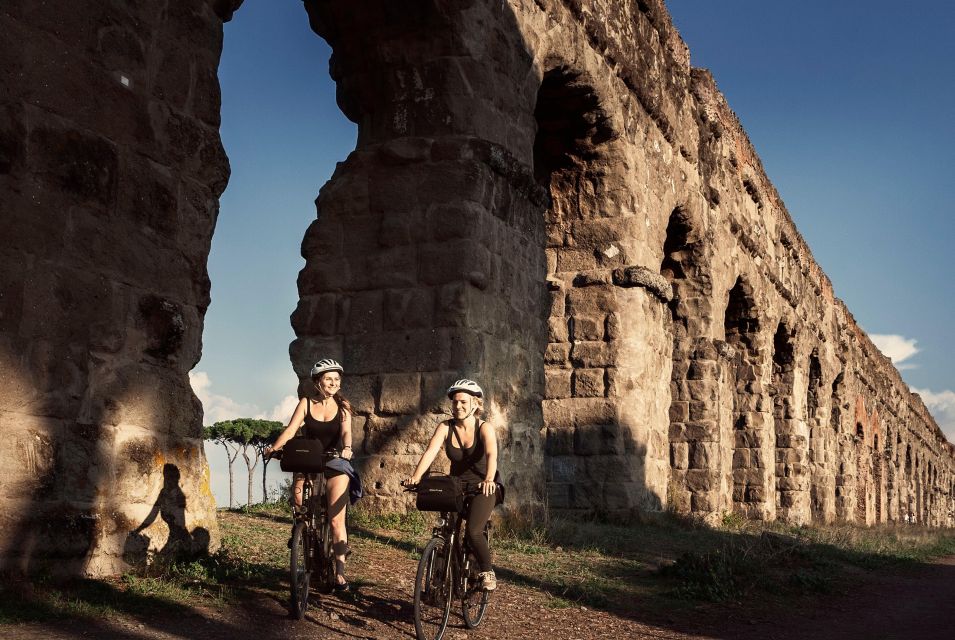
- Roman aqueducts in the open air at Parco degli Acquedotti, where the arches dominate your photos
- Only on the 6-hour tour: a guided catacombs visit with a 45-minute underground segment
- Small groups (max 10) and a guide-led, safety-conscious plan for busy connections
- Green Caffarella Valley for real countryside time before finishing near the Baths of Caracalla
Appian Way by e-bike: the kind of Rome you can actually ride
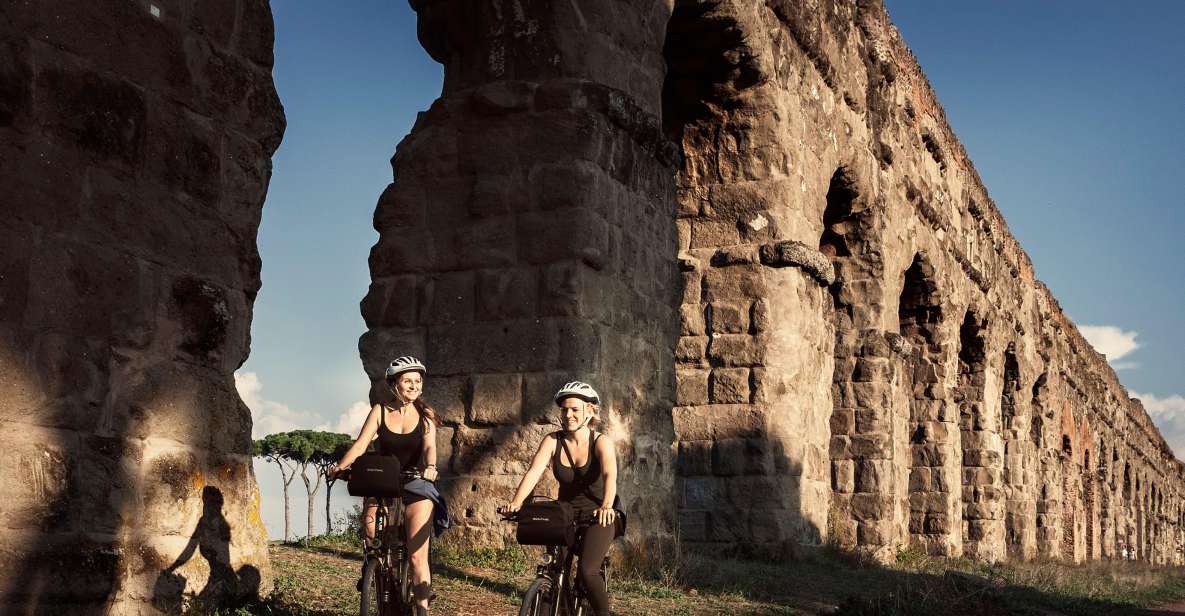
The Appian Way (Via Appia Antica) is one of those places that sounds dramatic in a guidebook and even better in real life. Here, you don’t just stand and look. You travel the same kind of route the Romans used, with the added benefit that your legs still get a say in what happens next.
This tour keeps the day moving in the right order: city exit first, ancient road second, then monuments and aqueducts in park settings. That sequencing matters because it helps you ease into the ride. Start on calmer segments, build momentum, then spend the best scenic time in the countryside stretch where traffic basically disappears.
You can also read our reviews of more tours and experiences in Rome.


Meeting at Via Labicana: quick bike setup, then out of the crowds
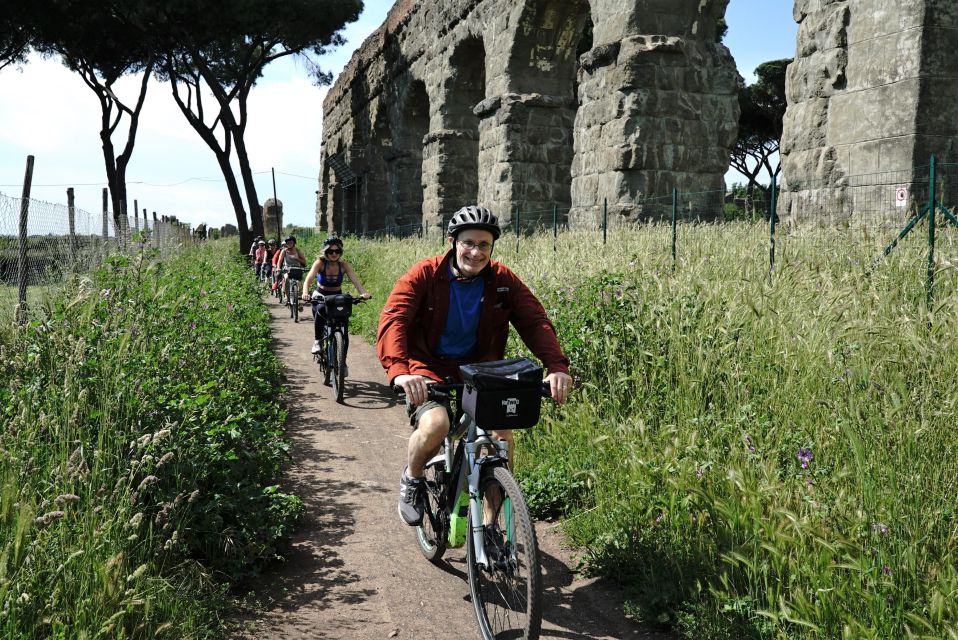
You meet at Via Labicana 49, a short walk from the Colosseum area. That’s convenient because you’re not traveling across town just to start pedaling, and it keeps the day efficient. After meeting your guide, you get on the Cannondale e-bike and get briefed before you join the road network.
The e-bike setup is a big part of why this tour works for so many people. The tires are built for real-world riding with anti-puncture protection, and the saddle is designed for comfort over longer time in the seat. In other words: you’re not signing up for a bumpy punishment ride.
You’ll also get a bottle of water. Not a full picnic setup (more on that later), but enough to handle the first chunk of the route without feeling unprepared.
Leaving Rome: Aurelian Walls and the shift into ancient territory
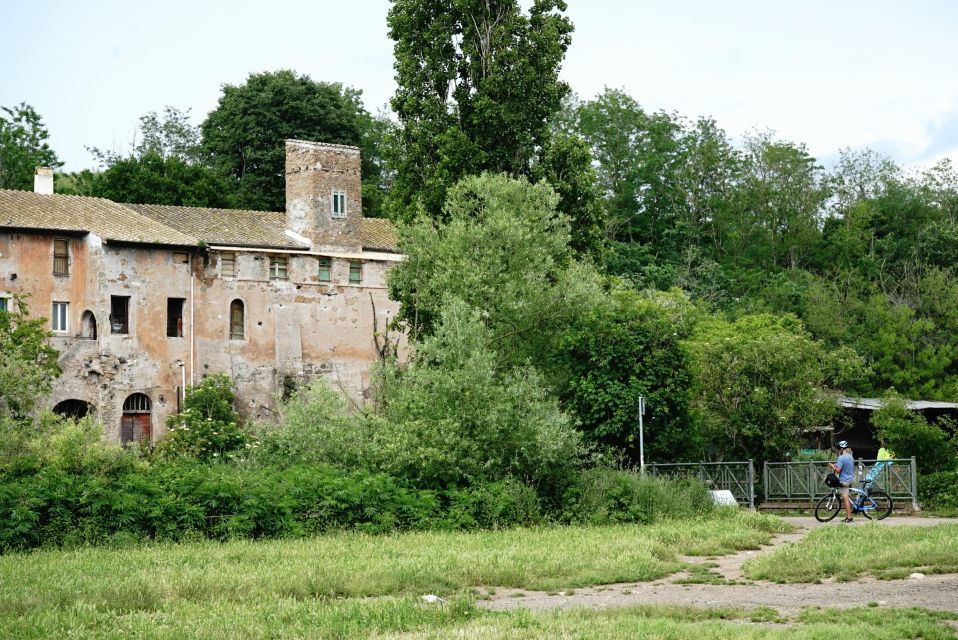
One of the smartest parts of the itinerary is how it bridges “modern Rome” to “Roman Rome.” You’ll see the Aurelian Walls as you roll out toward the Appian Way, then you transition toward St. Sebastian’s gate. It’s a visual warm-up: defensive walls, then an imperial road built for movement and power.
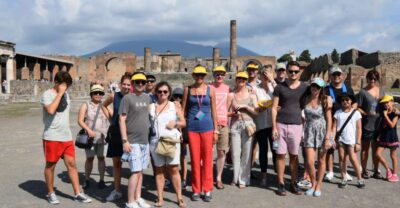
Once you’re properly on the Appian Way, you get what makes this area different from typical city sightseeing. You’re traveling an open-air museum through mausoleums, villas, and funerary remains lined along the route. This is one of those settings where just riding forward feels like part of the interpretation.
The Appian Way monuments: Circus of Maxentius, Cecilia Metella, and more
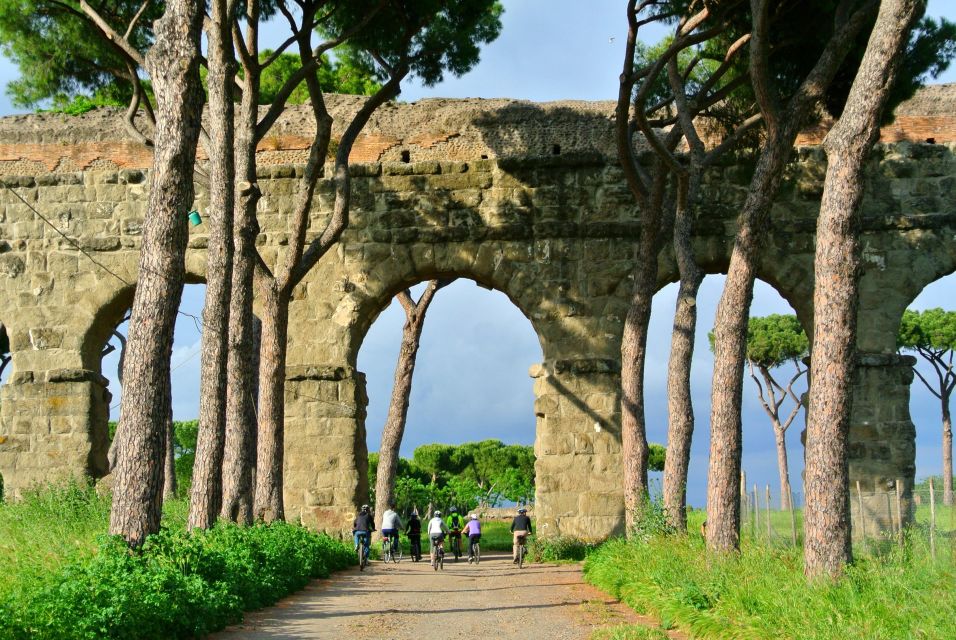
Along the ride you’ll pass some of the heavy hitters that most people only see in bits and photos online. The Circus of Maxentius is one stop that gives you scale: it’s the kind of site where your brain finally understands what “Roman entertainment” meant when you can place it in space and context.
Then comes the Tomb of Cecilia Metella, another visual landmark that grabs attention fast. It’s a stop that’s easier to appreciate when you’re moving at a human pace, not stuck in a bus window or pressed into a crowd behind a railing.
You’ll also see the Villa dei Quintili, plus other remains connected to Rome’s long history of villas and funerary practices. The point isn’t just to view objects; it’s to understand how the landscape was organized around status, memorial, and leisure.
A practical note on “nothing special” expectations
Not every stop hits the same for everyone. One family-style viewpoint in feedback suggested the kids found some monuments less exciting than the ride itself and the parks afterward. If your group is more “let’s see nature and big structures” than “let’s learn each building detail,” I’d still keep an open mind, because the biggest payoffs are often the aqueducts and the park riding time.




Catacombs on the 6-hour tour: what to expect underground
The catacombs are the optional centerpiece. On the 6-hour version, you’ll get a guided visit with about 45 minutes underground after you cycle through the earlier highlights.
Expect a real shift in pace here. You’re going from bright, open-air Roman stonework into enclosed corridors of early Christian burial spaces. If you’re the type who likes atmosphere and quiet, this segment can feel like a hard-to-get experience that you can’t recreate on your own.
If you’re bringing younger kids, it’s worth thinking through the match. One review explicitly said they would skip the catacombs because kids found it boring. I don’t think that means the catacombs are bad; it just means the catacombs are a different style of interest than outdoor ruins.
Park of the Aqueducts: the arches that turn water into a monument
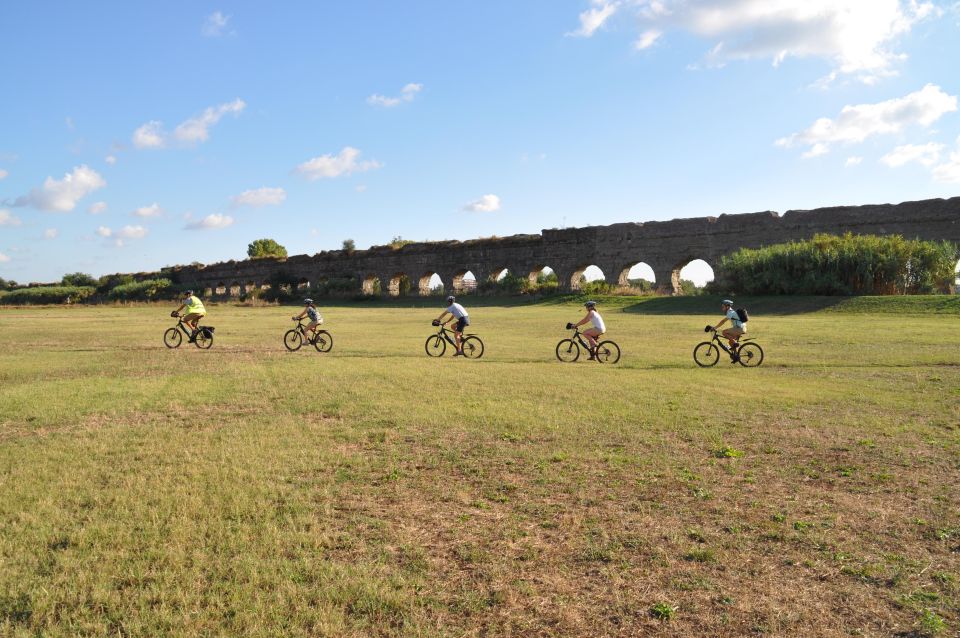
If I were picking a single “you came for this” moment, it would be Parco degli Acquedotti. You’ll ride into the aqueduct park where monumental arches loom over the route, and the scale hits you differently when you’re actually moving under the vibe of it.
This part is valuable because it teaches you to see Roman infrastructure as architecture. Those aqueducts weren’t just practical. They were power made visible, pushing huge quantities of water toward the city and leaving behind a scenic trace that still defines the area today.
Timing helps too. The tour is designed so you can experience the park in the afternoon glow, when stone textures and long shadows make the aqueducts feel even more dramatic than in flat daylight.
Caffarella Valley and the finish near the Baths of Caracalla
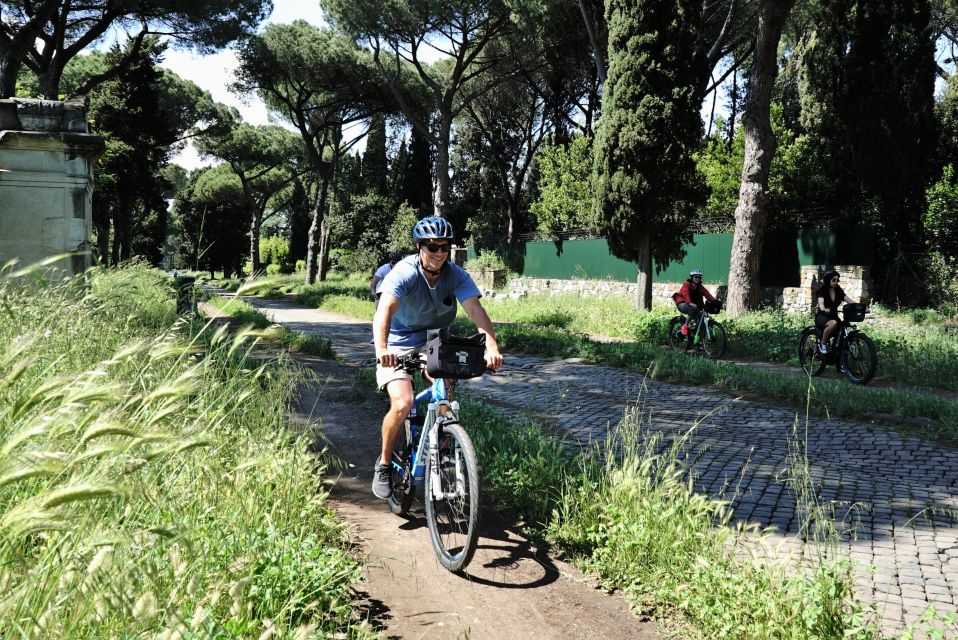
After the aqueduct park, you come back through Caffarella Valley, described as a true patch of Italian countryside inside the city. This is where the day often softens from “tour mode” into “stroll on a ride” energy, because you’re in a green corridor rather than repeating major monument stops.
The final arc includes the Baths of Caracalla. Even if you only spend a bit of time here, the setting is a fitting closer: you started with ancient roads and walls, you saw the memorial side of Rome, then you ended with the massive public-imperial world of baths and civic life.
And you finish back at Via Labicana 49, so you’re not stranded miles away from your hotel logistics.
Price and value: is $100 worth it?
At about $100 per person for a 4 to 6 hour experience, the value depends on what you want most: transportation, access, or interpretation.
This isn’t a cheap “just rent a bike and go” situation. What you’re paying for is (1) a guided route, (2) a small group size, and (3) an e-bike that handles a long distance of mixed riding—roughly 27 km (17 mi) with 60% off-road. The electric assist is what makes the distance feel like a ride you can enjoy rather than a workout that scares you halfway through.
If you choose the 6-hour version, the guided catacombs segment adds meaningful value because it’s not just time underground, it’s a structured visit that fits into the same day’s historical flow.
Given the strong overall rating (4.9 from 101 reviews) and repeated praise for safety and guide clarity, this price tends to make sense for people who want a guided “Rome without exhaustion” day.
Safety, traffic, and the real feel of the ride
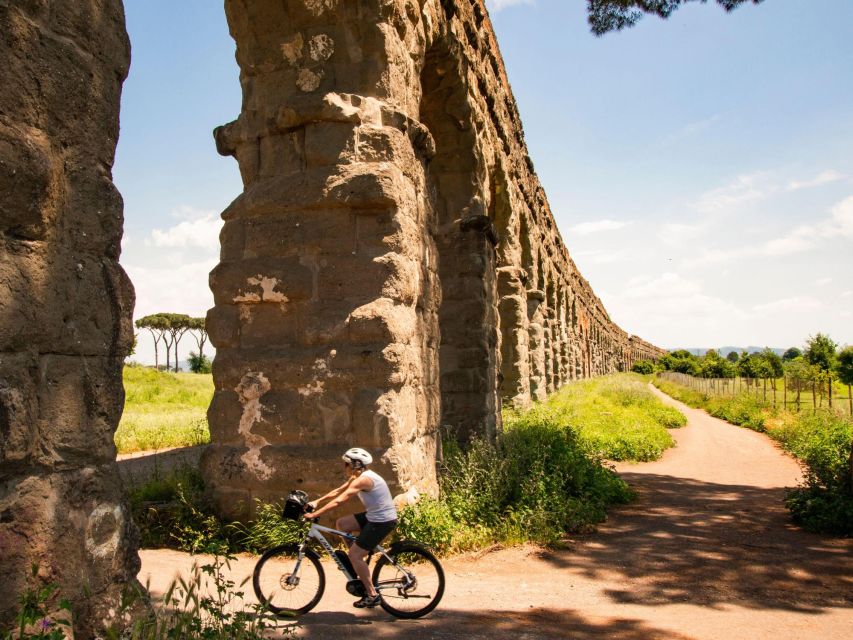
This tour is designed around safety, and the route planning helps. Roughly 40% happens in the city on carefully chosen streets, where some traffic is unavoidable to connect the Appian Way to the aqueduct park. The rest—about 60%—is riding in parks with no traffic, which is a big relief.
The practical safety stuff matters because you’re moving in a small group (limited to 10 participants) and crossing intersections as you go. In multiple comments, people specifically mentioned feeling safe even during busier segments, and guides were credited with patient, controlled pacing.
The ride is labeled intermediate and can be difficult with a child seat/extension, so read that as a gentle warning: you’ll want to be comfortable riding for sustained stretches, even with electric help.
Who should book this Appian Way e-bike tour
This tour is a strong match if you want:
- A longer-than-average sightseeing day without spending all day on buses
- A mix of ancient monuments plus countryside riding
- Roman highlights that are spread out, not packed into one overcrowded museum
- A guided experience that turns stops into a coherent story
It’s also a good option if you’re not a confident cyclist. Multiple reviews highlighted that the e-bike made the route accessible, even for people who hadn’t ridden a bike in a while.
Should you book this tour?
I’d book it if you want to experience the Appian Way and Roman aqueducts in a way that feels active but not punishing. The combination of small-group guiding, new-quality e-bikes, and the route’s park-heavy sections is a winning formula for a value-focused day.
I’d think twice if your group mainly wants quick hits of indoor history, or if you know kids in your party will treat underground spaces as a chore. In that case, consider whether you’re better off with the shorter version that avoids the catacombs, or be ready for the ride and aqueduct park to be the main event.
FAQ
How long is the Rome: Appian Way, Catacombs & Roman Aqueducts e-bike tour?
The duration is 4 to 6 hours, depending on the option you choose.
Where is the meeting point?
You meet at Via Labicana 49, about a 5-minute walk from the Colosseum.
Are the catacombs included?
The guided catacombs visit is included only on the 6-hour tour. The guided underground visit is about 45 minutes.
How much of the ride is off-road vs. in the city?
About 27 km (17 mi) total, with roughly 60% off-road. Around 40% takes place in the city on carefully chosen streets, with some traffic connections unavoidable.
What bikes and safety gear are provided?
You ride Cannondale e-mountain bikes with anti-puncture tires and a comfortable saddle. A helmet is mandatory and provided, and you also get a bottle of water.
What language options are available for the guide?
The live tour guide is available in English, Italian, Dutch, French, German, and Spanish.
Can children join, and what are the age rules?
Infants aged 1–4 can ride on a child seat and travel free of charge. Children aged 5–8 join with a child extension. Children aged 9 and above (over 140 cm) can ride an e-bike.