REVIEW · ROME
Rome: Between Holy Doors Small Group Walking Tour
Book on Viator →Operated by Treasures of Rome · Bookable on Viator
Rome has holy doors, not just statues.
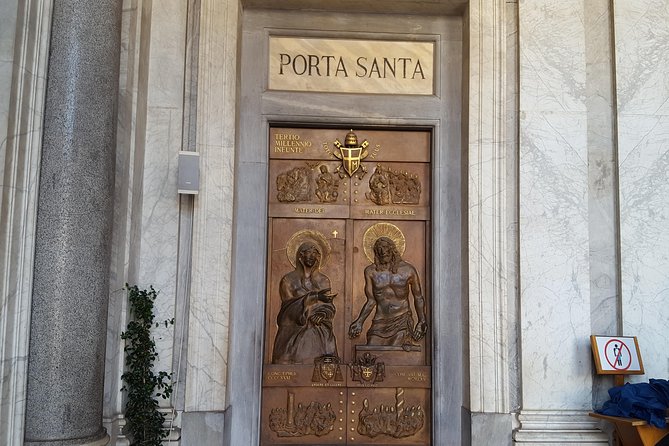
This small-group walk ties together some of Rome’s most meaningful churches, with a guide who explains what you’re actually looking at—symbols, relics, mosaics, and the ideas behind it all. I love that the focus stays on Holy Doors and the Roman church circuit you’d miss if you just followed the usual map.
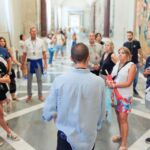
Two things I like a lot: first, the itinerary packs up to seven basilicas, chapels, and churches into a few hours without turning into a sprint to nowhere. Second, Roberto’s storytelling connects art and faith in a way that makes even familiar places feel newly specific—plus there’s real time for questions in a group that stays tiny (max 5).
One consideration: this is real walking. Expect stairs, uneven cobblestones, and a steady pace for 3–4 hours, plus dress rules inside churches (shoulders, back, and knees covered).
In This Review
- Key highlights to look forward to
- Why Holy Doors feel different when you walk between churches
- Where you start (and why your route matters)
- Small group size: the difference between hearing and understanding
- Price and value: $83.48 makes sense if you want meaning, not just entry
- Dress code and comfort: what to wear for churches and steps
- Stop 1: Santa Maria Maggiore and its Holy Door
- Stop 2: Santa Prassede, Stop 3: San Pietro in Vincoli
- Stop 4: San Clemente and Stop 5: Ss. Quattro Coronati
- Stop 6: San Giovanni in Laterano and why it’s a big deal
- Stop 7: Scala Sancta (Holy Stairs) and the devotion choice
- When Holy Doors are busy (Jubilee year timing)
- Final verdict: should you book this Holy Doors walking tour?
- FAQ
- How long is the Rome Holy Doors small group walking tour?
- What is the price per person?
- How many people are in the group?
- Do I have to pay admission at each church?
- What language is the tour offered in?
- Where does the tour start, and what metro station is nearby?
- What dress code do I need for the churches?
- Is the tour easy walking?
- Can the itinerary change during Jubilee periods?
Key highlights to look forward to
- Up to seven stops in 3–4 hours, centered on Holy Doors and major Catholic sites
- Roberto guiding the route with story-driven explanations you can’t easily find on your own
- Art you can spot faster: mosaics, sculptures, frescoes, relics, and architectural details
- Free church entry at each stop means your money goes to the guide and time-saving route
- Small group size (max 5) keeps it conversational inside busy spaces
- Jubilee changes can happen: the schedule may shift, and Holy Door passage can’t be guaranteed
Why Holy Doors feel different when you walk between churches
Holy Doors in Rome aren’t just a photo stop. They’re part of a lived rhythm of devotion, and the best way to understand that rhythm is to see how churches carry it—through relics, frescoes, mosaics, and the messages those objects were meant to hold.
What makes this tour work is the pacing between sites. You’re not bouncing across the city in buses. You’re moving through a religious neighborhood in a way that lets the meaning build stop by stop. That’s when the details start to click: you can look at a mosaic and understand why it matters, or notice a sculpture and connect it to the larger story Rome has been telling for centuries.
You can also read our reviews of more tours and experiences in Rome.
Where you start (and why your route matters)
You meet by the Statue of San Giovanni Paolo II in the Esquilino area (00185 Rome). It’s near the metro Line A stop for San Giovanni, which makes it easier to arrive on your own schedule.
The tour ends at Basilica di San Giovanni in Laterano, in Piazza San Giovanni in Laterano (00184 Rome), also well placed for getting back out to the rest of your day. This ending is a big deal: you finish at one of Rome’s central Catholic anchors, so you’re not stuck backtracking across town.
You’ll also get a mobile ticket, and the churches are listed as free admission. So your cost is really paying for the guided route, timing, and interpretation—not ticket fees.
Small group size: the difference between hearing and understanding
A max group size of five travelers changes the whole experience. In bigger tours, you often hear half the explanation while you’re trying to keep pace. Here, you’re more likely to catch the symbolism, ask follow-ups, and get answers on the spot.
The guides’ approach here—especially Roberto’s—shows up repeatedly in the way people describe the day: you’re not just being shown doors and altars. You’re being taught how to look. That means you leave with context you can reuse later when you step into other churches on your own.
Price and value: $83.48 makes sense if you want meaning, not just entry
At $83.48 per person, this isn’t an “easy bargain” tour. But the math can work in your favor because:
- Each stop’s church admission is free, so you’re not paying for multiple tickets.
- You cover up to seven major sites in a short window, which saves time compared with planning and navigating it all yourself.
- You’re paying for a guide’s ability to explain what you’re seeing—especially at places like mosaics, relics, and sculptures where a label alone won’t do much.
If your goal is only to check off churches quickly, you might do fine with a self-guided plan. If your goal is to understand the Catholic art and relic tradition behind these places, this price starts to feel fair fast.
Dress code and comfort: what to wear for churches and steps
Church entry requires shoulders, back, and knees covered. Plan clothing that reaches those areas without you having to stress mid-tour.
Comfort matters just as much. Expect about 2–3 miles of walking, slight inclines, irregular cobblestones, and stairs. Bring comfortable walking shoes you trust on Rome’s stone. The tour is paced to the group, but it’s still a walking tour—so if you need frequent breaks, plan around that.
Also note: there are restroom facilities at the start and end, and there’s typically a break around the halfway point. If you need something during the walk, the guide can pause for a restroom stop at a nearby bar when possible, but don’t count on full bathroom availability at every stop.

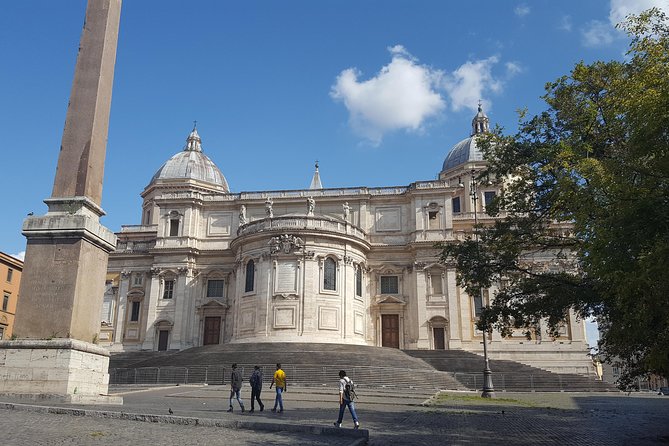
Stop 1: Santa Maria Maggiore and its Holy Door
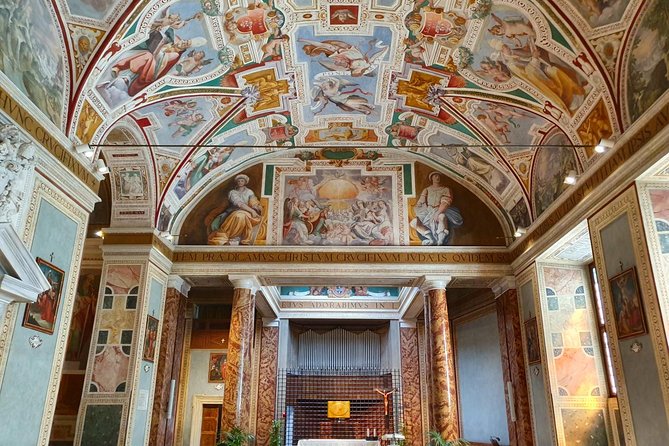
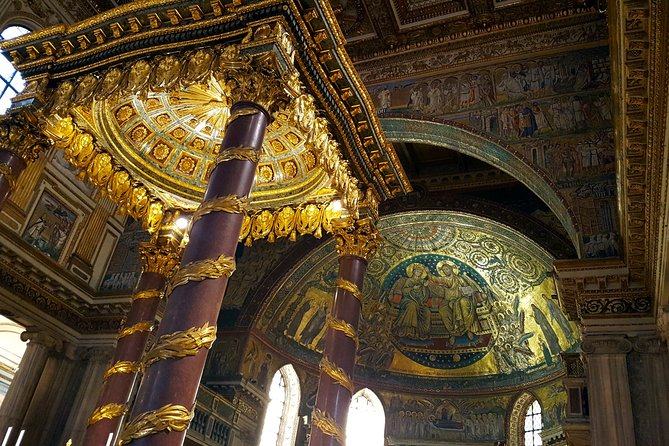
Basilica di Santa Maria Maggiore is a powerhouse opening act. It’s described as the biggest church for Saint Mary, and it also features the highest bell tower in the city.
The “Holy Door” angle is part of why this first stop lands. You’re not arriving cold to the theme—you’re starting where the church’s status and symbolism are front and center. You’ll also get time (about 40 minutes) to take in the impressive chapels and major interior elements at a calmer pace than you’d get on a rushed sightseeing stop.
Practical takeaway: if Santa Maria Maggiore is on your personal must-see list, this tour helps you slow down and understand the reasons people keep coming back.
Stop 2: Santa Prassede, Stop 3: San Pietro in Vincoli
Next up is Basilica di Santa Prassede. The headline here is the oldest apse mosaic in the world (as listed for the tour) and a relic tied to the passion of Christ. Even if you don’t know anything about the symbolism, the guide’s explanations help you connect the mosaic and the relic to the bigger religious story the church preserves.
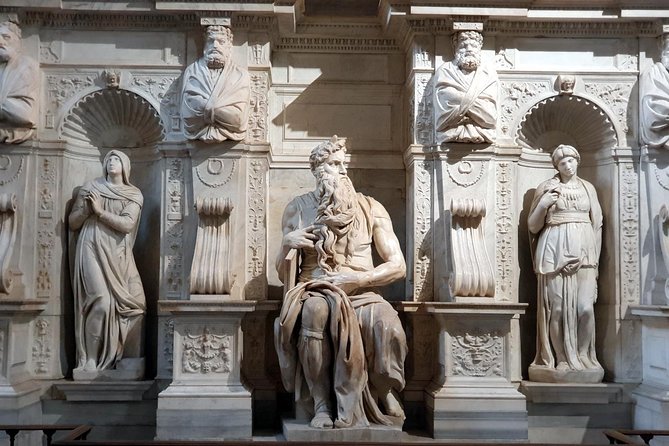
Then you move to San Pietro in Vincoli, known for two standout features: Michelangelo’s Moses sculpture and the wonder-working chains of Saint Peter. These aren’t “just art” and “just relics.” They’re objects that have been framed—over time—as evidence of meaning, not only beauty.
Time is short here (about 20 minutes each stop), so the value is in having someone point out what your eyes might skip. Think of it as learning how to read the room quickly.
Stop 4: San Clemente and Stop 5: Ss. Quattro Coronati
Basilica of San Clemente is one of the city’s oldest churches and includes an impressive apse. In a tour like this, age and architecture matter because they show how Rome’s sacred spaces evolved. You’ll get about 20 minutes, which is enough for a meaningful look if you’re not trying to self-navigate your way through the details.
Ss. Quattro Coronati takes you to a different kind of visual storytelling. The key attraction for this stop is a fresco depicting the legends of Saint Silvester. Frescoes can be easy to overlook when you’re wandering solo. With a guide, you get a framework—what you’re seeing, why it was included, and what it’s meant to communicate.
Both stops are short on paper, but in practice they help you understand how Rome’s church art covers different themes: Mary, Christ’s passion, saints and relics, and the legends that shaped devotion.
Stop 6: San Giovanni in Laterano and why it’s a big deal
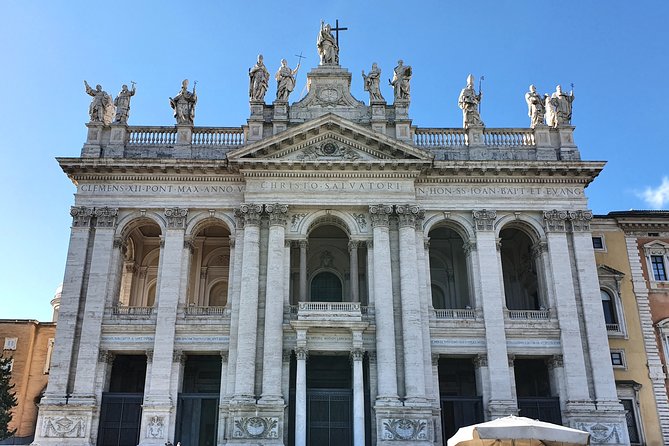
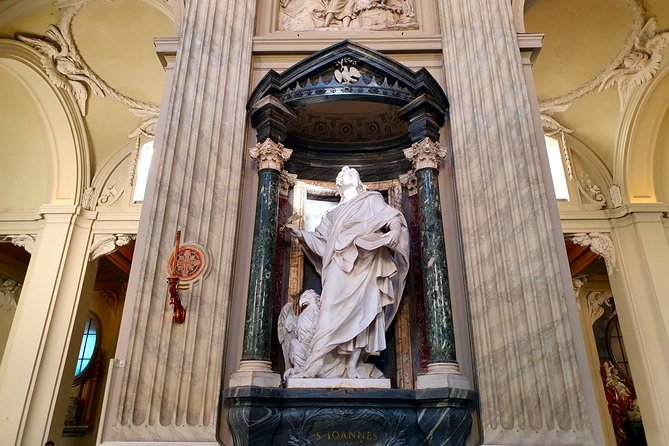
Arcibasilica di San Giovanni in Laterano is described as the most important church for Catholics. This stop also connects directly to major figures: you’ll see relics attributed to Saint Peter and Saint Paul.
You’ll have about 40 minutes here, which is longer than some stops because this is a central anchor in the story. If you only remember one thing from the day, make it this: you’re not touring random churches. You’re tracing a thread through Rome’s Catholic identity—its relic culture, its sacred leadership traditions, and the way important churches keep those traditions visible.
If you like your sightseeing with a clear through-line, this is the section that makes the whole walk feel like one coherent experience.
Stop 7: Scala Sancta (Holy Stairs) and the devotion choice
The Pontifical Sanctuary of the Holy Stairs is the final emotional and symbolic stop. It’s known for impressive frescoes and for the stairs from the palace of Pontius Pilatus.
Here’s the practical reality: climbing the Holy Stairs is personal devotion, and not everyone is able or wants to do it. The tour’s approach is designed for that. You’ll get explanation outside the building (since talking and photography aren’t allowed inside), then the official group may disband so you can enter at your own pace. The guide can accompany those who wish to visit together.
Time on paper is about 20 minutes, and that’s enough for the explanation plus a quick devotion plan. If you want the full experience, wear comfort-first footwear and be ready to move carefully.
When Holy Doors are busy (Jubilee year timing)
In jubilee periods, the itinerary can be adapted due to special events and longer waits. There’s also no guarantee of passing through every Holy Door during peak times.
So don’t treat the Holy Door aspect like a guaranteed photo mission. Treat it as a theme that shapes the day, with the expectation that Rome’s crowds may change the exact route moment to moment.
That mindset helps you keep the day feeling meaningful even if one moment runs behind schedule.
Final verdict: should you book this Holy Doors walking tour?
Book it if you want Rome’s church interiors to mean something—fast. This works best when you care about Catholic history, sacred art (mosaics, frescoes, sculptures), and you like learning how to notice details instead of just collecting stops.
Skip it if you want a low-effort walk, lots of seating time, or you dislike stair-heavy sightseeing. Also consider a self-guided plan if your main goal is only quick access to churches with minimal explanation.
If you’re the kind of traveler who reads small plaques, zooms in on carvings, and asks why a place looks the way it does, this is an excellent way to spend a half-day in Rome—and the small group makes the whole thing feel personal rather than assembly-line.
FAQ
How long is the Rome Holy Doors small group walking tour?
It runs about 3 to 4 hours (approx.).
What is the price per person?
The price is $83.48 per person.
How many people are in the group?
The tour has a maximum of 5 travelers.
Do I have to pay admission at each church?
The churches listed on the itinerary are marked as free admission.
What language is the tour offered in?
The tour is offered in English.
Where does the tour start, and what metro station is nearby?
It starts at the Statue of San Giovanni Paolo II in Esquilino, and it’s close to the metro station Line A – San Giovanni.
What dress code do I need for the churches?
Shoulders, back, and knees must be covered.
Is the tour easy walking?
No. It’s a walking tour with stairs and some uneven cobblestones, and you should be ready for a few hours of movement.
Can the itinerary change during Jubilee periods?
Yes. During jubilee, the itinerary might be adapted due to special events and increased waiting times, and passage through the Holy Doors can’t be guaranteed.