REVIEW · ROME
Rome by Night Private Walking Tour
Book on Viator →Operated by Rome Guides · Bookable on Viator
Roman history feels closer when the lights turn on. This Rome by Night Private Walking Tour takes you through the Colosseum area and central Rome with an expert guide who connects myths, emperors, and art in a way that’s easy to follow, especially after dark. I like that you get two guides working the story (a professional guide plus a local guide), and I also like how the route uses nighttime atmosphere to make major landmarks feel less like checklists.
One thing to consider: it’s still a walking tour, with moderate physical fitness needed, and night lighting means you’ll want good shoes and patience for uneven streets.
In This Review
- Key takeaways
- Starting at Piazza del Colosseo: getting your bearings fast
- What the private format really changes
- Roman Forum ruins at night: from Romulus to the empire’s fall
- Why the night matters here
- Trajan’s Column: the emperor story you can actually picture
- A practical heads-up
- Piazza del Campidoglio: Michelangelo’s Renaissance order
- What to pay attention to
- The assassination context near Caesar’s story
- The Pantheon at night: Roman engineering plus religion
- What you’ll enjoy most
- Piazza Navona after dark: Baroque art in the middle of the city
- A tip for the end of the tour
- How long is it, and how it feels on your feet
- Price and value: is $157.28 per person fair?
- Who should book this Rome by Night walk
- Should you book Rome by Night Private Walking Tour?
- FAQ
- What time does the tour start, and where do we meet?
- Where does the tour end?
- How long is the Rome by Night private walking tour?
- Is this a private tour?
- What’s included in the price?
- What language is the tour offered in?
- What’s the cancellation policy?
- Is hotel pickup or drop-off included?
Key takeaways
- Private group experience: only your group participates, so questions don’t get lost in the crowd.
- Night-first timing: you see famous sights with fewer people around and monument lighting that adds mood.
- Myth to empire storytelling: the Roman Forum section starts with Rome’s founding stories and moves to imperial decline.
- Trajan’s Column context: you’ll connect the monument to the emperor’s expansion and legacy.
- Michelangelo’s Campidoglio + views: you get a Renaissance perspective plus an especially nice Forum viewpoint at night.
- Pantheon engineering and religion: you’ll walk away understanding how the building was designed and why it mattered.
Starting at Piazza del Colosseo: getting your bearings fast
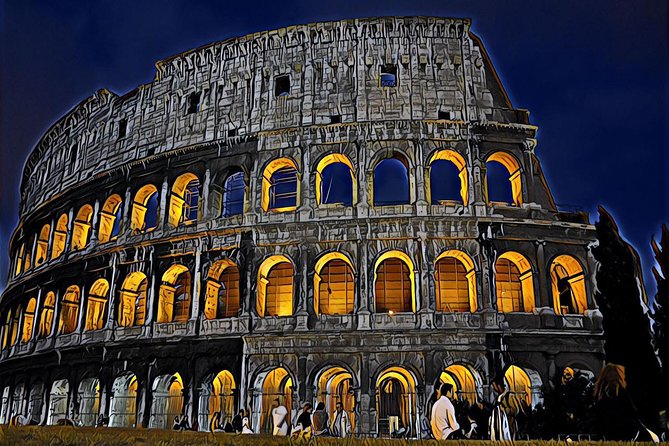
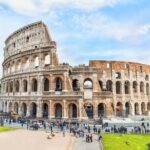
You meet at Piazza del Colosseo, 21 at 8:30pm, and that matters. Starting in the Colosseum area keeps the tour anchored to the big-ticket Rome everyone talks about, but it also gives your guide a chance to set the timeline before you wander into the quieter, more surprising corners.
The walk is designed for evening pace. You’ll be in the open at night for key moments, so treat this like a “long stroll with stops,” not a sprint through monuments.
You can also read our reviews of more tours and experiences in Rome.
What the private format really changes
This is a private tour/activity, so you’re not competing with other groups for attention. That changes everything about how fast you learn, because your guide can adjust the story based on your questions and interests.
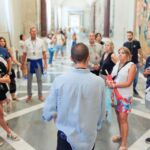
You also get both a professional guide and a local guide included. That combo is a big part of the value here: one guide helps with historical framing, while the local guide often keeps details grounded in how the city reads today. In feedback, guides such as Barbara and Vincent come up for doing more than reciting facts—asking questions back, keeping families engaged, and offering follow-up suggestions when you want them.
Roman Forum ruins at night: from Romulus to the empire’s fall
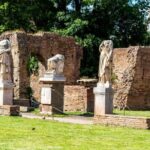
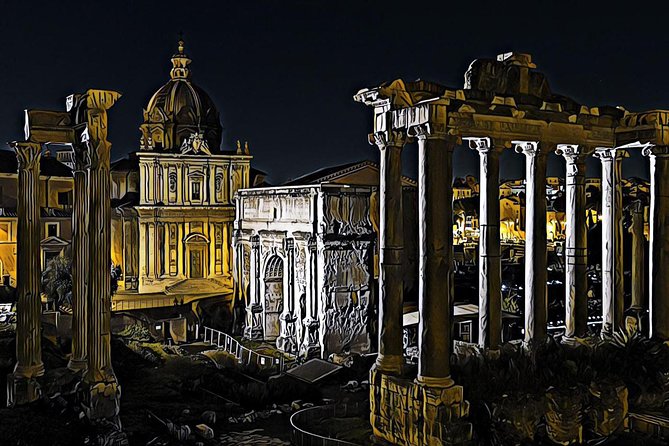
One of the best parts of this walk is the Roman Forum segment. You don’t just pass the ruins; you’re guided to understand how Rome’s story grows from mythological beginnings to political collapse.
Expect the guide to move through the big turning points: the founding legend involving Romulus, the rise of the republic and empire, and then the long, complicated decline. In a place like the Forum, that kind of structure is what makes stones feel meaningful instead of random.
Why the night matters here
At night, you tend to notice the scale differently. The Forum can feel overwhelming in daylight, when every surface competes for your attention. At night, monument lighting and darker surroundings help you focus on outlines—what you’re looking at and why it was placed there.
Trajan’s Column: the emperor story you can actually picture
Next comes the Trajan’s Column, tied to Emperor Trajan and Rome’s expansion. The key value here is interpretation: instead of treating the column as a pretty artifact, your guide connects it to what Trajan represented and what “power” looked like in Roman public life.
The column also gives you a visual lesson in Roman communication. It’s not just architecture; it’s a monument built to tell a story—one designed to last.

A practical heads-up
Because this is an evening walk, you’ll likely spend time looking closely at details in lower light. Bring your “slow reading” mindset. If you want to see the most, stand where your guide can point, and give your eyes a minute to adjust.
Piazza del Campidoglio: Michelangelo’s Renaissance order
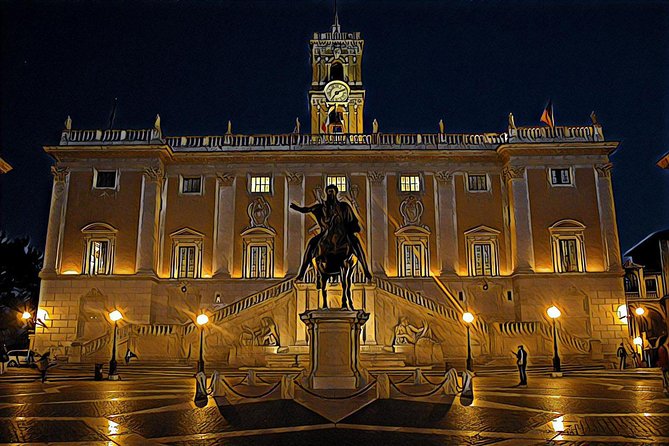
This stop is the Piazza del Campidoglio, shaped by Michelangelo and often treated as a Renaissance pause inside an ancient Rome route. Your guide explains why the design is so deliberate—how Michelangelo set the square up so you feel the geometry and the meaning behind it.
You’ll also get an especially good viewpoint over the Roman Forum. At night, those same ancient ruins look different—like a stage set rather than just a scatter of remains. It’s one of those Rome moments where you can breathe and take in the “big picture.”
What to pay attention to
Look for how the square frames sightlines. Your guide will likely point out how positioning and decoration guide your eye. That’s Renaissance thinking in a place dominated by ancient stone.
The assassination context near Caesar’s story
Walking through this archaeological area, you’ll hear about the murder of Julius Caesar and why the event mattered. The guide’s goal isn’t shock—it’s clarity. You’ll learn what made Caesar such a figure in Roman life and politics, and why his death became a turning point.
This is also a good moment to remember that Rome’s history isn’t only emperors in marble. It’s power struggles, public status, and timing. When you get the “why,” the place feels like it belongs to a living timeline, not a distant legend.
The Pantheon at night: Roman engineering plus religion
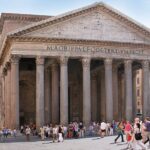
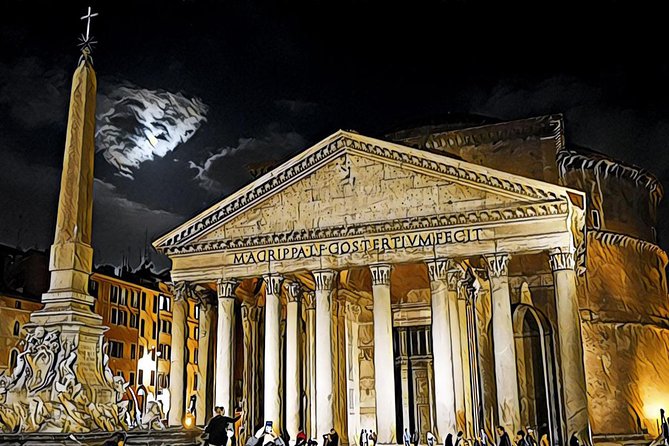
Then you reach the Pantheon, which is a strong anchor near the end of the walk. It’s one of the best-preserved buildings from ancient Rome, and your guide uses that to teach you how Romans combined engineering, architecture, and religion in one project.
You’ll likely talk about the building’s design choices and why they were so important for Roman worship and public life. The most helpful part of this kind of guided stop is that it gives you vocabulary: what to notice, what to measure with your eyes, and how to connect the building’s form to its purpose.
What you’ll enjoy most
If you’re even a little curious about how buildings work, the Pantheon is a rewarding finale within the ancient stretch. This isn’t just a photo stop—it’s a “look closer and understand more” stop.
Piazza Navona after dark: Baroque art in the middle of the city
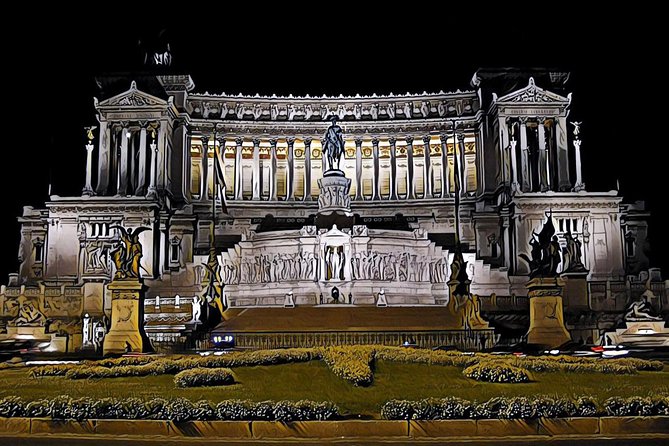
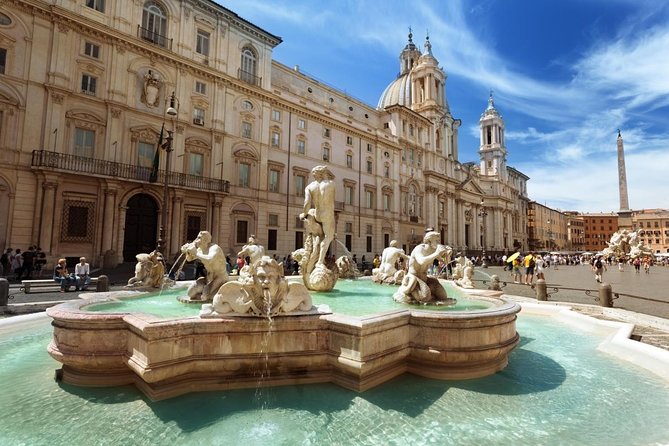
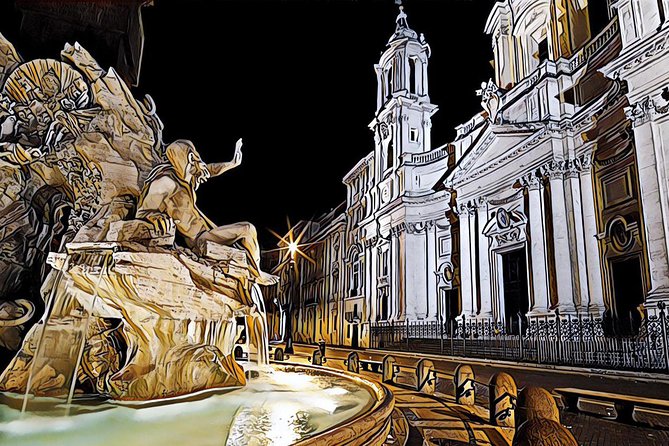
Your walk ends at Piazza Navona, and this is where the tone shifts from ancient Rome into later artistic Rome. Your guide focuses on the Baroque Roman style, including artists like Bernini and Borromini, and what their work meant for the city’s visual culture.
Navona works at night because it feels like a living stage. The square’s energy comes from its design and the way light plays across the details, and your guide ties that to how people in earlier centuries experienced art in public space.
A tip for the end of the tour
Plan a little time after the tour to linger. When a guide sets up the art and symbolism for you, you’ll notice more by simply slowing down—watching the square’s layout and thinking about why it was built the way it was.
How long is it, and how it feels on your feet
The tour runs about 2 hours 30 minutes. That’s long enough to feel like you’re getting a story arc, but short enough that it stays doable if you’re okay with walking at night.
In feedback, the experience sometimes runs a bit long when families and history fans keep asking questions. That’s a good sign, not a red flag. It usually means your guide is treating the tour like a conversation, not a script.
Price and value: is $157.28 per person fair?
At $157.28 per person, this isn’t a bargain-basement walking tour. But private guiding in central Rome isn’t cheap, and nighttime access plus a two-guide team isn’t typical.
Here’s what makes the price feel justified:
- You cover multiple major sights in one coherent story, instead of bouncing randomly.
- The Forum and Caesar context can be hard to understand alone; guided framing saves you time and frustration.
- The night timing can mean fewer crowds, which makes your stops more comfortable and your photos cleaner.
- The private setup means your questions get answered, and you’re not pushed along before you’re ready.
If you’re traveling as a couple, family, or small group and you want the city’s meaning—not just a checklist—this pricing makes more sense. If you’re on a strict budget and happy to read guide signs on your own, you might decide it’s more than you need.
Who should book this Rome by Night walk
I think this tour fits best if you want:
- A guided history thread connecting Rome’s founding myths, emperors, and major turning points.
- A night experience that feels calmer than peak daytime crowds.
- A private pace, where your group can ask questions and get real answers.
It’s also a good match for families, since guides like Vincent have been noted for engaging both younger and adult interests by asking questions and keeping the history interactive.
Should you book Rome by Night Private Walking Tour?
Book it if you want a night walk that turns the Roman Forum, the Pantheon, and Piazza Navona into one connected story—and you value private guiding over self-guided wandering.
Skip it (or downshift your expectations) if you mainly want lots of time sitting and people-watching, or if you prefer daylight for seeing details without night-adjusting your eyes.
If you’re excited by history that links myth, politics, art, and architecture, this is a strong pick for a Rome evening with real learning and good atmosphere.
FAQ
What time does the tour start, and where do we meet?
The tour starts at 8:30pm at Piazza del Colosseo, 21, 00184 Roma RM, Italy.
Where does the tour end?
The tour ends at Piazza Navona, 00186 Roma RM, Italy.
How long is the Rome by Night private walking tour?
It runs about 2 hours 30 minutes (approx.).
Is this a private tour?
Yes. It’s a private tour/activity, and only your group participates.
What’s included in the price?
It includes a professional guide and a local guide.
What language is the tour offered in?
The tour is offered in English.
What’s the cancellation policy?
You can cancel for free up to 24 hours in advance for a full refund.
Is hotel pickup or drop-off included?
No. Hotel pickup and drop-off are not included, and there’s also no private transportation included.