REVIEW · ROME
Rome by Night – Small Group Walking Tour with Gelato
Book on Viator →Operated by Rome City Tour · Bookable on Viator
Rome feels different after dark, and this route is designed for night magic. I like that it’s a small group capped at 10, so you can actually hear your guide and keep up on busy streets. I also love the “see it all in one evening” format, with a gelato stop timed near Trevi Fountain. One thing to consider: it’s a proper walking tour all the way to the Colosseum, and the finish can feel like a long haul if you’re expecting shorter hops.
The standout for me is the guide-led storytelling—many guests single out Vijay for his organization and clear history tied to each stop. You also get views at night when the lighting makes landmarks look softer and more cinematic. The possible drawback is simple: since you do not enter the Pantheon or the Colosseum, you’ll want separate ticket plans if those “inside” moments matter to you.
In This Review
- Quick hits
- Rome by Night at 6:00 pm: a route built for after-dark viewing
- Small group of 10: why it changes the walking-tour experience
- Spanish Steps to Trevi Fountain: the night walk that sets the tone
- Tempio di Adriano and the Pantheon exterior: old Rome close up
- Piazza Venezia and Via dei Fori Imperiali: the line that connects Roman power
- Colosseum views at the end: you’ll see it, just not enter
- Pace and how to avoid the most common frustration
- Price and value: $38.71 for a guided icon tour plus gelato
- Who should book this Rome night walking tour?
- Should you book Rome by Night with Gelato?
- FAQ
- What time does the tour start?
- Where does the tour meet?
- Where does the tour end?
- How long is the tour?
- Is gelato included?
- Is entry to the Pantheon included?
- Is entry to the Colosseum included?
- How big is the group?
- What language is the tour offered in?
- What if the weather is bad?
Quick hits
- Max 10 people keeps the vibe personal on crowded streets
- Trevi Fountain gelato is included and timed for a quick break from walking
- Icon-to-icon route covers Spanish Steps, Trevi, Pantheon area, and the Colosseum zone
- Via dei Fori Imperiali gives you a straight-line look at the Forums and excavations
- Outside views only for the Pantheon and Colosseum, so manage expectations
Rome by Night at 6:00 pm: a route built for after-dark viewing
This tour starts at 6:00 pm at Babington’s Tea Room, Piazza di Spagna (23), and it ends at the Colosseum area (Piazza del Colosseo 1). That timing is smart. Late afternoon turns to cooler temperatures, and the big sights look calmer under night lighting. If you’ve been cooking in the daytime heat, this is the kind of plan that helps you keep your energy for real exploring later.
The biggest win is that you get a guided “big picture” map of Rome in just about two hours. You’re not trying to see everything you could possibly see in Rome—you’re seeing the Rome you came for, in a tight sequence that’s easy to understand and fun to photograph. And because the tour is capped at 10, your guide can actually address the group without shouting over chaos.
You can also read our reviews of more tours and experiences in Rome.


Small group of 10: why it changes the walking-tour experience
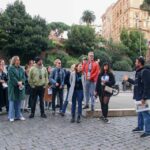
Rome at night can still be packed, especially around the Spanish Steps and Trevi. A small group matters because it keeps you from being swallowed by crowds. In a big group, you spend your time dodging and catching up. In a group capped at 10, you spend more time looking at the sights and less time negotiating sidewalks.
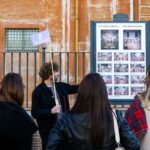
I also like that the tour is offered in English and uses a guide-led format rather than a self-paced script. Several guests highlight how organized Vijay is and how he uses tools like an iPad to help explain what you’re looking at. Even if you’re not a history nerd, that helps you connect facts to visible details—especially around the older Roman areas.
If you’re sensitive to loud streets or want a calmer experience, this setup usually feels like the sweet spot.
Spanish Steps to Trevi Fountain: the night walk that sets the tone
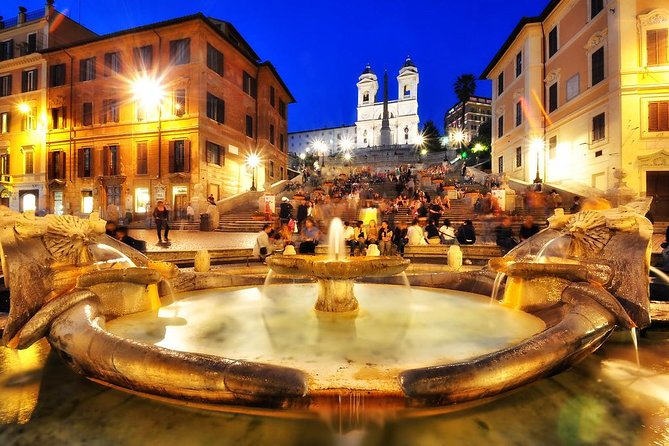
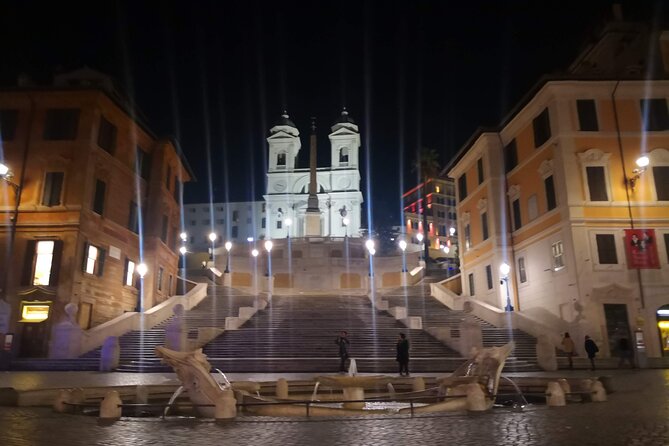
The first stop is the Spanish Steps, the famous staircase climbing between Piazza di Spagna and Piazza Trinità dei Monti. At night, this spot has a lively glow but fewer daytime crowds. It’s also a great orientation point: you get a feel for how Rome’s elevation changes and why the city looks dramatic from certain corners.
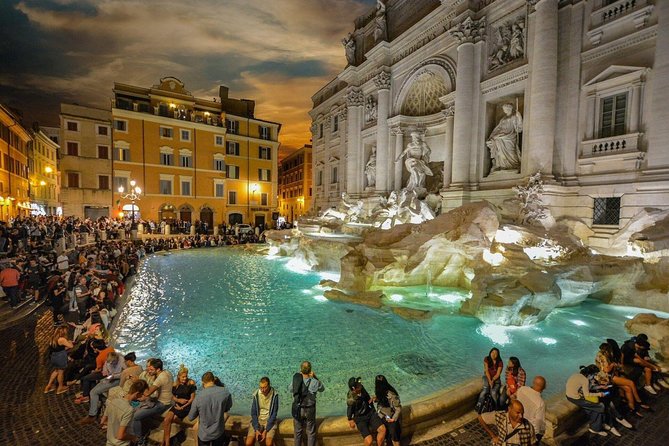
Next comes Trevi Fountain, one of the most recognizable fountains on Earth. It’s Baroque and massive—26.3 meters high and 49.15 meters wide. What you’ll feel right away is scale. Even when you think you know what it looks like from photos, seeing it in person at night hits harder because the stonework and the movement of people create a constant visual rhythm.
Here’s where the tour scores a real practical point: gelato is included and served near Trevi. That snack break is perfectly timed. You’re usually at peak pedestrian density here, and a quick pause helps you enjoy the scene instead of power-walking through it. The only downside is that Trevi can be very crowded, so if you want unobstructed photos, you may need a little patience as the group moves in and out.
Tempio di Adriano and the Pantheon exterior: old Rome close up
After Trevi, you head toward the Tempio di Adriano (Temple of Hadrian). This is an ancient Roman structure on the Campus Martius area, dedicated to the deified emperor Hadrian by Antoninus Pius in 145 CE. The best part of this stop is how it bridges the gap between the showpiece monuments and the more “real” ancient-city fabric that still sits inside modern Rome.
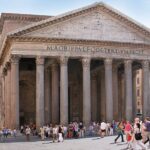
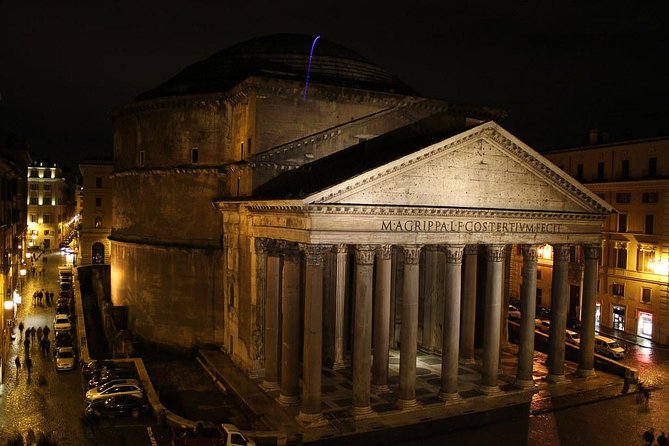
Then you reach the Pantheon. This is one of the best-preserved monuments from ancient Rome, completed around 126–128 A.D. under Hadrian. You’ll see the iconic rotunda and the dome shape that made it famous in its own time. The tour does not include entry to the Pantheon, so you won’t go inside—but you will get a guided look and time to absorb the building’s presence from the outside.
Practical note: standing outside the Pantheon at night can feel a bit like being in a moving photo line. If you want more time than a quick look, plan to come back later on your own.
Piazza Venezia and Via dei Fori Imperiali: the line that connects Roman power
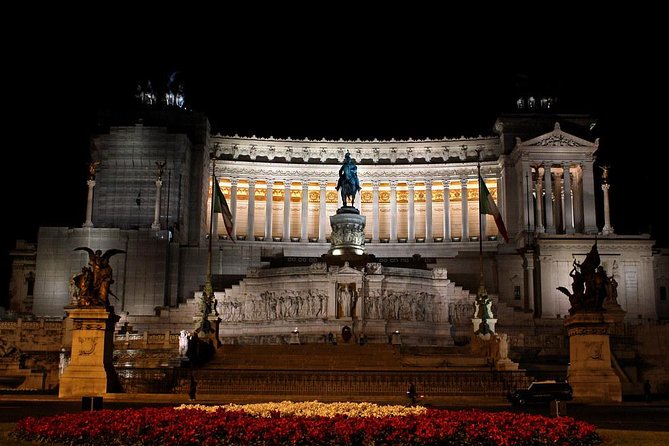
From there, the route pivots toward Piazza Venezia, which is essentially the tourist hub around big monumental buildings. It’s a strategic stop because it helps you understand Rome’s layout: you’re heading toward the ancient heart of the city and the corridor that leads straight to the Colosseum zone.
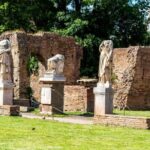
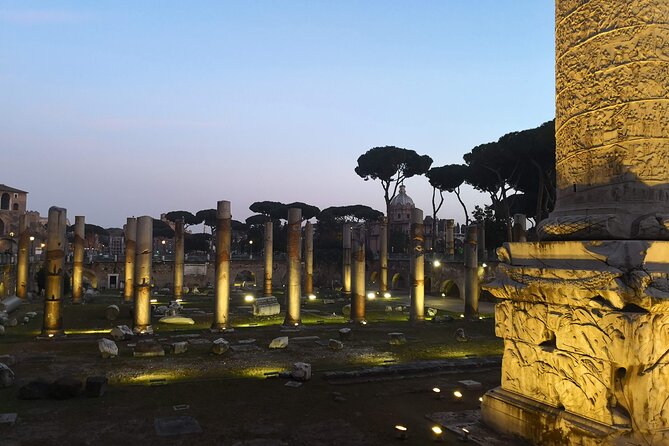
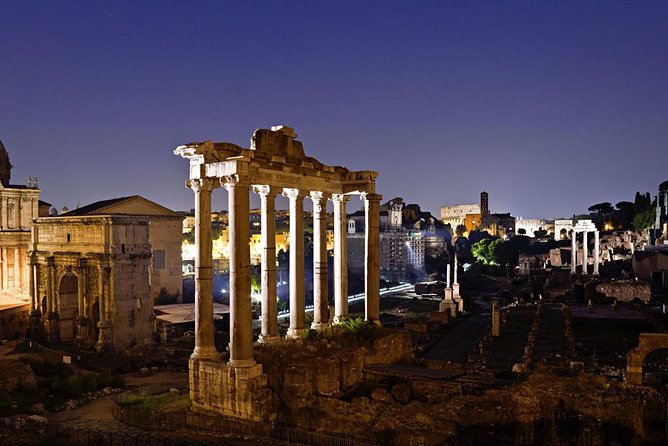
The tour then travels along Via dei Fori Imperiali, a straight road running from Piazza Venezia toward the Colosseum. The really interesting angle here is what sits alongside it. The road runs over sections of major Imperial-era forums—Trajan, Augustus, and Nerva—and some of what you can spot today sits above areas that have been excavated since the 1990s. Even if you don’t stop to read every panel, the guide’s explanations usually help you “see” the layers under the pavement.
Why this matters: after a first-day night overview, a lot of Rome starts to make sense. You’ll connect monuments you saw earlier with the sense of how Rome operated—processional, imperial, and built for spectacle.


Colosseum views at the end: you’ll see it, just not enter
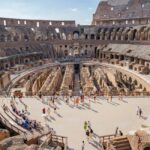
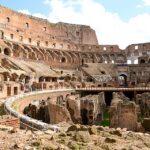
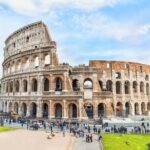
The tour ends at the Colosseum area. You get a night-sky view of the monument under lights, which is a great way to cap an evening—especially if you’re not trying to spend the whole night waiting in queues.
Important expectation-setting: the tour does not include entry to the Colosseum. That means you won’t go inside the arena or walk the full interior routes during this experience. If you want that, you’ll need a separate plan later.
Still, for the price and time, the outside view does the job: you leave knowing exactly where the Colosseum sits in relation to the Forum-adjacent areas you just walked through. It also gives you a natural starting point for your next visit.
Pace and how to avoid the most common frustration
This is a walking tour, and Rome rewards the prepared. Most guests describe a moderate pace and time to look around before moving on. Still, some people have reported that the walking felt longer than expected. For you, the takeaway is simple: wear shoes you trust and treat this as a “networking walk” across central Rome, not a light stroll.
Also, be ready for weather. The experience requires good weather, and one negative experience described a thunderstorm rolling in late in the evening. Rome nights can shift fast—bring a light rain layer or a compact umbrella and plan for wind near open areas.
Finally, keep close to the group when crossing roads. Reviews include safety concerns tied to how some guides manage crossings and group spacing. If anything makes you uneasy, you’re allowed to speak up and stay with the guide and nearest people.
Price and value: $38.71 for a guided icon tour plus gelato
At about $38.71 per person for roughly two hours, this sits in the “good starter value” category. You’re paying for two concrete items: a guide and gelato. You’re not paying for entry tickets to the Pantheon or Colosseum, and that’s the part that affects value most directly.
So here’s the math that makes sense for most visitors:
- If you want an efficient guided overview and don’t mind “outside views only,” this is a solid deal.
- If you want to go inside major monuments during the same trip, you’ll likely feel the ticket exclusions because you’ll still need to buy entry separately.
Where this tour really earns its keep is reducing decision fatigue. You don’t have to plan the order, figure out transit timing, or worry about how far apart major sights are at night. A guided route makes the city feel smaller.
Who should book this Rome night walking tour?
This tour is a great fit if you:
- want a first-day plan that gives you orientation fast
- prefer seeing Rome lit up without committing to long daytime heat
- enjoy history tied to what you can actually see on the street
- like small-group experiences where you can ask questions
It may not be your best match if you:
- strongly prefer entering major sites during one outing
- need frequent long breaks (this is still a walking tour)
- get very stressed in crowds around Trevi Fountain
- expect a fully hands-on, silent, phone-free guide at every step
The good news is that even with outside viewing, the route still covers the classic Rome checklist in a way that’s easy to understand.
Should you book Rome by Night with Gelato?
If you want a guided, efficient, night-focused intro to central Rome, I’d book it. You’ll hit major landmarks in a smart sequence, keep things manageable with a gelato stop, and likely enjoy the city atmosphere more than you would on a daytime sprint.
Book it with one clear expectation: you’ll see the Pantheon and Colosseum from the outside here. If you plan to enter those places anyway, this tour works like an excellent pre-game—helping you know where everything is and what to look for when you come back.
FAQ
What time does the tour start?
The tour starts at 6:00 pm.
Where does the tour meet?
Meet at Babington’s tea room, Piazza di Spagna, 23, 00187 Roma, Italy.
Where does the tour end?
The tour ends at the Colosseum area, Piazza del Colosseo 1, 00184 Roma, Italy. Note: you do not enter the Colosseum.
How long is the tour?
It lasts about 2 hours.
Is gelato included?
Yes. Gelato is included.
Is entry to the Pantheon included?
No. Entry to the Pantheon is not included.
Is entry to the Colosseum included?
No. The tour does not include entry to the Colosseum.
How big is the group?
The tour has a maximum of 10 travelers.
What language is the tour offered in?
The tour is offered in English.
What if the weather is bad?
This experience requires good weather. If it’s canceled due to poor weather, you’ll be offered a different date or a full refund.