REVIEW · POMPEII
Skip-the-Line Half-Day Private Tour Ancient Pompeii Highlights with Native Guide
Book on Viator →Operated by Tours of Pompeii with Lello & Co. · Bookable on Viator
Pompeii feels huge. This private skip-the-line tour uses an art historian guide to steer you to the best sights quickly, with the stories that make Roman daily life click. You get a focused half-day route with admission handled for you, so you spend less time queueing and more time looking closely at what’s left of the city.
Two things I really like are the time-saving route and the guide-led flow. You won’t be figuring out where to go next, and you’ll get context at the exact spots that matter. One thing to keep in mind: this is built for a short visit, so you’ll see major highlights, not the entire archaeological park.
In This Review
- Key highlights at a glance
- Pompeii in Two Hours: Skip the Lines, Hit the Big Stops
- Your Guide in Control: Private Pace and No Getting Lost
- Stop 1: Teatro Grande and the Roman Sound of Teatro Piccolo
- Via dell’Abbondanza: The Main Street Feeling
- Stabian Baths (Terme Stabiane): More Than a Roman Spa
- The Forum (Foro de Pompeya): Markets, Civic Life, and Excavated Clarity
- Lupanar: The Erotic Frescoes, Explained With Context
- Pompeii Archaeological Park Time: A Focused Walk, Not a Marathon
- Price and Value: What $83.48 Buys You Here
- Who This Private Tour Fits Best
- What to Do Before You Go (Small Stuff That Makes It Better)
- Booking Timing and Weather Reality
- Should You Book This Skip-the-Line Pompeii Tour?
- FAQ
- How long is the Pompeii highlights private tour?
- Is the tour private?
- Is skip-the-line entry included?
- What language is the tour offered in?
- Where does the tour start and end?
- Is hotel pickup included?
- What physical fitness level should you have?
- Is a ticket included for the sites?
- Is the tour dependent on weather?
Key highlights at a glance
- Guaranteed skip-the-line entry so you lose less time at the gate
- Private tour pacing that’s easier on your feet and your attention span
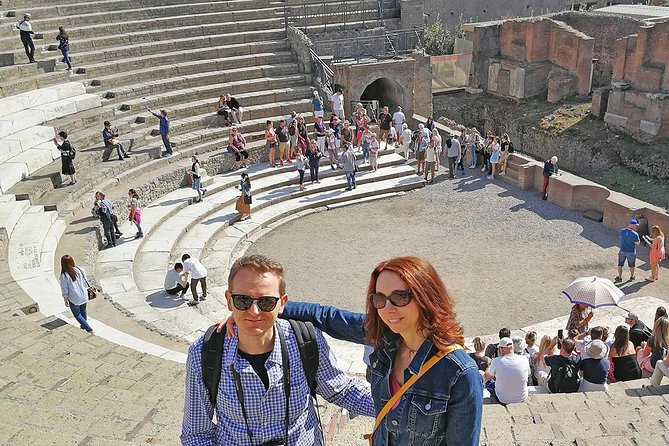
- Teatro Grande and Teatro Piccolo with explanation of Roman performance spaces and acoustics
- Stabian Baths (Terme Stabiane) plus how Pompeii’s thermal culture worked
- Forum area excavations so you understand markets and civic life
- Lupanar and its famous erotic frescoes, explained with care and context
Pompeii in Two Hours: Skip the Lines, Hit the Big Stops
A good Pompeii visit has two jobs. First: get you inside fast. Second: stop you from wandering like a pinball. This tour is designed for both.
The entry part matters more than it sounds. Pompeii can mean long queues, and those queues steal the best part of your trip: daylight and energy. With skip-the-line access, you start seeing the city while it still feels fresh, not after you’ve been squeezed by time.
You also get a tight set of stops tied together by a single theme: what everyday life looked like for Romans living in the shadow of Vesuvius. That’s what makes the time feel well spent. Instead of reading labels while you drift, you’re guided to the places people talked, shopped, trained, bathed, watched theater, and got their news.
Price-wise, this is $83.48 per person for about two hours. For Pompeii, that can sound steep until you factor in what you’re buying: private guide time plus guaranteed line-jumping plus admission ticket coverage. If you’d rather pay for clarity than “figure it out,” this often works out well.
You can also read our reviews of more tours and experiences in Pompeii.


Your Guide in Control: Private Pace and No Getting Lost
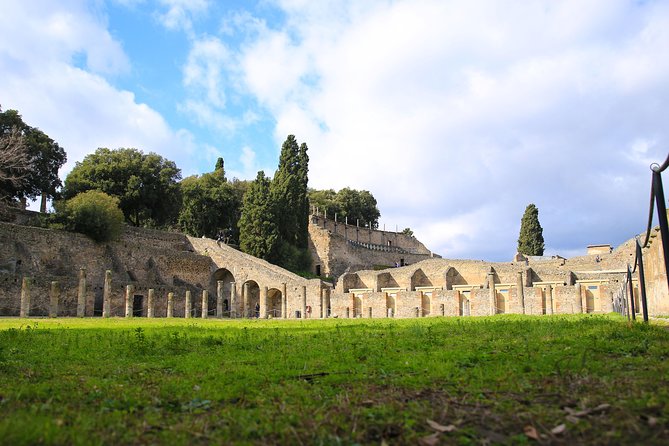
The big advantage here is not just “private.” It’s private with someone who knows how Pompeii is laid out and how to move you through it efficiently.
You’ll have a local guide plus a professional art historian guide. The combination is useful: one person helps keep you on track, and the other helps you understand what you’re looking at. That matters at Pompeii, because a wall fragment or a street layout can mean a lot once someone explains the purpose.
The tour also stays flexible. With a small group, you can slow down when something catches your eye—like the texture of a doorway, the shape of a bath room, or the way the Forum area is revealed through excavation. You’re not forced into a rushed, one-size-fits-all checklist.
One practical consideration: Pompeii still involves walking on uneven ground. The tour asks for moderate physical fitness. If you’re sensitive to lots of steps or long stretches, plan for breaks and go in with water and comfortable shoes.
Stop 1: Teatro Grande and the Roman Sound of Teatro Piccolo
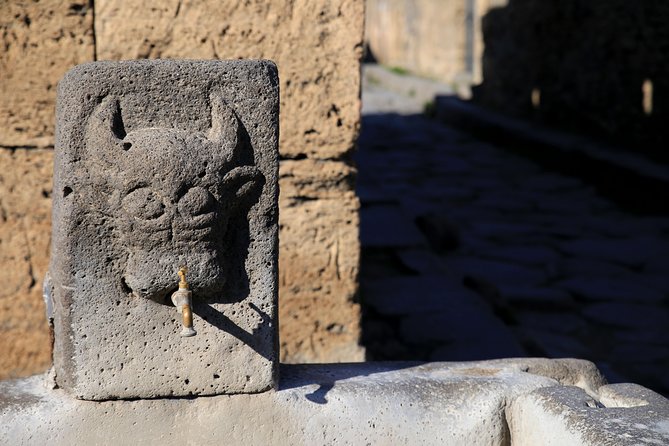
The tour often starts by pulling you into Pompeii’s public-life core, including the theater zone. You’ll hear about how Pompeians used these spaces—not just what they looked like.
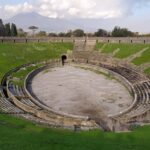
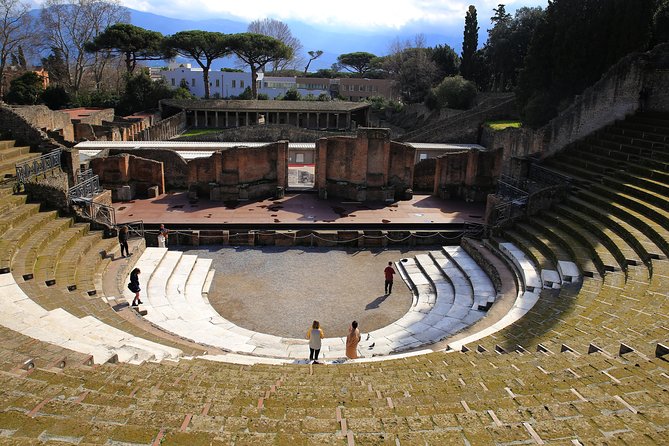
At the Teatro Grande, you’ll get context for what theater meant: entertainment, social status, and a regular “public” rhythm. Then the tour brings you to the Teatro Piccolo, with a focus on how the space works and how performances would have traveled through it. The point isn’t trivia. It helps you understand why the Romans cared so much about design, materials, and placement.
This is a smart early stop. It gives you a big mental anchor for the rest of the visit. Once you grasp how Romans gathered for shows and announcements, the streets and squares feel less random.
Via dell’Abbondanza: The Main Street Feeling
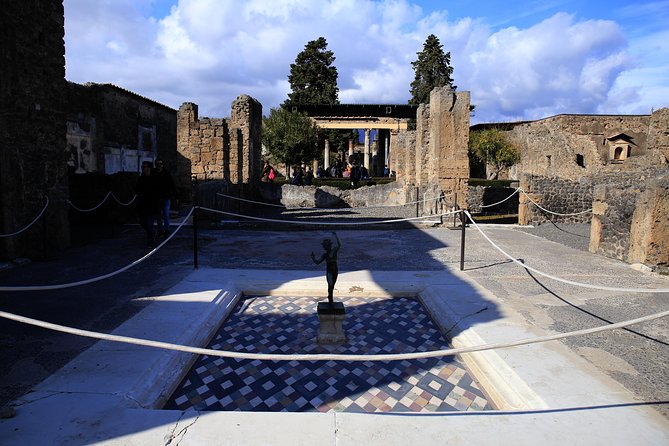
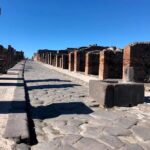
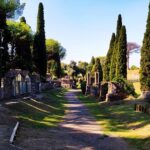
Next you walk along Via dell’Abbondanza, Pompeii’s famous main street. This isn’t just a “see the street” moment. You’re guided to interpret daily movement: where people would pass, what kinds of shops and businesses would have lined the area, and how the street functioned as a living corridor.
This stop is also where you get your bearings. When someone points out the flow of the city—what led where and why—you’re less likely to feel lost later.
If you like street-level travel—watching how a city works through its layout—this is one of the best kinds of stops. You’ll come away with a stronger sense of how Pompeii operated day to day.
Stabian Baths (Terme Stabiane): More Than a Roman Spa
The Stabian Baths are a highlight for many people because they show Roman bathing as a full experience, not just hygiene. Here you get the thermal-baths idea with real details: the spaces, the routine, and how a bath complex fit into social life.
These baths matter for understanding Roman culture. They reflect a world where leisure had structure. People didn’t just “wash.” They gathered, talked, relaxed, and worked themselves through a routine that could take time.
One tip from the way the tour is described: go in prepared for summer heat. If you’re visiting when temperatures run high, bring a water bottle and expect to need it. Even with a guide keeping your pace efficient, Pompeii still takes energy.



The Forum (Foro de Pompeya): Markets, Civic Life, and Excavated Clarity
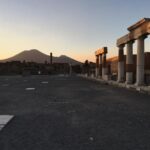
The Forum is where Pompeii shifts from neighborhoods and buildings to public civic life. This is the center of markets and major gatherings, and the excavated layout is what makes it so powerful.
You’ll see Forum remains and get the city explained in a way that’s easy to remember. The guide helps you connect street life to civic life: who would come here, what the Forum represented, and how it functioned as a stage for Roman authority and commerce.
If you’ve ever visited a ruins site and felt like you were reading a “floor plan,” you’ll appreciate this part. The Forum area tends to turn into real understanding once someone ties it to daily action—buying, selling, talking, and public decision-making.
Lupanar: The Erotic Frescoes, Explained With Context
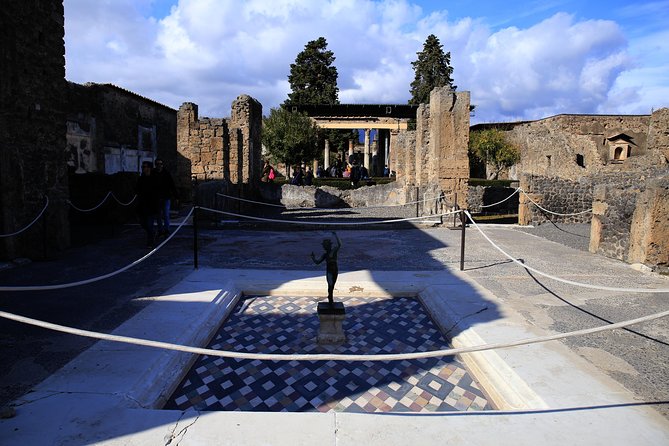
The Lupanar is famous, and it’s also easy to misunderstand if you only approach it as shock value. In this tour, it’s handled as a window into Roman attitudes and social reality—within the setting of the building itself.
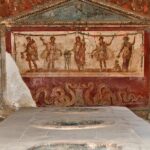
You’ll be guided to see the place and understand why it’s historically notable. And yes, the famous erotic frescoes are part of the story. But the value comes from placing them in their cultural and architectural context rather than treating them as a stand-alone curiosity.
This stop is ideal if you like museum-style interpretation—someone translating “what you see” into “what it meant.” It’s also a reminder that Pompeii is not only grand monuments. It’s also the everyday, human stuff.
Pompeii Archaeological Park Time: A Focused Walk, Not a Marathon
The tour concludes with time inside the Pompeii Archaeological Park, built around a guided walk of key highlight areas. One review-style detail that matches what you may encounter here: a chance to appreciate more than the surface level, including parts that feel like a hidden view of the city.
Depending on how the route lands on the day, you might get access to an underground or lower-level perspective. That kind of viewpoint can be surprisingly moving because it changes how you understand scale and preservation.
Most important: this isn’t meant to be a marathon. It’s about getting the big ideas of Pompeii into your head fast—without losing your attention to trying to see everything at once.
Pompeii is huge. A short private tour won’t replace a full-day plan. But it can give you the strongest “first take” that helps you enjoy a later return or a deeper self-guided pass.
Price and Value: What $83.48 Buys You Here
At $83.48 per person for around two hours, you’re paying for three concrete things:
1) Skip-the-line entry that prevents dead time
2) Admission ticket coverage included in the tour
3) Private guide time from a local and an art historian guide
If you were thinking of doing Pompeii on your own, you’d still need to solve entry lines, map confusion, and the “what does this mean?” problem. Those are exactly what the guide handles.
This tour can also be a strong choice for families or mixed-age groups if everyone wants a structured plan. The tone described for some guides emphasizes engagement and keeping pace manageable, which is useful when kids or teens are involved.
The only “value risk” is the same with any highlight tour: you won’t see everything. If you’re the type who wants to spend hours in a single zone or study one building in depth, you may feel the time squeeze.
Who This Private Tour Fits Best
This is a great fit if you want:
- a Pompeii highlights route in limited time
- a guided explanation of the places people remember most—Forum, baths, theater spaces, Lupanar
- a private setup that avoids crowd chaos and keeps the experience flexible
It may be less ideal if you want to roam at your own tempo for hours, or if you already have a deep Pompeii research goal and plan to spend time tracing very specific excavation areas without interpretation.
What to Do Before You Go (Small Stuff That Makes It Better)
A few practical moves will help you get more out of the two hours:
- Wear comfortable walking shoes. Pompeii surfaces can be rough.
- Bring water, especially in summer. Heat adds up quickly.
- Go with a “highlights mindset.” You’re here for the strongest anchors, not the entire park.
Also, plan your arrival so you’re not rushing at the start. The tour starts at Hotel Vittoria, Piazza Esedra (80045 Pompei NA, Italy), and it ends back at the same meeting point. There’s no hotel pickup and drop-off, so you’ll want to handle your own short transport to the area.
Booking Timing and Weather Reality
This experience is often booked ahead. On average it’s reserved about 87 days in advance, which tells you it’s popular.
One more real-world factor: it requires good weather. If bad weather hits, you’ll be offered a different date or a full refund. That’s the right kind of safety for a ruins visit, where visibility and comfort can change fast.
Should You Book This Skip-the-Line Pompeii Tour?
If you want Pompeii without the time sink, I’d book this. The combination of guaranteed skip-the-line entry, a private structure, and art-historian context is built for people who value understanding as much as seeing.
I’d especially recommend it if:
- you have only a half day in the area
- you want the Forum, Stabian Baths, and Lupanar handled with clear explanations
- you’d rather pay for direction than spend your precious hours trying to connect the dots
I’d hesitate if you’re aiming for a full park immersion or you already have a very detailed plan and want to spend long hours in one section.
Bottom line: for most first-time Pompeii visits, this tour is a smart, efficient way to get the story straight and move through the site with confidence.
FAQ
How long is the Pompeii highlights private tour?
The tour runs for about 2 hours.
Is the tour private?
Yes. It’s a private tour/activity, and only your group participates.
Is skip-the-line entry included?
Yes. The tour offers guaranteed skip-the long lines entry.
What language is the tour offered in?
The tour is offered in English.
Where does the tour start and end?
It starts at Hotel Vittoria, Piazza Esedra, 80045 Pompei NA, Italy, and ends back at the same meeting point.
Is hotel pickup included?
No. Hotel pickup and drop-off are not included.
What physical fitness level should you have?
The tour requires a moderate physical fitness level.
Is a ticket included for the sites?
Yes. Admission tickets are included at the listed stops.
Is the tour dependent on weather?
Yes. It requires good weather. If it’s canceled due to poor weather, you’ll be offered a different date or a full refund.